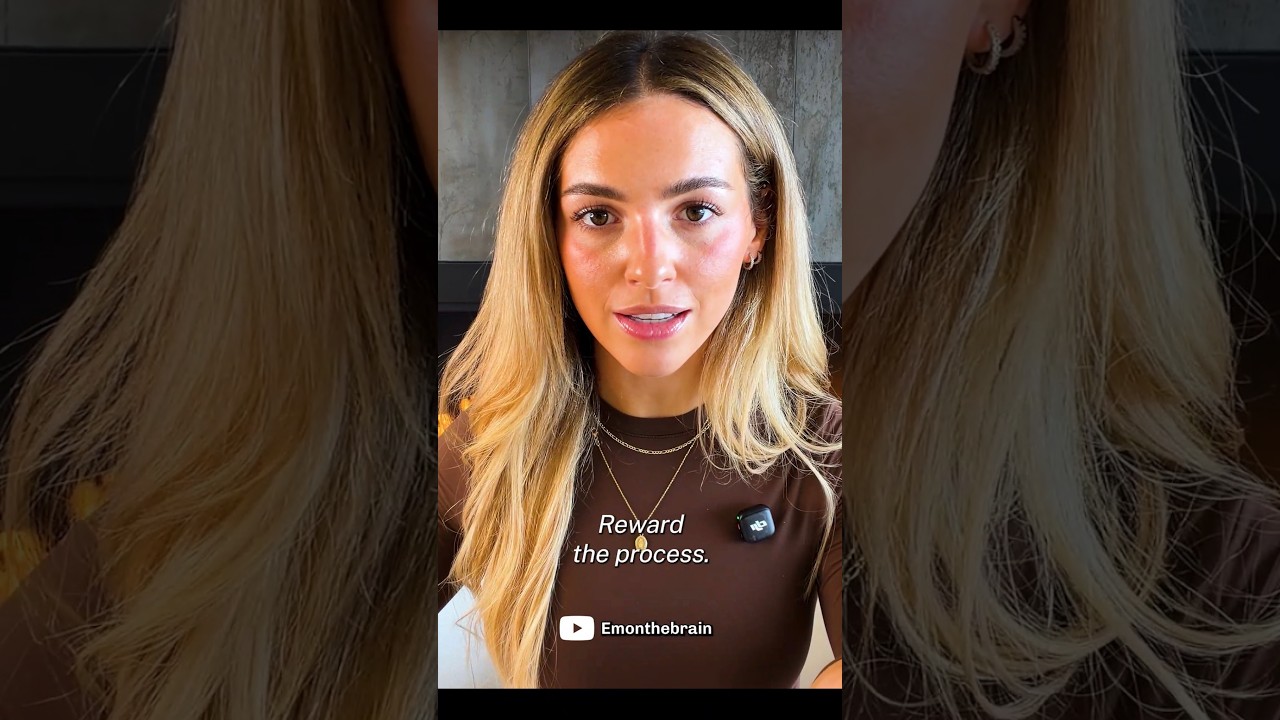
How to Lead Yourself Like the Greatest Coach of All Time | Lessons from Michael Jordon’s Coach

In this 30‑minute YouTube video, neuroscientist and coach Emily McDonald ("M on the Brain") breaks down Phil Jackson’s 11 principles for mindful leadership from his book Eleven Rings. She frames each principle with neuroscience insights, personal anecdotes, and concrete tools for viewers to apply in their own lives. The video opens with Emily’s background—two neuroscience degrees, research experience, and a global coaching practice—then walks through each principle: (1) Lead from the heart, (2) Bench the ego, (3) Let each player discover their own destiny, (4) Build a flexible system, (5) Turn the mundane into the sacred, (6) One breath equals one mind (meditation), (7) Compassion as the key to success, (8) Keep your eye on the spirit, not the scoreboard, (9) Use the “big stick” or purposeful disruption (including doing nothing), (10) Forget the ring – detach from outcomes, and (11) (implicitly) embody love for the game. For each, Emily cites scientific research, quotes from Jackson, Ruiz, Lao‑Tzu, and her own coaching stories, and she offers actionable exercises (e.g., heart‑centered intention setting, ego‑benching journal, system design worksheet, sacred‑moment alarm, breath‑sync meditation, compassion self‑talk, spirit‑check, environment shake‑up, brain‑dump + rest). The video concludes with calls to join her community, a free masterclass, and an upcoming live tour. The overall message is that by internalising these mindful leadership habits, viewers can lead themselves and others toward authentic success, happiness, and connectedness.
Chapters
Michael Jordan's basketball coach, the greatest basketball coach of all time, he's won 11 championships, wrote a book called Eleven Rings. And in one of the chapters of this book, he talks about his 11 principles for mindful leadership. And these principles really are the keys to success. So in this video, I'm going to share with you what each of these principles are, talk about the neuroscience behind them, and give you tools to apply each of these into your own life. By the end of this video, you are going to be so tuned in, tapped in, turned on, you'll be able to lead a group, lead yourself, and ultimately achieve the success and happiness and connectedness to yourself and others that you desire. The subtitle of this book is called The Soul of Success, and it really has been the return to connectedness that I was searching for when I was going to Barnes Noble to buy a book. And so I'm really excited for you to experience this for yourself too. If you're new here, hi, I'm Emily, also known as M on the brain. I am a neuroscientist by training. I've got 2 degrees in neuroscience as well as many years of research experience in the lab. And I now create, write, coach people from over 55 countries all over the world, help them rewire their brains, reprogram their subconscious, manifest their best lives, and ultimately live out their highest potential. So let's just dive straight in to number 1. Number 1 is to lead from the heart. And in this book, Phil Jackson talks a lot about how he blended his personal beliefs. He was a very spiritual man, blended his personal beliefs and his spirituality into his coaching methods, and he found that that worked best for him. Now, this man has 11 championships, and he compares himself in this chapter to other coaches, and he talks about how other coaches spend a lot of time studying what other coaches do and looking to others and, and kind of maybe even playing copycat a little bit. But he explains that he does things different. He's always been opposite in nature. He likes to find his own own way. And this resonated so deeply with me when I was reading it because I— it's some— this is something that I coach a lot on as well, is how important it is to find your own way in this life, but really to live authentically, to be true to who you are and not to look at what other people think or the way that other people are doing things. For example, there are so many— you know, I, I'm in the content creation space and I see a lot of advice on this this is how you should create content, this is what you should do, this is how you get the most engagement, et cetera. And in many ways, especially in the beginning, I went against a lot of the quote unquote rules that people say you should follow. For example, one of them being you need to post every single day, post consistently. I have never posted every single day on social media and I have 2 million followers on Instagram. So this is something like I'm personally a quality over quantity type of gal, but also this really bridges beautifully into what the title of this principle was, which is to lead from the heart. In the book, The Mastery of Love by Don Miguel Ruiz, one of my favorite books, he talks about in one chapter the track of love and the track of fear and how we can really only be on one or the other. And when you are sort of pushing, forcing, or trying to make a certain path or a certain way work that doesn't really feel true to who you are, a lot of the time we can move onto the track of fear. We do things out of desperation or because we have to or because we feel afraid of what might happen if we stop. On the other hand, we've got the track of love where we do things because our cups are full and we feel the need to express something. We do this thing, we are working toward this goal because we have something that we need to share. And, you know, from my own experience with content creation, with writing, it's always been that I have this message that bubbles up within me or this experience that I have for myself, or maybe I'm I'm speaking to a friend or even a client that I'm coaching, and it's something so profound that I just feel the need to share it. Like it has to come out of me. And that's always when my content performs the best, is always when it's being poured out from a place of love and a place of service rather than a place of fear. And this hasn't just been true in my own experience. So many of my clients, when they hit a huge business deal or brand deal, if they're content creators, or I have, multiple clients strangely manifesting the exact number of $35,000 in one week. And whenever I have someone— it was $50,000 recently. And whenever I have clients that report huge wins to me, I ask them, I say, you know, what, what is it that you did? Like, what do you think, you know, was the principle that really helped you the most in that situation? And of course, it's always a combination of things, but One of the things they always report back is that they really unlocked the energy of moving from the heart, moving as their highest self, and putting their own energy first. Principle number 2 is to bench the ego. In Phil Jackson's book, which I'm going to read from directly right now, he says, If your primary objective is to bring the team into a state of harmony and oneness, it doesn't make sense for you to rigidly impose your authority. This is so profound, so beautiful, and can be applied to so many different areas of life. This is actually something that I've talked about in my own content, the importance of putting your ego aside for so many different reasons. Now, Phil Jackson is talking about in the case of leading a team, how important it is. Like, if you're— and this is true for relationships, something that I've learned, uh, being engaged and just being in relationships, even with friendships as well— the importance of if your primary objective is harmony, it is oneness, it is connectedness, it's success between you and somebody else, you and others, then you can't be so focused on being right or protecting your ego. It has to be on how can we, as a team, attack this problem, right? Like, if there is an argument or a fight, like, it's not you against the other person, it is you both against the issue. Yeah. Which has been absolutely transformational in my own relationships when solving problems. But on the other hand of this, even, you know, from within, when you are moving toward a goal, when you are trying to start a business or create content or write or whatever it is, maybe it's like an athletic goal or a health goal, whatever it is, you cannot be afraid of looking dumb. And here's the thing: your ego exists to protect you. Your ego exists to protect your self-concept, your self-image, right? And the thing is, is that a lot of times when we are moving towards success in whatever shape or form that looks like for you, it kind of requires that you look a little dumb. Someone actually on my live masterclass yesterday asked me, you know, how do you deal with being uncomfortable and not having the skills to achieve your goal yet? Like, how do you— deal with that? And my answer was, you look at it and you run straight at it. And, and I also gave her a little homework because this person that asked me the question, because I told them, I said, go to my TikTok and scroll all the way to the bottom. My original videos from the very beginning of my content creation journey are still there for a reason, right? To see the progression so that other people can look and see, Em did not start out an amazing content creator. I did not start out that way. I started out kind of just doing whatever I thought. Like, I had a message I wanted to share. I had, you know, information and helpful science-backed tips that I wanted to give to people. I was like, um, that was my purpose. Like, that was me leading from the heart. I didn't have this ego of like, I need to look good. I need this content to perform. I didn't have that. And because of that, I have been able to succeed. So bench the ego and put whatever it is that you're wanting before how you look. Like, it just— disregard, like, how you're looking to others for a little bit. Like, you can polish it up later. Bottom line is that when you are okay with looking dumb and failing, especially in front of other people, you will be a lot more successful and a lot more at peace and a lot happier. Principle number 3 is to let each player discover his own destiny. Again, I'm gonna read straight from this chapter here. Phil says, "One thing I've learned as a coach is that you can't force your will on people. If you want them to act differently, you need to inspire them to change themselves." I think so many of us have experienced this on our own kind of healing journeys when we begin to wake up. And I remember in the beginning of my journey when I first kind of woke up and discovered the power of the mind and started, you know, warming up to spirituality and all these different things, like I— and just everything, I wanted everyone in my life to be on the same level. Like, I, I'm the type of person, like, I don't just want to enjoy this alone for myself. Like, I want my best friends, I want my brother, I want, I want all the people around me to also be on this wavelength so that we can enjoy it and be in it together, right? But what I quickly discovered is that you can't kind of rush somebody else's timeline. You can't force somebody else's path. That is their path. There's a quote by Rumi. He says, "Once I was clever, so I decided to change the world. Then I was wise, so I decided to change myself." You really must be the change that you want to see in the world. Like, if you want the people around you to be more kind, more loving, more compassionate, that's— you need to be that first. Be the change that you want to see in the world, and also allow other people to have their own timeline. Allow other people to discover their own path for themselves because that's really our only option. That's really all you can do, right? So accepting that is so important and just being a leader really does look like being that change, right? Like if you, if you are a leader of a team, I know a lot of my clients, like they lead teams in their businesses or they are business owners or they are working even in 9 to 5 jobs or careers and they want, they get into leadership roles within their careers. It's so, so, so important to embody the traits and characteristics that you want your team to have. If you want people to be on top of things, then you need to be on top of things, right? If you want people to be structured and, you know, organized, like you need to be organized, right? And so that really is the power of being in a leadership role. It's like you must go first. That is also true in relationships as well. In whatever relationships, whether it be a friendship or a romantic relationship, really being the change, right? Like, you can't expect somebody else to change in a way that you don't currently act or embody. Principle number 4 is the road to freedom is a beautiful system. If there is one thing I know about Phil Jackson is he loved that triangular offense. He loved that triangular offense and that beautiful system that he had. One of the reasons why he loved it so much, I'm sure, was that it worked really well, but also was that it had the team working together. It required that everybody maintained a part of every play, and it wasn't that it was just like memorized plays. It was like sort of— look, I was— when I was in middle school, I was in orchestra. So the way that I think about this is like it requires sort of like a symphony, an orchestra. Like everybody is moving and reading each other and working together. It's like a dance. And that is something that he talks about was so important, is just having a system. And having a system that works well for you really is key in every single area of your life. Now, of course, this is true for leading a team. Like, if you're leading a team, leading a group, having a system— like, do you— are you organized? Do you have a plan? Do you meet on certain days? Does everybody know what their specific role is? Is it super clear? And do you have a system that you feel is running really smoothly and is working well? And maybe the answer is yes, maybe it's no, maybe it's maybe, or maybe it's yes, but I think now as I hear you, Em, talking about this, that I think our system could be a little better. And honestly, when I was reading this, I was like, hmm, I wonder where I can go into my own life and think about, you know, how I can maybe implement a system that works better for me and fuels me and charges me up, right? And the system can be free to change. And I know as, you know, personally as somebody who's been diagnosed with ADHD, I don't like a rigid system. I don't like a rigid, uh, super structured system. And if that's you, completely resonate with that. But what I do think is very important is to have a system that you can build flexibility within it. And honestly, that's a lot like the triangular offense that Phil Jackson ran. It wasn't like calling specific plays where they had to do specific things. It was a system that actually allowed them to be more flexible and resilient, which was really beautiful. Mm-hmm. So maybe looking within and asking yourself, could I use a better system for my life? Or maybe for this certain goal that I have, maybe I need to implement a better system for achieving this goal. Maybe it's, you know, a certain habit that you're trying to implement. Like, you could take this on the macro scale and be like, do I need a better system of my day-to-day life and my routines, right? Like my morning routine, my night routine, maybe. But you can also zoom in on specific goals that you have, like systems for relationships, systems for your goals, etc. Personally, as a trained scientist, I always think of, you know, just different methods of action, and I love creating sort of systems or plans, outlines for everything that I do, and I love treating everything like an experiment. But the most important part of this is to figure out and find a system that works for you. Principle number 5, is to turn the mundane into the sacred. I'm going to share with you what Phil Jackson says. He says, As I see it, my job as a coach was to make something meaningful out of one of the most mundane activities on the planet: playing pro basketball. Despite all the glamour surrounding the sport, the process of playing day to day after day in one city after another can be a soul-numbing exercise. That's why I started incorporating meditation, I wanted to give players something besides X's and O's to focus on. What's more, we often invented rituals of our own to infuse practices with a sense of the sacred. I love this. Something that I say often is that it's so easy to forget the fact that we are divine life force energy in a human body. We are spiritual beings having a human experience. But it's so easy to forget that because it's just not what people walk around talking about all the time. It is so important to remember to turn every moment into a sacred moment because it is one. Every moment is a sacred moment. Like, first of all, we don't even know— wait, not another moment is even guaranteed after this present moment, but also it is. The other night I laid on the grass and I stared up at the sky, looked at the clouds as the sunset brought tears to my eyes, and I just experienced the most profound sense of gratitude for my position and my place on this planet. And that activity for me was something that I wanted to do because I know that doing that helps me to reconnect to the sacred and reconnect to just how special of an experience this is. Like— Mm-hmm. The planet, this planet is so cool. Like the Earth, insanely cool. Like the sky, incredible. The mountains, incredible. The water, lakes, rivers, oceans, like incredible. The grass, incredible. It's so cool. And just little, little things like this. It's just like, it's so easy to get caught up in the mundane everyday experiences of life. I was on a coaching call in my community inside of Minecraft, and I was talking about this exact concept. And as I was discussing it on my coaching call, I started to tear up because I'm sitting here in front of the community that every one of— every single one of you has helped me build. And I'm looking at all of everyone's beautiful faces and just this incredible energy, and I'm talking about this incredible topic, and I started to tear up because I'm just— how special is this moment that we're all here together right now talking about this? Like, how special is this moment and how sacred and is it? It's beautiful, and it's so easy to let those things slip by and have your mind be busy with what you're eating later or what your problems are right now or your stress or, you know, the rushing that you're doing. But don't forget to pause and turn every single moment that you can at least remember to turn into a sacred moment because it is one. And it doesn't just have to be a pause. You can do this on purpose as well. You can do this intentionally with your work with your everyday life, with your, you know, different tasks of the day. I have an alarm that goes off in the morning that says, "How can you make the tasks of today more fun?" How can you remind yourself, like, how can you infuse this energy into your day-to-day life, into the task, maybe into your morning drive to work, into your commute? Like, how can you infuse this divine life force energy, this sacredness of your life into the mundane activities of every single day. Principle number 6 is one breath equals one mind. Jackson says, though mindfulness meditation has its roots in Buddhism, it is an easily accessible technique for quieting the restless mind and focusing attention on whatever is happening in the present moment. This is extremely useful for basketball players who often have to make split-second decisions under enormous pressure. I also discovered that when I had the players sit in silence, breathing together in sync, it helped align them on the nonverbal level far more effectively than words. One breath equals one mind. Essentially, this principle is really just about the power of meditation and how important it is. Phil Jackson had his team meditating. He is arguably the greatest basketball coach of all time. He has 11 championships, and he had his team meditating. He had Michael Jordan meditate. So if you are not meditating, this might be your sign to start. Meditation completely changed my life. I don't know that I would be in the position that I am in if I did not start meditating. So meditate. Principle number 7 is the key to success is compassion. In his new adaptation of the Chinese sacred text, the Tao Te Ching, Stephen Mitchell offers a provocative take on Lao Tzu's approach to leadership. And this is his writing: I have just 3 things to teach: simplicity, patience, compassion. These 3 are the greatest treasures. Simple in actions and thoughts, you return to the source of being. Patient with both friends and enemies, you accord with the way things are. Compassionate toward yourself, you reconcile all beings in the world. Jackson says, "All of these treasures have been integral to my coaching, but compassion has been the most important. In the West, we tend to think of compassion as a form of charity, but I share Lao Tzu's view that compassion for all beings, not least of all oneself, is the key to breaking down barriers among people." I find that I give this advice to so many people when they ask questions. Yesterday in the Q&A section of my masterclass, someone was asking me about discipline and how we can be more disciplined, and I personally I have a different view on discipline than what I see out there, and I have a whole video on discipline already, so you can go and scroll and, and watch that one. But discipline, in my opinion, from my perspective, truly is just an act of self-love. It is loving yourself enough to look out for future you. It is so important to treat yourself like you would treat your own best friend. Treat yourself with kindness. and compassion, it goes a long way. So forgive yourself for whatever thing you're holding in your mind, whatever you're beating yourself up for. Forgive yourself right now. Allow yourself to move forward and forgive others as well, no matter what they did. Forgive others. Like, forgiveness and compassion doesn't mean that what somebody else did is okay, but it's giving yourself permission to move forward. Let the weight that you've been carrying drop. Give yourself compassion. Give other people around you compassion. And love yourself. I feel like I say that every video now. Principle number 8. Now this one is really good. Keep your eye on the spirit, not on the scoreboard. He says, most coaches get tied up in knots worrying about tactics, but I preferred to focus my attention on whether the players were moving together in a spirited way. Michael Jordan used to say that what he liked about my coaching style was how patient I remained during the final minutes of a game, much like his college coach, Dean Smith. This wasn't an act. My confidence grew out of knowing that when the spirit was right and the players were attuned to one another, the game was likely to unfold in our favor. We got one of the greatest coaches of all time talking about how you should not be keeping your eye on the scoreboard and you should be keeping your eye on the spirit, on your energy. Your energy is the foundation for everything that you do. Someone asked me yesterday as well, you know, how do you keep yourself from being hopeless or getting really upset or stressing when things aren't unfolding the way that you want to? And my response was, they're not unfolding the way that you want to on the timeline that you have set, but that doesn't mean that it's not going to work out for you. Dr. Wayne Dyer Has a beautiful quote that says, nobody knows enough to be a pessimist. Nobody knows enough to be a pessimist. The human brain filters out over 99% of the information that arrives to it before we become consciously aware of the reality that we are experiencing. We know for a fact that there are animals and different species out there that can perceive heat maps, electromagnetic fields. Birds can see the UV spectrum. Like we know for a fact that there are facets and aspects of reality that we cannot perceive. So what don't we know that we— that's out there that we can't perceive? That there is so much more than what meets the human eye. Nobody knows enough to be a pessimist. Like, we don't know enough to act like we know how something's gonna go or something's gonna work out. So we might as well be an optimist. We might as well believe that the things that we want are gonna work out for us. But we also really have to pay attention and and take control over the only thing that we can take control over, which is ourselves. And again, let's go back to the example that I was giving about my clients and the people that I coach. When they have these huge breakthroughs, their response is almost always the same. It is, I put my energy first. I did the systems that we talk about in Minecraft. I implemented the systems. I did the visualization. I did the identity shifting. system as well, and I've been moving like my highest self, and I've been acting as them, I've been feeling as them, thinking as them. Now all of a sudden, the thing that I've been wanting, or something that I didn't even know I wanted because it's beyond what I could have even imagined for myself, has come. Like Phil Jackson said, when the spirit is right, the game was likely to unfold in our favor. Your energy is so important. This also goes back to the example from the book The Mastery of Love, being on the track of love and being on the track of fear. If you are moving toward goals and you find yourself on the track of fear, pause and give yourself the space, the grace, the compassion, the support, and the time to move back over to the track of love, and then get back onto moving toward your goals from that place. I mean, research shows that the same action taken with different energy will give you different results. You are more likely to get what you want when you are in a better mental state, when you are your biology and neurochemistry is working for you because your performance will be better. Your energy will be better. I mean, nervous system co-regulation is proof that other people can feel the state of your nervous system. And if other people can feel it, don't you think the universe can feel it? Don't you think the things that you want, material matter outside of you, can feel the state of your nervous system? Absolutely. Your energy does not just exist inside of you, and we know that. So put your energy first. And keep your eye on the spirit, not on the scoreboard, and move like it's already yours. Principle number 9 is sometimes you have to pull out the big stick. Now, this comes from Zen meditation because there are meditators or monitors that roam around a room and smack meditators with a flat wooden stick, and it's called the compassion stick, apparently, to get them to pay attention, basically to get them to be present. It's not like a punishment. It's just to help them to be present. And Jackson goes on to talk about how he uses this in his own practices. Like sometimes he would turn out the lights. And have them practice just to get them to wake up and be present. Personally, this is something that I also do in my own life, in— with my work, with being creative. I know the power of environment and context on the state of the brain. It's actually something that I studied in the first research lab I ever worked in was learning and memory and our perception of time and how all of that changes when we change contexts. Super interesting stuff, but I use this in my own life when I am maybe sitting and I'm, you know, trying to be creative. I'm trying to write content. I'm trying to do something, maybe whatever it is. And I can't just, I can't drop into flow for some reason. It's just not, it's not hitting. What I will do sometimes is I will literally just go get in the car. I'll tell myself I'm gonna go to the coffee shop, but just the act of getting in the car, all of a sudden now, I, the, the ideas come and I'm flowing and every, it's, it's all happening. So sometimes you just need to shake things up, like on your way to work, if you usually You usually take a certain route to work or to the gym. Change it up. Take the long way. It wakes up your brain and it requires that you be present because your brain's like, "Huh, whoa, I can't fall back on my default way of operating. I need to wake up and pay more attention," right? Like if you were to brush your teeth with your other hand that you don't usually brush them with, your brain would have to wake up and be present and actually go to work because you can't fall back on muscle memory and default mode processing. Use this in your own day-to-day life. If you're feeling stuck, if you're feeling a little bit like, ah, I could use a little switch up, start small. Start with maybe just shaking up your routines and going out, maybe going to a different coffee shop this time. When in doubt, do nothing. Jackson talks about this from the lens of as a coach and, you know, maybe not responding to reporters or to the media when there are certain dramas or whatever's going on, but he also lightly touches on actually the neuroscience of it a little bit. And I love the neuroscience of doing nothing. It is so, so, so important. Now, the truth is, is that we can only consciously hold a certain amount of information in our working memory or our conscious mind at any given time. But our subconscious can do a lot more of this deeper processing, a lot more, you know, connecting of the dots. dots behind the scenes. This is why a lot of times our best ideas come to us when we're not looking for them, or when we are in the shower, because our subconscious mind sort of can do this processing and connect these dots and have this sort of creative, you know, flow, um, when we're not trying to hold certain pieces in our working memory. So what I have found to be really useful process for like using this on purpose is to, if you're, if you're having a problem or you're stuck or, you know, you're needing an idea, whatever it is. Pause and brain dump everything out of your head, everything out of your working memory. So let all of the pieces of the puzzle come out, write 'em all down. All the different pieces of the puzzle, write them all down. Get it all out of your head and then literally just walk away and do nothing. Maybe even sleep on it. Sleep on it. Go to sleep. Let the answer come to you literally in your dreams. I've had that happen before. And there are plenty of artists and even scientists, famous scientists that report having the same thing happen to them. And that's because this is just the way the brain works. There were so many times when I was writing and I would be, you know, trying to write a certain chapter or something, and I just couldn't necessarily put the pieces together of trying to put together like this perfect flow. And so I would just get up, go like, all right, I'll work on something else, you know, cause I can't figure this out. Get up, go take a shower, get ready for bed, and then boom, the idea comes to me. in the shower. So when in doubt, do nothing. Let all of the pieces of the puzzle be present and be there, and then literally just let them go and forget about them and allow your subconscious mind to do the processing and answer the question for you. And sometimes when you step back and you do nothing and you let go, you also leave room for divine intervention, which is also equally, if not more important. Stop trying to grip and control everything and let there be space for God to do God's work, for the universe to figure out your problem for you. And that perfectly leads me into the last principle, which is to forget the ring. Jackson says, "As a coach, I know that being fixated on winning, or more likely not losing, is counterproductive, especially when it causes you to lose control of your emotions." What's more, obsessing about winning is a loser's game. The most we can hope for is to create the best possible conditions for success, then let go of the outcome. The ride is a lot more fun that way. Bill Russell, the Boston Celtics great who won more championship rings as a player than anyone else— 11— revealed in his memoir, Second Wind, that he sometimes secretly rooted for the opposing team during big games because if they were doing well, it meant he would have a more heightened experience. So not only is one of the greatest basketball coaches of all time with 11 rings telling you to let go of the outcome, but also one of the greatest basketball players of all time that has 11 rings is also talking about how he let go of the outcome and was rooting for the other team. As if you needed another reason to detach and let go and enjoy the ride and enjoy the journey. Jackson also quotes Lao Tzu, who says, the best athlete wants his opponent at his best. The best general enters the mind of his enemy. All of them embody the virtue of non-competition. Not that they don't love to compete, but they do it in the spirit of play. This is a lesson that I have had to learn. It is so, so, so important to do it for the love of the game. And if you can't do it for the love of the game, then you're not in it for the right reasons, and you're not going to enjoy the journey, and you're not going to enjoy your life. If you are always pursuing things out of fear, out of 'I need to be better,' out of whatever other energy, you're not enjoying the ride. You're not having fun, and you're not detached. Detachment and letting go of the outcome doesn't mean that you don't want to win. It doesn't mean that you don't care to win. It just means that you play better when you're not afraid to lose. Which is so true. Jackson says, that's why at the start of every season, I always encouraged players to focus on the journey rather than the goal. What matters most is playing the game the right way and having the courage to grow as human beings, as well as basketball players. When you do that, the ring takes care of itself. And obviously it did because the book is called Eleven Rings. All right. Now that is all I have for you for this video. I hope you enjoyed it. I hope you took something amazing away from it. If you are interested in coaching and joining my community, I highly encourage you to check out the links in the description. Everything that you need will be there, as well as the link for signing up for my next free masterclass, which I also highly encourage you to do. I am also going on tour, a live in-person tour next year. The link to RSVP for your city will be in the description as well. Until the next video, I am sending you so much love. I am rooting for you. I believe in you, and you got this. I'll see you soon. Bye!