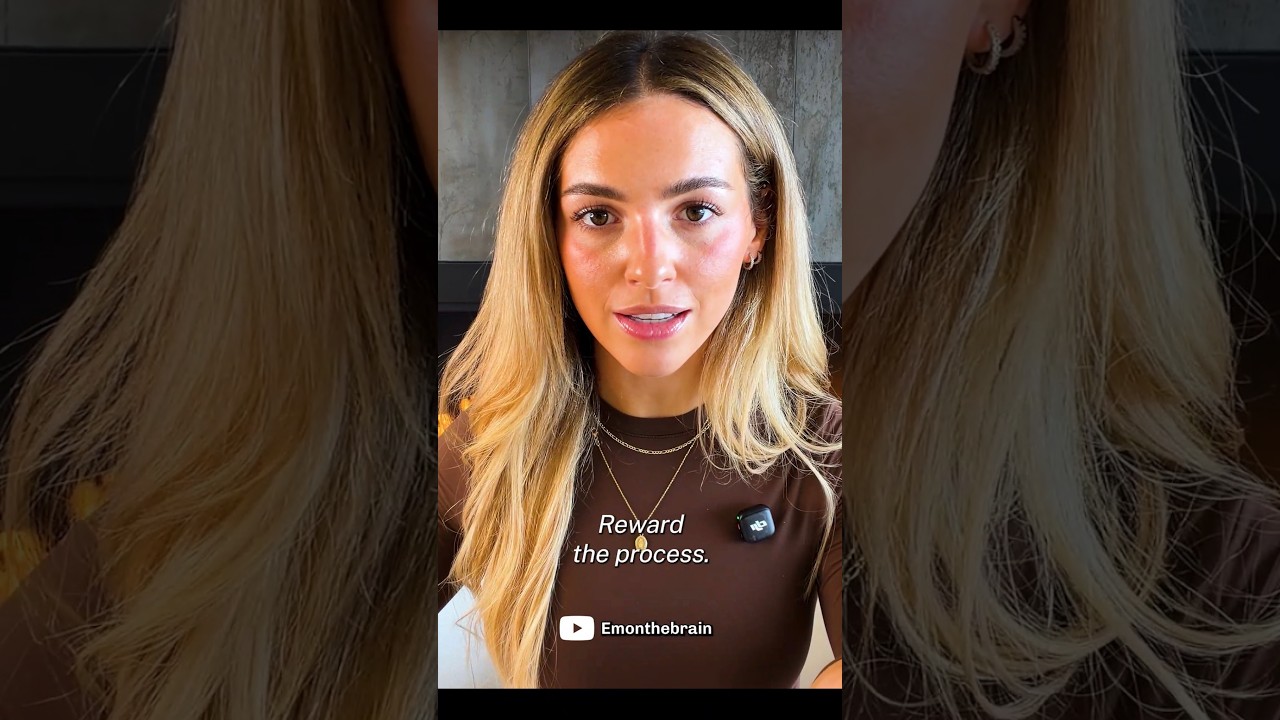
How to Stop Caring What Other People Think Using Neuroscience

Neuroscientist Emily McDonald explains why we're wired to care what others think, then offers four brain-based tools to stop: reframe criticism as not about you, decide whose opinions matter using four questions, treat haters as irrelevant noise, and embrace authenticity as your most powerful energy.
Chapters
My life changed when I finally understood the neuroscience behind why we care so much about what other people think and developed the tools to move beyond it. And this is so important because caring too much about what other people think quietly controls your life. It impacts what you say, what you do, the choices that you make, the places that you go, what you go after, how honest you are with yourself and with others, and so much more. So in this video, I'm going to explain to you the neuroscience behind why we care so much about the opinions of others and give you the exact tools to move beyond them. By the end of this video, you are going to be feeling so confident, so free, so willing to go after and do the things that have been placed upon your heart. But first, if you are new here, hi, I'm Emily, also known as Em on the Brain. I'm a trained neuroscientist. I've got 2 degrees in neuroscience as well as many years of research experience in the lab. I am now a coach to people in over 55 countries all over the world. I'm a speaker, a content creator, a writer, and I'm here to help you rewire your brain, level up, and create the life that you really wanna live. Let's talk about what happens in your brain when you face social rejection or hear a negative comment or words from somebody else. Okay? The first thing that's really important to understand is that the brain tends to have a negativity bias, and this is put in place to protect you. Your brain wants to protect you, especially from social threat. Think about how we evolved, all right, in communities, in tribes, in groups, where if we experienced a rejection from someone, this literally meant we could die if we were rejected and thrown out of the tribe. If we didn't have the tribe, if we weren't in camp with everybody else, if we were out there alone by ourselves, we probably wouldn't make it. And so our brain tends to still put this emphasis on social rejection, even though it is no the case. So what happens when someone says something to you, whether it be negative or a hate comment or whatever it is, or they're talking badly about you behind your back? What happens is the amygdala starts to fire up and your brain may trigger a threat response in return. Your amygdala is the fear center in your brain. It is often associated with fear, stress, anxiety, and highly emotional states. So we might start to feel anxious, we might start to feel stress. The default mode network can also start to become more highly active. This is where our mind starts to wander and replay, you know, what if this, what if this. Now we're telling stories about ourselves. We get into these loops in our minds. You may replay what happened, replay their words, what they meant, what that means about you. And the loop is the last piece of the puzzle. When someone else makes a comment about you, oftentimes what happens is your brain opens this loop and it replays the story or the event or the words, looking for some sort of certainty or resolution so that it can finally close the loop and move on. You may have experienced this after having a conversation with someone, a tough conversation, or hearing a negative comment about somebody, maybe getting a cryptic text. Now, usually when someone cares too much about what someone else thinks, oftentimes there are one of three things happening. The first thing that may be happening is that you may be treating somebody else's opinion like a fact. They think I'm annoying, that means I'm annoying. They seem disappointed, so that means I must have done something wrong. They're upset with me, must be a me problem. Number 2, you're trying to control someone else's perception of you because their approval feels like safety. If they approve of you, you feel settled, you feel safe. But if they don't, something feels off. If they misunderstand you, you feel compelled to overexplain yourself or perform or fix the situation. Or number 3, you've made someone else's opinion mean something about your worth. It's not just their opinion about you, it's their opinion means something about me. You can let me know in the comments if one of these resonates with you, but let's move into the tools. Let's talk about how we can overcome the opinions of others and finally be able to push forward, move free, and be more unhinged and authentic. Because in case you haven't heard it today, authenticity is the most magnetic energy, when you are being yourself, that is when you are truly in alignment and on the path that you are supposed to be on. Tool number 1 is to close the loop. We just talked about the neuroscience about what happens when someone else says something about you. Maybe you get a hate comment, maybe people are talking badly about you behind your back. Your brain opens this loop and it replays the situation looking for some sort of resolution. Now, what you've found is that sometimes, right, if you've experienced this before, sometimes this loop remains open for minutes, sometimes hours, sometimes days, sometimes weeks, and sometimes it never closes. Sometimes you are years down the road and someone says something to you and you're like, yep, I used to always hear that as a child. I've heard that one before. And you've never fully resolved the comments made about you. I personally have an affirmation. That I have come up with for situations where someone makes a comment about me or says something rude to me, they talk badly about me, et cetera. I actually have two affirmations depending on the situation. I'm gonna share them both with you. The first affirmation is based on the neuroscience of reality. You have to remember, maybe if you haven't heard me say it before, and understand that the brain constructs your entire experience of reality. Every single person that's ever encountered you holds a different version of you in their brain. You are a different person in every single person's brain that you've ever met. And so if someone makes a comment about you, when people make a comment about me, you know what I tell myself? That's a reflection of them. Oh, I don't like her hair. I don't like what she's doing. I, I, I don't like the information that she's sharing. I don't, I think she talks too loud. That's a reflection of them. That is a reflection of the way that their brain constructed me inside of their heads. And that may or may not have anything to do with me, but it's As long as it's something that I feel that I'm confident about myself. Like, I remember when I first started out creating content and I would get hate comments about how I talk with my hands too much. You know what I said back initially? I was like, well, I'm Italian. I talk with my hands. That's not something that I care to change about myself. Actually, I don't. I like it. That's a part of me that I like. And so when someone makes a negative comment, I'm like, oh, that's a reflection of them. That's a reflection of the way that their brain is constructing me inside of their own heads. That's one affirmation that you can use. The second one is also kind of based on this neuroscience of reality, but also programming and the way that our brains have been programmed and conditioned. Our brains, yes, were programmed, but your brain, when you were, when you were born as a little baby, your brain had the most connections it will ever have. And then as you were raised by your family, by society, culture, the environment you were in, et cetera, your brain started to kind of prune away these connections. And what you were left with are the pathways in your brain that you now have, right? And this includes your belief systems, the languages you speak, the activities that are normal to you, like riding a bike, for example, that you're really good at, walking. Let's say somebody says something to you like, oh, how are you gonna do that? You tell them your goal. How are you gonna do that? Mm, I don't think you can do that. I wouldn't, I wouldn't do that. I think you should do something that's more safe. You should do the safe option. Again, you could go with that's a reflection of them. Like that is a reflection of you. That's a reflection of your reality. But another affirmation I like to use is that is true for your reality, but not mine. I've also shortened that affirmation down and just said, that's not true for my reality. Like, that's not my reality. I use that affirmation in other times as well. Like, if I am in environments where there is the TV playing or music and there are kind of things being said that, you know, I, I don't want my brain to be absorbing limiting programming. So I literally just will say in my head, if I hear a certain lyric in a song or et cetera, I'll say, that's not my reality. Like, for example, something super simple, a song, oh, life's such a— you That's not my reality. Moral of the story here, close the loop, develop some sort of affirmation or mantra that you can say within your own mind to close the loop when people have things to say about you. Number 2, stop trying to manage other people's perceptions of you. This goes hand in hand with the neuroscience of reality that I was just explaining, right? Every single person has a different perception of you in their heads, and you can't control that. That actually is just the way that the brain works. That's the way the world works. And so you sitting around trying to control how other people are going to perceive you, it's a waste of your time. It's a waste of your energy. If you're a friend to everyone, you're a friend to no one. What I have understood in this content creation space, kind of moving into the world and having a— being more visible, being seen in a greater way, I've realized that you can't please everyone. And in fact, if you try to generalize yourself or be vanilla and be understood by everybody and control your perception, nobody is really gonna be able to resonate with you on a deep level. You kind of have to ruffle some feathers, right? And this is another reason why I often say that authenticity is the most magnetic energy. This is how you actually connect and build real connections and relationships with people online and with people in person, right? By being yourself. Imagine you had a friend that was a chameleon, and I'm sure you've probably known somebody like this in your own life. You've known a chameleon where they're different and they switch up depending on what group or what people they're hanging out with. And what do you think about those people? You think they're fake. So don't be fake. Stop trying to control other people's perceptions of you. Recognize that being misunderstood is the tax that you pay for being authentic, and it's worth it. So put your ego aside. Realize that it's not all about you. Like, other people are allowed to not like you. Other people are allowed to live in their own little world of, of hate and judgment and criticism. And realize that that's the world that they're living in. If that's their perception and that's what their brain is constructing of you, imagine what their brains are constructing of themselves. There's a quote by Dr. Wayne Dyer, and he says, when you squeeze an orange, orange juice comes out. Whatever comes out of other people is what exists inside of them. So recognize that that is what's going on inside of them, and it's probably not a super happy, loving, and joyous place to be in there. Tool number 3: decide whose opinion gets access. This is so, so, so important to remember. I remember when I was first starting out with my content creation journey, I asked somebody that I knew that was what a friend of mine that was creating content. And I said, how do you deal with the hate comments and the judgment and criticism? She would say, is this somebody who you would take advice from? You shouldn't take criticism from someone that you wouldn't also take advice from. Some questions that you can ask yourself when you are facing criticism, judgment, hate. Does this person know me well? If they don't know you well, They're not qualified to even have an opinion about you, your life, what you do. Does this person know you well? Do they want the best for me? Maybe they don't know you well, but they want the best for you. And so they're gonna give you some advice, maybe some feedback, some constructive criticism because they want the best for you. An example of this would be maybe in business, someone who is in business and, and can look at your business. They don't, maybe they don't know you super well, but they want the best for you and they're gonna give you maybe some feedback. Third question, do I respect this person? Do you respect this person that is having things to say? And number 4, are they qualified to have an opinion on this area of my life? And that specific question is very important because someone might be qualified to have an opinion on your relationship, like a relationship therapist, but that same person is not qualified to have an opinion on your finances. My accountant is qualified to have an opinion on my finances, but they are not qualified to have an opinion on other areas of my life? This is so important. What you will realize asking yourself these questions is that most of the people that are having these things to say about you, they are not qualified. They don't want the best for you. They don't know you or the situation well enough to have an opinion. And a lot of the time you probably don't even respect them. Someone that I personally know, she has an affirmation where if she sees certain words from other people or certain opinions, she says in her own head, not qualified. They are literally not qualified to have an opinion. Someone's calling you ugly. A beautiful person would never do that. Take me for an example. I would never get online and comment something hateful to someone else. I would never even comment anything negative on someone else's post, even if I didn't like their post. I would just— guess what I would do? I would just keep scrolling because I know that engaging with something that I disagree with or don't like, or that's just training my brain to look for more of that. I don't even want to engage in and Entertain that energy. Decide whose opinion gets access to you. And what you will find is that most of these opinions that you're so wary of, so concerned about, they, they're not qualified. And tool number 4, to quote a song that I used to listen to in high school, if you don't have any haters, you're not poppin'. If you have haters, that means you're doing something right. I remember when I was in my PhD, I definitely stood out, uh, because of my energy and obviously like I don't look maybe like your typical scientist, and I definitely had people that would hate on me or talk bad about me behind my back. I actually had a pet rat when I was in my PhD and people would talk bad about that specific thing. And I just remember, you know, the type of people that would hate on me were the exact people that I just would never trade places with, that I would never wanna be or be like, like tho— like those specific people. And it's a lot easier when it, when you are receiving hate or people are talking about, it's a lot easier in my opinion when it's in person, when you know these people, and when you can put a face to the name, because you can very clearly and easily see that these people are, are not happy inside. But also, they are hating on you, but you're the one in the arena. Like, you are the one in the arena. You are the one putting yourself out there, going out of your way. You're the one doing the work. You're the one making— setting these big goals and delusional dreams. Like, you're the one in the arena. You're playing the game and the people that are hating on you are not even in the arena. They're on the sidelines watching you, criticizing you, but you're doing something that they could never do or they would never do. Maybe they don't believe in themselves enough to do. Maybe they're too scared to do. You remember that you are the one that is in the arena. You're actually playing. And so yeah, if you mess up, let's say they're talking back because you messed up, you, you did something. Well, okay, that, that's what happens. Like failure and setbacks are a part of a winning journey. You're in the arena. You're playing the game. You are Putting your ego aside and recognizing that maybe being misunderstood, being perceived in a way that you don't want to be perceived, like, that is a part of going after your goals and dreams. And the people that are hating on you or talking badly about you or having certain things to say, those people, they, they don't have the nerve to go out and chase their own goals and dreams. So they're sitting around hating on you to make themselves feel better about the fact that they're not doing it for themselves for whatever reason. And it is not your job, nor is it your responsibility to try to fix that or reconcile that or make that better for anybody else. It's not your job. But I'm gonna give you some homework right now. I want you to go and look at your favorite content creators, your favorite celebrities, whatever, whoever you look up to, and if, if they're visible, they have a platform, and go look at their comments. I promise you, every single person that you love and that you see zero things wrong with, they receive hate. I remember when I first heard that advice, I went and did it for myself, and I forget who it was that I went and looked at, but I went and looked at someone's comments that I really liked, and I realized they had hate. And I was like, how could anyone hate on this person? Recognize that everybody who is doing something big, putting themselves out there, they have haters, whether it be online or in person. Everyone. If you stand out, if you are different, You're going to be a pattern interrupt for people. You're automatically going to draw people's brains' attention because that's how attention works. We've top-down, what we want to focus on, and we've got bottom-up attention. We have a network in our brain that its job is to notice things that stand out, that are different, that disrupt the norm. Maybe it's new, novel, bright, colorful, stands out, energetically different. This is called the ventral attention network in the brain, okay? Its literal job is to notice things that stand out. And if that's you, people's brains are going to be drawn to. Some people are gonna absolutely love it. They're gonna love your energy. They're gonna love who you are, and they're gonna be so happy their brains were drawn to you and they found you and they, they've been waiting for you for years and they love your content. And then they're gonna, there are gonna be people that are really mad that their brain highlighted you and they're gonna try to maybe dim your light or change you or bend you or perceive you in a way that makes them feel better, reconcile their version of reality because you defy their version of reality. And they just can't live with that. So they feel the need to make up some story inside of themselves so that they can feel better. But again, your job is not to control anybody else's perception. Live in the real world, live in your world. I wanna end this video with a little reframe for you because the tools are great, the information is great, but I wanna remind you to zoom out. When someone makes comments about you, maybe you're afraid that someone will make a comment about you, zoom out. Be the alien. Take the alien perspective. Take the perspective of the universe or of God. You are so much greater than any problem that happens on this planet. Like, you are so much greater than that. You are divine life force energy in a human body. Remember who you are. Remember how powerful you are. So when this happens, pause, give yourself grace. Remember, yes, my brain is wired to detect social rejection and register it as a threat because it used to be threatening to my survival, but is— it is no longer a threat to your survival. Remind yourself that you are safe, that you are worthy, and remember the bigger picture. Life, reality, the divine, the universe is so much greater than anyone else's words. And last but not least, growth happens outside of the bubble. Okay? It is really easy to be confident and to be at peace and to be happy living in this bubble where no one can say anything to you, right? Like if you went and just lived in your room all day long and never opened up your phone, never talked to anyone, yeah, no one would ever have anything to say. But is that really the life that you want to live? Probably not. I know a lot of you listening, maybe you want more responsibility or a leadership role, or you want to be a content creator, or you want to be an artist, or whatever it is that you want to be. You want a business, right? You want— the things that you want require that you open yourself up to being seen. By others in a greater way. And I want you to sit with this for a second. The level to which you want other people to see you at should be in alignment with the level to which you see yourself, like how deeply you know yourself. If you know yourself on a deep, profound level, you know who you are. No one's words can sway you from how you feel about yourself. But again, growth happens outside the bubble. So get outta your bubble, get outta your comfort zone, go put yourself out there, do the thing, and put yourself in the position for people to have things to say. And then maybe in the moment where you get thrown off, like, this is where growth happens. This is where the work is done. Growth happens outside of your comfort zone. So maybe the answer isn't to fix it or to stop being afraid of what other people have to say, but to feel the fear and do it anyway. Or, you know, maybe it's just to use the energy, alchemize it, and go, go prove them wrong. Their opinions are not facts. Their reality is not your reality. Their timeline is not your timeline. You know how many people I've proven wrong in my life? People from my family, school, teachers, professors, people that laughed in my face and said, how are you going to do that? When I told them my goals and dreams. You know how many people I've proven wrong? Everyone! Because I literally am living the exact life that I said I wanted to live. I've done everything I've ever said I was going to do. Go prove them wrong. Use it as energy. Use it as fuel, but also do it for you. Do it as an expression of your soul. And remember to surrender. Surrender to the flow of life. You don't get to control what anybody else does. All you have control over is yourself and your own energy, your relationship with yourself and your relationship with your higher power, the divine, the universe, God, whatever you believe in. That is all you have control over in this life. So surrender to the flow. Return to yourself. Remember how absolutely incredible and amazing you are, because you are. And go be the divine life force energy that you are. Thank you so much for watching. If you are interested in coaching, my program, my community, my courses, any of that, everything that you need is going to be in the description of this episode. I am also going on tour next year. The link to RSVP for your city is also in the description. Highly recommend you do it because that is how we're going to plan which cities to go to. Everything that you need is in the description. Until the next video, I am sending you so much love. I believe in you. I'm rooting for you. You got this, and take care of yourself, please. Bye!