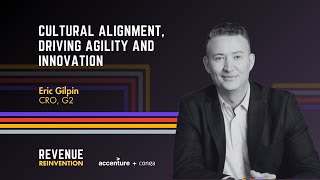
GTM 92: Secrets of Scaling to $1B, C-Level Selling & Developing BDR Acumen with Eric Gilpin
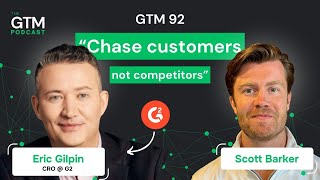
This is a YouTube video titled "GTM 92: Secrets of Scaling to $1B, C-Level Selling & Developing BDR Acumen with Eric Gilpin" published in June 2024. It features a detailed interview conversation between Scott Barker and Eric Gilpin, discussing Eric's extensive experience in scaling tech companies like Career Builder, Upwork, and G2. The discussion covers leadership lessons, enterprise sales strategies, navigating large deals, and the importance of alignment and focus in revenue organizations. The content is a professional podcast-style interview focused on go-to-market strategies and sales leadership.
All the deals that I've lost on the enterprise side is because I wasn't talking to the right people.
What were some of the leadership lessons that you learned along the way?
The alignment on the leadership team is like the most important thing. Everything dominoes from there.
How did you go about building that enterprise motion and what were some of the challenges you faced early on?
I think that one of the big challenges we had was not understanding the DNA and risk profile of a enterprise organization versus a small business.
Maybe from from career builder to upwork. How much due diligence are you doing on these next opportunities?
None of them were like flash in the pan decisions. Some of them were years in the making but it was constantly like external networking and not only do you need it in your current role that outside in thinking, but opportunities present themselves. I think the more active you are externally too. Behind the scenes it was a small group of people that were doing everything.
Welcome back to the GTM Podcast. It's your host, Scott Barker. I want to know how this insane growth actually happened. This episode is brought to you by Demandbase. Demandbase helps B2B companies hit their revenue goals using fewer resources by using the power of AI to identify and engage the accounts and buying groups most likely to purchase their account. Based technology unites sales and marketing teams around insights that you can understand and facilitates quick actions across systems and channels to deliver big wins. It's flexible, scalable and ABM built for you. Hello and welcome back to the GTM Podcast. You've got Scott Barker. Thank you as always for hanging out with us. For the next 45 minutes or so. We're going to do our best to leave you with some strategies, tactics and stories of how you can level up your go to market at your tech company. Got a fantastic guest, really excited for this one. I'm joined by Eric Gilpin. Eric, what's up man? Welcome.
Hey Scott. How are you? Good to be here.
Doing well, man, doing well. It's been maybe the busiest time for the fund since starting this, but in all the, all the right ways. So a lot of exciting things happening. Heading down to south by Southwest next week. Doing a bunch of events there. It's a lot of fun, man. But I'm excited to hear about your new journey because you just started a new gig six months ago. But before we dive into it, I do like to just set the stage for the guests. So Eric Gilpin is currently the Chief revenue officer at G2. We all know G2. We all love G2. We all use G2 most people know but of course it's the world's largest and most trusted software marketplace. And you know this role. You oversee all aspects of G2's revenue generation including sales, customer success, enablement, partnerships, rev ops, you know the whole gambit. And you have 20 plus years of experience building and scaling large tech companies. Before G2 you are at Upwork where you oversaw a global team of was like 400 plus which is insane and helped lead that company to a successful IPO in 2018 which is many folks dream. I think that listen to this podcast is to be part of that journey. And then before that you actually spent 15 years, which is like a hundred in SaaS years at career Builder. So it's been a hell of a run for you. And you also are an LP of GTM Fund. So we appreciate that and been an incredible member and sit on a few boards, notably at sales assembly. But man, 15 years at Career Builder, seven years at Upwork. Those are incredible runs and they're, they're very rare. Sales leaders don't usually last that long. What do you attribute those lengthy tenures to? How'd you keep your job?
I want to say I read that average CRO CMO tenure in like startups like less than two years at this point. So it's, it's definitely high casualty jobs if you will. The one thing I'll say too, Scott, I just want to echo the success at the GTM Fund. It's been amazing just being in the community, but also even in the slack channels, even as a listener and observer, I feel like I'm learning constantly from that ecosystem. And so just kudos to you and team and continue to cheer on the community aspect that you continue to build. And so thank you again for having me. I think to answer your question, timing has been a big part of it. One of the early founders and CEOs of HeadHunter.net, which was acquired by Career Builder, he had this saying, his name is Bob Montgomery. He said, eric, you're going to get where you're going whether you know it or not. And I never really understood what that meant, but I've interpreted it as this idea that when opportunity knocks, you need to have the courage to answer, but not just answer, but get conviction and go through the door. And I think the Headhunter that got acquired by Career Builder, that was timing. I wanted to work for an Internet company. I didn't care which one. It was 2001. At the time, the newspaper industry had a foothold of how organizations Attracted talent. And with the rise of the Internet, it was like, man, we get to challenge the status quo, Help companies think differently about talent acquisition by leveraging the world wide Web, you know, at the time and, and, and frankly I joined there early on and I won as a result of that machine. You know, I, I grew up as an individual seller, got into leadership roles, you know, led a number of different divisions. But timing was a big part of that. But I learned a ton of skills as we went from you know, maybe 10 million in revenue when I got there to close to 900 million when I, when I left. I think upwork was the very similar kind of experience, but I'd had like a playbook and a DNA of understanding the idea of like future versus business model. The future always wins. And upwork was a tangent to career builder where we were still helping companies acquire talent. We were just doing it in a distributed way and on a contract basis maybe versus full time. And you know, similar to the newspaper industry, contract employment was also kind of a dinosaur where you've got $500 billion of, of revenue that's being generated across called 100,000 different companies. Leveraging the analog model of how companies acquire contract talent. And with the rise of cloud computing and just globalization and the idea that skills are equally distributed but opportunity isn't, the idea of being able to connect companies of all sizes with high quality talent faster than ever before was that same knock at the door of, you know, being a part of another wave of change rooted in like technology and distribution of how companies could do that. But I, but it also had a playbook of how to scale organizations. And here was upwork that had that same kind of problem statement like we want to bring this to market and apply those. And to your point, we had an incredible run, you know, built an enterprise business essentially from scratch. And today it's, you know, the world's leading platform of how organizations, you know, including the Fortune 100, you know, connect with high quality talent at a scale. When I met Godard, our co founder and CEO of G2, it was like rare. It was right there in the face again. They've built this amazing marketplace. Buyer behavior has changed. As technology companies scale, they need a way to be able to build trust and transparency and compete on a global kind of platform. And prior to G2, there might have been, you know, legacy analog companies like a Gartner or Forrester that allow companies to build brand, but they didn't necessarily go all downstream across all segments. And so by using our own Flywheel and network effects and just kind of the global scale that G2 operates, man. I get to help companies think about how they acquire customers, you know, differently. I get to help buyers think about how they procure services. And so it was that same like status quo vision and kind of change agent opportunity. I think I've been successful by like probably picking a lot of really good horses and having some like really good mentors along the way to like help me inspect what I expect on these opportunities. But also, you know, being able to just bring a playbook, you know, based on the company stage of what they needed and then apply that, of course make it their own through relevance, you know, based on kind of the uniqueness of the, of the group. But a lot of it is just stealing from a lot of places, building upon that and you know, just, you know, trying to figure out that how do we win as a result of this go to market machine, however that looks for organizations. So I'm only six months in. I got to get to that 18 month mark or two year mark to say that I've done it three times. But thrilled to be at G2.
Well, there's a lot there that I want to get into. But certainly one of the kind of attributes that a lot of incredible revenue operators that I get to be friends with and I get to interview is their ability to pick great companies. And you said, you know, that when opportunity knocks, you have to have the courage to go after that and kind of go all in. But there's also this kind of shiny object syndrome that a lot of people can fall into, right, where you're like, you know, if you've done well in your career, a lot of opportunities get presented to you. And there's this idea of also having the patience to see something through and get to where you want to go. Walk me through maybe from career builder to upwork. How much like, you know, due diligence are you doing on these next opportunities? Are you taking months? Is it weeks? I think this is often an overlooked part of career success is like you gotta pick correctly. And it's arguably even harder than vc because in VC we can have multiple bets on the table. This is like I gotta have more than 150% conviction because this is my only bet. How do you get there when you pick a new role?
Yeah, totally. I think it's a fascinating question. There's probably a lot of sayings or adages that I'll probably use in our session here that I've stolen from a lot of Folks, but this idea of your network is your net worth and every opportunity that I've, well I've only had three now, but all of them were probably sourced months if not years prior. And this idea of constantly trying to stretch your external learning and like just having like an ongoing like thirst and desire for, for kind of knowledge in the concentric circles of like where you exist. And I think specifically on the Career Builder to upward journey, it was very serendipitous in the fact that Career Builder had already acknowledged this market trend on how companies were going to use flexible labor in a different way. And frankly we were even trying to figure out how to get into those spaces. And so we had a number of MVPs that we were trying to launch at the time. And so I had already been kind of a student of what was Elance and Odesk that became Upwork. And through different networking events, you know, I was able to actually connect with Stefan Kazariel who was the CEO of Upwork that had hired me. And so I almost felt like that was like destiny. I'd been trying to build this business internally and for whatever reason we had stops and starts, but had already built kind of passion around it, already knew who the market leader was. And then through networking kind of found myself in the room to have the discussion. And frankly 60 days later I started that opportunity. And so I think my journey to G2 same way I live in Chicago, G2 is headquartered here in Chicago. If you're in tech, you know G2. And so we've been following this story for, for a number of years and I had new number of the leadership team, the board members, team members that were there and, and none of them were like flash in the pan decisions. Some of them were years in the making but it was constantly like external networking. And not only do you need it in your current role like that outside in thinking, but opportunities present themselves. I think the more active you are.
Externally too there's nothing like that feeling of like role market fit. It's almost like very similar to like product market fit. And we all try and codify and explain of how we get there. But you feel it, you feel the market pull, you feel the role fit. It just feels like almost such a natural progression. So that's awesome. What were I guess the diving right into? So now you leave career builder big 15 year run, you go to Upwork, they're having success but they haven't cracked this like enterprise customer yet. And now I think a lot of us take for granted that Everyone use, you know, contract work. Big companies, small companies, just makes sense, you know, cheaper labor overseas. But that wasn't always the case. Far from the case. You know, when you started at Upwork, how did you go about building that enterprise motion? And what were some of the challenges you faced early on?
Yeah, no, great question. And I think the same challenges probably existed at Career Builder and they exist at G2, just in different forms, but similar stories. And it's always the kind of challenging the status quo and linking the old to the new. To your point, organizations have used contractors forever, but large companies build a lot of infrastructure and I would say systems and let's just call it red tape of how to like keep people out of an organization. And all of a sudden, you know, we're, you know, our pitch prior to Covid was like, you know, talents equally distributed around the world. They're at home, they're high professional, they're high demand. And I think if you, you know, we're talking to Procter and Gamble, what they might hear is like, yeah, no, that's people at home in their underwear stealing my trade secrets. Like, I, I don't, we don't want access, you know, to that talent. Covid was clearly, I think, an accelerant and challenging, you know, kind of that, that narrative. But we were successful even prior to that. And I think that one of the big challenges we had was not understanding the DNA and risk profile of a enterprise organization versus a small business. And like, better chap, cheaper, faster. Like early on you think everyone would buy that. But if you think about the things around not just risk mitigation, but compliance and gdpr, PI and all these things, I think we, we underestimated the lift of what it would require to be badged, you know, certified as a, like a trusted partner. And so we had to do a lot of the work. And it wasn't just a go to market team. It was product, it was research, it was marketing to really understand that, that Persona at the company level as well as the executive, buyers and users, you know, within those organizations. And we had to start like basically removing the parking brakes, like reducing that uncertainty tax. You know, for these organizations to show that no, we can do global payroll and compliance, no, we can actually handle all of the GDPR requirements that you have, screening and vetting. You know, they're, you know, by using machine learning and this is even prior to AI, like we can actually provide better quality candidates than maybe Human Assisted Search, you know, as a part of that. But we had to do A ton of work and a ton of I would say like product market fit calls like early on to understand deeply what those gaps were because you know we could have the best go to market team in the world. If we can't meet these requirements as an organization, you know, we're kind of dead in the water. And so I would say the first year was all about searching for product market fit and what were the must haves in order to drive value for our customers. And then once we got conviction around those and what I would call what the minimum were, I would say then we kind of lit the fire if you will on great, let's sign up as many customer. We had a milestone of let's get to 100 enterprise customers because we knew we would learn quickly on what it would take to get to the next 500 and very, I would say systematic and all company approach. Like an enterprise strategy is not a sales strategy, it is a company strategy. And we had to remove all daylight and lock arms between product marketing, you know, engineering, sales, back office, all of those things to win in that space. And I think it was we underestimated the lift kind of early on for us the unit economics made a ton of sense. Like an average enterprise customer on upwork spends a million bucks. An average self service customer spends $5,000. And so the trajectory was there. We just had to like unlock the front door to be able to have those conversations.
So I think that's something that's often overlooked when folks are trying to break into the enterprise. I've seen this firsthand a couple times and you put it really, really well, is that an enterprise strategy is not a sales strategy, it's a company strategy. And you know, I remember times at outreach where we would go and we would talk to this customer that maybe we've talked to before and you look back in the CRM and like why we lost the deal before and it was a product and a functionality issue, not, not a go to market issue. And then we'd look and be like we haven't fixed that yet. What are we doing in another sales cycle that's going to cost a lot of money, a lot of people's time. It's go like our whole exec team is going to get around this. Like the cost of going and doing this versus fixing the thing and then going is, is massive. And I think that's, it's often overlooked because it's. People think of it as a sales strategy and you've got that big number, you like that shiny Logo and then the, the other piece, the other cost of that is you only get so many chances to sell into these large companies. You, you don't necessarily get blacklisted, but like, hey, we reviewed you 12 months ago, we reviewed you 18 months ago. What, why are we going to do that again? It takes time from our team as well. How do you, I guess coach your reps, your, your team to take that broader look when there's staring down the barrel at a really sexy logo that you might not be able to support yet?
Yeah, well, an enterprise I think is like a, it's a buzzword and also like a trigger word. In some ways it's an enterprise means different things to every organization. You know as well, I, I, I, I have always subscribed. Like we learned early on back at Career Builder that anything that we build, if it's not relevant to like 80% of all the customers that we either serve or want to serve in the future, we can't do it regardless of the value of that unique customer because it just doesn't scale. And I think that discipline has carried with me both at UPWORK and here at G2 because there's a lot of things that customers are going to want you to do. And if you want to have really strong alignment with product and marketing and your internal partners, like having conviction around scale and being able to replicate those efforts is really important. The one thing I would also say about if you're starting it is you gotta have balance. You can't build it. It's like to fill the dreams deal, you can't try to seek perfection because obviously the enemy of progress. But you also can't go to market with nothing. And I think by setting milestones of like, hey, we want to get to a hundred customers and we want to learn. And maybe that hundred milestone means we're not going to like match light a bunch of like paid marketing. We're going to be pretty lean on like how our sales kind of go to market. We're going to have like one squad or scrum team on the product type thing before we go all in. I think a lot of companies, they might not hit whatever that early milestone is. They get a couple signals and they go all in. And then they have a ton of painful conversations 12 months later because they missed like one of those must haves, you know, that was required to end in whatever they think enterprise kind of is. And so I think it's by setting up smart goals and stage gates so you can learn as fast as possible. Is definitely kind of key to success, but also understanding that replication and scale and predictability is also going to be important. And so I've had to say no to, you know, deals in my career that were 20, 30, 40, 50 million bucks just because we wouldn't be able to do them again. And it would derail all of our internal resources. And so it would take all eyes off the mothership, if you will, and distractions like kill businesses.
Those were probably some sleepless nights when you're trying to figure out how do we make this 20, 30, $40 billion deal work? And then you finally reach the conclusion of like, sometimes it does not work and you're going to make undue sacrifices to get there. And even worse than that is if you don't make that hard decision early and then you onboard them, you go through the whole thing, you resource them and then they turn off in, you know, six months time or a year's time. And you got to go explain that to the board and all the sunken cost and, and well, it's not even.
The sunk cost of the, the go to market team, it's the sunk cost of the whole company. You know, those deals. And I'll give you an example of a transform, transformative one where we did it and we needed to because it was an 80% play. But you know, before I get into that, like it's, it's not just the, the, the revenue engine that fails. It's like all of the product, you know, and engineering resources that went into it, all of the internal distractions you like, if you're good at prioritization, that means you also put other things on hold, you know, to pursue that opportunity at the same time. And so there's a ton of risk associated with those big swings. As I mentioned before, like, there was an example of career Builder where we actually had one of those opportunities where I would say on the surface, everybody was like the chief, no, officer, like, we're not doing it. And I remember partnering with our CEO Matt Ferguson at the time and basically getting permission to like, let's just like go understand a little more of like what the customer wants and let's see like how that maps to like other customer needs. And I would say that for the first like 90 days of the project, everyone was trying to find a reason why it didn't work. And I knew that I just needed to get more perspectives in the room. And so not just product engineering, but marketing, but finance. You know, I wanted to get our voice of our current customers to See, like, what other kind of common themes are we hearing that this solution, you know, may serve? And I learned as I increased perspective, I started moving the needle more. And I was finding more, maybe not hella yeses, but like people that were like, oh, this like could be interesting. And then when you try to map that, you know, kind of opportunity and say, okay, great, well, how does that align to our three to five year plan? How does it align to our M and A strategy? We probably have a lot of horizon in concentric circles that maybe this is an opportunity to accelerate some of those things. And it took a long time, yeah, I would say, to get alignment internally. But once we did and we saw like the replication effect, you know, kind of of that. It was one of those deals. It was a $13 million deal that I spun off a hundred million dollars in additional sales in the next two years. But we wouldn't have gotten there if we wouldn't have like one like seeked additional perspectives, constantly mapped it to like, you know, current customer pain in other areas and to the future roadmap. And so the big swings can work if you do the due diligence, you know, on them and making sure you're all going together. And so we had this saying, like, if it's not a, if it's not a hell yes, it's a hell no. Like there's no middleware in this decision.
Let's go deeper on that, that deal, $30 million deal, it spits off another 100 million originally. Everyone's saying, you know, hell no. Uh, I'm curious. Did what they thought that they wanted in terms of product feature functionality end up being what you delivered? Or was it through kind of your deep discovery and analysis that you were able to maybe coach and shift what they thought they wanted into something that more aligned with your business goals as well?
Yeah, totally. And I, I think this is true in any large deal. You know, I think what buyers want is an outcome. And I think they, they get married to the how way too early. And some of that is because there's, you know, competitive forces that are already being very prescriptive in it. But at the end of the day, like I'm trying to, I'm trying to deliver X. And if you go really deep on that problem statement and really understand not only what their outcome is, but like the, I would say the impact that outcome has not only on their organization, you know, but, but their teams, the how becomes less concerning because you've already anchored in. If we could do this, it's going to have this impact to your organization. And so I think once you, once you kind of get to alignment there that we're aligned on kind of the same goals and the impact you can massage and like better partner exactly how you deliver that, which helps remove a lot of the custom work that is the weight in those deals kind of internally and focus on like, well it's probably more configurable to the, you know, the 80% thing. Like the 20% may be unique to you, but the 80% is configurable pulling things, you know, that we may already have assets off the shelf and tying them together. But you wouldn't get there unless you spent a lot of time on understanding what that outcome was. Because then you can be prescriptive of like, okay, well there might be a different way to get there. I feel like anytime someone comes in with exactly how they want it to work and exactly, you know, the permissions and viewership or exactly how they want it to integrate, I like get scared of those deals because they're more married to the how versus the why and the what. And so I think you can only get there by like the right level in an organization. Like the, the 13 million deal is like CEO and CEO staff conversation both internally for us as well as for the customer. Because executives don't buy the how, they buy the why and the what.
How did you in that deal? There's a few things is how did you get their team to buy in? Because this takes a lot of time to uncover the how and other possible solutions. And I'm sure it was a competitive deal. There was probably competitors around the table that were like, yep, we'll do that thing and then they're gonna go and try and figure it out. How did you I guess earn the right for them to be like okay, let's, let's spend time with Eric. I think he's hearing us. Let's spend some cycles on this. Cause that is, that is the R part of, of sales that's, that's tough to replicate sometimes.
Yeah, well, I think it's important Scott, to know it was a multi year journey. Like you don't go from 0 to 13 million, um, maybe buy an AWS, but like in normal cycles you do not. Um. And so we had had a, I would say, you know, call it three to four year track record of building trust along the way, you know, with that customer on different problem statements. I would also tell you in a world class account team. In fact this, this story is actually detailed In a book called Deal Storming that was written by an author named Tim Sanders. I think it's chapter three. And so there was a lot of, I would say, credibility and like value creation for the customer along the way that kept, I would say, like increasing our seat at the table with like. So as they, as this problem became known for them. We were kind of already in and we definitely had competitors, you know, that were custom shops to some of the largest, you know, software companies in the world to even some of our traditional kind of competitors. But I think, I think we, you know, earning the right over time and establishing credibility over a multi year period was key to even like get us a shot at the opportunity. And so there was awareness of our organization within their leadership team. We had a track record of like proving value based on other problem statements that they had shared. We wouldn't have gotten there without, I would say the relationship. Specifically the seller, her name's Alyssa. That was the biggest differentiator I think we had in the deal. But it was a multi year thing that allowed everyone else to get involved.
And now looking back, is there anything you do differently? Obviously it had the right outcome so you don't want to change too much. But anything you do differently on that.
Specific deal, there's probably a lot of things that we would like do differently. I would say that we could have maybe moved faster internally. Like, cause I even like I was a blocker in the deal early on. I'm like oh gosh, this is, there's no way this is going to take forever. Um, and I was probably even a little too slow as like an executive sponsor, you know, to help. And so I bout to move faster and accelerating a no or a yes. Um, like it was probably in the maybe phase too long and maybes are also terrible. Yeses are great and those are fantastic too. And so I might have accelerated our decision making on a decision making, accelerated the alignment internally. We were probably slow to respond. Like you know, the shark was looking at us and like we should have just swam right at it and figured it out quicker. Does that make sense?
It does, yeah, totally. Get at least you'll get data either way. You get a no, you'll learn from it. You get a yes, you'll learn from it. And then it usually presents another series of yes or no questions to go. Makes sense. Thanks for sharing that deal. That's a big one. I want to shift gears a little bit. So you talked about Alyssa and some of these other great members of your team. You were fortunate enough to have 400 plus people roll up to you. It's a big task. What were some of the leadership lessons that you learned along the way? How did you get people to follow you into battle in some of these really tough, complex, demanding deals?
Yeah, well, I think it's even one level above the revenue teams. I think companies that have outsized outcomes and winning in whatever market they want to go after, it could be small businesses, it could be global enterprises. The alignment on the leadership team is like the most important thing, like the most important ingredient, I think, because everything dominoes from there. And there are two areas of alignment that I think are critical. One is the idea of who we are chasing. And what I mean by that is you don't chase your competitors, you chase your customers. And so having really strong energy and alignment around who do we want to serve? And it doesn't matter who, but just like having strong alignment, I feel like revenue orgs break down sometimes because there's a misalignment at the top of who we're chasing as a part of that. So that'd be number one, make sure that we're all chasing the same people. And then two, once you decide who you want to chase, that's where you got to come in. Remove all daylight, you know, between product marketing and sales of like how we're going to win those customers in concert. One of the things I laugh at a lot today, um, and I mean it with positive intent is you can't go a day on LinkedIn or, or some medium where it's like, well, it's product led growth, it's marketing led growth, or it's sales led growth, or now it's product led sales. I don't care. It's all growth. And so I don't care who gets credit. Like the only person to get credit should be the customer. And so how do we work in concerts across all of those teams to provide as much value in an efficient way, you know, kind of possible to the customer if there's not alignment of who we're chasing and then you don't have alignment of how product and marketing and sales are going to work together to create value for that customer. It doesn't matter what you do in the revenue team. Like you're just, you're, you're never going to meet your potential because you're misaligned up top.
It's a good point on everyone seems to be trying to oversimplify their motion and tie themselves to one for some reason. Oh, we're a Product led growth company or we're, we're this, we're that as your journey. So like G, G2 career builder, you have, you had multiple motions running, right? You have multiple, you know, SMB mid market enterprise teams and then you, you have these all types of different, different motions. How did you make sure they were all in concert with each other?
Yeah. So I would tell you we're actually in this journey right now with G2 where we, we service customers from you know, small software company, you and I, you know, all the way to, you know, Microsoft or you know, Salesforce, you know, for example. And so I think that if you're aligned on who we're chasing, which we are, we also have strong alignment on you know, product marketing and revenue of how we're going to work together. But we also know that like the packaging and delivery model for all of those segments can't be the same. And I think that's from a corporate strategy standpoint that's like the last mile of getting to like a really good long range plan. And so if you know everyone who you're chasing, you have a like alignment across the team of how you're going to serve those customers. But then you're also understanding the product nuances or service nuances of those segments. You don't get, you don't kind of get above your skis. I see. I think a lot of companies do where hey, we started enterprise and we want to go downstream but let's treat small businesses just like we did enterprises non starter or we're a small business organization and we want to go upstream and we want to treat customers like the same way, non starter. And so like having the discipline to say we're going to treat our small business customers this way, our mid market customers this way, our global enterprise customers this way. And it might look different, we might package and monetize, you know, differently. That's like really hard work but it's an unlock. A lot of times you didn't, it wasn't a product market fit issue. It was you know, more of like understanding the nuances and like packaging and configuring what you needed, you know, for that specific market. You might have had it, you just didn't actually specialize the pieces for it.
Great, great advice. I want to quickly go to a listener question and we, we've kind of been talking about this for most of the episode but would love to get your, your take and anything else you'd like to, to highlight. But the question is we keep spending cycles on large enterprise customers and then losing those deals at the one yard line. Heartbreaking. It's costing us a lot of time and money. Any advice to improve our win rate at these really large orgs? So it's kind of outlining to me it sounds like that example of.
The.
They'Re probably nailing an SMB and then they're going and approaching these enterprise deals with probably a pretty similar playbook. What, what advice would you give them?
Yeah, well I would also tell you if we're trying to do it now versus 24 months from now, it's also incredibly different. So this is my opinion but I've learned it painfully, you know, over the last 23 years or so. All the deals that I've lost on the enterprise side is because I wasn't talking to the right people. And you have bottoms up selling which product LED growth is a great example of how you drive usage to drive scale. You've also got tops down selling where go way back selling DeVito style. And you want to talk to most senior executive in the team. I think in order to win enterprise deals today, especially you know, high seven figure or even high six figure deals, you got to be able to do both and understanding not only the economic buyer but the entire committee of like where your tool or solution is going to be either influenced or roadblocked and making sure that they're all, you can't let the tail wag the dog but you obviously you can't get I would say the deal approved without some sort of executive sponsor at the same time. And that motion is actually really difficult to be able to have the executive alignment but then also have kind of that entire buying committee all the way down to users kind of aligned to those solutions. And I feel like usually when I've lost a deal I've either talked to the executive and he or she is like all in on it and then as they want to deploy it, everyone loses their minds because they don't want to do it. It's change. Or maybe they love the incumbent or whatever. Or on the flip side like we've done everything that we can, everyone loves us and then that deal is said no to us by someone that we've never even met or who we knew were in the process. And so there's great like tools out there. Like Medpic is a great, you know, kind of opportunity qualifier kind of type things. But you know, two years ago you didn't have to worry about that. All the fish were jumping in the boat. And today like if you didn't have like strong qualification criteria in your deals. You're exposed. And I think everyone is seeing that like Churn. Churn isn't happening because you have a bad product. Like Churn is happening because the CMO said, hey, I gotta cut my budget by 500 grand. I don't know any of these people. I've never met with them. So I'm just going to start cutting and like a lot of the, I would say old school, not even old school, you know, call it the 2000, like modern selling strategy. It could be challenging. Before management could be Sandler. I don't care. We kind of like went out the window with those things the last three to five years. And I think in order to be successful in enterprise, you're going to have to bring that methodology back.
Do you have a preferred methodology? Are you agnostic?
I've ran them all. Like I grew up. Sandler trains. I still do upfront contracting and earn the rights on every meeting I run. You know, we, you know, we kind of built around at career Builder stealing from like Miller Hyman solution selling. Back in the day, Upwork was a med pick force management shop G2. We're actually trying to navigate on like which one that we want to. We have a number of kind of different motions we're going to cement on. I don't. Not married to which one, but I'm married to a process.
Yeah, more about selecting the process that most closely aligns with, you know, how your, your team sells and your buyer. Buyer wants to buy.
You know, Challenger is a great one. I've never actually deployed it, but I've always been in these like status quo, market challenging situations. And like I think that that, that methodology. There's a bunch. Like I said, I don't care which one. Just let's have one and let's execute.
It's certainly not as common as it, it used to be. I think it's, it's coming back. But yeah, it's even if for nothing else, then like you can triangulate what excellence looks like and then you can coach against it and like see where things went wrong. You know, it's a, a huge part. All right, my man, last two questions. I keep these intentionally vague so you can take them whichever way you want. You can highlight something we already talked about or, or something completely net new. There's a lot of bad advice out there. And the question is, what is one widely held belief that revenue leaders believe to be true that you think is bullshit or no longer serving Us, I.
Don'T think it's only relevant to revenue leaders. I think it's relevant to all leaders and especially CEOs. And I love my CEO, by the way. Just make that clear.
Goddard's awesome.
Yeah, the. I think there's this belief that as we grow and we have a lot of people, that means we can do a lot more things. And what I mean by that specifically is that this idea of you can have multiple priorities, it's just bullshit, in my opinion. At the extreme example, there's a great book called the One Thing, and I think Gary Keller, the author, he basically says if you try to, like, chase two rabbits, you won't catch either one of them. And every organization that, that, that I've been a part of, like, you go through these phases of where, like, ruthless prioritization didn't exist, and it slows you down. And I think, in fact, I just finished Amp It Up, Frank Slootman's book about his run at ServiceNow at Snowflake, and prioritization and Focus is a big part of that. In fact, there's a great YouTube video out that had, like, Warren Buffett and Bill Gates, and they asked, like, what was the, like, number one contributing factor to your success? And it was Focus. And I think as companies scale, they tend to just take on too many things at once and they get distracted. And I, I, I've learned painfully and try to be a good challenger, you know, in our revenue teams about what we want to sign up for as a leader on the elt, what we want to sign up for. But just thinking, because you're bigger, you can do more things, I think is a trap.
I think that's a really, really good call out. And it makes sense, right, though, from a leader's perspective, you're like, hey, we got 50 people on this initiative. Let's hire 50 more, and we'll do this initiative and we'll be able to accomplish them both. But then sometimes you're just, you know, going in circles because the priorities are almost competing against each other or detracting.
Well, everyone talks about, like, tech debt, but, like, it's not just tech debt. Like, it's, it's emotional baggage, too, that you create for your employees because they don't know what to do because they're chasing so many things.
So, yeah, that was one of the things I loved back in the day. It was so cut and dry when I was running BD teams of what Focus would do. And on the last day of a quarter, when any rep or like one or two opportunities away from, you know, hitting their goal. The amount of focus that would come and magically every time they hit it. And it was purely because they were 100% focused on that outcome that day. And it would happen almost like clockwork, like every time. And you're like, just imagine if you had that level of focus every single day where you would be at.
You know, ironically, I was in a pipeline meeting yesterday. And so our calendar, our fiscal year ended January 31st. And if you look at that last week of the year, like our BDR production was like through the roof. And everyone, everyone's like, you know, it was a crazy good week. And I immediately go, why can't every week look like this?
Yeah, yeah, yeah. With that focus could like the only thing is just a re energize and an exact focus on exactly what needs to get done and then in like an immediate reward almost.
But yeah, you know, one other thing on that too is you, you hear, especially right now, you hear about efficiency. And I hate efficiency because in my.
Mind that's a hot take. Say that again. I'm going to put that on social media and everyone's going to roast you. I'm just.
All right, well, hold on, let me defend myself. So if you think of efficiency as like doing things like the right way in an efficient way, like, okay, cool, but I would rather be effective. And what I mean by that is like doing the right things in the right order. And I think you can be efficient, but if you don't respect the domino or multiplier effect of like decisions in order, you're not effective. And so if you can understand like where you want to get leverage and then prioritize, like what are the most important things to be able to topple over to like create that multiplier effect, that is cool. I think everyone's just looking for efficiency. I'm like, no, I'm in search of effectiveness.
I like that. I like that. Yeah, because if, if you're focused on efficiency, you're making like each step more efficient and that's great. Or you could go for effectiveness and make, maybe I don't need these four steps and I just do this thing really fucking good and that will get me the desired outcome. I like it. All right, final question. Tough times out there. Hopefully they're getting better, but it's, it's hard. Everyone's looking for things that are actually working. What is one tactic strategy on the go to market side of the house that's been working for G2 these days.
Yeah, I would tell you that it kind of goes back to the, the methodology thing. Like I think executives and I don't mean like VP level. I'm thinking like, like C level. Engagement is an opportunity right now. Now we can't do that in the way that we've been doing it the last four to five years. You've got to be able to cut through the noise because every company's challenged with Churn and everyone's not growing as fast as they would like, which means that every competitor is trying to out compete you, you know, on everything. But I think that a lot of folks are still running the old plays and you know, slowing down to do a little bit of research to being able to connect the dots. And I'm not talking about personalization. You know, being a student of your prospect or customer can actually go like a really long way. And so we've, you know, we sell into the marketing Persona at G2 and a lot of our customers are a director of Demand gen or a director of customer advocacy. And we've been up leveling, you know, everything that we do to the, you know, CMO CRO conversation. And we found it's impactful for two things. One, they're all riddled with the same challenges we are. Everyone's trying to grow faster, everyone's trying to be more efficient, everyone's trying to reduce Churn, you know, at the same time. And if we can link our solution to those higher order problems, no one cares about the product or feature. I just like, as I mentioned before, they want that outcome. And I've even seen it on my end, the amount of thoughtful research. And I remember you and I on a session when I talked about this in Chicago where I kind of went like over nuts on just like how inefficient it's only gotten worse. But the amount of thoughtful outreach that I get to engage with me as a multimillion dollar budget holder, especially within our tech stack is like zero. Everything is on the Ron Papil set it and forget it. Just run me through a cadence. But if you just took two minutes and looked at my LinkedIn feed, you'd know exactly what we're talking about at G2 and what we're passionate about. And we need help. We need our partners and vendors to help us out. But it's, it's almost like we've like given up on trying to be relevant and I just don't think it'll work. And something we've been leaning into a lot the last quarter and it's really having outsized results because no one's doing it. You can actually, if you want to stand out, take the time to stand out.
And not just blanket personalization. I think like a big missing piece maybe for that not happening is I don't think we've done a good enough job teaching our bdrs entry level folks like just business acumen so that they can show up in a relevant way. I don't know if it's necessarily their, their fault. Right. It's like we need to do a better job explaining our customers business to them and how they, they actually think. I think is a missing component in, in fairness to SDRs out there trying to, trying to hit their number.
And I mean I grew up in that role like I was a prospector. We didn't have bdr. I was a prospector. That was my title. And, and you see it like in all the data of like the first year fail rates of like BDRs and SDRs into AES. And that's because we're not teaching them like the most important thing that they're going to need to be able to do. Even discovery, you know, the amount of, you know, meetings or opportunities created that are over email, that are demo requests, that are like quick responses that go to an ae and all of a sudden we put a highly effective BDR in a role that never had to do discovery, never had to do research, never had to connect the dots and they fail. That's on us. That's our fault as a result. So we need to protect that.
Totally agree. Agree. Well Eric, thank you brother. That was, that was super fun. Appreciate you breaking down the deal and always learn a ton from you. Thanks for being such an active member of the community and excited to see you continue to grow G2. Huge fan of yours, huge fan of the whole G2 team. But thanks again, man.
Yeah, no, happy to be here. Good to see you Scott.
Beautiful and thank you to our listeners. I always say it, but listening is one thing. Actually executing something totally different. So hopefully you take some of these lessons, strategy stories, implement them at your organization and go out there and crush it. We'll see you next week. Senior run. You go to Upwork. They're having success, but they haven't cracked this like enterprise customer yet. And now I think a lot of us take for granted that everyone use, you know, contract work. Big companies, small companies, just makes sense, you know, cheaper labor overseas. But that wasn't always the case. Far from the case. You Know when you started at Upwork, how did you go about building that?
Yeah, well I think it's important Scott, to know it was a multi year journey. Like you don't go from 0 to 13 million, maybe buy an AWS, but like in normal cycles you do not. And so we had had, I would say, you know, call it three to four year track record of building trust along the way, you know, with that customer on different problem statements. I would also tell you in a world class account team, in fact this surprise motion.
And what were some of the challenges you faced early on?
Yeah, no, great question. And I think the same challenges probably existed at Career Builder and they exist at G2 just in a different. This story is actually detailed in a book called Deal Storming that was written by an author named Tim Sanders. I think it's chapter three. And so there was a lot of, I would say credibility and like value creation for the customer along the way that kept, I would say like increasing our seat at the table with like. So as they, as this problem became known for them. We were kind of already in forms with similar stories and it's, it's always the, you know, kind of challenging the status quo and linking the old to the new. To your point, like organizations have used contractors forever and we definitely had competitors, you know, that were custom shops to some of the largest, you know, software companies in the world, to even some of our traditional kind of competitors. But I think, I think we you know, earning the right over time and establishing credibility over a multi year period was key to even like get us a shot at the opportunity. And so there was awareness of our organization within their case.
You know, when you started at upwork, how did you go about building that enterprise motion? And what were some of the challenges you faced early on?
Yeah, no, great question. And I think the same challenges probably existed at Career Builder and they exist at G2 just in different forms but similar stories. And it's always the kind of challenging the status quo and linking. But large companies build a lot of infrastructure and I would say systems and let's just call it red tape of how to like keep people out of an organization leadership team. We had a track record of like proving value based on other problem statements that they had shared. We wouldn't have gotten there without I would say the relationship. Specifically the seller, her name's Alyssa, that was the biggest differentiator I think we had in the deal. But it was a multi year thing that allowed everyone else to get involved.
And now looking back, is there anything you do differently, Obviously, it had the right outcome. So you don't.
And all of a sudden, you know where you know. Our pitch prior to Covid was like, you know, talents equally distributed around the world. They're at home, they're high professional, they're high demand.
More from Eric
GTM 92: Secrets of Scaling to $1B, C-Level Selling & Developing BDR Acumen with Eric Gilpin
GTM 92: Secrets of Scaling to $1B, C-Level Selling & Developing BDR Acumen with Eric Gilpin
GTM 92: Secrets of Scaling to $1B, C-Level Selling & Developing BDR Acumen with Eric Gilpin