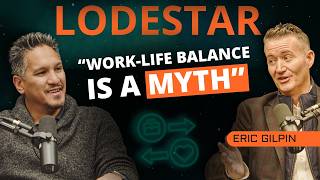
In this Loadstar episode, host Cliff Simon interviews Eric Gilpin, a veteran CRO who has spent over 15 years at CareerBuilder, 7.5 years at Upwork, and now two years at G2. Gilpin explains how he built and scaled go‑to‑market engines at each company, emphasizing the importance of a clear Ideal Customer Profile, aligning marketing, product, and sales, and investing heavily in leadership enablement rather than only seller training. He details G2’s AI strategy – making its review data available to large language models, launching the G2.AI copilot (formerly “Monty”), and partnering with platforms like Reddit to syndicate data – and how AI reshapes both buyer research and seller enablement. Gilpin also shares how G2 embeds AI tools internally across RevOps, and discusses the cultural shift needed to make managers the primary focus of enablement. The conversation then shifts to personal life: Gilpin talks about work‑life rhythm, communication frameworks (StrengthsFinder, Enneagram, love languages) he and his wife use, intentional parenting rituals, and the challenges of travel and family time while leading high‑growth organizations. The episode weaves together strategic go‑to‑market insights, practical AI adoption, and personal frameworks for sustainable leadership.
Chapters
Many of us strive to be the best versions of ourselves in the workplace. We set seemingly impossible goals. We battle to achieve them. Often in that pursuit, we forget to take the same level of care and diligence with ourselves and with the ones we love the most. Loadstar is about those moments, the ones that shape go-to-market journeys and the humans behind them. We'll dive into the wins, the mistakes, and the lessons that don't fit neatly into a playbook. Hi, Cliff Simon here with another episode of Loadstar. I'm here here today, joined by Eric Gilpin.
Thank you for having me today, Cliff.
So Eric, you've got a pretty unique story when it comes to your career. A lot of folks in tech haven't typically had that long tenure, right? Average CRO sticks around for 17, 18 months, and here you are having had two stints of over what, 8 years?
Well, yeah, and I just celebrated 2 years with G2 last September or this September. And so, all right.
Already beaten the mark.
Or days are numbered. One of the two. Yeah, I've been fortunate to be a part of two organizations. I think timing had a lot to do with it that were kind of early stage scaling mode. Spent almost 16 years at the first one and then 7.5 most recently at Upwork before joining G2.
What do you attribute that to? I mean, that's a significant amount of time.
Different stories for both. But if I think about, you know, CareerBuilder, it was really like my first professional kind of job. In fact, I worked for an organization called Headhunter.net, and we were acquired by CareerBuilder. I think my story there over 15 years is I won as a result of an incredible machine. All of the original leaders in the organization investing in talent development and kind of building from within was a big part of our culture. A lot of the things that I learned then I still use today, but it was massive growth. I think it was like $10 million when I joined. Close to $900 million in revenue when I left. And so it just presented at that stage as the internet, and then mobile, and then cloud just created a ton of opportunities. I think the story with Upwork was similar timing. I joined right after kind of the marriage of Elance and oDesk, which were the two largest freelancing marketplaces. And at that time, it was a very, I would say, like small business-focused tool. And they had a big vision around large organizations should be able to scale flexible talent as well, but they didn't really have a go-to-market machine. And so I went from this very large sales-led culture very much to a product-led self-serve product, and then we had to figure out how to build sales on top. And so that was like a complete build. In fact, when I joined, 20 people on the go-to-market team, we scaled that to north of 400. You know, in that 7.5 years. And I think similar timing, like it was right before COVID which was also really cool. I mean, we were selling remote work, which was really hard to do. And then come March 2020, we were all forced into this experiment and it became a really big matchlight for accelerating, you know, both talent and organizations to find new ways of working in a distributed way.
I mean, it was one of the things that made Carabiner possible. When we had first started, I think we got our first like 10 clients off of Upwork.
Yeah. And it's great to see. I mean, they're still the leading, I would say like independent work platform. They're doing awesome things with matching up both freelancers and AI solutions, you know, together. Had strong earnings, you know, earlier this week and it's, it's just been awesome to see that platform continue to grow.
So when you talk about this system that was at CareerBuilder, the same thing at Upwork, How did you put that together to enable and train up the management layer? Because that's typically where these things fall apart.
The biggest things that all organizations need to figure out, especially in their go-to-market motions, especially if you're going open market and you're going to hire expensive resources, is really aligning and having zero daylight around this idea of who are you chasing? And I don't necessarily mean competitors, really your customers, like who are going to be those ideal fit and like what are all the firmographic and persona information that you need? And then really understanding like how does everyone organize across go-to-market, you know, obviously all of our marketing teams as well as product. So you're working in orchestration to be able to help that customer win. And I think if you can align on that as an organization, then you gotta like figure out, well, what talent, skills, resources do we need to be able to do to prove that? And I think that was a great example of what we did at Upwork was,, we have this amazing platform. Um, when we said freelancers, we thought it was like super cool, super hip. It's like the future of work. When Procter Gamble would hear, we want you to use freelancers, they're like, well, hold on, that's people at home in their underwear stealing my, my trade secrets. And so we had to find a way to link the old to the new, um, and understand that like you might not hire freelancers, but you hire thousands of contractors. Um, this is a very similar delivery model. We're just leveraging cloud. And technology to be able to take the work to the worker. And so that means we had to not only invest in critical technology experts on the platform, but we also had to hire a lot of, I would just say, talent equation experts that understood the value prop, you know, the organizations we're trying to achieve. And then how do we make sure our message didn't alienate value prop that we were trying to solve? And so we hired people from all different, you know, kind of like backgrounds from HR tech, to traditional staffing, you know, kind of relationships, but really understanding like where we wanted to go, what the gaps to get there allowed us to develop kind of that talent profile and then build leadership skills that would help us to be able to develop, you know, kind of the next round. But it all started with like, who are we chasing? And then everything else kind of dovetailed from there.
Yeah. What's the ICP? What's the persona? Totally. What are the things they actually care about? So as you're doing this, you're putting these systems together, you're helping people understand what they should be focused on. How are you scaling up the management layer?
Well, and I would say that that's like the biggest area of opportunity that I see in go-to-market today. I think unfortunately in some of the, let's call it correction, that we've kind of gone through in the B2B space over the last 3 or 4 years, enablement has had like the wrong seat at the table. In fact, our VP of enablement at G2 reports directly to me. I didn't want to bury it anywhere in the organization. I wanted to make sure that everyone knew in my direct staff that this was a critical ingredient for us to be able to not only just scale the team, but think about like, how do we win the middle? You know, I think organizations think that strength is always at the edges and they try to do one-to-many programs, like all the way down to the sellers. I would, or I firmly agree that you got to play the middle. And if you really want to build strength, maturity, and like, we're all going to leave our organizations and like you want that legacy to be able to outlast you. You've got to do it at the manager level. And so we spend a significant amount of our time and resources, not necessarily just at like, what do we want sellers to be able to do, but what do we want our leaders to be able to understand around expectations and talent development themselves? I think a lot of times enablement is like shaking the training tree. And I think managers sometimes forget that that is actually their job. Enablement organizations should provide resources and platforms and tools to be able to do that. But if you're not spending a significant amount of your time developing and coaching your staff, you're kind of missing the opportunity. And so we do a lot of things around like leaders go first. And so like anything that we want to do around enablement of a new process, a new package, a new motion that we want to run, we make sure that we have absolute clarity and certify all of our leaders first. And we do that way before we introduce it to the sales team. One, they're going to call bullshit on a lot of things that we want to do, and we need to understand kind of what those objections, what those extra ideas are to be able to strengthen it before we go live with it. We also need their buy-in and understanding that it's not like, hey, heads up, this is coming out. No, heads up, we need you to prioritize it and help pull this through. And I think the sequencing of that is a big thing that I see missed today in go-to-market teams. I'd agree.
And then on the enabling piece, I feel like a lot of the folks that are in enablement today never carried a bag.
Totally.
So they might be a really good teacher, but they don't have the nuanced subject matter expertise to be able to relate that back to the people that they're teaching to.
Totally. And I've seen like both versions of that coin where you've had like strong, like academics around like organizational development and design, as well as people that have grown up, you know, actually in that kind of subject matter expertise of like having to do a day in the life. I think what's special is like when you can team those two up. And I've seen a lot of folks that have moved from individual seller roles into sales management and then actually got some of that organizational design and frameworks. And I feel like that is where you see a really amazing recipe for success.
Now that you guys are launching an AI product, or you've launched an AI product, how's AI shifting the way that you guys do business?
Man, what day is it? I mean, especially for G2 and for buyers and for sellers, AI has changed the game on a number of different dimensions. And in some ways we're just getting started and it's frankly hard to keep up. Let's take it from the buyer perspective. The way that buyers are doing research on solutions is evolving very quickly. We had research earlier this year that basically said 70% of their research is done before they even reach out directly to an organization. And frankly, most of them don't want to talk to a salesperson in the process. Which means that we are at a disadvantage, you know, when we get that MQL or that lead or that meeting booked because they know more about us potentially than we do about them. And so if you think about G2 today, the world's largest software marketplace, you know, buyers are not necessarily just getting information from us. They're also using these large language models, you know, to be able to, you know, drive that shortlist even before maybe they do deeper research on G2. On the buyer side, we've had to evolve, like, how do we make that data available? You know, we made a conscious decision early on that we were going to let, you know, OpenAI, Gemini, Claude, Anthropic, like, scrape our public data. We subscribe to this idea that dollars follow eyeballs. And if all of a sudden we don't make our data available where buyers need it, like, we're going to be irrelevant. And so today, you know, G2 is one of the leading sources of LLM citations because we make that data available to ChatGPT to Gemini. We syndicate all of our content to AWS, Azure, SAP, and others. You know, fundamentally, if we don't have buyers on G2, we kind of don't have a product to sell to our sellers. And so we're constantly grappling with how do we make sure that we drive engagement wherever they are and then bring them back to G2 as a part of that journey. Now, I think on the seller side, it's like radically different. I think the fundamental concept is the same, but I think the application and delivery model's evolving really quickly with AI. And so if we're trying to help buyers understand the value of G2, like our seller customers need to understand that as well. And so we've, we've launched a new solution today that, you know, actually shows our customers like how their reviews show up in AI visibility. You know, we used to always tell everyone, get your G2 reviews because it'll help you win on our grid. You'll get your badges.
Yep.
Well, now it's about like, how do you stay relevant in your own marketing strategies? And the LLMs love reviews, they love conversations. And so we have a big effort on helping our customers understand the value of G2, but also like, how can they evolve in this kind of AEO world? And as you can imagine, that is like all kinds of enablement, not only for our customers, but for our sellers because it's changing the talk track. It's not exactly how SEO worked. And so we're coaching and developing our customers and having to coach and develop our teams at the same time, which is incredibly hard.
Sure. I mean, web traffic's down, right? Totally. People are flocking to the LLMs, they're flocking to Reddit, and it seems like the LLMs are giving even like Wikipedia authority, which is crazy to me because technically anyone can change that at any time. Totally. So how do you make sure that your information stays relevant and that you're able to pull the right eyeballs?
Today, the reasons I think they like places like Reddit, places like, you know, G2, Wikipedia is the real-time nature of the content. Every day new companies are posted on G2. We drive thousands of reviews every single day. Same thing you see with Reddit and Wikipedia. And so I think the real-time access to that content is one thing that's like a big driver of like LLM interest there. They also like conversation data. They like the fact that G2 reviews are verified, moderated, and trusted as well. And so I think for us, it's like, how do we continue to drive close partnerships, you know, with those organizations? We announced a deal with Reddit where we're actually syndicating a lot of our data directly from G2 to Reddit, understanding that LLMs are looking both at Reddit and G2 as leading sources of content. And so I think it's, you know, on the product side, us constantly thinking about the architecture of our data, what's available, potentially what's not available, because we know that Yes, SEO is down, traditional search traffic is down. We have to make sure that our information is available real time where buyers need it.
And that's in some type of copilot, you know, cursor experience somewhere.
So we were early on, I would say, like the copilot experience on G2. We had an early version, we called it Monty. It's now called G2.AI. But right when GPT came out with 3.5, we basically built a copilot experience on G2 where maybe a buyer doesn't want to go through kind of our taxonomy or maybe they don't know what they're looking for. I just know I have an email marketing problem. And so instead of, you know, having to search through our, you know, kind of taxonomy, they can just prompt that experience and we'll actually, you know, help them navigate. We've done that early on and we've tried to figure out how do we increase the surface area of that tool. In fact, if you go to g2.ai today, our site's 100% a prompt experience. And so we're also looking at like, how do we take those capabilities via MCP either to other LLMs or to other software providers? It feels early, it feels late at the same time, but I think it's around that mission around like we want to help buyers reach their peak potential and we have to make sure that our data is available and relevant in anywhere that they're looking to make decisions.
Yeah, and then driving that education throughout the team. How do you make sure that you have a programmatic approach to how you guys are using AI internally?
I would say today, like G2, there are autonomous motions that we've built. It can show up in tools like Forethought that help us on like support resolution for customers. We're doing a ton of this in R&D on like code development. We're in the content space, and so there's a lot of review moderation that happens. And so I think we've seen AI strengthen the velocity and the scale of which we can do that. I think internally, we encourage all of our team members, you know, to figure out how to put AI as a part of their kind of workflow, not necessarily to give time back. I think that's the wrong story. Like, how do you 10x your output as a part of that? And so our sellers have access to all the GPT tools that they need. We've got great partners across our RevOps stack that also have, you know, kind of AI-infused workflows. I would say from a go-to-market standpoint, we still feel a little Copilot-esque, and we haven't necessarily got some of the autonomous automation that we want to see. But I would say the environment of testing, learning, rewarding, and incentivizing this behavior is where we've leaned in really hard this year.
It's always great to see companies actually eating their own dog food and—
Totally.
—walking the walk. You've had a really awesome sales career. Spent a lot of time at companies that have had incredible growth. That takes a toll. Totally. So obviously, what the podcast is mostly about is how do we actually continue to show up well at home? I think it's a challenge for all of us, but would love to hear your perspective on how you do that as a dad, as a husband.
Well, as I mentioned earlier, it's a journey. And I think I've probably learned and failed more than I've succeeded in that journey. And it wasn't just me. You know, my wife Jamie, she's also had an amazing career, you know, kind of grew up through the marketing leaderships. Most recently was the CMO at Sprout Social, you know, kind of led them through their IPO process. And as you can imagine, there were like significant trade-offs, you know, that we had to make. Our boys are, you know, a little older now, 10 and 13. But if you think about from like 2017 to like 2022, man, I know we both would like a lot of those days back, and we're trying to figure out, based on those learnings, like, how do we double down and increase kind of presence now? I think one of the things that we've done well is one of my early mentors, Jeff Bolling, told me, he was like, this idea of work-life balance is kind of bullshit. And he was like, it's more around how do you seek work-life rhythm, understanding some work's going to have to happen at home, and some home's going to have to happen at work. And I think that was exploited during COVID As we were all forced kind of into that equation. And I think having strong alignment with your partner is really important around expectations. Having whatever framework you want around communication styles is really important. I think staying curious and trying to be empathetic is obviously really important, something I strive to get better at all of the time. But if you can kind of like, set up that kind of relationship and goals and communication style, it gives you tools that you can navigate as life gets really hard. And I think that has been one of our keys to success. I will tell you that we made a conscious choice that we were going to go as hard as we can. And we knew that just because both of us came back from super— or came up from super modest kind of upbringings and we had opportunities to accelerate our career and potentially and hopefully build something for our kids that we didn't necessarily have access to. I think having that framework up front really helped us. I mean, even now my wife has taken a step back. She's continuing to do some board stuff, some fractional things. She's got a lot of ideas of what she wants to do next. And whatever that is, we'll just have to reset those expectations and confirm how we can support each other. But it's incredibly difficult. There are a lot of things that make me happy and sad is watching the, you know, the boys kind of grow up. And I think today in the moment, it's just like every moment is precious. And so like, you know, no phones at the table, make sure that you have family time. You also get one-on-one times with your kids, you know, individually as well as you remember that it's, it's, you need to date your partner as well. And so like, how do you keep those times going? But if you don't prioritize it, if you don't set goals around it, it's never going to happen. And I would say the frequency of revisiting that is really the key to success.
There's a lot to unpack there, especially with teenage kids or about to be teenage kids.
They play sports. They do. Yeah, we had this whole weekend and we had a soccer, basketball, and volleyball tournament. Yeah.
You've gone from like parent mode to chauffeur mode. That's right.
I don't know when it's like too early to let them Uber by themselves, but I think it's open for debate.
Oh man, and you travel a ton too. I do.
I often say, people ask you like, where do you live? And I'm like, well, I get my mail in Chicago. But yeah, I'm almost 200,000 miles this year. 200,000 miles this year. Yeah, I mean, we did have a family vacation in Japan, so that one doesn't count. OK. But even outside of that, I've been to London twice, India once, and California at least a dozen times this year. So it's not like that all the time, I hope, but this year has been a big year for us.
Yeah, what's been the driving factor behind that?
You know, so just celebrated 2 years at G2 and, you know, I think the first year joining was a lot around like kind of transformation and not necessarily just the revenue org, but for G2, like how do we get ready, you know, for this kind of AI surge and can it happen through us, you know, versus to us? And there was a ton of calibration that we needed, you know, to do in the organization. You know, we had just achieved, you know, the $100 million ARR milestone as well as like free cash flow and EBITDA. Congrats on that one. Yeah, it's great. You know, so it allows us to be in more control of our destiny. And so I think that first year was really around like, how do we build that system, you know, that our organization and our customers should be able to accelerate from? I think this year has been more about execution. All right, so great. We've done a ton of hiring, we've done, I would say, some streamlining of organizations and we've built this systems approach. Well, now we gotta go actually go make that work. And so, we've been able to accelerate growth this year. We've launched a number of new products this year. And so I think in the age of AI and the speed required, we knew that we'd have to double time this year. And so it's taxing, it's hard, the trade-offs are worth it. And I think the pace of the organization it's probably been higher than it's ever been.
I feel like a lot of people are feeling that, right? Like AI's not quite there yet. It's able to do some things really well. Is it a year? Is it 2 years? Is it 3 before 50% of us don't have jobs anymore?
I don't know about that. So I mean, my first 2 runs were in talent marketplaces. And so the, the, the robots are coming for your job story isn't necessarily new. The internet, you know, heard that. We heard that with mobile. We heard that with cloud. Obviously AI, is accelerating that differently. I mean, at least in my experience, as jobs are automated, new jobs are created. I like to live in abundance as a part of that. I also subscribe to the future versus business model. The future always wins. And so I'd much rather try to figure out like what the machine can't do today and like what the human and the machine can do together, you know, to be able to accelerate that. I do think that this one is different based on the scale. And acceleration. The speed. But I choose to live in abundance and optimism that what can I learn? What can I apply? How do I go first? So that I'm trying to constantly modernize my own skill set and set the expectation for our teams that they need to do the same. But my hope is that similar to what we've seen in every industrial revolution, as this thing evolves, so will we as humans. And leverage technology and grow at the same time.
It's funny because I sit down, I look at our business, and it's going to be people who are very adept at using AI to help them maximize their outputs— totally— that are going to be the ones that succeed. And all the baseline-level stuff, whether that's creating fields or actually building out an instance, whatever, that's all going to be automated. Totally. But you just have to be able to understand the business process and give it the inputs. Right. This is what I need to be able to see and have it drive it.
Well, and frankly, I think if you think just at the desk level for our sellers, half the stuff we make them do, they hate anyway. Sure. And so if we can leverage technology to be able to do autonomous prospecting, autonomous data enrichment, you know, autonomous like CRM updates, autonomous research, like all of the things so that like the hardest part of the job is the meeting. And so if we can do whatever we can to accelerate not only getting a meeting, but the quality of that meeting, because we're as prepared as our buyers are now. Man, it's like if we can increase their phone time or meeting time, everybody wins. Sure.
And the customers have a better conversation.
They have a better experience. Totally.
They don't show up to an AE who doesn't actually know anything about their company or the product they're selling.
And the crazy thing is how often that still happens. Like, if you want to take the time to stand out, kind of take the time to stand out and learn some of these, like, new tools or kind of skill sets or applications to help. That keeps me excited a little bit. Then I'm like, okay, hopefully our teams are ahead of the curve, but it also still a little sad of, of the state of outreach today.
I think that those legacy industries are a lot of fun because they're getting to step over most of what was done over the last 10, 15 years. Totally. They don't even have to worry about adopting that. They, they are coming in at AI. It's, it's a generational change as opposed to maybe a 1 or 2 deviation shift. That's right. You were talking about empathy before. Definitely something I think I have been trying to grow in. I'm personally super, super business-focused. My top 5 for StrengthsFinder are Strategic, Ideation, Achievement, Competitiveness, and Connectedness. And one of the things we did even before we got married, when we were engaged, we both did StrengthsFinder, like, all right, well, how do you communicate? How do you communicate? How does that show up for you guys? Because it's interesting. I'm not the empathetic one. My wife's EQ is off the charts. And I usually put her out there. I'm like, can you just point me in the right direction here?
Ours is fascinating because not only were we in the B2B tech space, I'm a CRO and she's a CMO. And so that almost just destroys empathy, unfortunately. Everyone talks about sales and marketing alignment. I'm like, I got to figure that out 24/7. And I would tell you, similar tools, like understanding communications. I mean, we did this even before we got married, setting up the sessions around your love languages. I'm like, I really like affirmation and gratitude. She really likes acts of service. And so she wants me to want to do the dishes, as you can imagine. And if I think about me, I'm an Enneagram 3, and so I also have this kind of achiever mindset. As you do, Cliff, and knowing your partner's or spouse's kind of communication style is really important. I actually think a lot of couples don't take the time to do that. But it gives you a framework to talk. And I think for empathy, for me, is a journey. I had a prospect tell me really early on— and if you're out there, his name's Rick Moore. He actually worked for a company called Volt. And in 2007, he goes, Eric, I need you to listen to understand versus respond. And that shows up for me every single day. And I think for empathy, for me, is around trying to hold two stories in my head at the same time about how I feel, and then trying to understand based on what I know about the other person, what are they feeling at the same time, and trying to stay curious. But if I didn't have a framework or StrengthsFinders or Enneagram with my partner, that would be incredibly difficult to do. And I would still tell you we suck at it, but at least allows us to call it. And so I think we talk a lot about these tool sets at work on how do we increase our organizational health and how do we increase trust and transparency. Man, that same tool— and it's actually not even just for your partner. Do it for your kids. We've seen that even with our 13-year-old. He's using similar language than we are. Man, like, if you have common framework, it's amazing how fast you can go together.
That's interesting. Like, so we, we homeschool, and our kids are 5, 4, and 2. Oh wow. Uh, yeah, we're in it. And number 4 is coming in February.
Oh my gosh, good for you. Thanks.
For us, we try to center everything, um, back to, you know, our belief system. So we're Christians, everything goes back to biblical roots, um, and then those principles are like, you have to respect everybody. Everyone's worthwhile. I don't know. I think those things really matter. Totally.
And I would say that we probably don't have the rigor that your family does. But there are rituals that you need to build around— we try to have dinner at the table 3 nights a week, barring any travel things. And it's like no phones. And we have a number of different exercises. The fun ones is the rosebud thorn conversation. Around, you know, give me something good, you know, give me something you're excited about, maybe something that's not going well. We try to, you know— It's like a one-on-one. Yeah, yeah. We spend a lot of time on thorns. We try to be like curious, you know, with their friends. You know, we decided early on that like we weren't gonna complain about having kids over at our house all the time because we wanted to kind of see how they're engaging, you know, with their friends. In fact, earlier this week we had dinner and like, 3 other friends had dinner with us. And so it allows us to, I think, listen a little bit, but also kind of show them the values that we want as a family and how we want them to show up with their friends. But it's still hard and something we need to strive to get better at all the time.
Yeah, for us too, we want our house to be this place where everyone feels like they can come and breakfast every day together. Or dinner that my calendar's blocked out. 5:45 till like 8 o'clock at night. Like, that's dinner, bath time, bedtime, goof around, whatever.
You're gonna love it when they can like bath and shower by themselves. That was a game changer. Um, now we still have to like get them up there, like, because they don't ever want to shower. And I'm like, man, at 10 and 13, like, it's time to shower every day. Um, uh, but man, it was a game changer.
I'm just waiting for them to wake bottoms.
Yeah, yeah, no, no, I mean, I'm just giving you something to look forward to.
I appreciate it. I appreciate it. But yeah, those moments, right? The mornings and the evenings together. Totally. When I'm not on the road. Yeah. Which is like, for me, it's like about 50% of the time.
Well, and the one thing that we probably didn't have an intention that was spoken on it or committed to, but we kind of fell into it this year, is breaking them up. And I have a trip coming up with my oldest later this month where it's just me and him for the weekend. We're getting out of town, we're going to do something super cool that neither of us have done. And like, I'm really looking forward to it. I got to spend, you know, a full day with my youngest, you know, last weekend as we had to like kind of dive up. And it's amazing like how different your kids are, but you don't see it until you kind of break them apart. And so I think being intentional on the family thing, but also getting some one-to-one stuff. I remember, you know, that relationship with my dad and And I cherish those memories and moments, and I want to make sure that we can recreate those as well.
For us, it's— they're a lot younger, so we'll do things like I'll take them to the diner early in the morning one-on-one. Or like tomorrow, I took the day off, fly back home from Chicago, and we're going to the zoo. That's cool. So just try to do stuff during the week too to show them that there's that intentionality of like, we're gonna do these things. Dad's not always just going to be on the road doing podcasts or going to conferences.
But, and if— I mean, I don't know if everyone would subscribe to this, but like sneaking in a, like, a joint hooky day is also kind of fun. Um, they feel like it's a little special. Um, uh, and like, I could always use the break. Um, but, and a lot of them, uh, too, that like spontaneity of it is also cool. Trying to figure that out more. Like, I had a month off when I was transitioning from Upwork to G2, and it was also the summertime. That was awesome because outside of camps and some of the stuff they were doing online, we got to mess around every day. What's been your favorite trip? I think Japan was like— since my wife's not working full-time right now, we got to do like 2 cool trips this year. I had been to Japan, but it was like you Fly into Tokyo, you go to the hotel, you're at the conference, back to the hotel, the airport. So I didn't really see Japan. We asked the kids anywhere they wanted to go this year. I was hoping they would say, I don't know, Florida, California, maybe Northeast. They chose Tokyo, so that's where we went. But we got to spend 13 days between Kyoto, Osaka, and Tokyo, and all kind of our first time. And the culture is amazing, like the kind of vibrance of the city, very similar to New York or London, but just different. And I think for them it was like a massive stretch. And, you know, at their age they're into VR anything. And man, that is the capital of the world. Future world. Oh my gosh. You know, they got into like these robot machines and like, you know, fought each other in this like grid thing that was like super cool. A little intimidating, but super cool. That one was awesome. And then I'd say the second one this year is we have a big team in London and I needed to be there at the end of Q2. Our media team's been on fire this year, and I wanted to be there at the end of the quarter to celebrate. And so I actually brought Jamie DuBois with me, and so we ended up just living in London for 3 weeks. That's fun. Yeah, I figure we're fortunate to be where we're at. They're off for summer, and if I'm going to be gone, how can we make it a family thing?
Yeah, my favorite trip this year, I was speaking at a conference in Berlin back in April. And we got my in-laws to come and watch the kids and just went, me and my wife. And it was quick, like 3 and a half days. Oh, wow. Um, supposed to be a little longer, but our flight got delayed by 12 hours. Um, we flew out over Canada as we're about to get across Newfoundland and like be out over the Atlantic. Like, there's an issue with the pressurization system. So we end up coming back to Newark and getting on a new plane within like an hour and a half.
Oh man.
That was probably my favorite trip this year just because we never get like us time. Yeah. And like, I totally hear you. You got to date. And it's so hard to date when you've got 3 little kids and I'm on the road all the time. She's at home, which is a way harder job than what I have.
Yeah, I mean, it is important. And I mean, right or wrong, I was all over like Care.com early. Plus I was in the freelancer space. And so this was just another talent thing. And we had great nannies as a part of it. But even if it was just getting away for dinner, I had 3 or 4 college students in a talent cloud ready to go at any given time. But yeah, man, that sounds awesome. My wife and I are going to New York next July. I get it's a while away, but I'm very much looking forward to it.
Well, it's nice to be able to plan around it and have it on the calendar, especially as all kinds of work obligations come up. And then all of a sudden, it's like, oh, we didn't block that off, or we didn't actually book that yet. That's right.
And then the time slips. Well, it's also Bon Jovi's last tour. And so he's playing 12 nights in a row at Madison Square Garden.
And so that will not be missed.
Big Bon Jovi guy? A little bit.
A little bit. Well, really appreciate you taking the time.
Yeah, no, this has been super fun. And I appreciate the range of the conversation. Feeds my mind good stuff, reminds me of other things I need to work on that are not my quota.
So thank you. The way I keep thinking about it is— when I die, no one's going to talk about if I sold the business. No one's going to talk about what milestone of ARR I hit. It's going to be the impact left on people, and it's mostly going to be the impact left on my kids and my wife. Right. All they're going to remember is like how you made them feel and maybe some of the lessons you taught them along the way. Hopefully.
Awesome. Thank you.
More from Eric
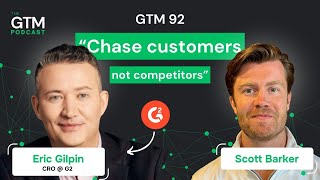
GTM 92: Secrets of Scaling to $1B, C-Level Selling & Developing BDR Acumen with Eric Gilpin
GTM 92: Secrets of Scaling to $1B, C-Level Selling & Developing BDR Acumen with Eric Gilpin
GTM 92: Secrets of Scaling to $1B, C-Level Selling & Developing BDR Acumen with Eric Gilpin
GTM 92: Secrets of Scaling to $1B, C-Level Selling & Developing BDR Acumen with Eric Gilpin