How I Hire with Eric Gilpin, President GTM @ G2
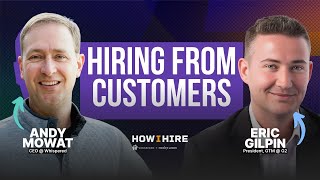
Eric Gilpin, G2's GTM president, on hiring go-to-market teams. Hire for the team, not just the role. Keep an always-on funnel to avoid hoarding talent. VP searches average 66 days and include a working exercise, not just interviews.
Questions this video answers
66 days.
"speed delete" of 28 days until the ops created.
About 5 VP-plus level hires in his first two years.
Two of the five had he worked with in the past.
10 direct reports.
Chapters
In my opinion, it's still the same framework if I understand the impact and the jobs to be done. The next question is like, do we have anyone in the organization? And if the answer is no, like then it's okay, great. How do we expand our network to be able to bring those capabilities in house?
How do you go find senior level roles?
I would say that I lean hard into agency relationships. It is expensive, but not as expensive as making the wrong hire.
Do you love it when people outbound cold to you? Do you, do you resist that? How do you think about those things?
I do and I would tell you that I'm shocked and maybe I'm wrong on like how often or how the lack of how often it works or is actually done. I believe in this framework that you have to hire for the team, not necessarily the role.
Welcome to How I Hire the podcast where we talk with senior leaders about how they find, vet, attract and grow go to market talent. I'm Andy, founder of Whispered. Today I'm joined by Eric Gilpin. Eric is the CRO at G2. Before G2, Eric spent 22 years as a sales leader at career in Career tech at Upwork and Career Builder. So if there's somebody who knows how to hire and the technology behind it, it's Eric. And I've loved G2 as well since the first day. I found it on a trade show floor and one of them explained it to me and so I'm excited to dive in. Eric, to how you, how you hire.
Yeah, no, happy to be here. Thanks for having me.
That's neat. Well, on one of your other podcasts you've done, I think you talked a lot about the importance of cross functional orchestration, you know, decision making within the go to market organization. I'd love to get your take just on how do you get that right so that you can then build a great executive team underneath you.
Yeah, great question. It is probably something I've ranted on numerous times and I feel like the like ego is always in the way. You know, depending on who you talk to or what event you're at, you'll hear, well it's product led growth or it's marketing led growth or it's sales led growth or eco led growth or event led growth. And I feel like that is like where everything breaks down. Like the only person that should get credit is the customer. And I think it is like around goal alignment of like who are we chasing? And I don't mean competitors, but customers. Like how do we like prioritize that across revenue, marketing, product organizations and understand how we're going to serve them in concert. And think of it more of as an orchestration versus an assembly line. And I think when we start shipping our org chart as well as our metrics, like that is where customer friction kind of happens. And so the more that you can drive like absolute clarity at the top of who we're chasing and like what the input metrics of that business are, you typically fall into line a lot faster.
When you think about setting targets and goals, how do you think about like marketing, sales, cs, getting them all on the same page from like a goal target philosophical perspective.
Agreed. And I think when you're trying to manage that funnel in isolation, that is where organizations get off the rails. And I think it's like really mapping it back to the entire customer journey, starting from awareness, like how you get into the consideration stage. What are we doing kind of pre sales, what does the contracting process look like all the way into like early activation, you know, renewal growth strategies. And I think if you're not necessarily understanding that's not one funnel, that's like 30. And so every part of that organization, you know, should have an input metric that is leading to the future and, and appreciating the lag within that. And so I'll give you the example here.
G2.
You know, our sell website is a big part of our, you know, kind of customer activation motion. And so we need to understand what that monthly traffic looks like. Because if you think about our average cycle time of 66 days and then our speed delete of 28 days until the ops created, we're always living 90 days in the future. And so if you're not necessarily looking at those conversion metrics across all of those touch points, like, you need to be able to see around the corner good or bad. And I think where organizations fall down is they're, they're thinking about the funnel and different isolations versus looking at the full pitch and the moment that you can do that in the customer journey. Everyone understands the role and job to be done to help customers get through that buying process as quick as possible. And so don't do a pipeline review or forecasting call, do the whole customer journey review. And like, where are you creating value or creating friction on every one of those funnels? And everyone that has an impact on that has to be in that room.
I couldn't agree more. Yeah, it's like that, that weekly GTM cadence, right? It's not sales coming together or marketing coming together. Or CS coming together, it's, you've got to bring all those people together and they got to be on the same page with the same metrics.
Totally.
That makes sense. What, when we talked at the beginning, you said you've, since you've been there, you've hired kind of 5 VP plus level roles. How do you go about designing one of those things? And, and really what's the work you do before you either call the recruiter or you call your internal recruiting team?
Yeah, I mean I, I think that like anytime you have a new opening or a new desire to create an opening, it's an exciting opportunity to rethink everything. And I think it starts all the way on this idea of who we were chasing. And what I mean by that is like the customers that we want to serve long term. Because I think that like having deep understanding and conviction and clarity on that, it allows you to be very prescriptive and like whatever talent, capability that you're trying to bring. And so I think it starts there, I think about role design in two phases. One, impact, meaning like what is the outcome that we want to be able to achieve with this role or the organization that they're leading? Then two, I love the jobs to be done framework of getting very tactical on like what are the clear things that we need this leader to execute on and, and socializing that. I believe in this framework that you have to hire for the team, not necessarily the role. And so if you have really good clarity, Andy, on like what the impact we're trying to achieve is, what the jobs to be done are. The next thing I'm going to ask myself is like, where do I have gaps on capabilities across the entire team? Yeah. And so I try to hire not just for subject matter expertise, but like what are one of those like capabilities or traits that would be able to rise the bar for the entire organization? And so do I have enough AI literacy on the team? Do I have enough critical thinking around, you know, leveraging data driven decisions? Do I have enough emotional intelligence on the customer relationship? And so while I might hire a VP of Rev Ops that needs to be like super narrow and expert and competent on that kind of engine and glue, they need to have something else that is a gap that's going to be able to help raise the bar for the entire team?
I love that. Does that mean that you know a lot of CROs like great, I'm at the company, let me bring over my head of Rev Ops, let me bring over my this. But it sounds like you're actually not reflexively doing that. You're saying, would that person, I know five people in my network, would that person fit within the GTM leadership team that I'm building? Is that kind of how you think about that?
Totally. I grew up in an organization that there was a ton of internal mobility and man, it was good and bad. It was great to be able to build your career over, you know, a 15 year plus journey. But it created a ton of groupthink. We didn't have a lot of challenging the status quo. We didn't have access to maybe new skills or capabilities as an organization and it held us back. And so if you think about the five hires that VP level hires that I've made here at G2 in my first two years, only two of them had I worked with in the past. I was very intentional in creating kind of diversity of thought and experiences so that we avoided groupthink and that we always had like a fresh set of eyes and perspective on the team.
That's really interesting. I've been at places that have had great internal mobility and ones that have not. Sounds like maybe you've experienced both now too. But how do you. Do you have a reflexive approach to that of. I'm always going to look, I guess my, my reflexive approach is I'm going to look for junior roles internally, but senior roles I'm going to focus on. I'm generally assuming that I'm going to hire those externally. Like do you have a reflexive approach to that or how and how do you. How was the experience you had at whether it was upwork or career builder? How did that, you know, how did you think differently about internal mobility maybe versus other people?
In my opinion, it's still the same framework if I understand the impact and the jobs to be done. Yeah. The next question is like, do we have anyone in the organization that meets the needs? Because I do think that internal mobility is important for all the reasons that we could chat about. And if the answer is no, like, then it's okay, great, well, like how do we expand our network to be able to bring those capabilities in house? And so, and so I think it's the same decision tree. It's like if we don't have, you know, the right leader to be able to step up into whatever we're trying to do, then I might have the punch out strategy. Like, okay, great, well how do we go build a network folks that would help us do that.
Any best practices you learned on internal mobility that, that you'd pick up like at box. I think we learned that you almost want to have a different person, almost like a different person recruiting because you have to handle people in different ways. Right. There's different sensitivities. We had another policy which was when the offer is made internally, it's we're gonna, we're gonna give a guaranteed five week. You must move to the other team because every manager wants to hold them. But I'm curious any like insights or guidance you've got for people thinking about like doing internal mobility?
Well, I mean I think that you don't want to create hoarding for sure. And so I think you have to get the incentives right. And in go to market we see it all the time where you know, the reps want to move up, the managers don't want to lose good reps. And so I think the only way you get ahead of that problem is you have to have an always on funnel. I think if you're reactive in your recruiting process, that is like where those like trade off friction exists. If you have great choices, like you'll make great choices. And so I feel like, you know, even in sales leadership if you're not, if you don't always have two or three people in your funnel understanding there are things that you can't control as well as you want to support internal mobility. You'll, you will, you will experience withhold, you know, kind of on that. And so the only way to get ahead of that is pipeline.
I agree. Does that doesn't extend for the always hiring to like the VP of sales where you've got a bunch of them and you're, there's in. You can always have internal mobility and growing high potential people. You can always be interviewing for like those director and down type roles. But I, how do you approach like always hiring for more senior roles? You were, you were talking about something around customer hiring customers and building relationships. But how do you, how do you think about always hiring when you're talking about a VP plus level rule?
Yeah, well, I don't know if my team appreciates it as much as I do, but like for context I have 10 directs, all the current roles are filled, but I know who my next three are already. And so, and so it's around this idea of like if you have choices, you'll make choices. And I remember an early manager I worked with, his name was Charlie Fisher and he used to always have three names written on the whiteboard in his office back when we were in office every single day. And I remember early on I joined and I'm like, who are these names? He's like, these are my next three hires. And so if you don't work out, I already have one that was here. And so I might not display that in a similar way, but Charlie was always ahead of his hiring plan. He was always ahead. Like, he didn't have this whole, you know, ramp issue because he always had a relationship or network ready to go. And so I think about that even today in VP level hires. How am I constantly expanding my network? You know, one of the things I'd shared as we were prepping for this is like, I love recruiting from customers. That is controversial at times, but it's great to see people that already have passion for your brand. The problem that you solve, they understand the application and, like, why you exist, man. They hit the ground running as a part of it. The learning curve is, you know, obviously shortened in a big way. And so, like, I meet with customers and the best thing about G2 is I get to meet with CROs and CMOs and VPs of marketing and sales all the time. I'm always asking myself, could we work together as a part of it?
I think that is so cool. I will tell you, that's like a networking hack on the other side as well, right? Like, everyone's always like, how do I get advisory gigs? And I'm like, you just go out to the small group dinner with these people. You, you, you give that CRO or CEO feedback on what they're doing. You show interest in their product, right? Like, I remember I met Chris at Sandoso and he's like, hey, my team told me you were a really interesting buyer. Like, can I take you out to lunch? You took me out to lunch. He's like, do you want to be on my advisory? I'm like, I don't know what that is, but I'm happy to do it. And like, that just snowballed. And so I feel like if you're a lot of senior level, people might stay away from the cabs, the warrior games, whatever, or the Bulls games in your case. But I, I kind of say, like, those are really great opportunities to build real relationships. Like, I always say to people, like, I'm going to be your worst prospect and your best customer. And I truly mean that. And so I think there's real opportunities to build real friendships there. So that's cool to see how you've done it.
Well, one of my favorite books is called Love is the Killer App. It was written by Tim Sanders, who's ironically our chief innovation officer here at G2. Different story for a different day. But one of the big thesis of his book was like, your network is your net worth. And, and I agree that if you're CEO of a Fortune 500 organization, that might look very different for you than it would for you or I. But if you're constantly not feeding your mind good stuff and like getting external inputs, you're kind of not growing either. And there's so many benefits, customers, recruiting, learning, access, your own career mobility. And so if you're not out in the wild, figure out what that looks.
Like for you and go do it. Yeah, it's so passionate about that. Like at some point in your career you get punched in the face and you've got to figure out how to proactively look versus the other way around. Maybe let's shift over a little bit to okay, so now you've got the role to find, you know what you need. You talked about like sometimes you use agencies, sometimes you use, I'd be curious, like how do you go find senior level roles?
I, I would say that I lean hard into agency relationships, but we also have a really strong partnership with our ES team, which extends for employee success. And so they have a talent acquisition arm. I don't think it's one or the other. They actually have to coexist and you just have really tight alignment with your people leader on what tool you're going to use depending on the pool that you're, you know, trying to curate from. And I think for a lot of our sellers as well as I would say like middle management and ICs within marketing and revenue, like we do a really good job on internal sourcing, we do a really good job with employee referrals. But I think as you're thinking about the senior director VP level, I really like working with agency partners for two reasons. One, a lot of this sourcing work around, like making sure you kind of meet the minimum on experiences, compensation, been there, done that, you know, kind of lookalikes. Like a lot of that work is done ahead of time. And so when you're actually talking to candidates, you're not spending as much time on like skill and competency vetting. You're really kind of co authoring the role together and like learning from each other.
Yeah.
And I think working with strong agency partners, they can take a lot of that off your plate and so you have like really good at bats. That would be one. Number two is they're also in the Funnel business. And so we all get calls from recruiters all the time. And so not only are they always trying to sell us on a job, but they're also trying to build a relationship with us because that might not be the right fit. And I have found that executive recruiters that do a really good job of relationship building on the candidate side, they can get me into calls faster. Yeah, then maybe I would be able to do myself. And they also know about things that are not on the market. And so they almost have like the private listing business versus the job board public listing business. And so it is expensive, but not as expensive as making the wrong hire.
I couldn't agree. Those, those whisper candidates are very valuable. I love it. And we work with about 120 recruiters. Big fans.
But you got to have your, you got to have your corporate and your agency teams working together. Like so like I'm in a search right now. I'm in a joint slack room with the agency as well as our internal TA team. And it's not about like who's competing for the work. It's like how do they work together in concert to be able to deliver the end goal. And so if you can create that environment with your partners, which is hard both internally and externally, I think it's a win win for everybody and the candidate.
Any favorite exec recruiters out there, you want to shout out, give them a little help on their business.
I've worked with a bunch. I would say the most recent success that I've had here at G2 is with a firm headquartered here in Chicago called Hump Club.
Oh, I know him well. Yeah. Pete is a GTM fund and I know those guys. They to me, Hunt Club is world class at Midwest. And then they do like certain specific verticals that they really know well. So that's really cool. Totally.
I. Well my, my wife is also on their board. So like I would get in trouble if I didn't mention it.
So that is great. How can people find you? I think we talked about the customer advisory side, which is a really great way, which is good. Are there any other unique ways that you either listening for candidates or people can break through to you? Obviously they've got to know about the rule in the first place, but if they do, is there. Are you. Do you love it when people outbound cold to you? Do you, do you resist that? How do you think about those things?
I do. And I would tell you that I'm shocked and maybe I'm wrong on how often or how the lack of how often it works or is actually done and so true. Yeah, I, I mean we probably have 20 open roles in our revenue teams today. Most of them I see some sales management stuff and I would tell you that I might get one a month of a direct email from someone that's connected the dots of like the role that we're looking for, what we're talking about as a brand, what I'm communicating as an individual and leader to be able to stand out. I think, you know, you're applying into that black hole as a part of it. Uh, and I would tell you everyone that sends a note, some of them are fantastic, some of them aren't great, but I forward it onto the team.
Um, which everyone?
Yeah, every one of them. But I would tell you it's like one a month. Maybe across a thousand applicants we get a month. And so regardless of what role you're looking for, if you're not outbounding like you're, you're unfortunately not being seen.
It's also what you need to be able to do to be successful within your or I mean definitely within sales, most likely within CS and probably within marketing as well too.
Totally. But I think that would exist in any function and, and we're always looking for application and so if they can kind of connect the dots, they have the courage to kind of throw themselves out there. Like that's a really good positive sign. Regardless of the content of the copy was not exactly what you were looking for. And so I try to find a help, I try to find to help them in the process because they've taken the time to try and stand out. It just doesn't happen very much.
It's shocking to me. It's also scary for people to be able to do, to do that outbounding. We touched a little bit before we started recording on process. It sounds like you've really been passionate about the process for the interview. I'd love you to maybe just tell folks about how you look at the interview process and then we can dive deep into a couple areas.
Yeah, I think interview process is like a product and so it needs to be constantly evolving based on like feedback. And so I could tell you what I have today and my hope would be as it continues to evolve and it would be specific to VP level hires and above. And so I tend to have like a four step process and so one I'm engaging with the agency that is, you know, building a short list kind of based on the impact jobs that we've done. And scope that we've aligned on. And the first call I want to have just like one to one and it's just a 30 minute chat. And I would say that like this is around relationship building on both sides because the agency has probably done a good job understanding the technical and skills vetting of what's going on. And so I really want to kind of understand a little bit more about how they think, where they're at in their career journey, how they think about, you know, G2 and what context that they have. But it's definitely a relationship building call where I'm doing discovery. And those questions might look very different and we might go very different places. Yeah. But at the end of 30 minutes, I usually have a pretty good insight of like, okay, do I want to continue this conversation?
Agree.
I think some organizations say, okay, great, we'll like move them to the panel. I don't do that. I immediately go for like call number two. But I do something very specific where I send a context deck. And it's not because I want them to generate a business case. In fact, I'm very prescriptive. I don't need you to prepare anything. But I think in order to make the best hires, you gotta be transparent all the way kind of through the process. And so it's usually 15 slides of like where we're at, you know, some financial, you know, kind of data that's non, you know, non material or at least not public information. You know, maybe some of the things we're working on within our V2 mom or okrs, but something that gives them a little bit more of like the inner workings of what we're trying to do. I try to have that call like within a week of the first one. And, and what I do in that next call is just like, hey, I want to understand, like how you think. Like, I don't need know it alls, I need learn it alls. And so like, what are, what, what are the things that you're extracting from this? And like, what would be the main questions you would have about our business? And it's fascinating what people pick up on. Some of them are obvious and some of them are just like wonderful kind of offshoots that like challenge me to think about it differently. And I'm really, I'm really trying to deeply understand how they think, what they prioritize, how they make decisions. And usually at the end of that call, I'm ready. Okay, maybe I would like to introduce you to a panel which is no more than Three people. Yep. You know, obviously a peer in the organization, you know, someone that they would need to lead and depending on the role, maybe another member of our leadership team and I and we do like a grid scoring kind of feedback. We use our own tools to do that. And my goal is to get to a short list of 2 to 3 within that process and then usually how I end it. It's not really a problem statement. I mean I don't like doing the whole business case thing. I like, I actually like building on a part of the context that we kind of surfaced in the second call. And it's almost like a collaboration together. And so is the output like yes, you know, some ideas and plans or frameworks to think about that problem. But it's usually a very real problem. It's not a made up business case. It's something specifically we're trying to achieve here at G2. And that role would have like a ton of surface area of creating impact. And so we're almost like co collaborating at the end. We're almost like working together. It also helps me kind of close candidates like based on the energy and thought that they put into that. And so and what I found that this process like usually sticks me with really hard decisions to make. Like I can't think of one. I've always chosen what I think was the best candidate but it was never like a landslide gap. They were always really close. And I think a lot of it was the vetting process which is 90 days, you know, of work to kind of get through all of that. But I would much rather figure out the 90 days than figure out figuring out like a false start problem and having to go back to it. So I try to stick to that process. Two calls with me, panel interviews and then some sort of collab working experience together so that we're actually experiencing some of the things that we'd be doing on day one.
I love it. I've always said like two, one on ones in. I know if I've made the right hire and I'm learning like can you manage up? Are you succinct? Are you clear? Can you take control? And I feel like if you can create that process that does that on its own is interesting. So it's not a classic like here's a project, go back and present to a panel. Like it's you and them back and forth working on something around the business.
And I'm usually checking in like if someone is meeting with pre the RT people officer, I'm not going to Wait till they finish the panel. I'm going to get some insight from Preeti but I'm going to text or email the candidate. Just be like, tell me what you thought, how'd it go?
Yeah.
And so like I feel like silence kills all deals and so I'd much rather have like a step up of communication especially as we're getting to like the, the final step.
What's the lift for the candidate on that co collaboration project for you? Like do you have an example of one you've given? And like, you know, because I, I hear so many execs right now, especially when it's a hiring market are just like oh I got that 15 hour they told me to spend on no max of two hours. But I know that if I don't spend at least 15, like this thing won't go well and it's this huge investment and I've got to do it. We actually had a candidate that did one sent it and then the company came back and said I'm sorry, we're not proceeding. And they're like what? It sounds like you solved that problem because it's like you and them are doing work. But I'd love you to maybe take a deeper dive of like give an example of one you did with somebody and kind of the back and forth that you had.
Totally. Well and, and I don't write the business case like upfront like it depends on the candidates and like where we're going. So a recent hire I made, his name is Damian Amaya. He runs our digital and self serve business. And so G2 massive opportunity to better monetize the long tail of our marketplace. But we haven't really had like I would say streamlined self serve experiences for SMB customers. Yep. And so based on the DNA of the company, we knew we wanted to go externally as a part of that. And so you know, Damian joined us from activecampaign where he helped, you know, orchestrate all of their self service journey. And so I already based on the context deck and what we were looking for, like it was already pretty specific on the capabilities that we wanted to do. And so when we got to the kind of collab of what we were working on, it wasn't like, hey, build us a model, it was like help us figure out culturally how we change this because we're going to be disrupting our go to market motion. Some people are going to have a lot of passions about that and so like what are the keys to winning this culturally, internally so that we can make the turn on our customer. I never would have wrote that down as a business case. If I would have started, I would have been like, hey, build me a three to five year model and what's the conversion rates in the marketplace and like, what is the product market fit that we're trying to. And so at the end we basically created like our walking deck of how we're going to sell this to the sales team. And we ended up using most of it at kickoff, you know, 60 days after he started.
Have you ever. I know candidates always complain of like they're going to take my work and use it. I always say to people like, that's an immature philosophy. If they do, they do. It's the same thing as like when somebody's raising money and they go to VC and they're like, sign my NDA and the VC is like, no. And I feel like it's the same thing. But if you ever got in a circumstance where you've got fairly far down that road, you've done that work, obviously that's probably worked. It's feeding in directly into your strategy. Do you ever feel bad if you don't hire the person on that side or, or how do you. I mean, it feels so collaborative and they're meeting you and building a relationship with you no matter what. But how do you think about the candidate perspective on that?
Yeah, I, so if we get to the kind of collab round, I always let the candidate know that it didn't work out. Like, I, I never like outsource that to the recruiting agency on. Because you like build relationships before you need them, you never know when that's going to show up again. And a lot of times it wasn't because they did a bad job. It just might have been not the right fit at this time. And so I try to manage those handoffs in a very empathetic way. I think there has been an experience that I went through last year when we got to that round and the person basically was like, I'm not going to go through that process. I'm great, I don't need to. And instead of me getting frustrated, it was just a great, all right, great. We're not going to be collaborative. I'd much rather know that now versus like, leadership's about doing hard things. And so if, if we're not going to be able to be flexible now, we're definitely not going to be flexible later. Thank you for sharing that and I wish you the best.
I love that. It's so true. It's like, I mean obviously you're doing it with like one or two. Are you doing with just one candidate or are you doing that with two or three?
Usually two to two to three at the end, but different.
I think the difference is you're actually spending time with them.
Like they could.
I had another, I think CRO on and they were like, I want to have you at any, any moment in time, night or day, like text me because that'll be the way we're going to have our interaction when we're interacting one on one. So like treat me like I'm your boss and ping me at any time. And you're going through it in a similar way. It sounds like you've created that, like ask me any question anytime, clarify. You know, maybe you even put them in slack or something. Totally.
No, no, absolutely. And I mean the more that you can like uncover like your working relationship. Um, yeah. It helps you also understand how to set em up for success too. And so I would much rather do all of that work upfront. It might be a little slow, but I man, false starts and rehires are hard and so I would much rather get that out up front to, to increase your odds. And, and, and here's the thing. Bad hires will happen. That's okay. It's sitting on them is the problem. And so the more you can get that, you know, worked on up front, you just increase your odds on both sides. Like you want them to be successful too.
How about references?
I love references, but probably more in the back channel, you know, sense. We asked for references as a part of the process, which I think is pretty typical for organizations. But I won't do back channels and I don't wait on back channels. You know, I'm in a search right now. I've already met with two candidates the first time. I've not gone to stage two, but I've already back channeled them both. And I feel like this goes back to that statement around your networks or net worth. And I value back channels in a really meaningful way. And rarely in my experience have I not found an in, you know, kind of around that. I'm very transparent with the candidates that like, hey, I'm gonna poke around. You should too. And I would encourage you if you wanna learn about me, like, do that work. But I'm gonna be doing it as a part of the process.
I love that. Do you ever ask them, like, hey, are there certain people that are off limits? I've seen the last in the last week. I've talked to two VP/C level folks that have been at jobs and have been interviewing and have both been blown up by back channels. So like, like CEO finds out and it turns into a shitstorm. Like how do you, how do you handle that?
I think it's the, it's kind of a collaboration up front and obviously you know, the majority of world class leaders are usually currently employed. And so I think having that conversation up front of like what's, you know, off limits and it's a natural expectation that they should expect of, you know, their hiring leader. And so it's good to have like, you know, kind of that transparency. But yeah, I think questions around like anything you want me to avoid, you know, from a research standpoint, it's a great question.
It's a phenomenal question. You like there's a person that if you ask me anybody you want to avoid, I'd be like, just don't call that person. Like I didn't respect them, they probably because of that didn't respect me. And like it will be a bad reference.
Well, this is why I also love hiring customers because I can pull up the recording of like any call they've had with our team over the last two years and see how they've engaged with our team and so I get to see them in action. And so I, I gong is a cheat code for me on, on recruiting too.
Oh dude, that's great. How, how would you, how do you think about references with your recruit, your third party recruiters? It's funny because one of the two that got blown up was blown up by a recruiter. Just like firing every VC out there and due to some do you just say don't bother, I'll take care of them. You still want them to do it?
I, so I, I want to 100% do it them myself for a number of reasons. Like one, I need to hear it and I want to make sure that I understand the context and be able to poke around in those and so I don't outsource that to them. And two, like I don't want a bunch of noise in the market. You know, we ask candidates for references as a part of the process and we do call those as well. But like I, I've learned the hard way on back channels and I won't not do it again.
I, any one of my managers that won't do the back channels, I just, I will have that hard conversation with them and explain them why it's important. It's also why your network matters. Right. Because, Eric, you probably have a very large network and you can ping people and they'll respond to you. I think these people that are quiet leaders, without a network as they get to be a leader, it's actually harder to do. I think the other interesting thing is the social side. By coming on this podcast, talking about how you hire and think, I think helps it make it easier for you to hire as well.
And. But the cost of getting it wrong on both sides is it's just not worth it. And so I would much rather do everything I can possible to increase our odds for both so that, you know, we have clarity around expectations and we kind of know with absolute transparency what we're getting into.
I'm sure there are sometimes where you encounter a bad reference on somebody, does that shut you down or does that just mean I need more data points? How do you think about that?
Yeah, so I'd say data point. When I've had bad references, it's usually validating to something else I've experienced in the process. And so like I. A data point in isolation is a data point, but when you've got like three data points, you have a trend. And so anytime that I've gotten a back channel that wasn't great, I've been able to connect it to something that wasn't great already, you know, in the, in the process. And I would also say that, like, back channels can help in a positive way too, because, you know, maybe there are things I hadn't uncovered yet or I wasn't thinking about that I learned. I'm like, oh, wow, that could be like an additional asset that I'm not even thinking about today.
All right, I agree. Back channels can really make people rise. I was talking to a candidate the other day and I was, they had a three year experience and a one and a one. And we'll, we'll talk when we stop recording about the one. Because you actually know the CEO. But they, I was like, you're going to struggle. And they're like, yes, but does it help that my references are X and Y? And I was like, yeah, it does. And I've actually been trying to meet X and Y for a long time. And this person's like, great, I'll send you an email with an intro to both of those people. Right? And, and I guarantee, you know, both of those people. And, and I was like, wow, you just rose in my mind and very impressive.
And everybody's got short tenure right now. I mean, I mean, what is average CRO, CMO? Turnover like less than 2 years 18 months yeah and so I just celebrated 2 years and so God clock is ticking we'll see but the and so like there's always a story in that like there is nobody in tech that's not going through some form of transformation and this is where back channels they to your point they help rise the candidate in a great way I couldn't.
Agree more we could probably talk for hours but I I and I just deeply appreciate you taking the time to come and and share the wisdom it's it's neat to see how deeply you've thought about it and generally every leader we get on has been like soap awful so thank you so much for taking the time I'm excited to do a keep building the friendship yeah no.
It'S been awesome and appreciate you thanking MG2 and me and it's been awesome to hear some of the other leaders.
As a part of the podcast that's awesome thank you.
More from Eric
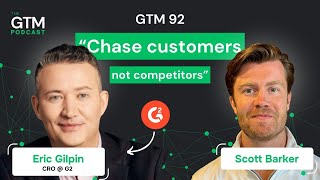
GTM 92: Secrets of Scaling to $1B, C-Level Selling & Developing BDR Acumen with Eric Gilpin
GTM 92: Secrets of Scaling to $1B, C-Level Selling & Developing BDR Acumen with Eric Gilpin
GTM 92: Secrets of Scaling to $1B, C-Level Selling & Developing BDR Acumen with Eric Gilpin
GTM 92: Secrets of Scaling to $1B, C-Level Selling & Developing BDR Acumen with Eric Gilpin