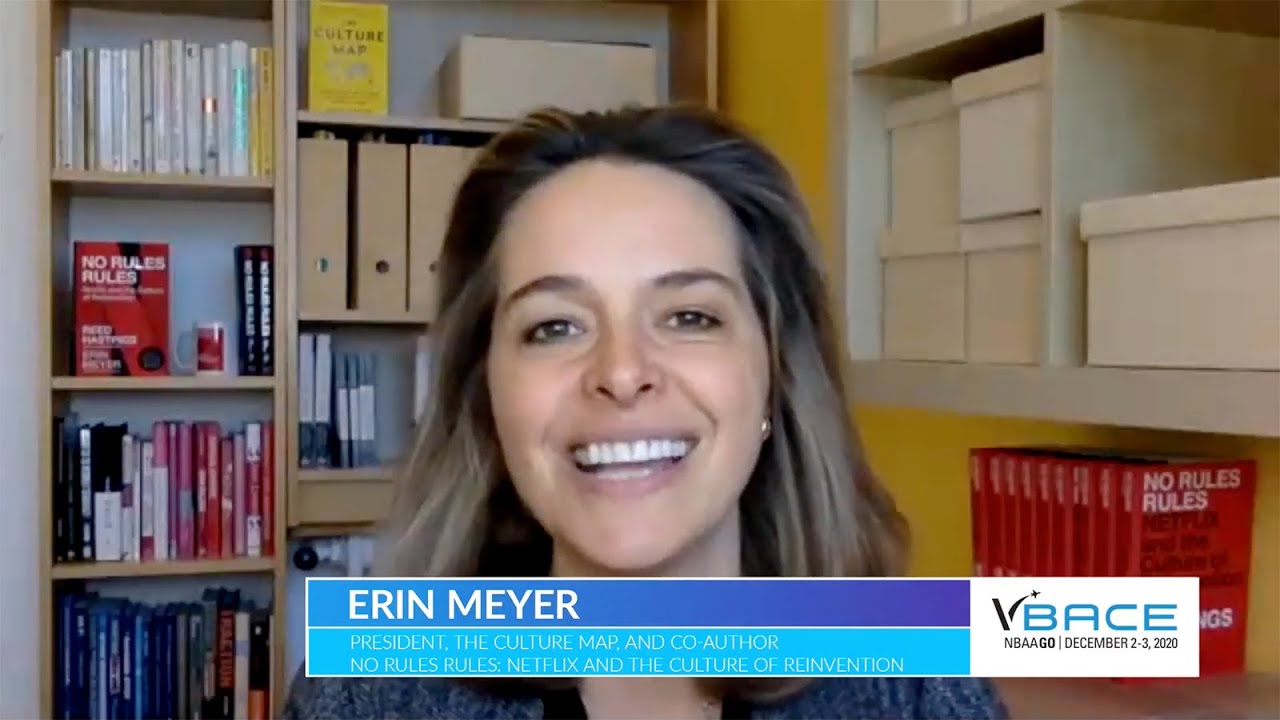
286: How to Influence Cross-Culturally, with Erin Meyer

In this Coaching for Leaders episode, host Dave Stachowiak interviews Erin Meyer, INSEAD professor and author of The Culture Map. Meyer explains her culture‑mapping framework, which positions countries on eight behavioral dimensions (e.g., communication style, feedback, trust, hierarchy, time orientation, listening vs speaking, etc.) to reveal the relative distance between cultures. Through vivid anecdotes—from Americans misreading French punctuality, a Chinese colleague’s silence, Japanese eye‑contact cues, and a French‑American feedback clash—she shows how the same behavior can be interpreted very differently. The conversation covers practical strategies for adapting communication, feedback, and trust‑building across cultures, the distinction between cognitive and affective trust, and the impact of egalitarian versus hierarchical leadership styles. Meyer also highlights an interactive online culture‑map tool (with a free‑access coupon) and a personal‑map questionnaire that listeners can use to diagnose their own cultural positioning. The episode ends with personal reflections on subtle cultural differences and advice to stay curious, humble, and to listen before speaking.
Chapters
In the last week, I've had either phone calls or academy sessions with people in 5 different countries, but I'm not really that unusual. Most of my clients today interact with people all over the world almost daily. On this episode, the framework you need in order to influence with care across multiple cultures. This is Coaching for Leaders, episode 286.
Produced by Innovate Learning, maximizing human potential.
Greetings to you from Orange County, California. This is Coaching for Leaders, and I'm your host, Dave Stohoviak. Leaders aren't born, they're made. And this weekly show gives you access to the practical wisdom that will empower you to become a better leader. I'm so glad you joined in today because today's conversation is one that has become— it's always been relevant, but in today's world, Is probably most relevant to the kinds of work that so many of us are doing, not only in the places that we live and work, but across the entire world. And in fact, that's very much a part of my work on a daily basis now. And I bet for almost all of you listening, if not directly, indirectly, you are working across cultures. And yet, it's sometimes challenging to know exactly how to best work cross-culturally and how to navigate the complexities of culture. And today, I'm really pleased to have with us someone who's an expert at this and is going to help us to really frame the perspective of how to work cross-culturally and to navigate the complexities of culture. And that is Erin Meyer. Erin is a professor at INSEAD, one of the leading international business schools. Her work focuses on how the world's most successful managers navigate the complexities of cultural differences in a global environment. Erin is published frequently in the Harvard Business Review, and she's also been featured in the New York Times, Forbes, the Times of India, CNN, and many more. Most recently, Erin won the 2015 Thinkers50 On the Radar Award, an award given to the up-and-coming thinker most likely to shape the future of business and business thinking. And she is the author of the book, The Culture Map: Breaking Through the Invisible Boundaries of Global Business. Erin, welcome to Coaching for Leaders.
Nice to be here, Dave.
So you're the author of The Culture Map, and you're also a professor at INSEAD in France, but you don't have a French accent. So where are you from and what are you doing in Paris?
Well, yes, thank you. That's true. So I was— I'm American, as I think you can tell from my accent. I was raised in Minnesota in a very monocultural place, but I've been out of Minnesota now for a long time. I've been living in Southeast Asia and in Southern Africa. And I've been in France now actually for 17 years. So my husband is French and my children just recently announced to me that they are French. I received that information. So yeah, so I teach at this business school INSEAD, which is an international business school. I have students and executives from all over the world that I work with daily. And we are located here in Paris.
Fabulous. Well, I'm really glad to have you today because I first heard about your book from one of our listeners who Wrote in and mentioned how helpful it was. And in reviewing your work, there's so much here we could go into. We, uh, we're just gonna scratch the surface today, of course. But one of the big themes that came up for me as I looked through your book and, and started looking at the work you've done is the phrase cultural relativity. And so I'm wondering if you could tell us what that means and why it's important in the context of thinking about culture.
Right. I have a system that I call culture mapping that helps people to decode how cultural differences are impacting their effectiveness. I look at 8 behavioral scales, like how decisions are made differently in different parts of the world or how we build trust differently in different countries. Then I have countries through a lot of research that are positioned up and down these scales. You can compare one culture map, one country's map to another in order to understand how to adapt your style to that culture to improve your effectiveness. What's important about the maps is the relative distance between the countries only. I'm just going to give you an example of that. I worked with a team where I had Americans and French on the team. I asked the Americans, what's it like to work with the French? They said to me, well, Erin, you know the French. They're very disorganized. They're always late. They're always changing the topic in the middle of the meeting. It's really chaotic. Then a little bit later, I had a group from India that joined the same team, and I asked these How's it going working on this French team? The Indians said to me, well, Erin, you know the French. They're really rigid. They're so inflexible. They're so focused on the punctuality and timeliness of things that they're not able to adapt as things change around them. So funny. Why this opposite perception? Well, we can see if we look at my scheduling scale, a dimension that looks at time orientation, that France falls somewhere between the US and India, which then leads to these opposite perceptions. So my whole goal with my culture mapping work is not to help people to say this culture is like that, which I don't think is really that useful anymore in our multicultural world and in our global teams, but instead to start teasing out, you know, why does my Brazilian team member, why does he perceive his, Canadian team member like this? And why does my Canadian team member, why does he perceive his Spanish team member like this? And how can we all adapt to the cultures that we're working with to be more effective?
So it sounds like a key piece of this is just understanding also where we fall along those spectrums, not only individually but also culturally, to help understand the different places and the distances between different cultures.
That's right. So of course, individuals are different also. And when we work with someone else, we have to be thinking about what's the individual and what's the culture. And that's what the Culture Map helps you do. It helps you figure out what's cultural and what's the individual. So you know in which ways you need to adapt and in which ways you'll just treat it like a personal difference.
Oh, fabulous. So I do want to get into some of these different contexts and how to look at them. But before we even get into that, one of the things as I was reading through your book, it sounds like that there's a key balance point between listening and speaking. What's the importance of the listening versus speaking dynamic?
So this is one of the things that we learn at such a young age is when it's appropriate to talk and when it's appropriate to be quiet. I'm going to just give you an example, an example from my book, but I had a situation when I first moved to Paris where I was leading a training program for a couple of French people who were moving to China. And I was working with this Chinese expert, this Chinese manager whose name was Bo. And I prepared him in advance to give examples for the content that I was providing. He was really extroverted, he was very smart. And then I went into the training program with him and with our clients, and I started going through the framework and I kept looking at him for him to jump in and give his examples. He just sat still and quiet, saying nothing. I just kept coming up with every example I could, trying to fill up the space. After 2 hours of talking— Oh,
no.
I started to feel really panicked, like, how was this possibly going to be successful? Apparently, he was not prepared, is what I thought. But then a little bit later I thought, you know, I'll just take a risk. And I looked at Bo, who was, you know, just kind of staring at his paper on the table, and I said, Bo, do you have any examples? And he looked at me, he sat up straight, he opened up his notebook, and I thought I saw that he brought about 30 pages of typed examples with him. And he said, oh, well, thank you, Erin, I do. And he started giving these fascinating examples. So we of course laughed about it later because here I am running a cross-cultural training program and falling into this trap. But in his culture, in the Chinese culture, the expectation is that since I am the facilitator of the meeting, that he should listen carefully and quietly until I call on him. Whereas, of course, my American expectation is that if he has something to say, then he should just jump in and say it.
Yeah.
And also to adapt, right?
Yeah. Oh, that's fascinating, especially the fact that you were training on culture.
Culture bursting.
Yeah. Yeah. Oh, that's great. And of course, that is something I suspect too. I'm so glad you pointed out individuals are so different depending on our family dynamics, depending on what part, even what part of countries. I mean, growing up in Minnesota is different than growing up in other places, even here in the States. That, that it really does affect us and change us. And so I really get a sense in your work of the lessons for each of us of just taking a step back, putting ourselves in the other person's shoes, and, and being able to do that in such a way from a place of, I want to understand, I want to meet you where you are so that we can work better together.
Yeah, that's right. Although I do want to add that, of course, in each country we have individual differences, but we also have And I think I'm going to give you an example that kind of builds on the example I just gave with Bo and also has a very practical strategy that goes with it.
Oh, please.
So I had a situation in Tokyo where I gave a presentation to a small group of Japanese, and at the end I asked if there were any questions and no one raised their hand. So I went to sit down. And my Japanese colleague who was traveling with me said, Erin, I think there were some questions. Can I try? Fine. So then he stood up and he looked at this, you know, this audience of Japanese and he said, okay, Professor Meyer has just spoken with you. Do you have any questions? And no one raised their hand. But this time he looked very carefully at the audience and he studied them silently. And then he gestured at one woman who had been sitting there, from my perspective, motionless. And he said, do you have a question? And she said, thank you, I do. And she asked a fascinating question. Hmm. And then he did that several times, you know, calling on these people in the audience that, from my perspective, were giving no signals they had anything to say.
Hmm.
But then they asked these fascinating questions. So I said to him afterwards, you know, how did you know that those people had questions? And he said to me, well, it had to do with how bright their eyes were. And I thought, wow, you know, coming from Minnesota like I do, that is really difficult. But then he clarified it. He said, well, you know, Erin, in Japan we don't make as much direct eye contact as you do in the West. So when you asked the group if there were any questions, most people weren't looking right at you.
Mm-hmm.
They were looking somewhere else. But I noticed that when you looked at the group, that there were a couple of people in the room, when you asked them if there were a question, a couple of people in the room that were looking right in your eyes. And their eyes were bright, which signifies they would be happy to have you call on them if you would like to. So the next day I gave another presentation. Again, I asked if there were any questions. Again, no one raised their hand. But that time I thought, okay, I'll just try. So I did what he suggested. I looked carefully at this group of Japanese, and as I studied them, I actually saw immediately that he was right, that most people were not looking right at me. And as I looked at the group, there was this one Japanese manager in the room who was looking right at me. And when I looked at him, he held my gaze. Now, whether his eyes were bright, I can't say. Yeah. But I wanted to try, so I made a gesture and he nodded his head and I said, do you have question. He said, thank you very much. It was such an incredibly unsettling experience for me because at INSEAD where I teach, I have these crazily international audiences every day. What I realized when I got back to my school is that there were all of these bright eyes that were in my classes that I had just been entirely missing.
Oh, wow.
I just wanted to give that example because you'd said, okay, well, individuals are different. Yes, but you know what? If you're in Minnesota or you're in New If you're in New York or you're in California, you're not going to expect someone to pick up on your bright eyes and take that signal that you have something to say. But if you're in China or you're in Japan or you're in Indonesia and you're looking directly at someone with bright eyes and they don't call on you, you think, well, that's too bad that they don't want to invite me to speak when they see that I have something to— some input to provide.
Oh, that's fascinating. I would have done exactly what you did initially. And so, I mean, it's just It's one of those things that unless we think to ask or think to notice or have someone with us, as you did in your case, good for you for having someone who had trust with you to be able to give you some guidance. We can very easily miss the different cultural context, especially if we didn't grow up in that culture, we don't have experience in that culture. And that's where I thought some of the dichotomies— is dichotomies the right word for the— Sure.
I call them cultural dimensions, but you can call them dichotomies also. That's fine.
I like that better, cultural dimensions. I think that's where if we highlight a few of these, it'll really help us to just understand some of the complexities here, but also some of the broad brushstrokes that are helpful to us in understanding culture. And one of them is on communicating, and the dimension is on low-context versus high-context cultures. Tell us more about what that means and what we should be looking for in culture.
Right. So this is a dimension that looks at basically how explicit versus implicit we are in our communication. And one thing that we've seen is that Americans, for example, are much more explicit than really any other culture in the world. And that means we value explicit communication. So when we say, you know, he's a good communicator, we mean, well, he's really clear. He repeats key points. He puts things in writing. His message is so simple and clear that everyone gets it instantly. That's what we believe in the US. But in many other cultures, the best business communication is much more nuanced or sophisticated or subtle. Just for example, here in France, there's this word in French which is very common in the business environment, the word is sous-entendu. We have that word in Italian also, sottinteso. That word means, don't listen to what I said, listen to what I meant. Listen to the message that I passed to you between the lines.
Hmm.
In France, a good business communicator can both communicate literally and also pass messages between the lines at the same time. The most implicit culture in the world, there is an expression which is kuki yomenai. They shorten it to KY, and it means someone who is unable to read the atmosphere or someone who is unable to read, to pick up the implicit messages in the air. So in Japan, there's a lot of stuff being passed underneath. So what this means Just practically, for an American, for an example, an American executive, is that you might find that your tendency to be very explicit may come off as condescending. I have a French client who said to me, I went to Polytechnique, which is like the Harvard of France, and my American colleagues, they talk to me like I'm 5 years old. Just thinking practically about that, one of the things that we do is we repeat ourselves a lot, and we're always into like writing key messages down. Yeah. And we like in the US, you know, at the end of a conversation to repeat what's been understood and then to put it in an email in a recap. I had someone from Indonesia who said, you know, Erin, in Indonesia, if we have a discussion on the telephone and we make some decisions verbally, that wouldn't really be enough for me. And then if you get off of the phone and you put into writing everything we've decided and you send that email to me, that would really be a sign to me that you don't trust me.
Ah.
So one of the simple strategies is that we as Americans can just recognize that we don't need to always be repeating ourselves and putting things in writing. Instead, we can just try saying it once and see if that might have passed the message before we come back for the repetition.
Oh, what good advice, because that is a mistake I absolutely would make working cross-culturally. So I'm so glad you mentioned this. And interestingly, one of the things I was really fascinated by in the book is how you highlight some of the reasons for that as far as culture and why we do things differently in America versus why the Japanese do things differently. I was wondering if you could share some of that with us of just how did this emerge? Why are the cultures so different in this way?
Yeah, well, that specific one, we can see that that's directly linked to history. So Japan, the most implicit culture in the world, well, Japan, an island society, a homogeneous population, people living in very close proximity for thousands of years. And the Japanese got to the point that they could just read the atmosphere, whereas in the US, just 250 years ago, we were moving from all over the place, having different histories, different backgrounds, different languages, and then we found ourselves in the same spot. So we learned very quickly in the US that if you want someone to understand your message, you really have to simplify it to the lowest common denominator and repeat yourself and put it in writing. So we can see that cultures that have a longer common shared history and a long, longer common shared language tend to be cultures that do more of passing things between the lines and reading the atmosphere.
Just fascinating. Absolutely fascinating. So one of the other dimensions is around giving feedback, and this varies a lot by culture too. Some cultures tend to be more direct. Some cultures tend to be more indirect. What does that look like?
Yeah, well, I think actually that builds well on what we were just saying, because I was talking a moment ago about how explicit Americans are, and Americans are known across the world for— as being very direct. But one of the confusing elements is that although Americans are very explicit in all ways except for one, uh, where is when it gets complicated. So, uh, Americans, the one time that they're not explicit is when it comes to giving negative feedback. So I look at one of the dimensions I look at is how blunt cultures are with negative feedback versus how soft or diplomatic they are.
Hmm.
And what I've seen is that Americans fall somewhere kind of in the middle of that scale, but there's a tendency in the US to give 3 positives with every negative. To catch people doing things right, do positive anchoring, which means if I have to tell you that your performance is not acceptable, it would be respectful for me to start by telling you what is good about your performance.
Yeah.
And for cultures that are more direct with negative feedback, like the Netherlands or Germany or Russia or France or Spain or Poland, that is very confusing. I'll just give an example. I mean, the French, okay, the French are more implicit in most ways, as we've already learned, but they're more direct with negative feedback than Americans are, and they're much less likely to wrap positive messages around negatives. So I was working with this French manager who I'll call Sabine, and she, she moved to the US, and I asked her how things were going, and she said to me, you know what, Erin, it's going great. You know, this job, it's, it's just taking advantage of all of my talents. And I had my first performance review with my new American boss last week, and this was by far the best performance review I've received in my career.
Oh, good.
And then I called up her boss, John, right, this American guy, and he said to me, you know, it's so frustrating because I've talked with Sabine a bunch of times about what changes she needs to make, and, you know, she hasn't made any changes. I had my first performance review with her last week. I was clear with her, so I'm hoping to see some effort soon. This is, I would say, just a classic type of cultural misunderstanding, which is that when John starts by telling Sabine all the things she's doing well, she thinks to herself, wow, this is the best performance review I've ever had. Right. By the time he got to the real message, which is what the American would hear, Sabine wasn't even listening anymore. So we need to be really careful when we're giving and receiving feedback internationally to understand these differences.
Oh, that's so interesting you say that because I've seen even Americans with each other err on that many, many times. And I'm thinking back to a time I had a very similar story happen with a client. And now that I think about it, the employee was from a different culture. And so it is really fascinating that we are so direct in so many ways, and yet on that one point, it is absolutely true. We do handle things differently, and it's interesting to know that other cultures don't do that or handle that differently as far as feedback.
Yeah, and I think what's, for me, fascinating is that although Americans are kind of midpoint on the range of direct to indirect negative feedback, Americans give more positive feedback than any other country in the world. So, you know, even in the most indirect countries in the world like Thailand or Japan, our style in the US of giving all of this positive feedback is confusing. And that's something we as Americans can really think about when we're working with others. When we use these terms like, oh, that was fantastic, or that was wonderful work, that often is heard as much more strongly than we intend when we're working with our international colleagues.
Such good coaching. And speaking of coaching, one of the aspects, of course, I zeroed in on in the book, this being a show about leadership, is the dimensions on leadership of cultures between being egalitarian and more hierarchical. Tell us about that dynamic and how that plays out in culture.
Right. how much people defer to an authority figure in different countries. I'll just highlight this with an example. I've been working with Heineken for many years, so obviously this Dutch brewing company. The Netherlands is one of the most egalitarian countries in the world. What that means is that Dutch children learn in their schooling systems and from their parents that The teacher is really just a facilitator among equals. You can easily disagree with your parents or talk back to someone who's older than you. Then in the work environment, the Dutch learn that the boss is also just a facilitator amongst the team. His opinion is no better or no more important. When I was working with Heineken a few years ago, they purchased a big operation in Monterrey, Mexico. And, you know, in Mexico, children learn much more clearly to defer to the person in charge. So, you know, not an extreme hierarchical society on a global scale, but more hierarchical than Americans and way more hierarchical than Dutch. So I have these Mexican managers who are now trying to manage Dutch teams, and one of them said to me, Erin, managing Dutch people is absolutely incredible because I go into these meetings and I'm trying to roll out my strategy and get everybody on the same page. My Dutch staff, my Dutch team, they are interrupting me, they're challenging me, they're contradicting me and taking my ideas off in different directions. He said, sometimes I just want to get down on my I had to get on my knees and beg with them, beg them, you know, please don't forget that I'm the boss. So I think that really highlights the challenge of being a leader in today's globalized world, because it's no longer enough to know how to lead the Dutch way or the Mexican way or the American way or the Chinese way. We have to be flexible enough and skilled enough To adapt our style to the population that we're working with in order to get the results that we need. And that's what I really try to do with this culture mapping process is help people with that.
Oh boy, you sure hit the nail on the head. And you see this every day, of course, in your work and the students that show up in your classroom. And I'm just thinking back to the last 24, 48 hours for me, I've probably talked to people in 6 or 7 different countries. And so this is a daily challenge and opportunity for all of us, uh, really these days who are working cross-culturally. And, uh, I, and I guess this leads me to the question of, uh, there's a huge part of this, of course, that's how do we put ourselves in the other person's shoes? How do we understand where they're coming from? And I'm wondering what, for those of us who recognize the complexity here and say, okay, I want to get better at this, I'm not great at this, And what are the ways, if we haven't grown up in the culture, or maybe we've grown up in just one place or one culture, that we can start to really help ourselves to understand some of these dynamics and put ourselves in the other person's shoes?
Well, I really feel very strongly that we can learn a lot without living in another country. I mean, of course, living in another country is great, but if you don't have the opportunity It's not the only way to learn. And you know what I tried to do in my culture map book is just provide a simple method for people. Even if you're just working virtually, you don't even get to go to the country. You're just sending emails or working over the phone. I wanted to provide a simple method that just helped people to think very practically about how to make adjustments to their emails or to their telephone calls, to To adapt more effectively to the country that they're working with. I think if you just read a little bit of this book or look at— we're going to give you some tools at the end here. You could do some culture mapping yourself. You'll see that it's not that it's so difficult to make these moves. It's just that it's complicated to know what to do if you don't have a source helping you do it. I'm just going to give you an example of that. If we think about how trust is built differently, I mean, obviously, I think we all can agree that in every country in the world, you can't get work done if you don't trust the person that you're working with. I've seen with a lot of research that how we come to feel trust is very different from one world region to another. I look at the difference between what I call cognitive trust. versus affective trust. Cognitive trust is trust from your brain. Cognitive trust is like, I see you are reliable. You're on time. You do good work. You have a good product. I trust you. Then we have what we call affective trust, which is like trust from your heart. It's like, I feel a personal bond or an emotional connection with you. I've really removed my professional persona with you, and you've seen who I am at a deep level, and I also have seen who you are at a deep level. What I've seen in business is that in the United States, as well as in Scandinavia or in Germany or in Australia, that there's a strong focus on cognitive trust for work and affective trust for home. The work we mostly think about, are you reliable? Do you have a good product? Are you on time? Emerging market in the world, whether it's China or India, whether it's Brazil or Nigeria or Korea, there's a much stronger emphasis in the work environment on building trust through not just cognitive but also building affective bonds. And once we're aware of that, we can very simply start to make some changes. Like, I'm sending an email to somebody in India, Well, I can put a little bit more personal content in my email. Ask them how they're doing. Talk a little bit about my family. I'm talking on the phone with someone from Nigeria. Well, I can start by talking a little bit about myself, understanding the importance of getting to know them. So I really think that the strategies just come naturally once you start learning and reading and understanding this stuff. And, and I don't think you have to go there in order to learn it.
Well, that's such good advice. And it's almost like once you've learned a new language, I know one of the things people often say is learning other languages then becomes a lot easier, not because you know the vocabulary or the words per se, but you know the way to think about it. And so, a big part of this I'm hearing in what you say is just the way of thinking and how we approach thinking about culture and thinking about our interactions. And when we're walking into a meeting, and how we're writing things on emails, that makes a really big difference in our ability to then interact in an effective way.
That's right. Really practically, we're going to give, as you know, Dave, we talked about this, we'll give a link to your listeners afterwards so that they can go and access this culture mapping tool where you can click on 55 countries and you can just look at the maps from the different countries. They build trust differently in the different environments you're working with, or which ways you might need to adapt your feedback style. And I think even just looking at the maps and understanding the gap suddenly leads to practical solutions.
Oh, that's fabulous. And I do— I want to ask you one more question, but before I do, let's say something about that for sure, because I think it's going to be a really powerful resource. Of course, I'd encourage folks to check out the book because As you have heard from Erin, there's so much richness here. We haven't even gotten into all the details of the book, of course. There's so many more things that you highlight in the book, Erin. And the map that you speak of, normally you have to pay for it, but you're actually going to send me over a coupon code so folks can access it for free. And they'll be able to then, I think if I understand you correctly, you can go in and actually look at each country. And see how those dynamics, where the country generally falls on the spectrum. Am I interpreting that right?
That's right. So you can click on whichever countries you're working with and see them mapped up against one another and see where the similarities and differences are.
So it'll be really helpful for all of us on awareness, especially for those of us who work cross-culturally sometimes every hour, depending on who we're talking to and what email we're sending. So I know it's gonna be a That's a really great resource. So, thank you in advance for providing that. Well, I'll have the link here in the outro with the coupon code. And of course, it'll be in the show notes in this week's leadership guide as well. And Erin, I can't let you go without asking you just about some of your own experience. You've lived all over, including Africa, now Paris, of course. What's the biggest personal lesson that you've had on navigating cultural differences?
Well, one thing I found very interesting, there's some research that shows that the highest expatriate failure rate is not like Americans moving to Japan or to China, but it's Americans moving to the UK. Oh, really? And I know that surprises people because they think, oh, really? But those cultures are about the same. But it's often the most subtle cultural differences that lead to the biggest challenges. So what I found is that when we know there's a cultural difference, when we're ready for it, that we end up being more flexible and adaptable and things go fine. But when we're not expecting it, or we think that the cultures are about the same, or we're only thinking about individual differences, then we end up getting frustrated and impatient and we end up, you know, not being successful. So what I try to do is really encourage people to look at the more subtle Subtle cultural differences that are not obvious to us. And I find on a daily basis that, you know, no matter how much I study this, there's always more subtle differences. So what we need to remember is that we have to be curious, we have to be humble, we have to always remember to listen before we speak and to learn before we teach. And if we're doing those things, then we're always getting more effective. On a daily basis at working in this very complex multicultural world that we are living in.
Erin, you'll appreciate this as a Midwesterner. 20 years ago, I left Illinois and moved to California thinking those were pretty much the same cultures, and boy, they are not.
That's a great example. Of course, you also could have that if you change companies. Each company has a culture, too. You go from one company to another, you don't expect it to be so different. And you end up really being shocked.
Yeah. Oh, indeed, indeed. Erin, this was such helpful advice for all of us. I really appreciate your time and thank you so much for bringing this work. I know so many of our audience members are going to really find a lot of value here in their daily communication. So I really appreciate your perspective on all this.
Wonderful. Thank you, Dave. In addition to the code that we're going to give to the coupon to access the culture mapping tool. We'll also give you a link to, uh, just a free tool for your audience members can do a personal map. So you can respond to 25 questions and then you can find out where you as an individual fall on the culture map. And then you can find out if you're living in the right country or not.
Oh, fabulous. Well, thank you so much for that, Erin. We're going to get all the links for that in the show notes. Erin Meyer is the author of the book The Culture Map: Breaking
The Pleasure. Thank you, Dave.
One of the things you may have heard in my conversation with Erin was her referencing a behavioral culture map that's on her website. Now, normally, to get access to the map, you have to pay a bit for it. Erin and her team have been really gracious to Yeah. And Erin was kind enough to pass along a coupon code to all of us so we can actually access the map for free for the next week. And so if you are listening to this during the week it's airing, which is the week of February 27th, 2017, you can get access to it for free if you follow these instructions. What you're going to want to do is go to coachingforleaders.com/culturemap and select the 7-day premium access option. And then if you enter this coupon code, it will give you free access. The coupon code is CFL7DaysFree, and it's the number 7, not the spelled-out version. So again, that's CFL7DaysFree, all one word. And if you do that, you will get access to it. Now, I know many of you are listening while you're on the go or working out. I am absolutely going to include all the links and logistics for how to do that in this week's weekly leadership guide and also, of course, in the show notes so you can access that. And it's a very It's a really cool resource because when you go in, you can actually have it give you a lens to look through in 55 different countries. So you can pull up the country and then you can look at how each country falls around these different dimensions we've talked about in today's episode. So it's a really powerful tool. So thanks again, Erin, for giving us access to that. I really appreciate it. Go online, check it out. I think it'll be a wonderful follow-up to this conversation, especially if there's some cultures and particular organizations you work with regularly that are different than your culture. Really, really powerful. And the way to get access to that, in addition of course, and to get that in your inbox this week, is to activate your free Coaching for Leaders membership. So if you don't already get the weekly leadership guide, you're going to want to, especially this week. It will give you access to the leadership guides coming every Wednesday with the show notes, with all of the resources we mentioned. And in addition, it'll also give you access to my 10-day audio course, 10 Ways to Empower the People You Lead. If you'll give me 10 minutes a day for 10 days, it'll help you to really get the most immediate practical actions to become a better leader. So you can activate your free membership at coachingforleaders.com. There's a whole bunch more in the free membership. One of the things that's in there, and I haven't mentioned recently, is the Membercast. If you haven't heard the Membercast yet, you're missing out because there's a bunch of other podcasts that don't go here on the main feed but are fully accessible for all of our free members. If you log in, you'll see there's a button that says Member Casts. And there's now, at the time I'm recording this, there's a handful of them up there. One of them is a recent conversation I had with Milica Simovic. She's one of our listeners out in the United Arab Emirates. Milica and I had a conversation recently about her listening to the show and how she, just by listening to this show and taking some of the books that have come up in conversation over the last year, How she dramatically improved her leadership results at work. If you're looking for some inspiration on how to take action, just listen to this podcast each week and engaging with some of the books and the things you hear about on the show, I think it— you'll find it's a really inspirational conversation. It's Membercast number 3. When you get in there, you'll find a whole bunch of other Membercasts as well too. But definitely check out that conversation with Melissa. And thanks again, Melissa, for doing that. I so enjoyed the conversation. And speaking of Speaking of podcasts, there's some related episodes that will be of value to you if you found today's conversation with Erin helpful. Way back on episode number 13, Bonnie and I had a chat on how culture affects coaching and our interactions with how we coach people. So, if that is of interest to you and maybe you'd like to get in some more depth on some of the things we talked about today, Bonnie and I looked at that a while back, some of the aspects. That's episode 13. Back on episode 144, The topic there was how do we— how we do things around here to get results. And my friend Kent Rhodes and I talked about culture within organizations, but we also talked about country and ethnic culture as well too. And so that's a really helpful complement to today's conversation of thinking about culture even within organizations. Again, that's episode 144. And then finally, on episode 166, We talked about how to work in different cultures. A friend and colleague of mine, Nathan Shubai, who I've worked with at Carnegie for years, talked about his experience of being an expatriate and going to work and live in India for over a year. And that experience, as someone who has been in Western culture his whole life, that experience of going through that process and his book around it, it's really a fun conversation as well too. You can get to all of those past conversations by going Yeah. Go to coachingforleaders.com/the episode number. It will give you access to all of those. And thanks if you do decide to check all of those out. And next week, Bonnie and I are going to be returning for the monthly Q&A show. Comes up the first Monday of every month. And if you are thinking about something that came out from today's conversation, or maybe something you're wondering about around leadership and you're looking for some perspective, I hope you'll take a moment To consider sending in your question. You can do that by going to coachingforleaders.com/feedback, and we'll consider it for this upcoming show or maybe a future show. So thanks in advance if you decide to do that. Thank you also to Nadavette in Germany for the very kind review on iTunes. Dankeschön, Nadavette. I so appreciate it. If you have a moment to leave a rating or You can get there by going to coachingforleaders.com/itunes if you're an iTunes user. Have a fabulous week, everyone, and I look forward to seeing you online and maybe checking out the MemberCast. Have a great week. Take care.
More from Erin

How to Bridge Cultures and Lead Global Teams for Success (Interview with Erin Meyer)



The Culture Map: Decoding how people think, lead, and get things done across cultures

'Netflix treats its employees like adults, that's what gets speed and innovation going'

No Rules Rules: Netflix and the Culture of Reinvention | Interview with Erin Meyer

No Rules Rules Co-Author Erin Meyer: Netflix's "keeper test", comparative turnover - Part 2 | E1168