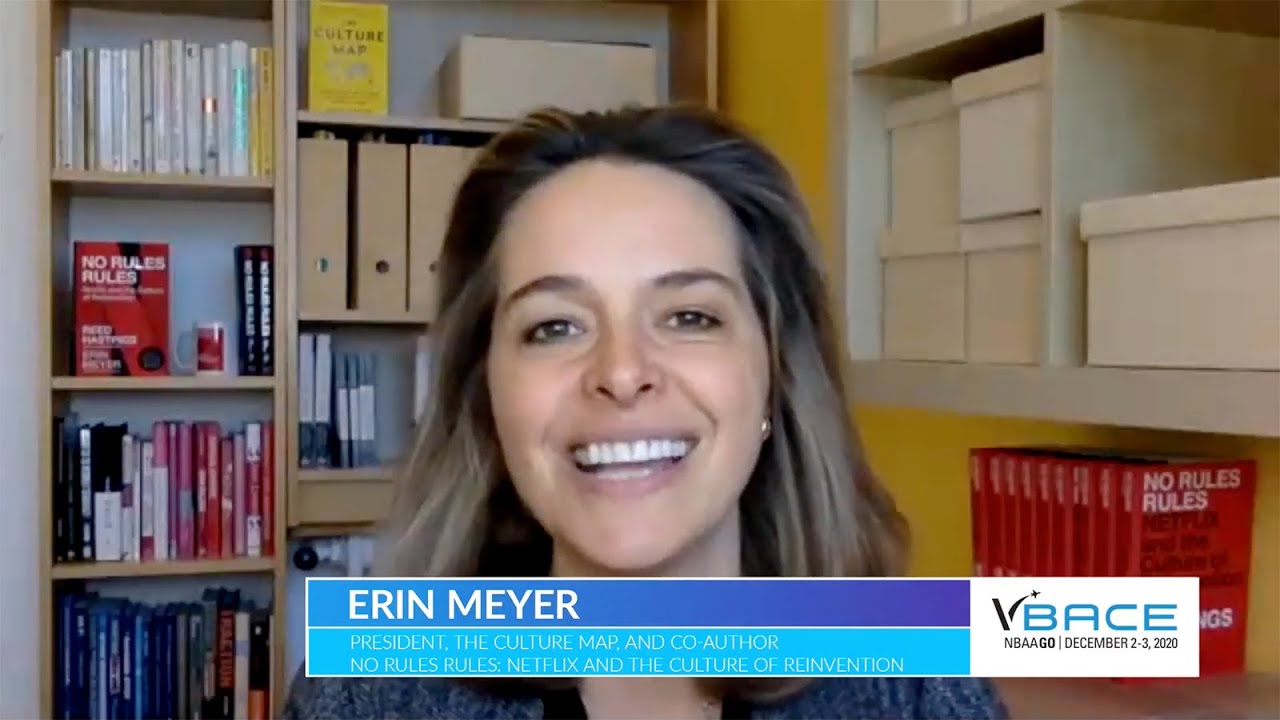
Unlocking the Secrets to Leading Across Borders (with Erin Meyer)

Erin Meyer, an INSEAD professor, created the Culture Map to help leaders navigate eight behavioral dimensions across cultures, from communication style to decision-making. She draws on her Peace Corps work in Botswana and consulting experience to show how understanding cultural differences improves team dynamics. Meyer also discusses Netflix's approach to culture through talent density and radical candor.
Chapters
Welcome to today's episode of the Positive Leadership Podcast. Today we are joined by leading experts in the field of cross-cultural communication and leadership. Our guest is someone who's had a profound impact on how organizations understand and navigate cultural differences in the workplace. She's a professor at INSEAD, where she teaches one of the most sought-after courses on the complexity of managing across cultures. She's the author of the highly acclaimed book, The Culture Map, a wonderful book, by the way, which I read, which is considered obviously as a must-read for anyone working in international or cross-cultural contexts. She's also the co-author of No Rules Rules alongside Netflix CEO Reed Hastings, a book that explores how the company's radical culture of freedom and responsibility has led to its success. Her expertise has made her trusted advisor to global leaders and companies like Airbnb, Google, and many others. Our guest today is Erin Meyer. Erin, thank you so much for joining us.
So nice to be here with you.
So Erin, it's a pleasure to reconnect with you after a few years. When we met, I was still working, leading our global sales at Microsoft and traveling the world for 30 years of my life. So I like to start my episode usually asking for your roots, and could you please please share a little bit about basically where you came from and who and what has influenced your early years in your life.
Okay, yep. So let me just reiterate as I get into this that, so as you know, I mean, I study how people conduct business most effectively in different parts of the world, so cross-cultural management, but I am from a very monocultural place. So I was raised in the Midwest of the US in Minnesota. I was born in the northern US, and I mean, sorry, in northern Minnesota, Two Harbors, it was called. And I think just a little anecdote to kind of illustrate how monocultural my upbringing was. When I was in high school at Minneapolis South High, my least favorite class was French. Really? That's true. And I remember I just thought it was so useless. And I just had this like, I would complain to my friends, it's not like I'm ever gonna meet a French person. A little ironic Given that I've been in France 24 years now.
Yes, yes, indeed.
I did meet a couple of them.
So you persevered with your French, obviously.
Well, you know, I mean, I— we had to— at my school, there were 2 languages. There was, there was Spanish and French. And my, my brother was taking Spanish, so that left French for me. But yeah, then I went on to To undergrad, and, um, I studied— I, you know, I needed to continue. I mean, literally, that was all. I just continued with French because I needed it for my major.
Of course, that's the only reason.
All right, but I was— now I realize it was the most useful, the most useful class that I took in high school.
What about your family in terms of parents, their influence, where their background and the way they Kind of— Raised me. Raised you, yes. Yeah.
So my parents were psychologists. My parents actually, I'm in the television, sorry. Both of them? Yeah, both of them. That's right. And my parents actually were from California. They moved to Minnesota to live off the land, to have this kind of like natural back-to-earth experience. So they were psychologists, but also anthropologists. So although I come from a very modest background, we used to travel to remote places. To
research and study?
My parents were just interested in it. So we would go to like, other people, maybe they would go to Mexico and like go to Cancun. Yeah. But like we would go to Mexico and like go to some kind of like little village where my father could visit like the local shaman. So I grew up, although in a very monocultural place, I grew up with this kind of interest in human beings around the world. And I guess that that's what later on became No,
for sure. So to what extent, again, your family, but maybe some other people as well, who've been either mentors or friends, have influenced your academic accomplishments and what you studied and what you decided to do finally?
Yeah, I mean, so how I got into this field was that after undergrad, I joined the Peace Corps. And so that's for your international, for your non-American listeners, That's the volunteer organization where you go and live in another country. The country is chosen by the government, right? By the Peace Corps in the US. So I went to Botswana, and it was while I was there that I became so interested in seeing how children are motivated so differently in different cultures, and how the teacher, which of course later on becomes the— is reflective of what we look for in leadership, right? True, yeah. But how the teacher leads the classroom so differently. I mean, all of the techniques that I'd learned about positive leadership—
We'll come back to that in a minute.
About positive leadership in a classroom, right? I mean, they, they just fell flat, right? It was like all the things that we were doing in the U.S. in order to engage the students, like, that didn't work at all. Were
you a teacher yourself?
I was a teacher, yeah.
A teacher of what?
I was teaching English. English?
Well, not French.
No, no, no. Oh my gosh, no. In a very remote Yeah, so they were just, you know, the kids actually came to school barefoot, right? So I was teaching in a very remote school, and we just, you know, sometimes we taught classes outside, actually. We had the kids sitting around. They had like little benches. Yeah. So in any case, at the end of all of that, I was trying to figure out, well, what am I gonna do with my life now? And I did, I worked through, I don't know if you are aware of this book, but this book, What Color Is Your Parachute? Which is— No, doesn't sound familiar. An American, I mean, And at that time, it was all about what— that was the book if you wanted to figure out what to do with your life. And at the end, it told me that I should study cross-cultural management. Really? That's true.
The book itself?
Well, no, but you work through activities, right? So like, it gives you like activities. And at the end, so you make like lists and you circle things and bring things together. And at the end, you get like a couple of options of what to do with your life.
So it's like a previous version of the Ikigai, or the American version of Ikigai. Exactly, exactly.
Yeah, not, not I don't think we need it anymore now that we have the internet.
But before we go there, Erin, if you don't mind, I'd like you to elaborate a little bit on Botswana because I'm sure this, I mean, the remote village back many decades ago must have been very special. Any special moment touching in terms of the kids, the families that left you with some lasting impressions on why this teaching role was so critical? And what you learned out of it.
Yeah. I mean, um, the, I think what was, um, was so fundamental was to see the level of commitment to these, of these children. Yeah. And not all of them, but the children who, I mean, like the amount that they would, would give to the classrooms was actually more than I had seen, uh, in my, in the US. And, um, and I, I was, it was quite, it was quite touching.
Yes.
It was quite touching to see that level of commitment. So I that's what it that's what made me want to later go on to to be a professor. Yeah, right, and to help others.
So let's go back to this parachute color coding. Tell me more about the way you frame your future at the time, given the workbook you did and gosh,
okay. I know it's no, I know, I know, and I just like no, I haven't. I haven't explained that to anybody in the last 30 years, but let's do it. Right. Yeah, so, okay, so the exercise is that you write down all of the things that you love to do. You write down all the things that you're good at. And then there, of course, the intersection of what you should— and the impact that you wanna make in your life, right? And then the impact of the 3 is— The intersection. Right, the intersection. Sorry, the intersection of the 3 comes to what you should do with your life. So what I knew then, because of being in the— I was teaching these classes. Sometimes I would have 90 kids, and I would have them for 2-hour periods, and I was only 22 years old. So, um, so I saw, oh, I'm good at capturing an audience.
Yes.
So that was my skill set. And I saw, okay, well, um, uh, I'm fascinated by how people are working differently and thinking differently and responding differently in different cultures. So that was my fascination. And then And the impact that I wanted to make was I felt like at that time there was so little understanding as to how culture intersected with psychology. And I wanted to see if I could learn something that could help the world with it.
Wow. And I'm sure you had some deep discussion with your parents too, as psychologists, didn't you? No?
I don't know. I mean, well, at that time they were in the US and I was in— And you were in Botswana. Communicating with each other.
There was no internet, I guess, at the time.
Or cell phones.
No connectivity there. So let's move forward a little bit, Erin. Then you decided to join the corporate world, and you worked for McKesson, a healthcare services company. And later on, you joined Appian as a country manager for France— here comes French again— whose mission is to enable individual teams and organizations to work effectively across boundaries and borders. They work on cross-cultural understanding, collaboration, global workplace. Providing tools, training to enhance cultural competence. So how much of that particular professional experience opened your eyes, on top of the parachute story, on the need to master cross-cultural collaboration?
Yeah, so what happened is that I moved back to the US, and that's where I met my husband, who is French, and we moved to Paris together. And before we moved, I had this— I got this job to come to the U— to come to Paris and to open up the French branch of this cross-cultural consulting firm. And at that time, cross-cultural consulting was basically just expatriates moving from one country to another because we didn't have— there was no other connection, right? Yeah. So what I did, I mean, almost every day was that I worked with a couple who was moving from one country to another, and I worked— I I would have a country specialist. So the country specialist would be someone from the country that the people were moving to who was living in the country that they were in now, right? So for example, if I was working with a French couple who was moving— I remember one French couple moving to Wuhan, China. Okay. So then I had someone from Wuhan, China who was living here in Paris who would come in, right? So that person is not an expert on cross-cultural consulting, but has lived the experience in the other direction. Sure, I see. And that was just, so every day I was learning so much from these individuals about their own culture shock, about how they recommended people going into their countries adjust their style to be effective. And I started writing it all down and started, I wanted to figure out, gosh, you know, there was like, it seems so useful. So I wanted to figure out, was there some way that we could like create some kind of system to help people understand? Framework. Yeah, and many of these people, of course, were serial expats. So they would go from country to country to country. And it was kind of like, well, can you take the lessons that you learned from one country and which ones of those can you apply as you're going to another country? So that's how I started kind of putting the information together and seeing if there was What were some patterns that we could come up with? And that began— that was the beginning of the research that became the Culture Map.
We'll come back to that in a couple of minutes. I must say I can relate to that because in my whole life, number one, I moved to the US myself with my family many years back when my family was 3 kids, a baby of 2 months, and basically 4 and 5-year-old kids. And I didn't have any preparation for that, but I was working for an American company, so I had a sense. But for my wife, it was, pretty wide and she was speaking broken English. She was not driving, which in the US is something like, you know, not really working well. Anyway, I can really appreciate what is that support, the need for that support, because I also relocated many people across the world.
Yeah.
And I remember many discussions I had with the professionals, either men or women, and the challenge they had with their family you know, basically learning the rules or the rituals or the ways to behave in China, in Africa, in Mexico, whatever it was.
That's right.
Very hard. That's right. So a wonderful discipline. I think a lot more to do.
Yeah.
I'd like to go back a little bit on, again, both the Peace Corps experience, but also I know you work in the US with Asian migrant communities.
Yeah, I do.
So in a way, you've been connecting with those Migrants. What unique challenges did you observe among those communities? And as you reflect on this highly sensitive issue of immigration today, whether it is in the US or in France where you're living now, what would you recommend to our new French Prime Minister when it comes to— Oh my gosh. Yeah, no worries. It's not a political talk. When it comes to migrants integration, because I don't want to get into necessarily a political— Yeah, it's so interesting. Big discussion, but what is What does he mean?
Okay, okay, so right, so when I came home from Africa, when I came home from Botswana, before moving to Paris, I ran a school for some— for refugees that were in Minnesota, in Minneapolis. I did that for a couple of years, and the 2 immigrant and refugee populations in Minnesota were and are still today, the primary ones are Somali and Hmong.
Okay.
So the Hmong are a population that come from Southeast Asia and don't really have a— they don't really have a home, right?
Yeah.
So I had— and what I did was I had like these volunteers who were mostly teachers. They were volunteers, and I would— the classes were made up of half Hmong and half Somali because that's who we had.
Interesting mix.
Before I give advice to the French president, That's how we dance. Let me start there. So that was actually just amazing because the Somali culture is a very emotionally expressive culture. Like, people would speak really loudly and they would laugh loudly. And like, when, when things were happening that they would enjoy, they would like pound on the table or they would like get up and kind of like pace around.
Physically touching others.
They would hug each other, hug me when they saw me, right? And then And the Hmong culture is this like very soft culture, right? So spoken. Where people speak very softly. They never interrupt each other. They're very thoughtful. They don't speak without preparing first. So already, I mean, like, of course now I teach leaders like, think in your meetings about why some cultures are talking so much and why you're not hearing from others at all. All right. So in any case, I mean, that was actually something that marked me, those classrooms. Okay, but go on to now.
Back to the big issue of immigration.
The big issue of immigration. So I do believe it's quite important, like, if we think about these people coming in from all of these different countries, because of course they bring all of their— not just their values with them, but their behaviors, which we misinterpret. Yes. Right? So we may misinterpret one behavior as being arrogant or being inappropriate. And I do believe when we're thinking about like, okay, let's just think about the French classroom. Yes. It's so important to think about, okay, how can we both keep, keep our, our own culture present? That's like your corporate culture later on, right? That's right. And then, but also be open-minded and respectful and understanding of the culture that are coming in. And I would really, you know, really recommend that teachers— and it's actually something I've worked on quite a bit now after The Culture Map came out— is helping teachers in international environments understand why some— why when they walk in the classroom, some populations, they stand up, right? Because that is, you know, respect from their heart towards the teacher. And from other cultures, like, what are you doing? So I believe that That creates a lot of richness, but also a lot of complexity. Okay, well, that's not really advice, but okay, there you go, something to think about.
No, so maybe we should come to the point of naming a Ministry of Integration, who knows?
For example, yeah.
But I think there's a lot of lost value in the midst, in this process which is often missed, to actually integrate. And it's hard. That's right. It takes work. I mean, there's a number of wonderful NGOs that do this work in every country in the world. I know that for a fact in France, Singha and others do that. Yeah, but you know, it's something otherwise that is completely overlooked and completely underestimated.
Shifting our mindset. Yes. Yeah.
So let's let's continue our discussion. Following all those experiences again, your career eventually brought you to corporate and academic world together. You became a professor in SEAD, which for listeners is a leading of course global executive education in Fontainebleau, where you've been directing the leading across borders and cultures program. So what made you decide finally to dedicate your life to teaching and research and consulting? So it's not just teaching, you do actually a lot of different activities. Yeah, but still, I think— but you should push me back— yeah, on one or two main topics: cross-cultural leadership, but also probably organization culture, which we'll come back to later on.
Yeah, that's right. Yes. Okay, so picking up where we left off, that I was working with these expatriate families and I started to take lots of notes. So just like maybe Monday I'd have a group from Sweden moving to Argentina. Maybe Tuesday I'd have a group from Indonesia moving to Canada. Yeah. So I started recognizing through all of the learning I was doing these patterns, right? So what was coming up as critical? And let me say, I mean, it's not like I was the first person to do that. I should be clear. I mean, there were some people who were very, foundational researchers in the cross-cultural field. Can you give me a name? Hofstede is the big one, right? So he's this Dutch guy who did this enormous research project, and he looked at value systems of societies, whereas I look at behaviors in business. So I used his research, but I also tried to kind of think about how it would— well, I was noticing how it was playing out on the ground a little bit more. So in any case, I started seeing things like, oh, What's one of the big ones? Oh, one of the big ones is that what we consider to be constructive feedback is so different in different cultures. And what's disrespectful in one culture is completely respectful in another. Or another one, oh, how do we build trust? Yeah. Like, in some cultures, it's all about spending time getting to know one another personally, sharing meals together, even if we're just business colleagues. And in other cultures, it's all about have you shown me that you are effective and reliable and consistent? And
continue and yeah.
What leads me to feel trust? So, as I was taking all these notes, I started to put— create categories and then that led me to want to do more research. Okay. And that I actually then started working with INSEAD and I did my MBA at INSEAD, an executive MBA. And as I was doing that, I also had an opportunity to Teaching. Yeah. So then it all came together.
So this is the way you actually framed and defined the so-called 8 dimensions of the cultural map as you are teaching, as you are trying to assemble those 8 patterns?
That's right.
How did you decide? Because I'm sure you probably have taken thousands of pages of notes, maybe on OneNote, who knows what. I don't know which tool you're using. Very useful. All by pen at that time. I can nail myself. Yeah. Or maybe just with a I'm sure you used a notepad and a pen. But how did you decide to make that critical choice of those 8 dimensions? Because I'm sure there were many others that you considered. How do you pick the most defining ones? That's something I want to understand.
But you know, it's amazing. Like the most amazing thing about this is that the same things come up again and again and again. Like you would think that if I were doing, you know, 5 or whatever, 4 sessions in a week, that each day we would be like touching on wildly different things, but it always seemed to come back to the same patterns, to the same issues. Yes. Like, oh, I insulted him because I was honest in a way that's appropriate in my culture, but apparently that's not appropriate in their culture. Or, um, I upset him because in my culture it's totally appropriate to show up 8 minutes late for a meeting, but I guess in their culture if you show up 8 minutes late and you don't It's a sign of arrogance. So these, I don't, I mean, to tell you the truth, it just, at the time there were clearly about 8 things. And then I did put a cap on it at 8 because—
That's enough. That's a long list enough.
Yeah. And as you know, I mean, there's all this research. That's why telephone numbers are never more than 8 figures because we can't remember more than 8 things.
So can you— I know you've done that thousands of times— can you unpack those 8 dimensions and orientate our listeners on the way to think about that cultural map as they manage international people, as they relocate themselves, their families? How do you think about that framework?
Yeah, so I'll explain the framework kind of largely, and then if you want, we could get into some specificities. But okay, so it The framework, the Culture Map framework breaks culture down into 8 behavioral scales. So it looks at things like how do we express disagreement differently in different cultures, or how do we, let's see, which was something I haven't said yet. Well, I have a whole one about implicit versus explicit communication, for example. Yes, yes. And then through about 180,000 interviews that we've now conducted in about 62 countries, we have these countries that are positioned up and down these scales. So then you can map up, you can look at the position of each of the countries on each of the scales, and you can map them up next to one another. And then you can compare the similarities and differences. And what's so important about the framework is that it's the relative position between the countries that matters, not the absolute position on the scale. And I'll just give you, I'll give you an example.
Yeah, just a concrete example of 2 nationalities Yeah,
so here, one that will be of interest to you. So, um, like, as an American, when I moved to France 24 years ago, um, I was struck personally as an American by high— by how hierarchical the culture was here. So that's something that, um, is very common for Americans, or even more from Scandinavians moving to France. Like, oh, there's, there's so much focus on the, the who's at what level.
Boss, next level up.
Yeah, deferring to the boss. And You know, then I remember distinctly when I was doing research on on this element. I remember interviewing this woman, a Chinese woman for Hermes, who was had moved here, and she said to me, she said to me, Erin, you know it's just crazy because French people are so egalitarian. And she said, you know they say this. Of course they say égalité, fraternité, but they don't just say it. they mean it. And then she started giving me these examples. She'd say, you know, like anyone in a French organization can have an opinion and their opinion is seen as being just as valid as anybody at any other level. And of course, if we look at what that— what's going on relatively on my leading scale, we can see that the US is more egalitarian than France, which is considerably more egalitarian In China, yes. And then if I can just—
So related, yes.
That's right. And if I can just continue with that, then, so to continue with the relativity, I was in Denmark a couple of weeks ago. Okay, so Denmark is the most egalitarian country in the world. And compared to Danish people, to Danish culture, American culture is very hierarchical. And I gave the Danes this in my class, just this quick little exercise. I was only with them for a couple of hours. And I asked asked them from their experience to position a few countries on the egalitarian to hierarchical scale. And it was like Saudi Arabia, Nigeria, Japan, the US, and Denmark. And they put Denmark like in the correct place, like way, way to the egalitarian portion. And then they put all of the other countries in the same place.
Same place.
So for them, the US was just as hierarchical as Saudi Arabia, Nigeria, and That's very cool. So it's all relative, right?
So can you, can you name the 8 dimensions?
I could.
I know it's long, but I mean, just, just to give us— and maybe just a few comments on each one of those dimensions.
Okay. All right. I don't want to get too long.
No, I know.
I'll start and you can, you can jump in with your own comments as we go. Okay. So the first one is actually quite a, a complicated one. It looks at low context versus high context communication, but I'll try to make it simple. So on a simple level, It looks at how much we value explicit communication, where we spell things out, versus cultures where we speak between the lines and we pick up implicit messages. And of course, often I talk about just linguistically, like the difference between the US, which is super low-context culture, and France, which is more high-context. And of course, you have these words in French, Like sous-entendu, listen to what I said. Sorry, listen to what I meant, not what I said. Or second degré, deuxième degré. Don't listen to what I meant, listen to what I really meant.
The way you interpret what I said, actually.
That's right, that's right. Or Japan, which is the highest context culture in the world, where they have this expression Cookie yomenai, someone who is unable to read the air.
Read the air.
That's right. So the whole idea that a good communicator in Japan can really pick up all of the unspoken messages, and then a poor communicator is cookie yomenai.
I think you had one interesting anecdote on this one. I can relate. I've been leading Microsoft Japan business for many years in my previous life, Microsoft. And I remember learning deeply how to connect with the culture, particularly when I was doing as well some of those kind of HoloLens meetings with all the people in the room from the subsidiary, speaking and then taking questions.
Yeah.
Oh, my bright eyes example. Yeah. And then probably you see where I'm going here. It's so hard to get the first question. Even in American headquarters company, Microsoft, people are more used to that. But still, so can you share with us, 'cause I think I had exactly the same common experiences. I came back many years, many times per year in Japan, on the way you actually detect who is, who might be ready to ask a question, but who's not gonna raise his hand actually. What do you do?
Yeah, so that's an example that I had where I was, I gave a presentation in Tokyo, an hour presentation. At the end, I asked if there were any questions. No one raised their hand. Yep. I went to sit down, but I was with my Japanese colleague, and he came up to me and he said, oh, I think there were some questions. Would you like me to try? And I said, oh, yes, yes, please. So, so Taka stood up and he said to the group, oh, do you have any questions? Yeah. No one raised their hand, but he stopped and he, he silently looked around, and then he gestured to someone who was sitting there, from my perspective, motionless, And he said, do you have a question? And the person said, oh, thank you. And he sat up and he asked a fascinating question. And then Taka did that a couple more times. So afterwards I said, but Taka, how did you know that those people had questions? And he said, oh, well, it had to do with how bright their eyes were, right? Oh, I see. But actually he then clarified. He said, well, you know, in Japan we don't make as much direct eye contact as you do in the West. when I asked if there were any questions, most people weren't looking right at you. They were looking somewhere else. But I noticed that there were a couple of people in the room who were looking right at you and their eyes were bright. And he said, so look for that. Look for the eye contact, which was very useful. And I actually, I cannot underestimate, I cannot understate how useful that information for me was. So the next day I gave another presentation. Again, I asked if there were any questions. Again, no one raised their hand, but I did what he had suggested. I stopped and I looked around. People were looking at me softly, let's say, but there was someone in the room who grabbed me with his eyes. That's as well as I can explain it. Like, he looked at me and he held my gaze.
Whoa.
And when I looked at him, you know, he And he kept the eye contact. So then I was like, huh, does he have bright eyes? So I made a little gesture because I didn't want to take too much risk, and he nodded his head. Of course, of course. Do you have a question? Oh, I do. So the important part of that story is that when I got back to INSEAD where I teach these incredibly international classrooms, I saw there were all of these bright eyes surrounding me, not just from the Japanese. And that my own American assumption that if someone had something to say, they would raise their hand— Raise their hand, yes. Was completely blocking all of this, all of this input in the class. So, okay, that's my brain on acid.
You know, it makes me think about certainly the, you know, the way you, you pick up those nonverbal cues. And as you know, I mean, everyone has been studying that 90% of our communication is nonverbal. And I think it's even more important in a cross-cultural environment. And that's why as well, we may discuss a little bit later, you know, of course, digital communication, the Teams and Zoom calls don't necessarily help because you're missing the body language, even the bright eyes, kind of.
A little bit complicated. But I want to give you a brand new example since you asked me to give you a really old example. People are going to be like, like, oh, Erin's always giving that bright eyes example. So let me give a— let me give a brand new one from last week. Okay. Okay, so this one shows— if, if Japanese people are looking for bright eyes, this one shows the American style of spell it out. Okay, so let me first start by talking about sense of humor.
Yeah.
Okay, so first let's, let's just mention that the US is the lowest context culture in the world, and that is largely because we are a country of immigrants. So Japan, a homogeneous society, thousands of years of shared history, so people have a lot of experience reading one another's body language and nonverbals. Yes. The US, just a couple hundred years ago, we came from all over the place. We have different histories, different languages, so we learned we really have to dumb things down in our communication. And and spell things out. So like a simple example, this is not the new part, but a simple example has to do with sense of humor. So like, I, you know, I was in the UK a while ago, and when I'm with British people, they're always saying things. I think it's a joke, but I'm not sure, so I don't dare laugh. And I'm always saying, oh, um, you know, if you could please do what we do in the US, which is when we make a joke, we put a label on it, right? Yeah, yeah. So we make the joke and then we say, Just kidding, right? And then they know they can laugh. Okay, so I told this story last week, and I had this Italian guy in my class who was living in Silicon Valley. Oh, okay. Okay, he's living in the US. So Massa says, he said, he said, when I told this thing about just, just kidding, he said, um, he said, no, Erin, that's not the end of the story. And I said, okay, well, what's the end of the story? He said, well, in Italy, if you make a joke and the other person thinks it's funny, Yep. Then they laugh. Okay, logical. He said, but in the US, if you make a joke and the other person thinks it's funny, then they say, that's funny.
It's so funny.
That's hysterical. And I said to him, because I never thought of this, right? So I said, oh, you're right, we laugh and we say, that's funny. And he said, no, Erin, I've been observing this carefully. The laughter is optional. Which actually on reflection is true, right? So I said, that's funny.
Wonderful. Any other dimension you'd like to outline again for our listeners quickly? A couple of them that you believe are critical as well?
Yeah, well, maybe we should talk about, um, maybe we should talk about expressing disagreement.
Yes. Oh yeah, that's an important one.
I think that's a good one because we haven't mentioned it yet. And you know, here you are from France, having lived in the US, and here I am from the US having lived in France. And this is such an important one in our cultures and in many cultures. So of course, in your culture, you learn really like in your education system to debate, right? We love debate. You love debate. And of course, that comes from Descartes, the system or method of systematic doubt, right? So if you say something, then I I should express doubt in order to have a debate to lead to a good outcome. Yes. Right. So it's very appropriate in French culture, for example, to say, no, I completely disagree with that, or, absolutely not. And of course, that doesn't have any kind of negative impact. Yeah. Right. In so many cultures in the world, expressing open disagreement is really seen as disrespectful, disrespectful, or like you don't like me, or you're personal. Yeah, you take it really personally. I I remember moving here to France, and I would I would well even in my classrooms, but I would go into these meetings and like I'd be outlining an idea, and someone would say, "Oh no, je ne suis pas d'accord." I disagree with you. And for me, like even the word dis Yeah, it was
aggressive. Right.
So that's quite an interesting dimension because, of course, we might just be having a discussion. And, of course, Americans are quite confrontational in comparison to Latin American cultures or to Eastern European cultures. So I think just thinking about how to— how much debate is seen as appropriate in a meeting, and then What's the best way to frame that debate so that people see that as constructive and not as an attack is such an important skill for anyone working in an international situation.
No, I love it. Let's bring that into your real-life example, Erin, if I may, right? Sure, of course. I mean, you've been relocated to France a couple of decades ago, right? You raised your kids in France. You were born in France, and your husband is French. So how should I think about you two as parents raising your kids in terms of disagreement with your kids, in terms of your education philosophy? Do you play it as like the good cop and the bad cop, the good guy and the bad guy? How does it work?
Wouldn't it be nice if we were like really strategic like that, really aligned? Aren't we all really aligned?
How did it work? How could you figure that out?
But I do think that's like such an interesting element because sometimes people will say to me, you know, Erin, aren't cultural differences becoming less important in the workplace as we have more and more experience working with people from other countries and as we become more internationally connected? Yeah. And I actually believe deeply that although that may be true on some kind of minor level, that the cultures across the world will remain different as long as the way that we educate our children is so different from one part of the world to another. And I mean educate as far as the classroom goes, but also educate as far as how we parent goes. And I think for any of our listeners who are in multicultural marriages, you know, the most difficult thing is that how— what we consider good parenting is so fundamentally different— Different, yeah. In one country than another. And like—
So how did you deal with that with your husband? Did you have a kind of big meeting at one point? I mean, we deal with that. How do we align? How do we unify?
Like, I don't know. Like, I would love to say that it just worked out smoothly, but in truth, it's like deep— I mean, deeply complicated. And like, so just an example that comes into my head, and let me say that, so I'm American and I have lived in France now 24 years. And my husband is French, but he lived in the US for almost 20 years. So we are sort of the opposite of one another. Yes, yes. But of course, he was raised in a French family and I was raised in an American family. And one of the big issues that we had when the children were little is that I would— we would bring the kids to my mother-in-law's house, to my French, you know, my husband's French family. And in the U.S., we just we we have such a strong idea about letting giving your children lots of freedom, yes, so that they can turn into their own selves. Yes. And of course, in France, you have this idea of having children who are you know well well cadre, right?
You have that protected and yeah, and worse.
And behave in a way that's appropriate. So I just like, that was deeply difficult because— To
accept.
Well, Eric's parents would be like, I can't believe the way— The way they behave. The way that Erin just lets the children behave like that. And of course, to me, it was like, don't shout at the children. Children shouldn't be shouted at, right? And even that's so interesting. My American friends, I was just speaking to my close friend from when I was a child and she was like, oh, you know, I feel so horrible because I shouted at my son yesterday. And I was like, Linnea, you know what? He'll be fine. And I said, you know, like people here, they shout at the kids all the time and they all turn out great. So in any case, yeah, it's challenging, right?
Very interesting story. I know we many listeners as well across cultures. I think they— I'm sure they'll pick their own stories. Now, moving to the professional world, you know, I've been myself growing professionally in an American company for 40 years, a wonderful company, Microsoft. And I've been running the global business for many years, traveling, you know, for 30 years of my life to 120 countries. And over the past 8 years, I was working alongside Satya Nadella, the new CEO. Mm-hmm. I had the opportunity to lead some amazing team, you know, composed of basically Egyptians, Brazilians, Americans, Spanish, British, Germans, Chinese, Japanese. I mean, so many nationalities. So let's imagine that I'm starting all over again, right? This is Jean-Philippe JP like 30 years ago. I'm gonna, I'm gonna be appointed to take on that global business. What would be your coaching? What would be your advice to me, Erin, as I think about this global business and this global organization made up of 120 subsidiaries, 35,000 people? How should I deal with that?
Yeah. So my main overriding advice is that you should get a conversation started. And it amazes me how little people talk about this topic in international companies. And I believe the reason that we don't talk about it is that on the one hand, people worry that if we bring up cultural differences, that that leads to stereotyping and putting individuals in boxes. Yes. Yet if we don't talk about cultural differences, then we all end up running around viewing everybody's behavior from our own lens. Like the Japanese person who doesn't speak up in the meeting. Oh, he has nothing to contribute, right? Or like the French guy who starts a debate. Oh, he's always attacking everybody, right? So we need to, but first of all, be able to separate individuals from cultures so we can have a discussion. Yes. So we can recognize, okay, on the one hand, every individual is different. Even if we come from the same block, the same family, of course we are We are all unique. On the other hand, we are all the same. Okay, we are like, we are the same animal. We feel envy, we feel, we have adrenaline that floods through our body when we're excited.
Dopamine, oxytocin, et cetera.
Of course, we are all the same, but we all come from somewhere, or maybe somewheres if you come from different countries. And where we come from and how we were raised The companies that we have worked for, they impact what we see as being effective and ineffective, constructive, destructive. So we need to get a conversation started.
So how do you do that?
What does it look like, that conversation?
Let's imagine I've got those 15 guys, my 15 leaders from 15 different countries, and I'm having my first meeting with all of them. What should I do?
Well, so what I always recommend— I mean, of course I'm going to talk about the way that I would do this with my Culture Map framework, but I don't think it has to be done around the Culture Map framework. But what I like to have people do is do a personal assessment so they can respond to questions about themselves, right? And then they can have themselves mapped on these different scales. Yes. And then you can also map out countries. So then you can say, oh, well, look, I'm Egyptian. Here's where my— when it comes to negative feedback, In my culture, we are not very direct. Okay, not as indirect as Indonesia, but compared to the Europeans on the team, clearly we don't like to state the criticism directly. Yet I, as an— and I can help you if you're working with Egypt. I can help you give the feedback and understand. In a way that is understandable. Now, that being said, I as an individual, you know, I lived in the Netherlands from age 10 to 20. And I am more direct in my style than almost all of the other cultures represented on the team, right? So I think having that kind of discussion, it's like, oh, we have so much to learn from one another. And we never assume that an individual is like a culture. And therefore, we can discuss with richness, right? So
it's really about decoding each one of the persons one by one, both from a cultural standpoint, or in terms of nationality, country, but also where do they come from, as you said, because everyone is unique. But understanding the, not the boundaries, but the ways they've been growing up, what's offensive, what's supportive, what's working and not with them, that would be a great way to start communicating effectively, I guess.
Yeah, and not being afraid to ask questions.
Candid questions.
I don't know, people don't bring it up because they think, oh well, if I ask, if I ask him a question about Egypt, he's gonna think that I'm stereotyping. But everyone loves to talk about culture.
Absolutely.
As long as you use humble words to describe your own culture. Yes. Laugh at your own culture, always great, right? And you use positive words to describe the other culture. I actually have a great example from just a couple of days ago. So, I mean, one thing I've been looking at more at is positive feedback. Okay. How much we express open recognition in different cultures. Yes. And I had this German woman who was working on a team with a bunch of Americans, and she said to one of the Americans in the group, you know, I've noticed— so again, humble or negative words to describe your own culture and positive words to describe the other culture. Yes. So she said, I've noticed that in the US you're really good at appreciating one another openly, something that we don't do much of in my own culture. She said, but you know, I get confused Because when our American boss singles out an individual for praise in front of the group, you know, is he signaling to me that he's not happy with my work when he praises the other person openly? And that American, because she framed it in a positive way, was able to say, oh no. Not at all. Not at all. You know, that's, that's That's something we love and it comes from our education system. So just ask the questions.
Great example. You know, you're back. I had the pleasure on the podcast again to host Stephen M. Markovey. He's the best-selling author of a great book, Trust and Inspire: How Truly Great Leaders Unleash Greatness in Others. In our discussion, he shared with us building trust is both an art and a science that requires self-awareness, clear communication, and consistent behavior. Erin, can we have a bit of dialogue on what does it take to build trust with international teams? We just started the discussion. Can you help us working through our self-awareness, our communication as well, and our behaviors, one person and one nationality at a time, which is a bit of a discussion we are just starting to have?
Yeah, thank you. Yeah, so I think actually the most important of my 8 dimensions is the trusting scale. Trust. pretty simple dimension to understand in comparison to some of the others, but it breaks culture down into 2 types. So we have what we call cognitive trust, trust from my brain. So I see you are on time, you do good work, you're reliable, I trust you. And then we have what we call affective trust, trust from my heart. I feel an emotional bond with you or a personal connection. Yeah. I feel like I've seen who you are inside, and because I've seen who you are inside, I trust you. Trust you. So of course, if I ask you why you trust your mother, it doesn't matter where you come from. We all talk about affective trust. But if I ask you why you trust a business partner or a colleague, we'll see a lot more difference from one part of the world to another. So many cultures like my own, so the US culture or Northern European cultures, where we tend to really separate Like cognitive trust for work. Yes. And affective trust for home. For home, yes. It doesn't mean that we, that we don't want to work with people that we like, but it means that, that we don't invest a lot of time in getting to know people personally. Right.
And as you know super well, of course, being on the couch shows sometimes it's not really well received to invite for that personal, real connection.
And in fact, it may be seen as dangerous, right?
At work. At work, yes.
It may be seen like, well, We should be really friendly with one another, but we don't want to— like, we have a clear boundary. We're not gonna let people that we work with in deeply because then we arrive with a conflict of interest.
Yes.
And then of course we have many other cultures in the world, all Latin American cultures, almost all African countries, the vast majority of Asia, where cultures tend to be much more focused on weaving together this cognitive and affective trust altogether.
Maybe building on that a little bit more, I would like you to talk a bit about self-awareness. Because I think when it comes, again, to positive leadership, it's one of the foundations to be aware of yourself, to get to know yourself, which is so hard, right? So how do you translate that, again, across boundaries, nationalities, self-awareness?
Yeah, well, I think that that's actually a great moment to ask that question because when I talk about this dimension of trust, people who come from task-oriented cultures, they always complain. They'll say, well, it's not true. Relationships are really important in my culture too. And of course, I do believe that humans are relationship-oriented, but when we start kind of looking at people's behaviors, we can see, oh, actually more self-reflection is needed. And maybe I'll just give a simple example, a recent example. So I was doing some work with an American Indian collaboration, and things were not going well at all. And I spoke with these American managers who were like overseeing this group in India. In India, yeah. And I said to them, you know, have you taken the time to build trust and get to know them personally? And they said yes. They said, we have a great relationship. You know, we connect very well with them. We went to visit them. You know, things are great, right? Yeah. But when I worked with the Indian group, I learned something different. And I remember talking to one of the senior Indian guys in the group, and he said, you know, we have this problem because of course we know Here in Bangalore, we know that Americans, when they start a conversation, they say, how are you? And the other person says, I'm great, how are you? Fine. That's it. Well, don't be that. Right. So he said, so we do that too. So they say to us, how are you? And we say, we're great, how are you? Or, how was your weekend? It was fabulous, thank you. Let's get down to business. And he said, but you You know, for us, like, for us here in Bangalore, we can't really trust somebody unless we feel like they know us, not just us as individuals, but they know what's going on with our children. Yeah. They understand the issues that we're having with our mother who's sick or whatever, the wedding that's going on, whatever. And so he gave a very simple recommendation. And he said, so when you— the senior Americans, when you're on the phone and you say, how are you? And your Indian team member says, oh, I'm great, thanks. How are you? Just stop and say, no, but how are you?
Really?
Yeah, but really, how are you? And then if you do that every call and then also tell them something about you, like, how are you? And he gave another recommendation that I loved. Get rid of the virtual backgrounds, right? Get rid of the virtual backgrounds. Put some personal stuff about your kids and your family behind you, right? And then, okay, now we can get a conversation started. So, your question was, how do we— how important is self-awareness? And I do believe we say, and when it comes to culture, fish don't see water. And often, if we are in a culture and of a culture, we don't even recognize how others view our cultures, which is why having this kind of reflection is so important.
No, I think it's so important. It made me— it makes me think about another great guest I had, which is a friend of mine, Michael Bungestany, who wrote this wonderful book about coaching habits. And the first question is, what is on your mind, Erin? And what else? And what else? And what else? So stop there. Love it. Yeah. It's really all about getting into that that personal connection really, meaning it, not just superficially. Now I'd like to shift gears and talk about communication. You know, I recently, actually late December, had a great discussion with Charles Duhigg, the bestseller author of The Power of Habits. In his recent book called Supercommunicators: How to Unlock the Secret Language of Connection, he identified 3 primary types of conversations. That are essential for effective communications. Practical conversations, what this is really about. Emotional conversations, how do we feel? And social conversations, who are we? So do you agree with that conversation taxonomy? And do we really have the same 3 types of conversations across cultures? Uh-huh. I know it's a pretty big question. So the practical conversations, the emotional conversations, and the social conversations.
Yeah, so I do believe when we talk about— I mean, I talk sometimes about the head, the hand, and the heart, right? Yes. Okay, so maybe that's the same thing, right? So that when we're working internationally, we have 3 things that are going on. So the first has to do with our cognition, right? That's the head. The hand, that has to do with how we are actually doing the work, right? And then the heart, how we feel about what we're doing. And culture impacts all 3 of those things, our cognitive patterns, our emotional reactions, and also our behaviors. Our behaviors. Right. So yeah, I think that's the same thing.
That's a nice way to embrace it. No, I'd like to finish on that cultural map discussion. You could spend so many hours, but the time is going pretty fast. And coming back to another guest, which I know you know well, Daniel Goleman, on emotional intelligence. So I'd like to get your, basically, viewpoint on the way you think about emotional intelligence and the way it should complement some of the cross-cultural intelligence for today's global leadership. Does it matter?
Yeah. So people will often say to me, I mean, if you're emotionally intelligent, isn't that— well, is that Must you be emotionally intelligent to be a good international leader?
Yeah.
And I would say yes, but it's not enough. Because you can be extremely emotionally intelligent in your own culture, but not be able to recognize the signals that are coming at you from another culture. So I believe it's critical for anyone who's in a global leadership role that they are stretching themselves Yes. To challenge their own ways of understanding communication patterns and to move beyond it. And I think maybe just a really simple one. We talked earlier, you asked me that example about the bright eyes. So one thing that comes up so often, and I think you had this at Microsoft too, but what happens so often is in American companies, we often talk a lot about the importance of speaking up. Yes. Right? So that's a very strong American belief That if you come to a meeting, you better say something.
Yes.
And that, of course, comes from the American education system where we have a participation grade in our school.
Yes, in school.
And as a child growing up in the US, I had my hand almost raised even before I knew what the question was. That's true. It
was behavior. It was a habit.
Because I knew that if I had my hand raised first, I would get the answer. I would get called on and I would get extra credit, which means, and it's true, that what was important was that I said something, not that what I said was the highest quality or the most thought through.
It was not to be about the smartest in the room, but actually participate.
Participate. So different than the vast majority of school systems.
Oh yeah, particularly French ones, right? Yeah, well, of course.
You only speak if you've really thought through, because otherwise you're gonna get in trouble. But I mean, let's just look at like all, all of Asia. Oh my gosh, like where we don't even really talk unless we've really prepared, right? So of course then if you go to a meeting and you're like, oh well, you know, you're not speaking up, so you're not showing leadership skills. Yes. That leads to an incredible bias as to what good leadership is and how we get people into the right positions. So in any case, I can't remember what the question was anymore, but I'm sure that was the answer.
Absolutely. So let's move now to this great book that you published in 2020, Erin, No Rules Rules: Netflix and the Cultural Reinvention, a book that you co-authored with Reed Hastings, the co-founder and former CEO of Netflix. So in your book, you talk about Netflix culture, which is a culture of no rules, a culture built on context as opposed to controls, and a high-performance culture built to attract and retain talents. Can you unpack the key traits of this unique culture and tell us if you believe it can sustain over time?
Yeah, right. So starting in 2017, when Netflix was still a— well, it's— yeah, 2017, Netflix was just newly working outside of the US. Yes. I started doing this big research project with Reed Hastings, with the founder of Netflix, the CEO at that time, on understanding their organizational culture and how that organizational culture would work around the world. And then eventually we wrote a book to help other people who are entrepreneurs or running creative companies to think about how to get an organizational culture that, that innovation and flexibility. And I was very interested in this company because I think it's— they actually had about the most disruptive organizational culture of our time, really something quite unusual. And there were 3, just 3 primary tenets, which when people say, oh, we want to have an entrepreneurial spirit, I think this is actually what they mean, right? Mm-hmm. So number one, you want high talent density. So, high talent density means that we have less employees but only really or as much as possible really good ones. So, of course, you have a limited budget. So, use your limited budget to hire 10% of the employees and pay them if necessary up to 10 times the amount to get really, really good ones. Because the
density of talents makes a big
Because once you've got really high talent density, then you can have a lot less rules, policies, and processes. Because really good people generally don't need to be controlled so much. That's right. Okay. So, that's step 1. Step 2 is that then you create a culture of candor. Of candid feedback.
Radical feedback, I think you call that, right?
Radical candor. Radical candor. That's right. And now we've got a lot of of companies using that term, but at the time it was the first time I'd heard it. So
let's express what is radical candor.
So radical candor means that whatever you feel someone else could do to improve their work, you tell them. And it might not sound so radical, but you know what it is.
It makes a difference. Yes, yes.
I actually— I'll just tell a quick, quick story. I know it's full of stories, but the first time that I was presenting at Netflix on the culture map, someone came up to me during a break and she was with a group of other people and she gave me feedback about what I could do in order to improve my presentation right in the middle of the presentation. Like I was on stage. Interesting. She said to me, the way that you're facilitating the discussion from the stage is undermining your point. And she was right. She said, because you're asking people to raise their hand And only Americans are raising their hand. So, and she gave me back my feedback from the book, and then I was able to improve my presentation based on it, but it didn't feel very good. Of course. Right? So that's the second point, which is as long as the feedback aims to assist and is actionable, that we say whatever's on our mind. And the deal with that is that once we have really strong talent density, that if we can get all of this constructive constructive feedback going and people really saying exactly what they think, it boosts talent density higher. High performance gets stronger. And once you've got this, as they— one person said to me at Netflix, a garden of excellence.
A garden of excellence. Wow.
Once you've got this environment where you've got like this extreme high performance, the thing is that then you can give people immense amounts of freedom. So really, like, all of these policies, processes, rules, even things like KPIs or management by objective, you can just, like, release those control mechanisms and let your employees run a lot more free. Yeah. And that's what creates this kind of, like, well, as Reid said to me once, operating on the edge of chaos. Yeah. But of course, if you've got all of that kind of freedom going, I do believe that's where innovation lives. And of course, much more flexibility. Yes. Right? So that's the 3 things we need.
So let's dig a little bit more into this context, not control. I think at Netflix, you observe that leaders provide employees, again, with a clear understanding of the goals, broader strategy, the context, but then allow them to determine how to achieve these objectives, which obviously minimize bureaucracy and poor decision-making. So likewise, is this a leadership style that you would encourage other companies to follow, or is it something just too unique to Netflix to imitate?
OK, so let me— so they say 2 things, right? Lead with context, not control. And don't seek to please your boss. Ah,
it's an important addition, actually.
Seek to do what's right for the company. For
the company, yes.
And then just like a couple little samples, things like that. I mean, like the expense policy is spend money in the company's best interest, right? And then the manager should be setting context as to what would be like to spend money in the company's best interest, but there's not rules telling people how much money they can spend.
Written rules. What you spend, when you travel. Travel abroad, blah, blah, blah.
Or how you need to get things signed off. So the question that you need to ask yourself if you are ready for this is, in your organization or in your team, is innovation more important than error elimination? Because innovation and error elimination are in tension with one another. And maybe I'll just say, like, my kind of overarching learning from all of this research at Netflix was to recognize how the vast majority of companies today are operating with an industrial era hangover. And of course, during the industrial era, we were all obsessed with error elimination, consistency, and replicability. Oh yeah. And if you are leading a manufacturing plant today, if you are working in a safety-critical Industry, please keep following the rules of the industrial era. Procedures, processes, and rules. But if— so that's if error elimination is more important to you. But if innovation, creativity, fresh thinking, agility, flexibility is more important than error elimination, then Follow the method, right? Then you want to go for employee freedom, which requires talent density and requires candor.
Yes. So let's move on. It's been 2 years since Reed Hastings stepped down as the CEO of Netflix, passing the baton to 2 co-CEOs, Ted Sarandos and Greg Peters. How much of a change did you notice from the outside and maybe from the inside? I don't know if you still work with them. Is Netflix leadership style? And to what extent do you believe they feel the need Yeah,
so I have not done research since then, so I can't really speak from a very internal perspective, but I will say that both Ted and Greg, who took over from Reed, and Reed's still the chairman, right? But they were— they had been with the company for decades, and they were 2 individuals who had a very, like, deep understanding of what that company was about. that cultural ethos was. And I believe when Reed moved over to let them take on that position, he chose people who he knew had the culture in their fabric. In their fabric, yeah. Right. So those 3 elements that we've just outlined, I mean, talent density, candor, and freedom, they are still the leading drivers in the company. And I mean, I don't know if you've been at it, but like I was just looking at Netflix stock a few days ago and it's like amazing. Like, I can't believe it. I can't believe how from 2017 when I started working there to like where it is today. Oh my gosh. And I really do believe that it's because they've managed to flip the decision-making methodology on its head. On its head. Yeah. And I'll just give one image of that. So like the vast majority majority of companies today, I mean, always have been operating like a pyramid. So you've got the chairman at the top and the lower-level employees are at the bottom. The lower-level employees can make small, unimportant, inexpensive decisions. Decisions, yeah. But for anything important, you have to push it up the pyramid. And of course, we all know the pyramid. But in these, I think, remarkable companies, today where they're trying to adjust to our new reality and where we realize in these companies innovation is more important than error elimination. That now, I mean, Netflix is using a decision-making tree. And the thing about the tree is that the chairman of the tree is in the dirt, not at the top of the pyramid. At the roots of the tree. Setting the context. This is our North Star. This is the way we're running. Here's the culture. That will drive the decision-making throughout the organization. It only works if you have a culture-driven organization. For sure. And then, of course, as you get up the tree, you have actually the lower-level managers who are often making huge, expensive decisions. At Netflix, I saw lower-level managers making multi-million-dollar decisions for the organization, not saying, boss, can I? Or, can't I? Just do it. But keeping in mind all of the context that had been set for them. So if there's any reason that company's been so successful, I do believe it's because they got that tree so healthy. Now, have adjustments been made? I'm sure the context has changed as the company has grown so large.
No, I love it a lot. Microsoft, one of the key tenets of the culture— leadership, sorry, culture— is starting with actually clarity. Clarity to me connects actually quite deeply with the context. You are here as a leader to bring clarity, to simplify, to provide some, I would say, some background and some support. But you are not here actually to give the list of things to do in details because you want to actually bring some more comfort to the people so that they can take on their own some new challenges. Challenges and so on and so forth. So anyway, a lot more on the culture of the companies. Now moving on to the very last couple of questions, Erin. Earlier in the podcast, I had the pleasure of welcoming Kim Cameron, that you may know, well-renowned scholar and bestselling author on cultural change and positive leadership in organizations. He shared some valuable insights on how vulnerability is a critical component in building trust within teams, which he believes is essential for fostering a high-performing environments. So considering your work with leadership cultures, do you see vulnerability playing a role in the companies you've studied, particularly in creating environments where people feel safe to take risk and innovate? And does it travel the world as well to show vulnerability as the leader?
Yeah, that's a fascinating question. It is human psychology that when someone is vulnerable, shows vulnerability with us, that we feel more trust from them if they've already shown us high levels of competency.
Yes.
And that's critical. I mean, that's like super interesting research that shows— Very interesting. There's actually this very, very interesting, like it's an old study, but it showed that the study was that they're like interviewing, well, you have groups of people who are the research pool, the people who are like the research candidates, and they're interviewing people for a job. And if the person they're interviewing has shown them to have high levels of competency and effectiveness, and then they make a mistake— so in the research, that person would spill their coffee all over, right? And then they would say, oh my gosh, I spilled my coffee everywhere. If they were shown to have high levels of skill and competency, and then they showed vulnerability by reacting openly and explaining what was going on, that boosted the level of trust that the research— Trustee. That the people being researched had for them significantly. Yet, people who had not demonstrated high levels of competency, people who seemed to be rather Incompetent or ineffective, when they showed vulnerability—
In the country?
It made their trust— the trust for them plummet. Wow. So I think that's something important because I don't actually— this is an aside of the cross-cultural question, but I don't actually think that you want people who are like brand new, who haven't shown that they're good at what they do yet, walking around talking openly about all their mistakes and failures. But if we can get to a level that we've shown some cognitive effectiveness and built some of that trust, then we want to show high levels of vulnerability.
No, it's fascinating because very often these days, in the last couple of years, we heard about vulnerability as, again, as a key foundation for any leader. And you're so right that if you have not been able to demonstrate any competence, actually, it might not help you at all. Well, people just don't want to hear any more of it, right? So it's almost another addition. and confirmed by research. Really coming to the last couple of questions on positive leadership, you know, because as you know, the core concept of this podcast, how do you think positive leadership ties into cross-cultural leadership, particularly in today's globalized world or maybe deglobalized world? Let's see where the politics gets us. So what do you think about the positive leadership translating across boundaries?
Yeah, well, I do believe that Positive energy, I mean, positive energy is something that is human. And if you are someone who comes with a lot of positive energy, already you can inspire your teams around the world, of course. Yes. And then if we can add a level of cross-cultural awareness, then you can bring your positive energy to also increase diverse perspectives. And let's just give like a super simple example, but okay, we gave that Bright Eyes example earlier and you made comment afterwards that was quite interesting. You said, yeah, but of course, if we're working at a distance, we might not be able to read people's bright eyes. Yes. But, you know, I've seen— I just saw a leader do this a few weeks ago. It was— he was aware of all these things. We were on a Zoom meeting. And what he recognized was that while, you know, in some cultures they're interrupting one another, and in other cultures they feel they all have to speak, that in some of the cultures people would suggest that they had something to say by unmuting themselves or by leaning forward or opening their mouths. Yes. So he was then like the orchestra conductor, right? He was saying, oh, you know, I think, um, I think, uh, Chen, that you have something that you'd like to say. You unmuted yourself. And then, oh yes, thank you. He's good. Right? Or yes, Marianne, that was fascinating. Thank you for sharing that with us. Now let me hear from someone over here. And I do believe that if we have that cross-cultural facilitation skills, that we can then bring our positivity to also lead to more diverse— diversity of opinion, to hear the voice of diversity in our teams.
I love it. And I love the way you you brought together again that basically positivity, positive mindset, and cross-cultural awareness in a way it drives a more inclusive environment. So what is now your own definition of positive leader, Erin? Who is that person? How do you define that person, that positive leader?
You know, I believe that one thing that we have not talked enough about yet with leadership just has to do with the energy that pours out of us. Yes. And it amazes me when I see people who have this kind of like strong positive energy, how that then impacts the energy of the team. So, I've been doing a lot of work with organizational culture lately. And of course, companies will say, well, you know, we've been trying to change our organizational culture. But we're You're not able to do it. And you can't change your organizational culture if you don't change your own behavior. And it's so hard to change our own behavior. And because it's so hard to change our own behavior, it's so hard to change the culture of the company. But if you want more positivity in your organization, yet you as an individual don't show positivity in your own spirit, it's never going to happen. It's not going to happen. So I think I think that's just a simple message. Like, let me just give a quick example. Like, if you're on and on about we need to be more customer-focused, yet you as a leader are not out there on a, you know, weekly basis shaking hands with your customers, or you're not putting customer satisfaction on the majority of your agendas, it's not going to happen. No, right? So it has to start with you
for sure.
Yeah, culture starts with you.
I love it. I love it. I think it has to be so personal. It has to come from the inside of each one of the people and leaders to change and shape a change in the culture of an organization. Now, my really last question. A few months back, actually, I hosted Yoshito Aori, who is a wonderful Japanese leader who had an MBA in the US, and then he built the largest MBA in Asia. Globally, he's also running a private equity. Anyway, a very interesting, I would say, dual mindset between the US and Japan altogether. And we talked about the importance of empowering younger generations in leadership roles and providing them with the tools to succeed in a globalized world. So as a final question, looking toward the future, what would be your key advice for young upcoming leaders to thrive in an increasingly diverse and multipolar geopolitical world?
Yeah, so, uh, I mean, one of the fascinating things that happened after COVID, of course, is that people found themselves in these situations. We all— so many of us did— where, uh, maybe previously you were mostly working with people from your own culture, and now you get up in the morning, you open up Zoom or Teams, and you have a box on your screen, and each box is someone in a different country. Yeah. And it's so easy when we're not actually traveling to other cultures to not recognize what's cultural and what's personal, instead to assume that everything has to do with that individual. But just because we're in more frequent contact with people from other countries, it doesn't mean that we are more culturally aware or sophisticated. I agree with you. In fact, I would say that if most of your interaction with other cultures is at a distance, you're probably mistaking a lot of behaviors as individual attributes that are cultural attributes. So my main recommendation is, you know, don't forget to go visit the countries you're working in.
Get on the ground.
Get on the ground. Meet the people. Live in other countries. And, and, you know, if you can't do it, at least show curiosity and ask questions. And in doing so, we can all become, on an ongoing basis, more effective dealing with this extremely complex multicultural world that we're working in. And I guess my last comment is, for anyone who says, you know, I don't need to learn about this stuff because I've already lived in a bunch of different countries, And I hear that, I like, whenever I hear that, I'm just like, oh my gosh.
It's called a fixed mindset, right?
Yeah, because the world is so complex and fascinating that I think we know that the more you know, the more you know you don't know. And that's what makes this world so fascinating to work in.
Love it as a closing, Erin. Be curious and again, get on the ground to leave some real shells experiences with real people across the world. Erin, it's been an absolute pleasure having you on the podcast. Your experiences and insights are incredibly valuable and vibrating as well. I'm sure listeners have learned a lot. Thank you so much for joining us. And to our listeners, if you enjoyed this one, please leave a review on Apple Podcasts, any other platform. I'd love to have your 5 stars and ratings and feedback— candid feedback always, obviously. Stay tuned for our next episode where we continue to explore positive leadership in action with more incredible guests. Take care. Thank you so much again, Erin.
Thank you. Great to be here.
More from Erin

How to Bridge Cultures and Lead Global Teams for Success (Interview with Erin Meyer)



The Culture Map: Decoding how people think, lead, and get things done across cultures

'Netflix treats its employees like adults, that's what gets speed and innovation going'

No Rules Rules: Netflix and the Culture of Reinvention | Interview with Erin Meyer

No Rules Rules Co-Author Erin Meyer: Netflix's "keeper test", comparative turnover - Part 2 | E1168