The Culture Map: Decoding how people think, lead, and get things done across cultures

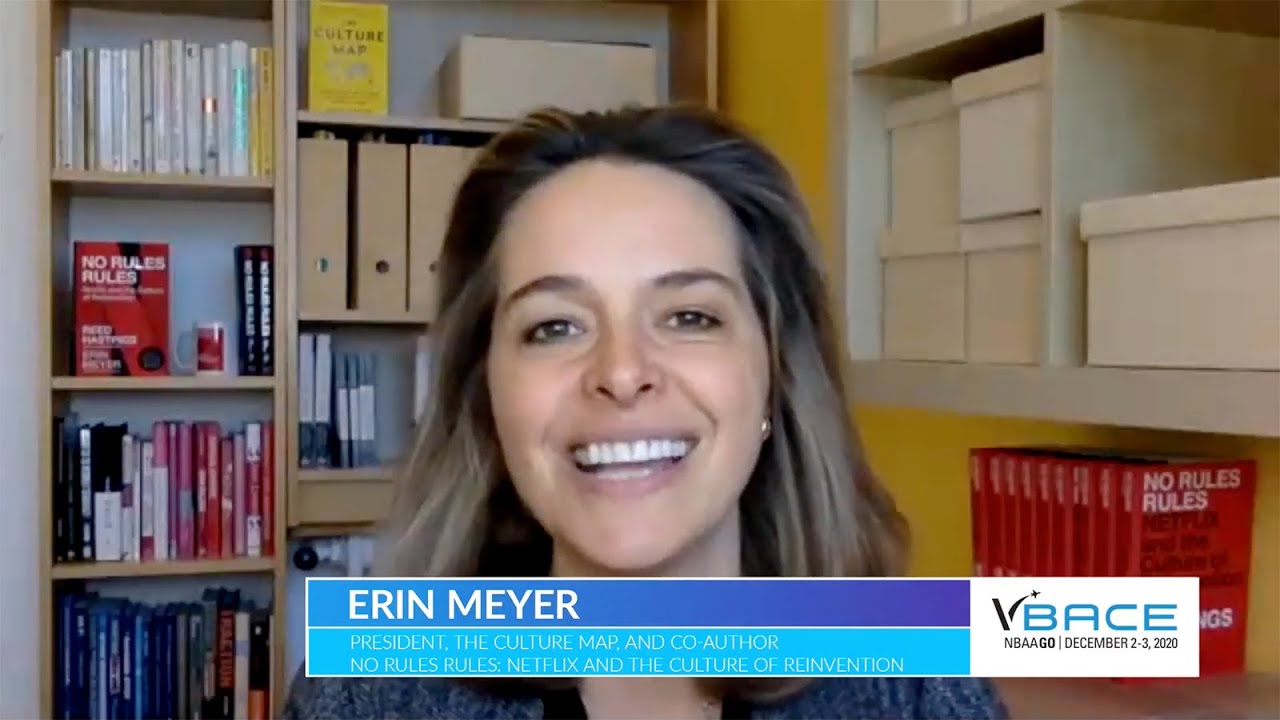
Erin Meyer, INSEAD professor, explains her Culture Map framework mapping eight behavioral dimensions across 64 countries based on 180,000 interviews. She shows how communication styles, feedback, trust, and power distance differ between Japan, Italy, Brazil, France, Germany, and others, with practical advice for managing multicultural teams.
Chapters
Welcome to our series Between the Lines, where we interview business school professors who have actually written fantastic books. My name is Henning Piesunker. I'm an associate professor and currently a visiting professor at the Wharton School. And it is my great, great pleasure to welcome today Erin. Erin, if you would join us, would be fantastic to have you. Wonderful. Thank you so, thank you so much for having you. Most of the people actually, most of the people actually already know Erin. Let me, however, let's kind of do a short introduction for somebody who doesn't need an introduction. Erin is a professor of practice at INSEAD. We have very, very few professors of practice. For those of you who don't know, it's a very, very exclusive title INSEAD gives out very, very randomly. Very, not very rarely, not randomly. I feel I need some content. I need some kind of high context, low context, I should say, when I make a joke. Look, Erin is a superstar professor at INSEAD. I would often say this about, by looking at the ratings, what's happening more in this case is that I teach in the Global Executive, which is one of the flagship programs at INSEAD. And the students have often taken Erin's class because they've taken my class. And so they often educate me about what I'm doing wrong in terms of culture and how great Erin is and how I should really need to understand that people from the Netherlands are different. And so I, but I also benefit from you because people might give me, provide me with more context. Beyond being a superstar teacher, being a professor of practice, Erin has been for a long time a consultant, a keynote speaker in very, very high demand. She has 2 New York Times bestselling books. The one, The Culture Map, which is the book we're going to talk about today. And then you can also see this in the background, Erin's book No Rules Rules with Reed Hastings, the CEO, a former CEO of Netflix. Also a bestselling book. And if you like the Culture Map, I highly suggest you also check out that book. Erin, thank you so much for doing this. Welcome to the podcast or welcome to the webinar.
Thank you, Henning. So nice to be here. So nice to be here with everybody.
Erin, what is the Culture Map? That's the title of the book. What is the Culture Map?
Yeah, so the Culture Map is, well, culture mapping. Let me just explain that. So culture mapping is a methodology that I use break culture down into 8 behavioral scales. So we look at things like, how do we build trust differently in different cultures? Or how do we make decisions differently in different parts of the world? And then through about 180,000 interviews that we've conducted in about 64 countries, we have these countries that are positioned up and down these scales. And what's interesting then is that we can kind of like map out, you can map out one culture up to another. So like if you were, I don't know, like working with a team that's made up of half Brazilians and half French people, you can map the 2 cultures up to one another and you can see in which ways they are similar. Like you could see, oh, both France and Brazil are relationship-oriented cultures, but Brazil a lot more relationship-oriented than France is. Uh, you could see, okay, well, here's like a really big difference. Like if we look at my disagreeing scale, uh, that, um, when it comes to open disagreement in meetings, that the French culture really tends to like, like open, strong debates, uh, which may actually strengthen the relationship. In comparison to Brazilian business culture, which may tend to avoid open, strong disagreements, especially in front of others, as it's likely to lead to a break in the relationship. So this mapping allows us to really kind of tease out what's cultural and what's personal when we're working internationally. And my book, The Culture Map, my first book, which came out now quite a while ago, 10 years ago in 2014, is all about that mapping process.
Erin, say a word about the 8 dimensions of the Culture Map. What are like, maybe like highlight 2 or 3 that you would gather the most important ones or that you encounter the most often. Could you like, yeah, talk about like 2 or 3 which typically stand out in like when it comes to like intercultural issues?
Yeah, so maybe I'll talk about, maybe I'll just start with kind of like the first one. So the first one is a little bit complicated. Wording. I'll keep it simple. So you mentioned it earlier. You said low versus high context communication. But let's call it for this webinar's sake, let's call it explicit versus implicit communication cultures. So I'll give you a couple of examples of this, examples that I've had since I wrote the book. So try to bring some new stuff. So my— so that scale looks at how much we spell things out and focus on making our communication labeled to get clear, recapping things in writing versus how much we focus on having sophisticated messages where we pick up things that were not said. And maybe I'll give you 2 examples of 2 extremes. So just after writing The Culture Map years ago, I took a trip to Japan and I was in Tokyo. I gave a presentation to a group of 50 Japanese. At the end, I asked if there were any questions. no one raised their hand. I went to sit down. So then my Japanese colleague, so our colleague from who works with, with me at, was working with me in Tokyo, came up to me and he whispered, he said, Erin, I, I think there were some questions. Would you like me to try? And I said, I said, yeah, yeah, yes, please. So he stood up and he said to this group of Japanese participants, you know, Professor Meyer has just spoken with you. Do you have any questions? And no one raised their hand. So instead of shying away, he he silently observed the group, and then he gestured to one woman who was sitting there from my perspective motionless. And he said, do you have a question? She sat up straight. Yes, thank you. I do. And she asked a fascinating question. So he did that 3 more times. So afterwards I said to him, but, you know, how did you know that those people had questions? And he said, well, it had to do with how bright their eyes were. So then I, I, I asked further and he said, well, you know, In Japan, we don't make as much direct eye contact as you do in the West. So when you asked a group if there were any questions, most people weren't looking right at you. They were looking somewhere else. But I noticed that there were a couple of people in the room who really were looking right at you, and their eyes were bright, signifying they would be happy to have you call on them. Okay, so that's an example of a high-context culture, right? I don't have to raise my hand or say, I have a question. I just look at you a certain way, and you know. that I have a question. Then another example. Here's a new example from last week. Okay, so, like, the American culture. So I'm originally from the US. I've lived in France for 22 years, but I'm originally from Minnesota. And I was running a training program in Italy last week. So the US is a very low context, a very explicit culture, which means that we tend to, like, really spell everything out. So I had this Italian in my class who had been living in the US for a long time, and he He said to me, you know, Erin, um, in Italy, if you make a joke and the other person thinks it's funny, they laugh. I said, well, yes. He said, but now that I've been like observing Americans for a long time, like in the US, if you make a joke, the other person says, that's funny. Now, I never thought about this before, so I thought, well, yeah, that's true. We laugh and we say, that's funny. And he said, no, the laughing is optional. So that's an example of a culture where we don't rely so much on body language. We really have to spell everything out. Okay, so I think I talked enough, but that's the first dimension. So that's one we can start with, explicit versus implicit communication cultures.
Erin, this is fascinating. You touch up on this in the book very early on. You talk about an Indian executive who was like half nodding. And this was the moment in the book where I was completely blown away, where like, okay, you see, like just in terms of like collecting the data, I was thinking like, okay, I can see how you run a survey and ask a bunch of questions or how people talk and stuff like that. But I was really curious in how you grasp like body language issues across culture, right? You talk about the nodding Indian executive. You've just talked about eye contact. Can you elaborate on this a little bit? Like, what is about things that are said? What is about body language? How do people figure out body language? Like, elaborate on the body language aspect of it.
Yeah, well, I mean, we all, we all pick up body language cues in our own culture, right? What gets complicated is when we are working across cultures. So, um, the way that I, the way I collect data, I mean, the, the types of things that I do, I, I never ask people about their own, their own cultures. Like, people don't know about their own cultures. That, I mean, that was a great example that this Italian guy gave me because I guess I've been saying that's funny for the last 40 years. But, but I never noticed it until he said it. Right? So the people who notice your culture are the people from other cultures who are living in your country. And that, that's what I, you know, that's where INSEAD is such a great playground, right? Because we have so many executives who have lived in so many different countries. So if we're trying to, like, understand the gap between, I don't know, like, um, Spain and Mexico. So 2, like, Spanish-speaking countries, um, 2 high-context cultures, but the cultures are really different. Then we, we would manage— we would interview a bunch of Spanish people living in Mexico and a bunch of Mexicans living in Spain, and they're the ones who will tell you about how those cultures, um, express themselves so differently.
You see, the, the great thing about coming to INSEAD is obviously you get exposed to all these other cultures, right? But there's a feature you touch upon in the book is you're also leaving your home country. And by leaving your home country, you actually start realizing that your country actually has a culture. So you're, you're speaking about, I believe, a gentleman or woman from, or lady from, from New York who says like, Oh, I don't think there's one American culture. But then the moment she actually— because, you know, obviously you're very aware that New York City and Idaho and San Francisco are completely different places, not even to talk about Minneapolis. Okay. But then the moment you leave the US, you realize there is a US culture in that sense. Say a little bit about more these differences within countries, but why there's still an— which might seem enormously big when you're in the country, but why there's still an overarching kind of country culture.
Yeah, yeah. And maybe I'll use this opportunity to talk about the second dimension. So my second dimension is a second communication dimension. It's actually my favorite. That's the dimension that looks at feedback and how we provide feedback most constructively in different parts of the world. And so then to link it to your point, So when it comes to people understanding their own culture, I mean, we always say fish don't see water. So when you are in a culture and of a culture, you don't see the culture around you. And as you said, it's only when you've been kind of like removed from your culture and you could kind of see it from a distance, uh, that you start saying, oh yeah, actually now I, now I see some kind of unity that was not obvious to me when I was in the culture. I'm in the culture. I just see the diversity of people, right? I see some people are more direct and some Some people are more indirect. Some people are more task-oriented. Some people are more relationship-oriented. You remove me from my culture, I start to see it from a distance like a fish out of water. And I think— and then you asked about regional differences. I'll wrap it all together. So my feedback scale, I think, is so important because, of course, when we're working internationally or nationally, we often as leaders have to give messages to our teams and our colleagues about things that we feel that they could do better, or things that we feel that they didn't do well, or to show appreciation. And the way that we, when we give those messages and how we give those messages is deeply cultural. So first, let me kind of talk on like a— well, I'll give you 3 examples from around the world, and then I'll talk about that in the, like, in the, in my culture, in the US, how we might find some differences. So And I think one thing that's quite interesting is that, um, well, for example, okay, so I'm, I'm American. As I said, I've lived in France a really long time. If we compare those 2 different cultures, um, Americans are, are stereotyped as being much— as being very direct and French indirect. But that's because of the low-high context that we already talked about, how explicit or implicit we are, uh, when it comes to giving negative feedback or giving criticism. I think the American culture is actually quite confusing to many people because on the one hand, we like a lot of feedback. We like to, to give feedback frequently, and we believe it should be given explicitly and written down. But on the other hand, there's this strong focus in American business culture on giving 3 positives with every negative, catching people doing things right. And actually, I've been doing work on a new dimension on a positive feedback scale. And what I've seen is that Americans give more positive feedback and stronger positive feedback than any other culture in the world. So then, like, okay, I mean, I'm working with, uh, like a French colleague, and she says to me she got this feedback from her American boss. And the American starts by telling her what he thinks is great. And she thinks, wow, that's the best, that's the best feedback I've ever received. Because in France, positive feedback isn't given very frequently, and negative feedback is given a little bit more strongly. So that's already quite complicated. And then we can bring in some other parts of the world, like, Well, let's bring in like Southeast Asia. So, okay, so of course, we, uh, you and I, we, uh, we teach in Singapore sometimes at our, at our Singapore campus. Um, if you go to a country like Thailand or Indonesia, it's very frequent that the best feedback would be given in a way that you might not even notice. You or I might not even notice we've been given feedback at all. Right. And one of the techniques that we might use would be like in Thailand would be to give, um, to say the good and leave out the bad. So like, I had an example. I was, uh, speaking at a conference in Thailand, and the woman asked me to send her, uh, 2 photos and a video so she could promote the conference, which I did. And then I called her up the next day and I said, you know, did you get what you need? And she said, the photos were excellent, thank you. So then I said, oh, would you like me to send you some other video options? And she said, well, if you have them, that would be wonderful. Right? So there she was able to give me the feedback without saying anything. So, so those are some differences from around the world. And now I'll, now I'll tell you about regions in the US. And then Henning, maybe so I don't do all the talking, maybe you could tell me about regions. I think, are you from Germany? Are you from Germany, Henning?
Germany? That's correct. Yeah.
Okay. You can tell me about the difference between the North and the South with, with feedback, which I think I have an idea about. Okay. All right. So in the US, of course, we have very strong regional differences. when it comes to that specific dimension feedback. And New Yorkers are clearly the most direct part of the US. And then the Midwest where I'm from, we tend to be much more indirect. New Yorkers feel we are passive-aggressive. They call us Minnesota nice, which means they never tell you what they really think. But I do think it's really interesting because of course the US is built on immigration and New York, like 2 of the biggest cultures that have impacted that New environment are the Dutch culture. Of course, New York used to be called Little Amsterdam, and then also the Jewish culture. And, you know, so, and if you look at my scale, I mean, the Netherlands and Israel are 2 of the most direct negative or the direct feedback cultures in the world, direct criticism cultures. So I do think that's interesting how we can see, depending on which part of the country you come from, that the immigration has really impacted. our communication. So now, what— how about you, Henning? Tell me about Germany. The north more direct than the south, right?
You know, Erin, this is, this is interesting because I have been— I left Germany pretty much when I was 22. Okay, you may, you may, you may think that's 10 years ago, but it's actually 22 years ago. Um, and so, but this is an interesting element about the book. Um, for me, this was very interesting when reading the book because you see, like, it's not only that I went into a foreign culture, right? You see, like, I, I got my PhD in the US. I studied in London for a bit. I studied in Paris. I then moved to Fontainebleau. I then taught in Singapore. Um, but one thing which happened as a side effect, right, is that I became more aware of what German culture is. Um, and I also became less German in a certain way, at least that, that's what, that's what I tend to think. That's the kind of feedback I get. And so I found your, you see, like, I find the book sometimes as a reminder, so to speak, to say like, oh, look, you now move into German context, right? You see, like, when I go to, I had this anecdote, Erin, that, that I moved back to my hometown. I'm coming up from a 4,000-people kind of village, Neckarsteinach. It's famous for being a very small village, having 4 castles in it. Okay, everybody should check it out. It's beautiful. And I remember I lived there the first 19 years of my life, and I went to an ice cream shop, and the ice cream shop person asked me, hey, where are you from? And I felt like, look, I am from this place. So I suddenly felt very— I felt like a stranger in my own town. Erin, the reason why I mentioned this is one aspect in which I found the book very helpful. Was not just in better speaking and better hearing, but also in better feeling to a certain degree. You see, like, for— so you mentioned the example, you presented to a Japanese audience, and I've done this, and I remember very well the first time I did this, I was in shock. Nobody clapped, nobody said much. It was very, very— it was hardly reaction, and I thought I completely bombed. And I was like, oh my God, put me on a plane, I need to get back. And then I got very positive feedback in the quantitative evaluation. People say like, oh, we want Hennig again, this was a fantastic kind of class. I was teaching a class on entrepreneurial management. And so there was an element of me, it's not just about how you talk and what you hear, but it's also about how you feel. And sometimes you see, for example, we, we got a, we got one question in the Q&A. How do you deal with the anxiety of it? How do the anxiety of saying something wrong or hearing something wrong? And you see, the book calmed me down to a certain degree because it it got me a little bit out of attributing everything to myself, or like a lack of reaction, overreaction, and more like oh that might just be a cultural issue. I and so I wondered I mean if this is a more general thing that was that my experience that like it changed how I. feel, or is that something you've seen more generally in your practice?
Yeah, well, I think it's super important because until we start, like, when we're working internationally, of course, there's all sorts of things going on that, um, I mean, even when you're working with people only from your own culture, you may have moments where people look at you like you're strange, or they don't react the way you expect it, or someone gets angry and you don't know why. And then when you're working internationally, that kind of thing happens a lot more frequently, and then you don't know, well, what's personal and what's cultural. So of course, that leads us to feel uneasy. And that's why I found that it's so important that we actually take a step back and try to kind of study, like, what are the cultural differences so I can start recognizing also what the personal differences are like. Oh, that specific situation actually is because I bombed. And that other specific situation is actually because of a cultural difference. I mean, you gave that example about presenting in Japan, but I just had a new example from a German woman who said to me in a— it was a question, but it was her example— said to me in a webinar just, I don't know, 3 weeks ago, she had an American boss. It's kind of the reverse of your situation. She had an American boss. Okay. She said, well, my boss, he often gives individual positive feedback in front of the team. He calls out someone for feedback, like, okay, you know, I don't know, Doris, I'd like to recognize Doris for her hard work. And she said, so of course, in my culture, if you had positive feedback to give to somebody, you would do it one-on-one. You wouldn't, like, call it out in front of the group like that. So whenever he does that, I think it's actually a message to me and the rest of us that he's not happy with our work. So that was causing anxiety. Anxiety from the listener, not from the presenter. So I guess, I guess the answer to your question is, Henning, that, I mean, yeah, it's complex. It can be worrisome, but it's also so much fun, right? And I think that once we start recognizing that a lot of what's going around us, on around us when we're working internationally has to do with our own, our own lack of feelers to kind of pick up the messages as they're coming in.
Yeah.
And we can ask a lot more questions. We can show a lot more curiosity, try to, to be less judgmental and less reactive. Now, will we ever succeed entirely? Of course not. But yeah, that's it. Yeah. So I think, Henning, it's normal.
Erin, how we are living in a different world now than 4 years ago with COVID kind of work from home happened. Zoom happened, or even worse, Microsoft Teams happened, right? You name it. And so I got like, I think at least 15% of the questions are about emojis and Zoom. And how does all this differ in a digital environment, right? You see where I am on Slack, I am on Zoom, I'm on email. How is this— does this kind of make this more important, less important? But also, how does it change it? What's different about digital communication rather than in-person communication?
Yeah, so I think I'm gonna answer it in 2 parts. First, the disadvantage to working virtually when we're working internationally, and then the advantage. So I mean, the disadvantage is, of course, that when we are— like, okay, 10 years ago, 10 or 15 years ago, most of the interaction that we had with other countries— I mean, most people who were working frequently with other countries also were frequent business travelers. So those 2 things tended to go together. And of course, when you travel to a country, you get a lot of information about what's cultural. So like you gave up— you brought up that simple point about Indians And head movement, and that's like a—I mean—a very simple point, which is that of course in most countries there's kind of two head movements, right? One is like this, and one is like this. There are two countries that we see clear differences. One is Bulgaria, where very confusingly often it's the opposite, and one is India, whereas especially in southern India, where there's another movement which is kind of like moving your head from side. side to side. Now, of course, if you go to India, you're in especially southern India, you ask a question, people respond enthusiastically. They do that with their heads or they're listening to you. You say, oh, everybody's doing that. That's a cultural signal of enthusiasm or that people are listening well. Fine, I get it. It's not personal, it's cultural. But then if you're working over Zoom, you've got just one Indian Or maybe 2, you've never been to the country. And that's what's happened, of course, since COVID is that now we're all working with countries that we've never been to. So we have communication without context, right? Communication without the ability to understand what's cultural. So then we start taking everything personally. Like, okay, when he moves his head like that, I know it's because he doesn't like me. Or I know it's because he's always doubting everything I say instead of recognizing what's cultural and what's personal. So I think that that's the disadvantage, right? The disadvantage to this kind of world we're living in now is that we end up taking everything personally because we don't have the cultural cues. Um, which is why the culture mapping actually, I think, becomes more important because it helps us take a step back and understand the cultural elements that we maybe didn't understand before. Um, but I actually have to say, as a facilitator, I love working virtually. I love having a virtual class. And that's because it deals with this very frustrating thing that happens when you have people from different countries in the same, in the same meeting, which is that some countries, some cultures talk a lot more than others do. And if we can in a moment, if you like, talk about like, what are the cultural reasons for that? But I mean, you know it, I know it. You've got people from different countries together. Some countries like my own end up doing all of the talking and other cultures it seems like you never hear from them. Now, of course, that's deeply rooted in lessons that we learn in school when we're children and at the dinner table when we are kids. But Zoom, I find, gives us all sorts of tools. Like now we can tell everybody to raise their electronic hands and we can call on them in order instead of just relying on people to jump in and whoever grabs the air most quickly wins. Or we can say to our teams, hey, you know, each of you go ahead and put an answer to this question into the chat box, or how you think we should deal with this, and then we can read everybody's answer and choose only the most interesting to give their responses. So I actually feel in some ways we can get a lot more quality from that international collaboration than the problem of being face-to-face. Okay, so just a couple of things.
Yeah, that's— no, that's very helpful. Erin, this has been obviously— so what I really like about this, and I'd not thought about this, that the— how should I say— the correlation of travel and digital communication. So we had digital communication for a while, but it used to be that the people who communicated with a certain country typically also were exposed to that country to a certain degree, and that link may now be more broken, right? it might have been like, you know, I'd go to Greece 2 weeks a year and then have communication throughout. But nowadays, you know, company budgets might be tight and they say, look, we never actually sent you to Greece in the first place. You just have a bunch of Zoom meetings. Yeah. Yeah. Erin, also this comes by— this is a very simple selection effect. The people who are on this call are obviously interested in cultural issues. viewers. A name that has come up quite a bit is Hofstede. So we have at least like 10, 20 questions on Hofstede. Maybe you can— I always find it ungrateful when people talk about other— ask about other people's work, but maybe you can help us positioning this a little bit. How does what you do differ? Is aligned with Hofstede? Can you say a word about that?
Yeah, sure. So Hofstede, I mean, he was the guy, right? I mean, he was the guy in my field who started all of all of the— he was the first guy to do it, the first person to do an extensive research project across the world. And I, you know, I reference his material and build on it on a daily basis. Yeah, a lot. It was a long time ago that he got started with that. So he had— Hofstede had also had cultural dimensions, a set of cultural dimensions that he worked with slightly less than I work with. But I would say the difference between his, his, what he looked at and what I look at is that he looked at value systems in societies versus whereas I've made a little bit of a twist. I try to look at behaviors in business. So I try to kind of try, I tried to make it a little bit more practical, take it away a little bit from like really having to kind of think deeply about like, how does this apply to really like, oh yeah, that's something I experienced. And a couple of his dimensions But, uh, you know, some of the most fundamental areas that he first studied, I still look at, uh, today. So for example, power distance, which looks at how much we defer to an authority figure and how much, uh, in our culture we are taught to show, let's say, respect to the status of the person that we are working with. And that's, uh, that's my leading scale. So I took his dimension, his work, and I've been building on it ever since then. So I have, I, you know, some of my, some of my work stemmed from him. But there, he's not the only one, right? I mean, there were a couple of other really important people. Of course, Edward Hall was, for me, just fundamental. He did all of the initial work with low and high context communication. He was so important to communication research that I think we all started kind of thinking in the cross-cultural world just Uh, about like the difference between explicit and implicit communication, which was context. I then tried to add another dimension, which was the feedback scale, because I saw that some cultures were both explicit but indirect and implicit but direct, which made, made things a little bit more complicated. So nothing more to say about that at the moment, just that your, uh, our audience is right. These, uh, these are all people that were really important and that we use as our grounding, our first steps in this field.
Erin, this is to say one thing, one more positive thing about the book I liked. It feels very, in a very good sense, tactical in the sense of like, oh, this is stuff I can immediately kind of apply. And I feel it, one can really tell that you do not just study these things but also work and consult in everyday life, that you go through these experiences, right? So you have, how should I say, you have data from surveys and so on, but you also kind of benefit from having the interaction with people who have these kind of issues on an everyday basis. Erin, there's one topic that has come up a lot in the questions. For example, So, Sophia asked a question before even the webinar had started in the registration form, and I thought a lot about this, the role of gender. Okay, the role of gender differs enormously across societies. What it means to be— I use as an example what it means to be a woman or a man in a certain society is very different from what it means in a different kind of society. So this feels almost like a curveball throwing into all of this, that if I talk with the women from Saudi Arabia, it's very different than when I talk with a man from the US. So it feels like there's this really complex interaction between interculture and gender. Say something about that. How to deal with this? Is there a real effect? Yeah.
Yeah, so I mean, I think that like one thing that we could look at, that first dimension I was talking about, so what we call low-context versus high context, explicit versus implicit cultures. Women often— women, my students often say to me, you know, are women more high context? Are they more implicit in their speaking? And that's a question that I get from around the world. What I've actually seen is that in a home environment, that may be true, right? In a home environment, like, okay, maybe your wife is like, I'm not angry, but you can tell she's angry. But in a work environment—
Yes, I know.
But in a work environment, it's much more complicated. So, I mean, like in the US, any woman who is like a successful businesswoman is just as explicit and clear in her communication as any businessman around her. Then there may be other cultures. I think France is one where we can see a stronger gender difference, and certainly in Saudi Arabia even more so. So I don't have a clear way to make a, like, a, a link to say, okay, yeah, we could make a clear graph like this. I think in some contexts, like in the US, women have to adapt more because the, the business culture is built, let's say, traditionally from a male communication perspective. And, you know, yeah, I mean, it's actually, of course, much more complex than just gender. Of course, generations are different. The world is changing. Every organization has its own personality, its own culture. So I don't seek to minimize that complexity. I just seek to help people to kind of tease out which is the national cultural difference that we can recognize. So at least it makes things slightly more, slightly clearer, hopefully. Are you okay, Henning? I think your screen is frozen. You're okay.
I probably froze for a second. I'm okay. I'm not so sure about the connection, but I'm okay. But thanks for asking. Erin, you made a beautiful differentiation there, which I think is very, very important, that we might actually build up stereotypes based upon people, how we experience them in their personal lives. And I think that might almost add to the confusion, right, that we have a business life and we have a business personality. and we have, we have, and you see even within business, right? I don't know, you may have experienced this from, from our joint colleagues. Some people are very different in the classroom than they are in the faculty seminar, right, on the faculty meeting. So I, I often have a hard time kind of telling when I talk with students about other colleagues, which I try to avoid, but when it happens, I almost feel like, oh, we are talking about a different person. That person is very different in one setting than in the other. And so So what you're highlighting here is the difference between the personal life and the professional life. And I might actually kind of confuse that, right? I might actually build up a stereotype and then act according to that stereotype, which I've learned in people's personal life, but then apply that wrongly in, in the professional life. Erin, say a word about cross-cultural households. So you see, a lot of our listeners are INSEAD alumni, and INSEAD alumni, there are a lot of cross-cultural marriages. There are a lot of children who are actually growing up in 2 or sometimes in more cultures. So I give you an example. My son Hector, who's 6 years old, he has been born in Fontainebleau. He speaks fluent French. I'm German. My wife is Chinese, and we are now living in the US. So he constantly deals with 4 languages, with 4 cultures. Inform me. I can share this, but I'm not— you see, like, I have a hard time making sense out of it. What are the advantages? What are issues that are coming up in these kind of multicultural households?
Yeah, well, I think that's a— I mean, it's such a fascinating question. Let me just start by saying, Henning, that your family is not my research pool. So I, I, I try to only look at, like, people who have spent their lives living in one country, right? I have to do that to get some kind of consistency. But then, of course, for people like, like you and so many of our audience who really have spent a lot— their large portions of their lives living in different countries, and, you know, maybe their parents are from 2 other countries, and maybe you are a culture map yourself. And I think what we can do at the end of the session, Henny, and I don't know why it didn't occur to me before, but I think we have the email addresses of our of our participants here, we'll send them a link to my, my culture mapping assessment tool just so they can play around with it for, for a couple of weeks, and they'll be able to respond. You'll respond to 24 questions about yourself, then you get your personal map and you find out if you are living in the right country or not. A very important, important moment. So yeah, I mean, I actually love to use that map even in families. I think it's really interesting how you can see how, how your children, like, like, I mean, I don't know, like Hector, right? Maybe, maybe he's got like this portion of him which seems to have come from the Chinese side and this portion which seems to come to the German side and this part which comes from living in France. And then, of course, he also has an ability to move back and forth between cultures without even noticing it. And I think that's the great advantage to people like our INSEAD students, right, is that much more so than most of the population, they have this kind of tacit or experiential knowledge so that they can adapt themselves to different styles. And I think the next step after you've got that is to learn the words to articulate what you know inside so that you can share this with your, with your teams and your organizations. And they can also start to benefit from that, from that knowledge that you have in you.
Erin, I'm— you're sitting on this treasure trove of data, and I wonder to what degree, or like from your experiences when you, when you give trainings or when you consult, to what degree do you see actually changes in cultures over time? You have been at this for a bit, and so for example, we had We had Patricia Sharma asking, Asia has changed so fast and so dramatically in the last 3 decades that Asians are no longer indirect communicators to defer to hierarchy. Instead, economic prosperity has brought some strong nationalism and a brash young wave of Asian directness. And she asked if you agree. So I wonder, you see, like I've talked, for example, with a lot of kind of Asians who said like, look, I left China 20 years ago and it's really a different country now. I wonder what's your take on this because these countries go through dynamics, right?
Yeah, so we, of course, we can track that, right? We can track how the world is changing. And maybe I'll just go back to that dimension that we talked about a few minutes ago of power distance. So how much we defer to an authority figure in different parts the world. So that dimension, maybe I'll just take a moment to kind of give an example around it. And then we'll talk about the way the world is changing. So we can see that, of course, in some cultures, like the Netherlands or in Scandinavia, children really learn from a very young age that the, the boss, the person in charge, is just a facilitator among equals. So like, if you go into a classroom in Sweden or in the Netherlands, you'll see the children call the teacher by the first name, that the children are seated at round tables and are welcome to like challenge the teacher or push back. And the teacher is there facilitating the learning. Of course, in many other world cultures, like, I don't know, let's look at the other extreme, like Nigeria. We may find that children learn at a very young age. There's kind of deep respect for elders, for people who are in charge. You walk into a Nigerian classroom, you could clearly see like the deference from the children to the teacher. And in part of Nigeria, if the elder walks into the room, uh, people will— like in the family environment, in any case, I mean, people will— the child will, will lie down, right? Will prostrate themselves in respect. So, okay, so then we take that to business, this dimension of business. This Nigerian guy who's leading a group of Danes, and he said to me, oh my gosh, like leading Danish people is absolutely incredible. Because they do not care at all that I'm the boss. So I go into these meetings, I'm like trying to roll out my strategy. People are challenging me and contradicting me and taking my ideas off in other directions. Sometimes I just want to get down on my knees and plead with them, like, please don't forget that I'm in charge. So I think on the one hand, we can really see that this means— I mean, of course, the lesson for all of us is that, um, what it means to— it's not enough in today's world to know how to lead the Nigerian way or the Danish way or the German way or the Singaporean way. We have to be flexible enough to adapt our style to the populations that we're working with to get the results we need. But then when it comes to generations, this gets more complicated. And what we see is that in every country in the world, the younger generation is lower power distance than the older, more egalitarian. In other words, kids these days. So younger people defer to authority figures less than older people do. And I think we can see a clear reason for that, for that, like, specific trend across the world, which perhaps happened with the information age, meaning that, like, when— okay, I'm 52. When I was a child, there was no internet. So the older person really was the person person who had the expertise. But today, like, your teacher tells you something, you can look it up on the internet, right? And then say to your teacher, hey, I don't think that's true. Or to the doctor, hey, I learned something else when I looked it up. So that kind of brought, like, let's say, a flattening out or an egalitarianism of information. So your colleague is right that we have to look at all of those things. And of course, in some countries like China, it's more complicated than in other countries where we may see more kind of like a gradual movement. But yeah, that makes it all more fun.
Christopher Buckman had a question, is a very pragmatic question, which I like quite a bit. He's just like, look, are there any generic levers to manage big cultural differences. So you see, like, I might not have the time to go to look at the map. I might not even have time to reread the book, but I might be in like teams with big cultural differences on a daily basis. Erin, give me your quick fix. What can we tell Christopher? What is it? What are like 1, 2, 3 generic levers? where that allow Christopher to manage the intercultural differences in his working environment better?
Yeah. Okay. So let me do 2. I mean, the first one is that I, I know that most organizations don't talk about cultural differences because they worry that if you talk about cultural differences, it suggests that you think that everybody from the culture is the same. In other words, then when we bring up cultural differences, we're putting individuals in boxes. Individuals do not like to be put in boxes, so we don't talk about the culture. The problem with that approach is that then we end up interpreting everything that's going around us from our own cultural lens. So we judge their behavior from what it would mean in our culture. So I actually think a much better approach to take to all of this is with humility and curiosity to ask a lot of questions. And that can be things like that. So the rule is laugh at your own culture. Okay, so speak about your own culture in a way that suggests that you think your culture is not as good as the other culture, or at least in a way that kind of teases how you work in your culture, and then use positive words to describe what you've noticed in the other country. Like, oh, I've noticed in your culture that you're really good at appreciating one another, and we don't do that so much in my country. So sometimes I don't know how to do that. Can you help me understand how to be more effective? Or, I noticed in your culture that you're really good at investing in the relationship building, and we don't do that as much in my country. So, you know, I'm gonna work on that, but I think going to need some help from you as to what are the practical steps to make that happen. And I think the more that we do that, I mean, I like to suggest that teams, then this link that we'll give to the audience where they can do the personal assessment, I think it's fun to have your teams like do their own, each member do their own personal assessment. Then you can compare your personal assessments to the countries that you come from. And you can say things like, hey, you know, how are you like your culture and not like your culture. So that's the first thing. First tactic, bring up cultural differences. Don't be afraid as long as you do it with curiosity and humility. I do believe everyone likes to talk about their own culture. Don't suggest that the individual in front of you is like their culture, though, because of course every individual is unique. Okay, so that's like one. The second one actually links to one of the, one of my, my dimensions that we haven't talked about yet. And that's my trusting scale. So the trusting scale, which talks about how task-oriented versus relationship-oriented we are in a business environment. And it looks at how much time we invest in sharing meals together or getting to know one another at a deep level, not just kind of like at a professional level, but really establishing those deeper heart connections in a business relationship. And, um, okay, so of course my culture, the US, the American culture, is quite task-oriented. So people may be very friendly, but we generally don't invest a lot of time in getting to know people deeply. And we often feel in, in the American business culture that it's kind of dangerous to get to know people well, because then that might lead you to make decisions based on the relationship, not on the, the, the, the task at hand. Um, but I do believe working internationally, the more relationship-oriented, the better. So that's the second rule. It was like, just spend as much time as you can building emotional bonds. Um, I'll just give a quick example. I was doing some work with a, with an Indian-American collaboration with Deloitte a few weeks ago, and I, uh, the, the American team told me that they had I built great relationships with the Indian team. But when I talked to the Indian managers, they said, you know, we have this problem because we get onto these calls with our American senior partners. And we know, like in India, we know that Americans generally start the meeting by saying, like, how are you? And then the other person says, great. And then we jump down to business. Or maybe, how was your weekend? It was fine. Then we jump down to business. But like, for our Indian team, it's really difficult to feel kind of a deep trust for our boss if that person doesn't know about our families and our personal lives. So like, after having that conversation, they just established some rules as a team, which is that, you know, at the beginning of every meeting, they were going to spend every 30-minute meeting, the first 5 And at the beginning of a phone call, if you start— if you jump right in, the other person should say first, how are you? And I think that's the second rule, right? So just like the more international, the more we need to invest in building the emotional bonds. Something like that. Over to you, Henny. Thank you, Erin.
Erin, I'm just gonna feature Rodrigo here. We have a lot of people who have already read your book, and the question which has come, if you published a revised edition— so I will say, I think the book has stood the test of time, so I'm not sure we need it, but there must be elements where you say, oh, I wish I could bring this in, or this is something I would write differently. So can you give us like 2 or 3 things where you would say, if I could rewrite this, or if I published a new version, these are things I would change or put on top?
Yeah, so I mean, I, I would like to have a big fat chapter about virtual communication, and probably after each chapter I would have several pages about how that impacts our virtual So let me give you 2 examples that can build on some of the topics that we've already talked about. So at the very beginning, I started by giving that example about bright eyes in Japan, about watching people's face. What I didn't tell you about— to see if they have something to say. What I didn't tell you about is how I use that in my classrooms. And then we can look at how we use that in a virtual media where, of course, bright eyes become complicated to see. Um, so, okay, so to remind the audience, I was in Japan. I got this feedback from my Japanese colleague that I should look for bright eyes in the classes in order to see who wanted to speak. And okay, so then the second part was then I tried the technique. So the next day, um, that in that trip in Tokyo, the next day I, I gave another presentation. Again, I asked if there were any questions. Again, no raise their hand. But that time I did what he had modeled for me, my Japanese colleague had modeled. So I stopped and I silently looked around the room. I saw, okay, people are not looking at me. But as I was looking around the room, one of the Japanese participants, let's say he grabbed me with his eyes, right? So he kind of like looked right at me. And when I looked at him, he held my gaze. Now, were his eyes bright? I mean, I don't know. But I thought, okay, well, maybe that maybe this is the signal. So I made like just a very slight gesture and he nodded his head and then he asked a fascinating question. But then what was so important was when I went back to INSEAD, where of course we have these incredibly multicultural classrooms, you and I, what I saw was that there were all of these bright eyes in the classes that I had been entirely missing. So not just from the Japanese. Like, you know, first of all, like, let's just say, okay, all East Asian cultures make bright eyes, although like Chinese, they're likely to have like a much bigger kind of like a smile or more of a head kind of grab me with their physical presence. But like even Brazilians, I just had a group of Brazilians a couple of weeks ago in my class. I have this Brazilian guy who's in the back of the class. He's like kind of moving around like he's really— this guy has something to say, right? I mean, he's not raising his hand, but he wants me to call on him. So of course, when I'm physically with people like that, now I I can understand those cues better based on this education that I'm getting every day. And I can say, you know, I can call on him. But now let's say we're in a virtual environment. Well, gosh, that's a lot more complicated. Um, but I, I do find I had this, uh, this incredible, uh, leader that I was working with a couple of weeks ago, and we were in a, a meeting and there were people from several different countries, and I saw he was really like looking carefully at his— at the people in the room. And like when someone kind of hesitated or stopped, he would stop and say, you know, like, Eun, do you have something that you would like to contribute? Oh, I do. Thank you. So I think that we as leaders need to be much better facilitators in virtual environments, looking for those cues that people have something that they want to say. So, okay, so I would add that. Can I do one more, Hany? One more example? Yes. Okay, go for it. We don't have much time. Okay, this one I'll do quick. Okay. But then the other one has to do with trust, and I know some of the audience members were wanting to do that, were wanting to ask that question, like, how do we build emotional bonds? cons when we can't meet face to face. And I think probably this is the last example that I have time for, but I had this fabulous example from this group in Australia a few months ago. I wish I could go back and put it in the book. So I had this Australian team, they were negotiating with a group in Beijing, and the Australian woman said, you know, okay, she said, I read your book. I know how relationship-oriented they They are in China in comparison to us in Australia. It was really hard at the beginning of the negotiations. It was like, like we, we couldn't get anywhere with them, and they were like really tough. And I knew if we could go there, we could build these bonds, and it would help things a lot. But we couldn't go. So they went to Chinatown in Sydney, and they bought these big like bags of Chinese snacks. snacks, things they had no idea what they were. And then they went to a grocery store in Australia and they bought like Vegemite, right? Like all of these Australian snacks. And they created a box and they sent it to their colleagues in China. And then in their next meeting, they all opened up their snacks, right? And they started with the Australian snacks. Okay, what are these? And they all tasted them. And then the Chinese counterparts did the same. And she And it was incredible because we all started laughing together, tasting these things that seemed strange to us. And it was just everything changed after that. So I think that, okay, that's the long answer to the question. I would like to add more about how to work virtually. That's what we need.
Erin, maybe what we are coming towards the end, but one word about how all of this relates to corporate culture. We are talking here in this fantastic book about national cultures mostly. I know it's an impossible question to ask with 1 minute to go, but how, what's the linkage with corporate culture?
Yeah, so I, let's see if I can do it super fast. So when I did this big research project with Netflix for my last book, one of the, I was working with them in 2015, Netflix was a national company getting ready to go international. And what I worked with them on was mapping out their organizational culture so they could compare that to the various national cultures they were moving into and then think about, like, in which way will our organizational culture work in those countries and in which ways are we going to have challenges that we need to reflect on. So I think we can just end with that, which is that from my perspective, very simply, culture is the personality of a group. So in the same way that, like, I could describe, like, your personality, Hany, like, you know, very friendly, thoughtful. The more I get to know someone, the more I know, the more we know their individual personality. We can also look at the personality of a group. And today in this session, we've talked about the personality of nations. And of course, you also talked a little bit about the personality of genders, and we slightly brought up the personality of generations, but organizations also have personalities. So I often work with companies on mapping their organizational culture out on the 8 scales also, so that we can start to have a little bit more of a sophisticated lens. Fastest answer I can give.
Erin, here my German culture comes into play. It is 11 AM Fontainebleau time. No, 4 PM Fontainebleau time. So we are closing punctually. We have the Swiss train policy. Dennis Sopp wrote a comment in the Q&A which I liked a lot. He said, great session, feel like I'm back to INSEAD. And that is very, very much the best I can hope for with these sessions. And Erin, thank you so much for, for taking the time. We are going to follow up with, with recordings and with the recording and so on. We also have 2 upcoming talks, and these are both on the topic of AI, and they are going to be— at least one of them is going to be different from the kind of talks we've seen so far. The first is where I do a research presentation. Okay, so we have From Chess to Career: Unlocking GenAI's Training Potential. Michelle. Um, what I will do in this is I will simply talk about research. I will not teach a class, okay? I will give you kind of a look in what happens kind of below the engine. I will start— I will show a lot of empirical research on what has happened in the context of artificial intelligence, what has happened kind of empirically, and I will in particular present one paper. So if you are interested in saying something, learning something interesting about artificial intelligence, And if you're interested in scientific research, you should join that. That's the session on Wednesday, March 20th. I've just actually put the link into the chat. And then we have an event that I'm super excited about. We actually got Ethan Mollick. Ethan Mollick is currently easy— easily one of the leading academics on artificial intelligence. So to give you like a feeling, um, Google is inviting him for talks. Talks to actually learn about artificial intelligence. He's a professor at the Wharton Business School. He knows his stuff in a way I've never seen. There's probably no one on the topic of AI— there's for sure no one on the topic of artificial intelligence that I follow more closely than Ethan. So it is going to be a treat. Ethan is super fun. He's fantastic. He's a little bit of a crazy genius, but it's simply extremely fun, extremely informative to talk with him. So that will be the next kind of classical Between the Lines with Ethan, and there will be the research talk by me on Wednesday, March 20th, and the talk with Ethan will be on Friday, April 5th, where we talk about this forthcoming book, but much more generally talk about how can we use AI in our kind of everyday life and so on. Okay. Erin, thanks once again. It was so great to have you. All the best. Otherwise, if I'll end up with my kind of signature ending, there are 400,000 thought leaders on LinkedIn, but just one Henning Pisonka. So if you want to kind of stay up to date, just follow me on LinkedIn and we'll take it from there. Alrighty. Thank you so much. Take care.
Thanks to our audience for all the fabulous questions. Great weekend, everybody. Take care.
Wonderful. See you. Bye.
More from Erin

How to Bridge Cultures and Lead Global Teams for Success (Interview with Erin Meyer)




'Netflix treats its employees like adults, that's what gets speed and innovation going'

No Rules Rules: Netflix and the Culture of Reinvention | Interview with Erin Meyer

No Rules Rules Co-Author Erin Meyer: Netflix's "keeper test", comparative turnover - Part 2 | E1168