The Three Pillars of Netflix's Culture | Erin Meyer with Jacob Morgan
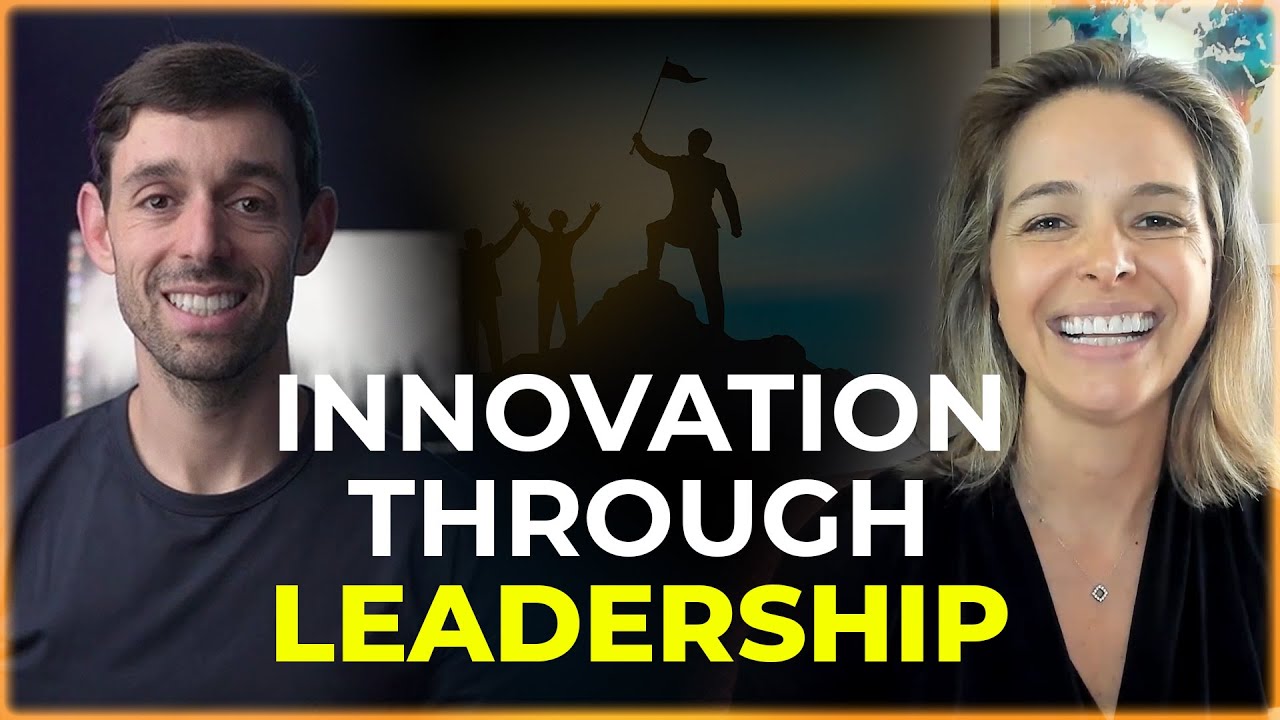
In this interview, Erin Meyer explains how Netflix cultivates a high‑performance culture through three pillars: talent density, radical candor, and freedom‑and‑responsibility. She outlines the "4 A's" of feedback—Assist, Actionable, Appreciation, Accept/Decline—and shares vivid anecdotes, such as a mid‑presentation critique at a leadership conference in Cuba and Patty McCord’s 360‑feedback dinner practice. Meyer describes structured mechanisms (regular feedback meetings, live 360‑feedback dinners) that make candid feedback safe, linking the process to brain science: the frontal cortex welcomes honest input while the amygdala reacts to perceived threats. She warns against "brilliant jerks" who misuse candor, noting that Netflix’s "keeper test" removes such people. The conversation also covers Netflix’s unconventional policies—unlimited vacation, expense autonomy, and the absence of KPIs, MBOs, and pay‑for‑performance—framed as symbols of trust that enable agility. Throughout, Meyer emphasizes cultural awareness in feedback, the emotional intelligence required, and how these practices let employees operate with autonomy while maintaining high standards.
Chapters
But I will tell you a story. I have a whole bunch of these. The first time that I was doing work at Netflix, way before I started working on this book, I gave a presentation at their leadership conference in Cuba. And at one point, I came down from the stage and I was walking around, and one woman saw me and she gestured me over. And she says, Erin, I want to tell you, the way you are— Sorry. Oh my gosh, you're telling me that now? Right in the middle of my keynote? In front of your colleagues?
Patty McCord was telling me this story. I don't remember exactly when this happened, but she was telling me this story that when she was responsible for HR, there was a situation where one employee basically came into her office and they were just complaining about somebody else. You know, this person's not doing their job, they're not that great, why is that, you know, why are working here? And Patty basically says, okay, hang on a second, I'll be right back. And then she goes in the other room and she brings that other person to her office. And then she turns to the first individual and then she says, okay, now tell them everything that you told me. And like, I couldn't— I mean, does that stuff happen? Like, is that a real thing? Is that candid?
Oh no, it happens all the time. And actually, maybe I'll tell you a personal story.
Hey, really quick. Sorry to interrupt you but did you know that 96% of the people who watch videos on this channel are not subscribed? Do me a favor. Subscribe to the YouTube channel so that you can get notified when more videos just like this one are released. And now, let's get back to the content. Yes.
I also found people giving candid feedback to me. And let me say before I start this that there are some clear guidelines. I call them the 4 A's, the 4 A's of feedback. The first one is that all feedback should aim to assist, right? Yeah. So you shouldn't give someone feedback just because you're frustrated and you want to get stuff off your chest, or just because you want to get that person in trouble. You need to think, ah, you know, I think I have some information that if I gave to Jacob, that could really help him do a better job, right? Okay, aim to assist. The second is that your feedback has to be actionable. Right? So, like, I can't complain about something that you can't— I shouldn't tell— give you feedback about something that you can't do anything about, right? Okay. And then the third is that when you get the feedback, you should say thank you. You should show appreciation. That's the third A. And the fourth is accept or decline. That's the fourth A, accept or decline, right? So, you don't have to act on the feedback that's given to you. But I will tell you a story. I have a whole bunch of these. The first time that I was doing work at Netflix, way before I started working on this book, I gave a presentation at their leadership conference in Cuba. And there were, I don't know, maybe 500 people in the audience. And I was talking about national cultural differences, which is my first love. And at one point, I came down from the stage and I was walking around. And, I think I'll add that I had been a little nervous getting ready for this presentation. It was new material, and I really wanted to do a good job. You know, I could, like, feel my heart in my throat during the whole thing, right? But, I felt it was going really well. So, I came down from the stage, and I was walking around while these— the audience was having little bits, little discussions. And, one woman saw me, and she gestured me over, right? Right? And I came over, she's talking to her team, right? And she says, Erin, I want to tell you, the way you are facilitating the discussion from the stage is totally undermining your— totally undermining your point. And then she went on to explain that I was talking about cultural differences, but I was asking for volunteers, and only the Americans were volunteering. So that was, you know, going to ruin my presentation from her perspective. And I remember when she told me that, I was like, Oh my gosh, you're telling me that now, right in the middle of my keynote, in front of your colleagues? But after I got the feedback, like, you know, instantly, I shifted from being like panicked to being like, okay, I have 3 minutes before I have to get on stage again, and I better fix this, right? And I came up with a new method for how to organize the discussions differently. I came back on stage, and I started with Brazil and then Japan. And, you know, I got to tell you, that woman And she saved my presentation. So, I just love that example because here we really have something totally unusual, right? I mean, how many organizations would you have someone who would dare to give feedback in that kind of situation? But when you do dare, if you aim to assist, it can really help a lot.
Yeah, that's a great story. But I would imagine there's also a borderline between like candid feedback versus just Being rude, because I could see certain situations where you, you know, you're giving feedback, uh, with positive intent so the other person can improve its action, you know, it meets all those things, but it doesn't come across in a nice way. Yeah. Um, so how do you balance being candid while also not— I don't want to say not hurting somebody's feelings, but really that's what I'm trying to say. How do you balance being candid without attacking or without hurting somebody's feelings or without The other person taking it personally.
Yeah, and this is where we really have to put mechanisms in place in our organization for the feedback to get out there in a non-hurtful way. Right? I mean, okay, this woman, she was like on the edge, and those things do happen at Netflix. I don't know if I recommend that for kind of the masses, but they are— what I do recommend for any organization that wants to get more candid feedback going on is that you all start putting feedback on the agenda. Right. So, like, let's say that you and I go to a client meeting together every Monday. Well, at least one Monday a month, we should meet after the meetings in order to give one another feedback as to what we could do differently. And if we know we have that feedback meeting, then it'll encourage me to have the courage to speak up, right? And you're not likely to get upset because, you know, we set up that meeting so we could help one another, right? Right. The crazy thing that they do at Netflix is these live 360 feedback feedback dinners, right, which is that they, they all get together maybe once a year and they take turns, right? So like over a meal, maybe at a restaurant, right? And if I'm up first— I
like it, public place so you can't make a scene and freak out. Smart people.
Public enough, you've got your team there, right? And your boss. And you go around, right? And each person gives, like me, if I'm up first, feedback about what they think I could do in order to do better in my job. And then we move on to the next person. When I first heard that, I thought it was crazy. I thought, well, what's the point? Like, why do you have to drag my weaknesses through the group? But I saw it created a very interesting moment, actually a very important moment, because it moves us away from all that one-on-one feedback, which may be awkward and uncomfortable, and I don't really know, is it because you don't like me, or is it more about you than it is about me, to really these kind of Situations where I can see, well, one person thinks I talk too loud and another person thinks I talk too softly and another person and everybody in the group thinks this is something I need to work on, right? So, I think actually those are some of the greatest developmental types of situations that I saw when I was there.
Well, so that brings up an interesting point. What if you are getting different types of candid feedback from different people and it's not aligned? So, somebody says, Like you said, you're a great communicator, and somebody else says, you know, you're not a good communicator, or, you know, or they criticize something else. You know, you're a great communicator, but you're not a great project manager. And somebody says, you know what, you're a great project manager, not a great communicator. How do you— how do you balance all that?
Yeah, well, that's the— that's why we have the 4th A of feedback, right, which was the accept or decline. Because if you are in an environment like that, you are going to hear from a lot of people on an ongoing basis about what they think that you could do to improve. But only it's up to you to choose. You know, maybe you're not going to do 80% of what the people tell you, right? Of what people suggest. But at least if you have that information, then you can make a very informed choice, right?
Okay.
And that's when now, once we have that talent density and we have that candor in the organization, now you're in a position that you can eat your cake, right? So what I mean by that is that I think when we talked about talent density, I'm sure some of your listeners loved it, and some of your listeners thought, oh my gosh, I do not want to work in a place like that, right? That's the spinach, right? Some people love it and some people hate it. And same thing with candor, right? When we're talking about giving all this candid feedback, I'm sure some of your listeners are thinking, oh, I'd love to work in a place that I got so much candid feedback. And other people are thinking, no way do I want to work in a place like that, right? That's your mushrooms, right?
Yeah.
The deal is that if you eat your spinach, and you eat your mushrooms, then you get to eat your cake, right? And everybody loves the cake. And what I mean by that is that once you have your talent density in place and you have your candor in place, then you're in a space that you can really remove all of these control mechanisms that we have in most companies and let our employees just run a lot freer, right? Yeah. And that's where we really see the joy, the joy of this type of environment.
Okay, so one last question for you about candor before we switch to the last one.
Yeah.
And that is how much candor are we talking about? I mean, like totally honest and blunt and how often? So for example, let's say you're walking down the hall and I say, you know what, Erin, I don't like your hair today. Or I don't know, just something like, you know, Because candor and being critical, I think, they could be very close.
Yeah.
Because you don't want to make sure, or you do want to make sure that it's not just kind of critical feedback, like everybody nitpicking every single thing that you do, and then if you push back on it, they just say, hey, I'm just being candid. I'm just giving you the candor that is part of the culture. Is that a problem?
Well, I certainly did come across situations even where people did not pass the keeper test because they were not able to give that feedback in a way that was showing appreciation and that was actionable. And they took the candor as a card to behave obnoxiously to one another. Okay. And those people are gone? Those people were gone, yeah. I mean, actually, I did the research over a year and a half, and I have to say, I know more than one person who lost their job because of that. They also say at Netflix, no brilliant jerks. And I remember one woman coming into my office for the interviews, and I actually really like this woman. She flopped down in the chair and she said, oh my gosh, it turns out I'm a brilliant jerk. And she had just received feedback from her boss a couple of days ago that the way she had been giving feedback was not appreciated by those around her. It didn't feel like a gift. It didn't feel like she was aiming to assist. And she worked hard. I remember she worked hard with a lot of coaching from her boss. But about a year later, I came back and I was like, oh, where is she? Where's Caitlin? Caitlin wasn't there anymore. So, yeah, that did happen. But I think I'll say one thing. I mean, when it comes to feedback, because of course my main expertise is national cultural differences and What's considered an appropriate way to give feedback in one culture is totally inappropriate in another, right? Oh yeah.
Japan versus China versus the United States. I mean, it's—
So the guideline that I always give is that, I mean, when you give feedback, you have to think about 2 parts of your brain. The first is your frontal cortex, and your frontal cortex loves honest feedback. So your frontal cortex is the most logical part of your brain. And the frontal cortex would like to— I'd like to tell you, Jacob, what you can do differently, and I'd like to hear from you what you think I should do differently. That's my frontal cortex. Love it. One research project showed that 72% of employees said that they would like to receive more direct feedback from their bosses, right? That's the frontal cortex responding to that question, because the issue is that we also have the amygdala, and the amygdala is the most primitive part of your brain. The amygdala is very concerned with finding safety in numbers, right? So the amygdala does not want you to get kicked out of the group because historically, if you got kicked out of the group, of course, that would lead to death. So if I give you feedback in a way that seems too direct for your culture, or I give feedback in a way that feels too blunt to be, let's say, appropriate, Then my amygdala starts sending off a siren, and that siren physically throws your body into fight or flight, right? Fight, I deny it. It's not true. You're the problem, right? Or flight, I say, thank you so much, Jacob. Thank you so much for that feedback, and then I hope I never see you again. Or if you're my boss, I say, thank you so much for the feedback, and then I start looking for another job. Yeah. So, of course, the goal is to give feedback in a way that nourishes the frontal cortex but keeps the amygdala calm. And that's why we're having these kind of structured feedback moments where we all know we're going to sit down and I'm going to tell you 3 things you can do differently, and you're going to tell me 3 things I can do differently, right? And then we move on. So, my amygdala doesn't have to start screaming about losing its place in the tribe, I know we're all doing this together. Something like that. It
seems like there's a lot of emotional intelligence that's required here. I mean, you need some self-awareness, you need empathy, you need to kind of understand yourself a little bit and understand how you come off, how other people perceive you. Because if you don't have those things, I would imagine this would be a complete disaster for you. You wouldn't be able to succeed in this kind of a company.
Yeah. And I think that was actually the most surprising thing for me was that when I read the Netflix culture deck, it sounded really like a bunch of engineers who were totally lacking emotional skills. But when I started working there, I saw actually the managers there were spending a lot more time focusing on people management and on how to get those, you know, the feedback out there and how to inspire without giving directions. I mean, very difficult management skills. And, you know, if they weren't able to deliver that, then they weren't right for that environment.
So let's give a little bit of background info on this and how does this actually manifest inside of Netflix? I know, for example, there's no vacation policy. You don't need to get approvals for things. So it really is kind of— I don't want to say Pinocchio's Island, but it's very free. Pinocchio's
Island. I haven't heard that before. Okay. That's right. Oh my gosh. Okay. Yeah. So there's 3 kind of categories of processes or control mechanisms at most companies that you won't find in this type of environment. So, the first is, I mean, as you said, as we said earlier, the vacation policy is take some. Yeah. So, every employee decides how much they want to take. But beyond that, the expense policy is act in the company's best interest. So, anybody at any level can purchase a new computer or sign off on a million-dollar Whatever, a sales deal, whatever they need to do to get things done without getting sign-offs from other people in the organization. So that's the first category. But I would say those are symbols, those policies, those are just symbols that say, dear employees, we trust that you will behave like adults. And in doing so, then they start behaving more like adults.
Yeah.
On a cycle of what we call freedom and responsibility. But then moving on, I think more interestingly is that at Netflix there are no KPIs, there are no management by objectives, and there's no pay-per-performance bonuses. So probably most people in your audience don't think of those as control mechanisms, but they are, right?
The KPIs, right away I was like, what? No KPIs?
No KPIs?
How could you? Yeah, I mean, that's standard for so many organizations around the world is everybody says, You know, what are your key performance indicators? What are your metrics? How are you going to be measured? Like, so I'm very, very interested in how the company operates without having KPIs. Thanks for watching. Before you go, please remember to subscribe to the YouTube channel so that you can get access to more videos just like this one. 96% of people are not subscribed. Hopefully you are not one of them.
But KPIs are horrible for organizational flexibility. Right? I mean, the thing is that, like, in today's world where the environment shifts so quickly, KPIs are the worst, and they're a clear remnant of the industrial era, right? Yeah. In the industrial era, we could set our goals in January, right? And we'd work all year long on the same goals. And when the next January came around, those goals were still relevant, right? But the problem in today's organizations is if you do an annual KPI, I mean, things change so much, and it forces your employees to keep moving in the same direction instead of changing direction with the environment around them. Yeah. The image is like, it's like a ship in the sea. An organization is like a ship in the sea that builds up barnacles over time. And those barnacles are the processes that tell your employees, you know, what they should do and when they should do them by. People get really good at following those. I know I'm going to be measured in 8 months in this way, and I know that I have to do this and then I'll get rewarded in this way. But then as the ship needs to change direction, those barnacles make it much slower to move. Yeah. So, an organization that doesn't have KPIs or pay-per-performance bonuses, which are even worse, right, as far as as organizational flexibility goes, is an organization that's much more agile, that's much more able to change direction as things change around them.
More from Erin

How to Bridge Cultures and Lead Global Teams for Success (Interview with Erin Meyer)





The Culture Map: Decoding how people think, lead, and get things done across cultures

'Netflix treats its employees like adults, that's what gets speed and innovation going'

No Rules Rules: Netflix and the Culture of Reinvention | Interview with Erin Meyer

No Rules Rules Co-Author Erin Meyer: Netflix's "keeper test", comparative turnover - Part 2 | E1168