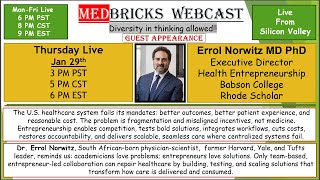
Dr. Errol Norwitz describes CognitiveCare's MIHIQ system, which uses 48 AI algorithms to predict maternal complications like preeclampsia and postpartum hemorrhage. A 2023 pilot in Kenya achieved 95% accuracy in identifying high-risk postpartum hemorrhage patients, and the platform integrates patient data from EHRs, imaging, labs, and wearables to guide clinical decisions.
Chapters
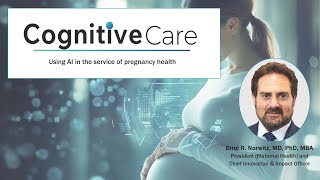
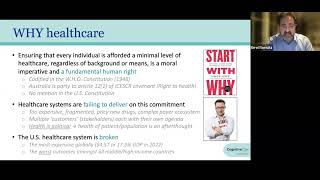
My name is Dr. Errol Norwitz. I am President of Maternal Health as well as Chief Innovation and Impact Officer for Cognitive Care, a data analytics company using AI in the service of pregnancy health. I have dedicated my professional career as a physician scientist and high-risk obstetrician to promoting the well-being of women and children, to give every pregnant person a safe delivery and every newborn the best possible start in life. In this short video, I promise to share with you our vision and why our AI machine learning driven platform is not only innovative, but will save the lives of women and children. This is progress in the service of people. What I've come to appreciate over these past 30 years is that the US spends more money on healthcare than any other country on the planet. $4.5 trillion, almost one-fifth of US GDP. And yet we have the worst health outcomes of all developed nations when it comes to both maternal and infant deaths. Incredibly, Black women and infants in the US are dying at a rate 3 to 6 fold higher than any other racial group. What is most distressing is that the majority of these deaths are preventable, and the problem is getting worse each year. Our old models of care are not working. We need to think different. Many pregnancy-related complications and deaths can be effectively mitigated using 4 tactics. 1. Improved access to care. While this is true for all pregnant people, it is especially important for those at highest risk. 2. Provider vigilance. The earlier a care provider can identify the likelihood of a serious adverse event, the more effective they can be in managing the pregnancy. 3. Educating patients. The more patients know about these risks, the more they can engage and actively partner with their provider to improve the pregnancy outcomes. And 4, efficient use of resources. Healthcare in the US is expensive. The solution is not to throw more money at the problem, but rather to use existing healthcare dollars more effectively. These 4 tactics are best leveraged when we're able to accurately distinguish between low and high-risk patients, and to do so early enough in pregnancy to actively intervene. Over the past several years, we at Cognitive Care have been thinking different. Working on an innovative and bold approach to address the drivers of poor maternal and infant health outcomes head-on using the power of multimodal data. Recently, we achieved a significant milestone having been granted an expansive patent by the USPTO for our unique platform which we call our Maternal Infant Health Insights and Cognitive Intelligence, or MIHIQ, triaging system. I'd like to take a minute to explain what we do and why our platform is so innovative. Let's start with what the Mahek triaging system does. Our AI algorithms have the ability to accurately identify pregnancies at risk for serious adverse outcomes and to do so longitudinally across the antenatal, delivery, and postpartum period, both at an individual and a population level. While the platform incorporates 48 distinct proprietary algorithms, we are laser-focused on finding and implementing solutions to the most important drivers of maternal and infant deaths worldwide, including preeclampsia, postpartum hemorrhage, and infection. How are we able to achieve this? Our platform is able to pull a huge range of data from a variety of sources such as electronic health records, images, lab reports, wearables, payer data, and even unstructured data like provider notes and reports. As well as genomic and metabolomic data, such as that reported from urinalysis, serum biomarker tests, RNA and cell-free DNA testing, and even whole genome, whole exome sequencing. We can work with any data systems, any image provider, any device, and there is no need for manual inputs. The data are pulled directly from the server in a way that is de-identified and HIPAA compliant, allowing for seamless integration. Moreover, our system architecture is modular and scalable. Our algorithms not only assess risk at an individual or cohort level, but also use explainable AI technology, meaning that our technology can pull back the curtains and identify the drivers of the risk. For example, wouldn't it be immensely valuable to identify early those patients at highest risk of postpartum hemorrhage, the single greatest killer of pregnant people in sub-Saharan Africa? This paradigm was tested and proven in a 2023 study conducted in Kisumu County, Kenya, with support from the Bill and Melinda Gates Foundation. Patients at high risk for postpartum hemorrhage were identified using our algorithms with a 95% accuracy. Kisumu County is now in the process of hardwiring these algorithms into their electronic medical record system and routine clinical workflows in 25 clinics across the region. All pregnant people can now be screened, and those at highest risk can be referred to regional centers experienced in the management of massive obstetric hemorrhage and poised to save the lives of these women and infants. Our primary humanitarian aim of saving lives is coupled to economic incentives, given that postpartum hemorrhage alone costs the US taxpayer an estimated $1.8 billion each year. Each year, and we are just getting started. At Cognitive Care, we have gone a step further by layering an open-source large language model generative AI solution on top of our Mahek triaging system. The model relies on a painstakingly curated knowledge graph derived from published literature, credible guidelines and best practices, permissioned high-quality reports, as well as a large data lake of shared electronic health records. In consolidating all of this healthcare-related data, the Mahek LLM solution being developed can educate providers as well as patients and direct them to reliable sources of evidence-based recommendations. At Cognitive Care, we are proven, patented, and published. We are moving the needle slowly but reliably with ongoing pilot and prospective validation and implementation projects, both in the US and across the world. If improving maternal and infant health outcomes is important to you, please join us at Cognitive Care on this critically important journey.