In this solo episode Jeff Hassemer explains how recent AI developments are reshaping small‑business operations. He starts with Canva’s new all‑in‑one AI ad engine that lets businesses create, publish, report and refresh ads across Meta, TikTok and LinkedIn from a single workflow, and notes that agencies can leverage it for their clients. He then shifts to local SEO, highlighting that 45‑60% of consumers now use AI to discover local services, that only ~1.2% of businesses are recommended by ChatGPT, and outlines the technical steps needed for AI‑friendly visibility (JSON‑LD structured data, Q&A‑style blogs, a clean Google Business Profile, active social media). Next, Jeff shares adoption statistics – 82% of SMBs have invested in AI tools, 91% are using AI, and AI use correlates with revenue growth – and promotes his own AI training and autonomous agent services. He introduces AI phone/booking agents, focusing on Google’s Spark product (currently for Gemini Ultra users) that can handle calls, appointments and reservations, and mentions his own CRM’s built‑in phone and chat agents. Finally, he warns about the emerging patchwork of state AI regulations (seven states with active legislation, $16k annual compliance cost, ~17% overhead) and advises small businesses to adopt the strictest standards, audit AI visibility (via FirestarterMarketing.ai), consolidate workflows, and deploy AI chat/voice agents while staying compliant. The episode ends with a call to action for listeners to reach out for help.
Chapters
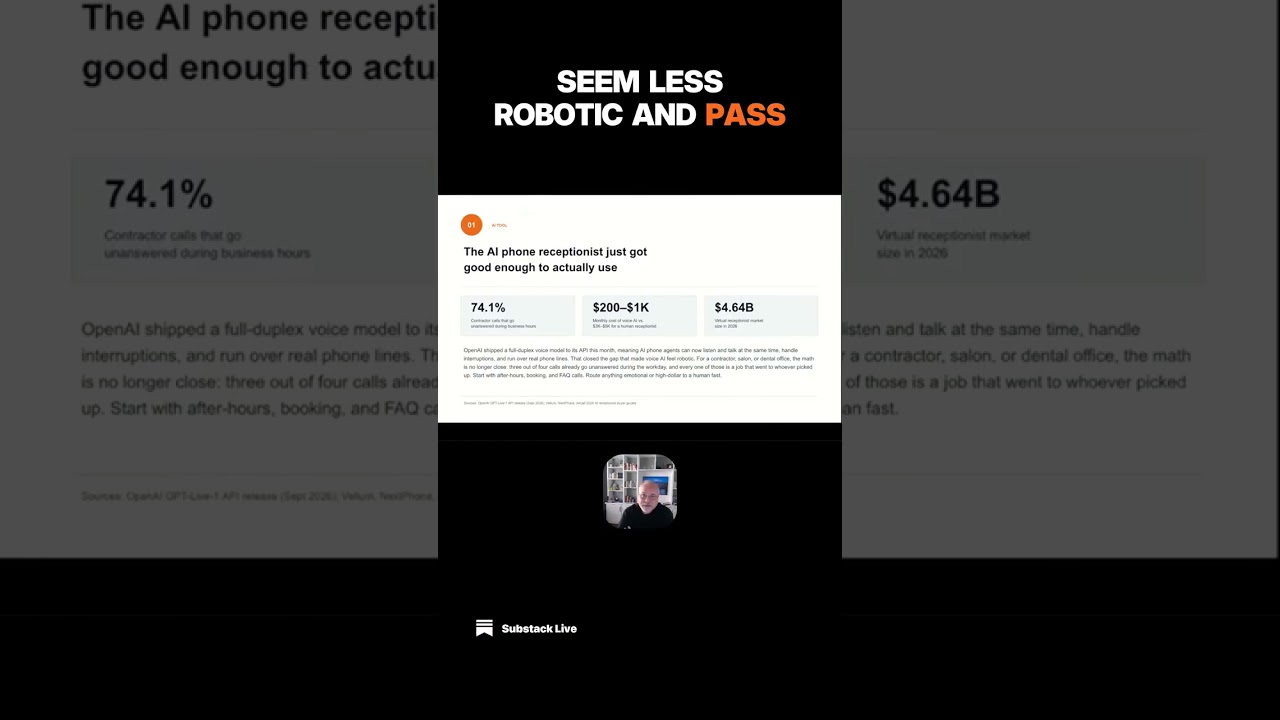
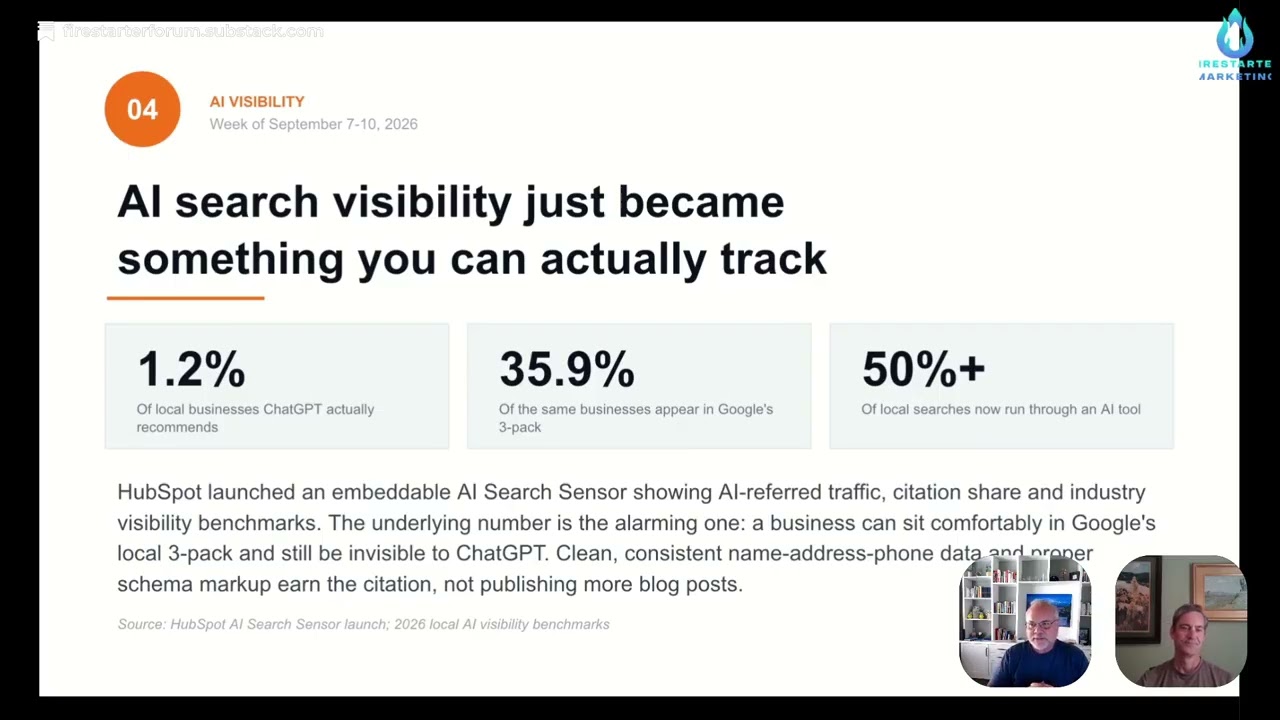
Hello, welcome to the AI Cookbook podcast. We are, uh, I'm Jeff, by the way. We're going to change up the format here. We've been talking a little bit about AI news and realizing that that doesn't really fit for what our theme is. We work with small businesses and helping small local businesses figure out how to deploy AI and pull it together is really where we live. So we're going to start to really dig in on how the news and things that are going on in AI are affecting small businesses day in and day out. So still same format in terms of 5 things that we talk about, um, every week. But this week we're going to talk a little bit about Canva shipping a new all-in-one AI ad engine, which is pretty interesting. Um, local SEO, geo, and what's going on with that. Small business adoption of, uh, AI. It's getting huge. What happens in operations and some state policies that are going on that affect small businesses within this environment. So let's start here with Canva shipping an all-in-one ad engine. So Canva, I think, has been a little bit slow to jump on the AI engine, um, and now it's getting better and better. With pulling that together, and they're getting smarter and smarter about what they're doing. This allows you to create ads for 3 different platforms: Meta, TikTok, and LinkedIn, which is just about everywhere you want to be. And then create, publish, report, and refresh all in one workflow with that environment. So this allows you to use Canva as a core tool for your ad, ad management in social media. I think that's pretty smart of them to do. I think I haven't played with it at all, I have to say that, um, because we usually do our own tool, Moxie, that has that capability as well. Um, but this is a smart move by Canva. It's used by a lot of small businesses, and being able to do this for you for running your own ads, um, that's pretty helpful. Now that said, there's very few small business owners that I've come across that are great marketers. And so I need you to consider that, you know, this is going to give you some middle-of-the-road things, but there are agencies out there that you might want to be working with no matter what, because that extra $400 or $500 that you're giving that agency, or 10% of your ad spend, generally is going to help you out quite, quite a bit than that. But if I was an agency, I'd be jumping on the Canva tool for sure. Um, AI is sending your customers somewhere else and you won't know it. Now, this is really, really critical. SEO and geo has flipped. We talk about this all the time on the regular environment, but you're now at a point where 45% of consumers are now using AI to find local services. That's an old number, by the way. It's closer to 60%. That's based on a early this year, 2025 numbers. Now you're seeing this more and more, and they're not just saying restaurant near me, plumber near me. They're asking very specific questions, and only about 1.2% of local businesses are getting recommended by ChatGPT. Now they're also getting moved out of the Google pack because Google's moving AI as well. Now there's very few things that you need to do to make this happen and, and get up to that environment, and it's really just a content game, right? You need to have a JSON script behind your, your website structuring that data for the AI engines to see. You need to be open for AI to, to read your, your environment. You have to have a good, good blog on your site that's written in a question and answer format along with FAQs. You have to have a clean Google Business Profile with ratings within that environment, and you need to be active on social media. If you do those things, you will get recommended, um, more and more. And just, it's all about working with the questions and writing content in a way that's good for both the machines and humans. All right, so while most people are getting the, the memo that AI adoption is important, Um, adoption just crossed the tipping point for small businesses. 82% of small businesses have invested in AI tools of some sort. 91% of SMBs are using AI, and in report, it boosts revenue. So this is— it's arrived, no doubt. Most people are using AI in one shape or form, although I think people are still really figuring it out at this point, right? Uh, if you need any help with this, we do advanced classes on AI and how to bring this into your, your environment. We have our own agent infrastructure that runs both autonomously and runs a lot of our work that we do here. Um, so AI is big in, in our world, but it's also really critical, and it saves so much time and energy and effort for your business as a small business owner. Um, just contact us and we'll help you through how that works. Um, this one's really interesting. So, um, AI phone agents are picking up every call these days. Now we're moving into a world where Google has launched a product called Spark. Spark is now available only for Ultra users and, and paid users of Gemini, but this is going to go public by the end of the year. And what Spark is, is an agent It's going to be able to book appointments with you, book reservations for you, make phone calls to your environment or to your, to your business and all of that. Having an agent that allow on your website that answers questions, that books and schedules things and answers the phone is going to be critical within this environment. And you can set this up pretty easily within that environment. It doesn't have to be be flashy. You don't have to try and fool people with it. Tell them they're talking to an AI agent, and as long as it's helpful, people will adopt to that, right? And you can build these AI agents. Actually, we have a CRM tool that has a phone agent built into it as well, if you want to talk to us about that, um, as well as a chat agent and all that. Runs off the same knowledge base so that no matter what your clients are talking about, they're, they're able— or how your clients are interacting, they're getting the same answers from you. But these are things that you should be deploying and thinking about deploying today. So the last thing, you know, now that we're getting into massive adoption and it's all over the place, AI rules are going to start piling up, and small businesses are going to pay the same price as enterprises on this. So there's 7 states already with active AI legislation. Annual cost of AI privacy rules is $16,000 for people. The average compliance overhead added is— that will be added for AI systems is about 17%. So there's no federal law out there. So that means you're going to have to understand if you are multi-state, what's the most strict policy you're working with and operate under that. But you're going to have the same audit and notice requirements as Fortune 500. And if it touches anything, something like customer data, your hiring, automated decisions, you're going to have to do a compliance check and figure out where you stand in terms of your use with AI and how you need to disclose that, uh, within that environment. So this is going to get interesting and heavier. I think we're heading towards some sort of federal regulation on this because managing state to state is just going to become too much of a burden. Uh, we've seen that in the privacy game with California and the Texas laws and all Canada laws and all that kind of stuff. Um, so hopefully we start to see some sort of centralization of this. My best advice to you though is understand where you do business, understand the laws that you have to comply with in that area, and lean towards the strictest one within that world. So what takeaways I'd want you to get away with— so you have a chance to consolidate your workflows with AI, right? Being able to pull those together and operate and use AI is a good thing, but let's remember, your expertise still matters. Just like you're an expert with your business, most agencies are experts on the ad business. And don't necessarily rely on that. Maybe get the advice of somebody who knows what they're talking about. Um, audit your AI visibility. This is going— this is critical every day. We have a free audit on the FirestarterMarketing.ai site that you can look at. It gives you a full breakdown of what you need to do, or you can talk to us about what needs to happen for a deeper audit. But don't wait, start now. Um, also, don't miss this boat. You can save a lot of time and energy using AI in your business day in and day out. Start to adopt it and play with it as much as you can. Uh, think about an AI chatbot that answers questions from your website, both on chat, SMS, and in phone calls. Easy to deploy, just have to feed it with information about what you already know, maybe even already have documented, and you can get this up and running in less than a day. And finally, don't worry, keep your eye on the regulation that's coming. Just like privacy and opt-in all are important things, you're going to have— you're going to have to follow that as a small business owner as well. All right, hopefully this new format is more helpful for you and you're able to really, uh, get more out of what we're doing. We'll be looking at the top 5 things every week, giving more tips and tricks about how to work how this works. And as always, reach out if you have any questions.