In this episode Jeff Hassemer and Nate Lamas discuss five AI‑related developments that directly affect small‑business owners. First, Canva releases Code 2.0 for free, signaling a wave of price compression in SaaS tools that let SMBs build interactive web components without paying. Second, they note that 66 % of small businesses now use AI, but most only apply it superficially (e.g., flyer creation) and lack the training to embed AI into operational workflows, prompting a call for ROI calculators and education. Third, they warn that AI agents are beginning to act as shoppers, requiring websites to expose pricing, booking, and chat interfaces; they announce a live training on August 25 at the Arapahoe County Library to help businesses set up an agent infrastructure. Fourth, they highlight OpenAI’s new scorecard that measures AI‑driven profit rather than token usage, alongside falling token costs from OpenAI, Claude, and new Chinese models, positioning this as a way for SMBs to prove financial value. Fifth, they flag a surge in state‑level AI regulation—about 1,500 bills in 45 states—especially disclosure mandates for chatbot interactions, urging businesses to stay compliant. Throughout, the hosts blend optimism about AI’s accessibility with caution about readiness and regulation, and they promote their own training and tool offerings.
Chapters
partner, Nate. Say hi, Nate.
Nate Lamas. Hello everyone.
All right, so we got 5, uh, we're changing up the format. This is the second week of the new format for this. Um, our core is really focused on small business anyway, so rather than talk about AI news, we're going to talk about how AI is affecting small business in this world and news that's affecting small business. So we've got 5 new things to talk about today, um, really geared towards almost how AI is using small business fully. So let's jump right in. The first note is Canva Code 2.0 goes free. So Canva had introduced the ability to essentially vibe code, um, a little while ago. Now they're dropping that into the free category. So you don't have to pay to build interactive tools. So if you had a pricing calculator or you had, um, some sort of lead generation tool on your website, you can now code that in Canva for free. Canva claims there's already 6 million, uh, code site— Canva code sites created, and it has 75% faster code generation than the first version of what's going on. But I think the news here is honestly that Canva did this for free.
Yeah.
Do you have any thoughts on this, Nate?
Yeah, I think this is kind of the leapfrogging, right? This is the SaaS scramble. We were all playing with Canva like mad over the previous few years and then started using the AI tools instead, the native for the frontier model tools. And we all knew this price suppression was gonna happen and I just kind of like what Canva has done. Just like all of this functionality is free and, uh, you know, keep you guys hooked, stick with our tool, um, for the vast majority of what they do. It'll be pretty interesting to see, um, how many other SaaS companies follow suit.
Yeah, yep. I, I mean, this is the beginning, I think, of the price compression on SaaS model.
Yeah.
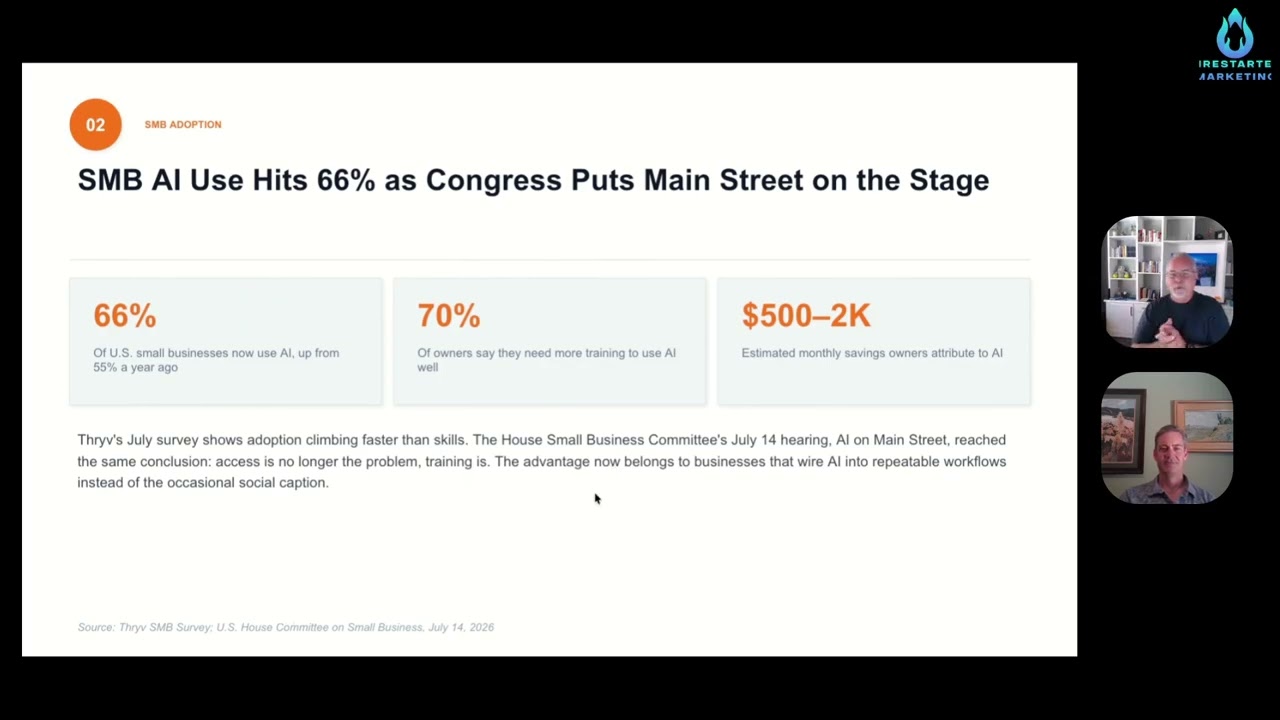
Um, and there's gonna have to be free components, then, you know, the standard just enough functionality to get you into that paid model kind of right there. Uh, this would be interesting to see how that goes. I think Canva, Canva definitely has a squeeze on their business with what AI is capable of, and it's only getting more capable. So it'll be interesting to see if this— how this sticks as it goes forward. Yeah. Um, here's a— this one I thought was really, really interesting. So small businesses' AI use hits 66%. As Congress puts Main Street on the stage. So they're saying that small businesses now use AI, 66%, but I'm finding that most people aren't really using AI to its fullest extent. And I think that's there in the second stat there. Most owners say they really need more training on the use of AI. Well, yeah, um, but there's money to be saved here, and there's And we, we're going to talk a little bit about an ROI calculator that's out. But while this is going on, the government is now talking about how to regulate AI and what they're going to do and, and all that kind of stuff. So, um, I think that's a little bit of a mix of, of points here, but I think the big point in here is that AI is becoming a part of everyday life, but people still really need help on how to use that. Yeah, yeah.
These stats to me, I mean, you know, you and I play with these, these SMBs, um, all day long, and it's, uh, it's the same as, in my mind at least, the same as saying, you know, yeah, I, I, uh, absolutely use AI. I created a flyer with it yesterday and put it out there, right? Um, yeah. Versus, well, how sophisticated did you get? Did you actually change operational workflows or enable operational workflows with AI, which the answer is overwhelmingly no. So that's where you start to see this, this narrative of, yeah, we all still need help. We need to understand how to really make impact on our business.
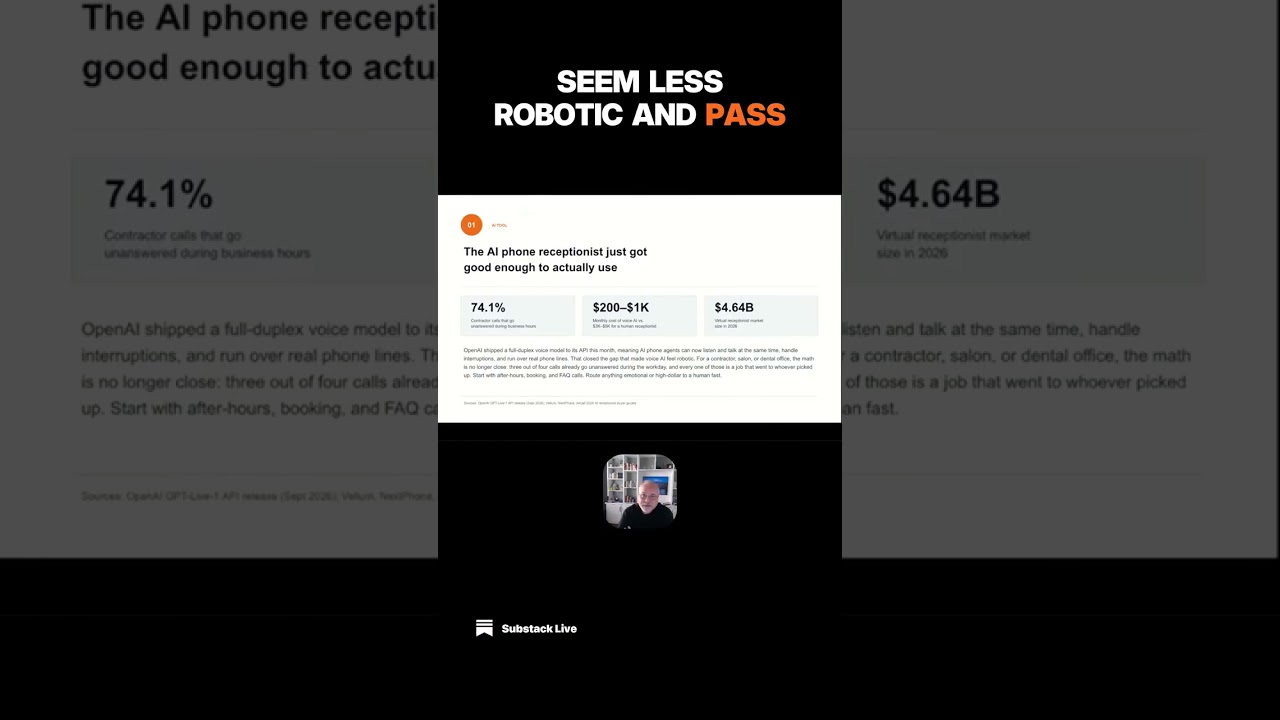
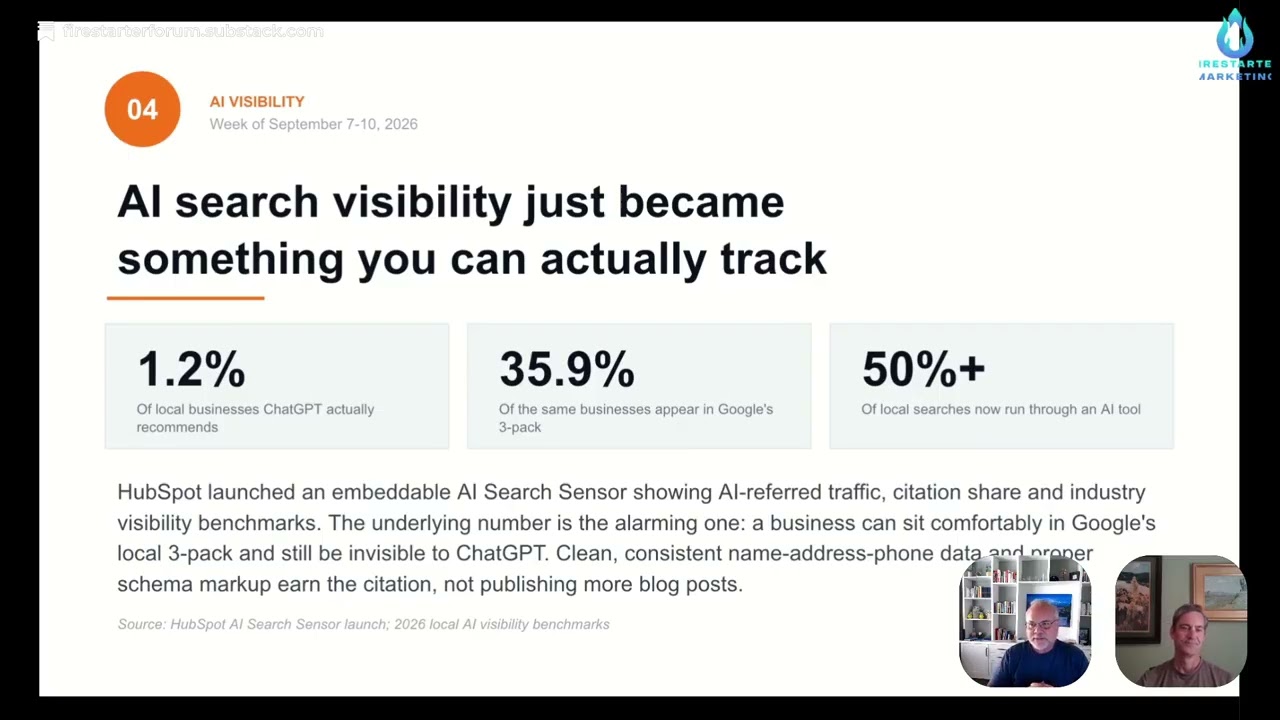
True. And by the way, along these lines, I've secured a location and I'm going to do a live training on how to set up an agent infrastructure for your small business on August 25th down at the Arapahoe County Library. So anybody that's interested, uh, we will be putting that out over the next month as well, um, to, to show that. It's gonna be a class like early birds can get in for $250, later it's going to be $350, and $300, $400 at the door. Um, so this I've been warning about for a while— AI agents are now shopping, and most local websites don't have the tools to make that happen. So we're starting to see AI agents actually performing full-on shopping tasks for people at this point. And only, um, of all website requests, about 57% come from bots at this point, says Cloudflare. And the companies are starting to back agent payments already. So what we're starting to see is that a tool like Google Spark or others— and Google Spark's going to become more prevalent later on in this year— but when somebody types in, 'Schedule me an HVAC consultant come to my house in the next day,' that agent's going to be looking for pricing on a site, it's going to be looking for the ability to book on a site, and look for the ability to talk to a chat agent on a site.. And if it doesn't have those things, you're going to get passed over on these types of transactions. And that's going to probably start slowly but move quickly in 2027. You're going to have to have all this on your website. Yeah. Um, to make it happen. So I think, uh, this is something people are going to have to really pay attention to. What do you think, Nate?
Yeah, what, what, uh, is interesting to me about this is we've for years told people, uh, you know, told companies from a competitive standpoint that as a buyer, if you don't have those things, you're not going to be compelling to me because I'm going to go to— I'm going to compare you to my best experience. And now that's just at the agentic level, right? So that consumer at the end of the day doesn't even know that any of this stuff is happening. The vast majority of businesses out there don't know this is happening. Um, but it's not— it'd be nice to have that, we'd have a little bit more business if we did. You're just not going to be found. Yeah, they don't have these things, and this is just overnight for small businesses. Yeah, the vast majority have no idea that this is coming.
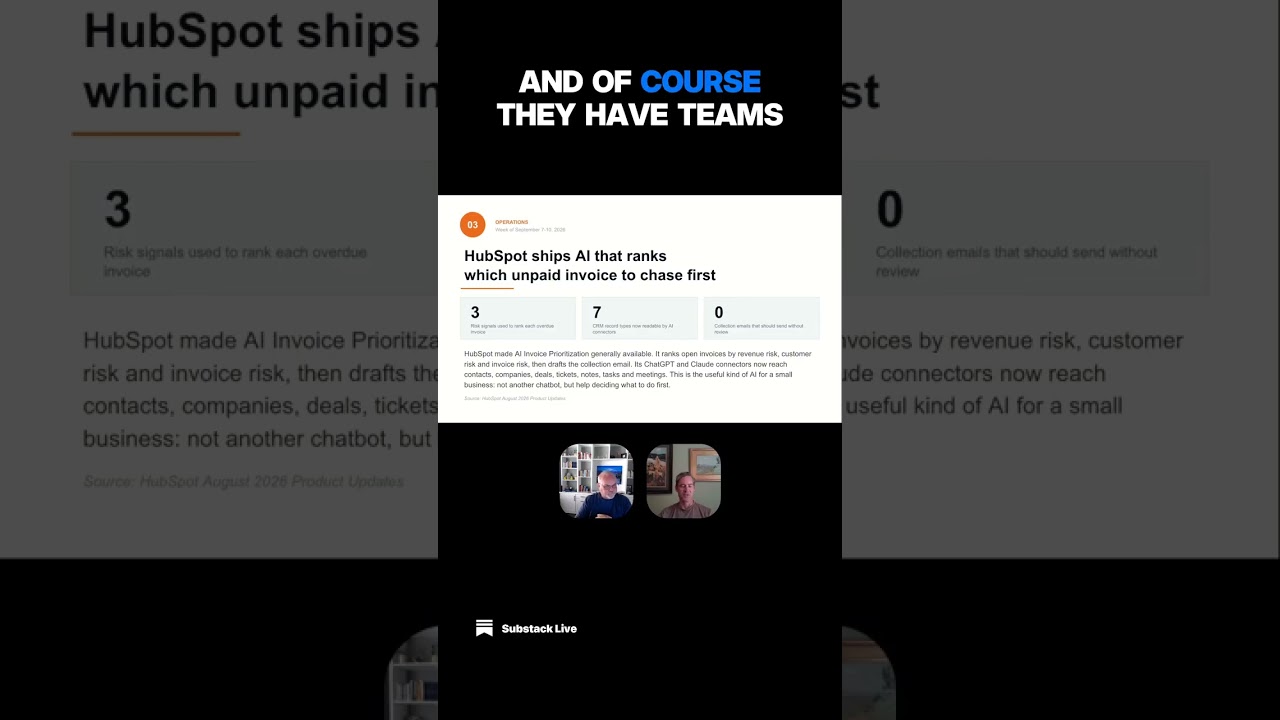
Yep, uh, and we see that every day in the AI assessments that we're doing on websites. Almost nobody's prepared for this. Um, all right, so now we're getting into the real nitty-gritty here. Like, if you're going to spend money on AI and start to use it, you need to know how you're making money on it. Um, so we're starting to see a massive drop in price per million tokens OpenAI and Claude, and with the new Chinese models that came out, um, cost per intelligence is really, really low, which is pretty amazing. But how do you know you're making money off of that? So OpenAI just launched a new scorecard that you can use that will count your profits, not your prompts, and understand how much completed work you've done, time saved, total cost, dependability, all that kind of stuff, so that it's actually showing the value of AI. I think this is in combat— this is a PR move in combat of, you know, half the stories out there that AI isn't making money for, for companies. What do you think?
Yeah, yeah, exactly. And I like that the fact that this is just like you use the, these Frontier models to converse and, you know, around your prompts. Um, it's the same idea here, you know, let's converse about how much revenue is being made. We'll make some recommendations. How should I change things to start making revenue off of this initiative I'm trying to put into place. So there's the PR move behind there, but there can be some real, you know, real impact here that makes a lot of believers pretty quick. Um, proof's in the pudding. We'll have to see how this works, if we can actually have that type of conversation and have it recommend how to make changes that increase profitability. But it's promising.
Truth, truth, truth. It definitely is. It's working for us, that's for sure. Um, so state— so here's the other thing comes on now, comes the regulation, right? So a lot of regulation that's going on is starting to start at the state level, uh, despite the national decree, um, that we're not supposed to do that. Most states are ignoring that and doing something. I think the most interesting, which of which is, um, forcing disclosure if a consumer is working with a chatbot. Yeah, which great that that's on the law. I think that's best practice anyway at this point. If they're— if you're using a chat agent or you're using an AI agent to answer your phone or whatever, disclose that it's an AI agent. And I don't think people are going to get mad at that. And if they do, allow for automatic escalation right into the platform. We do that right within our CRM platform today, by the way. Um, but the big news is there's 1,500 AI bills now across 45 states. So things are moving fast, and you're going to need to know how to navigate this alongside your deployment of it.
Yeah, and this is, you know, we've seen this before, but just not to this scale. I mean, you think about in years past with the privacy and the, you know, the various state laws and the various national laws and what have you, it's just such a bigger scale here as all things are with AI. But I agree with you, this aspect of it should just be best practice. It's going to be pretty easy to say, hey, you're interacting with AI for this interaction, and the vast majority of people are going to be totally fine with that.
Yeah, I think so. I think people know, in some ways I think people would rather interact with an AI chatbot than a human at sometimes.
Absolutely.
We're seeing that quite a bit. Especially if it's a good one, right? A well-designed chatbot on your site goes a very, very long way, not only from a cost reduction but actually just good customer service at this point. So anyway, so my takeaways here is that, you know, AI is going to become more accessible, um, and more affordable for anybody that wants to use it. Um, adoption's not an edge skill anymore. It's something you've got to really bring into your your system. And just a plug here, if you need help, we've got some training programs that do that. We've got tools that'll help you, um, very quickly take on, uh, these changes that are coming to you, um, between Moxie and our CRM tool and our ability to build you websites and all of that. Tap us because we can help you. All right, anything else to say, my friend?
Nothing else. I think it's a good summary of the week.
All right, well, have a good week. We'll see you next week. I'm gonna leave.