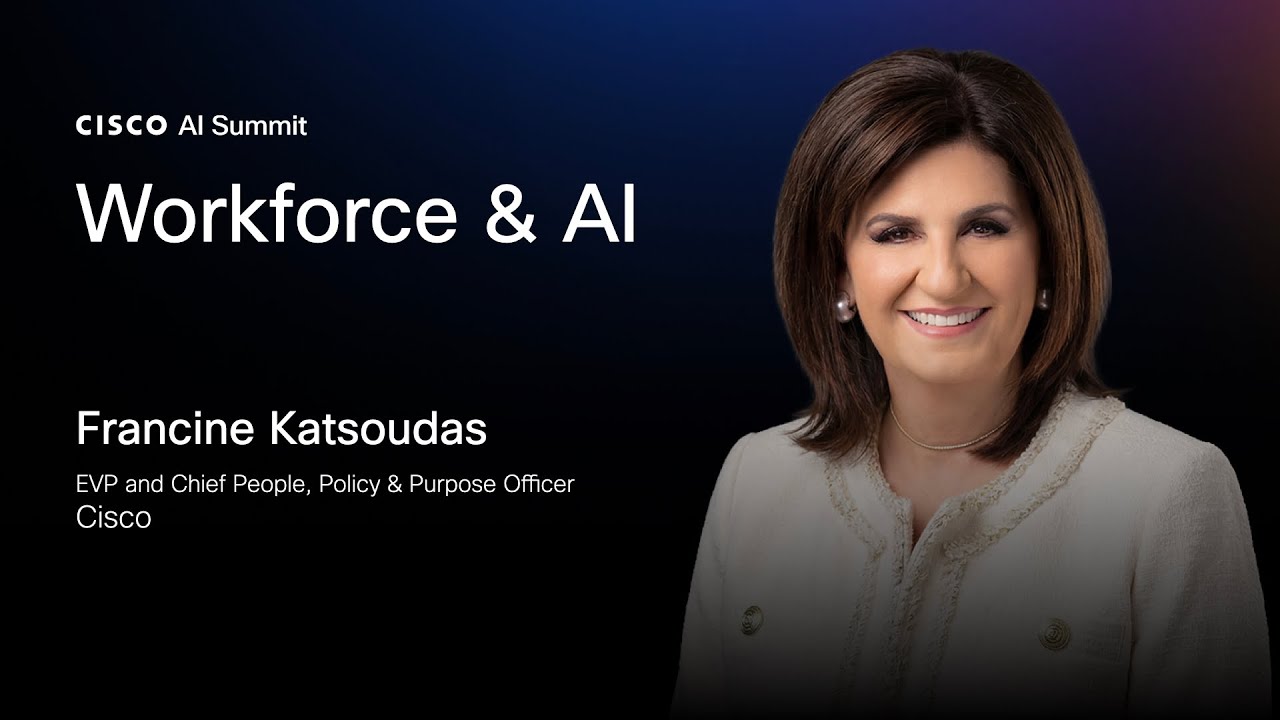
Francine Katsoudas, Cisco EVP, discusses why high-achieving women and caregivers burn out at work. LinkedIn data shows 60% of working women feel they're underperforming. Cisco found that women leaders score lower on physical and social wellbeing, so the company is subsidizing tutors and other benefits to ease the caregiving load.
Chapters
Fran, you just touched on it, on my next question in your answer. So yesterday, LinkedIn released some data that showed 60% of working women feel like they are underperforming. And these are high-achieving women. And anecdotally, I see this in my life. I have friends who have won awards for the papers they've presented at scientific conferences, but then on group text are feeling so beaten down. The tactical listening and work groups and mentorship are so important in advancing women, but the emotional piece is really important as well. And I want to— I want us to talk about that. So I'll start with you, Fran, since you just mentioned it. What specific programs or initiatives or ways have you navigated around the emotional aspect of what's going on right now?
So the first thing that I think we have to do is just acknowledge it, and we have to acknowledge the data. So as an example, at Cisco, we did a wellbeing survey for all of our employees. And what we realized was that our women scored lower on both physical wellbeing and social wellbeing. And that's something that we talk about as a company. Something of interest is that our people leaders also were lower than everyone else. And what I think that means is that caregivers, whether it's in the workplace or at home, are feeling an additional burden. Something that we say at Cisco is that empathy is a superpower. And I think empathy takes a lot more energy. And we have to be really supportive of all caregivers in that regard. It's interesting. On a weekly basis, our employees check in with us and they share their love and their load from the previous week and their priorities. And for many of the women, their loads happen to be concerns about how they're doing as a mother. And I find myself saying to many of the women that work for me, you are a great mother. There's just so much to juggle. And so what we've done as a company is we are pivoting our benefits now to support this way of working. And so what that means, as an example, is providing, um, tutors to our employees and helping them subsidize the costs so that they're able to focus on their work and take care of themselves.