How Does A Chief People Officer Make A Tech Giant Even More Competitive?
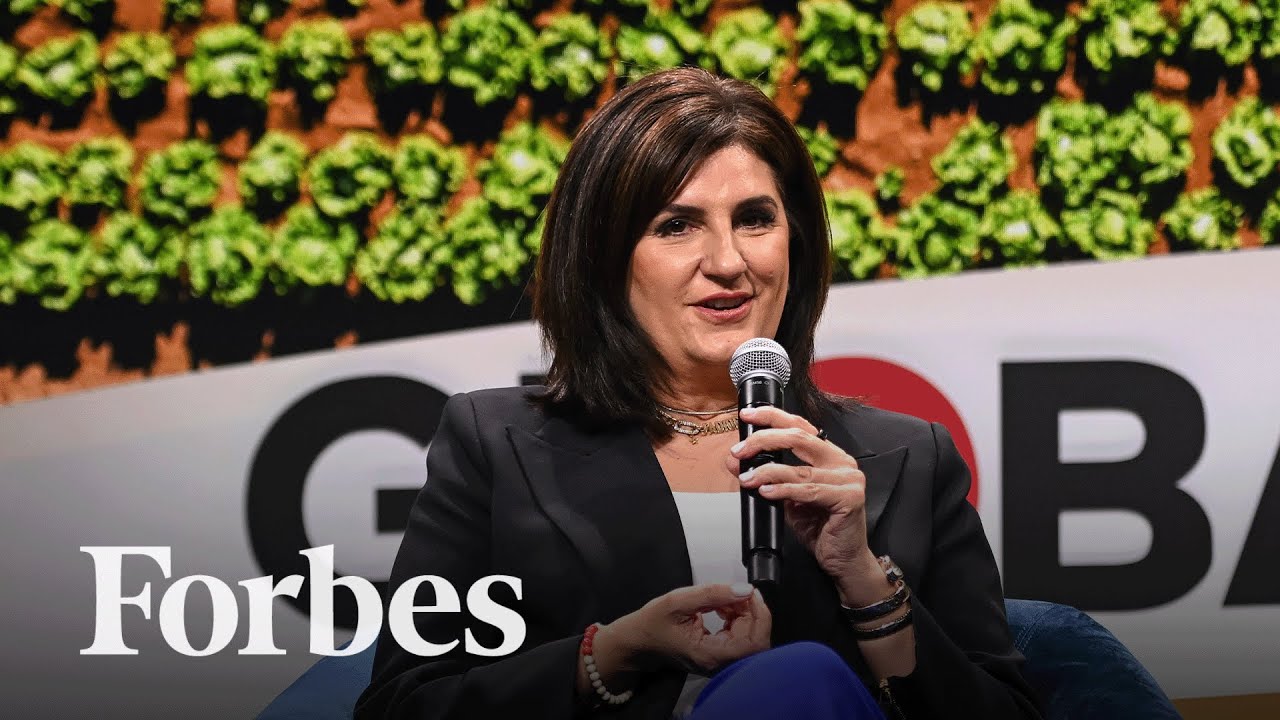
Francine Katsoudas, Cisco's Chief People Policy and Purpose Officer, oversees people, real estate, government affairs, and sustainability. She's spent 27 years at Cisco, surviving the dot-com bust and building culture around trust and transparency. Cisco trains nearly four million students in digital skills across Africa and uses AI to shift support staff toward higher-value work.
Chapters
Hi, everybody. I'm Diane Brady. I'm here with Fran Katsoudas, who is the Chief People Policy and Purpose Officer at Cisco. Fran, good to see you.
Great to see you as well.
I should also mention you were a judge in our 50 Over 50 list, which I just discovered. So, you know, thank you for that. I think it looks terrific. I want to unpack your title a bit here. People, policy, and purpose. That sounds like such a huge job. What does that mean in the context? What's your day job look like?
So I'll start first with the organization. So the organization is made up of our teams that look after our people around the globe. So our people organization. We also have—
It's a lot of people at Cisco, right?
Let's remember. It's like 86,000. Yeah. And then our real estate organization as well. Those organizations came together because we realized that one of the most important things to our people was their experience and space. Space is a big part of that as well. Government Affairs, that's where the policy element comes in. There's a really unique organization called Country Digital Acceleration where we work with heads of state on their digital agenda. Mm-hmm. And a lot of those agendas have to do with access to healthcare, access to education. We have our sustainability organization as well. And what brings all of us together is really this focus on how we architect to an inclusive future. Cisco's purpose is to power an inclusive future for all. And what's so fascinating is when you bring these organizations together and when you start to look at digital access against the backdrop of policy and then the engagement of your people, I think it allows us to be incredibly strategic in how we do some of this work around the world.
Well, so let's go back. I don't go back to the— actually, let's go back to the very beginning 'cause you're, you're, 27-year veteran, which meant that you were— now, it certainly was more than just, you know, a router company becoming the, you know, backbone of the internet. But you were there during a very heavy growth period. What brought you to Cisco in the first place?
Oh, that's such a funny story. I showed up to the wrong interview. Oh,
okay. And they said, you're hired, right? That's the joke.
Kind of. I was in the interview. I realized that it was the wrong one.
What was the one you were supposed to be in?
supposed to be in one that was more of a training, uh, type role, and instead I showed up to the technical support role. And, uh, at some point in the interview, I just had this sense that maybe it was meant to be. Um, and I tried to do my best to convince the hiring manager that I would learn the technology. And so I started in our technical contact center. Mhm. Um, and you're right, that, that was a point where the growth was Unbelievable. And I
mean, at one point, people might forget Cisco was the most valuable company on the planet, more valuable than Microsoft in terms of market cap.
That's right.
And then you also lived through the dot-com bust. So what role were you in during that period? Because I think it lost like 85% of its value. You're here to tell the tale. So it's like a good news story on the other end, but very painful period.
Yeah. Well, what was interesting was I was actually in a role where I was doing acquisition integration at that time. And so you can imagine that That was one of the first things that you stop as you go through this type of a crisis. And I remember that we went from integrating one of the companies to actually spinning out one of the companies within a millisecond. And I will tell you something that has always stayed with me. And I talked to my team about this. That was a hard moment. But I remember feeling really proud of Cisco because I felt like we were really clear. We started to invest in— at the time, it was 5 big technology areas that we thought would be our future.
You're talking about— this is around 2000?
This is 2001. Okay.
Right.
And, um, that focus on our strategy and where the company would go, and this realization that you can go through tough times and still come out on the other side and be even stronger. And I think for us as leaders, we became a lot stronger because we had to do a lot of tough things to work through.
So you were a leader back then as well?
I was. I was. Yeah.
And so, and you were never worried at any point about losing your job, but you must have had to lay off a fair
I did. I laid off a few people. I didn't have a really large organization at the time. Right. That was hard. That was really hard. It was the first time that we had ever done anything like that as a company. Looking back, I don't think I realized at the time just how challenging of a time it was. And I think our leadership probably did just a really good job of keeping us focused on what we needed to do. But yeah, that was tough.
So, you know, I know Cisco talks a lot about culture and, you know, now I feel like I'm jumping ahead 2 decades, but why not? I mean, even being in the people role and having sort of people, policy, and purpose, I started with that. But talk about what— how do you actually create culture? I don't even know how you unpack these things, but what are the elements that go into it? Because every leader talks about it. You know, the rhetoric is all right, but it's very hard to execute. Is there anything you've found in terms of your playbook for how you do this?
Yeah. You know, I would say one of the interesting things was joining when I did and having that tremendous growth. The culture was one of— it was very dynamic and we always focused on our customers. That has still to this day, it's a key element of our culture.
Doesn't every company say it focuses on its customers?
They do, but we mean it. Okay. Meaning they really guide us. And I think we take— I mean, maybe this was where the culture part comes into it. We value those insights quite a bit, and we work hard to engage them even at our size and scale in what we're doing. But what I would say is that I had the realization at one point that our culture had a had to shift. And what worked for us in the beginning wasn't going to work for us as we navigated.
From what to what? Is it like, you know, peacetime general to wartime general and back? I
think there's an element of that. I think there's an element of that. But here's what I would say about culture. I think the first thing is your people have to trust you, which means you have to be incredibly transparent, especially with the tough stuff. And I remember when I first became Chief People Officer, one of the things that we did was we showed a 1-year experience of a new hire to Cisco. And we showed some of the things that didn't go well. And some of the things were honestly, looking back, you would question like, why in the world are we doing this?
What didn't go well?
So we showcased that this employee came in, their leader doesn't spend any time with them. When it's time for their review, the leader says, hey, you did a great job, but it's too early to give you a great review. Like that kind of stuff that makes people like really, really frustrated. And so when we shared all of the things that we were not doing well, it opened the door to a real conversation. I think the other thing is that we decided as a company that we were going to put our people front and center. And it was important for us to say that and to just acknowledge that we're a technology company and our innovation comes from our people. Right. And I think signaling that, talking to our leaders about the fact that their whole purpose is to recognize the strengths of every person on their team. Their whole purpose is to make sure that the team is a great environment where everyone feels heard and included. These were the elements that started to really shift Cisco's culture. And I would say that even though we feel like we've achieved a lot, I think it's something that has to be continually assessed.
It's interesting, you know, the role of Chief People Officer or CHRO is one that can be either incredibly front and center in an organization or one that can be almost seen as a support function. I mean, how do you perceive— obviously, the job has expanded. So, I think that says a lot about the power of the role. But is that something that even gives you pause? You know, because I think about women going up the leadership track. Mm-hmm. You know, HR is a place that's not seen as, you know, necessarily a route to other C-suite roles.
Yeah, it's really funny because I remember when I first heard about the opportunity in HR, I was working still in more of the technical services side of the house, and I was really compelled to understand, like, what, what does this organization do?
Did it give you pause? Like,
It did.
No, thank you, or?
No, it was really funny. I think it gave my peers pause, like, Fran, why are you going to that org? Like, what are you going to do? And something that I realized early on, and I think it really helped me when I became Chief People Officer, is that when you're really clear about the strategy of a company, the next thing that you look at is, do we have the people? Do we have the skills? Do we have the culture that we need to get there? What should the organization look like? These are really important elements of any company. And I think when a chief people officer focuses on how they enable the business strategy, how they drive the overall experience for people, it becomes a role that I think is actually front and center and critical.
You know, every technology company struggles with getting women into senior roles, especially in the, you know, on the tech side of the house. What have you— again, I'm coming to you for advice, but what have you found actually moves the needle?
So there are so many things that have to be done to move the needle.
Are you happy with where you are? I should make that the baseline.
No.
Never happy, right?
No. But I will tell you, there are places where I'm happy. So our executive leadership team, 50% men and women. That's important, especially because something that we know is around the world women need to see other women in leadership roles and in roles that you are interested in, because what that tells you is you can do it too. So one of the things I would say is that you have to have leadership at the top. And I think women and also men with empathy and different experiences are gonna look to build diverse teams, which I think is critically important. Mm-hmm. The other thing that we do is we've really worked hard on our recruiting processes. I think they're a lot more robust now than they were. And so what's interesting at Cisco is At the top, we have good diversity. We have great diversity coming in. So it's the middle of the organization that we have to continue to focus on.
It's almost existential. I mean, every company struggles with that.
Absolutely. I think the other thing that I would say is all of us have to lean into the data that we have today. So as an example, at Cisco, there are a few courses where I know if a woman takes that course, her retention will be higher and her promotion velocity will be faster.
What courses?
So we've developed some great courses to really help women as they move out of an individual contributor role to a management role, and then one more focused on entry into work.
Is it unique to women, or you just suggest women take that course?
It's unique to women.
Really? So what is it that— what's the unique message to women that, like, let's say, okay, I put myself in that chair, I'm a high-potential woman at Cisco. What is this course gonna tell me that it wouldn't necessarily tell my male colleagues?
Yeah, you know, I think for I think for all employees, to be honest, you need to feel like you have community. And so one key element of these offerings is that you build community. And if you happen to be in a team— So
it's a collective shared experience.
Yeah, it is. It is. And then I think the other thing that's nice is that we bring in women with all different career paths. I think one mistake that we make is that we assume that all women are the same or all men are the same. And I think what we need to do, and this is part of what we do in these sessions, is that we show people paths of what's possible. And then we spend time where they want to spend time as a relates to career development and what different careers look like. There's this really funny slide that I have that I use quite often that shows 3 different career paths. It's mine, it's our CEO's, and then another one of my peers. And our CEO's looks like this, and mine kind of goes back and forth and up and down. And we show that to say, hey, you're going to figure out which one is right for you based on where you are in life and what you want.
And most people are like, I'll take that one, right?
I'll take the first one, please.
Well, what did you want to be when you grew up? I mean, obviously, We don't all— many, few of us sit in our bedroom and want to be an executive. What was your initial passion in life?
Oh, you're going to laugh. I didn't, I didn't know. I didn't know. So my parents would say things like, hey, why don't you be a lawyer? And it was kind of like an easy thing to grab onto.
Doctor, lawyer.
Yeah, exactly. And I never knew what it meant to be an executive. I had no idea what HR or people organization was. And that's why I also feel like from a career perspective, I think the more that we can keep things open for people so that they can explore and learn. We have things like stretch assignments or job swaps where you can just try something and say, I love it, I hate it, let me move on to the next thing. I think that's important.
You know, I often think about when I go into a room of women leaders and I ask how many have had an executive— first of all, how many have had same-sex education? A remarkable number of— almost all have had executive coaches. I think we underappreciate the value of that. I don't know if you've had one yourself. You know, what did you glean from that? Like, when is there a point in your career, is it in your 20s, your 30s, where somebody says, you know, Fran, we're going to get you a coach? I take it that's welcomed as a good thing.
Yeah, this is what I would tell you. I think what I find at Cisco is whenever we give someone a coach, they really see that as an investment in themselves. And the other thing that's unique about that is when you work with a coach, you work with a coach on on you, not you at Cisco, you. And I think that's the other part of it, which is kind of a cool investment in our people. I probably had a coach for the first time about 5 years in at Cisco, and I have one today. And I changed— Are you the same coach? No.
At that point, you're talking about wine and, you know.
But I stay in touch with the first coach. And where he helped me was probably more about How to be a leader, how to see my people, and, uh, and, and how
to project, you know, is it that executive presence stuff, or what, what do you mean how to be a leader?
No, it was more of how do you create followership, um, as a leader, um, what are the things that you do to bring along very different people. Like, I'll give you an example. When I started working with this coach, I actually had a large and very diverse team from around the world. And he taught me to kind of understand, like, each of them have different strengths. And like, you do have to find that. Like, that's your role. And once you understand that, you have to then cater your own leadership to each individual. And I think he was a little bit ahead of his time because at that moment, I think there was a leader and everyone had to do what the leader said. And I think today we recognize that Leadership has to be customized.
What value would you get out of a coach today? I mean, you've been in a leadership role for more than 2 decades. What would you glean from that person? Not naming names or sharing any thoughts, but I'm curious.
I mean, a ton. And so we spend a lot of time, as you probably would expect, where am I spending my time? What's most needed? With the various hats that I wear, how do I assess my performance in each of those? We make good use of the time.
So I know that Cisco's in a lot of areas that are very hot right now. I don't mean to sound like an ad for Cisco. It's not. But, you know, when I think about AI, cybersecurity, let's take AI because especially in a talent leadership role, There's a lot of trepidation because there's a lot of opportunity to displace workers, which is what investors would want to see. How are you thinking about it?
Yeah. So first, I would say the application of AI in our technology is, is really exciting. And I do think that our employees see that. So a great example of that is when you leverage our Cisco Webex technology, there's something called noise removal. And there's technology now that removes anything that is not a human voice.
Like your children.
Your dog barking. Right. Like the vacuum cleaner. Right. And so basic, so helpful in the quality of communication. Right. And so I think we see so many different applications from an AI perspective. From a talent perspective, I think one of the most important things for us is to understand where AI will start to impact roles and then to understand based on that, what are the skills and capabilities that our people need to, to move to. So I'll give you another example. Within our technical support centers, we're leveraging AI to help customers with the role that I initially had when I joined Cisco. And, and what that means is that people that used to do that work are now doing the level 2 cases. Right. And so
it doesn't mean less people?
It depends. So I would say right now we haven't seen that impact. What we see is an ability for our people to do more of the complex work and opportunity. I think AI will have different impact based on, on roles, based on companies. I think we have to, to be aware of that. But I also think there's a lot of opportunity. And the key for us is to really focus on skills. And if we can do that, we can prepare.
Let me ask about the last 2 parts. You're all here to end, but policy, talk about the landscape. I mean, there's a lot of discussion around what is the right policy and you're a global company, so I don't want to limit it to the 202 area code, but what are your priorities in terms of as a company and you must get into rooms we don't get to go? What are you hearing that you'd put on our radars?
So I would say from a policy perspective, we've always been incredibly focused on digital access. We've always been focused on those things that really open up technology, if you will, here and around the world.
So is that infrastructure? It can be.
It can be infrastructure. It can also be things like how do we, Cisco, support schools in getting connected so that classrooms have all of the latest and greatest?
Any pain points you'd mention, like anything that is concerning to you in terms of policy?
I think we're always going to be concerned as it relates to security. I think that's something that is challenging. It's something we stay close to. If I connect it to the last conversation on AI, some of the conversations that I'm having with governments around the world is what level of regulation is required.
You can't ban AI. I think Italy discovered that 2 weeks after trying to ban, you know, generative AI. That's right.
And the EU has created some guardrails and guidelines. And so Those types of conversations, I think, are a little bit more complex.
Has the EU become a less attractive place to do business or a more challenging place to do business because of those regulations?
Gosh, it's a good question. I think in some cases you could say more complex. And I think part of it is just keeping up with, as a global company, what's going on everywhere in the world. There are some places where I would say they're leading. When I look at some of what they're doing from a sustainability perspective, how we are running to meet some of those expectations and regulations, I do think will make us better as a company.
So that the purpose— I want to ask this, you know, to end on a final note, like your personal purpose. Let's start with that in terms of what motivates you now versus the start of your career. Maybe it's the same thing, but talk about what success looks like for you.
So I had this realization recently that the things that I cared about most when I was young are the things that I actually do today, but without kind of this realization. And so when I was young, I was a feminist from a very early age. I think I was a feminist at 5. Yeah. And it's
not a dirty word.
No, I love that word. Right. And so I, I was, I was always thinking about making space and ensuring that everyone was included. And a lot of that focus was on gender as a young child. As I've become older, I've broadened that to understand it's much more than gender that we have to look at from an inclusion perspective. The second thing that I was really focused on was community and how could we do our part as a family for the community? And I had some great role models in that regard.
When you say our family, you consider Cisco family?
That's— No, I mean when I was a child, like my family.
Oh, your family. Okay.
My family. Now, the funny thing is—
That's a high bar to have your company be your family, right?
Yeah, it's funny. Like, we, our former CEO used to talk about the company as a family. And it's an interesting thought. It's an interesting thought. I think, I think we're a company that cares deeply about the community. And so I see kind of the community element on both sides, which I love.
Yeah.
And then I think the last piece is just wanting to have impact. And that drives me tremendously today, is looking at all of the work that we do within people, policy, and purpose and looking at how we can drive that bigger impact.
So, and is there anything else on your radar? I mean, in terms of— there's a lot of curiosity about the economy, about where the world's going. Give me some sense of what we should be looking at, even coming from Cisco. I know you're a public company. There's only so much you can say without it having to be said to all. But curious what's— what you think perhaps is overhyped or underappreciated, especially in the realm that you work in.
Well, it's funny, I've just come back from 3 weeks on the African continent. Oh, wonderful. So I was in Cape Town, Johannesburg, South Africa, and then I was in Cairo, Egypt.
Wow.
So top and bottom, if you will. And I think what I would say that I think we all know, but the African continent by 2030 will actually have 40% of the young people in the world. And from a Cisco perspective, our role around digital access and most importantly, digital skills, I think is something that every company, every partner is thinking about because they know how critical it is. At Cisco, we train almost 4 million students per year on digital skills. skills. And so one thing that I would say is that I think all of us have to focus there. I think we have to focus there a lot more in the US.
It's a heartbreaking part of the world, you know, coup in Niger and, um, you know, a lot of challenges with climate change as well. So it's a billion consumers, but a lot of hardship.
Yeah, the climate element is concerning because I think you find that it's some of the smallest countries that didn't contribute to where we are today that are actually taking some of the hardest hits. But I do think in, in my travels and in the conversations that I have, there's tremendous opportunity there too. And I think for all of us from a U.S. perspective, there's tremendous opportunity. I think there's tremendous accountability and great work that I think we can do there as well.
Great entrepreneurship. I used to live in Kenya. It's a huge engine when you look at what women have done with M-Pesa and everything else. That's great. So I can't think of a better place to end than there. Fran, thanks for joining us.
Thanks, Anne. Appreciate it.
More from Francine
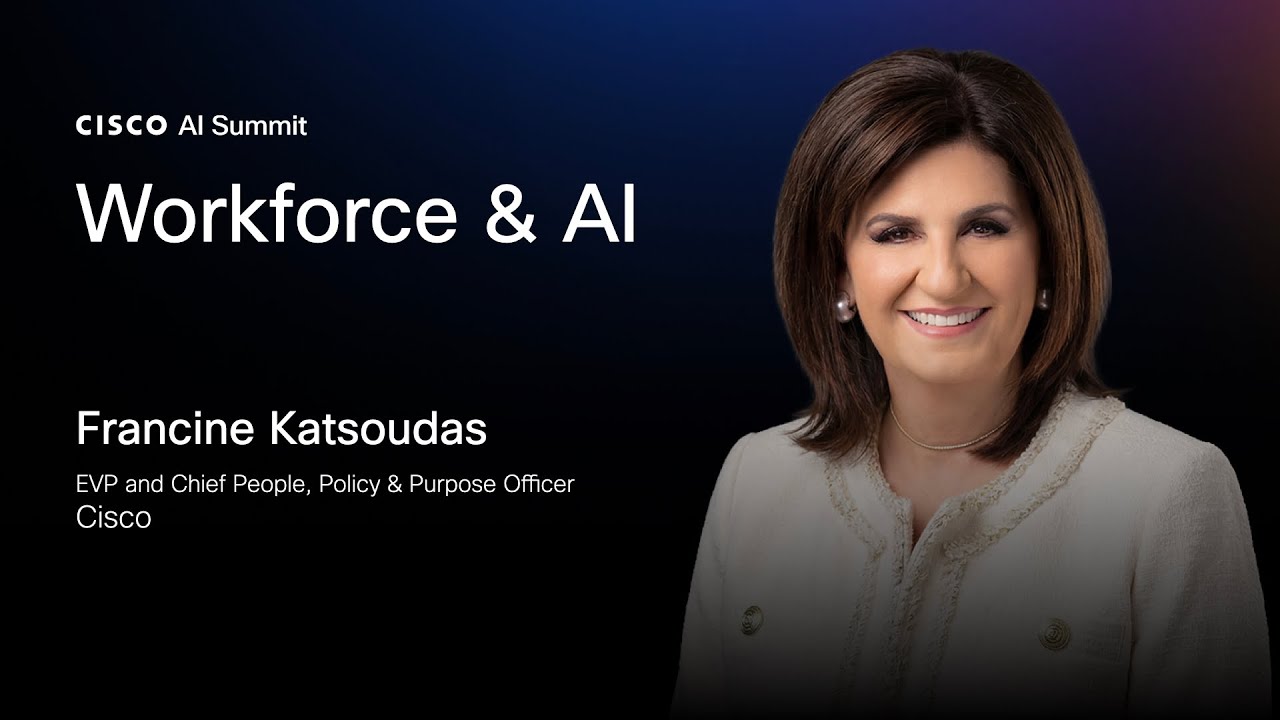

Talking people, policy, purpose, and how Cisco empowers employees in the AI era, with Fran Katsoudas
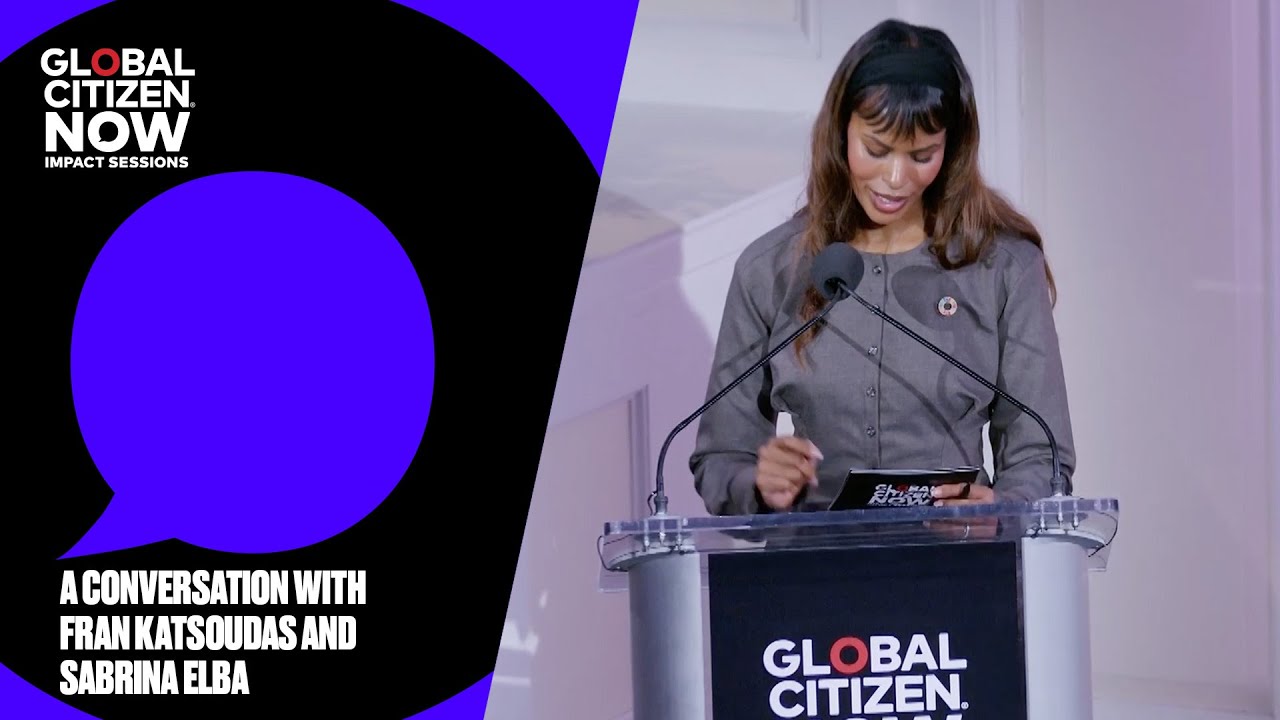
A Conversation with Fran Katsoudas & Sabrina Elba | Global Citizen NOW: Impact Sessions 2025


Hybrid Work is Built on Trust - Francine Katsoudas | Cisco Spaces Digital Event

'Empathy Is A Superpower': Cisco EVP Francine Katsoudas Details The Burden That Caregivers Carry

Organizational Resilience - Cisco's Chuck Robbins & Francine Katsoudas at CNBC @Work Summit