VIDEO KISS To Sell Masterclass Being YOU
In this 45‑minute free masterclass, Frances Pratt (Fran) shares her "KISS to Sell" philosophy, which centers on authentic, client‑focused selling. She begins by welcoming participants, explaining that a workbook and recording will follow, and invites live questions throughout. Fran outlines why every person who touches a client is a salesperson and why sales only exist when a sale is made. She challenges the stereotypical pushy salesperson, using a dinosaur vs. crocodile metaphor to illustrate outdated tactics, and reframes selling as "helping people buy" rather than pushing a product. Core practices include deep listening (engaging all five senses), asking clarifying questions, and mirroring client language. She emphasizes storytelling that spotlights client outcomes, using client‑centric language to build trust. Fran stresses the importance of body language, posture, and power‑poses, and suggests visual reminders (posters, checklists) to reinforce new habits. She guides participants to define their ideal client using psychographic details, understand client emotions, and craft a clear "why" using Simon Sinek’s model. The masterclass also covers confidence, pride, vulnerability, and the need to practice sales in real conversations, especially with existing clients. Finally, Fran offers a Mindset Month coaching session at a discounted rate and invites ongoing engagement via email, Facebook, or other channels. The session ends with gratitude and a reminder to use the upcoming workbook to put the concepts into action.
Chapters
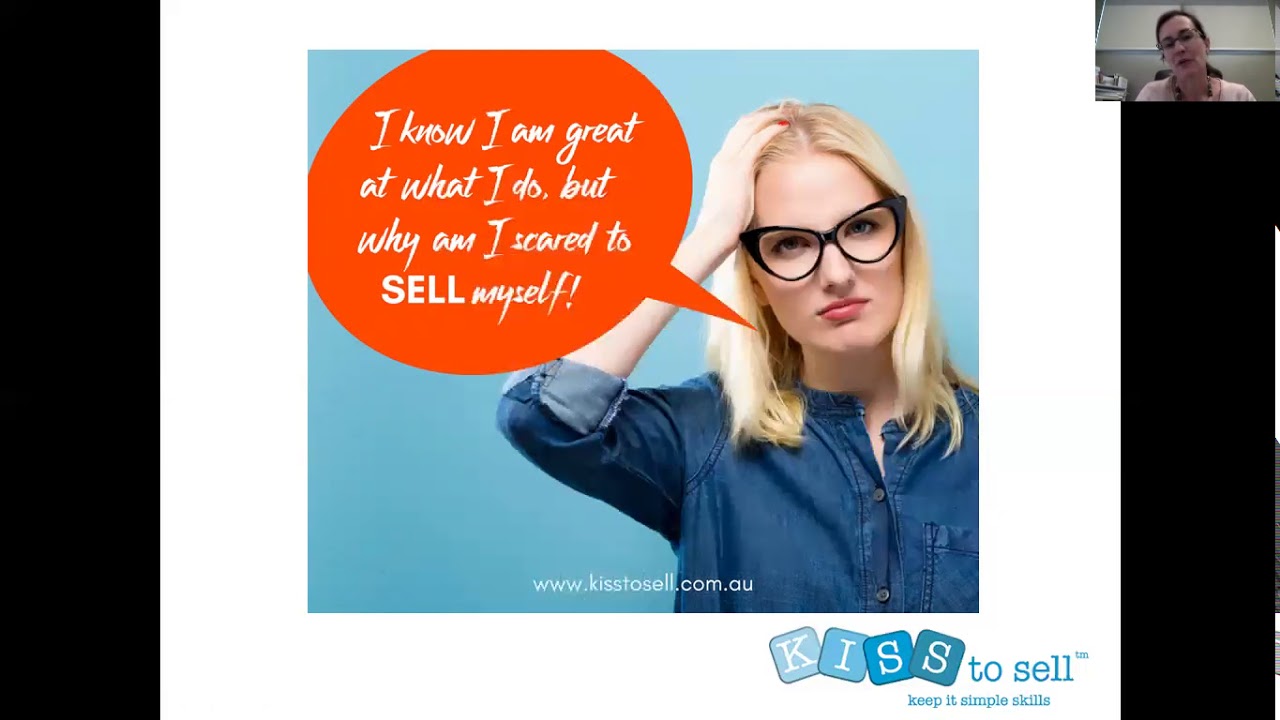
Hello everybody, and welcome along to this Kiss to Sell free masterclass on how to be you in sales and bring sales success. One of my favorite, most favorite topics is talking to people about and giving them permission to be themselves. So thank you, thank you, thank you for coming along today and for joining me. And I know that for those of you who are coming and joining the recording, welcome to you as well. I'll be sending out a recording to everybody who registered along with a workbook. And so today what I want you to do is listen and absorb and just know that the workbook will be coming to you tomorrow morning along with the recording once the recording comes through, and you'll be able to put these things into action because that's It's one of the foundations of what I do. It's great to listen and to learn, but it's much better to put things into action for yourself. So, um, let me just check that we've got some people on board, and we do. Thank you for coming along, and let's get started. Okay, so, um, please, again, thank you for coming along. We're going to spend about 45 minutes going through this topic, and I've got lots of things to share with you. One of the things that I love are questions. So if you've got some questions, please feel free to put them in the chat box. You can find the chat box down the bottom. And I might just put mine up so that I can see if things come through. There we go. And you can just type away in there and ask me a question at any time, and I will be really, really happy to answer that. I love questions because it allows me to apply what I'm saying to your question. And I know that you learn from that, but I also know that everybody else on this call also learns from that. And that's why questions are so wonderful and I love them a lot. So please pop them in the chat. If you don't feel okay about doing that, you can always email me, message me on Facebook, put something up in one of my Facebook groups. Or my Kiss to Sell page. There's lots of ways to contact me. So please feel free to do that because nothing— I enjoy nothing more than helping people get this right. Um, yes. So the workbook, there'll be homework for you to do, which I know you love, some things to think about and some things to do. And I'll be emailing that along with the recording. So some of you have never heard me speak before or don't know that much about me. So I'm just going to give you a little snapshot of who I am. I've been selling for over 20 years, and I have to tell you, I love it. I love selling. I love helping people. I like finding the words that will help them and influence them, understanding what they want. And it gives me a real buzz. But about 7 years ago, I started my own business to help other people with sales. And that really helped me to unpack the code around why I'm actually good at that. What is it that makes me good at selling? And so in the process of helping other people, they would say to me things like, oh my God, Fran, you, you ask the best questions. And I'd go, oh, okay, well, tell me about that. So every time I learned something new, I recorded it. Every time I learned an insight into what actually makes a great salesperson a great salesperson, I recorded it. And that's what I collected and put together in the program for Kiss to Sell. So Kiss to Sell is really a nuts and bolts of how you, whoever you are, wherever you're at in your business evolution and personal evolution, can find that code, that essence of selling and apply it in a way that's authentic and real for you. And that's what I love. I love seeing people understand these hidden rules and apply them in a way that just makes them shine. That's, um, I want you to be a sales goddess or a sales champion for yourself and not to feel icky and yuck about it. So that's what I'm all about. Um, and thank you for coming along. For the ride with me today. So today, why is it that you are the center of your business? Why do I go on about that so much? I just want to kind of— it's my starting point because I want to put a bit of call to action in there to get started. How to find your inner sales goddess or god for those beautiful men that have come along. And how to reframe what you're thinking so you can own that. What's that mindset? What are those things that I can do around my head that will help me do the right things? Because what I know is when we think the right things and think of things in the right way, then that changes our actions. It changes our body language. It changes our voice. It changes every— the essence of everything that we do. And when we do things differently, that's when we see and hear and listen for and experience different results. As I said at the beginning, I am all about action. One of the things about the discipline of selling is that it's one of those skills in business that you can only refine in front of your client. Yes, you can do some homework, you can work out a pitch and all of those sort of things. But at the end of the day, it's sitting in front of someone, seeing how you're influencing them, modifying what you're saying. That's where the true spirit and work of selling is. So definitely I'm big on practice and getting out there. Okay. So I love you and I know you love your business and I know you started Because you had a passion and an idea and you wanted to make a difference, whatever that means for you. But we get stuck, don't we? And at the end of the day, what I know is that clients and having clients, new, old, and such a variety of clients, and that's your business. Without clients, you don't have a business. And this leads me on to my 2 key essences. Around sales and selling. 2 key messages. Every single person in your business is in sales. If they have anything to do with your clients, interacting, sending invoices, picking up a box, I don't care. If they touch your client, then they're in sales because they impact on your client's experience. And the client's experience is everything. And that's what selling is. How do we let people know what that experience is? And then how do we deliver on what we say it is? And my second rule in business is nothing happens until a sale is made. You've got nothing to deliver, nothing to send, nothing to experience, nothing, no service to give unless you've made a sale. And that's why I bang on. Well, I love selling, but I kind of get a bit heated, I suppose. I was going to say bang on. That's not very nice. It's a bit heated about Why selling and that client engagement and talking to clients and living through, through their experiences is so, so vitally important. Because nothing happens, your business doesn't exist without clients. So I kind of wanted to make that point first. And now, now we've got that imperative and that call to action and the charge why you need to do this. And I know you're with me here that we can move on and keep going. So, so many women and people that I work with feel exactly like this. I know I'm great at what I do. My clients tell me. I feel it. I know it. But what— why does it stop me? Why does it stop me telling people about what I do? Why does it stop me? Or why do I stop myself from doing that? And I can tell you why. Let me get on to the next slide, and you're all going to go, "Aha! I get it." So tell me, and please feel free to use the chat to let me know that I'm on the right track or off, or you can hear me or can't hear me, or or what have you. Bit of interaction is always nice. So how many of you? when they think about picking up the phone or telling people what you do, are scared that you're going to come across looking or feeling or sounding like this guy. So, let's— instead of just brushing it off— Thanks, Caroline. Thanks, Beth. Yes, often the way people do selling is it's fake. It's not me. awkward. It's all of those things, but I'm going to give you some absolute things that you can do that will make you feel free and give you permission, and it will feel authentic and real for you, Beth. So let's, instead of just brushing this guy off and going, ooh, I don't want to be like that, let's, let's just explore a little bit why We don't want to be this man, or this way of selling, or perceived in this way. So, let's think about what he does. Does he listen to you? Not very often. He pushes. He's coming across at you. He's eyeing you up. He's looking at your wallet. He's seeing how much money you've got to spend. He's assessing you as a piece of meat to buy that car or not buy that car. And he gives you the attention based on his perception of his— Your value to him. It's all about him. He is in love with himself. He adorns himself with things that mean success, and he just wants you to buy this car. So you might say to him something like, oh, but I've got young kids, they're not going to fit in the back. Nah, nah, they'll be fine. He doesn't listen. He doesn't respond to what you say. He doesn't He's just there for him. And this is the complete opposite of what great selling is about. And I'm going to tell you a little story about dinosaurs and crocodiles right now, because lots of people say to me when I say that, that this isn't great selling, people say, but I've met people like that. And you know what, so have I. And I'm sure just like you, I've run the other way. But just because crocodiles still exist on the earth doesn't mean we're in the time of the dinosaurs. So yes, there used to be lots of salespeople like this, but now there's only crocodiles left. So there's only a few dinosaurs left on the earth, but we are definitely not in the time of the dinosaur, and we are definitely not in the time where this selling actually works. Um, And so, I want to now move him nicely off to the side. Now that we understand what he feels like and where he's coming from, we want to lovingly move him away and say no to that and say yes to beautiful heart-centered selling. Okay. So, let's reframe what we think about selling. Selling— when people think about sales and selling, they think about talking and telling. So let's change it. Don't use the word sales. Don't use the word selling. Who are we there for? We're there for our clients. What are we helping them do? We're helping them solve a problem. How do they solve a problem? Well, one way that they might be able to solve their problem is to buy something from you. It might be a product. It might be a service. It might be whatever it is. So if we start from the premise that we're not here to sell, we're here to help people buy. See how that feels different? I'm helping someone. That feels fundamentally different. And when it feels different to you, it opens up your body. When it feels different to you, it makes your voice sound different and it makes you choose different words. Oh, Beth said something here. So, Beth's just talking about direct sales companies, and some people in direct sales like Tupperware and Nutramedics, they keep coming back and trying to— she uses the word exploit the relationship. They take a pushy approach. Carolyn says. And that's right. So what they're doing is they're putting the primacy of that relationship, or what they can get out of that relationship, or the sale that they can make, the money that they can make, above the relationship. And what I'm saying to you is that actually the opposite way of selling is better. So when we put the primacy of the relationship first, and the function of that relationship is to help that person solve a problem. Is the second step, and the third step is that might be from you. So a beautiful sales process takes someone from the problem that they have and understanding that, understanding what you do and how that might help them, and helping them make a decision to either buy from you or not. So the purpose of a sales process. isn't to get every single person to buy from you. And often there's a— in people who are practicing sales incorrectly, there's that, I've got to get a sale, that urgency about that person buying from me. But in my experience over a very long time and with lots of different salespeople in the world, what I know is the people who focus on the customer and their experience and helping them buy and not on the money are the ones that win. And they're the ones that make all the money in the long run because you're not focusing on the money. What you're focusing on is that client and how you might be able to help them. Let me just read these comments. I love you girls. Thank you for— So, Carolyn says she likes the phrase helping people buy. Me too. It's one of my faves. And Sharon— oh, hi Sharon, welcome along. Sharon says relationships are always more important to me, and if they need something I can help them with, then they'll think of me. Yeah, I think that's right, Sharon. And I think sometimes though, we get a bit passive in that. So the selling side of me says absolutely the relationship is more important, and absolutely they need to understand what I might be able to help them with. But then I need to make an offer. And I need to ask. Because sometimes the thing that we miss is that prescription or the ask in what we do. And particularly because we go back to feeling like that pushy salesman again. But there are ways of asking. There's ways of presenting that make it feel genuine and have a nice flow. Flow to it. Okay, so if we're thinking about helping people buy, what's the first thing we do? If you're helping someone, if your first mindset is about the relationship and helping, what's the first thing we've got to do? Not talk; it's listen. Because unless we really understand what this person wants. What their problem is, what that means for them, um, what their experience of that is, what they've tried before, what they might try, um, all of these things, then how do we craft or explain to them what we do in a way that's going to fit their problem and their understanding of where they're at? So, the first thing we do is listen. Listen, listen, listen, and understand. And then we ask questions and we clarify and we actually make sure that what they're listening— what we've listened to is actually what we've understood. I often say when you're listening, it takes all 5 senses. So first of all, your brain has to be engaged with the person, not thinking about your shopping list or what you've got to do next or whether they're going to buy from you or whatever. You need to be watching them because 87% of communication is body language, which is why I love face-to-face, but also video is really important to me. So, a lot of my coaching sessions are done on video because I want that interaction, that body there, but nothing is better than face-to-face. It takes your ears, obviously, to listen. And then as you're taking the words and filtering them in your brain, because we all filter and create an understanding from the words, then we need to use our mouth to repeat back and make sure that we've actually understood what the person has said. And so, as you can see, if we're doing that, and then we can craft a solution that is actually going to fit With those things that we've heard and understood and listened to, then we can do the ask in a way that is meaningful and coherent and authentic and relevant to the client that we're talking to. So, this is something that I'm going to pop in your workbook to have a bit of a play with, but basically, When we're changing our belief system or changing the heart of our behavior, we have to put reminders around ourselves. So I'm sure for those of you who've, who've got kids, things like, you know, when you're doing toilet training and stickers, stars, notepads for yourself, making sure that you keep note of the number of days you've done a certain thing. If you're going for a walk every morning or whatever it is. They're visual reminders that help us see what's going on. So if you are going to approach selling differently and get rid of this fear in your behavior, then you need to put some prompters around. So it might be a little poster that says, helping people buy. It might be a little process that says, listen, and all the things that you need to do to listen. It might be an information sheet that you take notes on about the client. What are the tangible things that you're gonna pick up and use and see that will help you remember to make this change? Because unless you do it, you're gonna get to picking up the phone or talking about your business again, and that cringeworthy guy is gonna smack back up. Because that's what you're used to. That's what your brain is used to delivering for you. So we've gotta retrain your brain. By showing them something different, by giving you different tactics, and then actually doing that. And over time, then you'll go, "Oh, Fran, I don't need those reminders anymore," and I'll be doing a happy dance. Then I want you to think about, and this is why I went into how we feel with that guy, that used car salesman image. Because it's all that false, that pride, that, you know, all those yucky emotions. So again, we need to flip it. We need to think about the things that we're passionate about, that we— that instill trust in us and the people that we're talking to, the pride and hope. So one way to do that is to think about the passion in your business. So what is it that you're doing? Why do you get out of bed in the morning? And it's not, you know, to sell to a client, but it is to change their lives in some way. So I want you to have that central as well so that you're really clear about not just, oh, I'm helping people buy, but what are you helping them to do? And once you get the C, then you will see the change in your behavior. And once you witness that change, That will be— that will enable you to have more faith in what you're doing. And once you witness that change, it will encourage you to do more and more and more. So there's an exercise in your workbook to help you do just that. So often when I'm talking to people, and we talked about this before, you know, the fake, the deceit, I'm Ripping someone off, I'm making them do something that they don't want to do. So let me tell you my version and what I know about selling. People buy, and I know you've heard this before, but let me just put it in a different context for you. People buy from people they know, like, and trust. So if that's true, then deceit comes in. doesn't come into that. And again, I'm not going to say that there aren't deceitful salespeople out there, but we're back to the dinosaurs and crocodiles again. Yes, there's crocodiles still on the earth, but it doesn't mean we're in the time of the dinosaurs. So I just want you to get those things out of your head and think about know, like, and trust. So one of the things that I worked on last year, which was really interesting, is Looking at the know, like, and trust with Simon Sinek's The Why of Business. So if you haven't seen that TED Talk, and I'll put a link in the workbook for you, but that TED Talk is amazing. So what he looks at is the know, the 3 circles of business. So everybody talks about what they do, and I like using an accountant as an example here. So everyone talks about what you do. So Yep, I'm an accountant, and that gives someone a perception of what you do. Some people then go on to talk about how they do it. I do it by sitting down with my clients. I do it online. I do it this. I do it that. The how. But what people are most interested and motivated by is why. Why did you set up your business in the first place? Why is this important? And this is one of the things that I've actually just been working on with my business coach at the moment, and Can I read out to you my why? So this is what I want to achieve in life. I'm just, I'm reading it from over here. So excuse me while I just look over there. Empowering people to unleash their passion in business by unearthing their authentic sales style with powerful storytelling. And when I think about that and read that and, uh, frame that in my head. It just, that encompasses what motivates me and what I get a buzz out of when I see other people being authentic and real and themselves. Love the fact that your mission statement is on your wall, Fran. Yes, definitely practicing what I preach. And I've just been reworking it, so which is why I couldn't say it off the top of my head. So, but yeah, I love the elements of authenticness, and I love it that it's about storytelling because I'm such a storyteller, and I help people unearth their own story. Okay. So if we're going to embrace Our inner sales goddess. My first rule is be yourself. You can't be great at selling and somebody else. And this is where that myth comes into place about, you know, being pushy or extroverted or introverted. You know, people think that salespeople have to talk a lot and be really good on their feet and extroverted and be the light, you know, light up a room. And Yes, there are great salespeople who are just like that. But there are also great salespeople who are introverted and shy and have their own inner light. And they just do it in a completely different way. So the first rule of selling and finding and owning your inner sales goddess is to be you. So if you're a dag and tell jokes, then be a dag and tell jokes. If you are studious and do a lot of research, then research your clients and show them that. If you're analytical, show your analysis. If you're a storyteller, tell stories. Whatever it is and whoever you are, own that and be that and find ways to embrace that in what you talk about and how you talk about it. The second thing I want you to do is be proud. Be proud of you. And this is particularly a big stumbling block often for people. And please tell me if this is for you as well. But let me tell you why being proud is so important. If you're going out to talk to people, then being proud about what you do is, is a really important part because it comes across in your voice. It comes across in your confidence. And selling is absolutely, whether you're an introvert or an extrovert or a clown or whatever breed of salesperson you are, confidence and coming across as a confident, well-spoken person, um, is definitely part of great selling for everybody. But often, and particularly women, seem to get anxious about talking about themselves. So what I do about that is, first of all, we build a story around your why. Tell people about why you got in business. Tell people about what gets you out of bed in the morning. So when I think about that, for me, I think, you know, I love helping companies learn how to sell better and learn to understand their clients better and all of those sort of things. But the biggest buzz I get is when I help individuals unleash their inner passion. These people who have an idea, they have it, they have a business, and seeing them win at that and seeing them being able to talk about what they do in a way that's compelling and engaging and asking people to buy from them. That's my proudest moment. So my why, which I read out for you before, my mission, but then what I talk about and how I talk about that is through my clients. So I don't say I do these things. I talk about their experience. I talk about what I see in them, the change that I see in them, the problems that I see, the solutions that we come up with, and how it impacts on them. And you'll notice, even for me, I'm an awesome salesperson, but the tone of my voice changes when I talk about them. There's a power in that story that will come across for everybody. So if you feel awkward in talking about you and what you do, then just grab some client stories, mold them into things that you can talk about. Think about your client pathway and journey and, and think about how you can show people, um, through your stories and through the client experiences, the people that you've helped. Um, and the great thing about those stories is it does a couple of things. One, it goes back to our essential element at the beginning of helping people buy. So when you're talking about what you do, you're just showing How you help people. Secondly, when you're telling a story about a client, not a story about you, it's easier for you to say. You're more confident. And so it's more— pardon me— it's more engaging. And lastly, and probably most importantly, because you're telling a story about a client who had a problem and found a solution, someone else in that audience who has the same problem and would love to try that solution is listening and they're engaging, not from a sense of, you know, this person is talking about themselves, but this person is talking about me. I'm like that. I have that problem. I'd love to try that solution. So on all of those fronts, it's much more powerful and compelling way to talk about your business. And I'm going to harp on about this, but if you're going to let out your sales goddess, Then yep, you've got to let her out in public. So by all means, practice with your mum or with your best friend. But really, the only people who are ever going to buy from you are your clients or your potential clients. I was chatting to someone this morning, to one of my coaching clients, and she was saying, oh, my partner said this and someone at a BNI meeting said this. And I said to her, Are they your, your clients? Pardon me. Pardon me. And she said, no. And I said, well, I love them. I've never met them, but I love them, but don't listen to them. The only people who can help you frame how you talk about your business and understand whether you are engaging or not from a client perspective are clients. And that's why practice is so important. And it has to be face-to-face. And I'm sorry if that scares you, but it really does. I'm really not dying. It's okay. I am just going to take a sip of water, though. Okay. Excuse me. Because When you're saying these things, I wrote a blog post called Your Lean-In Factor. So, what you want to know is, what's that thing that makes people lean in and want to know more and engage with you? And you'll only know that if you're using these words and practicing these things in front of a group of people or in front of individuals. And for me, I know that it took me a long time to refine how I talked about KISS to sell. But if I'm in a group of people at a networking event or talking, people tell me, ask me what I do. I say I do coaching and training. Oh, now I can't even remember. Isn't that terrible? Haha. I do sales training and coaching for people who hate selling. And so the people in the room who cringe at selling and think that, you know, they can't do it, go, oh my God, I've got to talk to you. So when I think about being myself or being yourself, I've said to you, we've covered this off a little bit earlier, that people buy from people that they know and trust. And If you're trying to be someone else, if you're trying to put on a sales presentation, then even if they don't know it, or even if you do it beautifully, there will be a lack of essence in that, a lack of you in that, and people just won't get it in the same way. So when you're being you, I want you to be really you, and I want you to share things about yourself. So when I'm doing things for the first time, I say to people, you know what, I've never done this before. I'm doing this for the first time. I'd love your feedback. I'm open, I'm honest, I'm clear. So if you're going out and practicing talking about yourself, then tell people you're practicing. Tell people you want their honest feedback. And yes, you do have to be vulnerable. And one of my role models in life is Brené Brown, and I love her work on vulnerability. But it's true. If we're going to improve and be the best version of ourselves, and that includes the best sales version of yourself, then we need to be vulnerable and we need to put ourselves out there. So, in the workbook, I have put some elements about this and how to build these stories. So, talk about your why. So, with that one, as I said, I'm putting a link to the TED Talk for Simon Sinek. But I want you to think about why you're in business, why you help people. What is it that you help them do? Talk about your clients. Who are they? Are they women? Are they men? Don't just say they're anyone with a pulse. I often talk about this as getting crunchy. So if you can be, you know, if, if you can say I work with 30 to 35-year-old women in this locality with this specific problem, if that's who your target is, then what you're doing is you're not cutting off everyone else, but you are allowing the person who's listening to you to go, Either, oh my goodness, that's me, or, oh my goodness, I know someone who is that person. So when you're talking about your clients, I want you to think about the ones that you want to repeat. And back to my coaching call this morning, she was talking about, well, some of these people don't want to come along. And I said, well, then they're not your clients. And so if they don't want to do what you want them to do and how you want to help them, then they're not your clients. Let's Focus on the people who are engaged with what you're doing and get value out of, and let's repeat and find more of them. So if we focus on them, then we're going to be able to create more of those people energetically and find more of those people and create the stories around those people which will engage those people. And as you can see, you know, it's like going down an onion. Layer. It's got layers and layers and layers to it. So, Jerry, welcome along. Jerry says, is it also possible to have a more open description of your clients? For example, you may have an internal image of them being 30, but describe them as people. Yes, look. In my experience, and I'm struggling with this at the moment because when I think about Kiss to Sell, it's absolutely for women. But do I coach men? Yes. But still, on, on a lot of the messaging and stuff, I say women. Does that stop men buying from me? No. And, and so I think if you have A clear image and avatar of that person, then yeah, you need to think about how you describe them. But you want to describe them in a way that makes the other person go, "Oh, that's me." And I suppose I'm picking a little bit, Jerry, on you know sometimes people go, you know you're at a networking event or something, and they say, you know what sort of clients do you work with? Oh, anyone with you know, anyone with a pulse, and you just go, oh, well, I know thousands of people, that doesn't actually help me refer someone to you. But definitely, I tend to use a more psychographic approach than a demographic approach, if that makes sense to you. So, when I think about my client, I think about how they feel. And I do a lot of this work with my clients. So, I actually go back and think about, well, before working with this person, What was the problem that you had? How did you describe that? How did that make you feel? What had you tried before? That sort of movement or journey that is in a feeling sense. And when I think about my clients, so when they think about sales, they're confused, they're scared, they're, they don't know where to start with talking about themselves. They don't know how to ask people to buy from them. They just— and they're frustrated because they have this passion, this idea, but they can't kind of get it out. And then I think about, well, while they're working with me, they're discovering and they're uncovering and they're learning and they're having aha moments. So it's a real journey of discovery in the coaching. Let me just read what you're saying, Geri, so I can respond. Yes, so Geri's just saying that for her, being male or female isn't the key, but supporting them on their journey is where you shine, not dealing with the woman per se. I agree, I agree. And in reality, the men who are attracted to working with me want those other, those same key essences. You know how to talk about themselves without coming across as being pushy, how to use storytelling and those sort of emotive tools to be able to convey what they're doing and take their clients on a journey. So absolutely, absolutely. So there's lots of different ways, and there's no one way that is right. So you might try. Doing some demographics. If that doesn't feel right to you, try doing some psychographics and looking at that client journey, which takes me on to my next point. Thank you, Jerry. Beautiful segue. And that's really about thinking about the problem that your clients have before they see you. Why do they come to you? Why do they say yes? That's a great question to ask. Why did you say yes to me the first time? And listening, if you're going to go and ask these questions, listening for the words that they use and also the emotions that are underlying that. So you're getting the functional and logical elements, but also the emotional and spiritual elements. And take them through that journey. So while working with me, how would you describe that experience? What was unexpected about working with me? That's something that you enjoyed. If there was something that you could change, what would that be? Because we've always got something to learn and improve in our businesses. So we want to do the before picture, the during picture, and the after picture so you can get some outcome statements. So, um, so that you know what impact you had so that you can tell that full journey story. So when you've captured those stories and you've, you can own the words that these people say about you, There's so much power in that, and that's where your pride— so it will be great for your heart and soul to listen to those things and to absorb them, but it will also be great to then use that story to help other people really deeply understand what you do. I love this picture that when I found it putting together these slides. We all think, and I know I've done the same thing, we put heartache over the words, whether they're on our website or a Facebook post or whatever. But you know what? Body language, how her face— you don't need words to understand what she feels and what she's thinking. You really don't. And so If I was to give you one piece of advice from today, is to think about your own body language. It's 87% of communication. So, you can say a volume without speaking a word. So, absolutely, words are important, but nowhere near as important as body language. And by body language, it's about where you look. It's about the movement of your body. It's even about how you sit. I know a lot of people actually stand up to get to do a phone call. So, it gives them a different tone of voice, just the physical sense of standing. And it opens up your shoulders automatically. I'm going to also in the workbook put another TED Talk. I'm a bit of a TED Talk nut. To Amy Cuddy. And she's about power poses. And she's inherently an introvert, but she talks about the power pose and what difference— you know, this is the power pose— and what a difference that makes to our psychology and to our endorphins and also to the tone and the words that we choose. So, Absolutely, whether you're on the phone or face to face with someone, have a think about where you're standing, what your— what message you're giving about you and your business through your body. Absolutely care about the words. But when I focus on words, I really focus on using the words the clients use. So if I can replace every single word that I use when talking about my business with something a client has said about me. Then I think that has more engagement and more resonance with my target audience. And your tone, the speed, the way you talk, and all of those sort of things. So have a think about all of those things when you're getting out there and practicing these. But, and I do want you to be mentally prepared, but you absolutely have to get out there before you think you're ready. One of the rules I was doing some work with a marketing person and marketing people, God bless them. I love them. Um, but, um, they do a lot of preparation first and, and for a marketing person, everything has to be perfect before they get out. And this is where sales and marketing are completely different. As a salesperson, when I'm working with a business, I say, let's go out with exactly what we've got now and we can improve it later. But I can't get people to buy if I'm not out in front of them. So Beth just asked a question and she says, my clients are all over the country. When they call, I'm often making notes so I remember their needs and any key information. Trying to imagine how that would look in a Skype call. Oh, that's really interesting, Beth. Yeah, look, I know I'm a big, big note taker too, but I actually use Zoom predominantly now. One of the reasons that I use Zoom in my coaching and for my calls is because it's really easy to record. And I give— and I'm really good with words for people. So I give a copy of the recording to my client. And it also means I can go back. So the other day I was writing a proposal for someone from a call that I'd had with them over Zoom and I thought, Now, what did I say to them on that call? And I could— I just went back and re-listened to the recording and it was perfect. Exactly what I had framed for her as the solution and the next step. I just typed out exactly what I said. So have a play with that, Beth, and see how you feel about that. And also get some client feedback and see what they think. The only people who can tell you if you're looking distracted and disconnected are your clients. So, have a practice with one of them and tell them, I'm trying something new. I'd love you to be a part of it. Can I get some feedback at the end? Because I really want to know, what did you like? What didn't you like? What could I change? And see what their— how that changes their perception and their value proposition or perception. Of what happened. Great question. So we've already talked about be yourself. The second rule in Fran selling is get over yourself. You've got to get out there. I know it's scary. I get it. You know what? I've been selling for over 20 years, and sometimes I even get funny about picking up the phone and calling someone if I feel like. Oh, they're not going to say yes, or it's been too long, or it hasn't been long enough, or whatever. Those little demons and voices never go away. But what I know is that I can laugh at them now, and I can go, yeah, yeah, yeah, and pick up the phone anyway, because I know in my heart of hearts, through all my experience, that those little voices, they're rubbish. They don't actually understand what they're talking about, and they're certainly not my client. So the only people who can tell you and engage with you and tell you whether you're right or whether you're pestering them or not pestering them or anything is your client. I often, when I'm actually working with salespeople, I'll say to them, there are no numbers on your client's phone. They can't call you. It is your job to call them. So, um, you need to get out there. Yes, I get it that it's scary, but you need to get out and try. And just start by doing one thing. So, one thing that you might have taken from today is to go and talk to some existing clients about their journey and their experience. Do that one thing. And then tomorrow, choose another one thing or talk to another client. And then think about— once you've done a couple, think about how you can amalgamate that into a story that tells about you and what you do. So I hope that today you have heard and understood that just like this beautiful boy, sales is not a dirty word. Sales is absolutely being a superhero. It's being vulnerable. It's being open. It's being authentic, and it's asking people to do something that you honestly believe will help them. So, um, there's definitely time for questions. So if anyone's got any questions or things that they're thinking, oh, I don't know how to approach whatever it is, please pop those on now. That would be fantastic. And while those are coming through, It is Mindset Month at Kiss to Sell. And so I've got a special offer. So when I'm doing my company consulting, I normally charge $350 an hour for my coaching and consulting. But for Mindset Month and for my Kiss to Sell clients, I don't do that. But for Mindset Month, I'm doing a special where you get an hour coaching with me around mindset and thinking differently and working on whatever you want to work on in your business around sales for only $97. So there's a link to that. And I'd love you— you think that I can help you, I'd love to help you. And yes, this month is Mindset Month. So if you've got any other things about what What you're doing or some questions, then please feel free to ask away. So you can email me, you can post something on Facebook. I don't know, send me a pigeon if that's your preferred method of asking questions, or you could ask a question here. I haven't had any come through. Sharon says, great info, thank you. Thank you, Sharon. That's really great. I'm just going to scroll up and make sure that I have answered all the questions today. I have. So, I wanted to say thank you, thank you, thank you for you all coming along today. And for those people who are listening to the recording, Thank you for listening to the recording. And I'm just reading it. Sorry, I just got distracted. I'm just reading a question from Beth, but let me just say thank you to everyone and let me get on to that question from Beth. Beth says, I always imagined I'd be better at selling a tangible product rather than words. Do you tell me what you sell? Tell me what your business is, Beth, so I can help you. But yeah, often when there's a tangible product, it's something that people can touch and smell and see. It can make it easier. But sometimes it makes it harder because it's less emotive. There's often more emotions in services and everybody buys emotionally first and then puts logic around it. So she says she's a freelance writer and editor. Complex documents into plain English. Yeah, look, I think, Beth, sometimes it's more that we put that barrier up because the grass is always greener on the other side. So if you think about what you're doing, it's not about the words, really. You're solving a problem for someone. Someone wants someone to read something and they can't read it because their documents are too complex. Complex and too verbose, and they're probably badly written, frankly. And so what you do is actually give that business or that person a tool that is actually useful in their business, and it means their clients can actually navigate and they can get across the information they need to get across. So I think often when we're a technician— so I'm a sales technician— so often I get stuck in talking about selling rather than thinking about actually what does that do for my client? And I think it's the same with you. Are you getting stuck on the words rather than what it's doing for your client? Because the essence of, of, and the code behind writing, yes, there's words involved, but it's actually about getting across meaning and intent and having a call to action. Or actually creating a change in the person who's reading that. So, yeah, that would be how I would approach that, Beth. But I think sometimes we say those things to ourselves because we think it's hard to sell. And that's because you're thinking about it the wrong way, and you need to think about it differently, if that helps you. Thank you for that great question. Thank you for being a wonderful, inclusive, And, and Jerry says she'd love to chat later. I'd love to, Jerry. Thank you for being an inclusive and wonderful audience. Lots of interaction, lots of questions, my favorite sort of audience. So thank you, thank you, thank you. I hope you've all got value out of today's masterclass. We're doing— I'm doing one every month. So keep posted for the one that's coming up in April, and I'll let you know about that. And look out in your inbox tomorrow morning for the recording, and I'll also give you a copy of the slides and of course the workbook so you can get, get practicing. And if anybody wants anything else and you think that I might be able to help you, please reach out. Thank you, thank you, thank you, and have an awesome day. Bye.
More from Frances

Stop crocodile selling — help people buy. Snapping your way to selling JUST - DOESN'T-WORK.




Your 'shiny' sales words are killing your deals. How to build trust in sales. Architecture of trust.





