Amie Devero w Francis Wade 1 Great Culture Isnt Enough for Great Results
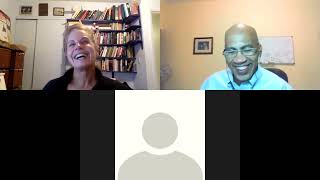
In this live interview hosted by Francis Wade for the Dynamic Objectives program, longtime collaborators Amie Devero and Francis Wade recount their joint history at Framework Consulting (1996‑2003) and the evolution of their strategy‑retreat methodology. They explain how an early belief that cultivating self‑aware, egoless employees would automatically drive superior business results proved false, prompting a shift toward a structured strategic framework. Their "aha" moment came with the Norton‑Kaplan balanced scorecard and strategy‑mapping literature, which they adapted into a proprietary process that blends several tools: a pre‑retreat SWOT and data‑gathering phase, elicitation of "de‑facto core values," the Merlin Process (backcasting from a far‑future vision to present‑day metrics), snapshot exercises that surface hidden inter‑departmental ratios, scenario planning, and pre‑mortems. They discuss how they tailor these steps for post‑revenue tech startups versus legacy corporations or public‑sector entities, emphasizing the need for a realistic target horizon (the "Goldilocks" year) and the psychological shift participants experience when forced to imagine distant futures. Throughout, they highlight the facilitator’s role in testing comprehension, surfacing hidden cultural tensions, and ensuring the snapshot becomes a usable, shared language rather than an academic exercise. The conversation also touches on practical logistics (online SWOT, focus groups, interviews) and the challenges of measuring the right metrics in fast‑moving startups.
Chapters
And we're live here at Dynamic Objectives, and this is Francis Wade, your host and the person who's been leading you for the last number of weeks through this program on strategy retreats and how to make them awesome. And tonight we have a very special guest, and please welcome Ami Devereaux. Hey Francis, it's great to have her, not just because she is very smiley tonight. But she's also a strategy expert. She happens to have worked with me for, I think, about 5 years back in the early days of Framework Consulting.
Actually, it was 7 years.
7 years. 7 years of Framework Consulting. And that took us until about 2003. And since then, we've been doing our own thing separately. And it looks as if we have a visitor. Hi, Kelly.
Hey Francis, great.
I'm gonna, I'm gonna mute you just because there's a little bit of background noise.
Of course, of course, no problem.
As questions come in, just put them in the chat and I'll pick them up, okay?
All right, no problem.
All right, great.
I'm gonna have to figure out how to make it show me something other than Kelly's name.
Well, she might only be— she might only—
oh, you're only seeing Kelly's name, literally just the Chiron. Okay, now I see you. All right, so let's see how that goes.
All right, great, great.
You're right, something has changed in Zoom, huh?
Yeah, a few things have changed, so we're getting used to the new settings and wondering what's going on. Took us a while to get in, but Ami and I parted ways back in 2003 and we've kept in touch. She wrote a book about our work in strategy and in other areas, and the reason I brought her on tonight is we thought it would be a great idea to resync, but not just to resync in private, which we've been kind of doing over the years, but to rethink in public, to bring together the best of what we've been doing, the best of what we now know after many years of leading strategy retreats using the model that we've taught in Dynamic Objectives, and maybe even a look at what's coming up ahead. So maybe, Amin, we could start by recapping how did we meet and how did we get to work together on strategy and what got us to the place that we're— where we had a company together and then parted ways. You want to take us through?
Gosh, every time you say parted ways, it makes it sound like we got divorced and acrimony. And I just want to say, for the record, there was none of that. I mean, we parted ways on the most amicable terms, and I left solely because I really was exhausted from spending all of my time in Jamaica, Trinidad, Barbados, and so forth. And, um, I just needed to be home a little bit more. By home, I mean in the US, and it had nothing whatsoever to do with anything that we were doing, because had I had my druthers, we would still be partners. So just didn't go that way. Um, however, um, I think— how did we meet? So we met through our common participation in a personal growth and development methodology that we were both, both participants in and later leaders in. And then we started to attempt to apply that same approach to organizations. And of course, at the time, Framework Consulting was a licensee allowed to use that kind of approach in organizations. And we had a theory. I love telling this story because it's a always kind of a surprise ending even to me. And the theory was that if you could alter the individuals in an organization and make them fantastically self-aware and egoless and hungry for personal development and do that universally across an organization, that the organization itself would alter and then the results would alter. And that was our theory. It was a working hypothesis, and we not only worked it, we believed it. And then lo and behold, much to our great amazement and chagrin, it turned out not to be true. It was a very disappointing finding because here we had done all this work in organizations and they were magnificently transformed into awesome places to be with awesome people in them and awesome conversations and fantastic levels of humility and personal growth going on, and they still produced exactly the same measurable results— the same mediocre measurable results, I should say.
In fact, in a few, in a few cases, the people were empowered and they were excited and they had nothing to work on, right? Because there was no, there was no overall strategy that the company could communicate to them even though they were now transformed. They would be transformed and then leave the company, or they'd stay and start to demand things of their management that the leadership hadn't prepared.
Yeah, it was a sort of staggering reality that awesome people doing the wrong, you know, doing the wrong things or not doing things in service of an overarching mission and plan produces no, you know, no particular results. So it really shouldn't have been surprising because when you say it like that, it makes perfect sense. But that's the benefit of hindsight, right? And so we sort of, sort of, sort of started scouring the earth for what would solve our problem. Our problem being that we now had a management consulting practice with no abiding approach to like our approach, we had decided was bankrupt. So what were we going to do?
Right.
And we started looking high and— high and wide and eventually happened upon a particular approach to strategy that had been developed at Harvard Business School. And I will let you continue the story from there.
Right. So the Norton and Kaplan article on strategy mapping came out in or 2001. I remember we had looked at the balanced scorecard stuff that came out in the mid-'90s and thought little of it because it was like, just, it was based, it seemed like basic thinking. Couldn't see what the excitement was about.
Well, and it was the cart before the horse. I mean, right, they themselves decided they needed to write a prequel that would set the intellectual sort of table for that, that finding.
Right, that's exactly what happened. And so the sequel turned out to— should have been the prequel, and it was what got us excited because it gave us a way to help companies develop strategy very quickly where we could play a facilitating role. They would do the work, but we could manage the conversation or the retreat or the activity, whatever they would go through, in a way that would allow them to to actually realize breakthrough results. And that was our sort of big aha moment. Yeah. Somewhere in 2000, 2001.
Yeah, it was a few years before the now infamous parting of ways. And—
I moved to Jamaica in 2005. Which is what, as you know, I was, I was always intending to do. That was why we weren't doing any business in Jamaica at all. And, um, both of us continued using the approach. Your book came out in about 2002?
2007 is when the book was first published. It really came out in 2008. And, um, and the book was written on the heels of Enron. So yeah, yeah, Enron was the sort of spark that had me write the book. Because the book, while it includes our entire approach from more or less start to finish, it's really, it's really focused on the degree to which strategy in the absence of clear both ethical and strategic core values is kind of morally bankrupt, and how a company like Enron that actually did have a very successful strategy, albeit completely devoid of any moral underpinning. You know, it was basically a strategy to be a scam, but they successfully executed the strategy until the scam was sort of discovered. Right. But I want to go back for a second. Sorry, I have a cat under my feet. She's very persistent. And so I want to go back for a second though to the sort of Evolution of the Merlin Process, because the Merlin Process is a really important part of our collective approach, and it's not one that most people who do strategy mapping do, right? Even, even strategy consultants that also do scenario planning, which we also do, right? But the Merlin Process actually came out of a different article that one of us found. I don't even know how we ran across it. And it was a very obscure article that some guy had written who we later got to know, and he had proposed that there was this very, um, ontologically challenging, like a metaphysically challenging approach to thinking about life and thinking about business that would require you to do a thought experiment of pretending you were like in Camelot, Merlin the Musician, who lived life backwards. And so he said, let's cast out into a future that's so far away that you can't possibly simply project what it will look like by saying plus 5% every year, which is, as we all know, mostly how strategy is developed or how planning is developed. And instead, let's cast out 30 years, 50 years, 100 years, and and ask the question, what's the vision of this enterprise? What's the vision of this marriage? What's the vision of this family that we can imagine for so far out that we don't know what anything is going to be like then? We don't know what the world is going to be like then. And once we have that picture imagined, now we can employ what have become fairly common tools of backcasting to wed our vision in measurable terms to our present in measurable terms, and that will give us the path forward in quantifiable terms, which is really, if you think about it, and there is data on this, it is psychologically a completely different way of thinking.
Mm-hmm, mm-hmm. We were able to codify it I wish I could remember the name of the article, but it did mention Merlin in the— or the Round Table or something.
Something like King Arthur, something.
King Arthur.
I'm gonna find it and we will post it to the Dynamic Objectives site.
Right, it was an academic article, I remember that much. But we were able to turn it into steps, and those are the steps that we use today.
Yeah.
Apparently not everyone uses— we were talking before and saying, what is it that about the content of dynamic objectives or the approach that we take that's different? And if you were to look at the individual pieces, you would say that this piece is done here, this piece is explained there, this piece is explained over there. But when you put them all together, that's what's very different, the amalgamation of all of them and having them happen all sort of at the same time. So we're going to go through each of the steps, right, and then compare our experience over the last how many years? 15, 16, 17 years.
It can't be that long, Francis, because I'm only 30. It's not possible.
You were in high school at the time.
I was a protégé strategy consultant.
Um, so let's talk about the, the actual start, the, the very beginning. Before, so before even the first exercise, before the snapshot is done, what kinds of things are you doing to set people up in your retreats so that they can expect and understand what's coming next?
Well, we do have a little bit of a preliminary sort of SWOT analysis that I actually have the team do themselves because the reality is, is SWOT analyses are not particularly deep thinking. And, uh, and let me just say, my clients currently are largely post-revenue tech startups. So I'm typically working with relatively small, very fast-growing companies that probably have not done a lot of planning, and more importantly, don't have a super long history. So, and they're all MBAs from somewhere impressive. And so SWOT analysis they can do in their sleep. They have copious quantities of data. They know what the marketplace is. And they can come ready with that. And then the other thing I have them do in advance is collect every possible piece of measurable data they could find. Usually that's already available on, you know, a variety of spreadsheets or in cloud servers or whatever, and I have them do that. And, and then we kind of sit down and talk about what the current challenges are, because the challenges will in some ways focus the conversation one place or another, and it's important to get them out on the table so that they don't, so that they don't sequester the conversation and keep it from being as bold and as novelty-seeking as it might otherwise be.
Right, right, right, right. Because in a way, we are preparing them to take this, this quantum leap in thinking. Which they— it's not a part of their everyday. Even the CEO is the most visionary person. The entire team wouldn't be as visionary as he or she would be.
And even if CEO is, particularly in the world I'm in, typically their focus is not long-term. It's on the next round of funding.
Ah, which is really short-term. Which is really short-term.
What do I have to do to get that next round of funding? Series B, Series C, or whatever it is.
Right, right. In our case, we do the SWOT analysis online. Refuse to do it in person because we say we can get the same result just by sending out some emails and collecting some results. Have them do the same kind of prep work that you described, so they come into the retreat ready. In some cases, we've added focus groups and interviews, which we give them as options. It It does exactly what you said before. It helps to prime their minds, but it also gives us an idea as to what out-of-the-box thinking looks like, because some, you know, they'll, as we talk to them, they'll start to sort of let go a few nuggets of visionary thinking. So even though they're not necessarily that way all the time, they would at least start to give us a little bit of insight into, yeah, you know, long time ago we had talked about, or maybe we should have, and da da da. But what we're looking to do is to get into the retreat and then amplify those ideas so when they come up, we can put some juice behind them and have them grow into something so that they're not stillborn, which is kind of what's happened up to that point. Somebody had an idea, they got killed.
It's funny you say that because, um, although I don't typically do focus groups, I'll sometimes do interviews And it really depends on what the goal of the retreat is. So if the goal is— usually I'm doing this in two parts. Like, so part one is what the sort of dynamic objectives model is. Like, let's get to a strategy map so that there's, there's a deliverable that can then be turned into a balanced scorecard and executed. But the second part that I do is this work on core values. And in order to effectively do that, I have got to elicit from the team what are what I've coined as a term of art in the book, de facto core values. These are the actual operating core values regardless of what kind of flowery things people are saying or what's written on the website. This is what's really running the show. And if we can get those from people through interviews or surveys or having everybody in the room and do it in a kind of private brainstorming post-its up on the wall kind of thing, then we can start to build something new, but we can't do it until all the kind of nastiness is out on the table. So that will often sometimes be part of the prep as well, and what's useful about that is once all the nasty stuff has been articulated, it has less power over people because it's not in the background kind of holding them hostage, and then the strategy retreat itself can, can occupy a kind of you know, demilitarized zone.
Ah, so that's a way of freeing them up from the constraints of their current culture.
Yeah, in part, at least, because then you have names for the kind of passive-aggressive stuff that occurs, right? That in the absence of naming those sort of— at those, uh, those de facto core values, it's just this sort of undercurrent of nastiness that you don't really know where— it's just, what is this disgusting morass? I don't know where it's coming from.
Right, right. Which can bother a retreat, don't—
very much so.
Right.
And it can also be doing things that are a little more insidious, like certain people just don't talk. Well, why don't they talk?
Right. I had a client— I had a client recently that I think would have benefited from that approach, because it wasn't until we're in the retreat that we realized Oh my God, right? They are in deep trouble. We had no visibility to the depth of trouble they were in, right?
Like, oh gosh, everybody's terrified of the managing director. This is going to be a problem.
We had to, you know, we had to dance right in the middle of the retreat because, and, you know, and kind of put our footstone in a way, right? Feet down, our footstone, our feet down.
Well, and you haven't done the work in advance. I mean, in my case, in many cases, I'm already the the executive coach for many of the leaders. So I already have a kind of relationship with them that allows me to exert a lot of pressure on, you know, the things they're saying, to push back really hard. But if you're walking in as a consultant leading a strategy retreat, you don't have that latitude. I mean, you can really kind of piss people off if they don't already have that trust with you.
Right, right, right, right. You could, but you can also sort of go for broke because you have nothing to lose as long as you're going to get paid. So it's pros and cons. But let's talk about that first session where we pulled together the snapshot. What's that been like for you recently? What are you— how do you do it nowadays?
It depends. So sometimes I'm doing strategy with one CEO and like no team. Oh, literally in a room with the CEO in some WeWork place, you know, right, little cubicle with whiteboards on every surface and lots of laptops. Wow. And so we are literally like dissecting every possible measurable thing. So we will do the scenario planning, me and the CEO, and come up with the prospective scenarios and then pull them apart, do pre-mortems on everything, and land on one. And, and in fairness, we're really landing on one as largely a function of a couple things. One is, what did the SWOT analysis say? The other is— it actually, it's a lot, what did the SWOT analysis say? Because, you know, if you have a scenario and it doesn't include any of your current core competencies, and it doesn't account for where you already have carved out a piece of the market, and it requires you to get, you know, 3x of the funding that you already have, it's not a good scenario. You can kind of rule it out quickly. Right. So scenario planning isn't really that hard a choice, but when we get that snapshot, that's where we kind of have to confront the truth. Right. And that can be really devastating because even in a very data-centric company that may be measuring lots of all the things that would be in an EBITDA, you know, they're also not measuring things like what's the cost per head, what's the cost of customer acquisition, right? Um, some of like what's really our sales cycle. Right. What's our, what's our real closing percentage? They may be tracking that in a certain kind of way, but they're not tracking that in a way that's really powerful.
Right. Because they're, they're sort of in startup mode and adding another metric is like Hercules. Hercules.
Hercules. But the degree to which they're being used, they're really used, is, is it's nominal.
Right, right. In, in our clients, we tend to be more, more mature because we don't work with, with startups. And certainly no one-on-ones. I've never had that privilege, never.
Really, it's really fun.
I imagine it could be a heck of a lot of fun. But, um, what we find is that the snapshot is more a function of bringing everybody together onto the same page, that each silo or each functional expert or functional head has been doing his or her own thing for a long time, and they've been managing their own metrics, and they've been reporting a few of them upwards, and they've been living inside of this whole world constructed in a language that only they understand. So what's been happening up to that point, we find, is that they've had senior executive meetings where each person reports and the others just fall asleep, right? Yo is the only person who's really listening to everybody, every conversation. And even then, you know, when HR comes around, he doesn't understand what she's talking about. He kind of just, right, he nods off or he's not with the conversation. But we force them to speak plain English and to speak to the person who is least likely to understand what they're saying. So it's a meeting of the minds where even if they see or hear things that they've heard before, it sounds new because now it's in English. And we also tell them, by the way, don't think you're not going to use this. In the afternoon, because you are. Once a snapshot is done, all of you should be able to represent what it's saying. So this is not an academic exercise. You're going to use this in the next session.
So make sure you understand that, because when I've done this work in particular with cities, um, cities are exceptionally siloed enterprises, and while they're not working on shareholder value, they may be working on citizen on services or on— they have particular goals that let's say the mayor has outlined or the city manager or whomever. And a lot what happens is, as you describe, each silo is managing their own metrics. And the kind of irony of municipal government in this sense is that all of this data is public. So in reality, any citizen could go online and find out all of these numbers. But in point of fact, almost nobody in the city actually knows any of these numbers except the individual responsible for the particular silo, like the parking department knows what their numbers are and their revenue, and the, you know, Public Works knows what their numbers are and what it costs for waste disposal and whether— what percentage of recycling is being done and what's the cost of trucking and petrol and so forth. But nobody knows overall how any of these relate to each other, and they all relate to each other. And it's almost impossible to think about strategy without everybody understanding those interrelationships and interdependencies. And I think that's largely what the snapshot starts to make, or at least to shine a light on and bring into sharp relief.
Mm-hmm. And also the gaps where people thought they understood each other, they were pretending, but they really don't. Right. And as facilitators, sometimes you probably do this, you look around the room and you look for blank faces. You get that? And we also— I also use myself. I don't know, you use yourself as a test. If you don't understand it, right, then chances are half the room just got lost. And you say, did everybody catch that? It's like, no, isn't this— you say this every month.
Yeah, I see myself as the perfect test case because I usually don't know anything about anything they're talking about. Like, you know, I really can be sort of the naive journalist in the matter, right? Like, explain it to me like I'm a 5-year-old, because honest to God, I don't have a clue how to do that. So, or really what that measurement means. So let's figure it out together. And make that way, if I get it, because it took a long way for me to get it, right?
Come along, right, right. It's like we, we're the proxy. Right. But the objective is that by the end of the snapshot exercise, there is a deep— people say this sometimes out loud, you know, they said they really have an idea where the company is now that they didn't have before. Yeah, I thought they, they would have told people that they understood, but they didn't really understand because they never really knew what questions to ask. And it wasn't their job to understand, it was their job to sit there faithfully and say, okay, That's all good.
Or just to manage their little fiefdom. And I mean, I think a lot what happens also is that in that snapshot, we're not just— or at least I don't just collect legacy metrics. I'm requiring them to come up with a lot of what I would describe as ratios. So what is the relationship of this to this? That may never before have been measured.
Ah, okay.
Because what I'm listening for is the interrelationships, how, you know, if we press on this, what happens there. And those interrelationships and those ratios and those interdependencies can shine a really significant light on what the organization as a whole is doing. Because if, for example, a person in one silo is managing a particular metric, but that metric costs so much money to effectuate, that it's killing revenue by virtue of that cost, but this person is just, you know, obliviously going about fulfilling the measurement that they're, you know, they're, um, that they're evaluated on. They're doing the right thing, but they're doing it in a vacuum, and that vacuum is causing damage to the organization inadvertently.
Yeah, I can imagine in a young company that kind of thing is happening all the time.
Well, I think even in legacy companies, I mean, I've seen this in cities, I've seen this in NGOs that shall remain nameless. And, you know, I mean, I've seen it in a couple of kind of stunning places.
Well, well, well, it's one of those things that as facilitators, It's not— I can't say it's our job to figure it out, but because we're there and because we take a particular stance, because we're really looking for the truth, we have the freedom to find the truth.
So we're at least looking for multiple truths, right? Not just accepting the received truth, right?
Right. We're looking for variations and nuances and contradictions. And I don't understand what you just said, right? All these places where they would normally skip over. And just keep going on with the meeting because I don't know, he always says that every month and I never understand him, but let's keep going anyway, right?
It's probably important, but it's probably not germane to me, right?
Exactly. And I'll— it may, it may never ever come to my doorstep, so I'll just fake it, right? Right. All right, okay. So the next step is this, setting the target year. Um, what have you seen? I know it's very different for you with these startups because they're not looking 30 years for them is like a different world.
Some, yes, some no. Well, for one thing, 30 years has a whole different meaning when you've only been funded for 2. So, so 30 years is kind of, you know, that I think is, it's, you know, probably a little bit too far, but unless it's a legacy company, and I still use 30 years with with legacy company clients. But with the startups, what we usually do is we choose exit year, whatever exit year is. So, um, and that exit year is usually defined by— and it's— some of these are fairly hackneyed, but every startup wants to be a unicorn. A unicorn is a billion-dollar company. So you have to choose the year when you are committed to being you know, having an exit and having a billion-dollar exit if possible. And that's usually somewhere around 5 to 7 years.
Okay.
Which is still a long time in startup land. Mm-hmm.
And that's, that's the point at which another company will come in and purchase, purchase them and pay the billion dollar— billion dollars of value or billion dollars in sales.
Usually a billion dollars in revenue.
In revenue.
Okay. Right. And, um, and yeah, they'll either get acquired by a company or get acquired by a hedge fund or get a billion-dollar valuation and then get some gigantic level of funding, which will, you know, just be a sort of, you know, quantum shift in the company. So, um, it really doesn't matter what that iteration is, but it's some big number like that. And that's usually what the number is. And it's usually about 5 to 7 years. Right.
Right, right, right. Um, in terms of where the— with— because we work with mostly legacy companies, we actually have a client that's getting to the end of its 25 or 30-year future. It's Grace Kennedy, you probably remember.
I do remember very well.
And back in the '90s, they created Grace Kennedy 2020, and it's now coming to 2020. And sure enough, they have used that vision to outstrip their competitors. So their competitors that were nipping at their heels back in the '90s are pretty much gone. They're either gone or decimated or ineffectual. They have new competitors, but the ones that were there didn't last the 30, 25 or 30 years that they had projected.
I'm sort of envious. I want to come back and do the reunion strategy.
I know, I know. Me too, for that matter. So it remains to be seen whether or not they actually create a new one, because it's, it's not a given that they would necessarily say, okay, let's have a heck of a track record to, you know, to build on. I know. And the proof that it worked. Yeah, that there's, there's, you know, it's, it's hard. There's hard empirical proof that it worked for them, right? Um, But what else can I say about that? You know, I still have, I still do have a struggle. I haven't done a 30-year in a while. Um, I think my clients have tended more towards 20s, 15 to 25s, usually round numbers. They look for like 2040, and right, there were a number of years that works out. So it's like, okay, well, let's pick that one, or 20, 2035, or some, some reason why a number would. But the conversation that they have, I find it's still very valuable because I take them down a path of saying you're looking for a Goldilocks— a Goldilocks, yes, Goldilocks number, like the just right, just right. Too far out and too far in, and so you want to find the one that's in your sweet spot. And I can't tell you the sweet spot, I can only tell you that go too far and this is what happens, and pull in too soon and this is what happens. And they sort of sort it out for themselves. Nowadays, I just kind of give them guidelines and I say, here are the rules of the road. So tell me, have a conversation, and I lead the conversation. But very recently I realized that by asking them to look that far out, I was essentially asking them for a breakthrough.
Yes.
Because they, you know, you and I were raised in a world of breakthroughs. And breakthroughs in terms of ways of being, right? But, but my impression is that by asking someone to look beyond the horizon is another way of causing a way of being temporarily. It may not last past the retreat, but during the retreat, when they're looking and they're stretching out, there's something happening that has never happened before, and they're able to let go of themselves and see see and create in an arena that they normally wouldn't.
Well, you know, that's what I was alluding to when I said there is actually this data about the psychological shift that takes place when you do this. And, um, and the place that this research has been done has been with respect to a pre-mortem. And you know how pre-mortems work is you look at a scenario, whatever it is, it doesn't matter what you're discussing. You know, you and I are discussing strategy consulting and we decide that we're going to, we're going to pitch only outdoor camping companies or whatever. I don't know, I just made that up. I don't know where it came from. But, and then, then we say, well, and everybody in the room says, oh, that's a great strategy, that's fantastic, Frances, brilliant. And then we say, okay, now let's look 10 years out. I have a crystal ball and my crystal ball says that that strategy was an abject failure. It sucked. We bit the dust. Now I want to know what happened. And then people are forced to almost ontologically transport themselves to this almost science fiction future. So it's a complete thought experiment, and we do the same thing when we ask people to project out 20 years or out 30 years. The breakthrough that we're causing is we're taking them out of predictability. So you can't predict why such-and-such failed. That's what doesn't work. What doesn't work is saying, let's consider what could go wrong with this. That doesn't work.
It doesn't get you anywhere.
You just get more yeses, right? You have to actually leave the current reality and project yourself like astral projection, like Aleister Crowley's stuff, right? Out into this completely invented possible future and then say, all right, here I am, I've landed on, you know, possible future 2040. And in 2040, strategy consulting to the outdoor camping market— oh well, the outdoor camping market went to hell because of global warming and nobody goes outside anymore. Okay, sounds plausible, you know. So it's a totally different mindset, and they've actually shown this in functional MRI machines. It changes what the brain does. Really? Go into the imagination world instead of into the logical sort of forecasting world.
Right, right. And it sounds as if we're agreeing that when our clients do that, it's very— it's a very different experience than their daily experience.
Yeah, there's a state change.
Right, right, right. And we can— you can kind of tell when it happens and when it doesn't quite happen. And so when they get into the next step, the scenario generation, is when it really— because they're now putting words to all the different scenarios in whatever target year they chose. They're putting and putting visions together, right? Not by— my opinion is that, or my observation is that, oh, clients really struggle when they get to that point. Yeah, they really have a hard time. Like, this is like— they, they— and I know they know the elements of a functioning company because they're in a functioning company, right? But to ask them to replicate just the functions and add on 20 years Right. Is a huge leap for them.
Huge, huge. I think it's hard for all of us. You know, it's really hard. I think that the, the, the wiring that allows for pure invention, which is really what scenario planning is, starts to erode at about age 11. You know, unless you are fortunate enough to become a novelist. It's very hard, or you're a fabulist, you know, you're just a pure liar. It's very hard to invent. Invention is hard, especially invention with a narrative, right? Which is what a vision or a scenario is, right?
And details and coherence, right? And stuff that sounds good to your peers because everybody's judging you as you're You're following our instructions and here you are creating this stuff from scratch.
And it's— I'm going to run out of time, just saying.
I know, I was watching. I think we're okay. I know, I think that the 40 minutes that we thought we had— okay, I don't know, we'll see.
We'll find out because we're not very far along in this.
I know, I was wondering myself because it really should have I'll cut this part though, but for Kelly's benefit, we're on a 40-minute cycle.
We think we're on a 40-minute thing.
But it's over 40 minutes, isn't it?
It's probably just getting close because we had our whole little snafu with the technology and we rejoined at about 12 past.
Well, maybe actually this is a good point then to play it safe and then stop the recording and then come back in. Okay, maybe. Also, yeah, okay, I'm gonna— Kelly, I'm gonna stop the recording.
More from Francis


Ep 35 Your Strategic Stagnation Isn't a Framework Problem—It's a Story Problem



The YouTube Strategy School: Why Your MBA Didn’t Teach You Strategic Thinking





