Day 1 Breaking the Bonds GK 25 year strategy Douglas Orane Feature Speaker v2
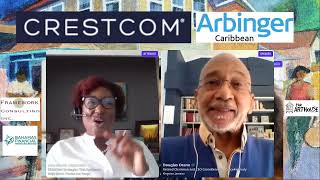
Douglas Orane, former Grace Kennedy CEO, built a 25-year strategy in 1996 to transform the Jamaican company from low-productivity to global. Revenue grew from $303M to $862M by 2021. He tackled five obstacles: productivity, IP protection, hierarchy, black-swan risk, and extinction risk through flattened structure, scenario planning, and focus on ethnic foods and remittance services.
Chapters
You're going to introduce him? I was going to say it's the Honorable Douglas O'Reid, um, just to clarify. Hello! And he of course is the former CEO and the former executive chairman of Grace Kennedy, um, it's Grace Kennedy International Foods. I know he will clarify for me, but it is an awesome pleasure. And I've been just talking to Douglas over the last few days, and I know that He's going to give us 45 minutes, but believe me, he can give us days of wisdom. So good morning, Douglas.
Good morning. Okay, I'm not—
all we're seeing is your fan at the moment.
Okay, I'm waiting. I'm waiting for my video camera to come up. Can you see me?
Not yet. We're just seeing the fan in your room, so it's up, but you may need to pull it down. Yes.
Okay, there you go. I know the reason why.
Okay, a little higher up now. Higher up now.
Okay, coming up with the right camera.
It's okay, we definitely understand. Okay, we're seeing the camera in your room.
Yeah, I know, I have two cameras, so I need to change cameras. Okay, let's see. Okay, um, I might—
We're not seeing your face yet.
Yeah, I know, that's because I have another camera using.
Will you keep lift— lift— just lower the cam— raise the camera just a little, right? More, more, more, a little bit. Yes, we're almost there. Okay, perfect.
No, but it's— that's not the camera I want to use, so I want— I need to change. I need to change cameras.
Okay, he wants us— audience, okay, the Honorable Douglas Arraene wants us to get the best shot of him. I want to tell him that it almost doesn't matter what he looks like because there's so many persons on here who are just excited to hear you speak, that, that you're in good order this morning. So, and of course, while we get him going, I just want to remind you that you can— there is a Q&A section or the chat. So if you have questions that you want to throw at him, by all means. I'm not sure if we're going to be able to get to all, but certainly I would love to have the questions for the conversation. And there we are. You could raise it up and raise it up.
Oh, there you go. Okay, I've got my shorts on. All right, I'm going to— I'm going to— listen, I'm going— I'm abandoning the other camera.
Yes, it's fine. You're good. You're absolutely good. You can have a seat, right? And you will—
No, I always do it standing up. All right, I'm going to I'm going to turn off the fan behind me.
Yes, okay. You know, one of the joys of live webinars, of course, you know, it's all— there we are, perfect.
Yes, we get to see you.
Wonderful, are you hearing me?
Okay, great, Lisa Maria, wonderful. I'm going to speak very quickly to make up this 5 minutes.
No, no, no, no, take your time.
All right, but here's a joke now. I went out and bought a new set of headphones because last time, 2 days ago, Francis said he heard an echo. Are you hearing an echo?
No, you are fabulous and you are fine.
All right, the second one is, as a chairman and CEO, I have completely prepared myself for the 21st century. Century. I haven't worn a suit in 2 and a half years, and I do all of my online calls in shorts and a nice short-sleeved shirt. You probably got a 2-second glimpse of my shorts. Listen, global warming is here in the Caribbean, so get used to it as a leader.
Well, it's a fantastic way to start, and I would say that you're also in the Caribbean, so, you know, the shorts and the shirt is appropriate for, for a Caribbean strategy conference. Absolutely. So Douglas, let's just jump right in. And I know that everyone is very interested in hearing about, you know, your, your time at Grace Kennedy, but let us start with, you know, that whole idea of disruption. And, uh, when you started with your 2020 vision in 25 years ago, it was, oh my God, unheard of to do planning for that long. Could you share for us the context before you even get to the vision? Could you share in 1996 what was the prevailing condition that made you or led you into a 25-year strategy?
Okay, well, for those who are watching very similar to today. So there are a lot of lessons to learn. We had high inflation, increasing uncertainty, all kinds of possible external disruptions. So let me describe how we felt at the time. Jamaica in 1995, '96, we at Grace Kennedy, all of our people working together, felt like we are running up a down escalator. What do I mean by that? Take two steps up and four steps back. Why? Because we would give salary increases of 20% at the beginning of the year, which look wonderful, but by the end of the year inflation was 40%. So we're worse off. And this kept happening year over year. We're in a low productivity, high inflation environment. So we said to ourselves, we can't continue living this way. The aspirations of our Grace Kennedy people are much greater than the economy of Jamaica. So let us develop a 20/20 vision, which is a play on words, so that 25 years later, um, in 2020, we would have become a global consumer group which would allow our people in our company to fully manifest all of their capabilities and create wealth for themselves and effective careers. And that's what we did. So January 1996, I launched 2020 Vision to 300 people at the conference center in Jamaica. Our board of directors, we all agreed to put this forward. And what was in the 2020 Vision? Well, as I said, the most important thing was to improve the standard of living of our people. Because the people are absolutely key to this. Well, how would we do that? We recognize rather distinctive competence, um, that we had a special close relationship with our consumers, not only in Jamaica but overseas. And we said we want to become a global consumer group in food globally and regionally in financial services. I'll come back later to why the difference. How would we get there? One of the first things we said is we want to double the productivity of every single person in Grace Kennedy in 5 years by the year 2000. And we had a slogan for it: double the productivity from Raph to Rupert. Who was Raph? He was the chairman at the time. I was a group CEO. Who was Rupert? He was a messenger. So we said we wanted to— and people said, dog, you're crazy, it can't be done, you don't know people, lazy. I said nonsense, we're going to do it, and we did it in 4 years rather than—
I want to stick a pin there because that's fantastic, from Raph to Rupert. So, um, that's like— that's another key segue in terms of— we were talking earlier about the importance of communicating the strategy and that, you know, getting everybody involved. So talk to us, tell us a little bit about that raft to Rupert and how were you able to, um, how were you able to engage all the team and, and really get everybody fired up about the strategy? And how did that impact the strategy?
You answered it 15 minutes ago when somebody said they want to learn how to communicate. Here's it, here is it, here's the acid test for all of you are watching. When you communicate a strategy successfully, anyone you ask in the company to say what is the strategy, whether it is a telephone receptionist, whether it is one of your managers, whether it's one of your salespeople, whether it is a janitor, they'll be able to tell you in 3 sentences what the company strategy is. So that's a test that I suggest all of you use. How did we do it? Communicate, communicate, communicate. I learned a painful lesson in the 1990s. I thought I was communicating because I was having these meetings with 200 people in different subsidiaries at a time. And a trade unionist came to me afterwards who represented the workers and said, 'Dog, you think you're communicating?' I said, 'Yes, don't you see me doing that?' He said, 'No, you're not. What you're doing is informing.' It's a one-way conversation you're having. You're telling us what you're going to do, but you need to listen. So I said, okay. And I've never forgot the advice that he gave me. So, um, that helped tremendously. And in fact, one of the things you had asked me about is, um, listen to our most critical workers. Who are they? They're usually not at the top of the organization. They're the key people. If they don't do their work effectively clogs up everything else. So in our company, it would be the salespeople out on the road, it would be the truck drivers in the factories, it would be the batch mixers who mix the key ingredients for each batch. Because if any one of them doesn't get it right, everything else stops, including the work of the chairman and CEO.
All right. And I actually said that you were the original undercover boss, you know, going out. So tell us a little bit about, you know, how— because I love that you're listen. So it's not— it's two-way. So some insights, it's two-way communication, it's listening. And also, you know, you said that you, you went out and you, you were looking at— you were working with people at different, different roles around the organization. So tell us a little bit about how that—
that's right. So I, I— in Grace Kennedy, our mantra is Grace, we care. Um, and that is about everyone, but particularly our customers. So we have an obsession with customer service. I'd go out and visit customers with the salespeople. I spent a whole day doing that. In addition to that, I would jump on a truck and drive around for the day with our delivery people, or I'd go into the factories and spend time with people on the shop floor to see how they're working. And that gave me a real sense of what their lives were like and helped me to be able to help them. In order to manifest what their dreams are or were at the time. And so that's the other thing is in the Caribbean, we live in a low-trust society. So people are very wary and distrustful of people in senior positions or in positions of authority. We need to find a way to overcome that and we need to be genuine about it because I can tell you this, Um, people can smell sincerity, they can smell insincerity. So don't, don't do it because I said so. Do it because in your heart you want to help the people. Love your neighbors, you love yourself. But let's get back to strategy.
It's an important part, it's an important part, that trust. We did that trust building. Um, other than you're communicating, uh, you spoke to the union, you told me you did the drive about Are there any other specific things you did to build trust in the team?
Well, first of all, I always saw myself as what is now called a servant leader. At the time, that term had not been invented, but I recognized— no, wait. So in other words, I was there to serve everybody in the organization. And so I had a big advantage in my early 30s. I actually did the acquisition of HI-LO in Jamaica and was the first general manager of HI-LO Food Stores. So I learned how important it is to work with our people, particularly when we get customer complaints, to solve them and then to move forward. You know, they have a saying that if you do things well, 5 people will tell their friends. If you do it badly, they'll tell 11 people. So make sure you— but here's the advantage: if they do it badly, tell 11 people, and you go back to them as a CEO and fix it, they go and tell 15 people. I said, my goodness, I can't believe this, that Douglas O'Rean, CEO of Grace Kennedy, called me and said, I'm sorry, we're going to do it better, keep the feedback coming. Uh, here's one of the things for the people watching, you know, criticism is a disguised form of compliment because our customers have a choice. They could remain silent and you'd never know until, of course, they're buying from the competition.
That is correct. A complaint is a gift. Absolutely. You know, one of the things I wanted, as you talk about the people, is such an important area. And but I have heard it said, and I know it's said that CEOs, oh, we're very busy. Yes, we would love to do that, but we are busy. We are being held to short-term profits. So could you give us a little comment, and from a strategic standpoint, of how Grace was able to, um, and then even in your own experience, that, that dichotomy, that balance between short-term profitability and I guess what we call the crisis of management or the crisis of leadership versus that long-term vision. If you can give the audience a little bit on how you've been able to balance those two.
Okay, sure, I'll be happy to do that. Well, let me start back up to the theme for this session. I'm going to rephrase it. What we were doing was to disrupt— we were disrupting the status quo within Grace Kennedy and in the markets that we were participating in, and at the same time preventing external misfortunes from disrupting us. And of course, one of the things that can distract you is if you're investing for the future and your quarterly profits are down and people say, well, what's wrong? You should cut back on that. And, um, so we can see a bigger short-term gain. The way to handle that is to explain very carefully to your investors, if you're publicly listed, to all your shareholders on the stock exchange, what exactly what you're doing. So let me, let me give you an example. By the way, I have listed out 5 external obstacles that we faced, which all have lessons for managers and leaders today. All right, the first one, in this 1990s, when we developed the 2020 Vision. Jamaica was a low-productivity home country that we are operating in, as you can see from the rate of inflation and all the other issues that we faced at that time. So what we did was massive investments in transforming, but starting with our manufacturing businesses and also our technological support in the back office. It costs a huge amount Obviously it had a temporary effect on profitability, but we explained it to our shareholders and most importantly to our people internally, because one of the things you want is for your own employees to be the messengers of what we're doing and to be engaged. And it worked. As I said, we doubled productivity in 5 years. Um, there are, there are some other issues that are important. I'll mention one, one other one at this point in time. Which is that in the Caribbean, traditional companies— we have all grown up in protected markets, and the tendency that happens is that the organization becomes very stratified in a pyramid structure. Once the markets are opened up, which there were in the 1990s and continues to this day, one is exposed to competition of a different kind. So you must go for a flatter organization that's more nimble. Absolutely. And we, I would say typically Caribbean organizations have been very slow to react to that. Perhaps I saw it differently. I never saw Grace Kennedy as a big company. I said, this is a tiny company in a big world, and so we need to prepare ourselves. So what we did was spend time explaining why we had to streamline the organizational structure. Uh, we did a lot of different things in terms of, um, the way the organization ran internally, um, making people much more self-managing. But I want to stick up—
yeah, I want to— sorry, finish. Okay.
One of the things people ask me about it all the time, they said, Doug, how did you all manage to reduce the size of your board of directors from 24 to 12? Um, and I said the reason is we all realized that we needed to function differently in this new era, and that is where the genesis of our development of good corporate governance to get to a global standard came from in that regard.
Yeah, and that's the thing I wanted to stick, that at the end of the day, structure— strategy drives structure. So if you have a strategy and you don't have the structure to help deliver it, it's not going to happen. So if your strategy is to be nimble and whatever, you can't carry 12, you know, 12 directors and are very top-heavy because I think that's one of the Caribbean sort of mantras. We sort of, you know, we top-load or we front-load on leadership. We have a big— and that's where a lot of the costs are. That's where a lot of the bottleneck is. And I think it's important to just highlight that for the audience that at the end of the day, structure is driven by strategy. So if your strategy and your structure don't match, you're gonna— if there's a mismatch, you're gonna have a difficulty.
So Lisa Marie, there's a corollary to that now, um, of one of the what I call external obstacles. What is it? Right, it's what I call extinction risk, uh, and when I was a young man in Grace Kennedy in my 30s, I just joined the late Chairman Carlton Alexander, get a group of us young people together. And he'd reel off the names of 8 or 10 companies, and he said, you recognize any of them? Uh, most of us said no. The only one I recognized was Bryden and Evelyn. He said, when I joined Grace Kennedy as a young man in the 1930s, all of them were bigger than Grace Kennedy, and today they no longer exist. What's the reason for that? Because one has to adapt. For the changing world around us. And that's one of the things that I believe we internalize in Grace Kennedy. Also, remember, we were very aware of this: we're not a monopoly in any market we function in. Um, there are low entries to barrier— sorry, low barriers to entry, particularly in the food business, also in the financial services, especially with globalization. So therefore, are constantly finding new entrants to compete, and we have to be— to determine what is our distinctive competence and turn it to competitive advantage.
Yes, big stick, one pin again in that this— where of course we're talking about the Grace Kennedy Experience, but it's applicable for the region, right? That finding, whether you're in St. Lucia or Antigua or Trinidad and Tobago, wherever you are, the conditions are very similar. At this point in time. And also there's the opportunity to— that competitive advantage. And, and Grace Kennedy sort of found that. So, so, you know, talk to us about it.
Okay, so there's one other— well, I think I've covered 3 out of the 5.
I thought you jump in, but it's okay.
That's okay.
At the end.
All right, so one of the things I'd say to, um, all those watching, if you're going to communicate, make sure you make notes the night before. So that you don't get distracted by whoever is the interviewer. So, um, you know, I'm being, I'm being candid. Um, but you're— so the other thing that we were very aware of is what we call black swan events. What are black swan events? Events that you can't predict, you never thought would ever happen. We never thought of there could be a 2008 financial crisis. We never thought that the government of Jamaica Jamaica could default 3 times on its national debt. We never— but today, look at where we are. We never thought we'd have COVID. We never thought we'd have supply chain disruption. We never thought that Russia would have invaded Ukraine. So yes, these are— how do you prepare for it? What we did, we adopted scenario planning very early. What do I mean by that? We would develop a series of scenarios and The first one we did was 3 scenarios: the world in the pits, that speaks for itself, really bad news, business as usual, and then what we call the digital world. And we said, if we are in any of those 3 in the future over the next 25 years, how will we thrive? And we developed a strategy for each one. Guess what the remarkable finding was? They're basically the same strategy. In other words, it was based on developing our internal competencies in employee engagement, listening to customers, developing ideas, experimenting at, at the edges of the organization, protecting our core business. And it has worked. The question to ask each of you: when last did you do scenario planning in your organization? Actually, we got a lot of resistance early when we started doing scenario planning. People said, but you're being negative, you're thinking about all the worst things that can happen. I said yes, because if they do, we'll be ready for it. And here we are in that regard. And since we want to get questions from the people watching, the fifth one that I will speak about that helped us to buildout. There was— when we decided we wanted to become a global consumer group, um, and we scanned the world, we recognized we needed a solid intellectual property platform that covered the entire globe. What do I mean by that? We needed to make sure we had all intellectual property rights to all our brands, not only in Jamaica but the entire world, all the countries that we operated in or were going to enter. And it's something that, you know, to my— to our participants, make sure you check out your intellectual property to make sure you have the appropriate ownership. You don't want to build something on something you thought you owned, only to find out that you really didn't own it. So that one really worked exceedingly well for us and provided the foundation for our globalization.
Fantastic.
So I've completed my 5 external events. So over to Lisa Maria again.
No, no, no, no, I want you to recap them. They went pretty quickly. Give us just the top line of the 5. I won't interrupt. Just give us the 5 again.
Okay, well, the ones are— well, they— I'll go through them. The first one was, um, we were in a low productivity home country. What did we do? We doubled productivity in 5 years for each and every employee. Um, the second one is we had incomplete, uh, intellectual property, uh, in terms of globalization. We made sure that we acquired whatever brands we needed to around the world in order that we are building on, uh, intellectual property that we owned in terms of our trademarks, etc. The third one was that, uh, we flattened the organization because we recognized that we are competing not only in Jamaica or the Caribbean in protected markets but in the entire world. I would give my— in the factories, for example, we had a meeting in the '90s with our factory that produced ketchup, and I said, how many competitors do you think we have in Jamaica? And they said, hmm, 6, 7, 8. I said, the answer is 15. I said, how many do you think now that the markets have opened up and the import barriers, trade licensing up come down. How many are there just in the Western Hemisphere alone that produce ketchup? And they said, maybe 20, 30, 40. The answer is 6,000. So therefore, it's a different world, and we need to recognize that, um, early in order to prepare. Okay, the fourth one is preparing for black swan events, and what we did was to do scenario planning so we are prepared for any unforeseen event as best as we could. And then the fifth one is what I call extinction risk, which is don't be complacent because you think you're a big company or that you have been around for a long time, because the world does not owe any of us a living. And so what do you do? You make sure that you continue to sustain your core business You continue to experiment on the edges, um, that— so that if you experiment and fail, it doesn't bring down the whole organization, but you will have successes that will cause you to keep building. Um, have a set of values where people trust you. Um, that's why in Grace Kennedy we repeat: honesty, integrity, and trust are our values. And finally, make, make sure you have effective succession planning and implement it. The reason why, if you don't, then when you decide to make a change or you're forced to make a change, you won't be ready for it. And I think that's one of the things we, um, internalize very early. And I'm thankful to those who went before who groomed me, and I'm now thankful to Don Webby, my successor, who is executing Tremendous.
Fantastic.
I can tell you some of the results, um, before the end of this session to show that it does work.
I, I'm, I'm so happy to hear that. There's a question I want to take from, um, AC Cecile Watson. Just wondering who drove the heavy lifting for your strategy building. Was it the board? Was it management? Or was it the employee group?
All of the above. But ultimately, I would say that it came from a very small group of us who said, look, we can't continue this way. And I believe that— let me put it this way— I believe the CEO has to lead it. There's no other way out of it. And so I recognize a lot of these trends And so I said, if we didn't do it, Carlton Alexander's words would come true. He, he was a visionary in his own way to say, I recognize this, and kept on saying, we've got to change, we've got to change, always saying that. And he was right. So it's something we continued and continue on a continuous basis today. One of the things I would say, though, is that whatever you come up with, You need to own it. You have to say, this is my strategy, this is my plan, and then implement accordingly. By the way, you, you had asked me a question yesterday, so I'll answer it in this regard, which is name 3 things that you would share with our viewers about what you have learned about executing on strategy. And I said it's simple. It's 3 words: listen, think, and act. Why do I say that? Yeah, why do I say in a Caribbean context? Well, first of all, I don't know about the listening part, but we're very good at thinking and talking about issues and problems and going around. I'll be candid with you, in circles a lot of the time on the on that part of it, and then we don't act effectively. So we need to do each. And if there's one important issue, the first step, listen very carefully to our consumers, to complaints, to our own employees. And the third one, act. What gets measured gets done. And we're not good at that in the Caribbean. We're not good at holding people accountable. But here's the good news: you can do it in your own organization. You don't have to wait for other people and say, you know, I'm surrounded by inefficient people. One of the things— or inefficient organizations. One of the things that I said to people when they said, yeah, but we're in a low productivity environment, I said, that's fine, but we will become, um, a high productivity company, uh, and we will make sure we're globally competitive in that regard with global standards in the products or services or corporate governance. But in addition to that, we will seek suppliers and providers of services who are themselves doing the same thing. So even if you're surrounded by mediocrity, that doesn't mean you have to be mediocre too.
That's a very important point.
Get on, get on with it. And measure, measure, measure. The reason why we doubled productivity in 5 years, we came up with a very simple measure, which is profit in US dollars per employee per year. And that's what we measured because it's so easy to understand. No, I know a lot of individuals say, yeah, but it's, you know, it's, uh, you know, it's not a a unique enough measure for every single person. I said, I know that, but right, something that's easily understandable from— by everyone, from Raph to Rupert.
That's right.
And everybody understood it, and you could measure it because, uh, you— we, we were a publicly traded company. Every quarter you could see our results and measure it yourself.
Yes. I want to just give you some comments from the chat because I'm not sure if you can see them, but there's somebody from Kelly McIntosh. She's actually, uh, validating. She said that As a former Grace team member, top leadership owned and communicated the strategy. So kudos there. It means that, you know, she's validating what you've said. And she said it was always clear what the vision was. It was always clear what my— our role was. And this is the function of leadership, visible sponsorship from the very top. So, you know, somebody's validating what you have said. And of course, I love that though. Listen, think, act. We can call that, you know, LATS, listen, think, act. But that's also very, very important. Um, I, you know, there you, you've preempted me on the questions, but there was one that I have, one left. Um, as we have other comments come in, Grace Kennedy is now a global brand serving the Caribbean diaspora. Talk to the Caribbean about what is the Caribbean essence. um, that they should leverage. And you talked about how in, in, you know, in one of the publications that, you know, you went to the— to what you knew, which was the Caribbean diaspora, you know, their taste, you know, their interest, um, and you use that to the competitive advantage for Grace Kennedy. You and the team, of course. Talk to us a little bit about that.
Okay, so I can only speak for ourselves. Every other company in the Caribbean, you need to determine what is your distinctive competence, which I don't know what it is, and turn it to your competitive advantage. But we knew what our distinctive competence was. We understood our customers and consumers in the food business, not only in Jamaica but in the diaspora. Um, I spent a lot of time walking around Brooklyn and in Brixton and in Birmingham just to get a sense for what was happening. So we knew there's huge unmet need for Jamaican and Caribbean food that was not being met. And we knew that from in the 1980s, in fact, long before we developed the 2020 Vision. But in addition to that, we knew there was an unmet demand for people who said, we want to bring or send our money back home. One of our directors went to Central Florida and met with some cane cutters there from Jamaica, and he said— his name was Joe Lee, bless his soul— and I said, you know, Mr. Lee, well, I want to send my money back to Jamaica, you know, but when we send it in the post, them thief it out. And if I send it with a friend on the plane, we don't know if my baby mother go and get it, or she only go and get half. So we said, oh, there's an opportunity, huge opportunity, huge, for remittances. And we, we were well prepared for it. So when the opportunity came that Western Union said we're looking for an agent, we said yes and we moved with it right away. I know it's grown into one of our largest businesses, the partnership with them. We represent them in 12 countries around the Caribbean. So what, what are the lessons from that? Determine what your customers recognize as a distinctive competence that only you offer. And we knew what that was in our case, and we built on it. By the way, that's why at the beginning I said we have a distinctive competence globally in ethnic foods. Our distinctive competence in financial services is regional in the Caribbean because we understand the Caribbean region. We understand our own Caribbean people, but yeah, that's not— we're not going to say we want to go and establish, um, financial businesses in Southeast Asia because it's a part of the world that's growing faster than anywhere else. So one has to understand what you're good at and where you're good at it.
Yeah, and, and actually it underscores something that I'm very passionate about, which is know your customer. It seems like, you know, sometimes it gets overlooked. It's so simple that, you know, as you said, you walk Brixton, you walk Brooklyn, you know, you know who your customer is, you know what their needs are, and you know what their unmet needs are. And I think, you know, that, that all good. Well, so that's actually a great point. I see another question here for you. Um, what do you think are the top 3 challenges facing Jamaica and the private sector performance? Over the next 5 to 10? So I'm gonna— because this is a Caribbean strategy conference, I know you can speak about Jamaica, but make it as broad as possible for those, you know, in terms of just how the challenges you see facing Jamaica and perhaps the Caribbean, if you can.
Okay, well, that one is coming out of left field, but there's one that is, I think, top of mind for everyone, and We don't speak about it. Corruption. Ah, uh, corruption is number one. Um, I would say it's number one, two, and three. Why do I say that? Because it's so corrosive to whatever is happening in our society and our economy, and it affects every individual. And one of the things that people don't realize, it affects the poorest more. Than anyone else. And if we want a society which creates equality, then we need to get rid of corruption. Here is something very practical that we did. McKinsey did a study in the early 2000s where they surveyed investors both on stock exchanges and privately and said Um, what's the relationship between, um, good governance, good corporate governance, and what you would pay for shares in a company? What the survey showed is that companies that had really good corporate governance traded at a premium of 20% and up, um, compared with those that didn't. But here's the other finding: the more corrupt the country that the company operated in that had excellent corporate governance, the bigger the premium investors were willing to pay, pay to invest in that company or with that company. So there's a practical advantage to good corporate governance.
It's not—
you know, it's a great philosophical route to go, but there's a practical business reason for doing it. Yeah, as I tell people, just think of it this way. If you have really great corporate governance, um, and you're in a corrupt society, about foreign investors coming from overseas, who do you think he wants to do business with? He'll ask around and say, who can I trust? Absolutely. Check out your website, check out your news releases, check out your, um, succession planning and say, ah, here's a company I can trust. I want to do business with them so that— so I don't get caught up with problems. So, so, okay, so we have a corrupt society. There are lots of other things that we need to do in as citizens in our own right in order to reduce that and remove it. But in our businesses, there's something we can do immediately about it in terms of governance.
And that's an excellent point in terms of They— you, you talk— you spoke earlier about trust, but it's not just trust internally but also trust externally that, that, that benefits the organization. So I think— I mean, um, Lennox asked that question, and I think there's a lot of feedback about talk the thing, Douglas. So, you know, it wasn't so far out of left field, right?
Okay, but anyway, Francis saying we have 2 and a half minutes left, and Um, there's a question that I know you want to ask me, Lisa Maria. Go ahead. Has the 20/20 vision worked? In other words, 1996, 2020, what's the result? Okay, here are the results, folks. If you have a pen and paper, okay. All right, in 1995, Grace Kennedy's revenues were $303 million US. 2021, $862 million US dollars. Uh, 1996 profit, $10.5 million US. 2021, $55 million US profits. Um, PE ratio, price earnings ratio, 1995, 3.4. 2021, 12. Um, we had set a goal to earn half of our profits from outside of Jamaica by the year 2020. 2021, what was that figure? 45%. So I owe a tremendous debt of gratitude to those who succeeded me, Don Webby and his team, for continuing this work. Because remember, you know, the 2020— I retired in 2011, so there was another 9 years to go. For others to carry this on. And that's why cross-generational engagement is so important. But here is a lesson I'd leave you with. Having a vision is aspirational. Most of these objectives we have exceeded, but some we haven't. So for example, we are— we haven't reached 50% in terms of profits from outside of Jamaica, but we're on the way to get there. And Donna has set an objective. We're going to surpass that where they have developed a 2030 vision. In addition to that, the valuation of our company— yes, we're at a PE ratio of 12, but, um, in the developed world, a company like ours, if you're on the New York Stock Exchange or the London Stock Exchange, you'll be trading at a PE ratio of probably 25, double. So that's a work in progress for us as well in that regard. So the fact you don't meet it on the exact year doesn't matter, so long as you keep it ahead of you. That you said, that's, that's the mountain I'm going to climb and I'm going to reach the summit.
Fantastic. Thank you so much for that. And I mean, as we round up, there was some really, really fantastic nuggets in there. Um, the, the, the corruption versus corporate governance and really investing in that. That was a key takeaway for me because it didn't come up before. And that cross-generational succession and employee engagement, those are also very strong points. And of course, you gave your top 5, your, you know, how you move from low productivity, flatten the organization, preparing for black swans. I think I've got it, intellectual property, the core values, and of course the extinction risk. So, um, Douglas has been really great. I know Francis is going to drop in very soon. Um, do you wanna— and you, and you've just given us an awesome, um, what we call fiscal report. So it's all under the backdrop, the proof is in the pudding, as they say. You know, even if every single thing wasn't achieved, there was such a tremendous growth of the organization. So thank you for that. I know persons are on standby. I
More from Francis


Ep 35 Your Strategic Stagnation Isn't a Framework Problem—It's a Story Problem



The YouTube Strategy School: Why Your MBA Didn’t Teach You Strategic Thinking





