Day 1 Opening Session Lisa Maria Alexander
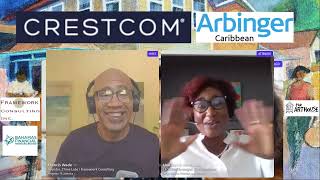
Francis Wade and Lisa Maria Alexander open the Caribbean Strategy Conference, addressing how post-pandemic "hurricane mentality" has trapped organizations in firefighting mode. They introduce a six-month Blueprint guide for building breakthrough strategy by January, with panels on tourism, financial services, energy, and digital transformation, plus interviews with regional disruptors like Digicel and Grace Kennedy.
Chapters
How can you lead the effort in your company to develop a game-changing strategy that would make all the difference? Do you care about your organization's success? You and your company and your colleagues, you made it through the pandemic, but as you look to the future, you see that you could accomplish so much more than just more survival, more emergencies, more firefighting. And more fear, you could actually carve out the future that you want for you and the people that you care the most about. I'm hoping that's why you're here, because this is the Caribbean Strategy Conference, and my name is Francis Wade, and I am the co-host along with my wife and colleague Dale Pilgrim Wade. She's listening in on the background, and I welcome you to the morning Second day actually of our conference and I can already see some emojis happening. And if you have never used our emoji, you know, been here to your meet, you can click on that smiley circle at the bottom and pick an emoji that you want and just kind of put up some picture. Oh, okay, everybody found that. But I also want to make sure, I think you're hearing me, but let's make sure, let's get your fingers working and put some, give me a hello. Are you hearing me clearly? Let's drop some notes and start talking because this is going to be a day of full interactivity, and I want to make sure you're hearing me. Hi, Sharon. Let's see who we have. Kelly McIntosh, great to have you. Hi, Vanessa. And Kelly says, looking forward. Great. We have a vocal group here this morning. I can see Derek, you made it. Good. Buenos días. So Derek is one of our presenters. Hi, Ami. Ami is a presenter also. We have a really a packed day of activity to look forward to. The fact is we're here to empower you to lead. Now, you may not be the CEO, but we are positioning everyone who comes to this conference as someone who will take their company into the idea or lead their company to the idea of creating a disruption in their industry. Now, we know that's not easy, and we are here in the Caribbean, we tend to think of, oh, look what Netflix did, oh, look what Apple did, oh, look what Fujifilm did, all these disruptive companies all around the world. But we often don't focus on what we have here in the region, because we have examples of disruptions. And during the course of the next couple of days, you will hear about local disruptions like Digicel in the telecom market, Grace Kennedy in financial services, and you'll also hear about probably Tribe Carnival. For those of you who are from Trinidad and you know about Tribe, that's a disruptive company that's disrupted the carnival space across the region. I can say that having played in Tribe myself. So I want to take a moment to introduce you to Lisa Maria Alexander. So I'm going to hand Lisa the mic so she can come join me on the stage. So Lisa Maria Alexander is a marketeer, organizational strategist, behavioral coach, and an experienced facilitator and public speaker. She's been a C-suite executive for more than 15 years and has expertise in strategy development, strategy implementation, customer experience management, market planning, relationship marketing, internal branding, and performance management.
Good morning! Are you hearing me? Yes, give me a thumbs up if you're hearing me.
You're being heard, but you're at the bottom of your screen. Can you move your camera so that you can— we can see more of you?
Okay, all right. Is that good? Is that good?
That's great.
Well, good morning. You didn't say Caribbean woman. I need to put that at the top of my bio, that I am the quintessential— I consider myself Caribbean woman. So, you know, I'm so excited to join you today, and welcome to everybody. I know we have persons not just from the Caribbean but from across the globe, but Caribbean strategy, that conversation, it's one that we needed to have, Francis. It's sure one we needed to have.
We're going and all the conversations I've had, there are a lot of people who want to be here. They want to believe that they don't need to be firefighting, and they're right now in an office fighting off some demons that are attempting to shut their businesses down, right?
The whirlwind. That's correct, the whirlwind of crisis after crisis, right?
The last 2 and a half years have just been one awful drama after another, and many have not had a chance to step away from the hurricane to even think about the long term and the big picture. They've just totally been caught up. So Lisa, it's been a bit of a journey for you, but please share a little bit with our audience what it's been like ever since the first time I called you and said, hey, what's it been like to get here to be a host for the first morning of Caribbean Strategy Conference?
Well, you know, Francis called me and I said, he said Caribbean Strategy, and I said yes, because it's actually one of those things that It's— I call it a pet peeve. We talk about that whirlwind where you get caught up in business, and I understand a lot of executives, um, they fail to plan. So, you know, they say if you fail to plan, you plan to fail. Or we have great strategies, we do all— we spend the 2 days, we document it, and then what happens after? Crickets. Because we get really busy. So I really am hoping— and I've looked at the agenda, it's very exciting. We have exciting interviews coming up, um, with, with Douglas O'Reid, I don't want to preempt it, but from Grace Kennedy, that's going to be an awesome interview because we have organizations that have been able to do it successfully where they are building strategy, but they're executing on strategy. I think the killer of strategy is lack of execution. So, you know, I've seen that we have some awesome panels in different industries. So, you know, financial services, but we have energy, tourism, you know, many different, um, areas where the audience can benefit from, from getting the insight. So I think this conference is— it's the first. Is it the first of its kind? Um, it is the first of its kind. And you know, I— one of the things that I was talking about over the last few days is, is the Caribbean special? And I, I want to— I would love to see if the audience believes. I would love to see that in the chat. Is the Caribbean essence different? Are we the same as, you know, a North American company or European or whatnot? What really makes us different? And I know that over the next two days that's going to come out because that's an essential part of strategy. I mean, you've heard culture eats strategy for breakfast, right? That's Peter Drucker said it, not Lisa Maria. And the culture of the Caribbean is both our— it's our advantage, and it can also, you know, take us down if we don't manage it appropriately. So I, I know that we're gonna have a great session this morning, right? We have somebody says yes, the essence. I love it, Kelly.
Yes. Yeah, we, we, you know, chat with CEOs and other and board members and people who sit in strategic planning retreats, you know, they told us that they're just waiting. Some told us they're just waiting for this to pass. We call it the hurricane mentality, that what's happened in the last 2 and a half years is more like a hurricane than anything else, in that the hurricane comes and then it goes and then you mop up afterwards and in a couple weeks things go back to the way they were.
And then we have another hurricane.
And then we have another hurricane, but we kind of, okay, we last to the next one. But this is a permanent, this is a permanent shift, isn't it? This is not This is not like— I noticed in myself, my own behaviors have changed during COVID I am acting differently, I am using products differently, services differently. Some things I'm doing online and I'll never— I may never go back to doing them in the real world ever again. And that's just the nature of the beast. And companies have to now adjust to this brand new world. But it's more than just barely adjusting, isn't it?
Yes, and you know, it's interesting that you say that because a lot of organizations were waiting for things to go back to normal, right? And not understanding that normal has gone. There is a new normal, to use an overused cliché. But at the end of the day, I said to a manager recently, um, she said, you know, when we had this crisis happening, this is a frontline, right? So in a frontline capacity, you feel like you can't do work from home, you have to be there. And she says, oh my God, I don't know what I'm gonna do. I say, well, pretend that there's another crisis coming and start— because we saw some very innovative thinking, and now that things are sort of stabilizing, we want to go back. And I said, no, literally, that thinking that you used in the crisis, approach every day with that same sort of thinking. And that's where innovation happens, when you think, you know, you're thinking a crisis is happening.
Right, and that's exactly the mindset we want to promote because, you know, our big mission for having this conference is to have every single Caribbean company start 2023 with a disruptive, game-changing strategy already written and having everyone committed to it. And let me tell you something, that's a heck of a thing to bring about.
But I did hear you say you talked about a blueprint, so tell us about that. You something that's gonna help. So tell us a little bit about the blueprint, right?
So those of you who have full tickets— and by the way, we're gonna do a giveaway of a full ticket just now— those of you who have full tickets already have access to the blueprint, but it's also on sale. But the blueprint is a step-by-step guide for the next 6 months. So it's what do you do from July to December. We have a timeline in there and details of what you do at each step of the way and details of what you do in the all-important retreat. And it delivers a breakthrough strategy with everyone behind it in January. But it's not a static document. It's a document that you also can edit and change and customize.
And so, Francis, I have a thought for you. I feel like you need to do a workshop just on the blueprint. I feel like that's coming. I feel like people will want the— don't we want that? I feel like we'll want the step-by-step, you know, get— you see, look, somebody says, yes, I think you're gonna have to start planning for your Blueprint Day where you take persons through how to get, how to complete, just, just to start. I'm just saying, you know, you did ask me here.
I like that, just saying.
I'm just saying, right?
But it's okay.
Yes, and I think, of course, yes, and I believe, of course, it's important to have the blueprint, and that's awesome. Uh, what I have found though, that, you know, your interpretation and mine is going to be two different things. And I, I find it— and this is for strategy— an important level setting of, you know, it's common purpose. A strategy is formed and formulated on common purpose, and in order to get that common purpose, leaders have to come together. So whether it's in your company or whether it's of course in a forum like this. But that common purpose is critical so that we understand the same thing, right?
There's a bunch of CEOs who believe that they can write their strategy and just tell everybody what to do.
That's the point. There you go. And that's a no.
You have worked in the past when everything was nice and stable and you didn't need all hands on deck, but today you do. So guys, let's do our first giveaway. So I mentioned before that the blueprint is part of the full ticket. I imagine— I actually see people here who have already gotten the full ticket and some who have gotten here via the free pass. But let's do a giveaway of a full ticket. So the full ticket allows you to review all the conference videos, including the one that we're making at this moment, and all the downloads. And you get the blueprint, and you get the innovator interviews we'll talk about later today. And, and, and, and. Okay, so here's the question for the giveaway. The first person who names two of our non-Caribbean speakers from yesterday will receive a full ticket. The first person to drop that in the chat will receive a full ticket. I'm gonna go ahead and go on because just to make sure that we're moving ahead. But first person, somebody's looking something up, somebody's trying to remember something because we're going to go into the schedule for today. I see fingers moving, I see heads moving. Okay, so we're gonna Fox and Moira. Oh, Dale says Roxy, not you. Dale, you can explain your reasoning why not Roxy, but you just type it in the chat there. Okay, I'll leave Dale to sort that out, but let's take a look at the The virtual conference scheduled for today. Oh, sorry, this is not today's schedule. I think I'm in the wrong place. Excuse me, colleagues.
Live. We're live.
Today is Friday, isn't it?
Right, Friday.
Okay, so here we go. We have a full schedule for you here today on Friday. Coming up next, At 9 AM is an interview with Douglas Soraine by Lisa Marie Alexander. He's going to be describing the steps he took to create the GK 2020 strategy back in 1995. If you do calculations, you'll see that was a 25-year strategy, unheard of in the Caribbean at the time, and it's the reason there is a Grace Kennedy today and all of its brands. And, um, after Douglas Soraine, we'll go into the digital transformation panel moderated by Chris Record. Then we'll go into the tourism panel moderated by Anne Frick, Dr. Anne Frick. Then I'll introduce you to, um, Danielle Terrellon, and she and Lisa will be doing kind of a relay handoff just before we go on to lunch. We'll say goodbye to Lisa as a host, I will say hello to Danielle as the new host, and then we'll come back after lunch at 1 o'clock, and Daniel will take us through the financial services panel. With Wendy Del Mar, and then the energy panel with Dr. Dax Driver as the moderator. So these are some fine Caribbean minds, folks. We've also brought in a bunch of people from the outside the region, a bunch of experts, especially our feature speaker at 4 PM Jamaica time, Dr. Richard Roman. So he wrote Good Strategy, Bad Strategy, which I just finished reading, and he has a new book The Crux, which is just coming out. He's calling all the way in from California. He's a former professor at UCLA and an expert, bona fide expert, uh, coming to give us a perspective on that. Basically, the idea you'll be describing is there's this key part of every strategy, of every company's problems, and he calls it the crux. And if your strategy doesn't address the crux you don't have a strategy. It's deep, and it's extremely powerful, and it's the antidote to just kind of creating strategy as high-level something. So, uh, we'll close out the evening, Daniel and I, um, we'll have a couple of conversations, but we're going to have a very important networking session after we've closed out the evening. And that networking session is your opportunity to meet and talk with other folks here at the conference, you shouldn't leave each day of the conference without having met at least 2 people, at least 2 people who you don't know. That's the bare minimum. Okay, so Lisa, what do you make of our whole day of activity?
Well, I, I think it's quite an exciting one, and I, and I particularly like the, the different industries because, you know, sometimes we, we focus in one particular area, but as a Caribbean, tourism is very important to us, as financial sector, as energy, You know, those are some of the key areas, and of course there are others that, that really matter. So it's, it's a great lineup. I know some of the hosts or the facilitators, so I know it's gonna be awesome. And you know, I hope persons can stay on and just kind of be part of the conversation. I think that's the— that's my message today, that yes, you can watch it. I know that, you know, circumstances, you may be able to watch it, but while we're here, be be part of the conversation. I think that's going to be very, very important, that sharing.
Great. Also to mention that we have sponsors who— they're the only reason that we can have a full free pass. So Crestcom and Arbinger are two awesome training companies that offer training for— whoops, there's something happening on their own here.
Yes.
Offer training to executives, up-and-coming managers. You'll hear more about them tomorrow in their sponsored session. We also have Bahamas Financial Services Board, another sponsor, and you'll hear about caribbeanjobs.com, another one, and Helmsley Fraser, which is our final sponsor. And again, This would not be free. Free passes would not be available without them. And also those of you who bought full tickets, you know, thank you for your support. And once again, your support is helping us to offer free passes to all the— you know, we have hundreds of people, 700 people registered, by the way. So we have a lot of people who are interested in the topic, and you'll see them in and out today. So thanks to our sponsors. Um, but let me ask you guys, I'm gonna show you the, the map that you've probably seen. So you know that we have downloads available today, and it's a shorter list than yesterday, but these— this is the list that's available, available 24 hours. But as you probably know, our conference is made up of 3 venues. Currently you're in the bottom left-hand quadrant, which is we're in a live session on Airmeet. You can also of course go to those pre-recorded content videos and listen in and watch and learn. And we also have a chat that's going on right now on Volley. That's our conference chat, 24 hours a day. When the sessions aren't in, you know, aren't live, we're not either networking or listening to our presentation, we'll be contacting each other in Bali, and they've already— presenters have already started talking to participants, which is kind of the— what I really, really want to have happen, uh, in Bali. And finally, we have a conference store where I gave you the link a while ago, where we have items from our speakers, and that includes the blueprint, which is also available. But tell me in the chat, based on all that you've heard, What's one thing you want to get from— let's just say today. What's one thing you want to get from today? Kareem is making a comment about the different sectors. Yeah, the reason we're having different sectors is because if you read the Blue Ocean Strategy book, they say that some of the best ideas don't come from your sector.
Absolutely.
They come from other sectors, and these other sectors are the ones where you have these ahas that change everything, that make a difference.
And Francis, you know, that's how, uh, creativity is actually defined. It's not necessarily a new thing, it's the repurposing of an existing thing. That's, that's creativity. You know, there's hardly anything that's brand new, but it's the ability to take it and repurpose it in, in a different way that makes it creative and innovative. And I definitely agree that, you know, there are things that you can exchange across industries that could be very useful.
Right, absolutely. And that's— that's where we're banking on that serendipity happening. So Charmaine says that she's interested in hearing how to see ahead for 25 years. If it worked for Grace, yeah. Oh wow, you're about to hear how well it worked for Grace from the man who led the charge. Um, so thanks, Charmaine. Who else? What else are you hoping to accomplish or take away from today? And there we have Douglas already dropping a, dropping a comment right there in the chat.
He's so ready.
Roxine says, one thing on my list of things that she said to take away Again, forecasting and how, how, how Douglas did that. How did GK do that? Because there were many people who said, who still say, it can't be done. You know, we have these conversations with, with prospective clients all the time who tell us they want to do 5-year strategies. And our word to them is a 5-year strategy is basically the same strategy you've always followed, just add a couple of, couple of percentage points different. That's not game-changing, and it won't give you a breakthrough. Careeds, uh, Vanessa says how to become a strategist. Excellent. How to think strategically and how to bring that to a team, because every executive team that we've worked, some people are strategic thinkers and some people aren't. Always a mix, right? Right, Lisa?
There's some who just— absolutely, they just They're just not able to, to think like that. And that doesn't— that's not a bad thing, um, because I would say you need your tactical, you need your, you need your persons who have to stay in the moment. But at the end of the day, at the leadership, you definitely need the vision.
Absolutely. And sometimes I've been in sessions where the CEO is not visionary.
Yeah, yeah.
He or she, they're really smart people Yeah, and they've been able to bring, bring out an innovation that got some competitive advantage. But ask them to think ahead. I actually had a conversation with a fellow in France who's a CEO about 2 weeks ago, and ask them to think ahead 25 years and get everyone to be thinking ahead. And sometimes CEOs have a really hard time because they're more innovation innovators in the moment than they are strategists. Correct. Sometimes that leads them to bring on a whole new CEO.
So that sometimes happens, right? Well, we're gonna have that in the conversation with Douglas as well. That is definitely that short-term orientation versus the long-term vision. He is definitely going to tackle that for us this morning.
Great. And, uh, Kareem says she's looking forward to to be empowered. And I'm also hoping that that's what happens out of our conference, is that some heck of inspiration kicks in for people who are still beaten up a little bit by the pandemic and the supply chain problems and the recession and the inflation and the war, and they're just kind of tired and exhausted and they're barely going through and they just, they, they're still kind of hoping it'll go back to the way it was. Yeah, and it probably won't, but the inspiration we want to give people is about moving forward, right, right, Lisa?
Absolutely. It's, it's really about how do I— it's, it's about the vision, but it's also about— and Douglas is going to speak to it— it's making the vision a reality because You know, vision without execution, or that ability to translate the vision to others, that's one— that's another pitfall of strategy. It's a great vision, but how do we make it editable and biteable for everybody in the organization? And Douglas is going to talk about that as well, from the, from the ground up. Everyone is, is aware of what the strategy is, and we're all working towards it. So that's, that's important.
And let's take one more comment. Lisa, you want to take that one?
Sure. More clarity on how to become a strategic thinker. Ah, being, being able to conceive in the mind, map out, communicate, and communicate it in a way that is understandable to others. She wants to hear from the experience of variety of industries. That's a great one, Cheryl, but you've got it right there. You see that piece about communicating? That's something that, you know, uh, sometimes executives forget. So the strategy lives in the boardroom, but it doesn't make it out to the persons who are executing it or who are responsible for doing it. So that ability to communicate is actually a very, um, key success factor for any good strategy. So you're already there. Yeah, you want to become a strategic thinker? Well, you know, you're on the right path, um, Cheryl, right? Because—
and part of that is also, Lisa said, it's the language. It's learning, learning how to speak the language of strategy. And folks, when you land in your first strategic planning retreat and the heat is on, so that everybody is watching, and they're interacting with you. And if you're not prepared to speak that language of strategy, you really could find yourself at odds, wondering what to say and hoping that you don't say the right thing. So it's something Dale and I see oftentimes in retreats, kind of the hoping that you don't say the wrong thing. And by the time the fear goes away, You're into the last 2 hours of the retreat, so the retreat is over, and now you're feeling comfortable, and now you start talking, and it's too late.
At least so because I was actually gonna add the behavior strategy, because if your lips are saying it but nothing that you are communicating is consistent with what you are saying with your mouth, like, I believe we can do this, but everything says that you do not believe— understand that your nonverbals, which is why communication is such an important part, Cheryl. Understand that in the business of strategy, your nonverbals and the behavior of the leadership has to model the strategy as well, because that's another pitfall, that your behavior does not model what it is you say that you want, right? Right. Don't stop me. Those are all my pet peeves, all the things that get me going.
You could, you could query them of Douglas. And Lisa, it's about that time to introduce Douglas, so why don't you—
yes, and I'm sure he's on and ready to go—
and just introduce Douglas and I'll bring him up all at the same time. So go ahead.
Right, are you gonna bring— you're gonna introduce him? I was gonna say it's the Honorable Douglas O'Reid, um, just to clarify. Hello, and do you
More from Francis


Ep 35 Your Strategic Stagnation Isn't a Framework Problem—It's a Story Problem



The YouTube Strategy School: Why Your MBA Didn’t Teach You Strategic Thinking





