Day 2 Manufacturing Panel
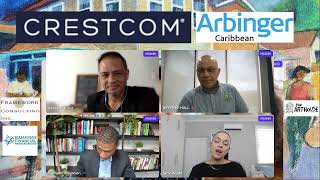
Three Caribbean manufacturing leaders discuss navigating post-COVID operations. Jane White, Graham Robinson, and Jeffrey Hall cover supply-chain resilience, hybrid work, and the shift from micromanagement to KPI-driven leadership. Jamaica Producers acquired a shipping line to secure raw materials.
Chapters
discovered?
It's that people show up to work too often thinking only about themselves, and this self-focus, this inward mindset, keeps them from considering the needs of others and recognizing their impact on those around them. What is the fundamental problem we've discovered? It's that people show up to work too often thinking only about themselves. And this self-focus, this inward mindset, keeps them from considering the needs of others.
Folks, welcome back. I'm gonna ask Julian to turn on his camera so that I can hand over to him. And he'll introduce the manufacturing panel. I think Julian may have jumped to a different universe. Let's see.
Oh, here we go.
He did a little bit. Welcome back, Julian.
I'm back in. Yes. Okay. All right. So I trust that everybody's re-energized. I certainly had to be able to boost my levels up again. Lunch, drinks, whatever you had. And we had quite a session this morning. Very stimulating, very invigorating, all those kinds of words that make you feel good because the panelists really focused very deeply on the areas and in fact expanded above and beyond, which is really, really, really rich. So we expect similarly this afternoon, and we got a number of things. One, we're going to deal with manufacturing, which of course is very critical at this stage of recovery for post-COVID, so to speak. Overall, the economy is another one of the special sessions, but I think the biggest of them all— all due respect to everybody else, uh, coming and going— will be the last session, which I say gives us a window into one of the premier companies of the Caribbean that has taken strategy and tactics to a whole new level in our regional experience. And that I'm referring to jmmb. Um, and let me just say, let me just leave it there. All right, but, uh, if there's anybody that you know signed up who hasn't logged in already, please encourage them to come back and join us for the— for this afternoon session. So manufacturing is the focus, and I'm very pleased to introduce a friend of mine, Derek Lapatt, out of Trinidad. We've had a lot of conversations in recent times And, uh, in looking at his, uh, forays across the Caribbean, I, I'm almost like jealous because I thought I, I thought I conquered the region, but, uh, I think I have to hand over that hat now to Tarek because he's done so much in so many of the territories and critical work too. So I think that he is the ideal person to lead this focus on the manufacturing activities and the strategic objectives and implementation for that matter. So Derek, take your kudos and take it away.
Thank you, Julian. I appreciate that, that generous welcome. And, um, and I know you are still the Caribbean man. That, that will not come off of Wikipedia anytime soon. So good afternoon everyone, warm welcome. And it is a warm welcome, uh, very, very warm in Trinidad. I'm not sure about the rest of the region. Jamaica is usually a bit cooler. Particularly in Mandeville. So I am really pleased and privileged to be the moderator for this session. Thanks to Francis and Dale and the Caribbean Strategy Conference. And I have with me a very esteemed panel, and I don't say that lightly. We have Ms. Jane White, who is the CEO of the Business Supply Group. We have Mr. Graham Robinson, who is the— and let me make sure I get this right— Senior Vice President of Stanley Black Decker USA, as well as the President of Stanley Industrial USA. And last and certainly not least, we have Mr. Jeffrey Hall, who I'm getting to meet for the first time, um, who is the CEO of the Jamaica Producers Group. Welcome to each and every one of you. Thanks for being here. And our, our topic for today is certainly— there's no, there's no, um, understating the importance of manufacturing in the region. And recently, some of our larger organizations have begun to flex their muscles. Global events have, have, have revealed deficiencies within the existing economic model, global economic model, with particular emphasis on the supply chain. And, and, um, I know Mr. Hall, aside from being in charge of a very large food and beverage entity, is also heavily into logistics. So I'm sure we could get some valuable insights there. So today's theme is what are the emerging best practices and innovations in your industry's strategic planning? So we've heard from the previous panels yesterday into today, very, very insightful, um, information, experiences, advice coming in from the different angles, uh, in terms of the businesses across the Caribbean, and even looking at it through non-Caribbean lens, which is also quite— always quite useful for us. So I'd like to just ask the team to give a brief introduction of themselves, starting with ladies first, please, and then, and then the gentlemen.
Good afternoon, everyone. So my name is Jane White. I'm actually born and raised in Trinidad and Tobago, and I'm proud to say that I'm the first female CEO of the Business Supply Group in the company's 40-year history. So I feel as though I have a lot to live up to, which I try to do every day. You know, the company was founded in 1978 and two main divisions would be print and packaging and stationery and furniture. And we try to serve our customers the best each day. The 15 years of experience I have spanned banking, distribution, media, and now into the manufacturing sector. And it's been a ride. It's been a year and a half, so I'm newly joining the manufacturing sector. So much to learn. And when you deal with customized products, it has a different level of intensity. So each day I wake up to serve my customers and serve the 134 people that work with me. And my mission really is to make sure that the people that I interact with live their best lives. And that definitely has been a challenge throughout the last 2 years. So keep on doing that each day. Thanks, happy to be here.
Thanks, Jayden. Graham, you want to go next?
Sure. Graham Robinson and I lead one of the divisions for Stanley Black Decker. Uh, Stanley Black Decker, we have two main divisions. We have the tools division, which most people know about, which is the iconic symbol for Stanley Black Decker, and we have an industrial division. The industrial division is the one that I lead, and it's about $3 billion in revenues. I have about 8,000 employees, of which 90% of them are in manufacturing. So a very, very heavy manufacturing footprint, which is global around the world. We make fasteners, switches for aerospace, automotive, heavy-duty manufacturing, electrification attachments for heavy-duty machinery, and smart storage devices. Increasingly, when you go in a manufacturing environment, you have devices which which look like lockers which provide PPE or other goods, and we are the leading provider of that. And that's my main job. My second job is I'm also on the, the board of directors for Northrop Grumman, so that also has a very, very heavy manufacturing footprint but in a slightly different context. It's good to be here and happy to be part of the panel.
Thanks, Kuriam. Interesting. And Mr.
Jeffrey Hall, Well, good to be here, Derek and, and panel. My name is Jeffrey Hall. I am CEO of Jamaica Producers Group, and JP has two broad lines of business. The first is food and drink. We manufacture— our largest business by revenue is in the Netherlands, and that business involves us bringing fresh fruit from all over the world into the Netherlands, and we make fresh juice for private label supermarkets in the Netherlands, Belgium, Scandinavia, Czech Republic, etc., Germany. We also manufacture food and drink in the Dominican Republic, in Jamaica. On the other hand, we run a logistics business which includes a multi-purpose terminal here in Kingston, Kingston Wharves. Which here we have a shipping line that calls Eastern Caribbean and Europe in Rotterdam or Flushing and Portsmouth in England and Colombia and the DR, freight forwarding operations in Miami and, and the UK. So it's kind of a diversified group. We have about 2,200 employees, and as Graham mentioned, you know, wearing a few other hats, maybe of interest to your your group I chair, Scotia, here in Jamaica, and my other substantive role is parent and husband.
Thanks, Jeffrey, and welcome on, on to the panel. And I think everyone would agree that we, we have representation across the world, across many industries, across many countries, so this should be a very interesting conversation. So Coming back again just to, to reiterate the theme, um, focus on emerging best practices and innovations in your industry's strategic planning. So at the heart of it, again, as has been the theme and is it of course the purpose of the conference, it being Caribbean Strategy Conference, we would have— I guess this could be tackled from various angles, um, I mean, we are all— I guess one could optimistically call it with, I say, with cautious optimism say that we are emerging from a pandemic. And while that is happening, there are certainly some significant global events that are, that are being felt at home. No ifs, ands, or buts about that. Given that that has happened, and some would argue that these recent events have created a window of opportunity, and it is a window because it's— and it's a window that, that some would argue is closing. What have there been innovations in your businesses in relation to how you do what you do to be successful, to serve your customers, as Jane was saying, to drive value to your stakeholders to, but, and to do things not just differently but better. So it's a bit of a broad question, and I would throw it out to, to, to just to any one of you to get the ball rolling.
I can take it, but I would— I'll start where Jane kind of left off when she said that— I hope I'm paraphrasing it correctly— that a big part of what she's doing is ensuring that her team members kind of live their best life or fulfill their potential. I think that— I don't know if I'd call it innovation, but I think that this is a moment in which leadership matters, and dynamic and agile leadership matters, and that's going to make the difference. So whether it be figuring out how to get your team vaccinated and safe, you're going to use leadership tools that are different perhaps than might have been called upon 2 or 3 years ago because you're having a conversation about people's personal lives. Whether you're dealing with work-from-home dynamics, again, it's kind of a leadership conversation and a leadership difference that matters. And I think relevant to your preamble, when you're dealing with highly volatile commodity markets, shipping prices, and you're beginning to ask yourself, how do you translate that into either cost transformation, um, at the shop floor, you know, yield, plant productivity, labor productivity, in transformational ways that really get your employees to buy into change. Leadership matters. And of course, if you're going to deal with agile and flexible pricing as a response, leadership matters and new ways of leading, new ways of communicating matter. So I took something from Jane, but I think that would be the starting point for me for discussion.
And I totally agree, Jeffrey. I think for the first time people had to show a type of agile leadership strength that they never had to use before. You had family members of employees passing away from COVID family members struggling with not seeing their families for 2 years, you know. And on top of that, you have declining sales— well, in my industries, you know, um, and you're trying to fight to push, you know, your margins up by getting the cost down with a workforce that doesn't want to be there, you know. Because some people genuinely, and especially in the first 6 months, were fearful of their lives to leave homes. We had some of our teams say, I'm not coming in, I will take the no pay, give me this moment, I'm uncertain. And they were so fearful. So, you know, when we speak about innovation, I mean, one of the key things you think of is yield and efficiencies, but there is an innovation in the way that you lead and the way that you bring people together and make them feel safe again. And I would like to think during that time, you know, we weren't doing a lot of Zoom calls, we didn't have people working from home, but we found those ways and those spaces to interact with people, you know, get medical professionals to come and speak to especially the ones who were most fearful of what could happen, those uncertain about taking the vaccine. And we had to prioritize different things. And once we got, you know, the teams kind of settled and more comfortable, it was like, right, sales have dropped 80%. Okay, let's, let's take a tack back. And, and the leadership team is grappling with, okay, so you want me to be sensitive and me to be caring, and people are slow, and people are not as they were before. So you're now trying to measure and really utilize the tools of measurement and the efficiencies. So we've, we've seen a lot of that, and now that some— and again, we're not out of the pandemic, but I think we're, we're kind of at the tail end. It's now really focusing on the metrics and the KPIs that exist in order to progress and make sure that we are profitable and achieving what we need to and measuring that, because people did have a level of complacency. So in that whole space, you know, lessons learned and innovation, it's, it's tailoring what you're trying to accomplish while being sensitive, or, you know, at least empathetic to the situation. So that's what I would add.
Yeah, I'd agree with both what Jeffrey and Jane said. I think leadership certainly matters and is important. And one of my previous managers would say the job of us as leaders is to do two seemingly conflicting things at once. Most leaders can do one. You can manage one in the short term, but you can't manage in the long term, or vice versa. And as we emerge from the pandemic and as we go forward, we're increasingly in a situation where us as leaders have to manage that dichotomy and to do both. And that's not so simple, especially with what we're facing right now. I mean, we're facing a highly inflationary environment. We're facing an environment, certainly in many parts of the US, where it's just tough to get people to work or into a factory. And you're facing an environment where you're trying to pass through costs to your consumer and the consumers in many cases pushing back. And at the same time, you need to put in place an infrastructure to manage your business for the long term and to put in place strategic planning, which was the purpose of part of what we speak about today. So leadership is as challenging as any point in time in certain recent history, and the ability to get your team empowered, engaged throughout this process is as critical as anything that we can do. So I wouldn't say there has been innovation. I'd probably say there's been evolution in terms of how we think about it and how we practice leadership, how we practice engaging, how we practice putting in place strategic planning in this time, in one which is so volatile and one in which we need to think about various scenarios. But increasingly, if you were to underpin it, we put a a big emphasis on managing what I refer to as your inputs versus your outputs. And in many cases, we spend a lot of time looking at the outputs, which are things which you have some control over, but you don't have a lot of control, especially in a market which is changing dynamically. But the inputs you have carte blanche control over. So being able to manage what those inputs are and putting myopic focus on that makes a big difference and keeps the team focused on things they can control in an environment where there's so many things you can't control.
One of the points you made, Graham, about innovation, or rather not being innovation— I think that, and I've had this conversation with, with quite a few people over the last few years about innovation, and typically innovation is associated with something that is new or, or beyond to the future, as opposed to a different way of looking at what you have or using what you have in a more effective, or one word, however you define it, better way. Listening to what Geoffrey and Jane had to say as well, this, and it has narrowed down to the crises that we have been going through and are emerging, is that the businesses have, even large businesses as yours and Geoffrey's, have had to humanize. Even more than they did before. Because if we were having this panel discussion 4 years ago, it would be different. We would be talking, I think, more along the lines of the typical status quo and the things that businesses typically engage in. The fact that, um, you know, as Jeffrey pointed out, one of the key things that has emerged, it has tested leadership. You know what, you know, during a hard time, you know who your friends are or who is who. Yeah, you're starting to see, does this company really care about me? And then some companies have realized that, okay, these people are willing to walk off the jobs. And I'm interested to understand how the three of you have coped with that while going through such a difficult financial period in, in different ways. In some ways, some companies of course would have, would have benefited, and because I'm sure the audience wants to understand how did you navigate through this, or how are you navigating through this, and what are the successes, what are the lessons learned? Because these types of, of, of external events are very, very uncommon. So on top of a pandemic that's going on 3 years now that has shook most of the companies and industries to the core, we now have other global events that are exacerbating the situation. So if I could throw it back out as to, are there particular examples or wins or lessons learned that our audience could benefit from you sharing with us?
Is that for—
whoever wants to rush to the mic.
Like, I'm— well, go ahead.
Well, the, the, the situation is evolving, and I wouldn't say we have anything overly profound in that context, but let's— let me describe how we, how we approach it and how I've approached it. Certainly the pandemic changed a lot, and it's— we've spoken about that certainly in the panel, and it's been difficult getting people to come to work in my situation, in which you have heavy manufacturing sites located throughout the world. Getting people coming into the factory is a challenge, especially when you have a broad dichotomy between people who have to work in the factory 24 hours a day versus those who don't have to work in a factory. In many cases, aren't working from the office, they work from home. So what's my incentive to come into a factory when my managers are working from home? So as a leader, you have to have certainly significant empathy in that context. And in my case, it meant spending a lot of time with people in the factory. It meant going on the factory floor. It meant going to— I have 60 factories around the world. It meant visiting them continuously, which are things that you would do as a leader, but you, you do in a slightly different way with a lot more focus now because you have to demonstrate that empathy to someone who is coming into the factory and really could do other things or not want to come in. Now, you mentioned the environment. Now, the environment has changed, is changing. So you're heading towards a much more— obviously in a highly inflationary environment, you're heading towards certainly a recessionary period in the US in a significant way. And that dynamic is changing a bit, and it will change slowly. It will change in the context of Certainly, I'd say the leverage changing a little bit in terms of the labor to the employer relationship, but it would also change in the environment where people are going to become increasingly much more challenged for them in terms of coming out into the office and being much more challenged in terms of what it means to, to work, and an environment which is much more challenging overall from a macro perspective, whereas you had a lot of leverage in terms of going from job to job to job. That is changing, certainly in the US. So as leaders, we have to manage that also, and we have to think about how we put focus on the key critical things that make the difference for the company so that the employee can stay focused. So, you know, in my case, I put a lot of focus on something I mentioned, the input and the outputs, but really the 80/20 or the Pareto principle, which is just really focusing on that 20% which manages the 80% of the output. And what is that? What do you do in that situation? And what are those critical few things that move the needle for you as an employee and for your people in your teams? Because at this time, it's very, very easy to do a whole bunch of other things and really not make much traction. So those are some of the things that we're focused on, really managing the inputs and putting focus on really the 80/20 and what is that— what's that 20% that will move the needle for the business.
Yeah, Eric, you know, I, I became CEO of JP in 2007, and JP had already entered a crisis before what we know of as the crisis of 2008. So it was a loss-making business, and all of the businesses at the time were on fire. And I resolved to organize myself— I hope this doesn't offend anybody— but to really value and enjoy a crisis. Not at the level of the personal impact, obviously, but at the level of the commercial result. And so when we took a look at COVID, we said to ourselves, the first order of business is to protect our people and make sure that they were safe. And we did that in all the ways that Jane spoke about that many businesses did— sanitizing, distancing, leading the vaccination campaigns, and these sorts of things. Second order of business is to get the business going again, you know, make sure we can serve our customers notwithstanding a curfew notwithstanding constraints. Good news is that most of our businesses in the environments which we do business were deemed to be essential services, so we were able to maintain our position. Um, the third thing, and perhaps the most important for this audience at this time, is we resolved to come out of this thing stronger than we went into it. And that's, for us, is the, the nature of a crisis. And we did. So our earnings are up relative to COVID, pre-COVID, 2019, along every dimension. And so the first order of business when you look at a crisis like this for us was to make sure we had our liquidity in place and to make sure that we extended our credit lines and fixed our rates. Jamaica operates in a market economy, in an open economy. And we predicted that would be a constraint. We didn't per se predict commodity price increases, but we knew that we had liquidity and we knew that we wanted to ensure profitability throughout. And so for us, that meant that we were going to take a fresh look at pricing and a fresh look at cost management and bring more discipline to those things. And tools that do that. And for me, in the manufacturing space, it depends on what your core underlying cost is, whether it's raw materials or you run a labor-intensive business, um, or, or a capital-intensive business. But for all those things, it's extremely important, no matter what size business you have, that you have metrics and targets. And so the 3 baseline ones that I care about are labor productivity, plant productivity, which is— so labor is obviously labor. And one of the things that we don't necessarily understand is that if you run a business with relatively low labor costs, you can overlay labor costs as a percentage of revenues, you can overlay an incentive structure that aligns that team and gets everybody focused without necessarily fundamentally damaging the margins, but getting that team on board around those metrics. Plant productivity was important for us, and then yield or wastage, particularly in our high-value items where we're doing juice, for example, and we're bringing in berries from Poland and citrus from Egypt and South Africa, or, or kiwis from New Zealand, and that stuff has a very short shelf life. So we've got to manage those numbers very closely daily, um, in that case. I would say that we also looked at the environment and said we had to make a couple of bold strategic moves. We observed what was happening with logistics costs very early on, had some context for the business, and took a bold decision to buy a shipping line, um, right at, right at the peak of, of of the crisis. We actually closed that deal in April 2021, and we bought it without even having visited the offices, which was a bold move taking into account kind of Zoom. And then that really served as a catalyst taking us to a new strategic level as a group. So those are kind of insights that I think could be useful to the listeners today.
All right, excellent. I mean, you, you took the entire— it What I took away from that is that your good management was, was made even better, tighter, a lot more focused. You did not neglect the— that core asset, which is, which are your people, particularly during a crisis, because you know that is what is going to pull you through and get you better on the, on the, on the, on the coming out of it. And then certainly what was really interesting is some of those, that, those bold moves, or that particular bold move that was made Clearly with calculated risk and, and, and based on what you're saying, and I guess what we can see from the results, it has paid off. Jane, what about you though? I mean, you're, you're unlike Jamaica Producers. I would imagine that your business was not considered as a quote-unquote essential service. You would have been subject to the same challenges that all of us would have gone through. You spoke to them a bit earlier. How are you managing? And of course you have two diverse, or rather two, you're on two sides of the coin. You handle both the distribution, but you are a manufacturing entity as well. So what are those key lessons learned and how are you making it?
Yeah, so it was a challenge like anyone else on the print. Are you hearing me?
There's a little lag, but that's okay.
Derek, I think I froze. Yeah, are you hearing me now?
Yes.
Okay, yes, I definitely think there's a little lag, but are you hearing me now?
We're hearing you.
Yes. Okay. Um, What we— okay, what we did decide to do, um, because we do service the food sector and we did a lot of printing for the groceries and some of those bigger customers who do bleach, we were able to stay open, and that was something that was very important for us. So strategically, we decided what are those things that we need to focus on? And we started looking at a few key, a few key relationships. We asked ourselves, how close are we with our bankers? How close are we with our suppliers? And how close are we to our customers? Because there were some key areas that we needed to tighten up on. As Jeffrey said, you know, we had to look at our liquidity, we had to look at the challenges that we had, because some of the same struggles that we would have had, our customers faced. So we had customers going through some really difficult times. Some of our customers were going out of business. Many of our customers were not essential. So we're trying to support businesses that we have been doing work with for 20 years. And so that was a bit challenging, and how we navigate payment plans. I mean, I felt like a bank at one point in time, and I'm working out, okay, how much can you pay this week and this month? Um, but of course it is a challenge because you're looking at a customer that you know and they're asking for support. You're looking at staff in the same position, you know. So that's why you turn to your bankers and you have a similar conversation. And then you look to your suppliers and get really granular. How can we support each other? Do you need me to order more frequently? Get more in touch with the customers. One of the things that were really useful to us is to work with our customers to get projections, which they don't always love to do. And that's a challenge. And tie the projections of the customers to our ordering practices. And that's something that we have continued to do moving forward because it has been such a challenge. So those are some of the things that we did.
So before we go into the Q&A, because we have a couple of questions coming in, what I wanted to ask, listening carefully to Graham and Jeffrey and you, Jane, the— as we are emerging, and again, I'm cautiously optimistic, emerging from the pandemic, but we are still experiencing some challenges at the global, at the regional, and of course at the national level. There are clearly improvements, whether we call them innovations, or they're clearly— each, each of you have been able to sharpen your saw. You've been able to tighten things up. You've been able to demonstrate to your teams that, hey, we actually do care about you. It's not just about lip service. You've been— your leadership has been tested. And you've been able to prove that we know what we're doing, we're going to get through this together. And this is not just with your staff, clearly with your suppliers and your customers. It has again humanized the businesses to, I think, to a larger degree than some of them were before. How, how, what are you doing to sustain these improvements? Because there's a human tendency to go back to the status quo. To get back into a very relaxed, comfortable laissez-faire when, when, if things were to quote unquote normalize, which actually may not happen. But are you, how are you keeping that ingrained into your culture, into your, into your processes? Uh, are there techniques that you can share with the audience that you are using to, to, um, solidify, to concretize these improvements, these innovations?
Well, I think the operative word that you said in your question was processes, and, and that's really the way to drive sustainable change in especially large complex organizations that I'm certainly— Jeffery's part of, I'm part of. As you think about the, the processes that you put in place going forward, you know, there's so many benefits you get from what we went through in terms of what you learn and the experiences you had. And one of the practical ones which, which I've really enjoyed is, you know, you mentioned in your introduction that if you were having this discussion 4 years ago, it would be different. Well, we probably wouldn't be having it by Zoom, first of all. Yeah, we probably wouldn't have had it because we were waiting to go meet face to face. So it probably wouldn't take place. And there's just so much more you can do in that type of context. There's opportunities to give feedback in real time by Zoom. Um, there's opportunity to interact with people that you never had before, you wouldn't get to in the near term. So those are some of the things which you can take from the pandemic and you can sustain as part of your management operating system on an ongoing basis. But the key is to put in place a process, to put in place some sort of system where you interact with the teams where you have an established process, whatever part of process that is for your business and works best for your business. And you allow people to be part of that process and at the same time demonstrate the empathy which is needed to manage the business. And that's, I think, certainly one of the things which we have taken from the pandemic and will take from it on an ongoing basis. By putting in place those processes and ensuring that our processes facilitate that type of structure going forward.
Yeah, I agree with that. And a couple of years ago, pre-pandemic, we acknowledged who we were, which was a holding company. We make value investments. So our investments are in different countries, different geographies, and different lines of business. So our In the Dominican Republic, we have a snack food operation with maybe 300 employees. We have a water bottling business in Santo Domingo and in Bavaro with another 300 employees. I mentioned our juice business, another juice business in Barcelona, a bakery in Jamaica, port in Jamaica, shipping line in— you get the point. And we said, okay, let's be able to articulate for all these businesses a set of values that cut across them. And shameless plug, Francis Wade helped us to do this and to actually write down what we care about in ways that cut across all the businesses. So we care about openness to new ideas as a principle. We care about leadership in very specific ways, metrics that are a leader can measure herself or himself against. We care about what we call reality, which is management by numbers, overestimating the opposition, burdening the financial models that we use to take capital investment decisions. And so all of this is spread across the team, and then the team is able to cascade these values down to actual decisions. And so we're trying to express precisely who we are on paper, and then we can hold ourselves against, uh, accountable for these values at every level in the organization. And I think that served as a way of organizing sustainable accountability and growth.
So that's what we're doing. Certainly it takes, it takes a crisis to test a model, and it clearly, that seemed to up to work quite well.
Yes, Jane. Yeah, I definitely, um, to what Geoffrey was saying as well, we had had— and previously to the pandemic, I was only the CEO of the distribution company, um, Boss, that we do stationery and furniture, um, and we were going to be the Amazon of the Caribbean. We had launched our e-commerce platform, going on one track. Pandemic happened, we consolidated the business I was now responsible for a whole manufacturing division, and the strategic planning stopped for all of us. We kind of had it at the back of our mind because it never leaves, you know, we spent some time developing it, and then we went into a very reactionary, like, what if this happens, you know, don't pay the credit card right now, let's look at what this customer has owing for us. And, and then in the last couple of months, um, we've engaged with a consultant and we said, okay, It's— we're coming out of this and we need to look forward to the future. And just as Jeffrey said, holding yourselves to these metrics and making sure it's done consistently, we're now setting the tone again because we knew who we were then. And specifically on my journey, I was leading a different company on one, and now it's what does it look like together as we grow and we have distribution and manufacturing together and a shared services that supports supports both, um, the challenges that come with that, putting down a shared metrics to support both sides with two companies that have two different cultures, two different ways of thinking. And it's— we're now in the process of more consolidating that, looking towards the future. So this week I was in 2025, and I hadn't been in 2025 the last two years, you know, before I started the first set of strategic planning. So it takes You know, we have to get out of the day-to-day and saying, I'm too busy. You know, even my chairman came to me 2 months ago and said, are you sure you want to start the strategic planning now? Is this what you really want to do, to stress out the leadership team? I said, what is the other choice? To be bypassed? To stay in 2022? I don't have any plans of staying where I am. I have to look to the future. Because if I don't, my competitors surely will. And we have a lot to achieve. And it's really just saying, yeah, it's hard. Yeah, I'm dealing with a customer complaining or a rep that's crying, but I need to look at 2025 as well. So it's that agility, which is key, and touching base with the leadership team and checking in and making sure they're okay and sending them home when you need to. But, you know, checking in with them on a weekend to say, you know, did we finish this report? But you could leave early on Friday. What is it that you need? You know, so it's, it's all these different conversations which, um, as a CEO, it can be challenging to where you put your energies. But I think if we don't look to the future and we don't revise our KPIs and we're not tracking our metrics and testing it, because even what we're doing now, next year we're going to review it as well. So it's building in the processes, as Graham said, to test what you're doing. Because what I'm doing this year and what I'm doing next year may be slightly different, guided by a strategic plan, of course. And I know, because Francis and I have had a few conversations about this, a lot of these smaller organizations don't feel they're at the point where they might need a strategic plan. You know, I'm 10 people, or I'm 200 people, do I need a strategic plan? I'm focusing on making money. But understanding the value of a strategy is so key because you have to be knowing where you're going, else you end up somewhere else. You know all those things. So what I would encourage everybody listening here— I mean, if you're here, you're, you're starting off on a right foot because you're looking forward to the future. But don't let it stop and die here because there's work to be done. And yes, it's great when you have a consultant to guide you through it. But there are tools and there are sessions and there are people that you can reach out to to get your company forward. And you can have 15 people and have a robust strategic plan. So that'll just be my, um, my little call to the attendees.
Fantastic. And, and I mean, what I'm hearing across the panel here is quite a lot of, um, positivity. The future does look bright. I mean, it's demonstrated clearly by, by, by the, the the three persons we have here. So we're going to just change the tone a bit and go to the Q&A. We have a couple of questions in the chat. I'll start with one from Rika Williams. What will be the strategy for the manufacturing industry in the face of worldwide shortages of raw materials? Which is certainly one of the things that— not that it's brand new, but it's certainly been exacerbated in very recent times. And I'm sure it's affecting each and every one of the businesses that our panelists operate within. Who would like to start with answering that? Because I think there would be valuable answers from all of you.
Yeah, well, I can answer. I know Rekha, so thanks for the question. It is definitely a challenge, especially when we're ordering raw materials like paper, which there's been a worldwide shortage and increase in pricing. And we've been told by some of our suppliers, right now we're not shipping to the Caribbean. We have enough to serve our domestic markets and we'll call you when we have stock for you. So it's kind of like a no. And that we went through. We've had, you know, suppliers tell us, I don't have the price but I now have material to sell you. You want it or you don't want it. So we've gone through a range of wild things, um, and it's a combination of— I kind of spoke to before— lazing with your customers and getting projections for a longer period of time so you can order specifically for people. Especially in my industry, it's customized print and customized packaging for unique customers. So the more we know from our customers' needs, the better able we are plan. So that would be one. And then the other thing that I would have told my salespeople is sell what we have. I'm like, look at, look at the inventory. Let's be real, I am— I don't have a magic wand. And sometimes these salespeople are like, oh well, you know, I now struggling and I'm bringing this and you don't have the stock. I said, yes, I am working on it, but sell what we have because we have the C1S. And how many of the customers you saw that today? Let's be— let's push ourselves. Let's go be not order takers. Let's sell what we have. Sometimes you have to do that. So those would be my two suggestions.
Well, Jane, I mean, I think you're— especially your last point is one which I couldn't agree with you more in terms of selling what you have. And, um, it resonates so well in this environment, quite frankly. The, the challenges— this is certainly probably the most acute challenge that I face as a business leader and one which I wrestle with on a day-to-day basis. And the two points which Jane brought up were excellent ones in terms of one, which is getting more visibility from your customer, and two, managing it with your commercial teams in a different way. Just to add, I think the, the point on the last one is a really, really important one because the challenge that I see happening now is the increasing dichotomy between the commercial teams and the operations teams, where the commercial teams are saying, oh my gosh, you want me to get more orders? Yeah, I do. Well, I mean, we have a ton of backlog. Why don't you just ship that first before you ask me to get more orders? It's like, okay, to the point that just meant that Jen just mentioned, sell what we have available and put more focus on that. Um, but imagine this, we're doing a number of things. One, we start with our plant and ensuring that we're being as efficient as possible. Jeffrey mentioned some of the metrics in terms of labor and plant productivity and putting myopic focus on that and managing that on an ongoing basis. We're also looking at nearshoring in terms of ensuring that our suppliers are as close to us as possible and being pretty prudent in terms of our suppliers. But we're also looking at— I mentioned the 80/20 before— but ensuring that we minimize the variability that we have from a production perspective so that we can maximize the leverage we have with our suppliers. So, you know, some of our devices— as at the plant in Delhi, Iowa, which is really the middle of nowhere, where we make heavy-duty attachments for John Deere and Caterpillar— we have 7 different shades of black, we have 5 different shades of gray. Oh, well, why? The customer wants this, this customer wants this. What about if we just went to one shade of black? I mean, what difference would that make now? Oh wow, make a big difference now, Graham, because, you know, we'd have more leverage with the suppliers. I mean, we'll miss it with a couple of customers, but it would be okay overall. Okay, well, let's do it. So, I mean, there's certain things that we need to start enhancing that linkage between our commercial teams, our factories, and the entire supply chain to ensure that we We really focus on that 20% which drives the 80%, and that makes a big difference from an operations perspective, not just substantively, but symbolically with your teams, because you're actually listening. You're listening to what the problems are, you're making their lives a little bit easier, and you're driving much more sustainable change in the organization. So to the point Jeffrey mentioned before, you, you don't want to put a crisis to waste, and this is one which allows us to facilitate that type of change and good hygiene in running the business, which you probably wouldn't have done before except for this type of situation.
I thought those are good points, and I don't want to belabor it other than to say to Rieka that, you know, when you look at your secret sauce of your particular business, maybe a few years ago it might have been selling, or it might have been production, or it might have been finance. But right now, I think for a small, a small to medium size business, having, having some real knowledge in procurement is going to be powerful. You know, getting those procurement muscles to be stronger and more agile is going to be important because there aren't many more people on Earth, uh, today than there were 2 years ago pre-COVID. So the stuff exists. Where what we're having issues with is getting it. You know, it may have existed in India 2 years ago, and that might have been the place that was most convenient. You might have had relationships that go back a long way. You may have had ways of working, credit terms, etc. But the same product exists in Colombia, and this is the moment to be good at figuring out where to get it. And how to get it, how to get those shipping lines organized, how to renew those credit terms, how to take advantage of slight differences in the available product to match your—
So we have— no, thanks, Jeffrey, and I think that combined feedback is incredibly valuable. I'm taking note myself, uh, as a, as a newbie manufacturer myself. We have another question from Rita Sukrit. Have you implemented hybrid working in manufacturing, and if so, what challenges did you face? And that again, I'm sure, is applicable to all three. Um, if I could probably start with Graham, given that he has such a large workforce, um, across many different, um, locations locations, and of which I think, if I heard correctly, you have— I think over 90% are in the actual factory floor.
Yeah, yeah, I think that's an excellent question. And when I first read it, I, I thought, oh no, I don't, I've never done that. But, um, it depends on what you mean by manufacturing. With our direct labor, no, we haven't done that. Um, it's always been— it's practically challenging to do it. With our indirect labor though, in terms of everything that supports— and by direct labor I mean really employees in the factory directly that are handling the materials. But with all the ancillary services that support directly, whether it's the planning, whether it's the procurement, whether it's engineering or otherwise, um, yes, we have implemented hybrid in those situations. And the big challenge that we face there is not too dissimilar to the, the distinction between hybrid for those in the factories versus hybrid for those in the offices. And you realize that— and this is what happens when you spend a lot of time in the plants— when you speak to people who are hybrid in the plants and you say, how's it going? Oh, it's going great. Everything is perfect. You know, I mean, I'm as efficient as before. It's even better. I don't have my productivity— I don't have to drive to the office. It's so great. And then when you go to the factories and you speak to them and you said, you know, your, uh, your planning person is at home and How is it going? And you speak to the people, the direct labor. How's it going? Like, well, it's pretty tough. I mean, because what they do is they call into me into the factory and they tell me, I need to do this for you, or ask me to do this for you, because they are no longer there in person. So it becomes a much more challenging situation to navigate. So the big challenge you have there is really, one, the perceived imbalance between the two in terms of people coming into the factory versus not. And the second is the perception for those who are hybrid that is as efficient as ever before, whereas those who are in the— whereas those that are in the factory don't have that perception because they're actually doing a lot of the practical day-to-day work. And the management of it is really that of facilitating a communication vehicle where it's not just the one or the other in terms of hybrid versus the other, but you ensure that people do come in at some point in time and some continuous measure, and you do try to break down that communication gap that exists in the structure where the perception between the two exists. So you try to smash that together as much as possible, put in place forums where we're speaking directly and transparently, transparently about what is working versus what's not working. So maybe just to summarize, yeah, we have done it for, and we are doing it for the indirect, not for direct. And I'd say with mixed reviews. Mixed reviews. It's a work in progress.
Thanks, Graham. Jeffrey, what about your side?
I would say the same thing. So what we do, you can't unload a ship or harvest bananas by working from home, or any of the core business that we operate. And so I took a little bit of a different view. Obviously, I took very seriously the importance of, uh, social distancing, sanitized spaces, and vaccinations and so on. But I took the view that we, even as management, had to find ways to identify with the essential team members that do the work. And I actually started to wear what I'm wearing today almost to demonstrate to the team that I'm part of it. And I'm not per se emphasizing being at home. At the same time, I do think, and as I mentioned at the outset, I do wear a number of different hats. I do think that there are technologies that are beneficial to businesses that can make the experience of office employees more productive, more agile, and that it is worth investing in the systems that support that and the ways of working that support that. But I would say it depends on institution, it depends on the moment. What I would say though is that we are also facing an interesting environment in which the US has record low unemployment. Or at least in recent times. Jamaica has record low unemployment relative to its— in periods since independence. And so there is a tight labor market in places that we care about. Europe is also very tight, in Northern Europe, in the Netherlands. And so I do think that there is a whole discussion that we as Caribbean people need to have about outsourcing outsourcing and providing temporary solutions for work globally, not just even in our own jurisdictions. So it's quite common in, in Europe, for example, to have contract employees that do certain functions that are organized to fill or to smooth out peaks and troughs in production. It's less common and less organized in the Caribbean. So I think it can exist in the domestic markets, but I also think there's a huge opportunity for those of us who are vested in the Caribbean to figure out what solutions we can provide to very tight labor markets globally. The cost of labor in Iowa is much higher than exists in Jamaica, I can say for sure. And so there's a huge opportunity. And some of this, the, the, what, what Graeme referred to as indirect employees that were working in office towers in Toronto or New York or Chicago, um, and supported by assistants and accountants and analysts, I believe that now that everybody agrees that those functions can be done online, that we ought to be standing up and saying that we can do some of those things right here in the Caribbean. So I want us to view it as an opportunity.
Thanks, Jeffrey. Jean, you wanted to add anything to this particular question?
Just to echo the same sentiments, um, but you can find productivity in a hybrid environment. Obviously, as Jeffrey said, if somebody's on a printing press, they can't do that from home, um, but some of the planners and the support functions, they can. For example, our production manager, sometimes when she's dealing a lot with these strategy pieces, she might say, you know, I want to actually take Thursday and work from home on Thursday, but I have the planner and the scheduler and the admin assistant who are there, so anything I need, they know, and I just want to prioritize this day for this reason. So there is still, with some of the production office support, some of that flexibility which we're trying to use, but driven by productivity. Or driven by need from the personal space, because some people's kids got sick. They're fine, I'm fine, but I can't leave the house and now I'm in quarantine because my child or daughter or mother got COVID. So we have to balance it, you know. So it has been very helpful in that regard. And we've tried to be very open to people who say, why can't I work from home? And we just break it down to them. We need some people in the office to do X. This is why they're able to do it. And, you know, just be very honest. And so, yeah, we just deal with the challenges as they come.
And that answer actually dovetails really nicely into another very interesting question we have here. It's a bit of a two-part. One is, how as leaders did you, A, transform yourselves to lead better in crisis, as well as B, overcome resistance to the changes you needed to implement, especially with your leadership team?
What I would say for me is I think my leadership style suits a crisis. I think, you know, how I've treated with people over the time of my career has been empathetic, which has sometimes been criticized as too nice. So I feel like I'm like, welcome to my type of leadership, people. You know, so I feel like it's been good for me in that respect, but bringing the team along and explaining some of the expectations have been a bit of a challenge. So taking the time to explain some of these things, um, I think is a key part of it because not everybody can be empathetic or has experience with empathy or has ever felt like they should be. So that's been a challenge for some.
I'm probably less gifted or intuitive as a human leader. And for me, it's definitely a continued work in progress. And I think that I've had to get help, honestly, this year. I saw the need to resource the opportunity more fulsomely than before. And so we brought in a coach, and the top, um, general manager, finance person, and commercial person, and production people in our, in our businesses were given kind of coaching opportunities, which commenced with a psychometric analysis.. And so we profile them and help them to profile themselves and help them to be better advocates for themselves in the business. Because you don't want, in times of crisis, for people to harbor concerns or be afraid to propose a CapEx decision or propose a change in something material. So we wanted people to be able to speak up and with confidence. And so that's made a difference over the course of the last year for us. But, but as I said before, for me, I have to work at it. I can't say that I am, I am a natural kind of people person, but I do think it's a huge priority for the organization.
And I know that the— in the audience, we— it's a, it's a very, you know, strong HR contingent we have, and I'm sure they all applauding and cheering and saying yes, on top of what, of course, Jane had to say, who clearly would be their darling. Graham, what about you?
I'd probably say my leadership style is more similar to Geoffrey than Jane, so I'll probably get some coaching from Jane afterwards on that. And I wouldn't say it's the most natural for me also in terms of being that of an empathetic leader, but it's one which I've put significant focus on because there's no choice. I think, though, as I listen to your question, the challenge is not the crisis. It's the crises in that it's a continuous flow of events and crises that we are going through. The pandemic is just one of them, quite frankly. If I think about what affected us in our business, the pandemic is probably ancient history. And we deal with semiconductor crisis. We're dealing with Russia-Ukraine. We deal with an impending recession. We're dealing with an acute shortage of labor and people, you know, managing that. So the question is, how do you sustain the energy of your teams when you're going from one crisis to the next to the next, and when does it end? And I think the way to do that is what Jane mentioned before, which was really doing the two seemingly conflicting things, which is carving out the time to start thinking about where you want to take your business in the next 3 to 5 years. Because without that vision, people just focus on the day-to-day and they just focus on what's affecting them right now. And they have a hard time really getting beyond that and getting beyond thinking about where we really want to go as a business and why this is important in the bigger scheme of things. So taking the time to do that, especially now, is particularly important because it gives the vision, it gives people the why, the why this is important for us as an organization. And why should I continue to endure through what seems like an endless slew of crises that are affecting us in this organization? So it's an ongoing process. And for me, it's a work in progress as a leader, but one in which you really have to do in this environment.
And that— sorry, that question came from Cheryl Messam. So thanks for that question. I wanted to ask a question of my own, because taking off our various CEO, consultant, HR manager hats, etc., director, business owner, we all share a common trait. We are human beings. And using one of those crises, which is the pandemic, it, for many of us, it forced us to, to pause and reflect and to start to relook at what is important in life and in business and so on and so forth. Putting back on your hats now, did, did you have any of those moments where your paradigms— because, and I could see this a lot in and I could see this in, I guess, all three of you. You are where you are because you are strong in your beliefs and you know what you're about and you make things happen. You have huge responsibilities. You're responsible for the livelihoods of hundreds or tens or even, or in some cases, thousands of people and their families. You have stakeholders, shareholders, suppliers, customers you're all dealing with. But is there anything coming out of this and the— what seems to be a, a, a treadmill of, um, of crises that has shaken any of your paradigms and changed you as a leader and said, oh, okay, you know, I, I now realize, or I now believe that I have to adjust? Is there anything that has changed in any of you? I think it's connected a bit to Cheryl's question. That is, is going to, and is, has, is changing and influencing the way you do business going now and going forward.
I, I wouldn't, in my case, I wouldn't say changing, but I would say reinforcing the The, um, I'd say certainly the pandemic has changed the way we think based on what we just articulated and based on us trying to get to the asymptote of Jane from a more empathetic leader. But in, in that, so, so we're constantly focused on that and we're constantly trying to do things differently to ensure we're providing support. I mean, and it just continues. A practical example Today's Saturday. On Thursday night, I found out— on Friday morning, which is yesterday morning, I found out one of our employees in our factory committed suicide the night before, so, or the morning. So on Thursday night slash Friday morning, and he was a 25-year employee in one of our factories. We don't know the details yet. We don't know why. We don't know what's driving it. But your first instinct is to think about, oh my gosh, and this was a site I was at 2 weeks weeks ago. What, what did we do wrong? What did we do wrong in terms of how we're managing our teams? And, you know, are we responsible for this in some way, shape, or form? So certainly, we'll wait for the details to come out, and we'll manage it in that way. But you constantly are thinking about what you need to do as a leader to make sure that you're connecting with your team through any single form of forum that you have. So I make it a practice know that for any factory I go to, and last year I did over 100 factory visits, that I have a town hall. I don't care how small the site is or how big it is, I have some town hall in which I'm visible, people see me, they can connect with me, and they can have some way to interact with me, whether directly there or afterwards. And that's one of the things which I'd say has changed for me as I've gone through this pandemic in terms of, you know, whenever I think I've communicated enough, just to communicate more, more, and more, and to ensure that you are connecting, not just communicating. And that's certainly, again, much like before, a work in progress, and that we're— I'm continually focusing on to evolve as we go through these different challenges that we face.
Great, great. I'm very sorry to hear about that, by the way, and, and I'm sure everybody is quite saddened and we express our condolences. Um, to turn into Jeffrey, um, with that question as well, because Jeffrey kind of revealed a bit about how he, you know, he clearly, you know, and we appreciate the frankness that clearly you've made a bit of a change in, in, in how you were going to deal with this opportunity in the form of a crisis through the coaching approach you took.
I was reflecting on what Graham said. And I'm sure he has lots of frequent flyer miles to share with us. I kind of got stuck on the 100 factory visits last year. But one of the things that I came away from that— I haven't had enough data to make it be true. Transformational for me personally. I'm observing a trend. It would probably take me 5 to 10 years to figure out whether it's true or false. But because our businesses are spread out globally, I would have at a point in time felt the need to visit. And whenever I visit one of our facilities, I, I, I tend to have, um, kind of a, a detailed review of financial performance and variance analysis and so on and drag it out and get into the micro of the business and try to add some value. But more importantly, really test to see whether the team on the ground has done the work and knows what they're talking about. And because I couldn't do that in peak COVID— I started to travel obviously subsequently— folks had to run the businesses on their own.. And I actually came to the conclusion that it's conceivable that you could express clear values in how you recruit people and how you measure performance, but actually leave people to be accountable to a higher level of success in the businesses. And so it's too early to say, but I, I think there's a scenario in which our business can expand significantly. If I find a way to select great people and clarify objectives for them and with them and empower them to just get on with it. And so we're going to have to have another panel in a couple of years for me to tell you whether it worked. But that's, I would say, the change.
And I'd love to be at that panel. Jane, you want to add anything to this as well? I mean, you seem to be in the, you know, your position seems to be that, hey, we should have been doing it Jane's way all along.
Yeah. I mean, my background is in HR. So I feel like I've been waiting my whole life, everybody, to get it. But what I was surprised about by myself is that this is the type of leadership style that I would have expected from my team for a long time and had been working with them to get there. And when the pandemic hit, my thinking was all the work that we've done together and the coaching, you should kind of switch into it more quickly. I've been saying this for the last 4 years, 5 years. And when they didn't, I wanted to completely jump out myself and be like, what the hell? We've been speaking about empathy and I wasn't practicing it. So it made me mad that they couldn't get it quick enough when it was so necessary that I dropped my own empathetic leadership style. And I was like, no. And I had to check back in with myself to say, you know, this is, this is where I need my most strength because when I'm under pressure, I can't, you know, do the thing that I don't want them to do. So, you know, just keeping it together through all the challenging times and seeing my leaders struggle was challenging for me. So to continue the empathy was even more difficult, especially when, you know, profits are down and customers are knocking at your door. So it definitely challenged my own style of leadership to stay the course. So I thought that I would have sailed through, but there were a lot of bumps.
And I think that is the reality that, that all leaders face. And again, leaders not only in the form of CEOs, but leaders at all levels of the organization. So I think we have time for our last question and closing comments. But before we go to it, something Jeffrey said resonated with me, that at some point in time I'd like to take him up on our conversation. Because if I interpreted what you said correctly, I have tested that for a number of years. And I would say that it's slower and messier, but ultimately I think it's more effective to get you to the, to your overall business objectives in, uh, you know, in, in my opinion, a more favorable win-win-win type situation when you look at organization stakeholders, meaning customers, suppliers, investors, etc., and the, the, the employees. I've actually had been at loggerheads with boards for that, that they felt that I was not corporate enough and, and that I allowed too much flexibility. So it's a very interesting point, if I interpreted correctly, correctly, that, that I would love to have a conversation sometime. So, so let me go to the— what would have to be your last question. I think time is closing on us. So there are those leaders who believe that when you have work from home, that equates to non-productivity, low performance. So, and I know this would have— we've touched on this a bit already— how did you manage performance metrics in your hybrid context? And I think that would be a good question for, um, in particular, uh, Jeffrey and Graham, um, given what they have told us so far. Not sure which of the two gentlemen anyone want to add to what you've already said about this?
I think for that follow-up session that you're scheduled in, please invite me because I'd certainly like to listen and learn. I think what Jeffrey said— I haven't spoken to Jeffrey in many years, but what he just said resonated a lot with me, certainly from my managerial style, which has certainly been that of— Diving into the details of managing at a pretty granular level and adapting that through a pandemic is one which I'm constantly evolving and adapting to as a leader. So I think I certainly want to participate in that. As you think about the metrics to look at and how to manage from work from home, they don't change that much in terms of once you have an established management operating system in place. And, you know, but I think what is important is less the work from home, but it's more the external environment and the pandemic. Because I tend to think about business, rightly or wrongly, as a linear equation. You get some output based on your input, but times some degree of leverage, some activity that you're doing, and it's plus or minus the market. So, your output varies to some extent based on the market and what it does. And the market you have very little control over, but you do have control over your inputs and those activities that give you high leverage in your business. So, I tend to put focus on managing those inputs and what those things are and what the teams are doing. And in a pandemic and working virtually, it becomes even more important because one of the things which you, you notice virtually is that people say, oh yeah, I mean, I'm equally as productive virtually as I am in the office, or nothing has changed in terms of the business results. And that may be true in the short term, but some of the things that you really want to put focus on are some of the activities that produce results in the longer term, such as innovation, such as engineering activities, and making sure that you're still putting that myopic focus on managing those inputs, which you won't see a variation in the in the near term, but you'll see a variation in the much longer term. And so I'd say not a dramatic change from an MOS perspective, but putting a little bit more focus on the areas which the outputs are not that clear because they're longer term in duration, and making sure that the inputs— you're managing what the teams are doing and what they're focused on, especially in a time when it's much more difficult to do that remotely.
Yeah, I think that's, I think that's right. You know, again, we're, we're, I think we're in the zone of professional services or, or other types of service sectors in which work from home is possible. And I think it's fair to say that in the short term, the productivity measures that you would apply to people who are in the office would be the same as those who are working from home. I think the real question for for me when I kind of scratch my head is how is the point that Graham was making is how does this evolve? And I guess the most interesting element of that question on evolution is how do I react to what will be short-term human experiences that evolve in the work-from-home environment that haven't yet troubled the metrics? So when I call an executive, in whom I have great confidence, who is working from home, but in the background are children making noise. What should I be thinking about in analyzing that? Is that, should I assume that that person is less productive or that they're actually managing their children now with a view to working much later on afterwards? And that's gonna be even more empowering for our business. And so in the short term, the metrics are clear. In the medium term, I have to try to understand whether that's going to affect teamwork, whether it's going to affect innovation, collaboration, et cetera. But I haven't changed the short-term metrics. And I think it's going to be quite interesting to understand how work evolves. And how behavior evolves and how, how the work, the composition of the workforce from the perspective of diversity and inclusion evolves, um, in, in this environment where, where you can source ideas globally, um, and you can allow for different work schedules of people. It's quite possible that we could all become more productive using different metrics in the short term. So my goal right now is to be attentive, to watch it very carefully, and ensure that in the short term, we retain our productivity, but we're actually a learning organization, hopefully ahead of others with whom we compete.
Jane, you want to just— I mean, we'd love to hear you your perspective.
Yeah, no, I would say, um, I agree with everything that's said, um, but at the heart of it, I think it's trust, you know, um, trusting, uh, the team that you have. If you didn't trust them when they were in the office, it's just gonna make it even harder when they're not there, you know. I've seen people in the office surprisingly look busy and not actually accomplish anything, you know. So I've seen people there So it really is about continuing to evaluate the metrics as we go along and continuing to have the conversations. And with all new people who go into the work from home, the expectations are that the leaders have the conversations. I know that your kids are home. How is that affecting you? How is your setup? What does it look like? Explain it to me. Are you, are you struggling? Is it working well for you? And, and having those conversations and some, some of the people we've given the work from home options to say, I can't deal with this, I need to come back out, um, because it's not working for me. And some will be honest and then some won't, you know. So it's just having those touch bases, um, and making sure that you can continue to connect the dots. Because one of the things that I am potentially concerned about is those in the whole conversation those just before somebody packs up to leave and you're just brainstorming an idea, those elements of just being physically in the same place that don't ordinarily happen if everybody's home. So those, those different, you know, brainstorming little sessions and conversations, where do they go? Do they stop? Are they still happening? Do we schedule time to just chat? You know, you've seen a lot of different organizations have cocktail hours and Scrabble games virtually and still try to do the bonding. And, you know, so it's just a way to manage it as we go along. But I think trust is a key focus. And if you're finding yourself doubting a person, chances are it's the wrong person.
And, and so that, that was an excellent question from, from Roxine Green. And And I think, Jane, you were reading my mind because in— and as we look to wrap up, one of the things that I had to contend with because I was leading a public sector organization when the pandemic hit, I had to let go. I needed to— not that I was an avid fan of micromanagement, but I'm accustomed having being on top of all the levers of a business, all of it, constantly scanning the environment internally, externally. And I had to let go some of that and trust people would do what they did. Because we did put the priority on— at the time, the pandemic was still early. And we took a— we agreed as a leadership team, 20 of us agreed, we would take an overly cautious approach. Let's do that. Let us get that done and as best as possible make sure that the work was done. We, we, we categorize the work in terms of critical, important, and couple, you know, and, and reprioritize things. And we quickly moved to try and get— and doing that in a public sector organization is not easy, as you would imagine— but we were able to get the team together to set it up in a way that we were able to make sure that the critical services went on and making sure we kept an eye on cost and revenue. But one of the things that was my— I had to do is let go. I had to let go of it and just, as you said, trust. And you would have to know your people as well. You know which ones to keep much closer and keep those check-ins a little more regular. And of course, to Geoffrey and Graham's point, lean even more heavily on those KPIs and those metrics. Make sure the reporting was there so you kept some semblance of structure and order and an eye on the ball, because of course businesses have, you have objectives, you have, you're serving people at all different levels, and you need to keep keep that going. And that's the challenges all CEOs have. So with that, I see we have the true Mr. Caribbean, Mr. Rogers, on the line here to knock us all on the stage. But it's been a pleasure, Jay and Geoffrey Graham. It's been a— it's actually turned out much better than I anticipated. And I hope the audience feels the same way.
It's been a pleasure.
Thank you, thank you, and your panel really opened up a lot of the, of the areas that in some ways a lot of people are a little afraid to deal with. And certainly in the last discussion about working from home, I know it very well, and I'm so happy that Jane raised the matter of trust because that is a real problem among managers and certainly among the employees as well. So thank you very much for raising those issues. All right, so let's move on then to a wider—
Am I supposed to leave? Where am I? Am I backstage?
Come back in here, Julian.
I'm gonna do it and then we'll start up in 30 seconds.
Okay.
More from Francis


Ep 35 Your Strategic Stagnation Isn't a Framework Problem—It's a Story Problem



The YouTube Strategy School: Why Your MBA Didn’t Teach You Strategic Thinking





