Day 2 Talent Management Panel
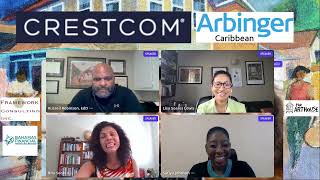
Dr. Russell Robinson, Rita Sukrit, Lisa Suarez Lewis, and Safia Johnson discuss why HR must shape strategy, not just execute it. Change initiatives fail at high rates when talent is excluded. HR leaders need data, agility, and the ability to link their work to measurable business outcomes.
Chapters
panel. And, um, thanks so much, guys.
Yeah, that was certainly very, very, very healthy discussion. Uh, you certainly broaden it out to affect and be of interest to so many people, which is very, very critical in terms of the discussions that we're having here today. So, so that the, the matter of, of, of data management is not in a silo somewhere but that it is pervasive across the organization and very critical at times like this. All right, so we're going to move on, as Frances suggests, and turn our attention to talent management, which I think would marry with a couple of comments came earlier in terms of HR and so on. But this is particularly crucial in the aftermath of the impact of COVID And we have someone who has dealt with people and with companies who may have had certain anxieties in terms of their performance, and those anxieties could be constraining in actual fact. So that it is very opportune that we have someone like Safia Johnson, who has a fancy address there at Queens Park West in Port of Spain, to come in and join us and to lead off the panel in the session. So Safia, welcome.
Thank you so much, Julian. It's a pleasure to be with you. And thank you for the wonderful introduction. All right, guys, we are getting ready to jump into the talent management panel. So how have you been enjoying the session so far? I know it's probably just one major one went before. But I know you guys are probably having a fantastic time. Yes. And, you know, talent management is so critical. So we're hoping that after we finish, we're getting all of those same thumbs up and wows. We're looking forward to that. So when it is you deal with strategic planning, talent management is absolutely critical, especially now in this season. There has been a serious paradigm shift, and we have some amazing panelists here with you today. So it is certainly my pleasure to introduce them to you. So I am now going to read out their bios, and then you're going to help me welcome— after I finish introducing each one, give them a round of applause, and then I would give each one at the end an opportunity to share. All right, so first up we have Dr. Russell Robinson, and he's the only guy in the midst of all of these ladies. Yes, he's the founder of Amplified Research and Consulting LLC, sorry, LLC, which focuses on research, analysis, and developing solutions regarding employee engagement, voice and silence, and talent management. The primary purpose of Russell's research is to to explore and document the work experiences of people in those three constructs. And you're going to hear a lot from Russell even in this panel discussion, uh, to do with voice. Very, very, very interesting as we talk about talent management. And then we have, um, now Russell is from Washington, DC, all right, but we loving him up in the Caribbean. So Russell, give him some thumbs up and some claps and some celebrations, all Nice. Welcome in, Russell. You're going to hear his voice just now. Then we have Miss Rita Sukrit. She is a globally experienced learning and development leader skilled in aligning business goals with L&D strategy. Rita implements innovative solutions using technology, tools, and frameworks. She combines business and commercial acumen to build trust, align stakeholders, tackle challenges and inspire creativity for workplace learning. So we want to welcome Rita, and Rita have Trini roots, all right, and you can hear my Trini accent. Yeah, my kids in Canada right now, so we're sending some love to Rita. All right, and then we have Lisa Sorrell— Suarez. That's good, Suarez. Suarez Lewis. Yes, and Lisa's a Jamaican national, so Jamaica is in the house on the panel. And she's the founder CEO of Great People Solutions that she created following her HR director roles across Jamaica, North Latin America, and the Caribbean. Her career spanned 20+ years across a range of local and global businesses in banking, telecoms, FGCM, sorry, FMCG industries. Her roles cover general management consulting, end-to-end HR management, corporate and commercial banking, and corporate governance. Lisa is a visionary and a leader in her field. She's commercially driven and possesses a deep understanding of talent and of unlocking people's potential to deliver competitively advantaged business results. She's also a member of the International Women's Forum Jamaica chapter. So let's send some love to Lisa across in Jamaica.
Thank you.
Right, nice. So these are our wonderful panelists for today. So I want them to give a short introduction. So even as I ask them this opening question, and I want each person to answer this question from your perspective, all right, from your perspective, share with the audience how talent management to have a seat at the table for strategic planning. All right. So share with us a little bit about you and then tell us your perspective. So we will start off with Russell.
Hey, happy Saturday, everybody. So first, like, I got the worst accent here, man. This is just— I think I've been set up.
Run with it.
Run with it, Russell.
But before I get started, man, I want to shout out Dale and Frances Wade.
Yes.
They always put together high-quality events that focus on where you need to be tomorrow, not today, not yesterday. So anytime they allow me, I think there's like one American minimum per panel. So I try to slide in on that and they help me out. So to answer the question, Deloitte put out a report. And first, let me say, I know everybody here is from the islands. I'm gonna try to be cognizant of that and not be too states in my answers. But Deloitte came out with a study a couple months ago that basically said 30% of all change and strategic initiatives fail. If you're in government, That number is 20%. A lot of times that is entailed by not bringing the proper stakeholders into the conversation. The one thing I say in the multiple hats I wear, I work for the civil service in the US, I have an LLC, I'm an adjunct professor. At least 3 times a week, I say the only change in your— the only constant in your industry is change.. And every change, because I speak from the prism of a training provider, every change is going to have an impact on resources and talent. And to be successful and get a number above that 30%, it's very important to bring talent in at the beginning, not just talent. I caught the last bit of the analytics. Presentation. It's good to have data people at the table. It's good to have technology people at the table. But if you don't have your CHRO or whoever's in charge of your talent at the table when strategic plan is being developed and determined, you're setting yourself up to fail. Yeah. And now I'm going to pass it on to somebody with a lot better accent than I got.
I'm going to kick it to you. Let's see if your accent is better than Russell's.
Well, I'll do my best. And first of all, thank you, Sophia, for you know, having me on the panel today with Russell and Lisa. And I have to agree with Russell, shout out, big shout out to Dale and Frances. Hello everyone. Um, a little bit, my, my answers might be a little bit skewed because I work for an organization stemming out of the UK that's been around for more than 30 years and the US for 17, Germany and Canada now. What I'm— so my answer is going to be based on a global perspective because we deal with a lot of international clients. 2 years ago when the pandemic started, we actually, I actually did a conference and I was speaking about what is going to happen with this pandemic. And I have to tell you, I was going back into my notes a couple of days ago, prepping for today. And it's the exact same place where we are today, but the list has now grown, you know, where we started. That just blew me away. So I want to open with that statement is why do we need talent management? And I'll tell you, 2 years ago, it was the same thing. We need to think business first. You know, what are the business problems? What are the challenges? What are the issues? And not silo it into functions or departments, because strategy is not a wish, it's not a wish list. It's about policies and it's about actions that we take as leaders and how we address them will show exactly why we need that seat at the table. So aside from the business person, the problems and stuff, I want to add on to a couple more things that are that have trended since then. First is offering the employees a fulfilling experience. This is mandatory because the employees are now, they are at the forefront. They are actually carrying everything. And it's what they say that holds weight. It's no longer what the employees, employers can give them, but it's they want to make sure they're aligned with an organization that meets their values, you know, who they are as a person. And the first thing they're looking for is a company culture that aligns with them. And if it doesn't align, they will go. So that is another reason why we need to have that talent management strategy. They want to be part of something that's big and that's going to give them the opportunity to be creative and thrive. Because without creativity and thriving, innovation sucks and it'll die. We know this. You know, one of my things I always say is I can't give up my BlackBerry because— but this is a case in point where it's just died because of lack of innovation. Second is acknowledging differences, you know, and being flexible. We have gone through the last 2 years where employees have defined what it means to work during a lockdown, and we can't go back to the way before. We have— that's outdated methodologies. We have to recognize that and come up with solutions that's going to accommodate whether it's hybrid, remote, a blend, whatever that is, we get to define that. Next is keeping values close and integrity close to our heart. And we saw this and this became like a global phenomenon, especially a couple of years ago when in the US when George Floyd, what happened there, it really opened up the social image of a corporation, not just a country, but an organization, every one of us. And we're looking for more than just belong. We need to have integrity. We need to be valued. You know, we need that kind of community. And we want that kind of belonging. That's what employees are asking for. And lastly, this is key because this is what's brought us here today is the future of work. We get to define that future of work. You know, we are in a spot where it's never probably going to come back in our lifespan. This is a one in a million chance. And I tell you, if leaders don't step up and really, really come and define the future of work, they're going to hurt. It's going to hurt them. What's going to keep our best talent in our organizations? How do we encompass multi-generational, multicultural, the work environment, and being flexible? That's what I would say is trending now.
Thank you so much, Rita, for that. Lisa, kicking it over to you with the Jamaican accent.
Thank you. People said I'm not sure about my accent and I wish I had a little bit more Trini because that's where I went to school. Shout out to the Trinis in the group. Um, I just want to, um, also say thanks to Daylan Francis for this. Um, and it just kind of is always a great refresher and to meet people. My background is also coaching, and I did the AAA strategy myself to be antifragile, to come out stronger after COVID than when I went in. And I found that In all honesty, for HR to be at the table— HR had a fantastic opportunity to kick up their whole brand, to pivot during COVID I don't think there's any client that didn't have HR at the table during COVID to work out the protocols. What do we do next? They were on, you know, speed dial, that kind of thing. So I, I do believe HR is the closest they've ever been, if they weren't at the table before, and they need to stay stay there. And I, and I, and, um, you know, to, to just kind of complement what Roslyn and Rita said, because we want to go into the conversation, is that, um, I have found, because I've worked in global companies and always kind of made sure I was able to implement locally, I really don't— the lines are too blurred for me. I don't know global from local. Our biggest growing industry are two industries, and they're tourism, which of course employs about 25% of the Jamaica workforce, or more, presumably. And the BPO sector, which is business process outsourcing, you can't get more global than that. Just to get an investor here to put down roots to be able to employ people, they're working at very competitive global standards. So I just try to make sure that everybody knows we are global. No, can't do anything about that. No, I would say that it's important that HR understands they have to provide the leadership on the talent strategy. So if you have a business strategy, then you have to create a document called a talent strategy that plugs in, that allows your business strategy to grow legs, accelerate, and so on, especially in this VUCA+ world. And, and basically, I mean, we can go into what that entails, but you know, essentially you're talking about the workforce plan, you're talking about the capability plan, the imperatives, the mix of talent, when you're going to hire people, the and that may go into that. But also, you know, we're changing the language a bit and being a bit more, a bit more brash. So, you know, you want to use words like eradicate silos. You know, we're no longer trying to find them, you need to eradicate them because they're not going to work. Last thing I would say is that HR has to be really keen on the capabilities. And when I went to India in 2020, in February, just before, people were saying, why are you going to India? Well, I was going to get an award and I was happy to go. And come back with— I would— I told everybody I was going to double mask. I'm going to go and come back. They were in a different realm, and they weren't like what was typical of the SHRM conference. These were people on the Asian side of things, and they were really focusing on what's new. And they, you know, one thing I came away— one little metric that came away was that they did surveys, and 55% of the workers knew that in 5 years their job was going to change, and there were new skills that were going to demand it of them. And that's what the workers were saying. And that's 20— let's do the math. That was 5 years. That was 2020. We lost 2 years. We literally have 3 years and they're moving ahead. So I think, you know, just to complement all of what has been said, time is against us. We got to get the strategy in. We have to plug in. And I think HR is at the table and they will be moving.
Yes, thank you so much, guys, for that. And I'm going to be chipping in and just bouncing off of some of the things that you have seen. And, you know, something Rita said which I found was so interesting, she talked about Persons are now looking for jobs and work that is aligning with their personal ethos. And you see it a lot with the generation, generations of change. And even in my own sphere with leadership, I look at the generations that are, that being led or who is leading, and the range of generations in a workplace. And what motivated a baby boomer or Gen X is not motivating the millennial or the Gen Z. Completely different paradigm and thinking. And so we have to shift that. And I think now this season is a season— it's been moving into an era of tremendous employee empowerment, you know, and I say power to them. And we saw the Great Resignation being the, the result of that empowerment. And the last thing I want to say is that though my moorings is not HR, I'm a chartered accountant, right, who ended up veering in all sorts of different fields, but I landed eventually in leadership and having led companies myself, my HR person has always been very, very close to me. But what I've found, and I think it may be the issue right now, they may not even recognize how much they need to drive what is happening. Not just to come and sit at the table to listen or to be an observer, to be aware of, but to actively drive the strategy that is being developed and the way it is formed. And I saw Derek put something in the chat, and I agree with him. HR has to be at the head of the table and it's not negotiable, and that just has to be. And so, so I want to challenge some things here, um, before we go into our other question about the fundamentals of this talent management strategy. But I wanted to poke a little bit because where I see sometimes HR, if it is they do get a seat at the table, may be pushed aside or may not be able to bring the kind of value that they want to, is somehow in their minds they don't link what it is they do and what it is they produce and the business outcomes or the business impact. And Rita touched on that, I think Russell touched on that, and Lisa to a certain extent. Just chat with us a little bit about linking what HR or talent management professionals do and the impact on business, because that is why finance always has a seat at the table, because business about money, that link is so easy to make, and Sometimes the finance people themselves really out of it and don't really know what's happening and can't give any sound advice. But the HR professionals now linking their own strong professional background, their experience, their training, and all the different arms that come out to business and the business outcome and the business impact. So who wants to take up that first?
I can try. I'm going to give you a quick example and then hand over. Yes, I hear from my clients Oh, um, you know, we just did an investment in Barbados and, you know, we just can't start because we don't have the— you know, we haven't found the right general manager. Project delay has a cost. Um, the Great Resignation, it came and came to people and they were not— they were asleep at the wheel when the Great Resignation came, when, you know, hotels were closed down for how many months and they could have stayed in touch with their people. And understood that the chef is disappearing and he wants to be an entrepreneur. So they could at least have planned for that. That's engagement. So when they started, now they realize that, you know, 20% of key roles are not there. They've gone, they've disappeared. So it impacts business. And if, if, if CEOs and leadership teams are honest, they'll realize there are a lot of business issues, delays, gaps, or they have lost competitiveness because maybe they did not determine that they were going to be in— they wanted to be the leader, they want to be number one, but they didn't determine that they want to pay their brand leaders and the commercial leaders in the top quartile or the top decile, whatever. So, you know, we have to help them connect the dots with why they are not competitively advantageous, why they're slow, why their business plans have not delivered, with the reason. And a lot of that comes back to talent.
Yeah, great. Thank you so much.
Rita? Yeah, thank you. That's— I'm going to build on what Lisa said. It, you know, this is so, this is so important. And I don't really believe people understand the magnitude of it. The first thing I want to say is that HR, they put so much effort, time, energy into developing, you know, getting the employees hired and brought into an organization because look, our biggest asset are our people. If we don't have the right people, we will not— what's the point? It's not going to work for us. But what the first thing is, we have neglected to invest in our own HR people. They do so much for the organization, but they're not getting some of that back for their own professional development or professional growth. What HR does, it's so critical to the success of an organization. And because I'm in learning, I have to say the two kind of go hand in hand. The one thing I want to say is that before the pandemic, they were focused on attracting, hiring, retaining, and developing high potentials. But today, their role is now actually coaching and mentoring leaders to lead through this pandemic or take us beyond the pandemic. They are now doing online hiring, a process that's completely new to them. A lot of the skills that they had before the pandemic are outdated already, and we need to find, you know, we need to invest in them as well so that they can carry on what they're doing, the great work that they're doing.
That's what I want to say.
Thank you so much. Russell, you wanted to add anything?
Yeah, um, so by nature, I, I got my undergraduate degree many, many moons ago in accounting. And I spent the first 10 years of work as a CPA. I've been in the HR space for 7 years. So I'm an outside-in person. So when I think HR, I normally come at it from the prism of a customer. And I think for everything we've said for the past 25 minutes, the big assumption is that the HR people at the table that we want at the table, or who should be at the head of the table, have the skill sets to be there. HR is heavily policy and procedure. It needs to be strategic. It needs to be— I, when I did the intro, I said Francis and Dale do events that focus on where you need to be tomorrow. HR needs to focus on where you need to be in the future. Like, for example, what What Rita said and Lisa said about the great resignation is, let's be clear, if for the past 27+ months, if you've lost a loved one, they're before the grace of God, go I. If you've lost a business, that can happen to anybody. If you're not in those first two camps and you haven't come out of the past 27 months with some reflection that your purpose has changed, or something has changed, then it's a blessing. And HR has kind of— I think they kind of missed that opportunity. Give you a quick example. The big thing for the, the savvy HR people at the table is internal talent management, which says, internally, organizations are starting to think about how do we create a gig economy within our organization, where you're not really getting hired for your, your job description, you're getting hired for a set of skills, and you're going to float throughout the organization utilizing those skills. HR has got to be able to articulate that at the table. And, and I'll say, like, from a change management standpoint, In my role in the civil service, I'm in charge of employee engagement and training. This was a promotion and a job that was created for me. I was very intentional that my position has a dotted line report to the CEO and not the CHRO because I didn't want to be a part of HR because I thought that was going to be limiting. I think So what I'm summing up and saying is HR needs to have a seat at the table. But what we've learned the last 27 months is that, yeah, not just these young kids, workers have different purposes. There's a desire more for corporate social responsibility. There's a desire for gig workers. The generation that's going to come in and work for one company for 30 years has changed. How do you focus on the candidate experience before we onboard people and the boomerang experience so people will want to come back after they leave? Like, I think that's where, that's where the ballgame is. It's way beyond benefits. That's simple problems. Like Lisa mentioned, a VUCA world. Like, you need leadership with the skill set to handle complex and complicated issues. The simple stuff, you should have it by now.
Yeah, thank you so much, Andy. The chat is lighting up, which I love, uh, so I'm gonna read some of them in a bit. And, and because it is so real, I had to do, um, for a client, they had a major recruitment. We were doing like about close to 70 positions, and my team and I, we were handling— but I was handling the executive part of it because leadership is my main state. And even though we had HR in the room, we came in as consultants who were supporting that effort. And would you believe, in going through the recruitment process, it was almost like they wanted to get to the end of the process. It was just so, so many positions. There were so many things happening, and I was there in the room, especially with the executives, because I ain't letting that ball drop. Because to me, leadership— you get a bad leader, remember Gremlins, and you wet it, it multiplies. That's what happened. The whole team ends up with all of these bad attitudes and all of these different issues, right? I wasn't letting that drop at all. And HR just wanted to get it over with, and I was like, no, 'You don't understand the impact on this company a year from now, 5 years from now, if we choose the wrong person. And you have the eye. This is your training. Come on.' And I had to be coaching the HR person along with me to ensure that we landed the right person with the right fit, skill sets, personality, everything, so that they can help take that company forward. So I'm seeing— so we're going to get to the chat in a little bit, but we are going to add one thing.
Yeah, I'm in the talent market because I do executive recruitment. And selection and lead. Okay, HR is talent too. If HR is in an organization— and sometimes I say your HR is as good as your CEO. If your CEO doesn't allow that space for the thinking and participation and development, you're going to get the HR you paid for and invested in. So in this example that you may have just shared, I would say maybe your HR is not at the level that you need and want for that. So you need a more strategic HR, you have to pay for it. So I mean, I just had people leaving a job. I find that HR jobs are changing now, people are moving around in the market. The HR are no longer satisfied with having to be, you know, in pity city talking about, oh, I'm not getting the attention. Move on because they're not going to give you attention. Go to another company. That's my advice because we have to grow the HR grouping as well. And I found that they got more confidence during that period. So I think HR capabilities are— they did go to the SHRM conference and know it. They need to be paired and business partnered with a strong team. And if they are not getting it, they're talent too. They go to where the supply is if the demand is higher elsewhere. And that's what I recommend.
So I want to jump on what Lisa said. I was working with the CHRO And he would stop staff in the hallway and be like, what's that you have in your hand? And they'd have a folder and he's like, oh, that's my work. And he was like, no, that's somebody's life you got in that folder. You know, their child gets sick, their ability to take care of that child is in your folder. And he actually, you know, and he had a perspective where he would go and say there's, Hey, there's no reason for you to have a full voicemail. You know, either, either you're returning your calls, or if you're out on leave or something, you're letting people know. And then he said, my executive is going to just start randomly calling people. If anybody has a full voicemail, that person and their supervisor have to come in and talk to me. And I asked him like, hey, so where'd you get this passion from this? And he said, I'm dealing with policy and procedures people. But for me, I was a waiter in a restaurant in college. Like, that's where I learned customer service and to see people who they— how that— who and how they are. So I think, you know, I want to bring it back to our topic, like talent management and strategy. Like, you really— like, this assessment, like, you've got to start with an assessment, um, that says, uh, like Lisa says, like, does this, you know, does the CEO care? You know, is the CEO focused on solely results, or results and relationships and technology and process? And then does the CHRO have that skill set, focus on the whole, the whole spectrum? Does the CFO have this, the whole, the whole understanding? Does the technology officer have the whole understanding? And do they embody the values? Because they can sit around and say, They're great and these are our values. But when you get to the rank and file, the employees know. There has to be this— before we get down into the weeds, there has to be a high-level understanding of strategy, mission, values, and making sure that everybody at that table has the skill set and the passion and the desire to make that happen.
If I may— oh, sorry, Safiya. No, no, go ahead, Rita. It comes back to what we've noticing as well. HR don't necessarily, and this is not a disrespect in any way, shape, or form. Some of them don't have the skill set, which is why I said we need to invest in HR as a role as well. We're investing in everyone else, but we're not putting the investment into them. On the flip side of that, if you have archaic style thinking leadership where they think it's a top-down strategy or top-down tribe, that's outdated and out of touch with reality because what employees are seeking is a more flat line, especially as we're working remote. So I don't want to lead— my people don't want me over their shoulder, nor do I want my boss over my shoulder. You know what? Let's work in a flat line approach. I want to be empowered to make decisions within my skill set as you do within your skill set. And I think this is what we need to see the trends and how things are shifting. So we're saying HR, HR, HR, but if if leaders are not, or their CEOs or their superiors are not in tune to how the workforce is shifting and where their role really is. It's not at the top and driving down, you know, it's not that way anymore. It's more, it's coming down where we're bridging that gap. The disparity is much closer now. We can't have that wide disparity between leaders and workers. It doesn't work that way anymore.
Correct. Correct. And we're leading into another part which I'm going to raise. Very candidly. But I want to say that, you know, even as a— starting out from a finance professional, and I think it happens the same thing, the same way in HR, based— each person has an area they prefer to operate in. So even in finance, have different arms and all of that, but there are some persons who prefer to go to the strategic space, and there's some who prefer to remain in the technocrat, technical space. And I think that is also important for HR professionals to recognize that there's actually two different domains altogether. And sometimes, you know, and it really breaks my heart when I see— and I'm seeing Joycelyn Fletcher, she's putting some things in the chat which we will get to— but what happens, HR is hugely overlooked. So yes, I get some of them, they don't have the skills, and I agree because I've seen that. I've had that experience as a CEO myself with my HR persons, but I've also seen very strategic HR persons, very much progressive and forward-thinking. Very innovative. And because of the thinking of the CEO or the thinking of the board, very archaic, you know, 1922 kind of thinking, that they really, really just leave HR off of the table. What would you say? We may have some CEOs on, and the truth is some of us may be CEOs but came from the HR line. And it's interesting when I work with leaders, the very thing they hated when they were not in leadership, they then do when they become leaders. It's a very interesting phenomenon. Um, what it is we want to say to board members or CEOs, those decision makers, when it comes to ensuring that they bring HR always at the side of them, starting from the board level, starting from the board level, and at that very, very high executive level.
You know, as we discussed, I think Thursday, if you don't start at the top, all roads lead to leadership. And I think the boards have to reflect because they should really be looking at themselves at this stage if they are really fit for purpose for the post-pandemic world. As I mentioned, you know, I do a lot of reading and, you know, I engage with futurists. And one of the guys that we did some work with 2 years ago, his name is Roger fits. He spoke about the AAA mindset. You have to be agile, you have to be antifragile, and you have to be anticipatory. You kind of have to put all the leaders through that sieve and see who really is able to hold up. Um, it means therefore, you know, you know, I had reason to speak about it the other day and, you know, in a similar setting, which I said basically, you know, if you hold up the scorecard, we have failed miserably on succession planning. What does that mean? You know, the most important role for you to fill is a CEO's role. If you have not had a good succession talent pool over how many years to get to that, which would probably need to be accelerated now with COVID post-COVID, it means the board has failed. And therefore, there, there's a, there's a board evaluation that has to be happening now with everybody, but with a harder look. And maybe board competencies have to change. You know, we look on it and say, well, do you have enough technology? Do people know are they familiar and, you know, fluent on crypto? You know, it's a struggle for all of us because we're getting into the uncomfortable space. But I think boards have to start, leaders have to start. And I'll say this one thing: HR and finance are very similar. You know, some years ago, the finance group were bean counters, HR administrators. The new CFO and the new CHRO are different. And therefore, a CHRO is now looking on a decision support strong agile FP&A is somebody who is not going to be in the HR field. You have to have a business partner. So to me, they're very much— they've tracked each other very well, and they've also kind of, you know, you're good for the numbers, but are you being a strategic thinker?
Oh, I think Lisa HR as well.
Okay, okay, great. You froze there for a little bit, Lisa. Yeah. Oh, frozen again. All right.
So Rita, you want to jump in?
Yes.
Okay. Okay. This, I know we're, we've got to come down hard on everyone that's within an organization, you know, and unfortunately, the buck stops at the leader. But just we got to keep in mind that our people are our greatest assets, our employees are our greatest assets. And I'm going to kind of change the pathway a little bit because I think if we don't have the right culture within the organization, we fail, we are going to fail miserably. And that adds to a lot of the topics we've been talking about from Russell, from Lisa, from yourself, Safiyyah, as well. I want to just, before I pass it over to Russell, is that like culture is created by, it's reinforced by, and often destroyed by leaders. So if our leaders are not on the bandwagon and are not with it and are not right quick with what's happening or trending, they can't have their head in the sand and say like, we're going to go back to the way things were because it's not going to work. It's just not going to work. We don't roll back, we roll forward, which is why we're saying the future of work. This is my voice. For us, I'll hand it over to you.
Yeah, so to bring it, to bring it up to, to a higher altitude, I think from a strategic planning standpoint, especially with what we've seen with, with, with the past couple years, it's important for organizations to have boards that have the ability to capture multiple perspectives. So that means, how do we get people of color to have access to being on the board? You know, there, there are several ways you can look at, at a strategic process for organization. I tend to look at it as this, this diamond between finance, people, process, and technology that's going to be involved in every strategic process. How do you make sure that you, that the board either has or has access to the perspectives and the knowledge to include those perspectives in all aspects of strategic change. I think at another level, especially I keep going back to the past 27 months because it's been a huge opportunity. Lisa talked about her 4 A's and they're similar to my mantra is 9 words, which is strategic, agile, emotionally intelligent leaders empower employees and customers. What that basically is saying is, at the CEO level, all the way down, you're going to have that, you're going to have the necessary technical skills. But if you have to have those adaptive skills, the flexibility, the agility, the ability to be emotionally intelligent, That means you can connect with people. That means you can be self-aware, you can self-regulate, you know how to communicate. And I agree with what Rita said. Like, it's— this isn't like an assembly line in the 1950s. You know, this is, you know, it's a knowledge-based workforce. People have voices and perspectives because they're on the front line that CEO or the board may not have. And it's like, prudent for your business to succeed and meet goals, that these voices have a way of making their ideas, thoughts, concerns for those to make it to the top.
Nice. Thank you so much. Oh, Derek, you preach a whole sermon there. Yes, about whether the board is properly composed, adequately knowledgeable.
But then, Derek, then what I'm saying is then you've got to make those changes to your board. And if you're, you know, if you're going to have an antiquated board and an antiquated, uh, CEO, then as, as one of my, one of my colleagues said, you know, listen, right now there's a scarcity of talent. The employees have the power, and if you're muzzled, then you're going to make a decision for yourself and your family based on that, right?
And the thing is, depending on which sector you're in, if you're in private sector, again, you're getting your shareholders to shift the board or if you're in public sector and it's appointed by the state. Oh my God, this thing gets so problematic. Rita, what are you going to say?
I just think the leaders have to recognize within themselves too when they have become out of touch with reality. I'm sorry to say, but we have to recognize that. I know in our organization, we really strive for equality, Russell, but no matter how much, I'm of color, I'm a VP, our CEO is a woman, she's in the UK. We try to balance, have a 50/50 with women equal to men in position as such. But that's a small organization. What happens in the large organization, that may not be so because you've got people that are in these positions that have been there forever and they don't really realize the reality of what's happening around them. And that's unfortunate, you know, or they just don't want to give up. Some what they have.
At least some that—
but there are some that have. Like, I know of an organization that, based on what you said, came up with the two things. One, board members have term limits, so there's something you can cycle on, cycle off. But they also dropped the requirement that to be on their board you had to have previous board experience, and that opened up the pipeline to people of color and, and women and people who normally wouldn't get that seat at the tape.
Nice. I would, I would just add too, because the board is talented too. I mean, they're, they, you know, I would say in all my boards in the last 2 years, I've never done so much board training. So we're being trained in all of the new things, and I can see the discomfort that some of it may be flying over some people's head, because as I said, you're deep diving into a lot of technology now, and that will give us an opportunity to bring somebody on. But the reality is that A lot of training has to be done now as well.
Yeah, yeah, yeah, yeah. And, and, and you must have board members, as far as for me, that are also capable of being trained, because a lot of times people believe that, yeah, training, and then they make themselves of very little or no, no use.
And what do you do with them? Because what's the price of keeping them.
I mean, I've had to deal with that in the public sector as well as the private sector.
I would—
and I have written to ministers requesting board members be removed because they are derailing the progress. Because if I said to see you, as I heard one person said, I don't preside over dead, so I'm not dealing with that. So we need to get the thing moving. So they need— they need to— we need to treat with certain matters. And I think many times, because persons don't want to rock the boat or they don't want to be unpopular, they shy away from saying the thing that everybody's thinking that we need to treat with in order to move the thing forward. Yeah, right. And we have to be able to engage those kinds of discussions respectfully.
And being uncomfortable is fine, it's cool, that means you're learning.
It's an imperative. Exactly. Call a coach if you're really uncomfortable, that's why we're here.
Yes, yes. So let me shift the discussion a little bit now. So we're dealing with hot In the smack dab strategic planning, talent management is at the table, and we really want to develop, uh, you know, a really, really strong, robust talent strategy, uh, to help that organization truly execute successfully on that strat plan. What do you think are some of the fundamentals that must be included, or some of the discussions they must have, or some of the things that they must engage, even thinking about the emerging trends, the emerging paradigms and what's happening now? So I want each one of you to answer that. So we can probably start. Russell, let me start with you.
Yes, I think, and I'm gonna give two quick theories here. From a talent management standpoint, you know, the wheels for talent management for me are onboarding, training, onboarding, hiring, training, promoting, and succession planning and offboarding. And I think I mentioned earlier, I'd also add in the candidate experience on the front end of onboarding and boomerang for— and boomerang employees on the back end of, of succession planning. So it's making sure that you're very robust in all of those areas. You have, and you have proper ways to identify where skill gaps are, and how to address the skill gaps. In my PowerPoint, I talked about— I'm a big soccer fan, Manchester United, and they're struggling now. But their old manager, Sir Alex Ferguson, would always say he had two goals. He had to focus on how do I put the best team on the field each Saturday? But what do I need to have the best team on the field 3 years from now? And when you focus on today and the future, and he said he'd like for his team to be a slow-moving conveyor belt. Where at the end of the season, maybe there will be a couple people cycling off, a couple people cycling on, and that helped him have the best talent and stay relevant. What he basically talked about was a process to identify where from a strategic process your organization or your HR needs to be 3 years from now, what type of skill gaps there are, how do you mitigate those skill gaps, Do you, you know, do you need— does the person in the, in the various positions have the skills now that they need 3 years from now? Good. If they don't, but they can be trained and coached, do you have the resources and training to do that? And if they're not going to get it, then you're going to, like, you're going to have to make decisions. And I'd also say, uh, for, for some of the consultants I work with, sometimes the best decision is to outsource that gap instead of bringing it in-house, like having a right way to do it. So I think it's, it's being able to understand all aspects of, of onboarding, training, promoting, and succession planning, but also understanding what talent you have now and what talent needs from— based on strategy, you need to have at whatever point in the future you would pick.
Thank you so much. So Rita, over to you.
And then I'm gonna piggyback on the previous group because I was so fascinated with the conversation around analytics. And this is, again, I'm speaking from experience, but we have HR that are people-focused, they're not numbers-focused, but they need to up the game here when it comes to analytics and reading it. Understanding what that is and how to take raw data and transpose that into actionable items. This is really, this is extremely difficult. I know when I produce a gap analysis and I do qualitative and quantitative analysis and I turn that into a training solution, potentially people are like, how did you get there with that? But that's the kind of skill set we need our HR people to come with now if we're going to have them assessing future skills for organizations. So Russell, you're a changeman, you would understand this. We have to look at the current state and the future state and how are we going to get to the future state. And that middle piece is our change management arena, as you call it. But honestly, data analytics is where we need to start focusing on because without data, we can't do this by hand. We can't do this you know, simply by just reports and reading. And we need hardcore, strong analytics coming from people and assessing these numbers and defining what we need for that future state. That's the one thing I'll tack on to what Russell said.
Thank you so much, Rita. Lisanne, what about you? What would you say?
Yes, and I would just say that's kind of HR, the leader needs to kind of add some discipline. So there's literally, you know, you have a business plan document, you should have your talent strategy. Strategy, written out. So all the headings that we just heard about from what Russell said and Rita, you have to cover. But where I like to start from is that kind of open conversation, which is, you know, a real picture of the future and the context and what's going to make us win. What are the things that we— where— when are we in the box that we don't know what we don't know, so that we can start thinking of the capabilities and how those are going to feed into the capability development plan. Or the workforce, you know, how much money do we think we need to have? So, you know, what do we need to keep in, what can we outsource? So, you know, going through and determining over the next 5 years what would you be putting out and not necessarily having to have it as strategic in-house resources and, and everything. Plus also a risk map, because the reality, the risk map, just like how you can use it for business, you can use it for talent. So the more an HR leader is able to do, have the discipline create a talent strategy, it's a more double credibility because they have to use the language of the leaders, whether it's even, you know, money, um, the future outlook for the business, what success looks like. And, and I think, you know, we have seen since, you know, COVID, when we're talking about what are the most important capabilities that all startups seize, you know, their critical thinking, you know, being curious, anything with a computer, which is really the data that we're talking about with retail you have to understand data. Because I'll tell you this other thing, maybe because of my FMCG background, we are recognizing there's so much similarity. When they spend so much time looking on consumers and where their wishes are and the desires, those consumers are employees. They have the same thing. They want, they want self-service tools. They don't want to be asking for information. They want to control as much as they can. They want to set some of their, you know, work from home arrangements because that's what suits their lifestyle now. And we spoke a little bit about this on Thursday, that the talent is changing. They're determining who they want to work for, when they want to work. So therefore, in your talent strategy, you have to have a whole section on the change in employee preferences, what matters to them, and how you can find a nexus between what you're offering as employer and what they're Thank you.
Yes.
Can I add one thing? Um, because Rita and Lisa said— they did, they just articulated some awesome stuff about the need for data analysis and this talent, talent strategy plan. HR leaders and leaders need to be able to take both of those documents.
Yeah.
And then to be able to articulate that to their audience, employees, stakeholders in a way where it's inspirational, understandable, and digestible.
If I can add to, right? Don't think that it's just that one report HR has to look at. They have to look at the business strategy of workforce plans. They have to look at what the current skills are, all their people in an organization, kind of predict or foresee, which is a huge task. Into what the future skills might be and the number of skills that will be required. So this is what we're doing in our organization right now. And don't be shy or don't be, you know, go get the help that you need. That's why there are experts out there. They do this for a living and they will save you in the long run, not just the headache, but the almighty dollar we are also concerned about. Sometimes you just have to say, okay, we need to do this, we need to do it right, and we only get maybe one chance at it. And this is where we are now. We have a short window before organizations roll back and do things the way they were doing before. This is the year. This is the year for that defining the future of work.
Yeah, yeah, yeah. All right, so guys, uh, we're going to start landing the plane in just a little bit. So I want to encourage you, the time is so— I mean, we have like about 15, 20 minutes again, right, Francis? Checking the time in the background. So you guys can put questions that you may have in the chat or in the Q&A section, and we are going to pick it up. Uh, so Lisa is switching her internet connection, so she should be out just for a few seconds and back in. But I want to raise the whole matter of technology, right? We touched on it just a slight bit, uh, in terms of the greater use of technology and AI in talent management and development even in your strategic planning for your talent. And let's talk about how we can use it and use it effectively, and when using it too much may not, may not necessarily work. So, Rita, do you want to start?
Yes, sure. You know, as I said earlier, I mean, this is not an area that HR is strong in because they are geared towards the people, that touchy-feely kind of approach. But we need them to now up the ante and start learning what analytics is. So analytics really, if you use it and you use it right and you do right by it, it can help you increase your employee productivity. It can boost employee engagement. I mean, we did a lecture at one of the colleges, the universities here, and they were HR students, about 200 of them. They were asking me, well, they're not happy with the way the onboarding process is conducted. It's like, here's your package, go do it, da da da. It's all technology-based. So we have to find the right blend of having, you know, like an experience that's high-tech and high-touch. We've got to find the right blend. We've got to have the technology, but we have to maintain the strength that we already possess, which is the people side of things. We have to look at ways that how we can come up with innovative onboarding methodologies or ways that we can bring our employees on board, but make sure they have that human touch to it. They don't just want the technology side. So we have to define what the balance is. Yes, we do need it. Yes, we will need the AI. We do need that information. But most of that information is probably to drive the future. And that's kind of what we're seeing in my, my, you know, with my clients.
Right. Great. Thank you so much. Before Russell, before you jump, let me just say the question over again because Lisa was out for a bit. For a bit.
We are talking about— can you hear me?
Yeah, we can clearly hear you loud and clear. So we were chatting about technology, the use of it, AI in talent management, talent development, even as you are doing your strategic planning, and when overuse may be an issue. So I'm going to kick it to Russell while you pull your thoughts together, because I'll ask you after Russell speaks.
So, so my thing is employee engagement, employee voice, and I'm very heavily using software, HR-based software as a service tools, pulse surveys, things you can do to onboard, things you can do for recognition. Earlier, I mentioned that strategic agile leaders empower employees and customers. The empowering customers that you're using technology to put the data out there where customers can answer their own problems. For example, you can now book airline tickets. You can— I can't remember the last time— I mean, I live at Amazon.com. I can't remember the last time I actually talked to somebody at Amazon. I have grandkids and they get on me because I don't wear cool Nike Air Maxes. I wear grandpa Adidas, but, you know, they're nice, nice stability at the bottom. I'm getting older. I had to return a pair of Adidas. On my computer, I went on their website, returned it, printed out a label, went to UPS, and the minute they scanned it, they announced that a new set of shoes were coming. So that's how technology can work. The challenge I find is technology is just a tool, and if you don't care and you're not strategic, it doesn't help. So last thing I would say about the use of technology is my wife's birthday is in 5 days. And I get a reminder on my Gmail, on Google. Like, it would be fantastic if Google could send me an email saying, hey, Russell, by the way, your wife's birthday is in 5 days and she's been on the, the Macy's site looking at, at these dresses, you know, and they're on sale. And let's say they could, let's say they could, and I could pick this out and buy it for— and on her birthday, like, it would be there first thing in the morning. It's great, it's awesome. But if I don't tell my wife happy birthday and I love her, then what good are the tools and the technology? So the tools can make things a lot better, but they are not a substitute for leadership. They're, they're not a substitute for leadership and strategy. They're utilized to enhance leadership and strategy. I dare one of the two of you to top that.
No, and I absolutely agree with you. Technology is a tool, but you still need the human aspect of it, which is why I always say HR understands the human concepts. We just need to upskill them with the tech, the use of AI in their jobs. That's— I totally agree with you 100%. Now make sure you buy the most expensive dress, okay?
Yeah. So Lisa, I've been at this game for a while.
I think women like to choose. Yeah, I would say that, you know, I'm not even seeing HR too much in a silo because guess what? All functional heads have to be people leaders. So the information is becoming more accessible and knowledge transfer is happening faster. So, um, when you're using— I think people think, you know, we don't have enough technology. We're not using the technology we even have. You can get cloud-based HRIS, which is really cheap. It's in the past where even, you know, the Big Five— I don't want to call them out too much on this call— they'll be saying, oh, you have to have this server and that server. That's a risk issue. Is that an issue for me? No, I'm going to have it on the cloud. You can get cloud technology very easily for many things in HR to support you, including workforce planning. Um, you have to think about configuration without thinking customization as well. And one of the things is just how you think. So in other words, I remember when we were implementing Workday in, you know, across Diageo And different cultures had different needs, and we were in a change management process that had to be layered onto that. Because if we didn't get it from people that, listen, you have 9 months maternity leave in Jamaica, the system is able to give you days. How much is that? So that's 91 or 93. Okay, I'm gonna give you 94 days. It's not skin off our back to give you 94 days maternity leave globally, for example. So can we use days? Everybody said, okay, great, days. So we don't have to configure, we don't have to customize for everybody, just configure. 94 days, you make a simple policy, everybody has the same thing that they can relate to. So I think change management and technology have to go together for them to see it. And also we need to have much more access to people, whether they're in WhatsApp groups, Facebook, or some of the technology has social sites because you have to be anticipatory as well. If you don't know what your employees are thinking, it's gonna kind of set you back. You have to wait for a survey. So you create a culture that's open, that people will share, and that's how you do it. The, you know, cheap and quick and dirty way, quick, cheap and quick way versus having to go into a big long, what, you know, IBM. So I shouldn't use any names, but there's a solution that they may offer you, right? So we don't use the collaborative tools either. You know, look on the struggle we had with people just using Zoom. Even today, people are trying to find the mic. So Building that capability and embedding what we have would go a far way.
Nice, thank you so much. So we have a question from the chat. In the chat it says the panel mentioned linking HR with business strategy. I would like some more information on how to actually do this.
If you have, if you have this, if you listen back to this Um, the— an HR strategy is a document that mirrors the business strategy, and it has certain headings in there, and we have mentioned all of them. So they're— you're, you're talking about your workforce plan, you're talking about the capabilities, you're talking about the development initiatives you have to have, we're talking about the engagement plan, you're talking about the headcount plan. So that you can now look and see what kind of headcount you need over the 5 years that you have a business plan for, how much of that is going to be permanent employees versus contract employees versus consultants. I don't need to have a high-flyer HR person. I, I can hire that consultant, come in. Um, what kind of imperatives you have, because remember, your wider environment is changing, so you may have some regulatory changes that are happening that you have to factor in as you do your talent strategy. And as I said, the talent strategies is literally your document, which is your people business plan for that. And then you can cost it out as well. So, you know, our company does that. I find that in a lot of my clients, um, a lot of the HR people were not doing talent strategies. And they can be fit for purpose. You don't have to have a very elaborate one, but you have to have something to tie down what you're doing in the talent world, which is your whole people agenda to support the business plan.
Yeah, not to just— yeah, if I can add to that, Lisa, what you said is so true. And I know for us, for example, if we were going to deploy a training solution, we would want to know what the business strategy, the business objectives were. So strategy and goals and objectives are very different. Don't— what we may have— yeah, we talked about earlier where business strategy, you, you're really addressing the challenges and the problems and the issues on an organization-wide. But when you come to strategies, more defined by functions and departments and stuff.
And remember too, your, your business strategy may be showing some major disruptions. So, so some functions may be going through the— it's no longer needed for our business, we're not going to offer that anymore. You know, there may be really a lot of dramatic changes, and therefore you have to, you have to know fit in what you're going to do with the people agenda.
And I think part of some— sometimes people don't understand strategy and tactical, you know. There's— they tend to think it's the same. I see that sometimes with people within our own organization. Well, that's tactical. I don't want to discuss tactics right now. I want to discuss strategy. Where are we going with this? Or in, you know, 9 months from now, 6 months from down the road type of thing. That's what I'm looking for, right?
But I think it's The opposite side of what you said, Rita, is there are people who think they're talking strategy and they're only talking tactical. Yeah. But listen, Lisa and Rita are the pros at this. The one thing I would add, and what I found is to find a way to link in the organizational values into this business strategy. From my training standpoint, I have found better traction and success linking whatever we're trying to do to the organizational values. Now, that assumes that the value— the espoused values are practiced. But by linking it to the values, you tend to automatically get to the strategy. So, and if I'm talking out of school, Lisa, Rita, please feel free. No, you're right.
No, I, I, I think every time you do any kind of strategic planning, you have to go back and sense-check your values, and you have to be honest about what's being brought to life, because those things go through the thread all the way down to even, you know, how you manage performance and coach and so on. But I just think that that top-level conversation about which of these are we living can differentiate. And of course, you know, you have a circle that can test it to get to the why, which is in the center— not what you're doing, but get to the why you're doing it. And you will find that the ones that survive are your values. And you may have to add new values too, because this— we are in a dynamic world. Some things are changing.
And this would be— would it be beneficial for an HR person to get training in, say, strategic planning or change management? At least I'm asking this.
No, I think they're all together. So when I use the word talent strategy, it's everything from the strategy down to the operational plan, because it has to hit the ground with some plans. And finance is going to say, how much money you need? And, you know, so you better go look for your providers. You got to put some numbers in there because it's going to be sense-checked as well. But change management is critical, especially now, Russell, because I would never implement technology without a change management. Yeah, everything in government has to have change management because this is— if we weren't changing before, now the change is in your face. Yeah.
And the thing what people miss about change management, everything we do has an change management because if our people don't change, they're the ones that drive the organization's success in the future. So if I can't get them on board with the change, it ain't gonna happen. I want to just add one thing about the values, right? We were talking about earlier where the employees are holding the ace card. Well, they want work to feel like home or like a life to them. So if the organization's values don't align with theirs, they'll thank you very much, on to the next. That's the generation we're dealing with today. That's the mindset of where people are this generation. I'm, I'm probably closer to a baby boomer. I'm a baby boomer, then, you know, I'm not quite a traditionalist yet, but that just gives you an idea of how the different people have different ways of perception when it comes to values. But I'll tell you, and this happened to me just about a year and a half ago, I actually did that. I walked away from a very lucrative contract because the value did not align with what I wanted or what I believed in. And I thought, never in my career, more than almost 30 years, have I ever done that. And I did it for the first time. And it bothered me for a couple of days because I'm like, what did I do? I walked away. And this is not the way mommy and daddy taught me. This is not what we do, right? Because, you know, you're responsible. But it took me a while to get over it. And so even the other generations are starting to feel that your values don't align with mine. Thank you. I'm not interested.
Interested. Yeah, I'm gonna get through this a quick thing on values, and that's to show you, as an energy leadership coach, if you find yourself in an environment where your values— when you prioritize your values and say, here are your top 10, and in the organization they have them in a different order, not to say they are bad, you're good— if you join that organization and you have these things up here, and for them they're there but they're down here, you will experience energy depletion. Yeah, and that's what happens. So that's a great decision. You save yourself a lot of—
that's exactly what I mean—
sleep. I was, I was going to give you an example for the US. A US HR manager today is the most challenged. If you think of what happened yesterday with SCOTUS, they have to now determine what is it they stand for in their organization, because they could have remote workers who are in red states, blue states, having to deal with a benefit which allowed them to even do abortions. They had the Black Lives Matter movement. They had a very polarized election. They have to keep the engagement going. So the whole issue of culture and, and what they're doing for the people and allowing some of that kind of different views to tolerate each other and still be productive is a huge challenge. I just brought that up because it's an extreme situation, but you know, you could see that we could be going through a little bit of that in the Caribbean in different ways.
Yeah, but, but it's extreme, but it's not as infrequent. So I know, uh, I know after George Floyd, um, George Floyd and Breonna Taylor and Ahmaud Arbery impacted me in a way that was just different, different to the standpoint where, um, in my government role and in my, and in my training and my teaching, I said I'm going to be intentional about bringing race and gender in, and we've done awesome stuff. We did podcasts with Black staff, uh, when there was the Atlanta, uh, uh, uh, massage parlor shootings. We did interviews with our Asian staff, uh, Hispanic staff, LGBTQ, um. I, I told my— our workforce, I'm Black Lives Matter, we'll do podcasts if you're All Lives Matter. We create a safe space where you can, you can have that conversation. The one challenge I had with George Floyd was I had people asking me for my point of view, or would you come speak here, could you come speak there? And I was like, well, you know, HR, you guys even, you know, you guys didn't handle the Me Too movement. Like, women are catching, like, women would, were speaking out and being retaliated against based on the Me Too movement. So if you look at what happened yesterday And here in the States, some companies, Dick's Sporting Goods has come out and said, for employees, we will give, I think, like $4,000.
$4,000.
You need to travel. It really gets to, like, you know, it's easy to be about your values when things are good. It's easy to be about HR when there are, you know, it's easy to be the HR expert when when the economy is booming and all problems are simple. But, you know, as you find in life, your values are tested when you're in the valley. HR expertise is tested when there are these conflicts between remote employees in different states. Yeah. And this is the moment for— I think Rita said this is the time for HR. Like, I agree. This is— I mean, if you're an HR expert, there's never a moment like right now to show and prove that expertise. Absolutely. And I think it's like the Grammy Awards when Julian comes on.
Yeah, I'm not gonna say that.
Hi, Julian!
Hi, Julian!
Guys, you're out of time, though I was going to try to sneak in a little extra few minutes, but Julian, I see that you're here. Um, do I still have the opportunity just to give any of the panelists just some closing remarks? And, um, you know, just one thing, and I was going to ask them, you know, just one thing that they want to leave persons with, but I want to just kind of narrow it a little bit more. One thing you want to leave persons with, really in advising or supporting or giving that guidance to HR professionals, they could be new or seasoned, in being disruptors. I think it's so important to disrupt that normal way of operating. And how could HR truly lead the charge? And I saw it in an organization, we were doing some planning and we pulling the HR, but based on what we were seeing happening in the market with people and talent and how they were operating, the company was able to develop a strategy to literally optimize on that what's happening in the market. Had it not been for the HR, we would not have known that because they, they had their pulse on what was happening globally and locally. So what is, what is the one thing each one of you would want to leave the business as it comes to disrupting as talent management professionals and HR professionals?
I, I would say really quickly, I'll take seconds. If HR doesn't have all the skills, they need to reach out to their HR coach strategist to bring it in. But the biggest thing they can do is help their leadership team to be curious and see the differences and changes, differences, and keep presenting the picture of change to them. Because the leadership team is going to have to make decisions as a group. So as much as possible, if they have not yet pivoted, they need to pivot so that they are heard or move on. But to kind of bring up that kind of, you know, dashboard to say, this is a change, and how do we get ready for it? Ask questions that actually deliver a different set of thinking in their leadership team and change. Because we have given tools, and we have tons of tools, but they have to be able to see it and execute.
Thank you so much, Lisa. All right, Rita, you're up, and then we can end with Russell, and then we hand over to Julian.
Okay, for talent management, listen, The hiring, you've got to innovate your hiring process. What's there is not working. Candidates want that human touch, but they want the technology as well. We've got to accommodate everyone in the workplace. And lastly, invest in yourselves, HR. You really need to invest in yourselves, your skills too, that you need to take us into the future of work.
Yes, thank you so much.
Russell? Yeah, everything I've heard and said I would say talent management should be viewed as a system. You can't do one thing and get the result. It's not a simple cause and effect. Broaden, broaden your strategic planning to see it as a system. Who are the stakeholders? Who are the perspectives? What are the ripple effects? And if you include that in your plan, do you have the right skill set at different positions? If you do that, then your strategic plan, your change will have a better chance of being successful, and you and your employees will be engaged.
Right. So we're going to land the plane. Rita, Lisa, Russell, thank you so much on behalf of Caribbean Strategy Conference and the hosts, Francis and Dale. We want to thank you for your expertise, your time, and all that you have shared with the audience today. So a big round of applause for them. Thank you so much for having the opportunity to be the moderator today. And Julian, over to you. Thank you so much, guys.
Thank you, thank you, thank you all.
You, you—
what a, what a session. Um, I know you started off with a number of, uh, objectives, but I, I thought that you really ranged over some of the most interesting elements, particularly where you focus so much on HR. Um, and I was interested in the definition of strategic versus that of tactics. Yeah, I looked it up just to be sure that strategic had to do with long-range planning and the tactics really had to do with the steps to get there. Yeah, so I hope that helps.
Yes, yes.
All right, thank you, thank you very much again.
Thank you, guys.
Bye.
Okay, it's been quite a day and so much flowing, but there's a lot more to come. But we're going to get you— give you a chance to, to get a lunch break. But let me just whet your appetites by suggesting that if you consider what you heard already today, then we've got a lot more interesting things for you, uh, because we're going to focus when we come back on manufacturing and operations. And, uh, that is a distinguished panel with a lot of expertise available. We look at the economy as well. Again, the matter of planning and strategy. And what I, what I hope and I expect will be the biggest of them all is the last session, which will give us a window into how JMMB started with strategy and how it worked over 30 years. I tell you, you're in for a treat. So go and treat yourself to lunch. And we'll come back in, uh, Francis, is it half an hour or 45 minutes now at this stage?
We're back at 1 o'clock, sir.
We're back at 1 o'clock. Okay, definitely at 1 o'clock. All right, see you again at 1 o'clock. Enjoy your lunch break.
only about themselves.
And this— what is the fundamental problem we've discovered?
It's that people show up to work too often thinking only about themselves.
And this self-focus, this inward mindset, keeps them from considering the needs of others and recognizing their impact on those around them.
More from Francis


Ep 35 Your Strategic Stagnation Isn't a Framework Problem—It's a Story Problem



The YouTube Strategy School: Why Your MBA Didn’t Teach You Strategic Thinking





