ESG Sustainability Panel Alexina Prather Manuel Vexler Kris Schaeffer
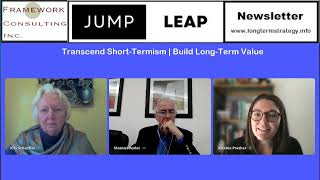
The panel, moderated by Chris Schaefer and introduced by Francis Wade, examined how ESG reporting can overcome short‑termism and become a cornerstone of long‑term strategic planning. Alexina Prather (Chief Sustainability Officer, CorpCare) outlined the structure of ESG reports, highlighted rising corporate disclosure rates, and stressed the need for both positive and negative impact disclosures, SMART goals, and alignment with frameworks such as GRI and SASB. Manuel Wexler (Executive Director, Actionable Knowledge Foundation Institute) explained the “supplier alignment gap,” the complexity of Scope 1‑3 emissions, and the fragmented regulatory landscape (EU vs. US) that forces companies to harmonise supplier requirements. The discussion covered governance – the necessity of a board‑level sustainability director and an independent CSO – and practical steps for data‑driven ESG, including digital maturity and robust data transfer. Real‑world examples (Levi Strauss, Gap Inc., Interface) illustrated how firms set ambitious net‑zero targets, monitor supplier contracts, and use transparent goal‑status indicators. Participants debated how ESG information reaches consumers (certifications, brand storytelling) and warned against green‑washing and the emerging practice of “green‑hushing.” The panel concluded with actionable recommendations: appoint a CSO, build a cross‑functional ESG function, align supply‑chain standards, and prepare for 2024 EU reporting mandates.
Chapters
Welcome back. And just before we start the ESG Sustainable Strategic Planning panel— oh, so I wanted to show you something, but it's not there to show. Um, I just wanted to give a little context before I introduce Chris, or bring up Chris, Alexina, and Manuel. Actually, let me go ahead and Just do that while I'm talking. Let's, let's be effective and do a little parallel processing here. Here's Chris, Manuel, and Alexina. Manuel and Alexina. So the whole matter of ESG is tightly related to the problem of short-termism that I— that we're here to address. Because the problems that we're seeing, for example, around climate change have been around for— we know about it for 40 years, 50 years, a long time. Same goes for all the other kind of ESG-related issues that we're trying to resolve. But there's something about the way that we engage in business that has allowed these problems to just be continually punted over and over again, and here we are. And it seems to be— there seems to be no end in sight to some of the challenges that we have. And does it all have to do with what our whole organizations think about the future and how they plan for the future? Well, it's not for me to answer, it's for our experts, Chris Schaefer, Manuela Wexler, and Alexino Prado. I hand over to you and disappear from the stage. And thank you guys for being here.
Hello, good day, good night, good afternoon, everyone. I'm Chris Schaefer, and I'm a certified consultant in conscious capitalism who's been a management consultant for quite a few years. Some people would count that in the decades. And I'm very pleased to moderate this panel with Manuel Wexler, who is the executive director of AFKI, the Actionable Knowledge Foundation Institute, and with Alexina Prather, who is the chief sustainability officer of CoreCare Solutions. Social Impact Consultants. Now, I think this is an interesting panel. It will be an interesting juxtaposition to the panels that we've had before, and in part because, uh, before we've listened to some concepts, um, about processes, how to write KPIs, about communication, and I think this panel has a couple of points of view, both about ESG, sustainability, and how that actually serves to build long-term value in your strategic plan. So anyway, let me turn it over to our panelists. Manuel— oh, and just as a reminder again, you've got chat. As well as Q&As. So participants, people who are watching this, please stay active and interact with a group of experts. So Manuel.
Thank you, thank you, Chris. Hello, Alexina. I'm going to share my screen. Hopefully technology helps me today, and I think I'm connecting to the screen. Well, it's trying to connect. Share screen. Playing the video now. Select it on the screen. Can you see my screen?
I can see it's trying to connect, Manuel.
Okay, let's see. Is it connecting?
So far we cannot see it.
Okay, we have some technical challenges here. Okay, let's try one more time.
All right, well, Manuel does that. I'll just recount the excitement that we had as this conference started this morning, and Francis and Dale navigated some technical challenges to prove that we do need to be agile and we will get it done, keeping in mind our purpose.
So, screen sharing not allowed. So I guess my browser doesn't allow. You have the presentation, would it be possible to run it from your screen and I'll do the talk part? Or maybe Alexina can, and then I could, um, apologize for that.
No worries, I could start with mine while you try to sort it out, if that works.
No, what I'm asking is, what I'm asking is to run my presentation from one of your screens, and I would need a little lead time, so perhaps Alexina's, uh, maybe Alexina goes first then.
So we'll just, we'll just switch the sequence.
Okay, great, thank you. Yes, hopefully we get that, that presentation up, but in the meantime, I'd love to just introduce myself and share a little bit more about what I'll be speaking about today. But as Chris mentioned, I'm Alexina. I am tuning in today from Miami, Florida, and I'm representing an organization called CorpCare, which operates out of Kingston, Jamaica. So I'll share a little bit about their work in a moment. But here in Miami, I work— I wear a couple of different hats in my professional role. So here in Miami, I support women-owned and minority-owned businesses that are local to Miami, and I help them get connected with access to resources and funding and opportunities. I have a strong passion for social impact and ESG that, that first started in my undergraduate career when I studied global social entrepreneurship at the university— or sorry, at Northeastern University in Boston. And I pursued a master's in sustainable business at the University of Miami. So that's just a little background about myself. In my free time that I might have, I love all things that have to do with sustainable fashion and upcycling clothing and really focusing on reducing our environmental harm and footprint. Print through the clothing choices that we make. So that's just a little bit about myself, but I will be dropping some links and some ways to connect in the chat later on. I'd love to connect with everyone on, on the platform today, and thank you all so much for, for spending some time with us. So I'm going to share my screen.
Right.
All right, it is connecting. All right, can everyone see my screen? Can I get a thumbs up, or—
I can answer yes.
Okay, thank you, Chris, I appreciate it. Um, so I am going to just share a few slides on disclosure to strategy and how ESG reporting can drive long-term planning. So I'm going to be talking about a few different elements of the ESG report, and in this presentation I'm talking about mostly larger entities, public companies, international companies. So I just wanted to share that context that this will be applicable for small and medium-sized businesses as well, but some of the examples I'm using today will be for much, much larger entities. But as I mentioned, I am— let's see if I can get the next one— I'm here today representing CorpCare. So this is my team based out of Kingston, Jamaica. The founder, Ali Madelon is in the center of this photo. She started CorpCare Consultants, hoping to help support Caribbean and local companies in Jamaica with their corporate responsibility issues, and has since then expanded to clients outside of the Caribbean region and the US to focus more on their ESG reporting and principles. So we are driven by the, the notion and the ethos that businesses that do good do better. So all of the work that we do, we really try and emphasize this and focusing, focusing on, on those businesses that are able to do good. And that can mean a number of different things will do better in the long term for themselves financially and also for their communities. CorpCare has, has 3 main approaches, and you can learn a little bit more about this on our website, but we focus on education and awareness. So we host, we share monthly newsletters with information and resources. We definitely participate in events like this and spaces where we can connect with other professionals. And we will be launching an Impact Circle later this year. That is a membership community. We offer ESG consulting and also project management. So whether you are, you know, running just a project related to ESG or if it's a full integration into your business, We can provide a variety of services there. So now switching gears a little bit to talk more about ESG reporting and how that really ties to long-term planning. I wanted to start with these two statistics just to kind of frame the, the conversation and the, and the topic. But the first one here is that 86% of the S&P 500 companies were publishing report or ESG reports by the year of 2021. So this, this info, this data is a bit dated. I am assuming that number has risen and is almost at 100, if not at 100, by 2023, by 2024. This is up from 35% of publicly traded companies in the year of 2010. So we're seeing a huge trend from these large companies that hold a lot of, a lot of economic value and presence in our global economies in their reporting and their efforts to disclose on ESG. So that's one of the trends we're seeing from the actual corporations and the entities. But on the other side, we're also seeing an increase in interest in this area from consumers. So I'm not trying to say that all consumers are reading, you know, word for word sustainability reports because they can be quite long. But they're getting other cues from companies and brands that they support, whether it be, you know, a certification on a bottle or something to indicate their commitment to ESG. But there's a growing trend as well in the way that businesses trust brands and commit to brands because of this commitment that they're sharing with their ESG efforts. So I just thought those are really interesting statistics that I wanted to share with you all to talk a little bit about the reporting landscape. This next slide is very, very high-level overview of what you would typically see in an ESG report. ESG reports are complicated.
They are long.
They are— there's not a mandated way in which you have to build them or create them. There are obviously frameworks and recommendations and best practices, but there is not a general consensus of how they actually have to be created. So this is again just like very high-level suggested ways in which you could start to create one. So I wanted to share that with you all, but the, the first thing that you have to do, you know, obviously is to, to share your company profile and to explain to your consumers or your stakeholders or your investors who you are, maybe the history of your company, where you're located, how many employees you have, just kind of that general background information. Um, the second main thing that, that I would suggest at least is to talk about your business impact. And I have a note here that I think is really important, that these business impacts should include both the positive impacts and the negative impacts of your business. So a report that cover to cover is, is only positive and only talks about the good things is likely not a well-rounded or honest report. You know, every business out there, whether it's small or incredibly large, has an impact, has a footprint, has, you know, both those positive and negative elements. So I think that's a really important part to highlight, that it needs to have both. And then for progress and goals, I'm going to talk about this a little bit more in the next few slides, but The goals that you see in a report should be SMART goals, which are specific, measurable, achievable, relevant, and time-bound. And this is what I think really, really, really is what ties into the long-term value and the long-term planning aspect of this conversation. So that's what I'll be talking about in a moment. But setting a goal that actually has that kind of long-term approach is incredibly important to how these reports are structured and built. And then the last piece is disclosures and frameworks. Again, these are the portion of the reports that have the most guidelines available, have the most kind of structure. There's a lot of ways to adhere to them correctly. There are a lot of acronyms in this space, so you may be familiar with the ones here, but there are things like the Global Reporting Initiative, SASB, which is the Sustainability Accounting Standards Board. So there's a lot of different things related to either carbon or how you are disclosing on some of the information that you're sharing. So again, progress and goals. I mentioned we're gonna just double down on this topic a little bit more, but when companies align their goals, their values, and their operations with sustainable practices, that's when you see benefits like risk mitigation, reputation enhancement, and long-term value creation. So those, those last 3 elements there are just a few of the benefits, but I think they all speak to that long-term approach and how forward-focused these progress and goals need to be. So the last few things I'm just going to do before I wrap it up and pass it over to Emmanuel is to just show two examples of what this actually looks like in practice. My first example here is Levi Strauss Co., which is a large denim and clothing company, which has been around for many, many years. They have sustainability goals listed here. This is a screenshot from their most recent report for 2025 and beyond. And that beyond really goes beyond. So They have 16 listed here under climate, consumption, and community. And these two blue boxes are, are two that I've pulled out. I recognize the text is quite small, so I wanted to highlight two of them specifically. The first is just their net zero emissions of greenhouse gases by no later than 2050. So what I, I love about looking at these goals is 2050 might seem far away, but Net zero emissions for a company of this size and scale is a huge ambitious goal. So they have to be one, setting the goal now and also planning for it and actively making strategic decisions and hiring certain employees and adding things into their supply chain and their operations that will impact this 2050 goal. So really, it seems very far in the future right now. It seems like that, you know, it's another lifetime. But it's such a big goal that they have to be making progress towards it now. The other one is, is very different. It's a very different goal. There's to drive societal impact in communities where Levi's operates through advocacy, grantmaking, employee giving, and volunteerism. So I love this in contrast because it's, it's so different from something like net zero emissions. But the things that they're mentioning here advocacy in a community, that doesn't happen overnight. That's not a short-term approach. That's not something that you would, you know, go in and go out and be like, okay, done, great, we finished that goal. Advocacy, grant making, investing in communities, doing all the things that they're interested in doing in the communities where they operate will have long-term effects. So I thought those were some nice contrasting examples to share. And yes, thank you, Magdalena. The 2050, it seems, you know, far from now, but this company is so focused on, you know, what they have to do to get to that point that they're anticipating they'll still be here in 2050. So the last goal here, example that I just want to share is around Gap Inc. And Gap Inc. is another mostly US-based company, but they have other brands like Banana Republic, Athleta, Old Navy. So it's much larger than just the, the Gap name, if you're familiar with that business. But this, you can see the screenshot behind has a very different structure for how they've set up their goals. But what I wanted to highlight was they have this key in the, the top right-hand corner here for whether or not the goal has been achieved, on track, a new goal, or if it needs attention. And I just thought that was a really nice way for stakeholders to, to engage with this report and to see, you know, transparently where Gap thinks they are in terms of the goals that they've set. One of the goals that needs attention is to increase the representation of Black employees by 50% in their store leaders in the US. So this is something that in a year from now, you could go into the next report, hopefully, and see them sharing information on the progress they've made, because in this year's report, they know this is an area that needs attention. So I just thought this was a really great thing that shows a little bit more about accountability versus maybe long term, but is definitely interesting to, to look at. All right, and I just have one last slide and then I will be passing it over. So if I haven't already convinced you, if you can't already tell, I truly believe that ESG reporting is one and the same with long-term planning. I think that they are extremely aligned and that to do ESG reporting well, you have to think forwardly and you have to be thinking about the future. So just a few other things that kind of build that case are that this, this aspect is really built around risk management and resilience, stakeholder engagement and reputation, and then the regulatory landscape. So I'm sure we'll be chatting about that a bit in our conversation, but for the landscape we're in today, you know, it's changing constantly and you have to be up to what the regulatory expectations are to avoid those risks of potentially non-compliance or, you know, not being able to be up to the standards that are required within your region. So being able to prepare for that is incredibly important. But great. Thank you all, all so much. As I mentioned, I'll drop a few links in the chat. But I really appreciate you all taking the time to listen and to learn a little bit more about CorpCare. And Chris, I'll pass it back to you.
Thank you. Thank you. So I have many questions based upon your presentation. May I take just a couple of moments? And then Manuel, I think I have your slides ready for you.
Okay, and I think Francis also is trying to get to help us. So Francis, are you on with the slides or we will get Chris? Francis, you're on mute. Chris, please go ahead.
Yes, I'm all set.
You're set and I'm set. Um, so may I ask just one immediate question? Yes, Alexandra, and then we'll go. Okay. Uh, you, you mentioned Levi Strauss and Company. I live in San Francisco, so I, so I can see what they are doing with their retail stores and how they are selling their denim products in a Target, for example. But my broader question then is, if companies do ESG reporting, how is that actually getting to the consumer? Consumers don't look at ESG reports.
No, it's a, it's a great question because the, the ESG reports really aren't, aren't built for the consumer. They're written in a way that I think some consumers with maybe some knowledge of the space can understand them and, and read them. But I think they're mostly built for investors or, you know, other stakeholders or competitors even. But the way in which I think that companies like Levi's can really communicate with their consumers are more through— I'm torn on this, but one way is certifications. At this point, there are hundreds of certifications. So it has to be a certification that is trusted and honest and is actually communicating to a consumer what it indicates. So even within that, there's a level of knowledge and understanding that has to be there. But I think social initiatives, things that connect with consumers on like a personal level outside of the brand, outside of like purchasing a pair of jeans, knowing that they pay their employees a certain amount of wages, knowing things about them. There's a lot of amazing— I'm speaking more from the fashion space, but rating agencies now about brands and holding them accountable for things, not letting people get away with harmful, you know, products or harmful actions towards their employees. So I recognize I'm not answering your question directly, but I think that it What I'm trying to say is that there are so many ways in which companies, they have to try many different things because one consumer is going to resonate with one thing and another one is going to resonate with another. But I do think the younger generations are learning more about this topic, are more aware about the purchase, the actions of their purchases. So I think with time it's going to shift, but it's it's definitely— it depends on the consumer, it depends on their knowledge, um, depends on the company. But I hope that somewhat answered your question. It's, it's something we can dive into more, definitely. I have a lot to say on it, so maybe after Manuel goes, or if you had another question after.
But thank you very much, and thank Francis, he has the slides up. We'd love to bring Manuel onto the stage.
Thank you, thank you, Chris. Thank you, Alexina. And I'll partially also cover Alexina's answer or the answer to your question, Chris, because I'll put this thing or two words: trust and materiality. So media circulates very fast. You don't need an ESG rating to hear about child labor in a, you know, very remote place in a very remote country. But let me focus on the slides, and I'm starting by looking at taxonomy, and I intentionally split sustain and ability. We call it sustainability in one word, but really Sustainability connects directly to strategy. It's the ability to build a strategy to be sustainable, to sustain, to be resilient, for companies to last a long term. You mentioned Levi Strauss, or Strauss, and this is an example of sustainability over a period of probably 150 years when they got their first patent or something like that. I'm separating this from ESG, which is a frame or a reporting framework. Aleksina covered a number of reports and examples with GAAP and Levi Strauss. It's clearly, it's a complex report. It's clearly a report that it's still changing. Standards are moving and changing as we speak. So sustainability is a broad concept related to strategy, and ESG is the framework for reporting. And once we agree that this is the separation, because many times, 70-80% of the cases, people use them interchangeably, and that's very confusing. You don't have a sustainability rating, you have an ESG rating. You don't have an ESG strategy, you have a sustainability strategy measure inside the ESG report or reporting. So with this out of the way, going to the next slide. Francis, you can move to the next slide. Thank you. Just a trip down the memory lane. I don't know how many of you remember this picture of a of a ship container blocking the Suez Canal to a global panic, actually. What I'm going to cover now is going to make this event a household event because supply chains are facing different set of challenges. And if we go to the next question— the next slide, please. As we discussed, the challenges are different and are related to ESG, and there are many. Companies have to report to climate change, and we talked about carbon footprint. 80% of the carbon footprint in companies, in average, is not generated by the company itself, is generated by the supply chain. So, you know, the traditional, the chain, you know, yanking the dog is here. The supply chain can make you fail on CO2 and you have no recourse. It's 80% of your numbers. So you can, you know, you can operate in the dark if you want, not with no LEDs lamps, and you still have 80% you don't control. Water scarcity, same story. Waste management. A lot of the waste, it's actually created before it reaches actually the company in the form of, for instance, electronic waste. If your product is not recyclable, if the components of an iPhone or a smartphone are not recyclable, the iPhone or smartphone is not recyclable. Apple cannot control it. Uh, Alexina already touched on social challenges, so her presentation was great on this. I'm not going to cover it here again. Governance challenges, corruption, corruption in the supply chain, not, not corruption in the CEO office of your company. It gets measured against you. Accountability, cybersecurity. And, you know, I could have made a list of 100 items here just to tell you how complex this environment becomes and why I'm saying that, you know, that single event of the Suez blocking is, you know, amplified by a factor of 10 or 100. We're going to the next slide. So what do we call it at the Actionable Knowledge Foundation Institute? We call it the suppliers alignment gap. Actually, we have a white paper which I'm announcing for the first time is released here. So something to keep in mind. I'll give my email address at the end and I will gladly share it with you. He describes in details this alignment gap between suppliers, brands. We talked about, again, GAP, for instance, as Levi Strauss. No pun intended with GAP. This is not the GAP company. This is Mind the Gap, as you see in the picture. So the compliance with regulations becomes mandatory in Europe. In 2024, and I'll show this very soon. It's directly connected to digital maturity. Why? ESG reporting requires data. How you transfer data between your supply chain or along your supply chains is part of the ESG reporting. You don't have a good way to transfer data? Well, don't try Excel spreadsheets, they don't work. And missing communication channels. You need, you need, we have the tools, but are the communications channels connected or they face this gap? So, well, the simplest one will be a language gap, but the second one would be a cultural gap and so on. And by the way, we, we, when we talk about supply chains We talk about traversing countries in state of war. We talk about traversing countries that are, to be politically correct, much less than democratic, and so on. So here what you can see is the regulations, and this is again a short list of the regulations. What I'm trying to show here, there is no consistency. So if you operate in the European Union, the regulations are much more advanced, but they are not aligned with most of the US or state regulations, US federal and state regulations. On the other hand, you have a set of regulations in the USA that are not in Europe. So try to figure it out. It's, you know, a chess player will probably be needed in the, uh, center, in the CEO office to sort of try to figure out the next move on, on reporting. Next slide. So the slide title, uh, is the time is 2024. This starts with January 2024. Don't think of December 31st, 2024. And the title is "Are you ready to sign to the dotted line?" And this question is for the CEO and for the board of directors or directors in charge with sustainability and ESG reporting. Why? European community— I showed the standards the previous slide— European community makes reporting material. What means material reporting or materiality? It is submitted to the same standards and legislations as we submit the financial reporting. So fines, jail time, even the dissolution of a company is in some of the laws covering now, or will be covered very soon, the reporting for ESG and sustainability. An article of New York Times a couple of weeks ago claimed that there will be 10,000 US corporations which are going to be responsible for reporting in Europe. And the rule is very simple: it doesn't need to be domiciled in Europe, you just need to do the business in Europe to be subject to European Community law. Because European Community law or European Union laws apply actually to what affects the EU citizens. So if your operations, if your supply chain, if your suppliers traverse this European market, you're responsible for reporting. And the responsibility goes to the top of the supply chain. You're responsible for all the response, for all the reporting along the supply chain. And as I mentioned earlier, here are a couple of cases of what happens when the, the companies fail to report or they are caught with supply chain problems. One of them is Starbucks, where you can see the They found child labor in one, I think it was in Guatemala if I'm not wrong, and the company is responsible for child labor on a plantation in Guatemala. And I listed here a number of acts, again, you know, there are more than any single transparency can accommodate, so I listed the top 10. You'll notice also the fact that Uh, every country has it, or every country or jurisdiction like California has different, uh, um, requirements that are not aligned. Remember the gap? This is the gap. So you have to report according to your operations. Next slide, please. So how we link it to strategy? Well, I think I already, already covered that because really you— it's imperative. It's, I would say, even—
Manuel.
Can you hear?
Yes, we can hear you now. Who cannot hear you?
Hello?
Hello?
Francis, is this a bandwidth issue?
Francis, can you go to the next slide? Manuel?
Manuel?
You could— I can hear you.
Okay, looks like it's restored. If that happens again, just turn off your video and just go with the audio.
Okay, I turn off the video anyway. Please go ahead and let's move to the next. Did you hear about this slide or I have to repeat? Hello?
You could do a quick summary, Van Manuel. Yes, I think you got cut off.
Can you go to the next slide, please?
Okay, thank you.
So here is, you know, one way to look at your strategy. And we call the— why we call the value chain, because always the suppliers were the value chain, were the ones which are building the value of your company. But now to the value chain, we have to add the values chains. If you do not, if you do not support the same values, if you do not have the same sustainability values in the strategies aligned on your supply chain, you won't be able to have really a clear ESG reporting and you'll be, you know, depending on the region you operate, you'll be subject to penalties or being barred to operate in the market. So this is the reason it's imperative. Francis, if we can go to the next slide. So, two more slides, one about AKFI, the Actionable Knowledge Foundation and Institute, and we are what is called an industry consortium. I know Francis is very familiar with that from the telecom industry. There are standards in the telecom industry. We build standards, we build in consortiums, we build standards, we build interoperability will build technical specifications. So we are really focused on bringing the digital transformation together with sustainability and ESG and actually make it part of the strategic development or strategy development of corporations. And next slide, please. Here are my contacts if you need to contact me. I appreciate the, again, the domain name is akfi.org. My email address is execdirector@akfi.org. Thank you very much and sorry for the technical glitches.
Thank you very much, Manuel. And wow, what a compliment to what Alexina is also presenting around ESG and reporting and what you're talking about with regard to supply chain gaps. So perhaps I can start a conversation between the two of you, and part of it would be Let's back into that supply chain and whether or not it's possible to get suppliers actually to work with you, the manufacturer, whoever it is that they need to get into that process. So how do we get suppliers to contribute rather than to be those wasteful companies that, uh, You know, okay, so how do we get suppliers to contribute?
It's, um, it's becoming part of— I mentioned the white paper. We discovered that each brand, each large, you know, the head of the supply chain has a set of requirements, mandatory requirements for the suppliers to comply. An example is child labor. I mentioned it earlier. So they have to report. What we find is a gap in reporting is, let's say, Walmart has one rule about child labor and Costco has a different rule. So now when you are in the supply chain, you have actually a set of— I call it a pileup set of requirements for sustainability. Keep in mind that some of these suppliers are large, there are traded, you know, large traded companies, but some can be very small, as Alexina mentioned, you know, providing cotton in, I don't know, Egypt or China, for instance, in the region where Actually, they cannot source cotton because of human rights abuses. There's a specific law. So it becomes extremely complicated, but that doesn't make the company, the brand, immune to any prosecution by the regulators. So they put the requirements, the requirements are not aligned. That's where one of the activities of AKFI is to make these requirements for the supply chain aligned. Because otherwise it will drive them nuts, right, with reporting. So that's the answer.
I can add a little bit. I don't know as much I'm not as, as versed in supply chain, um, but I know just from what I've seen in terms of, of reporting, um, there's a lot of, of talk and consideration around the Scope 1, the Scope 2, and the Scope 3 of, of your business. So for anyone that's not familiar with what that actually means, it's, it's basically like the immediate kind of impacts. If you have an actual, uh, facility, what the, the environmental footprint of that facility would be another step removed. And then step 3, scope 3, is kind of like anything that you could touch at any point with your business impacts. It's incredibly hard to, to manage and report on, um, but you're seeing more and more companies at least try to do it because it's, it's so important. If you, if you use Levi's again as an example, you know, the jeans have the cotton, they have the button, they have the thread, they have the zippers. There's so many things that go into that. There's packaging, there's, you know, there's so many different ways that kind of feed up into the pair of jeans that someone's buying at a store. And companies are definitely being held more accountable to consider those things, to make those supplier connections. But just adding to what Manuel said, there's no standards, there's no everyone needs to use this supplier code of conduct. Or, you know, mandates around that at this point. So it's hard on the suppliers as well for them to navigate it because what— like what you said, they're trying to please this company, they're trying to please this company, they want the work, but they also can't always be shifting their own business model or their own, you know, ability to create a product. So it's a very interesting space to watch. I think it's changing on almost a daily basis. This, you know, with new ideas, new regulations, new standards, new approaches. There's a lot of innovation in the space, which I think is really exciting.
I know two things, I have two examples, and one is from Levi Strauss, where yes, there are about 57 different suppliers that go into do the 57 different steps it takes to make a pair of blue jeans. But those pair— that— those blue jeans are made in offshore contractors, independent businesses, and Levi Strauss does have a very exact contract for the standards by which that contractor works. And so it does include child labor and includes the age of the worker, it includes effluent going into the streams outside. And I— so I think there's one thing which is to have that contract, but the other thing is that there's actually active monitoring of performance to the contract. So Levi Strauss inspectors or other inspectors will actually go to ensure that their contractor is doing what is required in that contract. So I think that's one part of it. It's not a solution. It's not a total solution, but it is where they have come to be able to, you know, and so Manuel, the whole idea of they have contractors around the world and there may be different laws in different countries about any one of those issues. So that's formaldehyde in the environment in which the worker works. The other example I'm going to give you is, um, is a story of a carpet company, Interface. And Interface Carpet used to advertise themselves as building a carpet tile that was so durable it would not decompose in landfill. So that is an extremely— that's an extremely dangerous product, right? And Alexandra, to your point of Levi Strauss setting a long-term vision for 2050 to become net zero, Interface's CEO set for the company a vision to become net zero, and it took them 19 years. Just so you know, it took them— they got there. They have now another another major goal. And one of the things that they did to get there was to go to their fiber suppliers. One of their fiber suppliers, DuPont, is a big company for which Interface was a small player. Another was a French fiber supplier, a small company for which Interface was a little bit bigger player. And Interface had said to their suppliers, let us try to rely less on extractable resources, petroleum in particular, and move more toward biomaterials. DuPont was going to have none of that, and this small French company said, okay, we will work at it, we're going to invest R&D. Now, could we kind of work together on this? And Interface said yes. If you can provide more biomaterial, we'll buy everything you can produce, including if we can't use it all, we will help others in the carbon industry be able to use your supply. Now, it took them a while. The first year they got to 5%, and, you know, of course it was an increment. So my point is, it not only is strategic to get your suppliers linked up to the same value, which is to protect the environment, but to work with them on an ongoing basis as they incrementally move to that.
That's such an incredible example, Chris, to share with the carpet company where, you know, 20 years ago, that's what people wanted to hear. This carpet will last you forever. You know, it's like Marketing 101 of like going to the question about the consumers. It's, you know, like they needed to hear that, um, and now people would run miles away from that. You know, that's, that's terrifying to people. Um, but just thinking about the shifts and the trends that we see, um, I think even just bringing it back to long-term planning, it can be hard for these companies to really kind of, you know, navigate that space. But you have to be listening to your consumers, you have to be listening to what the world around you is saying. However many years ago, the world wanted carpets that were never gonna disintegrate and would last forever. And now even chemicals like, you know, weed killers or things that people use on lawns where it's like all of the things that it's like 100%, you know, it works. It's like that can be scary for people now to know that it will kill any living thing. You know, what is in that bottle? Doing that. I just think that that's a great example to use because these companies have to adapt to like what, obviously what people are mandating and regulating, but also what consumers are adjusting to.
And I would like to point to something too. Levi may have very strict controls, but if there is child labor in that shop, It doesn't matter if they produce Levi or not. So you can see the extent of coverage of the supply chain. It's not enough that one section of the shop is Levi and the other is Wrangler and Wrangler doesn't check on child labor. Just a point of the complexity and, and sort of where the standards drive us now.
Yes, Manuel, you're referring to a shop that may produce product for several—
Correct. Yeah, correct. Which brands typically do. They don't have their own manufacturing. They usually manufacture in low labor cost countries, you know, cheap countries. And the shop, it's delivering to multiple brands. It's the way I understand the fashion industry works these days.
We talked about ESG reporting and of course the lack of consistency. Manuel's slide that showed us the difference in reporting for environment versus social social versus government. Can we— what does that mean for people in strategic planning? And how do you have advice for how to navigate the differences? Alexina Manuel?
Yeah, I, I think high-level and Manuel touched on this, but we're seeing a lot more of frameworks and guidelines for things like environmental reporting and for governance, but specifically environmental. Um, the social element, the S, is, is really complex. It's very hard. It's always been hard to measure historically, whether you're a nonprofit organization, a social impact entity, the social return on investment These are all concepts that people have worked on and found ways to record and monitor, but there's not a set standard that I've seen that is widely adopted. We also have the UN SDGs, which is an incredible resource for people to point towards when we're looking at global impact and goals that have been, you know, decided on, on us scale that, that is considering the entire world when those were set. Um, but I think that ESG are, are always coupled together as this kind of like non-financial areas that companies should be reporting on, but they really have to be broken down. You know, like they, they come together as an acronym, but within within each letter, it's, it's really varied. So someone who might be an expert in the environmental space might not know where to start, where to begin on the S or reporting on the S. So I think we're seeing a lot more people who are, are really finding niche areas of expertise and, and professionals in the space where they're really narrowing in on something like carbon or emissions or net zero or greenhouse gases. And I think it's important to pair them together and what they mean when you pair them together, but then when you report, you have to break them apart or else it can become a little too greenwashy, and to use that term if people are familiar with it, but that tends to be when you are marketing something or trying to make something a little bit, seem a little bit more more sustainable than it might be because you want to convince a stakeholder of how that, how you're doing as a company. But that's kind of what I would say is that they're often shared as an acronym, but they have to be really separated when it comes to how you report on them.
Good.
Manuel. And looking I'll take a perspective of corporate structure and I'll start with the board of directors. So the first thing, you have to appoint a voting or non-voting board member in charge of sustainability and ESG reporting. You have to go top down first. Next will be the CSO or CSR, Chief Sustainability Officer. She has to be empowered staffed and funded to really manage the whole ESG process, which Alexina did a great job of describing in how complex it is. But you need to have one function that doesn't report to marketing— it's called greenwashing if it does that— it doesn't report to finance, it's called cost cutting, doesn't report to report to HR, it's called training. Doesn't report to regulatory or, you know, the legal office because it's called compliance. So it has to be an independent function, top-down, that has the scope of control and the actions to build the strategy and the tactics and the reporting and the data streams. And, you know, we talked about supply chain So it has to be a whole function. We can't just, you know, peg it on the VP of HR, let's say, and she says, yes, we do a social function, we train, we, you know, organize kids' training, we do all this for society, we contribute to nonprofits. That will be an HR function. But if you peg it only to HR function, as Alexina indicated, You have only a little bit of this in ESG. And I can continue going on and on with examples.
Well, you gave a very important principle, which is the sustainability officer and having the scope of control. And if I were to continue the story with Interface, the carpet company, what's interesting about the carpet company company. They have a sustainability officer. They do not have a strategic planning department. Okay. Because this sustainability officer is responsible for working across all those silos, and their sustainability officer is global, not just for the Americas. One last point I'm going to make, having been at Interface 3 weeks ago and working with their sustainability officer. She has a tattoo that says, "I love carbon," because the point is that carbon is not bad. We're all made of carbon. It's just in the wrong place. So part of their carbon restoration is to put carbon back in the soil. And that's, you know, again, the vision of sustainability.
There's, um, Francis added a question here that says, are ESG reporting requirements forcing organizations to adapt long-term strategic planning techniques? I think that's a great example, Chris, that you just shared where, um, I, I wouldn't say that they're necessarily mandating them, but the way in which the reporting structure has at least up until today been designed, it has to have that long-term element. Because if you are putting— publishing a report that has very high-level commitments or things that are short-term or are just kind of like quick and easy wins, you're going to get some pushback on that. And, you know, it might come more from investors and internal rating agencies and that space versus consumers, but publishing a report that doesn't have long-term planning in it is going to be received negatively. So in a sense, I would say they are.
It's a little bit complicated question, but I will say it's not forcing and it's not forcing to be part of the strategy. Strategic plan, because some companies, as Chris mentioned, also don't necessarily have to have a strategic plan, or have a strategic plan is not— however, what's happening, what changed, what is changing starting 2024, it's actually this concept of materiality in ESG reporting. So where is ESG reporting primarily used? It's in the financial industry. It's a proxy for risk. Of the company. It's another proxy for strategic risk. Are they investing in the right place? Are they investing in social and so on? If the company now felt free to report, you know, through the marketing department, I would say that no, you know, remove this function from marketing because you are in great danger of fines. I don't go too far to say prison even for the executives. So it becomes financial reporting, and financial reporting is not part of strategy. Actually, financial reporting is reactive. So ESG will be reactive. It's tracking the performance. And yes, it has a little factor of strategy, you know, the factors of risk. But if you compare it to financial reporting, ESG is not going to be part of strategy. But, and here is the big but, sustainability will be part of the strategic planning. And if it's not there, you know, don't do ESG reporting until, you know, the Security and Exchange Commission says you must do it today, right? Or, or you, I delist you or something, right? So, so the answer is Yes, reporting is not strategic.
While reporting is not strategic, and when I said Interface Carpets does not have a strategic planning department, it doesn't mean that they don't think strategically because their goal, their goal, right? So their goal led by their CEO was to become net zero. And then they took the Then they took the incremental steps to be able to get there. Today they now have another impossible goal, and that is to reverse global warming. Okay. Yeah, yes, to the scope that they can. Almost as very similar to what we heard in the earlier panel, who— there's a group of physicians who want to stop chronic pain around the world. So I think in part the model of stopping chronic pain, while they may not be able to do it, they may also though be able to model it from which others could learn. So I'm thinking of that way. We have now— we're down to our last 10 minutes. Are there other thoughts? Ooh, should ESG be specifically called out or have initiatives in an organization's strategic plan? Thank you for that question, Alan.
I mean, I go back to taxonomy because when I say ESG, I see reporting, I see a framework or frameworks for reporting. So yes, reporting is not— it's part of the tactical plans of companies. They have to report, they have a calendar of reports, and they have a ton of reports. ESG is one of them. Financials, quarterly, um, officers, you know, trading on the stock exchange, and all these are reports that they are on the calendar. So yes, they have to have a calendar. As I mentioned before, I parse ESG from sustainability intentionally because I want to make sure that ESG, it's a number or a set of numbers that are used by the finance and insurance industry to measure risks, very similar to what we do with financial reporting now. But sustainability, exactly what Chris has said in all the discussion today, sustainability must be part of the strategic plan. The same way you have a financial, you have a financial financial reporting and you have a business plan strategy, right? The business plan includes the financial reporting, includes targets, financial targets in the future, markets and so on. But the business plan is part of strategy. The report is backward looking, right? It's basically capturing what had happened. And yes, we'll have elements of strategy, but it's not a strategic plan. That's the way I see it.
I would, I would just add too that, um, ESG outside of the, the actual report that is published on an annual basis, um, there's a lot of strategy I think in setting up ESG with internally. So if you are a public company with, with no CSO or no team members or no, you know, Chris talked about having that combination of strategic planning and ESG related internally. I think just the way that organizations are structured right now, there is a shift in who they need to hire, who they need on staff to, you know, actually create these reports and, and make the measurements needed to disclose certain information. So I just think it's— there's a sense of like you're either behind, you're ahead, or you're just like waiting for something to change right now in the industry. So in terms of like organizational planning and like long-term strategy, I think that ESG is a topic that a lot of companies are dealing with right now to figure out who on the board has to be represented, who of their stakeholder engagement Management is a huge piece of this. How do they strategically connect with their stakeholders at all levels of the organization? So that's, that's all the things that happen outside of the report to lead up into the report that I think involves a lot of, a lot of strategic planning.
If I may add something, actually, sustainability was always part of strategy. I don't know any company which has a strategy not to be sustainable in general terms, business sustainable, because really let's go back to what is sustainability. We call it 3 things: people, planet, and profits. Profits are part of the strategic plan. People have to be part of strategic plan, HR policies, HR perspective. And all the community work and everything else around it. And more recently, the planet became part of the strategic plan. So it's nothing new really in terms of developing the planet. What I mentioned at the beginning, now you have to create the function, and thank you, Alexina, you also mentioned the same, the centralized function all the way top down from the board of directors, CEO office all the way down to the operations to have the planet elements in the sustainability strategy. And yes, ESG is the reporting on this strategy, as I mentioned.
So any last comments?
Do we have another hour?
Well, we've got 4 minutes and 55 seconds, but who's counting? Top line, some of the things that we've been talking about. One is having a sustainability officer. Another one is taking a look at the structure in the organization and ensuring that sustainability is— and those concepts are built in. Taking a look at the supply chain and the suppliers to ensure that the suppliers themselves are congruent with sustainability and the other requirements that you might have as the end user of the supply chain. Another one is the whole concept that 61%— so, Alexina's slide that says 61% of consumers are expecting to have ESG values built into the product, and how do we actually get that messaging to the consumer? Because consumers are seeking higher and higher standards. Even, even the person who sits in the office where the carpet has just been laid is a consumer who doesn't want to smell all the off-gassing of the adhesive. So there are lots of rich ideas that you've given us about the supply chain. Francis, I can't wait to read the white paper. That is great. Would you like to give us a tidbit?
Just— we studied 3 industry segments: car industry, consumer goods and construction distributions. We found around the years, we look at the ESG, especially on the E and S, as Alexina mentioned, E is measurable, S is less measurable. And we look at their published reports on requirements for the supply chain. And it's a 37-page report. So I can tell you, we found a number of critical mismatches. And also we found inconsistency in reporting. I'll give you Tesla, for instance, says you have— this is the whole requirement for digitalization, digital transformation. You have to comply with our data formats, period. I don't think Elon Musk will tell you what his data formats are because he's very jealous about that.
Thank you. And Alexina, you have talked about, um, and actually one of the things that's been mentioned is bringing up consultants who are, who have niche expertise in whether it's environment or social or in governance. And as you presented, um, a core care as the company, they do have expertise and they do work with organizations. Is there a tidbit that you could provide us about helping with the expertise to do that ESG reporting internally?
What, what expertise we have? Sorry, I'm not sure.
Yes, yes. So you're, um, uh, so the suggestion was made is that we have niche players experts who know environment or who know social reporting requirements. So, um, well, first of all, is that true? And how would that actually be implemented as you see it from—
yeah, yeah, I think from our perspective is that's exactly what we're trying to help companies figure out is if they come to us and explain, you know, where they're at on their ESG journey, we can recommend, all right, you might need to hire, you know, someone with X, X title because that's something you're going to need internally moving forward. Um, so our, our approach is really kind of more of the like, uh, strategy, the actual strategic approach to it all, um, versus like the experts we provide in the areas. Um, but I think it's just, it's such a fascinating space because there's so many different ways to bring different professionals into it. You know, like you can have such a range of, of skills and expertise and still be in the ESG space in some capacity. Um, so our goal is to kind of take that high-level view of like, okay, this is, you have this, you don't need this, you might need this, we could provide this. You know, we're not going to do anything we don't feel like we are equipped to do for someone. So finding that expert for them type of services, because it's complicated. It's incredible stuff, but it's not always easy.
Let me complement Alexina's picture. Imagine a roundtable or a set of roundtables where we invite the suppliers and the supply chain to sit down and come up with a common strategy. Exactly what Alexina said is needed, because this alignment, this misalignment costs time, costs money, eventually can break the supply chain. You can find out that, you know, all your suppliers are infringing on ESG. What do you do?
You know, right? That's right. I can see that we could continue this now. Francis, however, is here to tell us that we cannot. So before we leave, I wanted to thank Manuel, I wanted to thank Alexina, and actually Francis and Dale for pulling this together.
Very grateful. Thank you, Chris.
Folks, you're very welcome. Thank you for your contribution today and for putting together videos. I know Chris put together a video, a pre-recorded video. This is a topic that I feel like we're just starting to discuss. So I agree, this could be a conference in and of itself just to deal with these issues. I think companies have a huge challenge, and just by committing to certain goals and certain reporting, I think it's gonna— it's just a matter of time before various reporting bodies are gonna say, well, show us the plan that you actually have to accomplish these goals. You're not just greenwashing us to death, as Alex Seda said, but you actually have something behind it. And that's when, you know, I mean, you could fake something and send it to, you know, whatever body it is, but I imagine that there's going to be a time of reckoning where these commitments are going to be shown to be empty.
Sooner or later.
2024. Yeah, it's coming.
2024.
Maybe you heard it here first, I don't know, in our conversation, because there's going to be a lot of problems for companies that, like, for example, if they only have short-term, short-term strategies and they're committing to these long-term, long-term goals, there's something that's— as Manuel said, there's a gap in there, and that I would call it greenwashing. It's, it's a pretense. To be doing something you're not really doing. So boy, I, you know, you guys might be back next year with a heck of a story to tell because it seems to be like, it seems to be that this topic is changing because the requirements are coming and there's no avoiding them. Topic is going to heat up.
And the, right, and the opposite of greenwashing is now called green hushing. Yes, green hushing. Yes. And the concern is that if we say anything, we'll be wrong, or we'll be accused, we'll be attacked. So just to be aware of ESG reporting, there is a trend to actually say less.
You mean like not report?
I'm not quite sure how they're using that term. The people who were at the strategic planning session on Thursday in Atlanta, we're talking specifically about that. Now, part of it is that the CEO of Interface Carpets would not let the marketing department talk about their progress toward their net zero until they got really close. Okay. So that's— so some of that can be, as we move forward incrementally, don't give yourself a pat on the back for achieving 5%.
Right, right, right, right.
I think it's a little bit, uh, too late for hashing, and I'll tell you why. Internet has a very long memory and a very simple search engine, even before ChatGPT, right? So it's very easy for NGOs, it's very easy for companies, it's very easy for the consumer to see promises made 3 years ago, be net zero by 2025. And now you shut up, it's too late, you did it.
And I think what Alexandra—
You are in the books.
Yeah, and what she showed us in terms of gap, showing achieved, common, and not done, I think that is a really helpful suggestion about how to be a little bit more accurate. Granted, those are qualitative words, but they certainly give you a very quick profile.
Yeah, yeah, we live in interesting times, folks. And thanks, thanks to all of you for your expertise, your time, your knowledge, your preparation for being on this panel. And I wish you all the best. Thanks so much.
Thank you.
Thank you. Bye.
Goodbye.
If you could turn off your cameras and your microphones, it will take you down from the stage. And folks, we're gonna go, go break for lunch. Just before we do that, I want to tell you about a couple of opportunities. First is to subscribe to the— whoops, that was too quick— subscribe to the Jump Leap newsletter. There's a 14-day trial that we're currently offering to folks who attend the conference. You can click there and access that. Also For those of you who are here, but you know, you can't see and there's no possible way to see all the pre-recordings, don't forget that the full ticket is currently available on discount. And if you click on that button, you will see that you will get some more information on that. So we're about to take a lunch break and we're back at 1 o'clock, which is about 40 minutes time. That's 1 o'clock, uh, UCT minus 5. Again, that's in 40 minutes' time, so go grab something to eat, uh, take a quick nap, and we'll see you back here at the Sustainable Strategic Planning Conference 2023.
More from Francis


Ep 35 Your Strategic Stagnation Isn't a Framework Problem—It's a Story Problem



The YouTube Strategy School: Why Your MBA Didn’t Teach You Strategic Thinking





