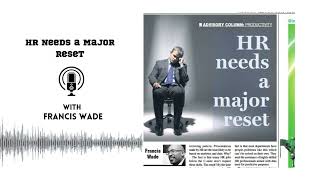
Francis Wade argues Caribbean HR professionals must adopt data-driven practices to gain C-suite credibility. Finance rose to prominence by embracing analytics in the 1980s; HR can follow by using ROI-focused diagnostics, identifying operational frictions like commuter tardiness, and tracking demographic trends like Jamaica's declining birth rate to predict talent scarcity.
Chapters
Hello and welcome back to Chronicles from a Caribbean Cubicle podcast. This is Francis Wade, and here's an article I wrote for the Jamaica Gleaner. It's entitled HR Needs a Major Reset. You are a local HR professional who yearns to have the same career prospects as your colleagues in finance. Why? They can see a clear growth path. From accounting analyst to manager to director to CFO to CEO or MD. But the same isn't true for you. The fact is, the total number of the HR managers promoted to become CEOs in Jamaica probably doesn't rise to the double digits. By contrast, some 52% of UK CEOs have finance backgrounds. But this remarkable statistic wasn't always real. It actually began in the 1980s when corporate accountants upgraded their profession using new technology and analytics. While this gap may be because of biases, let's dig deeper. The truth is, as an HR professional, you want the kind of professional growth and respect financial folks receive. Fortunately, most CEOs also want more from their HR business partners. When surveyed, they often repeat the usual complaint: HR is not being strategic enough. But what does one do next with that vague feedback? Here are some specifics gleaned in part from my experience with the Caribbean HR Forum community. Number 1: Powerful evidence-based diagnosis. Data lies at the heart of great strategic plans. Fortunately, most HR professionals also want more than anecdotes. They realize the importance of data, but it's not enough. For example, in over 50 strategic planning retreats, I have seen a recurring pattern. Presentations made by HR are the least likely to be based on analytics and data. Why? The fact is, many HR jobs below the C-suite don't require these skills. The result? By the time they join the executive ranks, HR professionals just haven't had a lot of practice. As such, when they are promoted, a glaring gap may be obvious. Now they must compete for resources and attention with other departments. Their counterparts have already been using evidence-based analytic language to get buy-in at the highest level. By contrast, the CHROs struggle. Sometimes a vicious circle ensues in which they make requests for better software but get repeatedly denied. Why? They can't make the ROI case because they lack the data the missing tools would provide. Unfortunately, CEOs are not likely to realize this problem on their own. As finance once did, HR needs to create a solid business case for a major reset to break the vicious circle. Number 2: Game-changing innovations. But these analytic capabilities are just the beginning. A great deal of organizational productivity is lost in the Caribbean due to invisible friction. This represents an opportunity for HR. For example, workers who have difficulty predicting their commutes are likely to arrive late. If their on-time presence is required to start work, then the cost of being tardy is high. A traditional HR solution would be to interview employees and help motivate them to leave earlier. But an analytic-driven department would suggest an investment in an employee-only minibus. While some may object that such a move encourages slackness, HR should remain focused. Why? The real question is whether or not the expenditure is worth it based on a crisp cost and effect analysis. This is the kind of proactive stance CEOs want HR to take. The fact is, most departments have people problems like this which can't be solved on their own. They need the assistance of highly skilled HR professionals armed with data used for predictive purposes. These interventions can change how a company is run, and more importantly, they anticipate the needs of the executive team the way CEOs do. Number 3: People predictions. Once data is available and practical measures are being conducted, HR becomes able to think about the strategic future of the organization. For example, Jamaica has a demographic problem looming. We simply are not having enough children to replace our current population. This fact is not being tracked by many HR professionals. Does it matter? Yes, the trend means that there is likely to be more competition for talent in the future. This could lead to wage inflation, or less migration out of the island, or more migrants from other countries. In other words, a possible strategic threat is brewing. During a recent long-term strategic planning session, this fact was mentioned, but not by HR. However, these are the kinds of predictions and impacts you should be tracking as an HR professional. In fact, you could just be like a CFO, but for all matters related to people. If you develop these capabilities, you can become invaluable to your company, but you will also experience the kind of satisfaction which comes from mastering a difficult challenge in your development as a potential C-suite professional. Thanks for listening. Do you have an unsolved problem in your Caribbean company related to strategy, productivity, engagement, or business process improvement? Just visit a searchable listing of all my prior articles and you may be able to help yourself to a fresh line of thinking. Go to blog.fwconsulting.com. Or see the show notes.