Speedy Long Term Planning Panel Michael Taylor, David Dunning, Dionne Harris
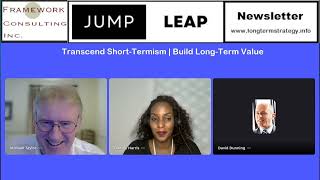
Michael Taylor, Dionne Harris, and David Dunning discuss how to cut strategic planning time by two-thirds without losing quality. They cover reusable data infrastructure, automating collection, clarifying risk appetite upfront, and using personality profiling to manage group dynamics. The key is treating strategy as continuous rather than episodic.
Chapters
Welcome back to the final panel of the day. So the final panel of the day will deal with the question of how quickly can interwoven short and long-term strategic planning take place, and are there ways to speed up the process? Because one of the arguments that we have is, oh my God, that takes too long. We're just gonna stick to the short term, just as this panel actually discussed. There's a whole argument that says that we don't have time for that, we need some immediate results. Well, to discuss this particular issue, I want to invite up Michael Taylor, Dave Dunning, and Dion Harris. And guys, could you just raise your hands by clicking on the hand symbol at the bottom of the page so I could find you and bring you up effortlessly and easily? Thanks, Dion. Symbol of a palm at the very bottom. Um, see Dave Dunning, Dion, and I'm looking for Michael Taylor. Oh, here he is. Thanks, Mike. And Mike is the moderator for this conversation, and I'm going to hand over to him once his video comes on.
You're not— you can hear me, Francis?
Yes, I can hear you clearly, just not able to see you.
Really? So just bear with one moment while I, uh, while I sort that out, because I should be displaying There we go. Not coming across.
Not seeing David either. David, are you not camera ready?
I know I had to find the camera on the bottom left. It's on that row of icons on the bottom row there on the left-hand side. Yeah, I've pressed the button. It defaulted.
The three dots, right?
Yeah, I pressed the button. Camera is not readable. Please close any applications using the camera and try again.
Okay, Dave, you might have been on a Zoom call or something else that grabbed your camera. If that's the case, case, first thing to try is to close down your browsers and open a new one. Second thing to try is to reboot your laptop or your computer if the settings are still stuck with somewhere else. This is a frequent occurrence. Okay, but actually the first thing you should try is to refresh. Dave? Ah, I just missed him. He could have tried to refresh the browser, but Mike, I'm going to hand over to you. It'll take him a moment to come back in.
And I thought, Francis, while David comes back in, you let me know if this is all right. What I'll do is I'll bring up some slides and introduce this subject to everybody. We'll let our team here, panel, introduce us. Sure. And then we'll go in. And maybe that'll give a couple of minutes for David to join. So what I'll do is, first of all, just say to everybody who is in attendance, who's watching this live, and for those of you that are watching the video, on the basis you're watching it at the recording afterwards, just want to welcome you to this fourth panel on the second day of the virtual Sustainable Strategy Conference 2023. And my name is Michael Taylor. I'm one of the co-founders and the CEO of Schelling Point. We're an applied research organization that's focused on collaboration, strategic collaboration and strategy development, and the strategy lifecycle is very much a strategic collaboration. So that's where we focus. And I've been honored to, in this case, work with these two esteemed colleagues to dig into the subject of improving the efficiency and cycle time of strategic planning. And so we'll get more into that in a moment. But first of all, Dion, would you mind introducing yourself to everybody, please?
Sure, thank you, Michael. Good afternoon, everybody. I'm Dionne Harris, um, strategy implementation consultant and director at Chatterton Research and Development in Barbados and also Tampa. We've had lots of, um, passionate discussions with Michael over the last few days on this subject, and whenever you have passion, I know you'll have a good delivery. So I'm really looking forward to having this discussion with you guys this afternoon, and we really hope that you'll chime and share some of your own thoughts and experiences as well.
Thanks, Dionne. And what we'll do is while David joins back in again, my thought is we'll proceed and I'm quite sure we'll be incomplete in what we do, but David can come in and fill us all in and correct us and get it all right when he joins. And the good news is he's not online, so he can't hear you say that. But for the audience, Dionne—
Michael, you weren't supposed to say that. That was supposed to be between just the group.
Set the expectation high. So what I'm going to do first of all though for everybody, I just want to tee up the subject because it's an interesting subject that Frances asked us to discuss. So if you'll bear with me, I'll just share the screen here. And when I go over and this allows me to choose the screen that I want to share. And I'm going to move us out of the way. Dionne, can you still hear me? Can you still talk with me?
I can.
Yeah, and are you seeing the opening slide here? I am. Great, all right, so thanks, Dionne. So for those of you that are again on board live here or watching through video, keeping it light and tight, reducing the effort and elapsed time of the strategic planning cycle. So I've only got 147 slides just to tee things up, so we'll be quick about this and then we'll get into the panel itself. In terms of some assumptions we have going into this session, so first of all, it was interesting for us to have a dialogue about what do we all mean by strategic planning, because that alone seems to be— there's some debate around that, or opportunity for debate. But on the basis that strategic planning is a multi-party collaborative act The strategic planning is conducted at periodic intervals. The strategic planning revises the current strategy into a revised strategy that becomes the new current strategy. And we thought that, that we thought that third item, or the fourth item, was particularly worth pointing out because very often you find in cultures people talk about the strategy, we're working on the strategy, we're implementing the strategy, but of course it is always the current strategy because it exists for a point in time and is only expected to exist for a period of time and then be refreshed. Also, while we're discussing that one, there's some language I want to mention is we use the term revising the strategy. This is an area where people talk about revising the strategy, developing the strategy, refreshing the strategy. So there's a range of gerunds that are used, and we're using the term revised. The goals and their enabling actions of the revised version are considered the most fit for purpose. So the whole point about it is the group leaves with this new version, what becomes the new current strategy that is considered most fit for purpose given the situation, the vision, the mission, the— what's around them. And that first of all, the revised strategy must meet a minimum level of quality in terms of content and characteristics. Now it's not for this group here to go through listing what that content is and what those characteristics are. The main point here is that as we get into the, into the last item is we're always remembering that when we talk about how do we, as it says on the last item, how do we produce a quality strategy revision in the shortest elapsed time and the least participant effort, we're balancing that against making sure that we first of all, though, do produce the quality in terms of that content and characteristics. So I wanted to tee that up just as a ground foundation before we go in. By the way, did David join us, or is that— is it Dionne? Are you still with us?
Yes, I'm still here. I think I'm seeing Michael as David as well.
Okay, all right then. Well, then all I wanted to say though was, David and Dion, if you wanted to say anything about this to the group before we move on, I'll go on, but don't feel you have to. It was more about just laying out some conditions, so I'll let a bit of a pause. If I don't hear anything, I'll carry on. So, you know, on the basis that we have people here involved in strategy development And that's a core part of that, is setting goals. I am here. I'm not sure my camera works, but— Hello, David. What I was going to do, I was going to finish this setup and then allow you to do the introduction that Dion and I gave at the beginning before we dive in. Is that all right? Okay, I'll carry on for the moment. So on the basis that strategic planning is a collaborative activity, but it's essentially a process, then a couple of the process goals we've laid out here are to sort of tee this up are: how do we reduce the cycle time from the triggering event of we need to revise the strategy to the strategy is revised and ready for implementation? How do we reduce that by two-thirds? That's ourselves a serious challenge here. And then the other one is how do we reduce the total hours of participant time invested into the strategic planning process by two-thirds? So if it takes us right now 100 hours, 400 hours, If you think about everybody's time all added up, how would you create a— how would you transform that process and reduce it down to one-third of the time that's required and all the benefits that come from that? Now, rather than David and Dion and I having the arrogance to suggest to everybody that that's what we should all aspire to, it raised the question, well, does everybody want such a reduction? Company leadership, non-leaders, consultants. So the first thing I want to do is I'm going to stop sharing here, and we'll bring David in, and then what I'd like to do is to just hear their views on the interest in reducing the effort and the elapsed time, and that might be an opportunity to get some questions also and thoughts in from you that are that are live. So first of all, David, do you want to introduce yourself now that you're— given you're with us? And David, I don't know if you're on mute. I don't see the mute sign. Dion, are you still hearing me okay?
Can you hear me okay?
There you go, David, we can hear you now.
Yes. Oh, crazy.
It's all right. You're not out in the tent in the garden with your son, are you? You can? Yes, we can. Yes.
Can you hear me? Yes. No, no. You can hear me?
Yes.
Can you hear me? Oh, good. Um, so hello, um, my name is David, um, My interest in Strasbourg is from as a business owner. I've got a company that—
Dale, if you can hear me, you're breaking up quite badly, so I'm going to ask Francis or Dale to intervene behind the scenes.
We're about to go off to Sicily for a, for a strategic planning session in 2 weeks' time.
Let me do the following. I think my message must— um, just apologies everybody, we, um, as you're aware, we're coming in from all around the globe at this point into this session, and it looks as though David's video is here, but we're always having trouble, some trouble bringing him in. So what I'm going to do is subject to David, on the basis that Francis or Dale are interacting behind the scenes on, on, uh, with David, what I'm going to do, David, if you'll bear with me until things— I'll say become clear in terms of your involvement, let me go into the subject for the audience. So again, the proposition here, the proposition is light and tight. It's about reducing the effort that's put in to produce a quality strategy and about shrinking this, shrinking, you know, time compression, shrinking the cycle time. Dion, Just to tee up before any hands are raised or questions are raised, when you heard about this subject, what were your thoughts?
I mean, definitely an interesting topic, Michael. I think, as we had discussed before, when I heard about the topic, instantly jumped to implementation. And then the question came about how do we define strategic planning. And for me, I define strategic planning as sort of the process in and around the strategic plan. But of course, we're talking today about the process from the decision is made, from when the decision is made to go ahead and revise the plan. So then when we have that articulated plan, so it was, it was an interesting topic. And I'm ready to jump in. I hope that David will We'll be back soon because we know we will have a lot of interesting banter back and forth, but let's just jump right into it.
Yeah, good, very good. Well, let me do the following. I'm watching the Q&A, um, and at the moment I'm not seeing anybody pose a question around this, and so I just want to acknowledge that. So we'll carry on. And so, um, the point here is that, um, strategic planning is a process. It's a process that requires humans, stakeholders, to invest time, and any amount of time that's invested into it is therefore— there's an opportunity cost. That means the time, right, there's time that they're not applying to other things. And one of the interesting things about it, of course, is all the time that we're working to improve the productivity of staff and employees and teams. And yet some of the greatest leverage in the organization has been able to improve the productivity of the leaders and executives and the board and those people that actually are the ones that are the ones that are most involved in the strategy lifecycle and strategy revision.
Yeah. Yeah. And I think I'm going to call you out here, Michael, because Throughout our conversation, I've been hearing about the board, I've been hearing about the executives, but I have not been hearing about the mid-level managers who we do need to participate in the planning process. And they tend to have a much better feel for what's happening on the ground, and they tend to bring a unique point of view that really, really makes a difference when it comes to after the planning process. So I really want us to include those mid-level managers in the discussion today, because they bring a lot to the table as well.
Yeah, and I think, and that's a good reminder. I would hope there's nobody on this webinar, or listening to it, that wouldn't agree that bringing in, we'll call them middle managers, rising stars, individual contributors, particular subject matter experts, Not only has McKinsey reported about 3 or 4 years ago that those people involved in the implementation who claim or feel that they have some involvement in the development of the strategy, those organizations perform better than the organizations where those middle managers and other people report that they didn't feel they had any involvement, it was given to them as something to do. So it's a good reminder. Yeah, so it's a good reminder.
You're right. Yeah, very. And if we Yeah, and if we define better as well, we can add more quickly to that. We can add a quicker or shorter planning horizon as well, if we want to define better.
So, so if— thank you for this. So rather than just talking managers and executives, and rather than just talking executives and leaders and managers, there we go, David. Wonderful, wonderful introduction.
My microphone wasn't on just then because I was saying big boy words very loudly.
It's no— it's okay. Everybody wants to know who David Dunning is, and we didn't get— we didn't get the good— the good introduction. So go on.
Oh, sorry. Right, uh, hello, my name's David, um, I'm, I'm the owner of a, a small business, about 100 people, uh, I'm involved in the strategy of that. I'm off to Sicily next week. We're doing a strategic planning process. This is very timely for me, but my biggest interest is in creating ecosystems in which strategy can work, business integrated governance, and that's the perspective I have on all this stuff, making an environment within which strategy can flourish.
So that's probably enough from me right now. No, no, thanks, David, that's great. And so what I'd done was I'd put up the slide that explained the fact that we're focusing on the strategy revision process from you, an executive, saying we need to revise the strategy to the point of, right, we've revised it, let's do the action, that part of it. And what we were doing just initially though was this whole subject here is how do we produce this quality product with the least investment of people's time, executives, board, managers, staff, subject matter experts, other people, not just, you know, the CXOs? And how do we do it in the shortest time? And before we took it as a foregone conclusion that everybody would want to do that, I just asked the group and those online if they wanted to raise their hands. How does everybody feel about that? You know, do you want to reduce the effort and the cycle time? So As a manager of a 100-person business, what's your thoughts on that?
I don't want to waste time, and I want our board members to spend quality time on working on strategy, because strategy is about the future of the company, isn't it? So I don't begrudge spending time on strategy development and strategy maintenance. I begrudge wasting my effort where not necessary to spend time.
And I think we live in a world where in process thinking we're always looking to reduce the investment of time into a process. How do we still get the quality product out but take less time to do it so we can use that time on other things or specimen at the time? So to your point, if it takes 100 hours right now on a cycle, if you could do it in 30 hours great as long as I haven't— as long as I'm still getting the quality out.
Yeah, but my perspective might well be, let's get it down to 30 hours, but you know what, I'll spend 60 hours on it because that means that I can produce a really good— overachieve on quality. And so that's my choice. If I've saved the time, I can use the saving to have more time with the kids or make a better strategy.
That's right, you can choose to allocate it elsewhere, however you consider the benefit of those extra hours you've enabled. I'm just curious because once talking to a couple of consultants about this, they weren't impressed by the notion of reducing the amount of time because they bill for time. And so I was wondering if there was any consultants on the line here would say I don't want to be able to do a strategy revision in just— I'll say we're not doing the same 30 hours, but I don't want less time because I bill by my time. So I just wanted to— but I'm not seeing any reactions to that, so there's no— but I just wanted to flag that, see if the audience has anything to say about it. And on that note, at the same time, I've heard from consultants the notion of look, the reality of the consulting life is we scope a job for 100 hours. And I'm— again, whether it's 100 or 400, the point is I scope it for 100, but actually I end up investing 130 to 150 in getting the job done right. I can't bill for that extra time because I told them it was going to be a bill for 100. And so yes, if there was a way to theoretically get it from 100 down to 30 to 50, what actually does is that gets me down to the workload that I actually hoped it was going to be in the first place. Dionne, does that relate as a manager?
It definitely, it definitely does relate, Michael, definitely does. And I think a lot of the things that we are going to discuss this afternoon really will help with that. I mean, I, you know, just being able to not have to put that extra time because of some of the issues that come up is like what David said, we can put it to other things, right? Or we can put it to quality as opposed to, you know, timing meetings. So, so I agree with you 150%.
And then on that note, then let's get into, into the discussions and how we actually do some of the, some of the time compression and some of the, some of the effort reduction. So I'll go back to sharing my screen and bringing up this. So, so yes, so how, so how, so how do we produce this reduction? One of the things we're doing here is because strategic planning is a process, and therefore for anything where you have a process, you can have a maturity model. And while this is a very poor depiction of a maturity model, on the basis of the process we're talking about is the— we have version N, the current strategy, we're going to go into a strategic planning process and come out with version n+1. On one end of the maturity model is the infrequent, maybe every 5 years, completely start over again from fresh, pull it all together in terms of the information that we need. We don't do it very often, so we're not great at it, so we slog through it. We're not quite sure what we're producing, so we think we're finished, but we might not be, but who knows. And we'll get a big binder out that will— I don't know how far it will penetrate through the organization, but at least we got the job done. Another end of the spectrum is where strategy is treated as a dynamic asset, or the strategy is a dynamic asset. It's always on, it's connected throughout the enterprise, it's guiding the decisions and actions. It's kept fit for purpose with very frequent adjustments, and it's done with a lean process. Now, on the basis that the audience here online and in the video, watching the video, can be anywhere along this spectrum, I just wanted to first of all ask, is to what extent does, or is it the case, that the maturity level of the strategic planning process that's been used has an impact upon effort and cycle time, or do both of these take the same amount of time to create a revision? David, Dion, any thoughts on that?
I've got thoughts, definitely. Isn't it? It's just not— surely, naturally, um, that's natural. If you have to start from scratch on something and you have to gather information and, and you, you don't have any frameworks to work with, that's going to take you a lot more time than if you have a framework and an information platform that already exists and, and, um, you can access for that information more easily and freely.
Right. So in other words, whether you're an external consultant doing this work for companies or you're an internal consultant doing the work, or if you're just a strategy, a leadership team that's not having any consultant inside or outside, the point is that thing that we're often used to, which is the go do the competitive analysis, go do the business landscape analysis, ground sweep, pulling that all together. The fact that you're doing that as an exercise immediately means you have to allocate a block of time, a period of time to go do that. You mentioned something about having access to information systems and being able to pull it off more quickly though. Can you just say a bit more about that?
Yeah, so if the last time we went through this strategic process, we decided to put a little bit of infrastructure in place to systemize the metrics that we were going to use to track strategic performance, that we created some management information capability to allow us to track key results related to the objectives. Then the next time we come to do— next time we need metrics to be an input to the strategic process, it's there and online. We've got that capability accessible and available. We don't have to build it from scratch necessarily. The question is, do we invest a little bit of time in our infrastructure each time we release a new strategy implementation, or do we keep thinking that we're going to do it cheap and have them to recreate all the data each time you go around the cycle.
I think I move several slides forward to this slide, which I think you're talking to, which is great, which is there's typically in the process as an input gathering stage, there's input that goes into the process, so there's a gathering exercise, a quant quantitative information and qual. And what you're talking about is having— you've been setting it up so that you have these available to hand. Is that what I'm hearing?
Absolutely. So when we did the strategy implementation last time, if we've got the quant database there, however it's depicted, if that's already available with the KPIs and strategy scorecard, then we don't have to go and discover it. If we're clear and on top of and in tune with owner goals and our business purpose rather than have to refresh it each time we go for a new strategic episode, we don't have to discover that again. If we have a live database with our corporate risk in it, we don't have to go out and hunt down opportunities, threats, imperatives, and what our goals are. It becomes a process of— if we can treat our strategy as a strategic process rather than a strategic episode, then perhaps we'll have the infrastructure to allow us to make that input collection and input validation a little bit easier.
I think you just said something there, and Dion, please speak up whenever you want to and engage. And by the way, both of you, I don't see right now the Q&A screen, So if you're seeing any Q&A coming, please interrupt me. But you use the term there, an episode, as opposed to a process. And I think that's part of what the maturity model is talking to, is it that episode that suddenly all hands on for a period of time, or is it an ongoing process, I think is your point.
Yeah, well, does anybody— I mean, I don't know anyone in an organization that hasn't got a strategy currently. It'll either be emergent or de facto, or we'll have designed it, but we're not— we're going to have a strategy tomorrow, we're going to have a strategy in 2 years' time. So surely, just like we have infrastructure to manage our finances, we need to build a bit of maturity to manage our strategy.
Right, right.
Absolutely.
Sorry, Dionne, go on. Yeah, go on, Dionne.
Yeah, No, I was agreeing with David. And I think that organizations who have the ability to start to automate this process, whereby they can just pull the data, pull the facts, pull the figures, as we may call them, and just have them available, because everything that you bring to a meeting may not be everything you need. There's also too the, the quality of what you bring to the meeting and the relevance. All right. So you may have it there, but then it maybe, you know, too much of nothing. So I think organizations who can automate that and who can be very clear about what is going to be required to maybe start this process, or even during the process, because there is a difference between what's going to be required to at the point of trigger, and then during the analysis stage. So having that differentiation be clear and having it automated is It's definitely very helpful.
I think this is one of the things that we felt as a panel when we were preparing for this, was that if you look at organizations in general, the better organizations have a process, have a good process discipline. And you talk about core processes, you have the selling process, the marketing process, the finance process, the production process, and And part of this is, and again, I'm interested to see what the larger group thinks, but typically strategic planning, how many times do you hear a CEO say, "Oh, we're going to do the strategic planning in September"? To David's point, this episode, it's not seen, it's just not felt as, it's not seen as a core process, it's seen as an event.
Yeah, we've heard, we've got our business planning round coming up. What's all that about? It's like business planning, surely it's ongoing. Yes, yes, we have to freeze and do budgets and performance levels and that kind of stuff. But I don't know, I just sense that if we only treat our strategy development as an episode, that's not going to really keep on top of it or even be able to be responsive to to an eventful and outside world.
I apologize for the slides moving around, but I think the point for the audience here is that on the basis you're going to be needing your quantitative information, on the basis you're going to be needing your qualitative information, opinions from industry analysts, board members, competition, customers, staff, supply chain partners, regulators, One is, do you have these listed? Because if you're living with them all the time, you have the list. If you're not living, if it's event-driven, the first question is, where do you get the list from? That's why lots of people go out to consultants, because they presume they've got the list. Yeah. So do you have the list? And then, of course, if you're doing it real-time, you have the sources known. And you have the connections to the sources because you're talking to the board regularly, you're talking to the customers, you're doing your signal tracking, versus if it's an event, you probably don't even know who the sources are. So you have to then go out and identify the sources and connect with them. So the point to this conversation here is, I think what we as a team feel here was that the more— one of the benefits of that more mature, that more mature sort of always-on strategic planning as a process, not only does it mean that your plan is more fit for purpose, your strategies and plans are more fit for purpose on an ongoing basis rather than the every 2 or 3 or 5 year course correction, but also it just takes a lot less effort. You get— you remove most of that preparation activity. So I think that's— Dion and David, I think that's one of the key principles we wanted to sort of throw out here. Yeah, yeah. By the way, anything coming up in the Q&A at this point? Any— anything I should be paying attention to that anybody's saying or should be responding to? Otherwise I'll move on.
Cecilia's made a point: once mature process is in place, how do we keep on the cutting edge of creativity and new creation frontiers. In other words, have a fixed base that is flexible for doing something that's not been imagined before.
Ah, right. So is there a notion there of by moving into the— making it a process somehow, is— do you get into sort of a state, a steady state, and lose some of— you know, one of the things about the periodic, the periodic event-driven thing is that it causes you to really look and— it can cause you to look and really refresh things and reconsider things. So I think what she's raising there is, how do you include that sort of vitality and fresh eyes in a process environment? Is that, David, does it sound like that's the question?
Yeah, I guess so. I mean, I would say maybe there are two parts to this. There's this, the opera operationalization, if that's even a word, of the fundamental stuff that enables you to save time and be effective. But yeah, that's not aimed at diminishing or increasing our ability to be innovative. So I think that's separate things. I don't know that it follows if you have a solid, well-looked-after process that you instantly become not innovative.
Right, right.
It doesn't stop you having an innovation workshop once a year or once a quarter and encouraging the diverse thinking that a once every 5-year episode would also give you.
The point though is that, the point is when you go into that innovation workshop, you've brought your information, you didn't have to go through all the rigmarole you typically go through to equip it with your current state analysis and all of your facts and figures you want to bring to those things. Yeah, okay.
But another thought is that, how can you be agile? You can be agile because you're responsive, but what makes you responsive is having information that's reliable and quick.
Yeah.
Yeah, yeah, no, very good. Dionne, unless you wanted to contribute, say something, I was going to tee up another question here, but go on.
Sure, sure, sure. I think it was a great question. If you can bring it back up, because there's multiple parts. It spoke to maintaining creativity. Great, good. So cutting edge of creativity and new co-creation frontiers. So one of the things that I— one of my favorite things that Ops served was with a university. They had on their plan a goal to raise their ranking, which they did eventually, to be in the top 75 in their area, which they did. And one of the things that they did when it came to creativity was to change the portfolios of the directors every 2 years. So you never had 2 years with the same department and scope of responsibility. And I think that was a big game changer for them. Because like you said, you know, you do have a fixed base. So how do you remain creative when you're sort of doing the same things over and over again? Of course, as we have seen with, you know, larger organizations, they change the CEO, right? It doesn't mean that the person is no longer associated with the organization. Maybe they're still on the board, but, you know, they change based on, on the goal. So that's one of my, um, one of my things in terms of, you know, remaining cutting edge and just keeping that creativity going. And like you said, there is also, you know, the enrichment activities that we can do, the innovation conferences and so on, but That would be my two cents.
What I thought on this one before we go on to the next one is just over my years in business, I found that the word process can have a very negative connotation with many people. For example, when we worked with an ad agency to improve the creative process in an ad agency, The word process to many people feels confining and constricting. I'm going to be limited to the process. And yet, good process actually is enabling, right? David, you said it, in that good process removes the routine, the manual, the low-value-add, and actually good process design enables the human talent aspect to be brought to it. So I just want to flag that, that if we're going to talk about or advocate maturing the strategic planning process so it is more always-on and dynamic, make sure that in doing so it still provides that creativity and vitality. So I think that's the point on this one.
Maybe saving the time in the process gives you the time to invest in that creativity and vitality.
Brilliant. Yes, brilliant. In other words, if I don't have to ask my team and I don't have to get involved in the hours that go into doing again the competitive analysis the refresh, the landscape review, and all of those things. Let's put that time into another 4 hours of ideating or something. Yep, great point. Yeah, so one thing while we're on this subject of the strategic planning process I wanted to tee up is different groups and different organizations include in the process different elements. So there's a bit of a scope question. So David and Dion, one of the questions I have is around the scope is feasibility. There's two schools of thought, or there's many schools of thought on strategy development. So there's many, but there are those where it's come up with the best strategy And then when you've come up with the best strategy, then go and apply feasibility assessment and risk management. And then there's those which are— well, part of being able to call it the best strategy is that you incorporate feasibility analysis and risk management into coming up with the final strategy, because that's what part of what makes it best. There's two schools of thought there, and I'm just curious in terms of your views on the impact on quality, but how whether you do one or the other also affects the time that you— the time in the cycle time. Any thoughts about how the scope of what we include in affects things?
Would you like to go first, Dionne? I jumped in last time, or shall I just dive in?
Sure, sure, sure, that's fine. So, I mean, in terms of feasibility, I think It really comes down to the size of the organization. I know your context in North America and the UK is a bit different to the Caribbean context. A lot of what we do is resource-driven. And when it comes to feasibility, the analysis portion of the strategic planning process is where that comes in. And when we've done, you know, we had our big ideas, and we've come to the point where we're doing our analysis, and we're coming up with options. Our risk appetite, we do the risk analysis at that point, and our risk appetite will determine then, or will contribute to determining, which of these options we will ultimately go with. In terms of reducing the time, I think if you can be clear about your risk appetite, because there are some organizations that are very clear based on what has happened before. But then when it comes to strategy and coming up with, you know, new ideas, and, you know, this big, this big thing that we're going to do over the next 5 to 10 years, there's always, you know, that sort of push and pull, that sort of push and pull, like, okay, yes, we can do this, but, you know, this is not how we usually do things, right? So That's where, that's my perspective on it.
Very good, thank you, Dionne. David?
I've got a few perspectives. One of them is that I'm a graduate manufacturing engineer, so I build for manufacture, so it would be innate into any strategic process that I run that we think about how it's gonna, how it might work and the feasibility of it during the build process. But I can see that that takes a little bit longer because we're going through a bit more detail, whereas maybe we just alternatively could leave the challenges to feasibility to our management colleagues who are going to have to pick that stuff up and then push back to us if they can't. The other aspect is around risk. I don't know if anyone on this session works with people in the assurance and governance, risk, and compliance domains, but they talk about risk-based strategy and to make sure that response to risk and emergent risk from your strategy is built into the strategic process. So, you know, the risk profile when you come out of your strategic process, as opposed to again throwing it over to the management team to do a risk analysis, then come back to us if they're not happy with it. So, sorry, go on. And the other thing is, do we have a capacity model? So I guess we're in the— when we're coming up with a new strategy, there may well be all kinds of other really good initiatives that are on the downslope from our previous strategy, if I can call it that, and other worthwhile change initiatives that are consuming all of our discretionary spend. So do we know what good benefit-driving initiatives we have on that we wouldn't necessarily kill, and what is our available resource to new strategy? And what would we have to kill or speed down or slow up to fit in any new strategic initiatives that we have? Do we have that capacity model available to us, or do we have to throw the strategy over the wall and then get the pushback when there's disagreement with our thoughts on priority?
Yeah, and that's brilliant. And I think the reason why we wanted, you know, the audience here, the attendees, the participants, to hear this part of the discussion was because you used the term, you know, throwing it over the wall, handing it off to the management team, handing it off to the implementers, handing it off to others. So this notion of including feasibility, build for manufacture, including risk in the process as you're coming up with the strategy, that is very much a binary decision to either include them in it and pay the price of doing it concurrently or have them out of it. And when you— and we're not advocating one is better than the other. What we wanted, I think, the group to think about here is that if you do it concurrently, you obviously pay a penalty for that in terms of effort and cycle time to do that. I think the bit is that if you don't do it and say, right, we're going to come up with the best, quote, the best strategy, and then of course we'll hand it over to them to do the risk analysis and the feasibility analysis, what doesn't appear to be very well accounted for is all of the effort and time it then takes when the answer comes back, which is this part's not feasible, this part doesn't work, how do you expect that to possibly happen when this, etc., or what you came up with exposes us to something way beyond our risk appetite. And we want to just tee this up because I think it's very tangible to say let's not include risk and feasibility in the planning process. It's way to cut down hours, let's focus on our BHAGs and what we want to do. But maybe what we lose sight of is the intangible, is the penalty you pay when you hand it off and then you have to go through the iterative cycle before you get to the final implementable version of the strategy. Is that— I think that was part of the thought process here.
I think it's a credibility question as well, Michael. I mean, if we keep throwing unfeasible strategic ideas to our management team, what ongoing opinion do they get of us?
Right, right, right. Yes, what does that say for the nature of the organisation? Yeah, yeah, why not have them in the first place? And again, if I can just check, any raised hands or Q&A coming in on this aspect of it? Because if there's not, I'll move on to do another facet. So we've talked about the notion of how dynamic is the environment how always-on and the maturity of the process and how that affects effort and elapsed time. We've teed up the notion of the scope of what's in the strategic planning process, what's in it versus what gets iterated around, and how does that affect things. One of the things that was brought up in preparing for this was the notion of what goes on before the— I'm going to move the slides down for a moment here to move away from this slide. We, um, so this, this, this one here was sort of the scope question, um, but on the basis you have the input, you have the actual process of strategic planning, and then you have the output. We've had a look here at the input. If we start to look at the actual process here, which, which is the meetings, um, if I can ask you to sort of not worry so much about all of this, but one of the ones that I thought was wonderful that came out was this notion of socializing ideas before the meeting, the Japanese expression of nimawashi. So you line up these meetings, you line up these workshops, and nobody talks about the strategy until you go into the first meeting, and all the conversation is in the meetings. And then the other scenario is we've got the first meeting coming up, And so if you follow— I think, David, you could talk about this— you follow Nimawashi, you socialize a lot of the opinions and ideas and concerns beforehand. So it's not in the meetings, but it's going on, and it takes time, and it's an investment in effort. And is that a good thing? Is it better or worse? So we just wanted to bring this aspect of where time and energy goes in. Outside the regular meetings? Dionne, David?
Yeah, it's an interesting and an excellent point, Michael. Certainly in small island states, there is a lot of that. Whether it's good or not is debatable, because then you sort of come into these meetings with mini units, right? Because you've met, you've ventilated your ideas, and, you know, you've gotten a few allies, and you, you come into the meeting then with, you know, some folks who are willing to support your point of view. So I agree it can save time, but my experience, unfortunately, unfortunately has been that it limits creativity to some degree. But I'm really interested to hear, you know, what your experience has been and what David's experience has been.
Go on, David.
Yeah, well, I work with a CEO who, when we're going into meetings, will share thoughts and ideas ahead of the meeting. And I will feed back to him some comments and thoughts and tell him what my questions will be when we're going to have the session, because I want him to be as fully prepared to answer those as he can be, and he really appreciates that, and he will read the analysis I give him, and he doesn't always agree with it, but he takes it into account and our discussions are quicker because we don't have to— he could have resolved some of the points I raised in advance. On the other hand, another CEO I've worked with has not appreciated that feedback, has not read the stuff, and is annoyed that I've commented like I have, and it makes the meeting more difficult and more— and a bit fractious at times. So, I can see it working well. It depends on your personalities, and I think we'll probably talk about personalities and team culture at another point, won't we?
Well, I thought it was an interesting one for, you know, because it's very much a case of do you do it or not do it, and some do and some don't. And when it comes to the whole cycle, time, effort, and investment, it absolutely affects it. And I think the bigger question around is what's the mindset about— what's the going-in mindset about what everybody thinks the strategic planning process is about? And so I think it was Celia, I think, to her question before, is if I'm going with a mindset in which is I already know what I want, yeah, I already know what I want, and I'm about to go into a process where I'm going to have to make sure I get what I want, versus I'm going into a process that's going to find out what we want and what we need. I think this very much can come down to the mindset of the individuals going into the strategic planning process.
I think it very much depends on the maturity of the directors. I think new directors may have the management mindset still, where they're very much thinking about their domain, whereas experienced directors I think can separate any management responsibility they have and be independent.
Well, I think so. So I think that in itself is a— well, so let me do this. I think we wanted to tee up this notion of socializing, dialogues before meetings, and this notion of what goes on in the meetings versus what goes on outside the meetings. Basically because we think that's an area that we don't manage well. And if you're going to talk about strategic planning as a process, then having agreement about how we're going to run the process and either say we don't do, we don't do socializing, we don't do socializing, we save it all for the process, which is going to be a creative process that takes everything into account. 'Or we say our process is we do socialising for this reason, which should save us time then in the meetings.' I think again part of what we're trying to do here was just raise it up as rather just being an unconsidered activity, that maybe it becomes a considered activity. Yeah, but to what you— and I'm doing a pregnant pause in case there's any questions coming up, any hands raised. Another, but what you stepped onto there, David, was notion of the maturity and capability. Well, here at SchellingPoint, we call it the collaboration quality. Collaborate. So I think part of it is the individual's, we can call it their maturity, but their collaboration competence. And then the group's, the group dynamics. Thoughts on how those do and don't affect efficiency and elapsed time, and maybe what we can do to support both.
Diane, should I go? Yeah, sure. So I guess some people like each other and some people don't. That's just a fact of life, isn't it? But I think people that like each other are perhaps more effective together and are more amenable to listening more attentively to what someone's saying, whereas somebody that doesn't like somebody else is going to shut that down. So I think it's important to know the relationship quality between directors of strategic process, and as I think it has a significant impact on the quality output of that strategic process. And of course, this is a very sensitive subject, and I'm sure lots of people don't want to talk about it, and they all say, "We're grown-ups, we'll cope with it." But I think a lot of HR directors that you speak to might have a different opinion, and that it's very, very important to manage the relationships or be aware of the relationship status between people in the strategic process on that personal level, but also looking at the dynamic of the team and its cohesiveness and effectiveness as a whole.
At least that's my view. Yeah, absolutely.
Dionne? Yeah, I mean, yes, David, there are some people who, you know, just don't like each other. But there is some merit to understanding how to communicate with each other. You know, there's some people who will need you to get to the point. There are some people who require, you know, some energy, you know, they're demanding, you know, there's some who are logical, who need figures, who need you to be thorough. And if people are able to communicate at that board level, and that strategic planning process owner or facilitator or consultant, or whoever they are, if they're able to channel the communication in a way that these individual personality types can tolerate. I think that would improve the collaboration for sure. So then I think one of the time-saving strategies very well could be to really give that facilitator an understanding of the board and the composition of the board or the composition of the management team, and some of the possible challenges that they may encounter so that they can, you know, prepare for that.
You know, Dionne and David, I think the thing there is, um, there are two, there are two very important points brought up here, two separate points, but they really do get to the heart of the efficiency and the hours invested. And the two points you've brought up are, one, Dion, which is, um, are we giving information? You can see that on the— you can see the Garunds there: informing, educating, listening, concluding, solving, right, aligning. And, and so it, it, it, you know, to your point, Dion, there's a way that executives, board members, managers, and others, and even Not all board members are the same, or all exactly the same. There's how we want to receive information, right? Right. So what you're bringing up is, independent of the relationships between the people, people individually have ways that they need to be able to receive information and process it, that you need— that if you're aware of that, then you can optimize around it. You can you can organize your process around it. And then the second one, the other one that David was bringing up was that, no, the relationships between people— if you have a group of people, if you have n people, you know, where you have 9 people, you have n times n minus 1 pair relationships. And so, right. And so what David is bringing up is relationship theory. I mean, this is known relationship theory says when I listen to somebody else say something, how I react to what they're saying in terms of thinking it's valid or invalid, or whether I endorse it or not, is directly related to that person's reputation with me. So, you know, if David likes me and I say something, David's more likely to say, well, yo, yes, and Michael, and and if Dion doesn't like me and thinks I've got— or is okay with it, but thinks I've got some agenda I'm out to play— Dion's going to react more with, well, you know, Michael, let's unpack that a bit, or whatever. And those are the things that turn what could be a 5-minute conversation into a 30-minute conversation in a 2 or 4-hour strategy meeting. In one of the 2 or 4-hour strategy meetings, this is where the time gets lost in the actual interactions. So these two items are very important.
There's a couple of tools, I won't name them specifically, but one thing that I've done when forming boards, there are many of these, but you might have heard of the Thomas International personality profiling, which gives you— and we've sat with, we've agreed as a set of directors to each run the profile and share results. Simply to enable each other to kind of understand a little bit more about how our personalities work and how we work in stressful situations, so that we can have a chance to adapt our communication styles, bearing in mind our colleagues' personality profiles, which is, I think, is a good idea. And the other capability I've seen is at the end of meetings, people make notes on the meetings in apps, and these apps, which contain comments and thoughts, we can run AI tools over that, and we can use that to detect the sentiment that exists about a subject or between individuals, and we can start mapping the hotspots and, see where there are frictions growing so they can be dealt with. This is all HR stuff, but I think it's important to think about this stuff. If you want to shorten cycle times in strategic process, then do your best to get the interactions between people as good as you can get them.
Well, and those things you brought up there are excellent because I think that's why we wanted to include this in this panel. Panel discussion, for those that are listening, um, is, is that, you know, for all of us on the— for all of us here who have been facilitated the, the 2, 4, 8-hour sessions, the 2-day workshops, the 3-day workshops, the, the, the 4 hours every week for 6 weeks, whatever it is, you, you know, you get given an amount of time You got 4 hours, got to do X in 4 hours. And if you have 9 items that you want to cover in that 4 hours, if you can have a group that can dialogue effectively for something in 7 minutes or take 27 minutes, that's where you get to the end of meetings going, well, I'm sorry, but we only got 4 of the 7 done, right? That has a direct impact upon the quality, so that's why we thought this aspect was worth bringing up. Dion and David, just checking with you again, anything from the audience here or others about this that nobody's raised?
Alan raised a question I think about the last point around whether we suggest there's a structured process for the socialising. I think we'd kind of wrap that by saying You play it by ear.
Yeah, I think that's right. I think it's a choice. I think it's a choice in your process design is where does socializing, or where does— if you think about it in general, what you're doing in a strategic planning process is you're saying we've got a group of stakeholders, and unless we choose to break them out into sub-teams to work on particular tasks, what you're generally doing is you're involving everybody in the dialogues for the most part, because you want, you want the benefits of everybody hearing and dialoguing and inputs. So as soon as you go to socializing, again, if you have, if you have n people, so if the number of stakeholders involved is a management team of 9, you have, you have 72 pair connections. So you're going to have 72 instances of socializing going on. That's It's 9 times 9 minus 1, 9 times 9, it's 72. And to Dion's point earlier, if you're going to include managers, rising stars, key subject matters, I know the work that I'm involved in that we're supporting, we're typically dealing with strategy teams of anything from 40 to 60, one recently with 350 people. So the socializing needs to be really thought about if you're going to do it, and how are you going to do it?
Peter raises a good point though, and it doesn't quite raise this directly, but there's the— if you're all pally-pally, then there is the risk of groupthink. So he says that relationship-driven companies, sometimes friends won't challenge each other. And so that's an issue. You need that challenge. And the other thing that's important is that I think a bit of coaching sometimes is useful for board members around the style of how they challenge, and can they challenge politely, and can a person that's being challenged learn to respond rather than react. I've done that with a informing a new board not so long ago.
Right, right, yeah, no, excellent, thanks, Peter. No, Diane, I don't know.
I was saying excellent, yeah, and I was saying excellent point because I've seen a board letter invitation that invited board members to have dialogic communication, right, meaning that, you know, communication will be focused away from debate and more towards learning and co-creation. So I agree with your point 100%. And it can be, you know, literally written into the deal, right? This is what we come here to do.
Well, and, you know, Professor Chris Argyris at Harvard, you know, one of the fathers of organizational development, of course, you know, his point was the language we use, the labels that we use, Do we talk about challenging someone, or do we talk about inquiring? Do we talk about tackling them on something? So the actual verbs that we use themselves are important. Just to respect the time before Francis O'Deaile brings the shutters down on us in the next 5 minutes, one of the things, one of the first items here we thought was worth teeing up was this notion of the The longer time between meetings, the more forgotten, and time spent reminding and correcting. And because what we were talking about was that, you know, you do see regularly, you see strategic planning processes where we've all— I think we've all seen it— where the leadership team and those involved, the stakeholders, come in and they go, 'Okay, well, the last meeting was 2 weeks ago, the last meeting was 3 weeks ago, and so can we— we've got a 2-hour meeting now, can we spend the first—' Well, they say, the way it's said is, 'Can we just recap and remind me what we agreed to?' And what becomes a quick recap becomes the first 30 minutes of the 2-hour meeting is just reminding them. So we wanted just to take this notion of frequency, now how you actually pace out. Dionne, David, anything you wanted to—
I know you have some thoughts on that. Dionne, I feel bad about just starting to talk without doing you the courtesy of letting you go first.
Yeah, and it really is neither here nor there. But yeah, it is a thing. I think it's a culture, it's also a culture concern, right? So do you have a culture of, you know, feeding everything to the board? Or does the board come prepared for meetings? Because these meetings invariably will have, you know, action points, they will have minutes, you know. So it is really your responsibility to, you know, apprise yourself of where we were at, as opposed to coming in and rehashing the whole meeting. So that's That's one. And two, the duration between the meetings, I think, does make the entire process longer. Because there is something called, you know, successive thought. And we do suffer when we don't have successive thought. So I would think that we would want to try to keep it tight as much as possible. And not spread it out too much so that we can, you know, save time in the long term.
Right, thanks, Dionne. David, anything on this one?
Not a lot to add really. It's, for me, the more frequent, the better we build relationships, have more interaction with people, we don't forget stuff, we're tending things. The other thing If we go bigger gaps between strategic episodes, then have we missed out on the chance to make the strategic correction and lost the opportunity to make a strategic correction by going a longer time between sessions? That's a thought that's in my head.
Yeah, and so I think on this point, before we have maybe one to finish with, is that this notion of frequency. There's sort of two levels of frequency then. There's the frequency of the actual revision, the refreshment, which is, is it every 5 years or 3 years or 1 year, or is it more cyclic, you know, shorter frequencies? And again, we— there's that aspect. And then we wanted to tee this particular one up, which it sounds like, it sounds very tactical. It sounds like, well, this is a bit of minutia possibly, but it's amazing how when you see these organizations that have it spread out because it's accommodating everybody's busy calendars, and even though it's the strategic plan, we're all very busy. So can you lay out these meetings at this frequency? But then they wonder why they can't get all the stuff discussed because they're spending the first 30 minutes recapping from something that they've forgotten was discussed before. These are the things that eat away, right? Eat away at the real time that you actually have to make progress. So we kind of take these things for granted. That's why we wanted to kind of throw it up and put a spotlight on it. One of the— if I can, before Francis and Dale shuts us down— is we did— we have several thoughts about the decision-making and about this notion of who makes the decisions. Are we clear when we've made a decision? Are we clear what it takes to have said we have a decision. To what extent do we think we've actually made decisions in the meetings versus the decisions then get revised and revisited by somebody going into the CEO's room, you know, 2 days later? So the decision quality, the decision-making quality, we wanted to bring up and tee that up as well before we went. Either of you wanted to follow up on that thought and with your concerns and suggestions on that around—
Well, for me on this one, I just wonder sometimes in meetings whether we've all kind of come to conclusion that the decision is A, yet we continue discussing it a long time post when we've decided it's A, or there's been one person that doesn't agree with A and is deliberately stringing out the decision. Can the decision process be facilitated better so that when it's apparent that we've concluded on option A, we move on to what the next decision point is? And that's really good, that's about consenting to that kind of behavior in meetings and having it facilitated to make it happen.
And I think this is one where I'll— I'm teeing up questions, but on the basis I've been teaching managerial decision-making at business schools, this is one I'll weigh in on as having an opinion on, is when we're teaching consultants and teaching organizations decision-making and in strategic planning, for example, one of the things is actually we have them do is agree, is to clarify and define the decision-making rules before they start the strategic planning. Because when you do, when you say, well, how will you handle this situation? How will you handle that situation? They don't want to confront it. They want to they want to say, well, we'll deal with it at the time. And that's what leads to what you brought up. But if you can have that, if you can put scenarios in front of them and say, what are you going to do when you've had all the conversations, you've heard all the input, and you've got 7 of you that want to do it and 3 that don't? How are you going to resolve that? And by sorting out those rules ahead of time, it actually has a dramatic impact upon the— well, both on the time spent and the commitment to those decisions. Yeah, sorry, Dion, you were going to say something? Well, let me do this. I'm going to stop sharing here and go back into the main room with everybody. Sorry, Dion, did I cut you off there at the end? No, maybe we lost the line a bit, possibly. Um, but what I wanted to do was— am I right in thinking we've run up, we've run up to our time here? Is my— is it my— am I on the wrong clock, or was it because we were 75 minutes and we had a— we, we, I believe we're up against the time. Is that accurate? Francis, I got it wrong.
Michael, are you hearing me? Yes, yes, yes, um, yes and no, because we actually built in an extra 15 minutes because the next, the next session doesn't start until the top of the hour. So you do have, you do have 10 minutes to play with.
Right, okay, well then let me do this then. One of the things that I'd like to go and make sure we don't miss, and I'll go back over, David, I'll bring the slide back up because we had some good dialogue around this as we were sort of setting up for this, was the notion of the close. So we've talked about the input, we've talked about the process, we've talked about the output. Now, I mentioned before, there's a notion of completeness. When you were doing all of this, did you actually have a spec against which you were working towards. It's amazing how many don't. They just say, we want a strategy, but they don't know what it looks like when they get there. But one of the things, David, and if Dion comes back, let me know because I can't see the screen right now. But one of the things we talked about amongst the three of us was this notion of, do you have the last meeting? What's your process? Do you have the last meeting and then say, right, everybody, we've done all the meetings now. Will now go away and will bring everything together and create the strategy document? Or were you doing assemble as you go? So as you had each of the dialogues, and as a dialogue, some dialogues are informing, but other dialogues are deciding and agreeing and selecting and identifying. As you go through and have the dialogue and go, right, we've agreed this, we've said we're going to do that, we're going to have that as a goal. We're going to do this risk mitigation. As you're doing that, is that all being gathered real time and basically putting a brick in the wall so that when you get to the end, you go, right, all the pieces are there? And we were talking about this notion, this aspect of assemble as you go versus sort of, you know, write it at the end. And one is paying a bit of time, you put a bit of cost in, as you build, as you assemble, as you go, to kind of clarify. But on the other hand, if you wait until the end, then you get this whole, okay, we've written all of this now, now do you want to all review it to make sure it marries up with what you thought we'd all agreed to in all those meetings that you can't remember half of what we talked about? So, David, go on, a fun one to finish with.
Yeah, so two things from my perspective. One of the ones is whatever meetings you have, we're all usually really tired at the end of tough meetings, but we need to find the energy to correctly document the actions, decisions, risks, updates. So, and drifting out of a meeting and not spending time just to wrap up and summarise and get on the same page, I think it is robbing Peter to pay Paul. So I think we need to pay attention to that so that our overall process doesn't involve reagreeing stuff that we thought we'd agreed last time we didn't document. The other aspect is, can you build a strategy by strategic piece? I guess you can, but as a negotiator, the way my mind works is I want to see— I'm happy to agree in principle the pieces, but I want to see the whole deal. Right, so I won't want to consent to the whole deal until I can see all the pieces. But that doesn't mean— that doesn't mean to say you can't build and develop the pieces as you go, not at all.
Yeah, yeah, yeah. Well, and again, I think the point we wanted to raise was it's one of these things that we think generally is just taken for granted as this is the way we do things. And we have the meetings and we take notes, and at the end we write the documents. And once you— it's interesting, once you start to put this process lens on it and say, how do we turn it from— I'll try and recap here and say, how do we turn it from— if you believe we should turn it from being this episodic event into this continual process, um, then, then you start to look at these things and say, all right, we've never thought about that before, but how should we do that? Yeah, which I think was part of what we're trying to get across today as much as anything. Um, though Francis is going to tell me we have a few more minutes, what I want to do is allow time for Dion and David to have any closing comments on this notion of, um, LEET, uh, least effort and elapsed time. Any closing comments before we have any questions that we want. I'd rather open this out to the group if there's any questions coming up. But David, before we go, any final parting thoughts?
I think it's a great way to shorten strategic planning cycles is to make the strategy infrastructure effective, that use techniques like Namawashi, effective decision-making orchestration, looking after your meeting behavior, meeting culture, personality consistency, dealing with different personality types. This is all— there's lots of different important things I think we can control our strategic process time with to allow us to invest in the things we really could spend that time on.
To your point, use the opportunity cost elsewhere. Right, thank you for that. And Dion, we just wanted to see as we close here if you had any sort of final thoughts of yourself for the group about efficiency and speed. Yeah, go on.
Sure, thank you, Michael. I mean, you know, okay, are you guys hearing me?
Uh, not well, Dion. You're breaking up and you're breaking up. Uh, you've caught my bug.
Well, let me do this. I, I have, I have. Is that any better? Is that any better with about the video? It is. Yes, it is. Yes. Okay, good. So I'll make this point. And just to add to what David has said, so people implement strategy, right? Systems do not implement strategy, processes do not implement strategy. But we do get kind of tied into our systems and processes, even though we want to change the strategy. And I think we, we can save time if we focus on those things that enable people, or enable relationships, or enable behaviors that will shorten the timeframe. Right. All right. So I think an emphasis on the people, the behaviors, the actions, and then how we can use systems to assist them would really shorten the timeframes.
Yeah. And culture and mechanics. Yeah. And Dion, I think to that point, I'm looking at the Q&A as you say that, and Chris, Chris Schaefer of Conscious Consulting, has made the point here: shouldn't we dig more deeply than communication and information processing styles? Barrett Value Center lets individuals and groups see the extent to which they share values. Has anyone used this? Again, I think the point is strategic planning is a process.. There's very mechanical pieces such as bringing in current performance, business KPI information, facts and figures of competitive landscapes, but the actual transformation from input to output is a human interaction activity. And that's probably where most of your heat, most of your time sink is going to go. Let me do this again just to respect the time for everybody here. What, two thoughts is that there's multiple things that were brought up here, uh, that we thought could be worth looking at and considering. We didn't cover all of them, so Francis, we can make the document and the worksheet available for anybody who wants to, to think about their process and, and think about, um, its, its efficiency and elapsed time. So we have some ideas to tee that up with. And other than that, I would invite anyone else that's out there on this subject to come and say anything. I think it's a very— I think it's again, I go, well, I'll close with this, right? There is one way— I'll close with this. There is one way to make sure, Francis, that when we say this is only going to be 10 hours to develop the strategy, you do what one of the Caesars did. You remember one of the Caesars used to hold his meetings at the gallows, and he said, he said, this meeting is going to be a 2-hour meeting, and anyone who is still here at a minute past 2 hours will be here forever. So there's always We can always just do strategic planning out by the gallows and use that approach.
Okay. I— gallows humor, right? Gallows humor.
Francis, thank you for inviting us to share these thoughts and interact with everybody around this subject. Thank you for this.
But I want to thank you guys for the hard work that you put in to prepare for today. It was evident that you went into every nook and cranny to think of all the different angles from which this important question could be answered. I consider it to be of vital importance because there are a bunch of companies out there that, you know, I could think of one owned by a friend of mine, a colleague of mine who I know from— I know socially. And he said to me something along the lines of, you know, I don't really believe in that strategic planning business takes too long. Just sit down in a room all day and talk, and he would not be budged. And I've seen where the lack of planning has cost him, is costing him in his business. And I don't know what to tell him. And he's not alone. He runs a small company by Jamaican standards, 50 people, but there are many companies of larger size family-owned companies, for example, which don't have a history of strategic planning. They have a history of, you know, the big, the big granddaddy or the big grandmommy, mama, tells everybody what to do based on whatever they happen to feel like in the last whenever. So they don't really do any planning, they do telling. So it's a very, very important, very, very important. I hope we, we equip our audience with some language to take back into organizations so that they can help them understand the benefits and understand that it's, it's there. It does get better over time. The first time may feel like a bear, but the improvements are possible. So thank you, Michael Taylor, David Dunning, Dion Harris. Thank you so much. Appreciate you.
Thank you. Thank you all. And thank you to my panel team as well. You guys have It's been entertaining, but also I learned so much from you.
Thank you. Thanks, everyone.
All right, I'm going to close out this session. Folks, if you close off your cameras and your audio, I'm going to close the session and Graham Kenny is waiting in the wings and we'll start just as soon as I come back. Thank you.
More from Francis


Ep 35 Your Strategic Stagnation Isn't a Framework Problem—It's a Story Problem



The YouTube Strategy School: Why Your MBA Didn’t Teach You Strategic Thinking





