The Hidden Secret of Credible Long Term Strategy Francis Wade
In this interactive webinar, Francis Wade challenges the prevailing belief that long‑term strategic planning is obsolete. He opens with audience polls that reveal most organizations only plan 3‑5 years ahead and are unfamiliar with backcasting. Wade then introduces his proprietary Endpoint Method, which evolved from culture‑change workshops and industrial‑engineering tools (PERT, CPM) into a structured fast‑backcasting approach. He critiques vague vision statements and ESG “green‑washing,” arguing that credible long‑term plans require specific, time‑bound Big Hairy Audacious Goals (BHAGs) and a clear translation of vision into measurable targets and initiatives. Wade walks the audience through the fast‑backcasting process—starting from a 15‑30‑year BHAG and working backwards in stepped intervals—illustrating with fictional credit‑union and revenue‑growth examples. He emphasizes the social dynamics of the exercise, noting how cross‑functional teams gain ownership, clarity, and flexibility. To help participants master the technique, Wade outlines three steps: acquire background knowledge, practice on a non‑paying organization, and develop a persuasive pitch. He also promotes the upcoming Sustainable Strategic Planning Conference, detailing free Caribbean access, ticket pricing, and a giveaway quiz that asks participants to name the two fields where backcasting originated (Social Sciences and Ecology). The session concludes with Q&A, networking table chats, and encouragement to apply fast backcasting to drive sustainable ESG outcomes.
Questions this video answers
Social Sciences and Ecology
Chapters
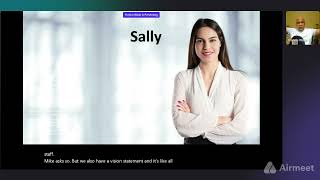
And are the naysayers correct that it takes too long, doesn't last long enough, too hard to do, and a host of other complaints that have rendered long-term strategic planning obsolete to some people, most people in most companies at this point, who are only persisting with short-term planning and thinking? If you're interested in answering that question today, you're in the right place, and welcome. My name is Francis Wade. And I am the co-host of the Sustainable Strategic Planning Conference. I am the host of the webinar today. I am joined also by my co-host, wife, and colleague Dale Pilgrim-Ray. You'll see her in the chat. But let me make sure that you can hear me and I'm not just talking to myself. Just drop a note in the chat so I know that your fingers are working and that I am not just talking to myself. So let's see who we have here today. Hi, Sonia. Hi, Adam. Wonderful. Great. I am being heard. And I'm gonna take that moment just as people check in to share my screen. So you will be in an interactive session today. And it's gonna be pretty interesting, because I'm gonna ask you to do a bunch of things. But let's flip over to my PowerPoint screen. Hi, Anakee. Anakee was here very, very early. And so as I asked you this morning, uh, very quickly, is it dead or are the naysayers correct? Because there is a whole school of thought that says that long-term strategic planning is a thing of the past and that it leads to rigidity and it leads to inflexibility. So today we're going to ask that question and we're going to query to see maybe the thinking might be a little bit stale or off, or a little bit old. And maybe there are new ways to think about making a difference at scale, because you need time in order to make a difference at scale. I'm also going to be asking you a pretty interesting question, which is, how could you be contributing to ESG issues, ESG challenges, ESG problems in companies and organizations both the ones that you belong to and the ones around the world? Now that's a very provocative question, right? Because I'm almost like accusing you, but play with me for just a little bit as I ask a couple of questions and I'm going to throw up a poll in just a moment. Let's see where the poll is. Okay, I'm going to put a poll on the screen. Show poll on stage. Yes, take a look at that poll. Let me know you can see that. And go ahead and give us some answers. How far does your organization's strategic plan stretch? And you should just pick the main organization that you belong to, whether it's— it could be your own if you're self-employed, it could be that of a major client, it could be, um, an organization that you work for. Um, you could be an executive, you could be the founder, you could be a CEO, whatever you may be. And let's see how many we have. 3 to 5 years is the winner. Okay, there is no plan, it's kind of coming in a close second. Man, are we in the right place today. And by the way, if you have a company of one person, you should also answer this question: how long, how, how much of a, a plan do you have, even though you may be only one person? Okay, so I'm gonna close the poll and go on to another question actually related to this one, but it's actually tied in with the topic of today, which is backcasting. So let's close that poll and let's, uh, answer another one. So the winner, by the way, is 3 to 5 years, tends to be the winner in polls like these, but let's see what our second poll yields. Oh, didn't pop it on the screen yet. Hold on. Just— okay, here we go. How much familiarity do you have with the term backcasting? Is it part of the work that you do? Have you used it several times? You maybe have been in a session or two. Have you heard it defined? Or this is what are we talking about today. You've heard of forecasting, who hasn't? But what is backcasting? Is it some devious, devious plot to take over the world by doing everything backwards? Some people have heard it defined. One person has used it several times, and it's part of the work that's what One person does. All right, great, great. Thank you, folks. That gives me an idea of how to sort of skew our conversation today so that I know that we're all included. And so that you also know, if you've actually not heard of backcasting, that it's something that you— you're not alone today. There are majority of folks today have actually never heard of it before. So I'll be speaking mostly to sort of contribute to their knowledge. All right, so we got through the polls. So today, to make sense of that question that I just asked about contributing to the world's ESG problems, I want you to do one thing: pick an organization which does not have a long-term strategy. But two things: one is that you must be a part of this organization, so you have to be a member, at least care about it. Could be a client, but It can't be your employing company where you get your paycheck. So I want you to pick an organization that you belong to. It may not be a legal organization, it may just be something like a club, but I want you to pick one and just drop it in the chat. You don't have to put the name, but what kind of organization did you just pick? Just drop that in the chat so that we know that we're tracking and that We're on the same page. So Marcia says a nonprofit. Steve picks a church. Okay, great, great. Some good answers coming up. Community organization. Political group. Excellent. Morgan Club. Dean, what's a Morgan Club? Give us a little explanation so we have an idea what that's, uh, what that's about. So Today's conversation would be for you if you're either an executive in a company, you'll get some practical methods, if you're someone who sponsors strategic planning retreats, and you could also be a consultant, someone who hires or is hired by companies in order to make a difference with them. So what I'll promise you today is that you'll get some hands-on experience if you're a consultant, and you'll get some practical methods if you're an executive. So in other words, if you're a consultant, you can actually use what I'm talking about today. If you're an executive, you can have other folks use it on your behalf in your strategic planning retreats. And to get that done, we'll be engaging in an interactive presentation. Um, there will be a giveaway at the end, so stay to the end if you're interested. It's a good one. We will end at around 12:30 Jamaica time or 1:30 Eastern time. And go into a lounge where we'll be engaging in small table chats. I'll be able to answer questions on a kind of one-to-one basis almost. But until then, I want to point out the Q&A button. So as we go through, put your questions in the Q&A chat while we're in the main session here. Now that's really important because I can't see all the questions that you may put in the chat. But the ones that are in the Q&A are particularly easy for me to find. So use that button, see that red arrow is pointing, use that button. That'll make it easier for me to find today. So I'm gonna promise that you're gonna walk away with a proven method, a method that I've used for— my colleagues and I, I should say, for over 20 years. And we've worked with more than 50 companies. Each of them has produced a 15 to 30 year strategic plan, and it has not turned people off, taken too long, and cost them a lot of money. So I'll be sharing a very portable kind of solution with you today. If you were at my last webinar, you probably remember Sally. So guess what? Sally has moved up in life. So she's a recently promoted manager. She loves the idea of the triple bottom line and has been asked to meet with the executive team in her company to explain how it can be accomplished. Her CEO, name is Mike, starts by asking her, "We've already committed to some visionary ESG goals as a company. Why should we do more?" And she responds, "Well, announcing the vision is the first step, but we need more." 'Every company is doing the same thing, but there's a credibility gap, especially among younger staff.' Mike asks, 'So, but we also have a vision statement, and it's like all— it's on all the walls.' And he points up to the wall because it's on the wall in the conference room. And Sally answers, 'Yeah, it is, but it's very vague.' And she's speaking carefully now because He probably played a part in developing this vision statement, and she's like calling his baby ugly, right? So she says, "It is, but it's very vague, so it could belong to any company. You know, in fact, I found a company which has one that sounds identical." And Mike throws up his hands because he knows how long it took to develop that vision statement. He says, "You know, I think you might be right, but I don't know how to make our goals come alive." In other words, he doesn't know what to do beyond creating a vision statement. So let's talk about that. What does it take to bring a vision alive beyond just creating a vision statement? Because today I'm going to present— be presenting vision statements, visions, BHAGs, big things that companies can accomplish. In the context of an interwoven short and long-term strategic plan. I mentioned that we've been doing this for a while. We use what's called the Endpoint Method, but that's not the point of today. It's not to say copy what we do. It's to find a way to do backcasting in the context of creating and accomplishing big visions, i.e., BHAGs. And you don't need to use our method necessarily to accomplish that. There are others, many others, but I'm going to be sharing it in the context of what we've done. So a little bit of background on me. I am someone who, as you know, I probably know, I own a consulting firm. We've been in business for 30 years this year, and for the first 10 years or so, we focused exclusively on culture change. And we did these workshops that worked really well. They were able to get people very, very excited about making their contribution to the company, and they would create these projects. And we found out after they created their projects and our part was done that the projects they created didn't have an overall direction. They were going in every possible idea that people had because they wanted to improve things that they found around them, but they didn't have an overall sort of shape. And, you know, our clients mentioned this to us a few times, and, you know, we asked, but isn't there a corporate strategy you could influence them with? And they'd say, well, not really. And what they had maybe was again a vague vision statement. So that was a problem, you know. I, I struggled with it, and really thought about it long and hard, said, we've got to come up with a way to give people this way of thinking about strategy that would connect with the people who do our programs, who come out so excited, and they create these projects, and they want to contribute, and they are ready to contribute. They want to work on weekends, some of them, and they don't have a way to understand where the company is going. So I knew a bit about creating strategy from prior projects and prior involvement in companies. And as an industrial engineer operations researcher, I was also exposed to PERT, CPM. I don't know if you're familiar with the technique, but they are planning techniques that industrial engineers use. And you probably are familiar with Gantt chart, which is a popular, popular tool that project managers use. But it actually took a little bit of putting together of some different experiences for me to come up with the endpoint method that I'll share a little bit with you today. Initially, I didn't have it though, and it took some research, some thought, and some going back into my books. And, and back then we didn't know the term backcasting. That was not available, but it was created in 1982 by fella by name I think is John Robinson. We didn't, we didn't come across it until years later. So it took some work to craft this approach, and I'm saying that to say that you can do the same also. All you need are the principles, and the principles are more available today than they were back when I had, you know, I was kind of struggling on my own. So the result of my struggling was the Endpoint Method, and today we're going to be focusing on two elements of that method, the single alternative vision and the fast backcasting. And if you want to really know, you know, what the endpoint method is and the content that I'm sharing today is all about, you can find it at, uh, in our newsletter. And, uh, it's a little bit small, but it's longtermstrategy.info. That's the collection. So today I'm going to be focusing on those two middle steps, creating a detailed vision and doing what we call fast backcasting. And that will give you some real hands-on secret ways to fulfill credible flexible BHAGs. And I'm going to share with you just three secrets. So the first secret is to contrast BHAGs with short-termism and also with the vague vision statements that most companies are comfortable with. And also, multiple BHAGs versus one BHAG. I'll show you how that's an essential requirement to do fast backcasting in companies. And I'll also show you, and we'll talk about how to become a future ambassador of the kind of work that I'm talking about, which is bring the future into the present and convince folks who you work with that that's a possibility. Okay, let me check the questions and see if we're all together. No, I don't see any questions in the Q&A. I don't see any in the chat, but let me know if you're— if, um, give me permission to move on. Is everything that I've said— does it make sense? Just drop me a note in the chat so I know that I have not lost you. All right, good. Thanks, Steve. And we'll go ahead— thanks, Maria Nicole— we'll go ahead with— oh, Maria! Hi, Maria! We'll go ahead with secret number 1. So I mentioned at the very top of the talk, of our time together, that there is a conversation floating around that long-term thinking is obsolete, and some are saying I've seen these comments that it's all— it's actually impossible is what some say. Somebody put a comment in the chat, all good. And there's a debate on LinkedIn right now that people are saying, you know, it doesn't make sense to do, it's impossible to do, things are changing too fast. And we live in this unique time in which things have never been as they were before. And in terms of it being impossible, as I look back at my own history of developing visions. I see that I've come a long way myself because what's allowed me to do that is my belief that there's a better way and that it's possible to craft a vision and accomplish it, a vision of, you know, something like climate change or climate change reversal, and to use that as a— create that as a bhag and then back up from it to today's reality. So at AT&T back in 1991, I led the vision team in my AT&T Bell Labs department. It was all in words. Then I joined a training organization in the mid-'90s that had a 2000 vision. And this was the first time I was seeing a year applied to a vision statement. And as you can imagine, applying a year to a vision statement changes everything. The whole context just shifts. Then in 2001 to 2002, I started teaching these culture change programs I mentioned before, and they really were all about producing breakthrough results. That was the intention. But these breakthrough results were specific, measurable, actionable, realistic, and time-based. They were SMART goals. So now we're talking about creating a vision of producing SMART and specific objectives, very much in line with strategic intent thinking championed by Prahalad. And also, if you know anything about the Merlin Factor and the Merlin Process, it was also championed by Charles Smith. And we have permission to share his original paper on the topic. He connected strategic intent with this idea of thinking to the future and then coming back. Now, he didn't include backcasting. That came later, but we started backcasting in 2002 when we created the Endpoint Strategic Planning approach. So what we're doing now is very different than what I did back in 1991, and I thought what we did in 1991 was the cat's pajamas. You know, I really believed in it, and although it was only in words, You can imagine where we're going with this. But at the same time, as we've been developing these, all these different tools, and I've been changing my approach and my way of thinking about strategy, and you could too, you know, this, I'm not saying this in a vacuum. I really want you to appreciate that the ideas build on each other, and there's a continuum, there's a ladder to climb where one builds on the prior. But most people haven't climbed that ladder. Most people, most companies are struck by short-termism. And if you're here at a long-term strategic planning webinar, I'm gonna think that you are well in the world of wanting a sustainable, you know, sustainable objectives, ESG, LMNOP, Everything in your mind argues perhaps for a sustainable world, and as a part of that, you want sustainable companies. And maybe you have been spending time trying to convince others around you that short-term thinking is a problem. Well, actually, executives agree. Based on a McKinsey survey of more than 1,000 executives, 40— I'll just let you read that first. So it's kind of a long chart, 3-year chart. 44% of companies said that they're using a time horizon of less than 3 years. However, 73% of executives said they should be looking for more than 3 years and And 7% said they should be— sorry, 11% said they should be looking at more than 7 years. So this is what I find in companies before we work with them. They know something isn't right about only looking at the short term, but they don't have the wherewithal to make the shift on their own. As a result, here are some of the results that happen in the real world based on the research that's been done. The impact of short-termism. You know, these are scary things. Majority of CEOs said that they would not take a long-term investment, they would turn it down because it could mean missing their quarterly earnings per share. 55%. 78% of executives said that when it comes between long— a trade-off between long-term value creation and improving quarterly earnings, they're gonna go with the improving quarterly earnings. Again, very, very scary kind of numbers. You know, investors should be up in arms, and some are up in arms about these kinds of results. And then, um, according to Alex Edmonds from his book Grow the Pie, Study by Stephen Terry showed that there are companies that meet their goals compared to the companies that don't meet their goals. The ones that meet their goals, quarterly goals, are sacrificing R&D spending in order to do so. So in other words, they're sacrificing the future. So I'm going to guess that you already have a sense of some of these things that These aren't brand new to you. But there's a social side to all this, right? Many millennials, Gen Z, Gen Y, are caring a heck of a lot about why they're in the job and what purpose they're meant to serve. So let's imagine that this is a typical interview. And a younger member of staff is listening and saying, why do I want to give 3, 5, 10 years of my time to this company? Is there any reason other than I get paid? Can I— can I— can my life grow? Can I find what I'm all about? Can I fulfill my potential? Meanwhile, if she's talking to the CEO, the CEO is really 'You know, I have some stock options I need to vest by the end of the year, and that's what I'm concerned about.' So the two of them are having a conversation about her possible employment, but the truth is he's on an entirely different wavelength than she is. A growing problem. And then finally, you know, If you think companies shouldn't care or don't care, well, the ones that care to measure the impact of this whole way of thinking about the short term, this belief that we're in a VUCA world and we can't think long term, we just focus on short term— the fact is the long-term companies are outperforming the short-term companies. It's according to a study by McKinsey. So I would argue, and I argued this at a conference last week of strategic planners, that these trends are going to catch up with us. But let's get ahead of them today and talk about why they only have— most companies only have these vague vision statements. I would say they actually have 3 things in common, most companies. A vague vision statement, a short-term strategy, and now we've added on a third layer, which is a public commitment to accomplish ESG goals, some in 2030 and some in 2050. So you add them all together, and I, I'm calling it a new kind of greenwashing, a new way in which companies are pretending to be committed to something when they really aren't. Because when you only have a vague vision statement with no time frame and no real metrics, you only are watching the short term and you're making public commitments to the long-term and measurable and long-term objectives. Something's not right, right, guys? Drop me a comment in the chat if you could. If you, you may disagree with me. What do you think? Greenwashing? Something wrong? Pretense? Fakery? What's your sense of what I've just— I'm just shared with you? Let me make sure you're, you're, you're with me and thinking along. And I don't want to say that you agree with me because I don't want you to just be there thinking, because the time will come where you'll be in front of a CEO explaining what I'm talking about. But you have to put it in terms that you can't just copy the words I use. You got to say it in terms that you feel comfortable saying. It's a weird combination, right? But this is what's happening all the way around the world, as shared with me by a CEO of a Fortune 100 company. Dan says, there's an illusion that business as usual can achieve different results. Daniel, I think there's a will by the companies, but no commitment. Right, because, you know, as one friend said to me, one colleague said to me, he is afraid of not hitting his ESG goals. He's more afraid than not having a 10-year strategic plan, which I found like— Rick Craig says public ESG goals are risk-free commitments. Because, you know, when the crunch comes, companies are going to default to their short-term strategy. They'll throw the big vision statement out the window and go for making the immediate bucks. But fortunately, there is a way out. Steve says a lack of commitment on the part of senior leadership. There is a way out, thankfully. So the way out has to do with actually the very definition of BHAGs. So if you go back to the book that mentioned BHAGs, written by Collins and Porras, Built to Last, they don't mention a time frame. So I went— I'm going back to the book and saying, why is there no time frame mentioned in the book? Don't understand. They came out a couple, like a year or two later in a Harvard Business Review article. So this diagram comes from that article, um, written by the same two authors, where for the first time publicly they said a BHAG needs time to accomplish it. It's not just doing this great thing in the short term. You need to think about putting time in. So today we're gonna basically just adopt their thinking and say, okay, BHAGs BHAGs need time. Someone says, I think you're also onto something driven by the tyranny of the urgent and accelerating at blinding speed. Good, good, good point. Very, very, very, very true. So let's talk about the vision of multiple BHAGs. So this goes beyond Porras and Collins and says, if you're going to create a real future, one that you can stand behind, one that's vivid in the way that they describe. You're talking about more than one bihag, right? You're talking about a constellation of metrics that represent a brand new world. Multiple bihags. No, you know, now many years later, that doesn't sound as scary as it would have if they had said that back in 2005, I think, when their book came out. But that's where we're going. We're going to, you know, what's it like to sit in a strategic planning retreat and ask an organization to imagine a future 15 to 30 years out, and to do so in terms of multiple measurements, multiple BHAGs. BHAGs, by the way, are Big Hairy Audacious Goals. What's it like to create that kind of future in that kind of detail? Well, As I mentioned, we've done it over 50 times with companies in the last couple decades, and here's an example of one that— not real, but fictional cooperative credit union. So this was done in 2001, fictional, 15-year time horizon, and they created a scenario in words for a collection of BHAGs for 2016. 15 years in the future. So as you can see, it's mostly words, and it hits multiple parts of their business because they're simultaneously painting a picture in detail of what the world is going to look like. So that's a lot different than just flinging out a vision statement out there, innit? So contrast the detail I just shared with you, looking 15 years out, with the typical say-nothing vision statement where you try to squeeze as many $10 words in there to give it some juice, but then it starts to look too long. Oh no, it's too long. Yeah, but it's not specific enough. Well, well, the problem is that the vision statement is a poor vehicle for doing what we want to do, which is to create a breakthrough future of multiple big hairy audacious goals. It's a bad vehicle. So the step that I invite you to take your company through and your clients through is, yeah, do this and then translate that goal into measures and initiatives. That looks something like this. So this is the next step in the process that I just shared with you, where the vision now gets translated into numbers and starts to look like something scary, right? No, whoa, whoa, because now you're saying the way to accomplish these targets is via these initiatives. So these have got to be, you know, depending on your company, these have got to be some Needle-moving initiatives. These aren't business as usual, because if that set of goals is not business as usual, initiatives can't just be, let's continue the way we've all been doing. They're a whole new way of thinking. And here's the fact: you can't backcast from a vague vision statement. Now, I know lots of companies, again, believe in vague vision statements, but they don't get the job done. They are a poor place to start working from because they are so vague. Mark you, they take a, they take a very short period of time to get done. They're easy, but but they're ineffective for the kind of credibility and flexibility we want to introduce by using backcasting. So I know I'm leaving you on the edge of something, but let me make sure— let me just check questions. Questions and comments at this point. Teresija says, people fear change, and having long-term strategy would mean they must change to stay up to date in order to achieve a long-term goal. Yeah, so achieving these long-term goals is difficult. It's much easier just to react to the drama of the month or the drama of the week, and it's easy to get a whole executive team caught up in one drama after another, all the while everyone's saying, you know, we really should be looking to the long term. Yeah, but we don't have time to do that. And having that be— or someone else saying, oh, We do have a long term. Look, it's the vision statement. It's on the wall. And having that be the only expression of the long term. Maria says, the tenure of senior leaders is approximately 5 to 8 years, and that's long. Some say it's 3 to 5. I wonder if the BHAGs are achievable targets within their tenure. So great question. Quick question, Maria. The answer is no. They're not going to be achievable under their tenure, and that's a problem, right? Short tenure, long commitment. Great for the company for a CEO to do that. Bad for him or her if he or she is getting paid on short-term options and he or she is very career-oriented and wants to make his or her mark in the job that they're in right now. But I'll tell you, this is what the sacrifice that we want CEOs to make. We want them to put company before self. I don't need to tell you that because you already know that. Everybody says that, but he knows it. But really, what's happening in the world today is the very opposite, and we don't have the tools to counteract the tendency that what's become the default which is to look out for me, myself, and mine first. Steve says, once there is a long-term vision, leadership needs to then create incremental goals to achieve the long-term vision. That takes us into where we're going next. Let's go, let's go to the next step. If you have these BHAGs of 15 or 10 to 30 years, as Porras and Collins said, you are talking about commitments that go beyond the average tenure of the average CEO. So let's talk about fast backcasting. So let's pretend that we're picking up the company that we just imagined, fictional credit union, so we're visiting them, they've already come up with their BHAGs for 2016, a 15-year time horizon, okay? So how do you do that? How do you help them to take the next step when you only have, say, a day? Well, I'm going to share with you some secrets of fast backcasting. So backcasting, as I mentioned before, we had never heard the term when we started our work back in 2002 in strategic planning. We knew the principles but didn't— never heard the actual term. It was, as I said, created by Robinson, and it first was enunciated not in business but in the social sciences and in ecology. And it was a simple idea, and it focused pretty much on one metric, backcasting a single metric or a single outcome. And, um, over time we've made some dramatic changes to the way that we do our fast backcasting. I'll share with them— share them with you as we go along to show you kind of what's possible once you— once you get your hands dirty and start doing it for real. All right, so what is fast backcasting? So let me just explain the basic idea of backcasting. So if you start with the list of metrics that fictional credit union had, if you recall, they had a whole list and a list of initiatives. So you'd break that down and say, okay, in the future we have a goal— that probably I should have used the ones from their case study, but I used a different company here. So this particular company has a 33-year vision, 33-year BHAG of $2 billion of revenue based on where they are today. So the idea is that you start in the future and work back. And as you work back, you do so in steps. Very important to work back. And notice I'm going a little bit quickly here, but notice that there is a change in there are gaps between the years. As you go out to the future, the gap is further, and as you come closer to the present, the gap is narrow. Part of the technique that we've developed, it also makes sure that you're not be trying to be over-precise in terms of your commitments, because that would be a problem. So the next piece I want to outline for you and to display is that these initiatives don't just disappear into the mist. They're actually used to drive the action that we're talking about here. They drive the action from year to year so that these initiatives or projects make these numbers real. They make something happen that wasn't otherwise gonna happen. So the way that you accomplish that, BHAG, for example, to get to the $2 billion in revenue, is via Project 1 and Project 2. And Project 1 and Project 2 could be an acquisition, it could be a new technology, it could be you're going into a new geography, new market, could be that you sell a business and use revenue in some other way, whatever it might be. But you're anticipating that these projects will drive those revenues. I think this is pretty straightforward thinking until you get to something like this. Because going from here, that's pretty easy, to this is a monumental jump. It's so monumental we've had to change or implement the fast backcasting method in order to help teams do it. Here we're talking about a complex set of numbers, a matrix of numbers that are all interrelated in some ways, driven by metrics. And here's even a more, a more complicated version developed by a bank that we worked with. But let's go back to the simple one so that we, that we can at least wrap our heads around it. So these initiatives are driving those results There needs to be— the timing needs to be precise. The number of assumptions that happens behind the scenes needs to be accurate and well thought through. So this is an intellectual task, but it's also a social task. So what we found that helps companies to speed this up and to have it happen more quickly is over the years we've cut our 3-day retreats to 2 days, made them shorter and more intense, partly in response to budgetary pressure from our clients, but also we found that it keeps the momentum going. Do they retreat? Second is that putting together a chart like this is the job of a small group. So our retreats may speak to 18 people, might have 18 people in the room, but only 4 or 5 actually put together this chart. Thirdly, they do it on their own. They don't use our input, and there's multiple reasons why we do that, but one of them is that we want them to come up with their own thinking and not use us as the experts. Why? Because we can never understand the interrelationships between the numbers and the activities on this chart. We don't know the company. They do. So it takes a cross-functional team of very hardworking people to sit down for about 2 to 3 hours and put together a chart looking like the one that we have here. And I tell you, it's the hardest activity that we have in our retreats. It's, it's not easy. The following day, they come back and present the draft chart to their entire team. But the entire process gives you a level of— well, let me ask you, let me not just put words into your mouth. What are the benefits of the approach that I just laid out? What are some of the benefits that you can see? Let me see if you're able to think just past the instructions I gave you. What are— what is— how does the, the team that we work with benefit from the approach that we, we're taking here? I know this is one of those gotta think about it questions, and here am I asking you in real time. Someone said that the vague vision statement business is just lazy. Yeah, that's true. This is not— as you could imagine, this is extremely difficult. This is I, I, we tell people sometimes after the fact that, guess what, this is the hardest thing you've done probably in the last few years as a team. Okay, so we're getting some answers here. Um, Diane says it focuses the mind on an achievable goal. Yes, and I would say minds, because we're relying on the team dynamic to get this done with high quality. We're relying on Norm, form, storm, perform. We don't tell them this, but they go through all the stages in order to get this done. They usually need a CFO involved because, as Manuel says, you're quantifying a perspective. It's gone from being just a vague picture of to being a very precise, somewhat precise, not very precise, because you don't want to be overly precise. Which is why you're jumping a few years in the end. Craig says that it forces managers to decide for the independency of various aspects of the bit. Frankly, Craig, you're right, and it causes them to fight over some of the interdependencies because some of them are brand new to them as a team. They have not had a discussion like this because what we find— what they tell us is that when they do their weekly presentations to their management team, HR gets up and Finance falls asleep. Finance falls up and HR doesn't know what they're— gets up, HR doesn't know what they're talking about. All the presentations are just presented in the typical update meeting. They don't need to rely on each other. They could just say, okay, that sounds good. But here you're producing one result that relies on the cooperation of a cross-functional team, some of which don't understand and don't work together well or have not done so in the past. Sonia says, there's clarity, the how of achieving the why and the what. Yes. Manuel says, changing and focusing the mind. See it big, keep it simple. Yes, we're fighting for a certain level of simplicity here in the face of what is a complex business, right? The fact is they live in a complex world. We're trying to extract this very simple understanding of their future path. Like-mindedness for coordinated action during implementation. Mike, very, very, very, very important because this picture of the future, it's accomplishing two things that, again, we don't tell them this, but I'm telling you because you need to know. One is that it's credible. So the team that sat down the night before and did this activity probably realized that there are some goals that are impossible. So when they started off with that list of goals and the initiatives that I showed you from fictional credit union, the prior step, those were unbounded. So call those the wish list. No, when you put together a chart like this, you can't cheat the devil, so to speak. Now you're talking about something that's real, and the numbers need to make sense. And I'll tell you, they'll come back the following day, haven't done the exercise. Sorry about that. And they'll say things like, guess what guys, we can't do what we thought we would do. There's no way to do it. We're gonna fail if we— we have to cut back. We thought we'd go to Latin America, we can't in that time frame. It's going to take us longer. We thought we would come up with, uh, doubling our market share, we can't do it. So aspirations get whittled down so that they can fit into this realistic picture. That's the first benefit based on what you're saying, Mike. The second is that it's flexible because the team that put this together, if COVID hits a year from now or some pandemic comes up, the team can revisit this chart because they put it together themselves. So if I'm arguing that you do not want consultants to come in and do this for you, then you understand what I'm saying. Zubida says the ability to think outside the box and what is truly achievable, as opposed to a consultant providing the solutions. Very good. Systems thinking. Very good, Sonia. I'm worried about the limited attention the top management team has on how many concurrent dimensions they can focus on. We need to be worried because it comes up in this conversation. And Diane says it creates this level of ownership of the team. Absolutely all correct. And it's, again, we don't tell our clients necessarily, but it's the most important part of the entire retreat. So with that in mind, knowing that you can produce that result, you just need to know how. Let me just say you need to know more than how in order to become a real ambassador for this in your company or with your clients. And original thought was that, well, we've done this a lot in the Caribbean, not so much in North America. And one day came, I got a call from a Fortune 100 company, and they wanted it done for one of their major divisions. And so I asked myself, do we have what it takes to take what we've done? Is it culturally specific in some way? Well, the good news is that it wasn't. Matter of fact, we made some changes to the process to do things differently than we had. But what we had were the principles. So if you stick to the principles of the conversation, the approach that I'm sharing with you, there's something that allows you to bypass all of the arguments that I mentioned in the very beginning— being principle-driven, principle-oriented. So how do you get sort of in touch with these principles? Well, I'm going to say 3 things. One is that you understand the background. So you listen to— probably re-listen to this, to this particular webinar. It's going to be in the conference materials, by the way. If you're not registered, make sure you do that. Um, but it's going to be— the replay will be in the conference materials. But we talk about the, the nuances of what I'm sharing with you in the Jump Leap newsletter, and you can get to that through longtermstrategy.info. Okay, so the knowledge is important. There's theory. It's not that bad. If you go check out backcasting in, in, um, Wikipedia, they have a nice entry. It's not that bad. It's not, it's not terribly academic. It speaks in plain English. And you want to know the case studies of companies that have used this effectively so that you can have a picture in your mind of how it works. So that's just knowledge. You don't want to stand up in front of your boss and say, I can facilitate us through this. And wing it. Because the world that we live in now is very different. I winged it back in 2002 because I never did it before. I wouldn't try that at home, boys and girls. Don't, don't do it that way. So second is that you want to get some practice. And the way to get some practice is pick that organization that I hinted that you should choose. And if I'm, if I'm hinting to you that I did, like I did to a friend just last week, that you need to go to your pastor and tell him we don't have a long-term strategy and we need one, and I'll help us to do it. I'm asking you to develop practice and skill in using this technique by approaching these organizations that aren't— don't necessarily pay your paycheck, but they could be ways for you to learn how to sponsor or facilitate this kind of activity. There's no substitute for actually doing it. And what I'm suggesting is that you do it in a safe place before you go to your CEO the way Sally did with Mike. And you know, it's like swinging for the fences. Okay, get some practice before you actually do it. So pick one and ask them, tell them that you're learning, you're mastering this technique and you'd like to work with them through it. And then finally, in addition to the knowledge and the practice, we live in a world in which there is— especially in North America, short-termism has been running rampant for a long time. And you need to have, in a way, your own sales pitch. And the way to develop your sales pitch over time is to keep sharing the concept. No, chances are if you're here in this webinar, you already have a commitment to things like climate change, things like social equity, DE&I, good governance, in other words ESG, and other long-term commitments. But what I'm asking you to translate your commitment into is an action. Remember I said before, you may be contributing to a problem and not know it. Maybe you're contributing We are all contributing to the larger problem of ESG because we're not insisting that our organizations do this long-term thinking and planning. But not a problem because we can reverse that by starting to develop our skill at convincing the organizations that we care about that this is absolutely essential to the planet. Okay. All right. So let me see, there's some questions. Let me take questions. Comments before I start to tell you about how you can learn some more about this technique. So drop me some questions and comments so that I handle them. If you're ready to move on, let me know. Got about 10 minutes left. Um, brilliant idea to pilot it close by. We'd love help as an NGO if anyone can't find a test case. Oh, so someone is suggesting their NGO, but I don't see their name, so I don't know how to contact them. If you look in the questions, you'll see it. I'll put that question on the stage. Someone is offering their NGO as a test case. Good idea. Um, same person also asked the question, do you adjust the 30-year BHAG by agreement— sorry, do you adjust 30-year BHAG by agreement with unforeseen conditions arise? Without a sense of failing? The answer is yes. So companies go longer and they go shorter depending on what's happening in the world, and they've never shared that they've had a problem with it before. And maybe because of the context that we created in with them, we tell them that this is a changeable plan, that this is a guide and it's subject to change. And the purpose of planning— I think Eisenhower said the purpose of planning is not the plan, it's the planning. It's the activity that gives you the benefit. So changing is absolutely essential, and you should expect to change. Okay guys, are you ready to move on? Are there any other questions or comments before I move on? Put a yes in the chat if you're ready for me to tell you about some concrete opportunities to learn more about using this technique in your companies. Yes, yes, yes. Okay, I don't see any no's, so yes. Um, by the way, just a shout out to Daniel. I see that you're here from, from Uganda. Daniel, I've sent you a message on LinkedIn, hoping to contact you ASAP. A bit of an aside. So our conference coming up is built around the idea that meeting sustainable goals of any kind, whether they're within the company or ESG goals, is a function of long-term strategic planning interwoven where short and long go together, that one isn't left without the other. And at the conference, we're going to have more than 20 speakers. We are— I'm really proud of the people who have stepped up. It took a while to find them because this is not an ordinary group of people. I'll tell you, this is not even the complete list at this point. Some more folks came on, and, um, really just an outstanding group of professionals from around the world that care. Uh, first day of the conference is going to be all about pre-recordings and on-demand downloads. Why? Well, one of our methods when we do conferences is to make content available 24 hours a day so that anyone in the globe can access it. And the way we do that is by having our speakers do pre-recordings. So between this week and time the conference starts, they'll be sitting in front of a screen just like this one recording their content. That's the way I am doing it right now. This is my homework, so that it gets put into the conference materials and gets shared with a global audience. We'll also have on the second day live panels and other kinds of chats. There will be more downloads, but there will be more— there'll be a bunch of live conversations. Unfortunately, because of the time zone difference, people on the East Coast will benefit the most, East Coast of the US. We're on GMT -5 or UCT -5 if you're interested. Okay, so how do you access this conference? Well, we have two options. One is, in keeping with our commitment— we're from— we live in Jamaica, it's a developing country, and we want to make this kind of information available to everyone in the Caribbean regardless of their ability to pay. So we make our content free for the 2 days of the conference, and it's all accessible during those 2 days. You can also make a contribution if you want to offset the cost that we incur to allow so many free people to access this amazing kind of messages and insights from our speakers. We're open to that as well, and there's a place to do that when you register. And also, if you want to access the content after the conference, we sell a replay, set of replays, which combine the live content and the pre-recorded content into one package called a full ticket, and that costs $179 US. Okay, and you have access to that for at least a year. Okay, I think there's— see if there's comments or questions. Comments or questions on that? Because I'm about to go and give away one full ticket. So if you're a speaker, you can also apply for this free giveaway. So I'm about to share. Dale has been dropping the registration link. You can see it at the top of the page. Okay, so here's the question. First person to answer this wins a free full ticket. What two fields did backcasting originate from? So I mentioned this very, very quickly, said that it existed before we came up with our approach. And Craig Perrew is the winner. Craig Perrew from the University of the West Indies. Social Sciences and Ecology. Amazing that it originally comes from that world of the environment and we're using it in business, and we're using it in business in order to do things like reverse climate change. I love the circularity of that, but that's just me. Craig, we'll contact you and let you know. Congratulations. I have— we have your email address and we are connected on LinkedIn. So folks, if there's no other questions, so this is the time to ask your last few questions because what's going to happen next is that I'm going to close off this presentation portion and we're going to move over into the table chats. So we'll be at tables. I'll be able to answer questions and have conversations on a private basis. It'll be maybe 5 to 10 of us at a table and we'll be able to have close conversations with video and microphones on. But let me see if there's any questions or comments to close out our time together as a big group. Questions or comments? Oh, Steve says, 'Very good presentation.' You're welcome, Steve. Thanks for the comment. Thanks for the kudos. If you want to drop a kudo as well, that's fine, or an emoji. Other comments? Thanks for coming. Comments, questions? Craig is gonna run. Great, Craig, we'll contact you. No other questions or comments? Okay, folks, so we're gonna move over to our talk at the tables. Gonna have a chat there. And oh, Michael says backcasting used successfully by 4 venture owners to build and be bought in 3 years to the 50-year strategy for a large US family. And I've worked with a couple of entrepreneurs who have used this that way. Companies which have a long-term vision are very likely to be bought because they're not just trying to go for a quick sell, right? They're actually thinking about where the company is going to go. It makes them very attractive to outside companies. It's a paradox, but it's, it's true. But who wants to buy a company where the owners are only thinking about selling and getting out? Because they probably laid the seeds of its destruction without necessarily even knowing. Hmm. All right, folks, this is it. Let's close out for today and thank you all for coming. A big, big thank you. And let's end the session today and go over to the tables. See you over there. You're welcome, you're welcome, Daniel. Don't forget to reach out to me. Daniel, I'm going to drop my, drop my email in the chat so that you can see it. Okay, and we're going to close out now and let's go over to the tables.
More from Francis


Ep 35 Your Strategic Stagnation Isn't a Framework Problem—It's a Story Problem



The YouTube Strategy School: Why Your MBA Didn’t Teach You Strategic Thinking





