ABM Campaigns: How to Plan & Optimize Them for Maximum ROI
Franco Caporale walks through building an ABM campaign from revenue goal to budget allocation. He shows how to forecast $1.2M ARR from $354K spend, run scenario analyses, and split budget across LinkedIn, email, direct mail, and SDR outreach while tracking cost per engage and cost per opportunity.
Chapters
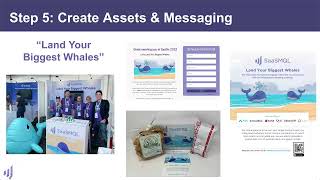
How to segment target accounts, how to create the playbook to engage and convert these target accounts. So today we're going to talk about planning, measuring, and optimizing the EBM campaigns. So it's going to be a lot of kind of math and funnels today, but it's actually pretty fun, at least in my view. So before we get started, very quickly about me. Why am I here talking about EBM? I've been working in Silicon Valley for many years for a few different VC-funded companies. I was leading demand generation and account-based marketing. And then in 2018, I founded SaaS MQL, and we focus on high-impact ABM campaigns for SaaS in particular. We worked with over 100 SaaS companies since 2018 to plan and execute these high-impact campaigns to drive opportunities and new customers. So with that, let's jump to the agenda. So today we're going to talk about account-based marketing funnel, what it is, how do we visualize, what kind of stages, what are we talking about here, how can we forecast future campaigns based on our goal that we have for next quarter, next fiscal year, whatever it is. How do we allocate the budget across the different channels? How, how do we track the important KPIs and what these KPIs are to measure the success of the campaigns? And how can we identify the funnel bottlenecks in our ABM program? And then at the end, we're gonna touch briefly on account-based marketing attribution, even though we're gonna talk about that topic later in future webinars as well. So let's start talking about the ABM funnel. So all of the models that I'm going to show you today are created with this tool called FunnelTap. We actually developed this tool internally at SAS NQL. It's something we use with every client to forecast campaigns, but you're free to use it as well. There are not a lot of instructions. So it's pretty self-explanatory, but I'll talk about that as well today. But let's jump on one example of an ABM funnel. So what you see here, for example, is I'm trying to close 10 new customers in a quarter. In this case, I put Q2, even though Q2 recently finished depending where you are, but let's call it Q2 is my next quarter. So if I want to close 10 new customers, I need to understand how much budget I need to allocate, how many accounts I need to target, and how it's going to be, how it's going to be my ROI, and what are going to be my conversion rates here. So you see these conversion rates here, where am I getting those? Obviously this is not our first time running this campaign, so we have data. To use. We're not really making them up from scratch, even though probably if it's your first time, you're gonna have to use benchmarks or take a lot of assumption on what's gonna be my conversion rate from target cold accounts to engage, from engage to discovery call, discovery call to opportunity, opportunity to close one. So you have to create some estimates, but the important thing of this exercise is to try to be realistic. With both the budget allocation and how many accounts you need to target. Because this is a mistake I see too many times where if I want to close 10 customers and I'm targeting 20 accounts in a quarter. So unless you are probably the best marketers, the best B2B marketers on the planet, you can convert 50% of your cold accounts into customers in one quarter at the enterprise level. Is pretty unrealistic. So here, by inputting actual realistic conversion rates that we see here, for example, here is telling me that I'm gonna need to have a list of 800, almost 900 accounts to drive 40 opportunities to close 10 customers, uh, next quarter. And then another important part of this funnel modeling is How much budget am I allocating per target accounts to engage and drive them all the way to become opportunities? This, this investment is gonna be distributed across different channels. So I'm not doing everything in one channel. There's also very hard to do at the enterprise level. There's always like some multi-channel effort involved here, but I'm trying to create an overall budget that then I'm gonna allocate. So in this example, I input $400 per target account. That's what I'm gonna be using average, obviously. So if I'm, for example, using LinkedIn ads and display ads, and I'm using direct mail, for example, to engage these accounts, and plus I'm also investing in some, I don't know, targeted happy hour event that I'm creating, $400 per account total. So that means maybe 1-2 direct mail, about $100 worth of display and LinkedIn ads, and then another, I don't know, $200 for the happy hour. That's an example. And so my total budget that I'm allocating for next quarter is $354K. But if everything goes according to plan, I'm gonna be driving $1.2 million in recurring revenue from this $350K budget because each of my new customers is worth $120K a year. You know, I'm targeting enterprise, a pretty healthy deal size, so I can afford to invest $400 per target cold account to drive engagement. So this already gives me some indication of what is gonna be my my ask to my CEO or to my CMO in terms of budget. If your CEO comes back and says, here's your budget, here's $80K to drive $1.2 million in revenue, you already either you try to play around with these conversion rates somewhere, or maybe you think you can do it with less budget per target account, but obviously that has an impact. Okay, so this is one example. So in order to create this model, you always want to start from your revenue or customer goal. It's hard to create a model if you don't know where you're trying to go. So, you know, everything will work in that case, but you always have a clear goal, right? In pipeline, in revenue, in number of customers, number of opportunities that you can model from. Because we are trying here to reverse engineer what it takes to get to that goal. And the more we do this exercise, the more data we have, the more we can be realistic and accurate at creating this, this type of model. So where, uh, what are the stages of your funnel? In this case, you saw I use target accounts to engage, to discovery call, to opportunity, to close one, which is pretty typical in SaaS. You can have a slightly different stages. Maybe you target accounts and then aware accounts and then warm and then you might have multiple flavor of engaged. Engaged is pretty generic terms to be honest. What is an engaged account? It could be someone who just landed on your website for 5 seconds or it could be someone that you met at an event and talk for 20 minutes at the booth and express interest. There is a lot of definition so you can split the stage in multiple ones. Here I'm trying to simplify, obviously. And then discovery call, opportunities, even here you can split multiple stages, but we're trying to create a model that is a little more simple because it's more manageable. And the important number is right here. How many accounts do you need to target? Too many times I see this funnel being bottlenecked right at the top. Where I'm targeting 50 accounts. But if my goal is 20 opportunities, why am I starting from 50 accounts? Unless, you know, there are cases where it makes sense. Those are my top dream accounts, and that's fine. But you have to play with the math and see if it's actually realistic, because you're looking to convert 50% of them in, in a short amount of time. If I have a year time and those are all my 50 accounts because they are massive deals, Sure, that might make sense, but always look at the potential value of that list. If I have 50 accounts and your deal size is $25K, that's not a lot of potential in that segment. Is it worth spending all this time and creating target campaigns and material and assets and everything for when even if you convert 100% of them is not a lot of money? Behind. So, you know, have always a healthy list at the top and look at the funnel, how it drops, what kind of conversions you need to achieve to hit the goal. And then how much budget to allocate for each account. This becomes really complicated. Obviously, it's a little bit of art, a little bit of a science of how much money it takes to drive an account that is completely cold to become engaged and warm and interested and then drive them to become— to take a discovery call and have a demo and then become an opportunity. Those are all money that are spent somehow, somewhere. It could be with an event you are doing, uh, I don't know, a 20-person chef dinner in San Francisco, or you're running ads on LinkedIn to target those accounts. Those are expensive as well. Or you have your SDR team doing cold calls and cold emails. Those are not free. You have to plan budget for that as well. Or you're doing direct mail, also an investment. But in some shape or form, you are spending money to drive engagement, to basically create that energy that pushes cold accounts to become warm and then hot. And then opportunity. And so is $400 per target account enough? I don't know. Those are all assumptions, especially if we don't have data. If we have data from the previous year, I can tell you how much money we spent average across all the accounts and so how much money we need to allocate. And so then we can start talking about budget allocation later, but at this stage we need a certain amount that we put aside for each account. And obviously the more accounts you need to target, the more money you're gonna have to spend. That's, that's why here this budget is nothing else than a formula of this value by this value. So, uh, is maybe $300 enough to get the same type of engagement, the same results? It's possible. It depends what industry, what kind of accounts are you targeting. Are these Fortune 500 accounts, or they are 100 people companies, it's very different, the amount of energy and dollar that requires to engage those type of accounts when they are a large enterprise. But obviously their value is going to be much higher, hopefully. If not, it's not really— doesn't make any sense. But you can also assume that the more money you spend here, the higher this conversion rate is going to be. And across. So if I spend $800 instead of $400, can I increase this conversion rate here? Most likely, right? Because you're— they are seeing your logo, your messaging across more channels, and you're spending more money to, to get them in front of, uh, of your value proposition. So your conversion should be higher. You're targeting more people in the company. So yeah, you can assume that. But at the same time, if I lower this $1 million amount, it's possible that I have to assume that this is going to shrink. And so I'm going to need to target more accounts. So it's, you know, you have to play a little bit with that. And so the ROI, we put it here. What is the ROI? Yes, I did invest $354K, but if I'm driving $1.2 million in recurring revenue, it's a solid ROI here. So I would be happy at the end if I hit that. But obviously you always want to calculate and what's your deal size, etc., to see if the ROI is healthy. So then now that I have data and I see— I run this for a quarter or two, whatever it is, and, and now I want to see, um, how it's going to be the future. So I can create different forecasts. So I use the historical data. In this case, I'm not running assumptions like I did here. These were all assumptions. I never ran it before. I guess, you know, benchmark how many I can engage. 'But now I did run it and these were my conversion rates.' So a bit lower in some cases, a bit higher in some other. But now I have actual data to use to forecast. So in theory, that might be your worst-case scenario. You're going to hit the same conversion rates because now you have more experience, you can optimize your campaign, so you can hope for higher, but obviously it's not a given. So you can also play more conservatively and forecast a lower rate. But let's say that the rate remains the same for now. So now I want to forecast from this campaign. This is my actual results of last quarter. In Q2, I did this result. So now the Q2 is done, it's finished. I target 700 accounts, now they're 886. I engage 195, I did 38 discovery calls and 15 opportunities and we closed 5 deals. So less than the 10 that we want— half of the 10 that we wanted to close because we had, uh, actually lower results here. We got 15 opportunities instead of 40 and, uh, less discovery calls, 38 instead of 62. Okay, it was our first time, we didn't do too well, but we also spent much less at the end of the day. So we spent $245 instead of what we modeled initially. Okay, but fine, so we have some, some actual results. So now I want to forecast what's going to be next quarter. And so I'm gonna look at what are my goals for next quarter in terms of number of new customers or new revenue that we need to generate. We start from the historical conversion rates that we just realized, and we can look at worst case, best case scenario and start asking questions. What if my conversion rate is going to increase because we become good with these campaigns? Now we know what role to target or what messaging works, etc. But what if they drop? I want to also calculate that and kind of have a range. What if my cost per opportunity becomes lower? Because again, we're more efficient, we're engaging more accounts with the same amount of money. So my cost per opportunity, which you can see right here, it's going to become lower. So instead of $16,300, $16,300, Maybe it's going to be $12,000 for each opportunity. And how much, much, how much budget we need to allocate to reach this new goal? So let's see an example. So this is an outcome forecast. It means I'm not trying to get 5 again, which is the number of new customers I closed last quarter. Here I'm trying to get 12 customers. How much budget? So this is a simple formula, obviously, because everything else stays the same. I'm allocating the same amount of money, right? Same everything. I allocated $350,000 per account and I closed 5 new customers. Now I just want to know, I want to close 12. So what is the budget I need to allocate? Okay, everything else stays the same. Simple math, right? I can do it in Excel super easily. I need to allocate $585,000, $586,000 next quarter and I should have a pretty good confidence level that I'm gonna reach this goal because I'm inputting the same exact conversion rates. And I need to target 1,600 accounts this time. So I need a larger list of target accounts for next quarter. But hopefully everything stays the same or maybe we do even better because again, we became more efficient and optimized on the campaign. So we're gonna, hopefully hit higher conversion rates. And with this budget, we should close more than 12 new customers, right? So this is a simple forecast, outcome forecast. Another type of forecast I can do is a budget forecast. So now I'm not asking the question, I want to close 12 customers, how much budget do I need or how many accounts? Now my CEO, my CMO said, hey, your budget is going to be $800K next quarter. What we can allocate for, uh, for marketing. So actually higher than what I estimated here. So probably my goal needs to be high, needs to increase. So now here I input what results can I get if everything stays the same, how many customers can I close. Okay, 16 with this $800K budget. So hopefully we can do 16 or better. Again, simple math. Nothing complex here, but it's good to start seeing what it will take to get 16. Or what if I have a million-dollar budget? How many customers can I close realistically? Because this is actual data that I generated last quarter. Another type of question that I see often when we discuss with clients is, okay, what if we target smaller companies? Because now this new product, for example, this 'New solution we have is more geared toward mid-market than enterprise, but also the deal size is not going to be $120K, now it's going to be $70K,' or 'We're looking for more velocity, you know, we don't want to, you know, take 6 months to close this deal, we need more velocity as well. Can we target a segment of smaller accounts?' Yes, we can. So, um, but obviously if everything else stays the same, my ROI will take a hit because now with the same budget initially that we close 5 customers and we close again 5 customers, but the revenue is going to be smaller, so ROI is smaller. However, here you can assume that your conversion rates are going to go up. And so because our, you know, smaller accounts are easier to engage than large enterprise, so, you know, you could realistically make that assumption that either you're gonna need less budget to engage them, that's Number 1. Number 2, you can have higher conversion rates. Maybe not both, a smaller budget, higher conversion rates, maybe. But before testing, I would just take one of the two. Either you spend the same and get higher conversion rates, or you spend less and you get the same conversion rates. Those are all, again, assumptions until you run it. And then another, interesting forecast is, okay, what if my conversion rates change? So in this case, they dropped. So I didn't do as well as the first time, but you can see the ROI is much smaller. I close 3.7, uh, customers here. So here you get some decimal, but, you know, say I close 4 or 3 instead of 5 and I have less opportunities, um, so you want to account for that because it's It happens, maybe you have a seasonal type of solution and you have quarters that you close less and they respond less to the campaigns. That happens very often. Or maybe there's more competition now. Whatever is the case, you always have to test that and forecast a worst-case scenario with lower conversion rates as well. Because it's a possibility. And so those are all examples of, uh, of forecasts, and they all start from a question that you're asking and see what it will change, what it will change in the next quarter. Um, but it's important to have those discussions and those, those modeling at the beginning. But now we have a budget to allocate, but where do we allocate that budget? So we're talking about ABM, account-based marketing. So we can only allocate the budget towards channels that allow us to target specific accounts. So I cannot spend it in Google Ads where you have no control of what accounts engage with your search ads, right? That's just purely based on intent, but it's not based on a specific list of accounts. So here I put some of the main channels, to be honest, that allow us to target per account. So LinkedIn Ads, email, direct mail, cold calls, LinkedIn messages, target events. So you usually can tell what companies attend certain events. Even if you have a, if you're talking about trade shows, right? There are, you can see the list of speakers. So you know what accounts are there or based on historical data on those trade shows. But for events, we also mean target events. Like I do a VIP dinner in New York with inviting 20 of my top prospects and their VPs and their C-level, right? That's the target events and I can do it specifically by accounts and by role. And then display ads. And then for display ads, I mean targeted display ads, right? Those that you can do it by reverse IP, like Demandbase or Sixth Sense or Terminus or similar. Those are the type of display ads that allow us to target a specific and warm up specific list of accounts. In all of this, I need to input budget, that budget that I forecasted early. Let's say the $800K that my budget forecast told me to use because I have this budget now to allocate for next quarter. How do I allocate that across all these different channels? We talked about $350 per account average. That gives me some indication, right? If I looked at, for example, LinkedIn ads or display ads and direct mail, I can say, for example, okay, I'm gonna allocate $100 per account worth of LinkedIn ads and display ads. So if I'm targeting with my $800K budget, I'm targeting 2,200 accounts. So $100 per account, that's what, $220K that I'm gonna allocate on my, uh, on this list of accounts. So I'm gonna put $220K for a quarter. So obviously you have to calculate daily spend and all of that, but $220K is going to LinkedIn here, or LinkedIn and display, you can split that. And then direct mail, how much budget? So How do we translate that into budget? So let's say one direct mail that you have an idea concept is $70 and you want to ship one per account or two per account, $140 multiplied by 2,200 accounts. That's going to be what I'm allocating for direct mail. And then I can allocate some for an event, for example, that I want to put $200 per account goes on or $150 per account for an happy hour that I'm throwing in Boston near inbound conference for HubSpot, whatever. But you get the idea. So it's just trying to get an average, but so to have some rationality to split this budget across these channels. Which one of these should you leverage? It really depends what type of accounts, what industry, what you're trying to do, um, and you divide it for each channel. But the other important part of this is understanding what channels are effective at driving that initial engagement, for example. So you're gonna use those channels more at the top of the funnel, so for cold accounts or semi-warm accounts or like lukewarm accounts. And then what tactics, what channels are effective at driving that opportunities, and then you might need also some channels that is effective at accelerating opportunities and pushing more towards the finish line. Um, so here is one example of a forecast by channel. So let's say the LinkedIn ads are very effective at warming up this, this account. So I'm running all these campaigns with content that I created, like white papers and guides and and videos, et cetera, about my solution. And I push these ads only against this list of 2,250 accounts that I created. So LinkedIn allows you to target specific list of companies. So we're gonna do that. And we're gonna put this budget in this case, whatever it is, $100 per target account by 2,200 for a quarter. So it's 220K. For a quarter. And my goal here is to engage at least 270 of these accounts, so about 12%. What is the definition of warm accounts in this case? Depends what kind of ads you're running. But if you're running any lead gen type of ads, you can use it based on who is, who's filling out the form on the ads or on your— if you have gated content. If not, you can use all those reverse IP tracking via ZoomInfo or 6Sense or all of that to see what accounts are actually showing up to your website, which they haven't done it before. So they're clearly being pushed by one of these channels because this is a list of cold accounts, right? So these companies have never showed up to your website, to your content. So we're running these campaigns for 3, 6 months, whatever is your timeframe here. And then let's say that direct mail instead is super effective at driving engaged accounts to become interested and wanted to book and schedule a discovery call with your sales team. So now I'm using the same 270 engaged accounts, but I'm gonna send 2 direct mail per company. So maybe I'm targeting the VP and the director with the direct mail. It's costing me $70 per direct mail, the idea that I have. So $540 here. So, you know, in this case, $70 by $540, I'm spending, allocating about $40K on this. And the goal is to drive this many discovery calls and they're going to turn in this many opportunities and turn into this many closed won deals. But all of this calculation, these are just examples, but you can do it across channels and it's not easy to model for multichannel campaigns because I could potentially drive net new accounts, cold accounts just with the direct mail to become opportunities. Absolutely. But you have multiple channels running together across, um, all these different programs targeting the same list of 2,200 companies for a certain time frame. And that's what becomes very effective. And then you can start assigning the attribution. You want to keep it pretty simple, and we'll talk about attribution, but overcomplicating— unless you have a super complicated model for campaigns and your go-to-market, I don't see the need at this stage to do it. So this is one example of a high-impact ABM campaign. So this is one of obviously our examples. So you can see we have this theme across all these campaigns, which is the secret sauce. What is our secret sauce for scale, for growth, for ABM success? Obviously our secret sauce is creating these high-impact ABM campaigns. And you can see the— it's consistent across channels. This is our direct mail campaign that's going out to prospect from our target accounts. And then we have this theme across multiple events this year. Obviously we have other themes that we're running as well, but the key here is to really become noticed by the decision maker by this prospect from target accounts and then hopefully drive them to become opportunities and new customers. So what are the metrics you wanna measure for each campaign? So first of all, you wanna know what are your total number of accounts in your TAM that you could potentially sell to and what are the total number of accounts in your ICP? And that should be a number that you absolutely know. Is that 500? Is it 4,000? Is it 3,500? You don't want to just start, I'm going to target 100 accounts. Why 100? What is your ICP? Start with all of them ideally, or try to engage, have a campaign that is targeting all of them at the top of the funnel because you want to move them to become aware and then warm. If they are in your ICP, why they should stay unaware that you even exist as a company, as a solution? If they are in your ICP, right? So have that list in front of you. And then of that list of accounts in your ICP, how many are engaged? How many are cold? How many are already opportunities? How many are customers? Obviously that's probably the easiest thing to know. And then you might have multiple segments. So you might have an enterprise and mid-market. What is the value of those accounts? For your top accounts, maybe you have some customer that spend half a million dollar a year with you. And then the lowest one, maybe they have a $30K customer as well. And how do they differentiate? So you can create these different segments of target accounts. And then how much does it cost to engage one account from cold? So when we look at this, um, these examples here, in this case, for example, uh, one engaged account cost me $1,400. So to drive one account to be from cold to become engaged, whatever your definition of engage is. Here it's costing me $1,400, and then each discovery call that I'm generating for our sales team is costing me in this segment $7,800, which is not cheap. So obviously your sales team better take a lot of, uh, spend a lot of effort for that discovery call. But here's just to have an idea, can you lower that amount? Of course. But here you know what is your cost per opportunity, what is your cost per engage, what is your cost per deal. Obviously those are easy numbers to calculate. And then what is your conversion rate from call to engage, what is your conversion rate from engage to opportunity discovery call, and then opportunity to close won. So these are important metrics to have in front of you because then you can plan for future campaigns as well. And once you have this kind of models, you can see where your bottlenecks are. For example, we have clients that they don't have a lot of engaged accounts or warm. Most of the target accounts are cold because maybe they are Series A or B startups. They're pretty new. So it's a new solution. Obviously, our main focus is going to be to drive more accounts to become engaged. And so a lot of campaigns are focused on cold accounts. So this, what we call this open the door campaigns. But then we have also clients that are very, very good at driving engagement. Maybe they have a content marketing machine. They sponsor many events and trade shows across North America and Europe every month, but they don't see them turning into a lot of opportunities. So that bottleneck needs to, uh, to be identified and needs to be targeted so we can create maybe a specific direct mail campaign or specific events or anything at that stage for those warm accounts only, because we want to drive them in to become opportunities. We don't want to let them become cold, right? Because that's what's going to happen. And then what channels are effective at doing that? What channels you see success are are driving that initial engagement and what channels are effective at pushing them to become opportunity. And how much should you invest per account to reach your goal, whatever the goal is. Always have that, that dollar amount in front. So I want to touch very briefly about ABM attribution here because we're going to talk about this in future webinars as well. But the, the key of ABM attribution here is to try to have visibility on what action is being taken at the account level. So you have all these prospects doing all these actions, right? You might have a, I don't know, a developer that downloads a white paper, and then a director of engineering that attend a webinar, and then the VP comes to a trade show that you're sponsoring, and then you send a direct mail to the CTO, right? So you have all these different campaigns. And what, what did what, right? What channels did that initial engagement at what level, right? At what seniority? What kind of role are you able to engage? So everything needs to be aggregated at the account level, including when you're trying to define an account as warm or cold or engaged, etc., is the sum of these activities. And obviously, there is even— that is more of an art than a science because, for example, you might have 20 developers that take action, right, with your content, or you might have one CTO who downloads your pricing list or request a demo. What is more important? What drove those developers to take action? What drove the CTO to take action? And that's where you're gonna try to allocate the budget to do this. So you wanna know the first touch and the last touch. And you need to track across all these different channels, which for some of them is not easy, especially at the very top of the funnel. It gets easier and easier when you go down the stage because at that point, you know who is doing the action. But because these are all targeted channels, it's not as hard to track the attribution at the account level and then at the opportunity level and when they become a customer. So with that, we close this webinar. Next presentation is going to be the top ABM tools and platforms. There is a lot out there, so we're going to try to to make sense of some of them. And it's going to be on August 20th, so hopefully I'll see you all at the next webinar. Thank you for joining us today.
More from Franco

The 10 Fundamental Steps to Implement Account Based Marketing at Your SaaS Company