SaaSMQL Live Stream
Franco Caporale breaks down a seven-step ABM framework for B2B SaaS: align goals with sales, build your ICP, segment accounts by tier, allocate budget across channels, create segment-specific assets, set up a sales-marketing SLA, and measure ROI. He covers tooling like ZoomInfo and Apollo, direct-mail tactics, and why ABM works best with larger deals and clear buyer profiles.
Chapters
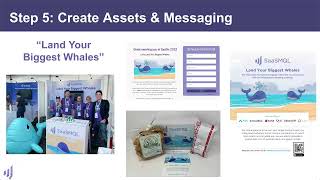
Good afternoon everyone and welcome to today's webinar focused on ABM and more importantly on the 7 steps to start an account-based marketing program. So before we start, obviously you are free to ask questions at any time during this presentation. There is a chat at the bottom here on Crowdcast. So please use it to ask any questions and comments, feedback, anything. We'll take some time at the end to answer the questions. And this presentation is being recorded, so as soon as we're done today, you'll be able to access the recording at this same exact link. So with that being said, let's get started. So what are we going to talk today? I want to describe the 7 steps that we implement every time we want to start an account-based marketing program. I've done it many times, so I'm very familiar with these steps. So we're going to talk about how you need to define goals and objectives with sales. You want to create your ideal customer profile and persona based on the data that you have in-house within your CRM. You need to segment those accounts properly to allow for an efficient budget allocation. Marketing budget is very scarce lately, so it's important to allocate it in the, in the proper way. And then you want to select the appropriate channel for the audience that you are targeting. You need to allocate the budget. Then we want to create the messaging and the assets that are going to be specific for the segment of accounts and persona. And then again, we go back to sales. We want to make sure that we have a very efficient process on how these accounts are going to be handed off to sales and taken back from marketing and how the whole relationship works. And then we're ready to go live. And once we launch, that's not the end of the program. That's actually the beginning. That's when the bulk of the work starts, which is optimizing, looking at what works, what doesn't, things to change, things to scale, things to cut. And so with that, why I'm here talking about ABM. I've been working in B2B SaaS demand generation for now about 12 years. I've been leading demand generation team in a few companies in the Silicon Valley, San Francisco Bay Area. All venture-funded companies, typically in the Series A, B, C stage. So growing from $3, $4 million in revenue to going to $20, $50 million in revenue. And, uh, after my whole experience, I'm also the founder of SaaS NQL, which I started 5 years ago. And SaaS NQL, what we do is we help companies scale account-based marketing programs. We work with over 75 SaaS clients so far, all venture-funded companies like Intellimize, Legion, Site Insights, Routable, Mosaic, many, many others. So very, very fast-growing companies that we help plan, execute, and scale account-based marketing programs to generate opportunities from their top accounts. So this is one example of, you know, how we take target accounts, we create this really, really custom targeted campaigns across different channels to drive opportunities and engagement. Okay, so now that you know why I'm here and why I'm talking about ABM, let's start and talk why ABM. So after many years of talking about inbound marketing, right, the traditional content marketing funnel approach where you are basically releasing a ton of content that could interest your, your audience. And then obviously attracts a lot of engagement, a lot of leads, a lot of clicks and forms fill out. And then you work the funnel to see who is qualified, who is not. And then at the end of the, of your funnel, you should have some customers as a result. So that has worked well and it still works today, don't get me wrong. It's not something that should be abandoned. Actually, we do a lot of content marketing ourselves, as, as you can imagine, and we do blogs and we have webinars, we have a podcast, uh, many, many things. However, there is a big space for account-based marketing. What is account-based marketing? Here we're talking about looking at who are your top accounts, who are your best accounts. They don't have to be just the biggest customer that you can possibly close. They should be your best. So sometimes a smaller account could be better than a big one, than a large one, if it can close faster, if maybe they're gonna, uh, churn less, they're gonna see more value in your product or solution. So those are the accounts that you want, and they typically match your existing best customers. So when you look at your CRM, you should be able to identify a few customers that really are your top ideal profile. They, they look like who you want to serve. They understand your solution. They love it. They are very, very big fan. You want more of those, and that's what account-based marketing helps you do. You start by identifying them, then you build a list, then you start engaging them And then once they become a customer, you go and expand and upsell them, and then they're gonna refer you to more customers and so on and so forth. And that's how you expand. And Terminus, a few years ago, kind of coined the term of flipping the funnel, where instead of the traditional content funnel, inbound funnel, you have this flipped account-based marketing funnel. And so when should you use ABM? Is ABM for everyone? Absolutely not. So the first thing you want to see when you look at your current business model and if you should go with the account-based marketing approach, the first thing is your deal size. So if you're selling small kind of month-to-month subscription at $100 a month, you're looking for volume there. You're, you're not looking to, to create these targeted custom campaigns. You just want to drive as much traffic as possible and convert a higher percentage of that into free trial and then revenue. So this is not for you. So I typically identify as larger than $10K ARR, even though even $10K is a little of a stretch to create a real account-based marketing program. But already a $10K, $10K, $12K can work. But obviously the larger, the better. So typically our clients are $50K, $60K deal size, or many of them have 6-figure deal size like $200K, $300K, half a million dollar ARR, or even more than $1 million ARR as a deal possibility. And those are an obvious target for, for ABM. Then as a second criteria, you have a well-defined specific ideal customer profile. For example, for a company that I worked in the past, we could only target companies that had a specific software implemented because that's, that was our current integration. We only had integration with a few software. So even if a different type of companies that had a different software would want to use our solution, we couldn't sell to them. So why go and target them, right? So we will create account-based marketing programs to only target the companies that we knew, that we knew had that software or the software that we integrate with. So that's a very defined, specific ICP that you have. And so IBM becomes a natural thing. And then you always want to look at your sales team because marketing and sales should go hand in hand. So if you are selling with a structure that is already with target accounts that are pre-assigned to every rep and they have a book of target accounts, then your marketing should mimic that. So your marketing structure and program should go and support the sales team, and you should target the same accounts from a sales perspective and from a marketing perspective. If your sales team is a high-velocity, round-robin inbound sales team, then don't do account-based marketing, right? That's going back to the deal size and the other criteria. So account-based marketing typically means multi-channel. So you don't do account-based marketing just by sending emails or just by doing, um, some ads, right? Account-based marketing means you have that audience, you have the list of target accounts, you know who they are. Now you want to engage them in as many channels as possible at the same time. With a cohesive message. So they should see your message when they go on Google, they should see your message when they go to events, when they read their newsletter, they should get a direct mail package at home or in their office, they should see on LinkedIn, everywhere they should be hit by your message as many times as possible because creating engagement is always about repetition. It's not one time someone will buy a $200,000 software. Is all about consistent and constant exposure to the messaging and the brand and the value proposition. And you should always remain top of mind with those accounts and those decision makers and those stakeholders that are part of your targets. So maybe they are not ready to buy today. That's very common. It takes sometimes months and months and months for a need to arise, but you are always top of mind with them with your account-based marketing program. So the goals are obviously you want to open the door with new accounts. That's pretty typical. You want to stay top of mind, like I just said, with key accounts for all the, for the next few years. You want to educate these main stakeholders, but also for those that are already opportunities, you can help your sales team by accelerating those opportunities. And avoid that they become stale or they start disengaging. So you, you keep inviting them to an event, you send them another package with a gift and some more information, or with a case study with other companies that are doing— that are using your solution. And another key segment is lost opportunities. You want to create a campaign just for your lost opportunities of the previous 2-3 years. And try to re-engage them. Usually they have pretty high conversion rates because there is many reasons why you will lose an opportunity. Sometimes it's just timing is not right, the budget, maybe they didn't have enough, uh, people in certain department. There is a lot of different reasons. Always re-engage them regularly is very, very important. So let's go with the step 1. The first thing you want to do when you decide that you want to implement an account-based marketing program is you have a meeting with sales, someone from sales, and you start looking at what are the goals and what are the priorities. So first, we want to understand what is the ICP. So what accounts are they targeting? But the best thing to understand the ICP is to look at your, again, your current customers. You pick the, the best 4, 5, 10 customers and create an ICP, a profile around them. What kind of companies they are, what vertical, how big they are, how much revenue, how many— much funding they raise, uh, what, what software do they use, how many salespeople they have, how many engineers they have, you know, any kind of criteria that you can put about those 5 or 10 best, best customers. And then from there, you're gonna look at You know, what is the persona? Who are the contacts that typically work with, uh, with sales during the, the sales cycle? It's not just who signs the deal. That's very important. You were not just targeting the VP of Finance or the CFO or the head of sales. We're targeting anyone who will be involved in the sales process, from whoever is kind of doing the initial qualification, the business user who needs to kind of approve it, or needs to be on board, including anyone in compliance, anyone in procurement, depending on how complex is your, is your sales process. And then start looking from a messaging perspective. What do they like about the software? What they don't like? What is the objection that typically arise? What are the competitors? How do we differentiate? All of these things needs to work out, be worked out in a document. So you create this kind of initial steps for, for, uh, for the program, but then you need to quantify, uh, these goals. You need to quantify your sales funnel to understand where you should focus on. I talked earlier about opening the door with new account versus accelerating existing opportunities or re-engaging lost. Where is in your funnel that requires more attention. For example, if you have a pretty thin pipeline at the qualifying or proposing stage and lost stage, obviously you're going to be focusing on prospecting. You're going to be focusing on net new cold accounts that you want to engage and move them to the qualifying stage. And so you don't even look at the other segments, just focus 100% of your ABM budget to drive new net new accounts. So they're cold, we make a list of the best 300, 500, 1,000 accounts that will fit that ICP, that profile, and start engaging them. And so you can track very easily in 3 months, 6 months, 12 months how many of those accounts have engaged, how many moved to opportunity, how many are in proposal, how many have closed won, how many are lost. And so you can see how your budget is affecting your funnel. Is one important note that I'm gonna add here, because a lot of people, when you talk ABM, account-based marketing, they think that everything you do is done on a single account. So I target, I don't know, Walmart, and I'm gonna create all of my campaigns just for Walmart and all of my assets and all of my channel and everything for Walmart. That's an ideal situation, but I know very few companies that are in a— that they can do that. Unless Walmart is worth a few million dollars for you as a deal size, it's very unlikely— it's very unlikely there's going to be an efficient strategy. So what you want to do is you want to work by segments. Your segment can be as small as 5, 10, 20 accounts, or it can be 100 accounts, can be 200 accounts, as long as that segment have the same messaging, the same type of pain, the same type of attributes, so you can create a cohesive campaign that they will see as relevant for them. If your messaging is designed for the head of HR and you target in the same way the head of sales, unlikely that it's going to work. Or if you target a healthcare company the same way that you target, I don't know, um financial company or a tech company is not very relevant. But so create your segments is the way to go. And so this is exactly what this is going to be, is start creating your ICP. So the accounts and the persona, all this data needs to come from your CRM. Don't ask to your chief revenue officer or your head of sales what, how to create the ICP. Look at your CRM, select what are your biggest account, biggest customers, and best customers. They're not always the same, uh, but list them out and then start creating the attributes like I mentioned before. And that's how you're gonna have your ICP. And then look for more companies exactly like that. If you have 5 companies like that, you can get 50, you can get 100. And then for the contacts, this is another important part because I hear it all the time. We target only VPs and directors. That's not true. If you look at any opportunities that you close, especially if your sales rep were diligent at tracking and adding context to the opportunities that they had meetings with, you're going to see a variety of titles there, a variety of seniority. There are many— very often the opportunity started maybe with a, with a manager, with an associate, with a I don't know, with the director sometimes, but there is a lot of different titles. And when we pull a specific report from Salesforce or HubSpot, we see that all the time. So if you go on your Salesforce and create a report by contact role of your opportunities, you're gonna see this variety of titles. Use those keywords and those titles to create your persona that will be part of this campaign because we wanna engage those accounts at every level from the beginning. Not only who signs the deal, that's, you know, that's not the way to go. And so you're gonna create something like this, you know, a table like this where you have industry, geography, size, attributes. Attributes can take any kind of form. I know a client, for example, where they figure out by looking at the data in the CRM that if a company had more than 10% of their employees outside of the US, it wouldn't be a good fit. They will lose 75% of them, and the sales cycle for those that they close would be very, very long. So what do we do? We excluded anyone that had more than 10% of employees outside of the US. Those are things that you can only find by digging at your data. So be as specific as possible, and then list some dream customers. Those should be part of your list, like those that you would love to have among your logos. And then for the persona, you do the same thing, but pull that report, like I said, from the CRM. Look at all the titles that were part of the opportunities that your sales rep met with and list their keywords, their function, seniority, department, and who you want to avoid. There are sometimes cases in which maybe you target engineers, but not every engineer. You just want front-end but not back-end, you know, things like that. You want to be specific so that you can really create a solid, solid list from the beginning. So to build your target list, these are just some of the tools that we use at SaaSQL when we build lists for our clients and for ourselves, um, from ZoomInfo, which almost everyone uses today, to Uplead, BuildWith, Leadiro, Apollo, Clearbit, Crunchbase. You know, there's many, many other And you know, we put everything into a database and then cross-match, cross-check, look for gaps. And then there is a lot of manual work involved as well to really clean up the list. But if you have a strong list from the beginning, both accounts and contacts, you are halfway through of where you should be. So segmentation here becomes particularly important then to segment because like I said earlier, every segment equals one campaign and a set of assets and a specific flow and a specific goal and a specific budget. And so that can be done by vertical, can be done by market segments. So yeah, maybe mid-market enterprise, maybe you have a tier 1, tier 2, tier 3 accounts where you have different territories or different use cases or products that you sell or different funnel stage. So what are these accounts in your funnel? Are they cold Or maybe they downloaded content, but they never became an opportunity, or they were an opportunity at some point, they're lost. Try to identify where they sit in your funnel so you can do kind of what I showed earlier. And then the intent, maybe they show intent somehow. They seem to have high score in G2 or in SixSense or in your marketing automation in Marketo, in HubSpot, they tend to score high. That needs to be identified. So all this data will allow you to segment, and the beauty of segmenting the accounts is that you can really become strategic with your budget. So for example, if most of your revenue will come from enterprise, you will allocate more budget over enterprise segment and less toward your mid-market segment, and then you can shift as you see traction and results. Same with your territory or your verticals. If you see that Maybe the manufacturing vertical is performing better, you're gonna put more, more budget there because you have segmented your accounts. So this is an example by funnel stage. Like I said, there are the cold, warm opportunities, and there are your existing customers. If you have a chance to upsell them, that will be its own segment. The churn customers, so maybe you want to try to re-engage and offer them something that maybe they can become customer again. And they have their lost opportunities. These are very important. Obviously everyone has this data, so it's, it's a no-brainer to segment your accounts this way first. And then the tier 1, tier 2, this becomes a little more complicated. Maybe you look by a number of employees, by revenue, by territory. Maybe you know that in California you perform better than others and there are better accounts. I don't know, there is definitely whatever criteria you use to identify the potential value of an account. Sometimes if you sell by number of seats, it would be how many employees they have in that particular department. If you sell by, I don't know, traffic on the website, you're going to go by Alexa Rank. So there is many ways to divide tiers on accounts. And then you can become super sophisticated with this. You could kind of mix vertical and tier, and so you create a Vertical A tier 1, vertical A tier 2, and so on and so forth. Don't do this at the beginning, obviously. This comes later as you start seeing traction and results. You can start becoming a little more sophisticated and segment the budget even better and create more assets, more specific, more, more, more. At the beginning, keep it as simple as possible, one or two segments. That's it. That's what you want to start with. Then start adding things on top because complexity is the enemy of success, as always. And this is a neat thing that you want to do from the beginning. This is basically trying to reverse engineer your program and the budget and everything from your goals. So this is a tool that we use at SAS NQL. It's a simple kind of forecasting calculator. So we use benchmark metrics at the beginning when we, especially when we work with new clients, we use our benchmark to forecast the engagement of the accounts within a certain time frame depending on the accounts, depending on the stage of the funnel, depending on a few things. And then what you do in this case is you assign a budget per account and then you calculate how much is one new customer worth to you. And then if I say I wanna— in this case, I'm setting my goal is $6 million in revenue. So I'm looking in a 12-month period to generate $6 million in revenue, in new revenue. And so if one customer is worth $130,000, it means that I need to close 46 of them. And so based on my win rate of 25% from opportunity, it means I have to generate 184 opportunities. Which typically my conversion from discovery call to opportunity is about 60%, so I need 307 discovery calls and so on and so forth. So you can see kind of the, the way it works. But in this case here, this model is telling me that I will need to target 4,000 accounts with these conversion rates in 12 months to generate this kind of revenue. Obviously some people might say, well, there is not— we don't even have 4,000 target accounts in our addressable market. So obviously what will happen there is you will dedicate more budget to less accounts, so your conversion rate will go up here. So instead of targeting 25%, you're gonna say, I'm gonna raise my, my investment per account, and maybe I'm gonna try to hit 40% engagement from 2,000 accounts, or 60% engagement from 1,000 accounts. Whatever the metrics is, but you have to be realistic. And when you look at the budget per account, this is based on what channels you're going to use. So for example, if you use direct mail and LinkedIn ads, you can say, okay, each direct mail that I ship is $50, and I want to dedicate— I want to send 3 direct mail, and I want to allocate $50 in impression per account. For, uh, for this segment. So I can, I can design it like that. And so this gives us some initial direction, and then we can customize it by, by working here at different— change the value here, change the value here, change the conversion rates, change the goal. And so this is a good exercise to do between sales and marketing to really understand what the goals are, but also to have an upfront idea what the budget is gonna is going to take for the year, for the quarter that needs to be allocated in a realistic way. And so here, for example, if this will hold true, this would be a fantastic ROI, right? I'm spending $800K in campaign budget to generate $6 million in recurring revenue. That's phenomenal. Probably unrealistic in this case, but it's just kind of random numbers here. So once you have the budget, you're ready to go. Now you want to create an allocation. So in this case, in this type of, uh, play, in this type of program that we created, we, we have our target accounts that are divided in cold and warm. So those that are cold, I want to create an initial engagement phase. So we're going to do emails and we're going to do LinkedIn ads. And those that are warm but they're not opportunities yet We want to target them with a direct mail to generate qualified meetings and drive opportunities for the sales team. And this is done in loop, as you can see. We'll talk about that at the end, but this is not a one-off thing. If you're doing a one-off thing, just don't do it. It's a waste of time. You want to do— we want to build a program that you're going to run for the next year, few years, that consistently and repeatedly and predictably generates opportunities from target accounts. So we're now at step 5. Now that we have created the ICP, we have our account list, we have segmented it, we have a goal and a budget, and we know what channel we're going to use, we need to create the assets. So that's the work, heavy work of the marketing team, to build a theme for the campaign for each segment. Right, we want to create theme and asset per segment. So they need to have— if we look at this model here, we need to have the emails, we need to have the ads and the banner, we need to have the direct mail idea and the, and the box and the design and the one-pager and the letter, anything that goes, and the landing pages, everything that goes with that. So to give you an example here, this is actually our theme for the end of last year and now, which is land your biggest whales because we focus on account-based marketing. So this is us as Saastr. This is the landing page that we focus on. You can see the consistency across the direct mail that we sent out with the one-pager and some cool organic coffee and some homemade biscotti. And then we have a one-pager here with a QR code that takes you to that page. So everything is design in a consistent way with this theme that goes across multiple channels. That's how you want to do it. And maybe your 2 segments, 3 segments will have different themes, because if you target, for example, different verticals or different personas, it might change, right? The theme will be different, the, the, the box, the design, and the gift idea will be different. But that's kind of how you, you want to design it. Um, so the step 6 is to now understand with sales, how are they going to jump in once you are generating engagement? At what point do they take over? Do they want you to continue— like, do you want as marketing to continue doing air cover campaigns, or should they stop there once they become opportunity? What if the opportunity gets lost? How— what happened to that account. You want to design that, that process, um, not like this obviously, but make it, make it very clear that there is an SLA between marketing and sales with the target accounts in mind. So the goal is always the same, is the same for both. You have a certain revenue goal, pipeline goal with these target accounts. And you're both targeting them. So there should be a clear process for who is doing what, when do they jump in, what happens when an account engages, how quickly do they respond, are they aware of the campaigns that are happening. So when they get targeted with the 'land your biggest whale,' it's not coming as a surprise to the salesperson. Everything should be in sync and aligned together. Then you're gonna see a lot of good results. And finally, step 7, and last, you go live, you launch, and you start measuring and optimizing. So we run our program in cycles, in rounds. So each round is a whole sequence of outreach with email and direct mail, for example, or you have LinkedIn ads running, or you're doing events. All of that needs to have a steps where you measure results regularly and make changes regularly. And so you can continuously improve the program to make it extremely, extremely effective, lowering the cost of acquisition, increasing the conversion rate, increasing the win rate. And that's a, that's a long-term thing. This is not a quick silver bullet. It's not a way to quickly generate some pipeline next month. This is a way to hit your goal in 2023. So in terms of measuring, this is an example how we measure by campaign, by budget, ROI. We track how many opportunities, how much pipeline was generated directly attributed to these campaigns, responses, engagement, hot leads. These are meetings, meetings, discovery call booked. And this is done by campaign and by segment. So you can see your segments, how they doing. You can see your campaigns, how they doing. And which one is delivering results and which one is not. Now, a couple of examples that I can show you now that we are at the end of kind of the step presentation. So for example, here, if you are trying to drive cold accounts to become engaged, so you can start with content and you create a nurture sequence for that target account list in HubSpot or in Marketo that has a bunch of content you want to send to them, and you're driving them to your site. And at the same time, you're targeting your accounts and contacts on LinkedIn and Facebook ads. How are you going to target— how can you target accounts in LinkedIn and Facebook? We actually have— I've done a webinar, I think a year or two ago, on doing ABM with LinkedIn ads. With Facebook is a bit different because you cannot really target accounts per se, but what we do is we create basically a big list on our database of contacts that match the accounts that we're targeting, and then we upload that as an audience on Facebook. Facebook typically match about 50% of it, but we're still able to see very good engagement and leads coming from those targeting type of ads. Then you could, you have an SDR doing outreach once someone engages with content. And then if they don't respond to the SDR, you can ship a direct mailbox, for example, direct mail package with a call to action to go and request a meeting. Or you start with the SDR outreach as many companies do, you know, they have SDR doing email sequence and cold calls and LinkedIn all day long, uh, and you can split. You can say, okay, for Tier 1, I want to invite them to a VIP dinner that we're doing in different cities with 20 people. This is something I've done a lot of, of doing this VIP dinner, 20, 30 senior people, very great, great discussion, great for pipeline generation and to close opportunities. And for Tier 2, maybe you just invite them to a webinar. That could be a strategy. And then both of them will go into your nurture sequence in HubSpot. Or you can do a— you can start with the direct mail and then have sales following up to everyone that received the direct mail. And then those that respond, invite them to a VIP dinner. These are again for tier 1 accounts or for opportunities in this case. So for opportunities, you want to keep them engaged, especially long sales cycle. So you will send a nice direct mail to them, nice gift, and then have the account owner following up with everyone. Um, this is another nurture example. So we have content, right? Someone clicks on our content. This is from, from us, obviously. Someone click on our email content. This is how we use LinkedIn Ads to engage with target accounts. They want to read the article, we get notified, and they get an automatic warm follow-up. And then if they don't respond to the follow-up, we send them a direct mail to book a discovery call. Same things happen with the targeted ads on LinkedIn. And when we have a lead gen form, the form will then— they will receive a follow-up and then a direct mail if they don't respond, and then book a discovery call. And actually, I forgot to add the last tips, but I want to add them now. So the first thing From a last tip perspective is don't start this without having a meeting with sales. Like I said at the beginning, what I see this going wrong is when there is a disconnect with sales. Sales is targeting different accounts than those that are targeted by marketing. So that's the worst case scenario because what happens in those cases is that marketing is working hard, spends a lot of budget, generates an opportunity or a lead at a meeting, and sales doesn't care and they don't follow up. So it is— I've seen it many times, is the worst type of situation. So try to avoid that as much as possible. And the other big, big, big recommendation is this— it goes back to the budget. Have this prepared up front. So have a clear expectation set of how much budget is going to take to do this, because a lot of time you start this without any budget allocated or any any real expectation and it becomes just an experiment that you try to do fancy targeted campaigns to say that you've done that with 10 accounts and it doesn't work. This is a process that is important, but it doesn't mean you have to start with a million dollars in budget. You can start small and scale it, but it's still gonna take, you know, some budget even to test it because to run a real test you know, being 3-month or 6-month test that you want to run, you can do it with a few thousand bucks if you're trying to drive enterprise-level or mid-market-level opportunities. So set a budget, set a goal that is realistic, and then work your way through and see if those conversion rates are actually true. What we do with our clients is once we run this for a couple of months, we forecast the future program by using their actual conversion rates and we create a model like this that has their actual conversion and just change the goal or the budget or the values here, but we can forecast the next year with a pretty good accuracy. The more we do this, the more those conversion rates are gonna be realistic. And so we know what it will take to generate the same level of opportunities. The other important part goes back to the list. Is first build a list that is actually targeted and doesn't have gap in the data. Use as many data sources as possible. You need to have the full contacts mapped to each account. Not have just one or two names per account. Anyone who should be involved should be in your list from the beginning. It might be a big list, but is— that's where your next few million of revenue are gonna, are gonna come from. So you want to have a very solid list from the beginning and don't have gaps. Have also full mailing address for each company's contact so that you can run those direct mail campaigns as well. You can become a little more sophisticated with how you target those, uh, decision makers. And then don't forget to segment. Because if everything is one bulk, you can be much— you cannot be too much strategic about it. But if you have segmentation, you can start looking at what is working and start moving, allocating budget around. And with that, that kind of terminates our presentation today. Let's see if there are any questions here. Going back to the beginning. All right, so we have a couple of questions here. So the first one coming from Michael is, what is the best way to segment accounts by, by stage of the funnel? Which is kind of what I showed here. So here it depends a lot on the data that you have in your CRM, but in order to do this, um, usually the majority are going to be cold, but it depends on your definition, particularly of warm. Is cold and warm is where a lot of these things kind of go bad because opportunities is pretty clear. Lost opportunities are clear, churn is clear, customer is clear. But cold and warm is what do you define as warm? In my view, anything that is— that has any kind of response, even downloading a white paper, is better than going completely cold. So I would take that over cold anytime. So you want to distinguish that. But then there are different levels of warm that can be like, okay, just download a white paper, or came to a 3-hour VIP dinner and had a long conversation. Like those are very different level of warm. So you wanna, if you have any scoring done in Marketo, in HubSpot, you can take your contest scoring and then group it up to other account level. That's how we typically do it. If not, you know, you will have to separate them and define what you consider cold. If not everyone is gonna be cold unless it's not an opportunity, but that's not ideal. And let's see, what is the other question? Okay, yeah, so this is a typical question we hear a lot about direct mail, and is how do you do direct mail now that a lot of people are working from home? That's not an easy thing, but You know, we've done it successfully for the past now few years. Actually, last year we shipped over 40,000 boxes, 27,000 the year before. So obviously this work and there is a way. Now it's much easier than during the 2020, during the pandemic, because a lot of people are now in kind of hybrid setting. But what we've done is we added a lot of manual steps and verification to understand if we should ship a package to a prospect. And also we add steps into the sequence in the outreach to figure out if that person might be working remote, and if they are, they have a chance to provide us with a different address or their home address. So there are ways to really make this successful. And still today, direct mail is actually one of the best channels because, you know, LinkedIn, ads in general, not just LinkedIn, Facebook ads, LinkedIn ads, emails are very oversaturated with noise. And with that, we are at the end of the presentation. Thank you everyone for joining us today. And if you have other questions, feel free to either email me at franco@sasandql.com or come to our website sasandql.com. And I hope to see you at the next webinar. Thank you.
More from Franco

The 10 Fundamental Steps to Implement Account Based Marketing at Your SaaS Company