The B2B Intent Data Goldmine: Turn Hidden Signals into Recurring Revenue

Franco Caporale shows how to find millions in pipeline by activating first-party intent signals already in your CRM: demo requests, free trials, website visits, lost deals. He walks through collecting these signals, matching them to target accounts, and hitting them with multi-channel campaigns across email, LinkedIn, and direct mail.
Questions this video answers
We use a ZoomInfo script placed on every page of our website. The script captures the visitor’s IP address, performs a reverse‑IP lookup to identify the company, and records the pages visited and time spent. The data is then automatically fed back into HubSpot (or the chosen CRM) where we can build company‑level visit records and trigger activation campaigns.
Chapters
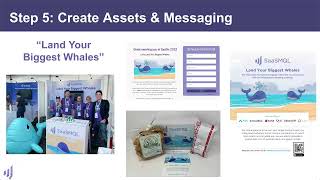
Hello everyone and welcome to today's webinar, the B2B Intent Data Goldmine: Turn Hidden Signals into Recurring Revenue. So today is a topic that I'm particularly passionate about and it's something I see over and over across our clients and companies where I work for, so I wanted to really dive into this, uh, this particular subject. And I think it's gonna be— I hope it's gonna be very interesting. So let's proceed. So first of all, very briefly about me and why am I talking about this, this topic today. I'm the founder of, uh, SaaS MQL, which I started in 2018. But before then, I worked for, uh, 4 different venture funded companies in Silicon Valley, in San Francisco, and I was leading their demand generation team, enterprise marketing teams. And so my, my goal was always to generate pipeline for the sales team and help them closing new deals, bringing new, new enterprise logos in particular. So what we do at SaaS NQL after that is We are focusing on ABM. We help SaaS companies implement and orchestrate targeted ABM programs and campaigns. And we work with more than 80 companies so far and generated millions of dollars in pipeline and recurring revenue. We are a HubSpot solution partner, so we can really integrate with HubSpot and help you scale these campaigns. And with that, let's start with today's topic. So we're going to cover the different types of intent signals and how they are categorized. Then we're going to look on how you can identify those intent signals, particularly in your CRM, whatever that be. It could be Salesforce, HubSpot, even in Marketo or any other CRM for that matter. Then we're going to talk about about how you can activate these intent signals with targeted campaigns, and then I'll show you some examples of these campaigns from our internal efforts. So let's start. So why I wanted to cover this topic today— this is something that is very, very common across many of our clients as well as potential clients that we talk to and other companies. And what I believe is every company, even probably the smallest one, as long as they have at least product-market fit, they are sitting on a gold mine of potential opportunities, pipeline, and revenue within their CRM. And the larger the company, the later stage the company, the more data is available. And I believe that you can easily generate millions of dollars in pipeline this month for this quarter just by looking at this, uh, at this data that you already have. Instead, a lot of times the focus is on engaging new logos, cold accounts, uh, you know, bringing new, new opportunities from, you know, ad campaigns, etc. And that's obviously very important to do every single quarter, but Every time you want to keep a close eye on your own data because the engagement data, the intent signals that you have are very valuable, but they're going to expire. So the more you wait to act on them, the more they're going to become cold and then they stop being so valuable. And so that's why it's always priority for us, particularly when we work with new clients, is to ask, Okay, what data do we have available? What data can we leverage for the targeted campaigns before we go on and start targeting cold accounts? And so you can have HubSpot, Salesforce, Marketo, depending on how you are set up. Typically this intent data sits a lot on the marketing automation side, but some of that is also on the CRM, but you typically wanna look at both. And so how do we categorize intent signals? Because there is a lot of talk around intent signals and what they are and what they mean, but typically there are two types of intent signals. The first one I call— I don't call— is called third-party intent signals, and those are actions and user performance across the web or other websites or indirectly. So This is basically something that will tell you or correlates to certain accounts showing intent either on your particular solution or on your category of solutions. So for example, with Bombora data, you will see someone that is doing research on, I don't know, some type of cybersecurity or business analytics. And if you happen to offer that solution, that's perfect fit and you want to target that account. So that's kind of like this intent scoring that you can pull on third-party websites and try to track, but it will give you an idea of what accounts seem to be showing intent on that. But what we're talking today and what I believe is something that can really generate a ton of pipeline very quickly is the first-party intent signal. So that's what is happening on your website, on your assets, on your content, on your with your sales team on your offline events or anything that you are directly responsible for. And so these intent signals need to be collected and many of them are collected automatically, but some of them you have to set them up. But then what happens is many times they just sit there unused, unleveraged, and so they nobody is acting on those intent signals. And it's something you want to do regularly and ideally programmatically, because if you're just doing it as a one-off, one time a year, it's probably you're leaving a lot of money on the table. And so the other distinction on intent signals is you have account-level intent signals and content-level intent signals. For example, you might see with tracking anonymous visits that a certain company came to your website. Through reverse IP, but you don't know what company— sorry, you don't know who from that company actually visited your website. You can see what pages were visited, how long they stay on your website, where they arrived from, but you don't know who the person is most of the time. And so you will, you know, you still have a good chunk of information there that you can leverage, you can activate, but it's not as powerful as obviously content-level intent signals. So they are very specific. You have demo requests, content download, webinar registration, people stopping by your booth, etc., etc. So those are actual persons that you can communicate directly with, you can target directly, you can retarget, you you can approach. And if they happen to be the right titles, that's going to be extremely valuable. So examples of this different type of intent signal. So going back to the first-party intent signals, which is the topic of this webinar, we have, starting from the top, demo requests, free trials. Those are obvious intent signals. Those are as good as it gets, I will say. But there are cases that those demo requests don't turn into anything. Maybe they don't even show up to the demo. What do you do with those, right? That's the question I see that many, many times, that some people sometimes they don't take any action on no-shows from demo requests and they, they are qualified leads, they're qualified accounts, target accounts. Then you have content downloads, webinar registration, Tracial leads, another kind of subject that is a little bit on a gray area. I saw companies that collected all these Tracial leads, but they were all sitting in a Google Sheet and no sales rep or marketing team was acting on them. And that's another potential gold mine. Those are people that stopped by your booth for whatever reason, right? They could be cold or warm. Maybe they were doing research, they are interested, but you have to act on them not just the week or two after the trade shows. We personally have clients that we closed 3 years after they saw us at a trade show, and they told us that. They came back 3 years later after we continue retargeting, nurture them, and they say, oh yeah, we saw you at the 2022 SASTR, for example, where we were sponsoring. So that's That can happen. So you don't toss them away. You have to nurture them. You have to constantly reactivate them. And then we're going to see how. And outbound email replies, that's another thing that sometimes this data sits on the sales rep inbox and it's not being pushed into the CRM. But those replies can range through like, yes, I'm interested. Those, okay, maybe they get pushed. But what about those that are like, right now is not the right timing, or we don't have the budget this year, or were finishing other initiatives, whatever that may be. I saw many type of replies. Those are still sign of engagement. They could be reactivated regularly. And so you need to be tracking all of those somehow into your CRM, marketing automation, etc. Anonymous website visits, we're going to look into this as well. Lost opportunities, that's another gold mine. We have a lot of success stories with our clients where the first thing we did was a lost opportunity reactivation campaign through obviously with the ABM approach, always looking at the target accounts that are within those lost opportunities, always with a multichannel approach, but that can generate almost immediate pipeline, especially if we target in the right way. And then when we look at the third-party intent signals, I talked about the Bombora Intent Score, about doing research on third-party website. You have G2 and Capterra visits. If you have a profile there, you can see who is visiting your page, but also your competitor page. Very interesting to know and something you can act upon. New hiring or job post, that's many times kind of like showing an intent. If you're If you sell a cybersecurity solution and someone just hire a chief information security officer, that's probably something that you want to keep a close eye on. Same thing with fundraising. If you target VC fund startups, customer transitioning, that's another interesting data that, for example, User Gems is a solution that is famous to track who from your customer just switch company, change to another company. Those are normally very, very important leads to target because if someone really loved your solution and was used to adopt it at the other current company and they change company, they want to probably implement the same. That happens a lot. Negative reviews for competitors, very interesting, as well as technographic signals like someone just bought HubSpot and your company integrates with HubSpot. That's, you know, could show some intent there as well. So these are the distinctions. Now let's look more closely to the first-party intent signals. So what do you want to collect? This is the first step. You want to make sure you are collecting that data because if not, there's nothing that you can really do. So you're most likely obviously collecting demo requests, content download if you have gated content, obviously. If not, if you're tracking, for example, someone that clicks on your nurturing email and goes and visits the blog, that's also kind of content visits more than downloads, but it's still something you want to track. Webinar registration, obviously, those are all These are more top of funnel signals, but it's something you want to still act upon. Then we have the lost opportunities that's easy to track. What is not easy to track and you should be tracking is the reason why they were lost. Because sometimes just seeing that is an opportunity that was closed lost, you can see at what stage it was closed lost. Was it the initial stage? It was after proposal? That's also important to know. But the reason typically has to be tracked somehow manually by the rep. And for example, HubSpot forces you to enter the lost reason and you should be forcing your reps to enter that. That could be in a dropdown field or open text, doesn't matter, but you want to track that. So for example, was it because they didn't have budget? Was because they went with a competitor? Was because they just didn't respond? They kind of ghosted your sales team, that will allow you to create more targeted campaigns after. For example, if we're missing a feature and now you have it, those are opportunities you can go back immediately and do it and launch a campaign. You're probably gonna generate a significant pipeline right away. Trade show leads, we talked about it. Track what trade show they attended. We see this a lot, please. Don't just track they attended a trade show, have ideally the date and the trade show name attached to these records, to these contacts, so that you can continuously target them and reference that trade show even a year later. Because if not, they're going to become just generic outreach, generic campaign that you don't— you're not going to see a lot of success. Outbound replies, we talked about it. You want to feed them into your CRM and marketing automation. And then the engagement from your marketing email. You also wanna track, I didn't put it in this list, but I'm gonna talk it next is the anonymous visits. You can do it with ZoomInfo, you can do it through HubSpot, you can do it with many other tools, but you wanna see what companies are coming to your website. And then once you have all these different intent signals, you have these different records, you probably have multiple CSV files or multiple lists in HubSpot. Now you want to match them against your target account list to see if you have, for example, 1,500 target accounts that are divided in different tiers and different segments. You want to see which of your target accounts are completely cold. You have no intent signals whatsoever, even the smallest intent signal, or which one are showing a lot. Maybe they did stop, someone stopped at a trade show, someone else downloaded content, someone else replied to your ad. Those accounts are going to be scoring high and companies like Sixth Sense, for example, help a lot to kind of put these signals together so you're not doing manually, but there are multiple ways of doing this. And so you match against the target account, but now you want to prioritize these intent signals. Like I said, they're not all the same. And the way you prioritize is you always want to start from the bottom of the funnel from closest to sales and move up because the closer they are to sales, obviously the more valuable these intent signals are. So you always want to start by retargeting lost opportunities. Look at your previous demo requests and any kind of inbound intent signal that was close to a sales opportunity, basically. Potentially you could also retarget churn customers. Those are other ones. That are very, very valuable if they have to be taken with a certain caution because you don't know why they churn or like you're tracking it. But not every customer and not every churn customer can be retargeted. But many times we do upsell or cross-sell campaign to existing customers. Those are obviously very valuable. But in this case, I'm kind of stopping to bring a new pipeline, not from customer marketing. But, uh, so after demo requests, we go trade show leads, email replies. Those were showing maybe some interest, some intent to the actual solution, to wanted to have a meeting with the sales team. They stop by your booth, but they are not an opportunity yet. And then you go up and up on the funnel with email clicks, content downloads, and finally anonymous visits. So these are people and companies that stop by your website, people that stop by your website from companies that you are targeting, but nobody filled out a form, they didn't show any particular interest per se. Maybe they visited a pricing page, which is something you can track and is very valuable, but it's still not necessarily an expression of interest. So they are aware of your solution and you want to push them down the funnel through activation campaign, which is what we're gonna look at right now. So the first thing we wanna look is activation campaigns from trade show leads. I put this first because obviously a lot of our clients, a lot of companies in SaaS, they sponsor trade shows. There are many different conferences every month. They cost a lot of money. It requires a lot of investment to have a booth at these companies. And so every additional opportunity that you can bring from those leads is gonna help a lot in terms of ROI, even from the initial trade show investment. So here I'm showing one example of a workflow that you can set up, but in this case, I basically put like you have email going out to your old trade show leads, then you send the package, then you send more emails, then maybe another package, then more emails, then a LinkedIn message. This is an example of, of a flow. I already mentioned the fact that we had success with leads from trade shows that we sponsored 3 years before, so that can happen. So don't give up on your trade show leads 6 months later or even 2 months later. You want to always retarget and obviously the closer the ratio, the more of success you're going to have for sure. But that doesn't mean that they are trash and you should always reference that ratio in your communication. That's why you want to have clean data on what ratio they attended. Did they stop by the booth or they did not stop by the booth or maybe they were just on the attendee list. And then if it's a recent trade show, in your communication, your messaging, even in the direct mail, you should carry the same campaign theme, the same messaging, even the same visual if possible. And I'm going to show you an example of this. This is our, our trade show that we sponsor, our campaigns, our activation ABM campaign. So you can See the trade show booth on the left. The theme here is the secret sauce. We call it Secret Sauce Campaign. So we know the secret sauce to ABM success. And then after the trade show, we sent out this package. And then once the package arrived, we sent out the emails and then we have multiple communication going. We have content sending out, but it's all coming together and this is done periodically. And then obviously we're not gonna continue carrying the Secret Sauce theme. Later on, we're gonna change with the more recent theme that we have, but we continue retargeting trade show leads even from, uh, 2 years ago, from, from a long time ago. And this is one example of a flow that you can set up. And then you can add obviously the LinkedIn outreach, cold call if you want, and, and add more, more touches. You always, always want to adopt a multi-channel strategy with enterprise mid-market prospects. If you just send out emails, yeah, you're gonna have some success, but probably just a percentage of what you would have if you have a multi-channel strategy. Um, the other example is the lost opportunities. So this is a reactivation campaign. These were really active leads, active accounts, and they were lost Ideally, you want to target opportunities that were lost more than 6 months ago. So you don't have a rep that lost an opportunity last month and you go and retarget now. That's probably not only a waste of time, but also you might irritate the contact and the champion there. So you retarget older opportunities to see how things are going. You have that kind of messaging across your communication. You want to show what is new with your solution. Learn more about their plans. And you can be very targeted if you have collected why the opportunities was closed lost, when obviously it was closed lost, and you always have everyone that was included in that opportunity, meaning the sales cycle. So if your sales team had meetings with, for example, the head of finance and then the VP of HR and then, I don't know, the IT manager then you should have all three so you can include everyone. But at the very minimum, you want to have who was the champion, who was the main contact with each opportunity that you can reach out to. Sometimes obviously that person might not— no longer be at the company, so in that case you have to go with whoever is on that role now. And but you're still gonna reference your conversation with that person. That's how you're gonna make it very, very relevant. And, uh, you always want to prioritize these lost opportunities. We have clients that have literally hundreds, if not thousands, of lost opportunities. So how do you— where do you start, right? How do you prioritize? So you go by dollar amount for those that have a pipeline attached to it, and then you look for the lost reason. And does that end in no decision are probably better, as well as like those with no budget probably are the worst ones. Those that went with the competitor are going to be some of hardest to pull back unless there is a reason, or maybe they didn't have a good experience. But, um, that's how you can prioritize this. One example from our flow, uh, you can see this kind of retargeting email here. This is one of our packages that we sent out to lost opportunities with some nice gift and some nice other additional information. Then we create a dedicated landing page where they can see the new new features, new services, new offers that we have. So these are some examples on how you can set this up. As long as you have a clear list of contacts and not just the accounts, if not you're gonna have to pull a brand new list of contacts based on your ICP and then your messaging is gonna change a bit. It's gonna be more like we have been speaking with your colleague about XYZ. And then another campaign that is actually very, very, very fruitful, very ROI positive, is retargeting anonymous visitors. So this is something we have automated, obviously, and we keep track across multiple, multiple dashboards and multiple reports. But, you know, we generate traffic to our website from target accounts mostly because we have campaigns that are running against lists of target accounts. And this is something we're gonna talk about in a different webinar on how do you generate these intent signals from cold accounts from scratch. But now we focus on those that are already coming to our website. And so you can track these anonymous visits through a different solution where they're gonna look at their IP address and do a reverse IP and they can see the companies that visited your websites. You don't know exactly who. I know there are some potential tools that do that, but they have a lot of privacy limitation. And so the very least, you can see the company XYZ visited your website. You can see what pages they visited, how long they stay on your, on, on your website, and when they did it. And so if you pull those companies and then you build a contact list that match your target buyer persona, buyer committee, and then you wanna reference the fact that someone from their team visited your website. Maybe it was them, but maybe it was a colleague. Most likely is someone that you target because it's difficult that someone from HR is gonna go visit cybersecurity website unless they're trying to sell to them. But again, someone from HR probably won't. You is likely that if it is a lead, if it is actual, there is actual intent and potential engagement opportunity is going to be from someone of the roles that you are targeting from those lists. And that's how you structure this campaign. And you can see an example here. This is the screenshot from our ZoomInfo tracking where we see, you can see this is pretty recent, September 6th, September 5th, 3rd, etc. And you might say, well, some of these companies maybe are trying to sell to you. Yes, that's true. But you want to— you can also see what pages they visit if you go into the details and how long they stay. So there are pages that someone who is trying to sell to you probably won't go and look. And then those that look at certain content, blogs, etc., they're probably more interested. They're not trying— there's not a sales rep trying to sell to you, but it's actually someone that could buy your solution. And it's even easier if you have a vertical type solution. For example, if your software is targeting hotel chains or independent hotels, and independent hotels come to your website, it's very likely that it's not because it's trying to sell to you, but it's actually a potential prospect, so a potential customer. So that's something It gets easier for those that have a very targeted solution. And so same thing here, we have an automated email that goes out to those people with some, some particular variables. And then we ship a package to them as well. Kind of again, leveraging the fact that they recently— someone from the company recently came to our website, to our SaaS MQL website. This is something we do for our clients as well. This is a very interesting campaign. It's not something that is gonna immediately generate pipeline like you can do with your lost opportunity campaigns or some of the other first-party intent. This is probably one of the weakest intent signal, but it's something that if you run programmatically and regularly the entire year, you're gonna see a very good ROI. You're going to see all opportunities that you would have not probably generated if you were not tracking this, uh, the signals here. So I want to summarize the key points of today. So if you need to generate certain pipeline, you need to hit a certain pipeline goal by the end of Q3, probably late, but Q4 is the first thing you want to do is look at every piece of data that you have sitting there. So your first-party intent signals, then you want to pull everything, you want to prioritize them based on funnel stage, starting from the bottom of the funnel first, moving up to the very top, the awareness stage, but always focus on anything that is closer to sales, closer to opportunities than to, to revenue. That's going to be way, way more valuable. That's where you can invest more budget, even for example spending on direct mail like we do, uh, to, to engage them. Because, you know, those could be, uh, 15 or 20% odds to close already because they are one step away from becoming an opportunity. And if your win rate from opportunity is 20%, you know, how much valuable they are. And so you know how much you can spend to engage them. Then obviously you wanna match this intent signals with your target account. And I don't mean just like your tier 1 account necessarily, you're gonna match them across your entire ICP, but also your, yeah, your ICP, your TAM, depending on your definition. But any accounts that you can sell to that is a potential customer, you want to map them against, but then obviously you always prioritize by tier of accounts. That's an obvious thing. And make sure you are tracking this data. That's probably the important part because that's something you cannot go back and do it later. So if you're not tracking some of these signals like anonymous visitors or email replies from outbound campaigns that the reps are doing through Outreach, Salesloft, HubSpot, or anything, Or you're not tracking those that replies to their cold calls or LinkedIn messages. Please start doing that because that's going to be very interesting data to retarget, as well as the offline events, trade shows, VIP dinners, wine tasting events, anything like that. You should always be collecting the list, scan their badge, and then push them into your HubSpot or Salesforce, attach it to the trade show. Or the event campaign so that you can go back and you have every information about it even 2 years from now. And important part that you want to always remember, don't just send emails. A lot of time I hear, oh yeah, we're doing retargeting, and it's always emails. You know, there is so many emails you can send us to us, to a person at some point before they, they not only stop being interested but they might unsubscribe and block you. So you wanna kind of diversify your approach and target them across multiple channels. Emails is fine, but you also wanna do LinkedIn messages. You wanna do the direct mail part. You wanna do cold calls if it's something that you are seeing success with, but really diversify that. You know, there are not many channels that allow you to target a specific person, a specific company. So you want to use them all, uh, and you want to use them in a cohesive way. So you don't want to have one message coming from LinkedIn message and then a different messaging coming from email and then a different look and feel and theme on the direct mail. And like, it should be all going together and work together to engage or re-engage this prospect and these people showing intent. And with that, I want to close this presentation. We have time for one question, if there is any. Let me see. Actually, we do have one question, which is How are you tracking anonymous visitors? Okay, let's go back. So I mentioned how we are doing it, which is ZoomInfo. We have a script on our website, that's how it works. I know there are other tools that do the same. HubSpot now does it through Breeze, which is after they acquire Clearbit. There are other— but I know they're changing now, so there are other platforms that can do that. To be honest, we always done very well with ZoomInfo and we have seen a lot of success from this campaign. So it's a simple script that you add to every page, landing page on your website and then you can see this type of report and this is something that not only can happens daily but then with ZoomInfo obviously we can automate a lot of these signals going back into HubSpot. And you wanna set up this type of campaigns, you're gonna see that a lot of our email campaigns have 3 steps, 3 emails. And if those don't work, then you can send another 3 email sequence, it's kind of different messaging. I normally don't like a 7, 8, 9 email sequence is usually not the best. The best approach. And this campaign has worked and is working really, really well for us. Again, you're capturing an intent signal that is happening on your website that you might have ignored completely. And you want to act fairly quickly. Obviously, if you go back 6 months or a year here, that's not going to work. So here is something you want to you want to do every week. Whoever came to your website this week, retarget them as quick as possible because that's such an initial signal, is really at the top of the funnel that if you let it expire, it's not going to be worth the same. Perfect. So with that, I want to close this presentation. Thanks everyone for attending it and I hope to see you at the next webinar. Thank you.
More from Franco
The 10 Fundamental Steps to Implement Account Based Marketing at Your SaaS Company