SaaSMQL Case Study - Verse
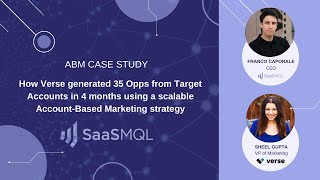
In this interview, Franco talks with Sheel Gupta, Vice President of Marketing at Verse (formerly Verge.io), about the company’s account‑based marketing (ABM) program run with SaaSMQL. Verse provides a vertical‑agnostic platform that instantly follows up inbound leads via text, using AI and human‑in‑the‑loop qualification. Facing limited internal resources and pressure to generate qualified opportunities, Verse adopted an ABM strategy with SaaSMQL, focusing first on proven verticals (real‑estate, mortgage lending) and later expanding to home services, education, and healthcare. The program employed a multi‑channel approach—email, LinkedIn ads, digital ads, and a standout direct‑mail piece (a box of biscotti)—delivered in synchronized “rounds.” SaaSMQL handled list building, intent data, and execution, while Verse supplied the ideal customer profile. Data‑driven reporting was enabled through Airtable dashboards integrated with Salesforce, allowing real‑time visibility of account status, engagement, and pipeline impact. In the first four months, the effort generated 50 engaged leads, 35 opportunities, and 2 closed deals, demonstrating clear ROI and a positive customer experience. Sheel praised the agency’s professionalism, cadence of meetings, collaborative communication, and the ability to outsource complex ABM tasks, noting that direct mail cuts through digital noise and is especially effective for B2B enterprise audiences. He strongly recommends SaaSMQL to other SaaS companies for ABM execution.
Chapters
Okay, so today I'm here with Sheel Gupta from Verge.io. How are you, Sheel?
Good, Franco, how are you?
Good, good, thank you, thank you. You know, Sheel is— we have been working together now for quite a bit, quite a bit of time since end of last year, and Sheel is the Vice President of Marketing at Verge.io. Can you introduce yourself and tell us what's your role at Verse and what Verse does?
Sure. Yeah. So as you mentioned, I run marketing at Verse and we basically help our customers follow up with their inbound leads. We do it immediately through text and we use a combination of AI and human in the loop to get the leads qualified and ready for the sales team.
And you guys target many different verticals, different industries. Like, can you share a little more about that?
Yeah, yeah. So, um, we initially started in real estate, and then we started doing real estate mortgage lenders, and then we started going into the home services. So we work with solar companies as well as really any sub-vertical within home services. So, you know, plumbers, roofers, HVAC, and we're also starting to dabble in education and healthcare. We have a type of product that's pretty vertical agnostic. Most companies can use us. So yeah.
Yeah, in fact, I saw a phenomenal traction across different verticals. And, you know, we started working together back in, at the end of December, beginning of January. Can you tell us what's your role at Verge in particular? What is your goal? What are you trying to accomplish there?
Well, I remember when we first started talking, I was really new to Verse. And at that point, we really didn't have a whole lot of marketing programs going on. We had some social media, some content. We were doing events before I joined, but then COVID happened. So there wasn't really a lot going on. And there was a lot of pressure for marketing to start driving qualified opportunities for the sales team. And so I was trying to figure out how do I quickly put some stuff together. So ABM is always a go-to. It's something that just is always proven. It almost always has really good ROI. So we started building it internally, but I only had 2 people reporting to me at the time. And so I kind of needed help. And so that's when I reached out to you and we started building it internally and we started using you guys as well. So we had two very solid ABM programs going at the same time.
Yeah, and I remember since you target all these different verticals, we, we had a lot of discussion about where the low-hanging fruits are in terms of like where should we focus our program versus what you're doing internally and what the rest of your team is focusing on. And I remember we, by looking at the data and all the data that you share with us, we, we decided to start really ramping up on the, on some specific verticals, the mortgage lending, real estate, and a few others.
Yeah, um, when I joined, we already were pretty proven in the real estate mortgage market, so that was perfect for us to be able to pass on to you guys because we knew it was the right— we had product-market fit there, um, we knew the message, we knew what was working, so it was really just seamless when we gave that to you guys and you were able to just run the program and provide us qualified opportunities. And then when it came to the new verticals that we were still trying to figure out what our message was and what would work and what would not work, who we should be going after, that's the one we did internally because we had to do a lot of trial and error there. So it worked really well that the, the vertical that we kind of really understood well, we passed on to you guys and you guys were able to take it from there.
Yeah, in fact we were looking for something that we could scale pretty quickly. So instead of like, you know, testing out if there is product market fit or like going into some unknown verticals, we were looking, let's start from what we can scale right away.
Yeah.
And then let's move gradually into some of the other verticals. And so tell us more about the program. Obviously I'm pretty familiar, but you know, we decided from the beginning to focus on this multichannel strategy for ADS. And then, you know, we developed the target account list, but then we wanted to really target this company list, these specific accounts across different channels, right?
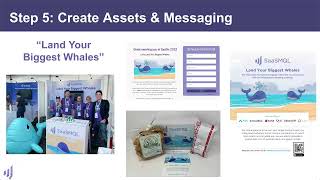
Yeah, I mean, what was really great about working with you guys is you did all the work. We let you know what our ICP was. You guys helped us create these accounts, figured out intent for us. And then when it comes to the actual execution of the program, yeah, it was a combination of emails, digital, like LinkedIn, Facebook, and then of course the direct mail, which was like the clincher. That's whenever we would start to see results, it would be because people got an awesome box of biscotti. And I would've never thought that people would go that crazy over biscotti, but they do. And as soon as you guys sent that, people were ready to, you know, hop on a call with us. It worked like magic. It was pretty great.
Yeah, those biscotti are getting pretty famous.
Oh my God, yes.
But yeah, we like to work with some local vendors when possible. But I think—
Oh, kind of a note to any— if any potential clients are listening to me right now, you can insist that Franco send you a box of those biscotti because they are really good and you will enjoy that.
Yeah, and again, local vendor here in the Bay Area. They make it by hand, so it's pretty cool. But I think, yeah, what we've proven obviously across all these years is— I'm not going to call it secret weapon on the direct mail side, but definitely is a marketing task that seems to work really well to grab the attention, especially when we combine it with the LinkedIn ads, which work really well for you guys. We see solid leads coming. On your content. You have great content, obviously, which helps to, to drive the initial engagement. Same for the email outreach, but then the direct mail really worked to push them over the edge and convert them from initial engagement, top of the funnel leads, into sales opportunities.
Yeah, and we were actually pretty surprised at the amount of results we got from the LinkedIn stuff alone. Because we've run these same types of programs internally and have— we were not able to see the same results that you were, that you guys got. So we're not really sure how you did it, but it worked and we're happy.
Yeah, the key there for us is always we have to target at the same time across all the channels. So when we select your list and we agree on what the list would have been from an account perspective, the, the, the same people within a certain time frame they need to get the message across all the channels together. So the email, LinkedIn ads, the direct mail, right? That really helps. If someone doesn't engage on LinkedIn, they're going to do it on direct mail or vice versa. And, um, yeah, and we like to target it to put all the budget against those companies without going outside our target list. I think that, that really helped.
Yeah, 100%.
And you guys, yeah, had a very cool direct mail offer. Box looks really, really appealing from a branding perspective.
Oh yeah, it looked really—
What do you think is something that you liked working with our team? Obviously on a week-to-week and month-to-month basis.
Well, first off, all of you guys are just so nice and just so fun to work with. You weren't on all of the calls, but sometimes me and Angelica would just, you know, just talk about random stuff for like the first 5 minutes and just like, you know, we connected, it was enjoyable, but then we would get into business. And I liked the cadence that you guys had where it would be like 2 or 3 meetings where it's like, okay, tactical, this is what's going out, this is what's being sent. And then we would talk about like list building and we would review the lists. And then once a month you would come in and we would be able to work on the strategy and really kind of see like, hey, what's the revenue looking like? Is it successful? Should we tweak something at a strategic level? I just think that it was a pleasure to work with you guys, but then on top of it, the structure was really, really good. And I like that we had the ability to optimize every time we did a new round. That was really cool.
Yeah, I think that's a super important part is we divide our ABM program into rounds, as you very well know. So we can have them all in front in terms of data and KPIs and performance, and we can see if there is any part that needs optimization. What can we improve at the engagement level, at conversion level? Is the email outreach? Is the direct mail? Whatever the opportunity is to increase the conversion. At the end, for us, what matters is are we driving opportunities or not? That's why it's important.
And I liked how data-driven you guys were. I love the Airtable that you set up and We were able to see, okay, these are all the accounts. This is where each of the accounts are on the funnel. These are how many have responded to, you know, the social media campaigns. This is how many people have actually replied back through email. And then you guys were integrated with our Salesforce. So we were able to see in your Airtable instance how many are actually talking to sales, turning into opportunities. And it was nice just to see everything in one place and know how things are going.
Yeah, that's another important aspect is the attribution. Obviously, you know, we spoke with companies that are potentially doing very well on their campaigns, but they don't know the ROI, they're not sure, so they stop spending, which is, you know, a shame. So it's important to see for each dollar that you spend, is it driving something? Are we getting a positive ROI on that spend? So talking about this, can you share some, some of the results, you know, in the first few months?
Yeah, I actually wrote this down. In the first 4 months, we received 50 leads. This means like of these accounts that we were going after, we had 50 people engage with us and be willing to talk to us. And then 35 of those actually turned into opportunities. So it definitely, yeah, we exceeded our expectations. And then of that, 2 deals closed. So in the first 4 months of running this program, 2 deals closed. So I mean, the ROI was already there. And I think it was just at that point, okay, it was proven it works. It seemed like the people that we were speaking to had like a really positive experience. So it was also not just helping drive revenue, it was also creating a really like positive, you know, you know, customer experience. And it was just really a matter of how much we can grow this. And what's really nice about this is when, when you— it's really hard, at least in my experience, to outsource things and it actually work well. I've worked with so many agencies. And I don't know, for whatever reason, I just have not been able to make it work. But with you guys, it's like, okay, it's working well, the ROI is there, we know it's being handled well. And it's much easier than having a team internally do it. Because, you know, having a team internally, you know, there's, there's turnover, there's people who get sick, there's all kinds of stuff that happened. Whereas when you, when you, when you outsource it, you just kind of know it's working, and it's going to always kind of be running, and you don't have to worry about it. And that was nice too. So it's not just the the revenue piece. It was just the time and energy that goes into something like this. We were able to give it to you guys. So that was really nice.
In particular for ABM, I remember even when I was working full-time and integrated direct mail is so many— there are so many moving parts, so time-consuming. Putting full-time employees dedicated to that doesn't seem the most efficient thing. And as I'm glad to hear obviously that things are working well because I remember, you know, you guys have very aggressive goals from the beginning. So we want something that works. We cannot spend 6 months to figure things out. I needed to work from the first quarter.
Yeah, we had goals and they had to be, we had to meet them immediately. So it was already kind of an impossible feat, but we actually got there and it's because you guys helped us.
So some people ask me, does direct mail work for B2B? You know, I haven't seen it from the '90s. What do you think about that?
Oh, well, I think direct mail, the reason why it works is because not enough companies do it. So it really cuts through the noise. I had been a B2B marketer, I've been reached out to by vendors for years, that I just don't even read my emails anymore. I only read emails if I know who the person is who sent to me. But if something shows up at my doorstep, I'm going to take a look at it. And so it's a way to cut through the noise. To me, it's a no-brainer. If there's like any— I don't know about B2C, but when it comes to B2B, you have to do ABM, especially if you're, you know, upper mid-market to enterprise. You know, I don't believe that, you know, a lot of marketers who do enterprise, they spend so much money on AdWords and, you know, display ads. And I just don't think that's the right strategy. Because usually a C-level person at a big company, they're not going to do the emotional buy where they see an ad and go and buy it. They— it takes time and they need to be educated. And ABM is really a way to be able to just like get in front of their face. And And ABM might seem expensive, but if you actually look at the ROI and if you actually think about how much you're spending on ads, it's not that expensive at all. So I don't know, to me it's an absolute no-brainer.
Yeah, it is. Right now there are not many ways to break through the noise, you know, like you said, of emails, ads. Events are not an option for now, but even when they are, you need that extra step and really trying to, to get in front of the right people. Obviously, if you target the wrong people, it doesn't matter what you send and how you do it.
And I mean, events, like, yeah, they're good, but they're not repeatable. It's not something that could constantly go on in the background all the time like ABM can. It's not repeatable. And it just, it's really hard to make the ROI on events work because you have flights, you have hotels, you have per diem, you're taking a bunch of people, including your salespeople, out of the office. So unless you're, unless you're seeing huge returns, it's usually not worth it.
Absolutely.
Whereas ABM, again, is a no-brainer to me.
And so my last question for you is, would you recommend to other SaaS companies, you know, VP of marketing or sales, to work with SAS NQL for their ABM program? And if yes, why?
No, I would not. No, I'm just kidding. Of course, of course. No question. And I mean, the reason for it is, You know what I had stated before is, I mean, the ROI is there. It's easy. You guys are doing all the work and you guys have quality. You guys, this is what you guys do. So you know all the best practices, you know how to make sure it's executed smoothly. So you have that as well. So you know the customers are getting a good experience. So 100% would recommend it.
Great to hear. Uh, Shiel, thank you so much for, uh, taking the time to, to talk to me today. Really appreciate it. And, uh, yeah, we enjoy a lot of working with you and your team as well.
Same, same. Thanks, Franco.
More from Franco

The 10 Fundamental Steps to Implement Account Based Marketing at Your SaaS Company