ABM Unlocked: How to Leverage Buyer Intent Data in Real Time
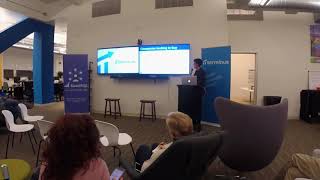
Terminus product specialist Josh and a marketer show how to score and prioritize accounts using first-party signals like website visits and third-party intent data. They demo real-time Slack alerts, Salesforce integrations, and direct-mail campaigns, then share best practices: start with data you have, run pilots, and avoid over-personalisation.
Chapters
Alright, thank you everyone for coming tonight. I know the traffic is particularly bad. Any of you who grow here?
Just me?
Because of Greenport, it goes south, it's particularly bad. But yeah, thanks everyone for joining here. How many of you is the first meetup for Manjaro? So tonight we have a particularly interesting topic, at least from my, my opinion, which is intent data. And intent data is becoming a buzzword in each week. All of you have already heard of it, but it's really, really hard to make a word here and make it effective because there is so much data around. And so even when I was talking to people about this meetup we were doing tonight, a lot of my connections were saying, you know, I don't know too much about it. We are pretty new to the whole intent data. And so that's when I decided it was a good topic to cover. And thank you to Terminals to host this event tonight. Josh, you want to tell what Terminals is, what you guys do?
Yeah, so Terminus, um, we're in the account-based marketing space. So Terminus has been around since 2014. Originally started out as an account-based advertising company, so really being able to help marketers who are trying to do display advertising, LinkedIn advertising, be more targeted, get to the right accounts, get to the right people within accounts that really fill that need. So how we've grown over the years, I actually joined Terminus in this office, joined Terminus as part of Terminus acquiring what we call BrightFunnel. So BrightFunnel, we were more in the marketing reporting space, focused on marketing attribution, multi-touch attribution, bringing all those data points together. So now with the two products combined, what we've really set out to build is the full A/B and platform. So connecting to your data systems, bring all your customers together, You might have additional data coming from first and third-party sources, so you can target great accounts, engage them in different channels, and then ultimately measure it all back at the top.
So I want to talk tonight about all the types of intent data, not just first-party, but also third-party intent data and how to use that from a metric perspective. Before that, something about me since most of you are new to this meetup. I was formerly head of marketing at a company called Branch. Before, I was in an NYC company called Optimise with local space, but always focused on demand generation and account-based marketing. I'm originally from Venice, Italy, and the last 2 years I started at this company called SaaS and Growth. And SaaS and Growth basically focuses on account-based marketing, helping SaaS companies growing pipeline from target accounts. And we do it in 3 phases by helping them selecting the right accounts, running campaigns to engage those target accounts, and then measuring attribution from all of their campaigns. OK, so I'm going to give this introduction tonight about intent data, how we use it, how we work with clients, what is my experience. And then Josh is going to talk about a little more in depth on this intent data, some workflows that they've done, and how certain industries using intent data to really power those programs. And then we'll have a panel from Josh and I, and particularly Q&A. We want to hear from you if you have any questions or comments on the topic. And then we'll have a little more conversation. So you already gave the introduction. Thank you, Josh. So we are running full steam ahead. I have to give a little announcement. We always have this session about open demand generation roles. So I was asked to publish this role at Comcast. This is in Walnut Creek, so not super close, but if someone is from the East Bay, they're looking for a regional demand generation specialist. If you have any roles that you want me to advertise in the group, please let me know, just email info@sussexuab.com. Okay, so let's go and talk about the topic tonight, which is how we make sense of buyer intent data. I always had a marketing journey study to grow over time, and this one is particularly focused on the right person, right time. So in this case, the right person, right time— right message, wrong time. And the intent data is particularly useful for one thing: for the right time. Because right message— probably almost all of you have the right message. You know who you're targeting, you know what's the pain, you can come up with a message pretty easily. You understand who's your persona, who has the pain that you're solving. But what about the right timing? How do you time your campaign for someone who is actually looking? For what you sell. For example, if you—
if your platform is helping people with accounting, but right now you don't have a pain with accounting or financial—
tracking financial data, you're not going to tell him if you're the right person. Maybe, well, you have a pain with your current platform, you want to switch, but how do you know when to switch and when is the right time? And that's what measuring that and how So these are the kind of— I categorize as 3 types of intent data. The first part of intent data is what Thomas was mentioning on tracking your own website, tracking what leads you are generating, what is the website visits that you are getting. Maybe you are sponsoring events and you had a bunch of people coming to your booth. That obviously shows intent, but it's something that you can service pretty easily just by looking inside your assets in your company. And then obviously tracking opportunities—
who is your sales lead every day, who is advancing the statement.
And then you have the third-party feedback data, and that's where we get in a little more complex area. So we have review websites, very popular now with G2 Crowd, now G2 and Kaptera, where you are basically tracking what are companies looking at. You know, when someone is looking at different platforms and comparing them, that shows a lot of intent. And that's what these companies are tracking. So when you become a client of the tool, if you have that data, you can see when someone is scoring high on a certain topic because they are looking very actively at those solutions. Then we have the publishing content consumption, which is through companies, for example, like Ogura, where they are looking at what people are visiting in terms of content on third-party channels. For example, analysts or partner websites where people are downloading white papers on specific topics, and they track based on topics. So if you, for example, are a travel management platform, you're going to track people that are looking for corporate travel solution. And then the other third-party data is the ad networks where you're able to get searches or engagement with certain type of display ads. And finally, the other intent, which is a little more subtle, is those trend signals. For example, when someone raises funding, so you can track on Crunchbase, or when they start hiring in certain departments, that can show intent. Meaning like, you know, they are about to buy a certain type of laptops. And also technology, like someone that just signed up with Salesforce, they might need some other platform that— Okay, so let's start talking about the first-party data for email. So the first one that you want to look at, and I strongly recommend if you do, if you walk out with something tonight, is Start taking a very good look at all your first-party data because just working with a lot of clients, I see that it's sometimes so overwhelming that people don't track it enough, and they maybe start focusing more and too fast on third-party data, but you have so much data already that you can look at and make the move. So example, anonymous visits to your website. So this is from one of our clients who are tracking what companies are coming to their site that are actually part of their target account list. And so here we're tracking when they came, what page they visited, where they came from. And particularly, it's that association with your target account list that makes it really valuable. Because now, of all the amount of noise that you have in your tracking Google Analytics and whatever you track the anonymous visits. Now understanding that someone from your target account is coming, hopefully, and even better because you are targeting those accounts on digital ads, on their email, on events, or whatever it is, that's a very good signal. And obviously Terminus has another solution. Like, their solution has a good way of tracking these anonymous website visits. Joshua is going to show some of it.
During the presentation.
When this happens, I strongly recommend always make sure you update the account status. So if an account comes to your site, it's one of your budget accounts, I like to change the status to aware. It's not a cold account when it gets to your site, so I want to treat it differently from other accounts.
That's step number 1.
Then you track lead and form submission. You can go back 6 months, 8 months, 12 months, whatever makes sense. And you want to look at what— of all of the submissions you got, how many of those came from your target accounts? What was the quality of the submission? Were they decision makers or not? And so that will allow you to score those accounts according to the type of submission, the number of submissions that they made. Did they request a demo? Did they download a white paper or sign up for a webinar? Those are all different levels of intent. And then you want to update the account status and account scoring based on this type of, uh, signal. This is an easy one, but even this is not done every time, and I can testify for that. Look at your opportunities, but not just those that you just opened. Look at the last 3 years. Uh, I worked with a company once. I looked at their lost opportunities the past 2 years. There were over 500 lost opportunities. So we run a quick campaign against those lost opportunities. Like this, we got 15 new opportunities of people that said, oh yeah, I want to take a new look. Maybe we didn't have a certain solution, a specific feature back then, or something changed. So you need to have those segmented in your database of accounts where it shows, okay, these are my accounts with lost opportunities, and periodically I want to go back to that audience.
And run campaigns specifically for them.
And so for those that are open opportunities, you tag your account status to opportunity, lost opportunity to lost opportunity, and if they are closed won, you tag them as customer, so you keep your account— your target accounts clean and you can segment them as well for the same segment. Now, third-party data, I think Joshua might be talking a little more about this later, But the two I mentioned, D2Cloud and Kokora, these are— they look at companies that are looking to buy right now. So they have this score, intent score, that will tell you the company has, for example, a 60. It's different than a company that has 90 against the specific topics or specific segments. And so you want to look for them in your these are companies that I'm tracking.
Like, specifically, you see here they're looking at the market ratio, they're looking at the market ratio consulting, they're looking at market capitalization, they're looking at book value.
These are all companies that I want to talk to when they have that specific interest and their different scores, obviously.
And then Trendsignal, Crunchbase, we use it a lot when someone, when a company raises new funding, they usually are either scaling more, they start acquiring a bunch of platforms, they need to grow. That's a very good signal. So I have a weekly job to refresh the list of companies we've been funding. We get notified, we trigger a bunch of workflows specifically, and then I was really keen to track company growth. Depending on solution, I have clients that are looking at a specific environment For example, engineering, and they look at companies that are growing their engineering department in certain areas, or they have a certain minimum of engineers, and that's what becomes interesting to them. This is a bonus, but I added here just because it saved me so many hours of work. This little tool called Mail Parser. So if you get regular newsletter emails that are always the same format, and you want to put them into CSV file, this would be the thing. And I looked for a lot of solutions and I was amazed how easy it is to give it a file, the exact type of content that you want from the text of the email, and then putting the content in the right columns on a CSV file. And then if you want to add it to your CRM or do whatever you want, you don't have to be Zapier, so you really, really cool. OK, so the main topic of tonight, which is operationalizing intent data. And I'm going to focus with marketing at the beginning, then sales. So I will show you some of those account status. But the things that control the account status is the account scoring. So one of the things you want to do in order to segment your audience is have some sort of model to score your accounts. And all of this information down at the lead level, but then you need to roll out this at the account level. So when you get, for example, 1 or 2 or 3 anonymous visits from one account, you want to score that account and change their status. When you get email replies, your SDRs sending emails to target accounts and they have a positive reply, it's sort of scoring. If they have a negative reply, did they tell you they're using a competitor? Did they tell you last connected 3 months. Those are all good signals. You want to mark that account because you're going to run different campaigns with those accounts than the cold ones. And then I always leave some space for custom signals. Every client I work with, they have a specific signal that they want to track because depending on their industry— for example, one client who works in the real estate industry, they look at how much the real estate agents are selling. And so that is the data that we have to track separately when they reach a certain level, then we score accordingly.
And so that's why we always have some custom stuff, but the others are pretty standard.
And once you score them, you want to segment and prioritize your account list. So let's say you have an account list of 500 accounts. You have an account state and an account scoring. So to simplify the accounts, you have segments of your accounts that are completely cold. You have no interaction. They don't know who you are. Never been to your website. Never happened.
Then you have some clients, some target accounts that might be interested in what you do. They visit your site.
They maybe show up to a booth that you scan their badge. Or they register to your blog and newsletter. But at least you know that someone in those accounts someone that you do—
that is relevant to you as a title, is aware of what you do and what you have.
And then you have the engage opportunity. But it is important to have those segments at the beginning so that you can run sophisticated workflows that I'm going to show at the end of the lecture as well. Okay, so example here, let's say we have Tier 1 account there is a high engagement. So tier 1 engaged, that's my first segment that I want to analyze. Actually, let's start with the low intent. So I have a tier— my tier 1 accounts, those that are most valuable to me. I'm going to start with the low intent segment. So they kind of show some intent or very little intent or no intent, but they're still all very valuable to me. So I want to work backwards on that one. By showing them ads online via LinkedIn, your Facebook, you know, kind of marketing those programs so they start consuming content, coming to your site, reading some of your blogs, and then you also track those interactions and engagement. Once they, for example, they read your email, they sign up for a specific content, you can add them to an email sequence to follow up and nurture them further and propose new content and try to really keep them warm. And then maybe they do want to engage, do want to pay the weekly, and then you can add them to, to our sales team. But if they don't, but they are showing that by engaging with those assets and that content, then they become a tier 1 account. And then I want to do a different workflow. So maybe I want to run a direct mail from GrooveKart. And so this is an example of a high-intent, tier 1 campaign that we do where we send them a direct mailbox because we know they have been to the site before. They've been to an event and scanned their badge or got a t-shirt, whatever it is. So we do this email direct mail workflow to try to keep them. And we do that in a pretty short timeframe.
So we don't want to wait 6 months to create this workflow.
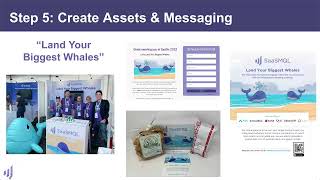
That's why it's important to have all of this stuff. Set up before you start. This is an example of something we did internally at my company. We sent this box with a bar of chocolate to a Catalan showman come to our site and show his pets and download some content that we have. And the incentive here was take a meeting with us, we'll send you a $50 Amazon gift card, we have a specific dedicated landing page. With the calendar integration so they can just go on the landing page and book the meeting. The last one we did, we sent 450 boxes of this, of all the translations done, and we got 33 meetings booked. And so it was— and they were all booked from the Italian account. None of those were outside our geotargeted profile. So extremely, extremely powerful when you do it the right time.
If you would have waited 6 months to do it, they would have all worked really well.
And then when you have your segment, for example, if you have Corporate Enterprise Tier 1 through 2 through 3, you want to track how many accounts you have for each, how many of those are engaged, what is the percent of engagement, how many meetings you go to, how many opportunities you find, and then you can track the percent of engagement to see how it's increasing. You can continue targeting the same accounts across different channels. Another way to track account scoring for first-party data is Engager.
That's a really cool tool that connects to your Salesforce, and you can have all your different account lists and score them based on, based on their engagement. They track it by mean of engagement, so that you can have based on the list or a specific account.
And then to close my presentation, uh, intent data for sales. For sales team, in my experience, they want to see two things. They want to be notified in real time when one of their target accounts come to the site and does anything. They want to know that. Uh, the VP of Sales, the Chief Revenue Officer, every single account executive just want to see that information in real time.
And the second thing is they want to have a list of accounts that are more willing to go after, especially the SEOs.
They've always wanted an updated list. But now they continue to go after these super cold accounts that have no intent, and so their percentage of conversion is really low. So what you want to do there is you want to create the real-time application based on that intent. So I use Slack and emails to do that. So when they have, for example, a new lead from target account, if you have a channel in Slack you create, let's call it ABM leads, shoot out a notification saying there is a new lead from this target account and put the information there. Same when you have an anonymous visit from the target account. I have that on the regular, notify every time someone from target account comes to our site. I can send a LinkedIn message within like 10 minutes to the person that we've got in front. And it's even better when you do that and you're running direct mail campaigns against those accounts. I literally had the situation where we sent out those boxes and one of the target accounts came to the landing page, they got notified. I reached out right away to say, "Oh, I saw you were looking, checking out, do you wanna set up a meeting?" The answer was always yes, and pretty impressed by it. So it's really, it's really effective when you do that, scale it to your whole sales team.
And also on a specific account, one of the target accounts, which is a specific sport.
And then the second part, the desprioritization, you just sort the list of target accounts based on intent. And then you want to create a separate list for new accounts that were not initially part of the target account list. But I'll show you that, as long as they meet your real customer profile. This is an example of the Slack implementation we use for our clients. It says, "Hey, we have one of your main accounts came to Slack right now." To power a lot of this automation, we use Zapier.
Really cool tool if you haven't used it before.
We use a lot of workflows in Salesforce, Slack, we use Airtable too as a backend. And so we can, we can kind of automate a lot of those cool workflows. In conclusion, so the intent data will help you respond to low-hanging fruit opportunities. Take a look at your first party internet data first. There is a lot for growing you through there most of the time, from anonymous leads to cold leads and all of that.
Then you can move into third party data that is going to help you know which companies are looking at specific topics actively.
And if you are looking at together very clear topics that you target, that's going to be your Here, Peter Rock from Kool, digital marketing and sales. And then it's important to automate this workflow. So don't do one-off campaigns. So if you just decide next month to go and filter your lost opportunities once and send them a box of cupcakes, you're gonna get some opportunities, probably some meetings, some engagements, but that's it. So everything that works is when you automate it, put it in the backend, and it just works for you. You might want to refine it, but have something that works every day, every month. So this becomes really powerful. With that, I close my presentation. Thank you.
Any questions on this?
What would you say is like the first, first two things that people would use ideas and actually do something with? Because I get all this stuff, but like when you start saying and choose that.
And I'm like asking myself, what piece of technology, how do I automate it, how do I put things together so that I give myself some more self-education? Yeah, how do I—
that's hard to predict.
Yeah, yeah, so that's, that's the hard part, right? So it's, uh, there are a few challenges. First of all, there is a lot of data and you have to aggregate that all together. The place could be Salesforce. We generally use Airtable because it helps us kind of— it's almost like a Tableau with less, less fancy Tableau that allows you to really make sense of all this data that's coming from different sources and directions. You can use Salesforce for that as well, but it's, uh, you're gonna need to do a lot of math inside, you know, your fields and your That's why we use a more flexible platform like Airtable. So we aggregate all that data and then you want to take one workflow at a time. So for example, anonymous visits, you focus on that first and you put that information, you create a workflow, create a— okay, you have that data. Now let's look at all the leads, make sure that you get all the leads.
And then the difficult part, I think the most difficult one, is to run the data at the same time.
'Cause you're gonna get a bunch of people, some of them are Gmail address, some of them, you know, how do you then push everything to a task? Even when you're doing Salesforce, you may have a piece of product, there's always a challenge to clean that up. Josh is gonna talk a little bit more about this and how they approach kind of getting all of this data from Aurora from anonymous spaces in one place. Uh, but then you also have to put like your Salesforce data and everything. G2 data, you can use that. Put everything in one place and then start looking what your sales team wants to see and what you need to see. The thing that I would do one thing tonight would be to create these segments here. So really start, have a list of target accounts and segment them at least in stage of intent.
And Tier 1, Tier 2, Tier 3.
If you have that, it's really like 5 times more advanced than most of the companies that I work with, because, uh, it's usually companies don't want to leave you too much, right? They don't want to say, oh, you're targeting this type of accounts. They want to keep it open. But keeping it open doesn't allow you to have systematic target company targeting. So be selective, create the target account list and then send them that based on those. Yeah, a lot of the data is pretty easy. Then like I said, I use, uh, like creating campaign plans, like this stuff where you kind of map what's going to be your workflow. And start with a big one. You don't want to have a 30, 40, 70, 100. Start with a big one workflow where you say, okay, we're going to send them one box, 5 emails, and then we target them with play out, for example. Or maybe you want to do like a pretty good VIP dinner and this and that, whatever it is you're working on, but have 2 or 3 versions that you have. And then, like I said, a lot of, a lot of the automation that I use, I do it through Zapier. So this is a tool, there are other tools that do the same thing, but this is something that allows you to connect different systems that wouldn't be connected and have a logic whether we kind of want to trigger those pull notifications or not.
Here's some best practices around your— like, if you look at the direct mail example, so if your account has shown some level of intent, you should probably consider to display ads or whatever the case might be.
Is it 33 out of 450 because you happen to set the box for those 33 people that happen to display that intent at a certain point in time?
Or you just happen to be a company where sometimes the person's on ad click?
How do you sort of like take the intent data and sort of translate that to specific people that are decision makers to then sort of target?
Yeah, so The people comes before you look at the intent. So first I look at my account state. So when I create a list of target accounts, I look based on people. So for example, in our case, I need to raise at least $10 million in funding, have at least 20 employees, have sales force, you know, whatever, whatever is your requirements. Then you look at requirements, so, you know, target, your marketing, the VP of Sales, the CEO. Those are my personas because we solve the pain for those personas. So I want— those are going to be my, uh, the people that I send the box to.
I don't send it to the top of the, uh, more clients.
And so what I was doing there, I was targeting those accounts on LinkedIn, particular industries. So we got a bunch of leads on LinkedIn, people that they might —bit to the side, and more content, and requested more information, requested one page of what we have. So those were all short intents. And then on top of that, we use this intent, this type of intent that I showed at the beginning, which is this spreadsheet. So I was looking for companies that just raised money and they don't have any margin yet.
or that they just hired a new marketing professional, right?
Because those are mostly the companies we work with. They actually— they are the companies that feel the pain the most. They raise money, they have budget, they don't have the people, it takes time to recruit and stuff like this.
So perfect intent, folks. So a combination of the first-party intent we're looking at, doing paid and display, and this trend as well, we're going to set and I think those accounts that way. And then we were—
the persona we were targeting are only those that want to—
you know, marketing CEO, CRO, with your face.
I wasn't sending to lower-level marketing person. So that's what got us that pretty high conversion.
And you know, it became an extremely profitable campaign.
A campaign like this cost us about $10,000. Absolutely. This was just an example. I'm not saying that you should do this for live traffic all the time. We do use direct mail as a first touch as well. There are several people in account that they don't engage with ads, they don't engage with emails.
And so when they get a box, they read it.
And so we don't want to leave you to just this. This is a— I wanted to show one example of what you can do when you start evaluating more intent, how you can do that, how much budget you want to allocate for this segment. But absolutely, you can use direct mail for cold accounts. Some of the accounts that we sent were cold from a first, from an intent perspective, from a howler intent, but they show a high intent from the brand that I was saying, like they just wanted, and they had a deal with your brand. So that's the thing, that's why we send the box. But you know, you can mix and match these things, you have to kind of have it and test it.
I don't know what's going to work for you.
What I did know is obviously when you send the box to accounts that are not cold, that have been warm up with ads before, it works very good. But you still get a lot of views. I always get a lot of views from [FOREIGN] [FOREIGN] Um, so go ahead and talk a lot about this.
Um, I feel like I'm getting too salesy to be out here. I throw something at me so I can get over that. But yeah, so I'll talk about is a lot of this is in the context of ABM. This is the context of how we thought about modernization. And one of the things I'll say upfront is that we built out a direct partnership with Bombora. So we leverage Bombora intent data ourselves, and we also make it available for our customers built into the platform because we just found that it's been a really critical part for finding an exit.
We use APM as part of the strategy.
This is me wearing the same shirt as last week so that you remember. But I'll talk through— I know we covered a lot on intent data, talk through a little bit about some of the different types of intent data and some of the different ways that intent data is being built out. We'll go into a little more detail on third-party intent data and some of the different data sources out there. Then I'll go through some of the intent-powered use cases, different flows that Sarah Huffman has had success with and doing well. So overall, I think we've got this pretty— covered pretty well, right? Intent data is some of that data that you're seeing in terms of content consumption or user behavior to give a signal that there's intent to buy or interest in product or experience. In terms of intent data, and so this is going to be more in that third-party intent data. So I think about it that way. So just kind of breaking down that third-party intent into a couple different categories. So first one is going to be independent websites. This is going to be something like G2 Crowd. This is going to be a place where this is a website where people are coming to get feedback on products, where G2 Crowd— we do a lot of G2 Crowd data ourselves. We're a part of the G2 Crowd program. We'll get, let's say, polls directly into Salesforce, and we'll create that into a survey. A Slack as well that shows us when, one, when people are on our G2 Crowd Review page, they'll show us what companies are searching. But then we can also see when they're looking at competitors or when they're looking at the overall topic category.
So independent websites, really powerful intent data.
It's usually a really strong signal because it's coming directly from that type of research. But the only— the downside there is it's generally local, right?
We get, I'd say we get probably between 5 and 15 G2 Crowd Intent notifications per day.
And some of that is, we'll see like, oh, this was, this company was on your competitor's page and then they were on your page. And so this might be multiple from the same account. But those are all things we pipe directly into Slack so that sales can reach out directly, ask the person to reach out directly. Knowing that it's a good time to engage. It's also really helpful for knowing what editors are looking at because that can help to tailor that initial outreach. Second type is publisher co-op. This is more in line with how Bombora is collecting their intent data. So basically what they're doing is they have a data co-op of over 7,000 websites through things like analyst pages, TechCrunch, News, they're very focused on B2B industry sites, content syndication sites, and what they're doing there is using cookie data and browsing data in this data pool and sharing that in an anonymized way. So no personally identifiable or private information is being shared, but we do know someone from this company was reading an article about account-based marketing, and that's going to be something and that can come up in one of those keyword topics. Definitely great with this co-op and the way it's set up, it's compliant with like privacy and security laws. You get more volume of data than independent websites. I do know with Quora, they're running machine learning and stuff parsing this topic, so it is English only. But if you're targeting English speakers, it's a good dataset. The last type is called— is using bidstream data as a data source. So bidstream data comes from advertisers, display advertisers. So essentially what that does is anywhere where a display ad is being served, bidstream is picking up on keywords and things like that from that page. Advertisers are also creating cookie tracking all over these websites, they can look at where they're serving display advertisement, because that's how they're gonna pick up a lot of cookie data and keyword data. So essentially what BidStream is looking to do is take this very high volume of data, try and tie it back to these cookie profiles, and use those keywords as indicators of intent. Some cons or things to keep in mind, With GDPR and CCPA, there's some gray area right now. There's been some GDPR lawsuits recently around, like, is this legal? Are you sharing this? Because you know you didn't get permission to track this, but you've kind of gotten permission to track this, so it's kind of a gray area. And then on the other side, it's more around tracking those keywords. Logic are you putting into that? Like, if you're looking up, you know, analytics or something like that, is it marketing analytics? Is it sports analytics? What, like, what are you going into in terms of analysis? Um, and yeah, so like some of the differences there, right? Intent topics will tie multiple keywords together to an overall theme, uh, whereas keywords are going to be looking for individual words. So an example here is, you know, you might be scraping for keywords. The words social media don't appear together in an article, it's not showing intent for social media. Whereas if you're working through and creating a content topic with a little bit of machine learning, AI, this is something that, that Onbora does pretty well. They are looking and they're seeing, oh, people are talking about Facebook and LinkedIn I can infer from that that those are related to the social media topic and start to get better signals or more reliable signals on that. To go more from there, thinking about this in terms of ABM and even thinking about this in terms of marketing in general, I don't think— I'll hit ABM. Isolated thing. It's all part of your overall B2B marketing strategy. But there's definitely a lot of different ways that you can leverage this, engage this. I have a lot on the screen so I can make sure that we get this out to everyone, but I'll pull up this reference. But being able to feed those data points back into like the automated workflows, getting that directly into your sales hands gives you a lot of ways to to take action on it. Definitely something that I think is important to keep in mind is what you want to do and how much trust you're putting into the intent signal. I've had the experience myself, even working in marketing operations with, like, inside sales team, where we've gotten some intent data and we're getting it and we were piping it directly to our sales team and every single intent signal we had, we sent to them and said, "Hey, give the SDR, give these people a call." And they were giving people calls and then maybe they had the wrong person or had the wrong thing and they got responses like, "No, we don't have a project. Why would you think that?" Or, "It's kind of creepy. Where are you even getting this information from?" And so there's a lot of potential that if you try and go too fast with it or do too much right away that you might build distrust with your sales team or not engage in the right way. So next I'll go through some workflows and some ways that we thought about bringing in intent data and how to leverage it as part of your overall strategy so that you can get the benefits of it without over-intensity. So these are kind of the primary use cases we see with our customers right now. Acquisition, going after new targets, expansion, trying to expand your buying committee, accelerate pipeline, as well as get more cross-sell and upsell opportunities. And then something that's been— we've been seeing a lot of success with is retention. So being able to identify among your customer base if there's intent for, say, competitive technologies or things like that, and being able to address that ahead of time, either meeting ourselves have been able to address some of these competitive concerns where before, uh, you might be waiting until we went and said, "Oh, it's about time to talk about your renewal," and that's when you're like, "Well, actually, we don't think we're going to renew this year." But if you're ahead of that, then you have the opportunity to talk about, you know, product features, product roadmaps, and things like that. Uh, so this is kind of a built-in slide just to think about is where comes in. So comments that put it in the marketing presentations, right? 60% of the buyers are having before they reach out, before they fill out a form. So when this anonymous research is being done, when people are out there on analyst sites, when they're researching a topic, this is the place where intent really comes in, right? You get that intent alert, and then what you can do is You start feeding that into personalizing your content, doing display advertising, and you have LinkedIn advertising, getting personalized content out to people, or showing intent, where you have content that's based around their intent signals, right? Do multiple product lines, take them to the part of your website that's going to be important to them. You're also going to be able to get that right in front of sales so that they're ready and able to act on that. When the time is right. So when you get that web visit, when that display advertisement is helping to drive brand awareness, people are coming back to your site and starting to explore, getting that web visit alert right to your sales team so that they know that that account is on your site. And then they can be doing outreach before someone's even decided to fill out a form or make themselves known. So if you're doing this and you're way ahead of this and your competitors are waiting for that form fill or their SDR team's following up on that MQL, then you might have already completed your demo before they're even making their initial call. Again, intent also plays into the acceleration activities once an opportunity is created, um, factoring a lot of this data in, modifying your messaging over time. Um, it's also great to be able to have your own data feeding in, so, uh, you can be able to say bring in your opportunity stages or bring in different things you know about the account to change the messaging and modify the messaging over the lifecycle of that opportunity to try and drive faster opportunity close, larger deal sizes, just trying to expand your success within those accounts that you're engaged with. Yeah, so this is just some stats we had from Salesforce in implementing, um, BotWarrant as part of display advertising. strategy. So by starting to trigger their, um, display and paid social off of these intent signals, um, they were able to see an increase of 271% ROI and shorten the length of their sales cycle by a third. Here are some just ideas around, um, using intent as a factor into email. Uh, so of course you want to make sure that you're tracking the topics that are going to be relevant to your industry. Something that we do, we look at using Marketo for marketing email nurture as well as SalesLoft for our SDR team for outreach. And so we do have some Marketo email nurture and things like that that are tied into our overall campaigns. Those are gonna be more around our targeted accounts. But for some of these things, we're helping our SDRs customize their outreach based on intent, we have some different templates and sales outreach flows that they can start to put people in, right? So if we see that someone is really interested in remarketing analytics, we're going to have a specific extra outreach track in SalesLoft that they can start triggering that might help them progress that along. It can also be really helpful for identifying what pieces pieces of your content you want to be getting in front of customers. And then of course, knowing that you're up against competitor ahead of time is always a great advantage. Next, I'll go through some of our, just, examples of what this looks like. So in this kind of framework where we start with, kind of start from our target, where we're thinking about what are those target accounts we wanna go after. Creating an email nurture campaign, creating a display audience, your overall target account is that you want to go after. As you're starting to see intent for a certain product line, then change your display strategy or even activate the display. So one thing that we do with the Determinist products, we let you connect intent data and your own first-party data into the advertising. So that the advertising can automatically turn on and off based on different changing signals. So you can take, say, a list of 1,000 target accounts and say, I want to get after all of these, but don't spend money on display ads until they're showing intent for any of these topics. So that way you can be really focused with your marketing spend so that you're being as effective and efficient as possible. And then as you go, you know, Engagement spike in our nomenclature is part of our web tracking that we do for customers. We'll place web tracking snippets on their site. Engagement spike is looking back at a historical baseline for that company and then showing when we see increased engagement or increased engagement in a particular area on your website, we can trigger engagement spike. So that's kind of just a smart indicator, but you can just think of that as increased traffic, and that can start start to just modify and update your strategy. So really what we're seeing across these, these whole, what was our streams, is that we want to take these different points in the journey and use these signals to modify our tactics to try and drive that success. This is Lenovo's, uh, looking back at the customer bars, um, something that they're doing with driving better results with intent data as well as with supplementing their other marketing channels with display advertising, targeted display advertising, right? Being able to get that higher open rates, opens, click-through rates, all very great early indicators that help drive that overall success. Another use case that we've seen work pretty well is combining intent data with regional data, like understanding where accounts are in different regions. So for field marketers, or thinking about different— if you're going on a road show or hosting different events in different areas, being able to look for places where you have the most concentrated target accounts showing intent around a certain topic Let's be a little bit more restrictive with that information.
Driving for better attendance.
One thing that this is really good for, and what we do is, is we like to have executive sponsors and executive presence at different events. So we've had certain situations where, oh, is this going to be a more marketing-focused thing? Maybe we're going to have more end-gen users be more, more interested. We're going to have our CMO at this event too to meet different people. We have other parts of our product and different things that are more appealing to sales and they're actually sales users. We've had, you know, our heads of sales, some of our VPs go out and get to meet with people and meet with them that way. So just having more information going into this planning helps you to spend that, um, event budget better. And yeah, so, you know, throwing an event that someone's actually interested in is going to be more likely to get more people to show up and increase your open rates, right?
Sure. That's success.
Um, the last piece I'll talk about is the sales aspect of it. This is a screenshot from our product. This is our individual Salesforce page that goes back onto the account record layout within Salesforce. And really what we were trying to do in designing this is help sales teams, and particularly helping sales teams who have quite a bit used to the magic of having leads or having MQLs where they're getting hit with 20 leads a week that they're going all out on, moving to more of an account-based strategy or an account-based approach, really trying to help them answer those questions, right? So if you have these anonymous web visitors from a calendar on a site, if you have intent data that's tied to full account level, that's all great, and it's a great way for them to know which accounts to prioritize. But then as you get down to the tactical level, like, what, what do I actually do here? Who do I actually reach out to? And so here the whole idea is to combine together account-level data and anonymous web visits, the, uh, before that data that's coming together, uh, with known activities, tracking, you know, what, who's been responding to sales outreach, who's been actually filling out forms or attending events, uh, and bringing them all together into one place so that as sales is reaching out on these hacking accounts that are prioritizing these intent signals, they can know who to reach out to and how. One thing that I'll say, this is that my marketing people don't want me to talk about this, but one thing that we're doing with Marmora is you can get a free intent report of 100 accounts. So if you have accounts that are— you have that target account, let's build that out, you have 100 accounts that you want to get some information on, we can do this through here. We can run it against the Marmora database for you and give you signals what keywords those accounts are looking at, which accounts are in market for the keywords that you're interested in. Definitely something worth looking at just to get that data. If you want to go a little deeper, I'm sure after this one of our SDRs will talk to you and you can set up for a demo.
But definitely want to get that out there.
Other things to just think about, other ways that you can think about just implementing these within your strategy. Tying your topics to different product lines and competitors, automating your display ad tactics into different focus areas like acquisition, renewal, and expansion programs, really training sales to understand the intent data and all this data that we have. I know myself from a marketing operations background and having automated a lot of tools.
I love having all the data in front of me, but that's not—
you can't just throw all the data in front of someone and expect them to act on it well, right? You want to help coach them, help them understand how it's useful for them, and then drive your programs with that data.
Thank you, Bill.
Thank you.
And now we have the Q&A part.
So right here, and I want to open up. You guys have any questions? This is really for Josh at the beginning from the presentation.
I'll start. Cool.
So I want to turn to you the question we were talking before.
You know, all of this is well and good, but is also pretty hardcore.
So if I have to do one thing tomorrow, like, how can I get started with this to get some results quickly so that I don't want to invest more and more time?
Yeah, so I think, I think from a database perspective or an intent perspective, I guess the first thing I would do, maybe, about this, is trying to get an inventory of what I already have in place. What are the tools that you already have in place?
What are the data that you already have in place?
And is there something that you can do with that, right? I like what you were talking about, about just starting to break those different accounts that you're looking at into tiers, right? Having that understanding Even just being able to go, I guess, a great dataset that most companies have pretty good setup is customers, right? You can take your customer, your— all your customers, look across them and just photograph the data around industries, company size. You should be able to find a pattern and agree what works well pretty straightforwardly. So being able to do that and then take that and apply it across your potential prospect database can be a great way to get some early indicators as to what would be a good set of target accounts to go after. And I have to say, you don't have to correlate with that, right? I know our customers, especially customers who are coming into how they smart very smartly, Generally what we try to help go through in terms of strategy is first let's figure out a small pilot program. You know, rather than trying to do APM across all salespeople, who are those 2 salespeople that are really, are really interested, really trying to do more, really trying to understand flow? Sit down with them and figure out the 10 best tasks for each of them and do a very targeted program. It can be smaller budget and a lower risk, but you can also be very targeted with it and you can start to prove out the success to that. And when those two start to see success, then you're going to get interest coming in from higher-end.
That's how you get more justification for more budget, more tools, right?
Thank you.
And one other thing is, like you said, that taking out a customer, looking at your customer There's a lot of things. I work with clients, and sometimes they tell me, we only target VPs and above, senior director and above, and nothing else. That's how I— that's how you get in those accounts. Is that the customer perspective?
They say yes. Then I go and look at opportunities and customers, and they all started with the manager first, and then the CEO of PayPal is the first one to sign, not the last one, but the conversation didn't start there.
So if I go and target, uh, Chief Financial Officer at Walmart, it's very unlikely that he's gonna sit with us and take the first step, right?
It then starts much lower, and then he or she might be the first one to sign the agreement, but that's different from what we're trying to do here.
Another question I have for you is, what are things to avoid or mistakes that you see being done pretty frequently that kind of will prevent you from having a good setup and doing these type of programs that you do?
Yeah, I think the biggest things that have gotten in the way organizationally is Make sure that you have buy-in from sales leadership and that sales and marketing are partnering together on an account-based strategy. I've seen a lot of people try and do this as an entirely marketing-based effort and kind of pushing up sales, which kind of pushes against the sales process or pushes against how they're used to doing things. Yeah, the other thing, the other Brian is good to have is at the executive level, but I mean, that, that, of course, there I think a good part of that, and it depends on where you've been and where you're coming from as a marketing organization, but a lot of times I see people struggle on the KPIs and how marketing is being measured. Coming from traditionally just accounting for who stands are hitting number of leads and marketing's just helping them fill a number. Trying to move to an account-based strategy where, you know, we have accounts that we've closed where no one ever filled out a form, but they did respond to the sales outreach because they saw Brandon messaging, they got directed, but like, never people were saying fill out a form. So just knowing that there's different ways to measure that engagement, and it's really 3% revenue, well, everyone thinks revenue is great, it'll take you out of the track, but as you're launching a program, you're doing things, people are going to want to know what's happening 3 months in. And that can be great if you have revenue already 3 months in, or some of those other earlier indicators you can look at around like increased website engagement, amount of bump market accounts, or, yeah, meetings being set, and opportunities being I have a couple of more things that I saw as a mistake.
Number one is, I think I mentioned during the presentation, when there's always resistance in narrowing down on target accounts.
At this stage, you know, we don't—
we try to specialize in vertical, but you see that 90% of the clients, the customers, after one vertical, they say, well, but we can also target this, this, that. That's their own path, but it's not a real customer profile. So by using their tier 1, tier 2, tier 3, I found that that's a good way to go around this and say, okay, yeah, we're targeting everyone, but 90% of your accounts is put in tier 3, and then these are tier 1 and tier 2, and that's what we care about. And you can run some low-budget background program for those tier 3, but they're really focused on your project and on what you want to— they just selected to spend time to fulfill those requirements.
On the other end of the spectrum, I also normally meet with those companies that try to narrow down and really personalize things.
So having companies that target like 10 events and they want to do a custom website, custom landing pages, custom everything, and I From personal experience, we tried that at one of the companies I worked in the past, and I remember spending like 4 months to build this thing for 5 accounts, took forever, and it wasn't much more conversion than what we're doing on like more open-ended programs. So unless you have a team, you know, there are companies that just want to target IPN and you don't have to do that, that's great because you But most of us don't have those resources, so try to read blogs for a year, 1, 2, 3, and decide on 5 you want to invest. One way is to analyze the internet.
This is an issue that we've run into sometimes, where clients in the B2B space who are trying to target the keeper topics that could all, you know, personal browsing. So for example, credit cards. I'm curious how determinists or just generally tease out research that would show intent that actually would ladder up like a top of the credit card or credit card processing, where you could also use a lot of, you know, personal Yeah, yeah, so that's, that's one of the reasons why we, we like Bombora as an intent provider. So Bombora is also selective about the websites that they're getting that data from. And so Bombora is very designed around the intent, right? So it's only picking up on unique sites and articles, and that helps to keep that data pretty clean. And then the other piece of that is making sure that you're not just looking for words and that you're looking for overall themes and doing a little bit more with like natural language processing to get more out of it.
Um, the same with the travel, I was saying, you know, there's people that report travel, like Spanish corporate travel, so that's been solved with machine learning, the natural language processing, and also single, should be able to distinguish those. We ask the fact that more focus on our average website content and more detailed design, so you can have a site or a procedure that depends upon the application. Yeah, so would you say that— did the acquisition of Google News— because one One of the things that was really good for your own business, but start engaging with your customers, exchange traffic, do the different things, do that methodology. Would you say that you could use intent before that, or is it more for just brand management?
The fit would be fine, just understand the fit of the next few years, but your own customer, like, I mean, personally, and maybe Doris has a different opinion, but, you know, I think that with your customers, you have a little less of a need to go and try to scout or search because you probably have a call with them every week depending on their situation. So you're not managing to go visit because you can kind of understand from other signals what is happening. But accounts that you have no where you have no relationship with the upper management, you don't know what they're searching for. That's why I see a lot of— personally, I see more opportunities with the client acquisition. But I think that does speak about that retention piece was really important that people mentioned.
Yeah, so retention, definitely being able to just track competitive keywords and things like that can be really helpful just in general. I think when it comes to expansion, it's going to vary a bit based on your business model and what you have. So especially when it's companies that have multiple product lines and things like that, that's where we see a lot of potential in expansion. From our own experience, right, we're a medium platform and A lot of our initial interest and stuff is coming in around EDM and that, that engagement. But part of our platform is this, is this BrightBounce technology that we've integrated in, which is like marketing attribution and marketing reporting and measurement and analytics. So when we see our customers starting to do that type of research on where did that money come from and attribution, that's a great time for us to engage. And yeah, you just let them know, like, hey, did you know that we have a product that does this?
So that's a great way for us to get feedback.
I have one more question.
Rafa, it is post-sale.
So can you tell us some of the best practices?
You mentioned something about having a unified sales team. But especially exactly what happens to the SDR team.
What is like the workflow or the process that you would recommend to help the SDR team that is struggling to do 50 calls a day and get into the quota become successful by using these techs? Also part of this question, who should own the data? Is it sales, marketing?
Um, so to answer the second part first, I would say, I'd say I think marketing is a good owner of the data and kind of taking that in the first time and getting it into the right hands and the right place, right? Do you want to leverage it for a marketing campaign, or do you want to push this directly in front of an SDR for outreach? I think one of the best ways to get sales to leverage things and do that is to put it right in front of them. So being able to— I'll just use Salesforce as an example, but like being able to help them get set up with account views, potentially even leader contact views that have information about the website. 10 products that are being researched, uh, some way to score that so they have a priority. That way it's not them scrubbing through and looking through and trying to do this research activities, but they will just go and say, what are the 3 accounts that go to the top today, or what are the 5 accounts that go to the top today.
One more thing, make sure your sales team has really good Salesforce what are the accounts that are target accounts and what are Tier 1, Tier 2, Tier 3.
I usually have a field called target account, and I have, for example, Q4 2020.
Those are my target accounts for this quarter, and they could be the same next quarter, doesn't matter. But I have something that says this is the target account for this quarter. We are spending money against this account, and this is Tier 1, Tier 2. So they see that and they feel differently. And then they see the cat score and all of that things.
And once they go in the morning and visit a county, they're not starting in Black and Deep Purple alphabetically. They actually have a way to sort it out.
Awesome. Thanks everyone for coming here tonight. Thank you, Josh and Bernice, for hosting.
I have one last question. You know that marketing and sales, as you said, are together, good together in a business. But usually when you have the data from an ATM, you are targeting companies without taking into any real consideration the prices. Behind the business. So the person as a role but also as a person, right? So maybe understanding what side of the buyer persona that is behind the people that you are, that are really searching in-depth on your website. We think to be successful also to really have the separate, have the marketing activities, the events, bring and help solve the thing.
So—
Are you talking about personal information, like for example what people like, their type of interests?
Yes, what people like, what people behavior on social networks that could be related also to your company maybe, because obviously if you check them on your website, they Maybe also check them on your social networks. But apart from that, apart from your company, other kind of people, like your friends, life, and so on. So it would be a circle.
Yeah, I have an experience with that, and then George speak on this, but you know, there are some companies now, they kind of scrape a lot of that information, they try to analyze it and tell you, oh, this person is interested in food. Football and hiking. So you could send, for example, with a blackmailer, with a football or a baseball bat or whatever it is. And I know a lot of his clients, and almost all the time, like, it's not like— either it gets too creepy, too stalky, or it's completely mismatched. Like, no, I don't care about this. So I think it might be a little too far from being good at getting that personal empathy. So that's why I personally focus more on the professional empathy. Okay, you are a manager, you want to grow your career, you have a graduate degree.
What can I do with what we do to help you with that career starting or growth thing?
But without connecting to the outside because that would be too hard with the type of information that we have.
That at least is my experience of kind of trying to play around with this kind of thing.
But, Josh?
Yeah, I think it's kind of interesting, like, you think about personalization and all of this, and you've seen things like people make personalized Vidyard videos or trying to do these things, and it works pretty well. And then I think the travel evolved into this, oh, personalization works. How do we do personalization at scale? And it's like, oh, well, by trying to scale this, you just took away the personalization element. Like, you try to scrape this data and take these signals and do it, and then you end up feeling disconnected. So I know what we do internally for our SDR team is we have Sendoso for our direct mail, and all of our SDRs have like budget and the ability to go in there and choose what to send themselves. And so we've had some really great success stories, but it's where an SDR has seen like a LinkedIn post or a Twitter post and connects specifically to one moment for that. Like, I think there was one where someone had posted about like, Neil Bourdain really loving the Anthony Bourdain shows. And the SDR saw that and sent them an onboarding book as a way to just like, "Hey, so I just did this, and I thought this might be nice for your home office." And the reaction there was like, "Oh wow, this is really personal. Like, you noticed this about me." But yeah, I think you want a person driving that so that it stays personal and you have that, you know, Thank you, José.
One announcement. So we'll have the next meetup on December 12th at the conference hall of the NEN here in San Francisco. We're going to talk about cool examples of how these marketing campaigns work. So we'll have some speakers presenting on campaigns that were successful. What the workflows, what they did, how they came up with them, what were the results, and that. So please sign up, mark the calendar, December 12th, uh, the conference of Blender here in San Francisco. Again, thanks everyone for being here and have a good night. Thank you.
More from Franco

The 10 Fundamental Steps to Implement Account Based Marketing at Your SaaS Company