How to Generate ROI from Event Marketing
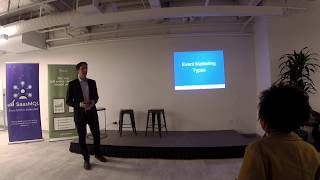
Franco Caporale moderates a panel on event marketing ROI with Matt Kaufman, Joseph, Andrea, and Kevin Joyce. They cover attribution tracking via Salesforce and Engageo, scaling from dozens to hundreds of events, and planning a first-year user conference in 8-9 months. The group stresses data-driven arguments for executive sponsorship and assigning clear ownership for event technology.
Chapters
Perfect, so welcome everyone. So this is another meetup from the Demand Generation Marketers meetup group, and today we're going to focus on how to generate ROI from event marketing. And event marketing is such a huge topic now, especially here in Silicon Valley in B2B, but also in other region of the country and other verticals, but today we're focusing in particular on event and B2B and tech and how you can get the ROI and drive pipeline for your sales team with events. So quick words about me for those of you who are the first time on this meetup. I'm the host. My name is Franco, originally from Italy. I've been here for many, many years. I started this company last year called SaaS MQL, and we are like marketing qualified leads. And the focus, the focus that we have at SaaS MQL is to help SaaS companies grow pipeline and generate more revenue from target accounts. So this is the quick agenda for today. So I'm gonna give a quick introduction about leveraging event marketing to generate pipeline. So I'm going to go over different types of events that you can manage and run. And then Matt from Qualia is going to talk to us about how they scale their event strategy and their field marketing to 150 events a year or more. And then we'll have Joseph from Segment talking about how they are running their trade show and event strategy at Segment, including some advice about starting your own annual conference. And then we'll have about 30 minutes for a panel and Q&A. So if you have any question, please save it at the end so we have something to discuss. And then we have more networking. So with that, I want to give some space to our very kind sponsors today. So first of all, we'll have Matt, from Qualia, if you want to come for 60 seconds to tell us what is Qualia, what you guys do.
Yeah, I'll keep it brief because you're going to hear way too much of me in a couple of minutes. I just want to say thank you all for coming tonight. Thank you, Franco, for organizing all this. I know everyone's really excited about this. Yeah, this is actually our first event here in this new office. We'll talk a little bit about growth as well, but we, at our core, I built an app that allows people to get into their homes through their closings. We just made the process incredibly simple and it's a lot of fun. And because of that, we get to have a lot of fun and kind of keep on growing and have this new office space. I'll tell you some more in a little bit, but I'll save that for a little bit later.
Awesome.
Thank you, Matt. And then we have Kevin, so from Metadata. Metadata, if you guys have come in previous meetups, have been sponsoring every meetup. So the food and the pizza, the beverage is sponsored by Metadata. Kevin is going to actually give us a very brief demo and explanation of what Metadata is and how it works. It's a really cool platform, so I would definitely recommend you guys to take a look. Let me switch to the demo here. This is what it looks like.
My name is Kevin Joyce. I am a customer success manager at Metadata. And what Metadata is, is an automatic advertising platform for B2B companies to generate leads and turn those leads into some qualified pipeline revenue. Um, this is our home dashboard here. Let's jump into creating an ideal customer profile. Um, what Metadata does is it pretty much syncs with your Salesforce CRM, or you can pull in your closed opportunity information information to recreate past successes in the company and generate audiences that will be used for LinkedIn and Facebook advertising.
So, uh, up in here, UICP.
When we pull your opportunity information, um, we pretty much are scoring all of these features, whether it is company firmographics, uh, technologies that those companies are using, certain job titles, job functions, scores in relation to each other, so you know, have a good idea of, okay, I've had all these opportunities in the past, but I want to recreate those opportunities in a way, or at least build off of them. Who should I be going after? And from here you can create audiences directly, add, subtract any of these filters, certain lead locations, job titles, or whatever. Let's say you already have the information that you want to create an audience. You can jump in here and create custom audiences from scratch. Um, we can create firmographic audiences, technographic audiences, um, audiences based on intent topics, um, and also ABM audiences. So say you have an event that you want to advertise prior, you know all the attendees and the companies, you can upload a list of those companies, create an audience, and then use that to build campaigns and launch directly from our platform on Facebook and LinkedIn, manage it all here without having to actually jump into those platforms. This is our campaign dashboard where you build everything. As you can see here, you pretty much drag and drop all the audiences that were created in the previous tab. You can combine them if you want to layer in more people into one singular audience. And what this does is creates all these different add variations that would normally take a few hours on Facebook and LinkedIn, and really just— you're allowed— you can do it in just a few minutes. Here you can create lead gen forms and landing pages from both channels. You can create— these are all the different ad variants that you would launch. We have previews for mobile, desktop, You can also easily duplicate ads. Say you just want to A/B test an image or a line of copy, you would just duplicate it, swap it out, and just like that you've created the same ad with a different image.
Just a matter of seconds.
You can also— you get a preview here of how many experiments you're actually creating in that time. So it says here on Facebook, this is just the demo account, but we have 850 experiments, and your max total budget given your time frame seems pretty big. But say you want to just cap your budget at whatever you have in mind. You have your budget here, control your start date, your end date, and even customize bid and budget for those experiments as well. And when it's all said and done, the ads are active and you're generating leads. Those leads then come into the Metadata Platform where they are enriched. So say somebody fills out a lead gen form with their Gmail email. We are able to enrich for job titles, job functions, business emails, company phone numbers, and you also get previews of what ad did this person convert on. So you can easily tie back just quick learnings and any sort of optimization that you want to make when you go and edit campaigns that are actually live. But the main important thing is that all these leads and what we're able to track ties back into actionable or pipeline value. So since we're hooking up with your marketing automation system and your CRM, we can track all the activity from the ads but also how it progresses into MQLs and SQLs, and total pipeline value. So this is the Metadata Platform very briefly, and we have some reading material over there, business cards, swag, what have you, so feel free to go after it and enjoy the pizza and beer.
Thank you very much.
Thanks again to Metadata for sponsoring. If you have any questions, please stopping Kevin or seeing him later too at the end of the meetup. Thanks again to Qualia for hosting us in this great office. And let's move on with talking— actually, one more housekeeping item. So there are some open rows here. So as you can see, I'm Brand new office needs to be filled, so they have a few open positions from Qualia. So Matt or Andrea here, please talk to them if you're interested in any of these positions, or if you know someone who could be interested in any of these positions. And then also we have a few positions from Algolia. They're also looking here in San Francisco for marketing-related roles, field marketing, marketing operations manager, senior content marketing Marketing Manager. I saw Farnet somewhere walking in. There she is. So if you have someone or if you're interested, please reach out to Kwalya or Golia. And now let's get started. Cool. So before I started SAS NQL, I was— my last full-time role was in a company called Branch where I was their Head of Enterprise Marketing. And before, I was in other different SaaS companies here in Silicon Valley. And so that's where I got most of my experience before starting consulting. And here at SAS MQL, we basically help clients like you can see Quidd, Legion. We worked with Metadata last year and several other companies to have them build pipeline from target account. OK, let's start talking about event marketing. That's why we're here tonight. So the definition— and this is a good one that I found from Bizabo. Which is an event marketing platform, is basically a marketing channel where you can use real-life experience to facilitate the interaction with your prospects, your customers, and you have different goals for this event marketing. It can be building your pipeline, accelerating existing opportunity, create partnerships. So that's kind of the general definition. But in B2B in particular, it's strictly focused on the relationship between different organizations. So you are not looking for this quick transaction, you're looking to build relationships which are very long sales cycles. So events can be very important to accelerate the sales cycle and get to the close. So this is an interesting chart from marketingcharts.com which shows how live events, so trade shows, dinners, conferences, how do they affect their pipeline generation and lead generation for B2B. So this was from a couple of years ago, but you can see that email and live events are the top 2 channels for most of the companies that were interviewed. So this is kind of to highlight how important it is to start investing early in event marketing. And they also take a very big portion of the budget. So I know companies that were actually spending 100% of the marketing budget in events. So the only channel they were doing is events, events, events. That obviously scales to a certain point, but even for large companies, at least 24% of the annual budget goes to event marketing. So I wanted to start looking what kind of types of events we can leverage to generate pipelines for B2B, particularly if you have a startup as well as larger companies. There are different strategies you can use. So I kind of categorize it this way. So the number one is exhibiting at trade shows. So this is the easiest one to get started where you just find the right trade show and get a booth there, and then you're going to send some people to run your trade show. And you might have a goal just to kind of spread your brand and be visible, but usually at this trade show, because of the cost, you want to drive new leads, you want to generate opportunities, and that's what I recommend to do. The range is very broad. You can find events that you maybe are able to get a small booth for $7,000-$8,000, Usually you're spending $20,000, $30,000, $50,000, $100,000, a few hundred thousand dollars or more when you go for large conferences and you want to have a very sizable booth. From a best practice perspective, these are what I listed, a few things that came into my mind was, first of all, you have to carefully select what's the right event for you. At the beginning it's hard to know if it's the first time doing it, you're going to have to do some trial and error thing. But you can try to understand based on what other companies are sponsoring that, are your competitors there or not, can you see an attendee list, at least as a company from previous years, who is speaking, what's the overall investment that is required. Then the important part is before you send people there you want to have a goal right before the event and say, "Okay, our goal is to get at least I don't know, 50 new leads and 5 meetings booked with qualified accounts. So then you want to track against the goal because that's going to tell you if the investment was worth it. And I've seen companies investing in trade shows and walking out with zero meetings and a bunch of unqualified leads. That's something you want to be mindful of. An important part is to leverage your SDR team before the event so they can start securing some meetings before the show starts. I always found a lot of luck getting side events around the show, especially when it is a major conference. A lot of times the day before the conference there is not a lot going on, so that's when you want to start maybe doing a VIP dinner or something that you can drive people that are already at the location but they don't have a place to go. And then I think number 5 is the most important thing of all. You need to track everything that happens at the event from a lead and pipeline perspective, which means you're going to create a campaign in Salesforce and you need to associate every lead that is generated and you want to track those that convert into a meeting right in Salesforce. So then you can see if they become an opportunity, how much pipeline you generated based on the investment that you've done. And then the way you follow up after the trade show is super important. I remember many times when some sales rep were going to the trade show, coming back to the office and just dumping 100 business cards on the event marketing manager's table and say, "Yeah, these are the leads." And there was no notes or nothing. You don't know which one was just a scan that was grabbing a t-shirt or you actually had a conversation with. So, well, anyone who's in event is probably, you know, live through that. So it's important to have a strategy to do the follow-up and to have the specific notes and then tag everything in Salesforce. So you want to build a dashboard and everything to see what your events are driving because it's such a big part of the budget. If you cannot tie it to opportunities, then you have an issue. So another thing, I actually did a podcast about this last year which is VIP dinners. So when I was at Branch, this was one number, probably one number one, number two channel in terms of driving pipeline. This is because if you convert VIP dinner into a process, so you're not just doing once in a while a dinner, we were committing at the beginning of the quarter to do 2 dinners, 5 dinners, 10 dinners. We actually grew it every single quarter, and then you want to do it in different cities. With different themes and you want to bring people that are very qualified, directors, VPs, and have a moderated conversation with 15 and 20 people. Some of them should be your customers so they can interact with them. If you convert this into a process, it can be extremely successful and much cheaper than running trade shows, I guarantee you that. So the best practice on this, the main thing that I can tell you on this is First of all, commit to the number and then set a theme. So for example, you can do the demand generation VIP dinner. So anyone who goes there knows there are going to be other demand generation people and the conversation is going to be around that. And you don't want to leave it as a random networking, you want to moderate the conversation, ask maybe 2 or 3 questions, get everyone to introduce. So you're going to know everyone at the end and they're going to find a lot of value from that. And then you track everything. This is my mantra for everything. Track everything in Salesforce. Then the annual conference, we're gonna talk particularly later in the panel. Joseph has a lot of experience starting from scratch an annual conference. This is also something I always preach and recommend. It's never too early to start your own annual conference. So do it even if you are 15 people. In a company, start with a small event, but start growing it year over year. You're going to see how much easier it becomes once you have something started. But this, it means it usually requires a pretty good investment. I started a conference when I was at Optimise, or a branch called BranchOut, and the investment was always $100,000 plus. It can be $300,000, $400,000, depending on how many days you do. But it is extremely, extremely successful to drive pipeline. I'm not gonna spend a lot of time now. We're gonna talk later, but there's a lot of best practice that we're gonna cover later on things that you wanna do. I had some nightmare experience working with audio and video, with PSA, all of the things you can find there. So you wanna find someone who has done it before is really important. So I do, I was gonna, I couldn't not do a Fyre Festival theme slide. A lot of time you're going to underestimate what it costs. Just for the stage, you have no idea how much it costs to build one. But it's important not to save too much because the reason to do a conference is also to look bigger than what your company actually is. So if you save too much money and it looks cheap, it actually is a disfavor you're doing. So when the companies come here, they should be impressed. When they come to your conference and think that your company is actually, even if you are 30 people, it looks like you are 300 people. Don't have too many panels, that's my recommendation, because I always find more value from keynote presentation than a lot of panels. And always charge for tickets. Don't get it free if you can, unless you do a very closed VIP, like 50 people, but try to charge for tickets because all the major conferences charge because you want to show there is value to come. Comp all the tickets if you want, but have a prize. And then a set sponsor, like start having sponsor very early. It helps showing how you stand in the ecosystem. Meetups, obviously, um, this is something that Branch, uh, Branch is doing extremely well. As an example, the meetup group has 20,000 people as members, but it is a very very long-term investment. So you have to start from zero and do a lot of meetups, and it's a long-term strategy. The best practice is it's gonna take you at least 2+ years, but you have to commit to a number of meetups per quarter, per month, whatever that is. But don't do it once in a while, or it's absolutely worthless. And sometimes you can take over other groups that are already existing that people don't want, like it was this group, by the way. I inherited it, I didn't start it. And I always recommend to promote it through third-party channels like Facebook and LinkedIn to grow it beyond the Meetup.com page. Cool, so this is it from, from me, and I'm gonna pass it to Matt, who's gonna talk to us about how they grow the field marketing strategy at Qualia. Actually, Matt and Andrea, they're gonna do a share presentation. So thank you.
Thank you, Franco.
And yeah, thanks again for putting all this together. And so Andrea is up with me today in large part also because the question up there, or statement, is how we scaled from 0 to 150. And I mean, at its core, it's the team, right? And so it seemed kind of disingenuous to come up here and kind of say it myself. So that's me. I'm Matt Kaufman.
I'm up there on the screen.
And so, yeah, so I'm the VP of Marketing here. As I mentioned, this is a new office of ours. I had the good fortune of being here very early on. We'll talk a little bit more about this throughout the course of the presentation, but I joined, we were about 20 people in one office in San Francisco right off of Market Street. And when you walk out on Market Street, that feels like sometimes, depending on the neighborhood you're in. And we've had the good fortune of really hitting something really nice in the market that people have really gravitated towards. And so we've been continuing to grow. We're now about 120 people across our offices here in San Francisco and our pretty large sales and customer success office over in Austin. And so it's been pretty exciting. So thank you for coming tonight. Andrea?
Yeah, so Matt gave you a little bit— oh, am I supposed to talk about me?
Yeah, you, yourself.
Hi!
So I'm our Field Marketing Manager here at Qualia. I joined back in October. Prior to that, I had been doing field marketing for a couple of years, also in the tech space, but more on PR and comms, as well as the education technology space too. So I've been here for about 5 months.
Yeah, feels like 5 years.
Feels a lot longer, maybe 5 years. But it's really cool to be part of a growing team that's Growing very quickly, we're hiring, and we have a really robust event program, which is something that's really challenging, but in the best way possible.
Yeah.
So, now to Qualia and what we want to talk about. So, at its core, it's really important to talk about kind of what we do so it can help set the stage for our event strategy. So, when I even am talking about it right now, I'm saying, you know, at Qualia, for most people out here who are not really deep in the real estate space, Probably the easiest way to understand this is next time you go to buy a home, which, god bless you if you're doing it here in San Francisco, you'll do it from your app, right? So you can basically pull out your Qualia app, you'll be able to track the closing in real time, ask questions, e-sign. It's fantastic, right? And so that's how the John Q public can really understand who we are. At its core though is the secret sauce and how we make it happen. So our actual customer is someone that you guys probably never really heard about much of, right? If you think about a real estate transaction, it's sort of this three-legged stool. You've got one leg, which is the matching process. So you've got your realtors, right? You all know your realtors, right? You've all been on Zillow, kind of scoping out prices of houses and stuff like that. You've got your financing piece, right? So that's your lenders, right? That's your other leg right there. And you all have seen that. You pass the Wells Fargo building all the time. You see the Rocket Mortgage commercials, right? But that third leg is the piece that really people complain about the most when it ultimately comes to the transaction, which is actually the closing, right? And so how are you going to go ahead and do all this paperwork, this legal filing, this exchange of money and making sure that that's all right? That's done by a group of folks called title and escrow officers and title and escrow companies. Really complex job, a lot of moving pieces, and unlike those first two legs of the stool, wildly underserved by technology for the past— how long?
20,000?
30,000 years? Yeah, ever since real estate has been around, right? And so, you know, our founders were really sort of forward-thinking and kind of, all right, how do you really make real estate transactions really a click of a button experience, right? You gotta start from these folks that quarterback the entire transaction. So I give you that much detail in large part to kind of set the stage for how our field marketing program has developed over time. So this is how our field marketing program has developed over time. And so basically I came from a background which was a bit more B2C, a bit more playbook was, all right, we could go ahead and throw a bunch of ads up and we'd have a bunch of traffic. It was a company called Rocket Lawyer that I was also early on. We kind of built this thing up. You know, people all over the place are looking for legal documents, help from a lawyer, all that stuff. And so you're really fishing with a net. And so it was just like, all right, just make sure we have the right keywords, people come towards us. Tried to bring that playbook here and selling to title companies. Eh, not so much, right? And so really tried to avoid anything that was a very expensive and ultimately time-consuming channel. So year 1, which was kind of even before that, ish, there was zero. In '17, it was like, all right, you know, there's some table stakes events that we just kind of have to go to. It's kind of your brand, you know, if you're not there yet in the industry. But then we started to see, well, maybe there's a there there, right? And so we started to experiment and push a little bit more in '18. And that 73 events, quite frankly, is a little bit misleading, 'cause it was really, that's kinda the tail end of the year, is when June, July is when we started saying, "All right, let's get into this." And as we'll talk about some more, really start to see where, well, we actually found our lever of growth, right? We knew that we could put in some money, and we knew we'd get certain money back. And so that's why, you know, as you look at this year, 2019, we, you know, we're so nervous about that 9. You know, that's where we're really kinda going in expanding really across the country and doing a bunch of different events. So I think we were going to chat about this. I kind of beat you to that first on that one. Yeah, that was right. So yeah, why don't you—
So just because this means it's right for us, obviously it's not a one-size-fits-all. And, you know, when developing a program like this, you know, events are expensive. We just heard Franco share, you know, up to, I mean, $100K starting point for a user conference. Trade shows that are starting at $10K. I will say luckily ours are, some of ours are a little bit lower than that, but it's still a big chunk of your budget. And so, you know, ultimately you really need to figure out if this matches your expansion strategy. You know, back to the cost thing, you know, we really had to figure out what is our event code. So as we're developing this, we looked at all of the events that we could go to, and there are a lot in the real estate space, not even touching the realtor side and the real estate agent side. But we basically assessed all of our events and broke it down into different tiers based on what the size of the events are, what is the organization that's involved. For example, these land titles, each title company is part of a land title association. Every single state has a land title association, and every state and association does a winter seminar, a spring seminar, an annual seminar. So we quickly realized, like, we just have to be there. Our competitors who really haven't been up to did in a while. They don't do a ton, but they are at these events. So we quickly realized this is where we need to find our prospects.
Yeah, I'd say it's safe to say that it's also eye-opening of how much of a bubble we are sometimes in here in San Francisco, right? When I think a lot of the screenshots that we even saw earlier were about these massive marketing events. You think Dreamforce and you think all that. Not our audience. Our audience is spread out across the country. Our audience is local. I know it could be a buzz term of sorts, go hyper-local, all that jazz, but this is really, these are events that are happening and the relationships really matter. It's not your standard, all right, this is a 5,000, 20,000 person event. These are, as Andrew was just mentioning, really attached to these local associations and that's where the relationships are really happening and how you can kind of dive in there.
And so, you know, as you're developing an event program, I would challenge everyone to look, you know, don't always think this big conference with 9,000 people is going to be the right answer. Maybe there's a better way that you can get in touch with your prospects on a different level. The Tier 1s for us, for example, are our like big conferences, and those are probably like 4,000 to 7,000. One of the questions that I get a lot when I'm talking to people and they're like, "You do 150 events, do you go to all of these?" Thank goodness no, but you know, you really have to define a strategy that works really well for your team and your company and how your company is structured. We're really lucky we have our office in Austin where our sales team is located, but in addition to the sales team, we have an industry relations team and their whole, one of their main focuses of their job is to really connect with the key players in the industry who the influencers are, the title companies that we talked about, you know, they won't make a lot of decisions without getting like the blessing from their partners they work with. So part of our strategy has really been to go in and figure out, okay, who are these partners and how can we become friends with them, build that trust. So luckily they're all regional-based. We figured out, I think before I started, the structure of the sales team kind of changed and it wasn't originally regionally But quickly we realized each state's a little bit different, you know, each county can be different. So having those subject matter experts for those locations is really important. For figuring out how many people to attend, so you're like, great, I have this booth, there's gonna be 200 people, how many people do I send? We kind of have an equation worked out for every X amount of attendees, we'll send this many people. So if it's like less than 75, we're like, okay, you can send one person and they'll be fine on their own. Like over 100, okay, now we're talking two. And like 500, now we might need 3, so kind of assess it as we go.
So speaking of the teams, right, and so now you've got this army of folks who are gonna go out and essentially represent your brand on your behalf, right? And so one aspect of it is they're going out there and, you know, I think we're pretty fortunate, our audience, so to speak, they're great people, right? At the end of the day, like, we get to have and build some really rich relationships relationships, which is pretty awesome, with prospects and with existing customers. The challenge on our end, I think to some degree, is also if you've got such an aggressive campaign going and you're sending people around the country, right, so how do you make them successful? And so these are some things that we've really picked up over time, which is first and foremost, obviously, providing event training. So it might sound a little bit sort of basic to say that, but You might talk to a rep who says, "Yeah, I want to go ahead and go to this event, and sure, I've done events before." And you're like, "Yeah, all right, then you go. Here's a table, here's a tablecloth, and here's some swag. Go at it." Not gonna work out very well for you, I'll tell you that right out of the gates.
Or they'll go and do it, but then they'll be like, "What, I need to do a Salesforce campaign?
What's that?" And then Cameron in the back, who manages our Salesforce, is gonna flip out.
Yeah, fire coming out of his ears.
So definitely getting that training down. And that goes above and beyond just training of what your product is, how you pitch it, but kind of what you're doing at that event and sort of really setting up the expectations so that you're really setting up your team for success. The next is obviously they're working hard, right? You guys have either— you're here to learn about field marketing or you're here because you've been doing it a bunch. And if you notice, like, I like to wear really comfy shoes. I wear comfy shoes because also when I go to conferences, you know, you're standing up a lot. It's a hard It's a hard day, right? Even though you're having some great conversations, you're meeting some great people, you're still, you're working really hard, you're exhausted, right?
It's also not 9 to 5.
Definitely not 9 to 5.
You know, typically, I'm sure you all know, when you're at these events, you're up at like 7 AM for the first round of coffees, and then you're probably doing after-hours events at the hotel bar or dinners, and it's long.
Yeah, and emotional, right? Because you got not only, you're up and you're moving around, but not only are you getting those great conversations, but you're also those nasty conversations, and you're like, so they're really out there and they're getting a lot. And so, you know, we found ways both internally and externally to recognize and reward the team that's going out there. And so for us, we're heavy users of Slack, for instance, and so we've got a whole campaign going for everyone who's over at the campaigns that we're making sure that even though they're out on the road, they're not alone. And so that they can see that people understand that they're out there working really hard, because that's the other thing, they could Tend to feel like they're on an island if there isn't that support from home base, if you will. Then lastly, the other thing that we've started to really do, and it's shown with some good success, is actually start to position them as thought leaders. They're going out there and they're meeting people. Not only do the people that they're meeting want to know that these folks that are representing your brand know what they're talking about, but also it elevates them. It helps them build their own brand for their own personal career, and then also just continuously makes them better. And that continues the flywheel.
One additional note on that, something that we're trying out this month, we are always searching for blog content. You know, how can we continue the messaging throughout our blog and how can everything be cohesive? So we're really encouraging our sales reps who are at these events, "Hey, go sit in a session, provide us with this." We give them like a pretty set template, like give us a quote, get us a picture, give us one awesome statistic, a summary paragraph, and then send it back to us. We'll ghostwrite it. And then we'll post it under your name on our blog, and then they can use that and post it on their LinkedIn channel, their LinkedIn network. We can share it for them, and so it gives them that opportunity to not just be at the conference, but then also to say like, "Hey, I know what's going on in this space and I'm a thought leader," and it helps us with the blog and it's kind of a win-win. So, sorry, our formatting is really rough. So, you know, we think it's really important to focus on qualitative and quantitative feedback. One thing that that we— one thing that we've worked with our sales team and everyone attending events, and they know the drill for it, is their event playbook. We spent some time really building this out in a Google Doc. We have a template that they can clone. More than happy to share it if y'all are interested. But it's not just after the event, it's not just before the event, they use it in every part of the event— before, during, and after. So the before work, they're identifying who their key influencers are, they're mapping out schedule of the sessions they want to sit in on, even going as far as putting the influencer, their prospect's headshot in there so they can really recognize them when they're at the event. During, they're noting on that their interactions or going straight to Salesforce, which we always urge people to do, but they're taking their notes and they're keeping that as their kind of running log. And then after, we really have a list of questions so that we get some feedback on. So we're gonna get an overview summary summary. We want to find out what was being said at the conference. We asked them to do a brand awareness ranking on a scale of 1 to 10. Do people already know us, or is it like we're walking in and no one knows who Qualia is? And we're tracking that in Salesforce too and putting the numbers that they were ranked in our Salesforce campaigns. Did the swag break? Did you have a banner that just doesn't stand up? Did everyone hate the hot sauces we gave out? So we're trying to get this feedback and really, you know, we'll comment on it, we'll read it, we'll say this "this is awesome." We're really trying to encourage them to always keep on bringing back more. And you know, from year to year, ultimately we ask them at the end, like, "Is this something we should do again?" So next year when they come back and they're like, "Oh my gosh, this event in Alabama was amazing, we have to go!" And I'm like, "But really, last year you said it was awful." So we can look back at something and say, "Well, this is what we saw last year, let's use that to inform our decision along with our campaign metrics." So by the way, hot sauce, good.
You just gotta make it small enough, otherwise they can't bring it on the plane.
Right. They love hot sauce, especially in the South.
Hot sauce and socks. And so, yeah, socks. So yeah, I mean, and then keeping it in that theme, obviously we've been all talking about sort of the Salesforce events and the campaigns, right? At the end of the day, you're looking at, you know, we're investing a ton of time and energy into this, is it generating revenue, right? And so really having that tech stack available, and obviously the team that's just committed to doing this is super important, so you can actually track through. And so we do that pretty aggressively, and we set up certain ratios in terms of, you know, how much pipeline are we expecting to be generated off of each event. Obviously, you gotta let that age a little bit, 'cause unlike a, basically a normal funnel where you can just like throw an ad up and you get a registration, Sometimes you gotta let those relationships percolate a little bit before somebody ultimately turns into pipeline. But the key was also, and I think Franco was talking about this a little bit, was certainly the event isn't, you're not looking to value just the event itself. Meaning, all of the activity that's happening isn't happening just at the event in terms of how to actually derive value from it. What we like to think about is we're really putting these tentpoles out there and say, look, This is actually giving us a whole, you know, if it's 2 months away, if it's 1 month away, if it's next week, it's giving us an opportunity to actually develop relationships and conversations with people leading up to the event, right? So how are you measuring that as part of the ultimate ROI that you're getting from your field events? Similarly, as you're looking at it afterwards, right, what did you actually develop from that? Are we developing content that we're actually able to use from this event, right? So basically, building up your campaigns properly, you can actually start to see that Even though you might be going to a certain event and maybe day of nothing really happened, all the various ancillary activities that you were doing around that was really helping driving some revenue. So it's really important to track that well.
What happens when things go wrong? Who has been at a conference or on your way to a conference and like something has gone terribly wrong?
Every time.
Yeah, yeah, most of the time. So I think you gotta roll with the punches. Something will happen that's not great. I had somebody yesterday who's at an event was like, hey, can you confirm I have a hotel? And I'm like, excuse me? So, you know, so, but for that case, you know, we have put up processes, we're setting the expectations. Like, if you miss your flight on the way to Dallas, too bad, don't call us at 7 o'clock in the evening when we're with our families. Like, you need to work through this.
It was in North Dakota. Code in on a Sunday morning. That's just—
yeah.
So really, you know, we are empowering them that they need to make these decisions. They are all grown adults. They need to figure out the best way to make it happen and deal with it the best that they can. Would you like to explain your Apple, not IKEA? I feel like it's a mantra of our team.
So that, I mean, it's just some guidance. Right, in terms of philosophy. It gets very easy because it's so tiring and exhausting when you're on the road. It gets very easy to sit behind your table, right, and just get comfy in your zone, right? It gets very easy to just let your table kind of become a mess, have people put their coffee cups on there and eat all there, and all of a sudden it looks like a college dorm room, right? Yeah, I see you, I'm gonna check, I think, yeah, I know what you're doing. And so it does take some discipline internal discipline to kind of go through it and understand that every single second you're out there, you're representing your brand, right? So what we definitely preach around here is when people look at that booth, no matter what time of day, I want them thinking we're more Apple than IKEA, right? So in IKEA, things are all over the place. Things are— that's their brand. Overwhelming.
Overwhelming.
You don't know—
yeah.
You gotta just go through the maze to get there. But the Apple, you know, we are— we present a very clean, high-energy brand, right? So that represents everything from, you know, it's literally, we move the chairs out from behind the tables. There's no chairs that are there, 'cause it's just tempting. I know there's a Seinfeld episode where you've got the security guard who doesn't get the chair, it's very upsetting. But, you know, it's all these little things, and so coming up with simple mantras that help people think like, you know, when I'm looking at this, am I thinking more Apple or IKEA, kind of help things in that process along the way.
Yeah, so to wrap things up, you know, if you're starting out in events or if you want to kind of give yours a gut check, figure out is there a pattern of your industry's events and how can you make sense of that and organize it accordingly.
Yeah, and then obviously, you know, like we're talking about setting up everyone for success, it's really like we said in the beginning, this is a massive team effort, unlike probably almost any other channel that you are working working with, it is really your team around you that's going to make this thing a success or not.
Everything that we're doing, we do want to focus on, "Okay, what was the action? What was the result of this? And how can we use what we're learning out there to inform our strategy for the future?" It's great if this can bring in all this pipeline, but at the same time we're like, "Well, what did we do to do that?" So really kind of figuring out, "Okay, let's analyze this. Look back, let's reflect and figure out like, what did we do really right? But also what went wrong?
Yeah. And then lastly, it's obviously, you know, expect the worst, hope for the best kind of deal, right? And really just, you know, be prepared. And so long as you've got good processes down and you can expect what's gonna kind of come down the road, you know, you'll be able to just really roll with the punches and manage and have a good successful event, even if the worst kind of things happen.
Cool. Cool.
Yeah, we're cozy. We're in New York.
Thank you, Matthew, Chandra.
When I first started, it was more about scaling the program up so that we had a system in place that, like the talk before me mentioned, is scalable and ROI-generating. But also one that resonated with the company. I kind of felt when I first started like I was the internal agency for everyone at the company. Like, they would come to me and ask like, "Hey, we want to do this thing for a meetup and we want to build it out of balloons. Do you know anyone that does that?" And like, obviously they thought I was because I was the guy who was able to make like cake pops with our logo on it. So like, you know, everyone just kind of like came to me with all these like random questions and And that's kind of like where I started to develop this very, very, very deep-seated love of my vendors. So vendors are 100% the way you make an event awesome. You can have all the ideas in every single— like, you could be the Steve Jobs of event planning, but if you can't take your vision and bring it to life, then you essentially have nothing. An event is an in-person activation, and if your experiential marketing prowess isn't up to snuff via dope vendors, then it's gonna show. You know, it takes a long time to develop relationships with people who do a wide variety of skill sets, and it does require you to be someone who can talk to both a carpenter and a vinyl banner printer and a just regular straight-up print house to a specialty neon design company. Like, you have to be that person that can like negotiate the heck out of all these different invoices at the same time while also keeping like, you know, your head on straight. And that comes with like, I think it does come with a certain amount of experience, but if you just keep your own objectives at the you know, top of mind, I feel like you can honestly have this conversation universally with any vendor without getting too stuck in the weeds. But it does kind of help to sometimes have a little bit of institutional knowledge when you're dealing with different folks. I think the conversations that you have with the caterer are much different than the conversations you have with the venue, and there are just certain things that you, you know, kind of need to know that you learn about through experience to ask. You know, what's your food and beverage minimum? How many people, you know, does your table fit? There's all kinds of different things. But vendors are, you know, I think, like I said, the lifeblood of any good event, but they're also the people who can, you know, if you're like me and you're in-house— is anyone here from an agency?
Marketing agency?
No?
Okay, cool.
Like, I feel like as the internal person, you kind of have to have your own little agency inside. Like, I have a specialty carpentry person inside of me, but then I also have like a catering specialist, but then I also have like a budget manager negotiation person, and they always fight. Yeah, budget guy wins all the time though. So, you know, you really do need to be able to garner these relationships with people who are so specialized in feel, but I feel like you do that not just by, you know, listening— but not just by telling, but by listening. I come from corporate America, and so when I came to San Francisco 3 years ago to work for Segment, which was much smaller back then, it was very much a process of learning how to versus what not to. And it was really the group of vendors that I had cultivated over a couple of months who showed me how different things are, um, up here than they were down south in LA. And you would be surprised to see them, like, the changes that, you know, that come with being surrounded by tech people versus being surrounded by film people. Um, I used to be able to go up to a vendor in LA and be like, hey, I want an 8-foot I want a 10-foot wall made out of silicone, and I want, you know, our logo to be embossed, but then when I walk by, I want like this like screen to come out and people can tweet from that screen. And you would just be like, oh yeah, dude, yeah, WB had that last week. Whereas up here it's much more like, what? You know, and so the, you know, that, that's kind of like one very specific example of vendor know-how, but one really cool, cool, cool experience that I had with a vendor was in the center photo you see a picture that's not so great, but I'll explain what it is, of our logo on a glass wall and people behind it. And that was actually a meetup that I had done, and the vendor who had the venue actually clued me in to meet with this artist who does like custom illustrations, and there was like the room itself was like this big glass encasing. Think like the Apple Store on Fifth Avenue where it's just one big glass enclosure. And, you know, I was talking to her in the venue walkthrough and I was like, how do I, like, what can I do to this space that's like, you know, that really makes it feel like not such an open cube? And my immediate thought was to like think of like, okay, let's get like balloons or vinyl banners or something. And it was her, you know, listening to her and her saying, well, actually, you know, there's this guy across the street who does like all these chalk paintings. I'm sure if you give him like $500, he could come in and like maybe do something with like a dry erase marker. And he did. He made, oh, so we were talking about GDPR. So that is the skyline of Amsterdam, and then our logo up top. And then he did a London, and he did a Barcelona. And like, that was just like really cool. Like, I— like, I mean, I— oh, and the best part is I totally got credit for all of that. Everyone at work was like, oh my god, that's so cool that you did that. I was like, I know, but really it was my vendor. It was my venue being like, hey, Hey, like, you know, Joseph, you've been here for 5 minutes, but I, as the venue, know what's around. And like, I listened and they helped out and it was great. And I think when you can find vendors that you can trust like that, where they're able to, you know, lend that kind of like specialties kind of insight, it gets really special. In the context of trade shows, this actually, I think, is even more relevant. Trade shows are so expensive. Like, that booth that Franco showed, I know that booth. I know who made that booth. They're a group here in the Bay. They are out in Alameda. I wanted to make that Slack booth because we use reclaimed wood and plants all the time. And when she told me how much that booth was, I was like, "Oh, to the hell no." It was really expensive. Actually, I don't work at Slack, so I can tell you. It was like $250,000. $250 grand. And I'm like, I'm definitely not a $250 grand on a booth kind of guy. Remember the vinyl banner with the duct tape? So like, for me, it was much more of like a gradual, like, let's get this company to a place where they look professional but not spend so much money, because Segment's not a trade show company, they're a data company. So vendors, the— I ended up actually making our first trade show booth out of a tension fabric that I found online through Alibaba, and then like that, like, you know, like rerouted me to like 3 different vendors, and then like I finally found one that I really liked. And all that goes to say that your budget is so important to let that guide you will save you so much trouble. The amount of time that I had spent researching that Slack booth, from stalking people online, to seeing who the event manager was at Slack when she tweeted it, to then finding out who her vendor was because she added them, to then reaching out to that vendor, having an in-person meeting in Alameda, and then going to finally go to the POC to find out that that thing was $250,000, I was like, I just wasted so much time. Like, what? Like, I— there's no— like, I spent all of this time looking into a booth that I couldn't even afford. Because when I first started, I was thinking like, okay, sky's the limit, I'm just gonna like go in and like figure it out. Nowadays, this is the first question that I ask all the time. How much are you willing to spend on this? I can give you Lady Gaga coming in on a shell any day. I can give you Coachella happening at the Hyatt Regency on Market in like 10 seconds if you give me $5 million. Like, that is the number one conversation I have now these days is, yeah, We can do anything if you have the money for it. And what's great about this is that rather than looking at budgets for trade shows as a hindrance, it really was more of a, it becomes more of a filter. If your CMO is like, "Yeah, you know what, we wanna go big on this one conference in Vegas, it's gonna be great," define big because big to one CMO is $10,000, big to another CMO is 100 grand. And when you're in Vegas in particular, if any of you ever go to a show in Vegas, I highly, highly recommend that you do your best, if you're trying to be budget conscious, do your best to not pay to actually be in the show. I know this is gonna sound weird and Franco's probably gonna kick me later for it, but one thing that I used to do at the end of, like, my role transitioned to focusing only on our user conference now, but when I was in charge of field marketing, I got to a point where I wouldn't even pay to be at the trade show. I would just set up a super bougie happy hour for a fraction of the money next to the trade show and invite everyone and be like, "Yeah, we're totally officially sponsored." Well, we really weren't. And just say, "Hey, we're having a party right next door. You guys should come through." And it saves you so much money. Everyone's already there. And Vegas is like a huge— things that happen in Vegas are are so overpriced that if you are looking for an activation with lots of leads on the side, that's a great way to do it. Because, like, what's AWS gonna do, come and shut me down at the SANS? Like, okay. Like, they have much more— they're trying to get Room 5 to not puke on the stage. So yeah. So budgets. Ah, process. So I think one thing that When, when dealing with, um, trade shows in particular, because they, uh, touch so many different departments, it really is super important that you have a process in place that doesn't only assist your planning process but also speaks to you, how you communicate your plans to the different parts of your company. So I think I heard in the previous presentation, you know, about like recapping things and documenting them. Huge. Because yes, they will say, "Hey, this event's super cool and all of our competitors are sponsoring it. We should totally go." And it's so great when you have that paper or Word or Google Doc that says, "Actually, last year I quoted you in this recap and you said it sucked." And that is so powerful. But not only that, If you are trying to build a trade show program, one thing that can totally happen is in the midst of having a booth going to Des Moines, Iowa, and a tablecloth going to New York, and 5 different bobblehead swag things going down to Latin America, you're gonna sometimes forget what the hell is happening, who you are as a person. So documenting everything is super helpful because when your sales rep says, like, "Hey, what's this thing that I'm going to in 2 weeks that's in Chicago?" You can just be like, "Chicago... oh, there's a doc for that!" And boom, it's right there. And it really does help streamline what, you know, what you're doing. So, process is important. Also, the things that go on in your head to try to make the event happen, it's important to try to get that out as much as possible, which I don't know if I don't know if you're anything like me, but I originally started off doing events about 9 years ago, and I hated sharing my ideas with anyone. Like, I didn't want to tell anyone what I was thinking about doing because I had this, like, thing about, like, if it doesn't happen, I don't want them to think that I promised it. Total 180 these days because now my ideation and opportunity sourcing is the time where I can let other people come into the process and say, I really want to like do this trade show, or oh, I'm so excited to like, I heard about this thing that my friend at a similar company is doing and it sounds like it's a really good opportunity. Awesome, I'm gonna be your Dr. Phil, I'm gonna listen to you all day, it's gonna be great, you tell me all the awesome things you want to do. I mean, secretly, on the lowkey, you get a conference room by yourself and you're whiteboarding everything, you're thinking to yourself, okay, what can I afford and what's not gonna kill me? But you at least let people at your company feel like they've been heard, which is really, really important. Then you get into like your planning and logistics phase, which is the real like rubber hitting the road. Like you are starting to do all of the— starting to turn the wheels to make all those different things in all those different cities happen. And that in and of itself can be a whole meetup, so let's just talk after if you don't have a process in place yet for that. And then there's the activation, right? So the actual like what you're doing. And really, it's all of those things working together that make your trade show, meetup, conference, user conference, whatever, super successful. Going back though to that process, to the first thing that I mentioned about bringing people in and letting them be heard and documenting your strategy or your methodology, try your best if possible to have one single source of truth. Yeah, it just can get real messy. I mean, you know, Asana boards and Google Docs and paper and God help you if you have a vendor who uses Word docs. Like, first, okay, actually, if you take nothing away from this, if you have a vendor that uses Word docs, like, don't use them. Because they like, yeah. But like, you know, try your best to be that, like I said in the beginning, that like gatekeeper that makes things streamlined and beautifully simple for your company. When I say like you're an in-house agency, or, and again, this has just been my experience, it's not that like you have to be a jack of all trades in the event world. It's also that you have to present and advise to people who may not know what you're talking about. My CEO does not know how to build a stage, but I know how to talk to— and I don't know how to build a stage, to an extent, but I know how to talk to the people who know how to build a stage. And I know how to talk to the people who know how to build a stage when they need to talk to my CEO. Like, you're this very much this conduit between 2 different types of people who don't know how to communicate. And so it's super important when you're in that situation— oh my god, I got unformatted.
That's supposed to say single source of truth up there.
It's so important that when you're in that situation that you have your documents or whatever super streamlined so that there is only one place where people can get information. If your caterer is working off of a run of show, that your content team doesn't look at, and your content team changes whatever they're running off of, you now potentially have opened up yourself to the situation wherein your content team has decided to actually nix that investor panel, and now it's a break, but your caterer thinks that the break is still happening at 2:05. So it's really your— the onus is on us as the event marketer to keep all of that sucinct and uniform and in place. And with trade shows even more so, because there's so many different people actually going to the event from your company and there's so many different people potentially that you're working with on-site to make your activation happen. You know, you don't want your sales team to cancel your lead generation order. You don't want your sales team to accidentally cancel your electricity order for your hoof. And all of this is completely negated by having a single source of truth where everyone feels comfortable and confident in looking at this one thing that tells them what's supposed to be going on. Yeah, and then I think I'm early. Does anyone have any Q&A or are we—
It's open.
Yeah, okay.
Thank you, Don. So now we're switching to the Q&A slash panel. So if you got any questions, could you prepare? Let's set up a couple of chairs. So Joseph, you want to stay on that?
Okay, cool.
Uh, Matt, I'm gonna stay on this side so we can still record, um, from the new angle that we set up.
Oh, awesome. That was on this.
Oh yeah.
Cool. So first of all, I want to know if you have any questions for anyone after all the presentations you saw about any type of events. Do you have any questions? If not, I'm gonna start. Please.
Hi everyone, thanks for that.
One of you guys talked about having goals, right?
And I think you may have mentioned rituals.
I'm a fan of ratios, so if Do you guys have any guidelines as far as size of event, size of attendees versus what you expect out of it as far as, you know what I mean? For example, for sales, you want 3:1 or 5:1 ratio to AR to things. But for events, do you have anything of that sort?
I think I understood your question. We're trying to work together. So yeah, we try to keep it pretty flat and easy in terms of what we're looking at. So we do it according to spend, and what I look for from the team is basically, can we generate 10x ROI off of our spend for each of the events?
Yeah, um, so like, I want to say like two things. I want to say like, yes, we did have a ratio, we did have a ratio, but also sometimes life just happens. Like, I had a, I had a VIP cocktail hour for this trade show called Mobile Apps Unlock that was in Vegas, and my ratio was perfect. We had the right number of people, but like 300 people ended up showing up to this little spot in Nobu, and I was like, oh my god, you know. But, but we— point being, that ratio, that day the ratio was off, but we still closed like tons of business from that event. So it's a rule of thumb, but it's not necessarily set in stone. And our ratio was to have, if it If it was a seated dinner, it was 1 rep per 10 people. If it was like a standing cocktail thing, it was 1 per 20. So that—
sorry, I should have probably let him talk.
Please.
So this question is specifically about what you presented there, but in general, I am really curious about how you hold your sales team accountable for all of the hard work that you're doing. That is my biggest struggle. So I feel like I'm killing it, but it's like I plan these badass, kick-ass, cool local events, and our sales team is like too timid to invite anyone to come to them, so we have to cancel them. Or we do these huge trade shows, or we do these like forum events, whatever, and I bring in all these leads that are perfectly, the perfect type of person, and yet nothing, no ops. So I'm really curious about, like, it's a very hazy, foggy bubble to me, the handoff from events and marketing to sales.
You start it out.
I was just gonna say weapons. Well, I mean, okay, so, and this again, this worked for me, may work for you, I have trained the shit out half of them. So I would bet, so when I started there were about 20 ADs. So if they went to a conference, I would sit down with them and I'd be like, what did you close? How did you close it? Did you close? Did you not close? Like having that, I don't know how big you are, but having that one-on-one, like putting the fear of God into them.
I hunt them down. I hunt them down.
And they still don't close? Why are they selling? Like this is not a conversation of like— I don't know if they don't close.
Events as a tool, as a powerful tool.
Oh, it is.
So one—
sorry, no, go for it.
One time I had this guy who totally same thing. What I did was I would highlight the deals that did close from events, and I would share that in our like announcement channel in Slack and be like, hey, like congratulations to XYZ sales rep for closing a deal this big from an event, you know, we just like, not only do we pay for this event, but it's like fivefold, and like give them all the praise. And I started doing that for every single deal that closed from an event. Then the rep actually like hit me up, was like, how do I get in on this like event gravy train? I was like, oh, would you like to? So, you know, stuff like that helps.
Yeah, I think definitely carrot rather than stick. I was kind of joking about the weapons I mean, it helps if you use weapons, but no, so definitely I think about it more also in terms of alignment, right? So if the challenge is right now activating them and holding them quote unquote accountable, right, it's, you know, perhaps it's also taking a step back and thinking like, are we actually aligned in terms of what the ultimate goals are for that event and what are you doing, right? So they should be equally incentivized as either having a revenue or a pipeline target that they're accountable for. I think we're in a bit of a fortunate situation because of the alignment for the people that we're sending to the events. They're also accountable for certain referral targets or certain pipeline numbers, and so it kind of comes into play there. And then to your point in terms of also, you know, the recognition and reward that we were talking about, we— if you've worked with sales teams a lot, which it sounds like you have, Most sales teams I've ever worked with are very into public shaming, not just public pronouncements of greatness, but also public shaming. We don't take the public shaming route per se, but the flip side of that coin of the announcements about who's been doing such a good job is that you kind of inspire them to want to be up there. And so it sort of helps with that.
I don't know if anyone else has that. One thing too, our sales team does this thing every day at 1 o'clock, they do a positivity meeting, which is like 5 minutes. They like huddle after lunch and they talk about some like, I had this great call this morning, but this happened, or so-and-so, I closed this, or this awesome referral that came in. Um, one of somebody in Austin just was telling us that she was like, yeah, Mason, one of our top sellers, stood up during positivity meeting and was like, I just closed this awesome lead that so-and-so met at an event. And guys, like, the "Your fans are legit." He was so excited about it, and for a top seller to say that, maybe getting 1 or 2 really key advocates from the sales team and be like, "Listen, if you do have those fans, get them to kind of..." It's like that third-party validation.
Totally.
And one last thing, a SPIFF. I did that too, that really works. It's setting up an incentive program to say... 'Cause the SDRs will sometimes be like, "Why am I gonna spend my time I'm bringing people to an event when I could just be hitting up people on LinkedIn and actually getting leads immediately. So we did a special invitee spiff for our big conferences.
And to dovetail off of that, which we're in the middle of or starting right now, is not just a spiff but also a competition. One of the dirty little tricks that all sales teams always— they're very competitive. And so you create a competition, all of a sudden it's amazing how quickly things get done.
Not necessarily because they're like, "Yeah, I want to nail this conference," but it's more so like, "I want to do better than that person." So on that sales alignment, I also actually got the opposite experience where in a lot of events you find that everyone wants to go from the sales team and you only are sending like 1 or 2, especially certain locations when you have like New Orleans, I remember, is super, like, anyone wants to go, or Barcelona when you have Mobile World Congress. And then other cities, I remember Orlando, nobody wanted to go for some reason. I have nothing against Orlando.
I love Milwaukee.
But so, how, like, I know you're talking about competition is the way I found to say, okay, whoever is at the top is gonna go to Barcelona. How do you manage that? Politics that is behind events and sales team where they say, you know, I have my prospect gonna be there, so I have to be there, like, but you are in charge of the event. So how do you guys manage that?
To be honest, I can't recall other than like once or twice when my sales team was fighting to go to an event, but I think the best way to do that is just to have some kind of to fall back on whatever data you may have. So, you know, letting someone go to an event because they were the one who in Q2 had the most leads generated from being at the booth, or letting someone go to an event because they closed the most deals, because, you know, they were like the most proactive AE. And, you know, when you're small, you can actually, like, offhand know who who are your event champions and who aren't. So it's easier to do that. When you get bigger, you definitely want to have some kind of reporting in place to say, "All right, I'm going to— if there's a thing in Paris, I'm going to send this person and this person because they brought in the most business for my channel." Yeah.
And you were just dealing with some of this?
Yeah, I know. I think a lot of ours— I mean, we're kind of in a lucky place right now that we are regionally organized. So, you know, there's one or two reps in that region, so typically, you know, they're the ones who are excited to go. Um, but, you know, at the same time, like, we, we will look at the numbers. If there's a couple of them who, like, really want to go, we're also like, why do you want to go? Like, we have an event request spreadsheet that if they come across an event that we may not be aware of, that their contact tells them about, like, we have them fill out the sheet and put, like, who are the 5 key people you're trying to meet there that are fully there, and like, what are your goals associated with it? So we kind of make them make their case for it a little bit, um, and if whoever makes the best case wins.
And that actually, you just raised a good point that we didn't mention. So I know this isn't a question right now, but the also the proliferation of our events in large part came not because there was 2, 3 people kind of researching and figuring out what the industry was, but also empowering the sales reps that were hungry for pipeline to basically let us know what events should we be attending. And so getting that process in place helps you then figure out, you know, where should we be kind of, you know, putting our seats.
And a lot of ours, you know, they're not necessarily on a website that you can find. They're smaller things and they're not invite only, but like you have to know the right pair of people because it'll be like an email flyer that's sent out. So, you know, how, We're not emailing with those contacts every day, so we did empower the team to bring that information.
Awesome.
Any other questions? If not, I have more. Fanette, please, and then Gil.
Yeah, how do you know when to kill a project or to hit the brake and stop a project that is not working? Like maybe you have no attendance or it's too late for you to start the project. I just did this, but it's not an event. Is that okay? Alright, whatever, I'll do it. So we had this campaign come up recently, and one aspect of this campaign was to do a direct mail piece. And, you know, we were moving really fast, and, you know, we did our best to up-level or flag certain concerns that the frontline team was noticing. But they never really made it to the top. So, you know, things get rescoped a lot, I think, before we kill a project. It's like, okay, well, let's try this instead, or what if we did this? But finally, it kind of just boiled down to me sitting down with one of the founders and saying, look, like, if you want this to happen, I need this much money. And that kind of is what did it, is that like very immediate— but that, you know, we're, we're, we're, I can do that, right? Like we're a, we're a 500-person company. You know, the founders and I have that kind of relationship. I would say in general, if, you know, killing a project is something that's necessary, the best way to go about it is to document all of your work, get opinions from across any channel that you may be working with. If it's a multifunctional project, and then just make your case as succinctly as possible because it's tough.
Yeah.
Yeah. Killed it.
Killed it. So I would just take a— coming out from the beginning part of it, which is more along the lines of, one, I think you should always make it really hard to kill a project, right? Because you don't want to get into a habit where projects are things that are sort of, maybe we'll do it, right? So you're thinking about it more so, it's more along the lines of what kind of stages of your project are you in so that you're actually like— and so if you think about it more of like a product manager and you're building something, are you in the ideation stage? Are you actually in the like specific planning stage? Are you starting to fund it? And so each of those should start to really develop either official or sort of unofficial blockers so that it just becomes harder and harder as you're going further and you're hitting those milestones. We've had to kill some projects around here, but it's in large part because, you know, we've put the stake in the ground that we're going to do it, but as we've started to approach, you know, it's really case dependent on what the decision is, but they usually, you know, back to the point around let your budget be your guide, right? It's really, you know, if sometimes you get to a point where if you continue with something, you're throwing good money after bad, that's when you can really make an objective decision.
If your question was about indicators though, I have talked to a bunch of friends who do event marketing. Like, a lot of times it's attendees. So like, if you're seeing that like your event isn't getting any attendees, I know like Like I said, I've spoken to a couple of friends of mine who are like, "Yeah, like if it's 2 weeks out and I have 10 people, I'm just gonna email them and tell them that this is cancelled." So that's something that some people come up against is the 10 numbers.
And so Gail was the next again.
Great, thank you. I was curious specifically to scaling up events, which it sounds like you've both done like from a pretty significant— in a pretty significant way. Advocating for that and sort of making your case because it's more money, more people, more complex, probably a shift in your job responsibilities and letting go of some other things and making that a priority. And if you have any like strategies for that or how you've been able to scale up and really say to other people in your company and leadership how that's such a priority and it's worth the investment.
Isolate one person on your exec team to become your best friend. And like really, like, like take— I took our VP of Marketing out to dinner. I was like, I'd like to talk to you about the future of events here. And I sat down with a ton of data and a year and a half's worth of work, and I said, if you give me this, I can give you this. And I'm sorry, my boss was like, I swear to God, if you I'm like, "If you give them the secret sauce, I will kill you." So I'm trying not to give too many numbers, but like, yeah, like I sat him down and I was like, "Look, I feel like we're being underutilized here. There's a huge opportunity. Here's everything that we've done for a year and a half. I guarantee you that I will get this much in revenue from this much investment, period." And that kind of like fired him up and he went to our exec team and We went from 25 events in 2016 that I was running to, at the end of 2017, I was doing about 180. Yeah, which I don't recommend because I wanted to die. Like, I was so— like, I was doing our user conference on top of these and I was just like, so done. So I kind of put my foot in my mouth by doing that. I was like, yeah, I can totally do it. But then like, I wanted to die. So— Find balance.
Yeah.
Run.
Yeah.
I mean, I think I agree. It basically boils down to kind of, have you found your lever and basically is the money going to be there?
Right.
And so if you can essentially prove out that, you know, dollar in is going to give you whatever you want out of it, then at that point it's really just math and it's just, all right, here's the budget and you start placing bets. I think that's exactly what you want to be doing is take some big bold bets with, you know, kind of some good math in place and see how it goes.
Yeah. And like let them know that like it is a bet.
That's like super important too.
I forgot about that is that like, I'm going to do my best to bring in this much revenue, but you know, there's a lot of things that I can't control. I can control an engaged sales team. I mean, I could try to scare them as much as possible, but beyond that, right? So it is a lot of betting. Maggie, you have a question?
So events like VIP dinners where you're trying to mix prospects with customers, do you have a tool or software process in place to build your customer community?
Haha, yeah, we just got one. We just got one, we actually have a now, we have a Customer Marketing Manager, and she has implemented a software called, oh, Influitive. Oh my God, yeah. And so we have that going. I will say though, we're just starting. If you want to know about community building, ask that guy, because when— before he even started at Branch, I was working with his counterpart whose name was Elizabeth, and she was doing the meetups, she could bring 80 people to a meetup like that. Like, she— Elizabeth and Cynthia, who are— I think Cynthia's still there. Elizabeth's at Slack. They were— they put together a community through this meetup program that was like, I mean, you could have put them under a tent and called it a church. They were so loyal and they were so excited to always come to these events. So yeah, I don't know how Elizabeth did that.
Yeah, I guarantee you, like, everyone was asking, how do you guys put together these meetups? Because it's crazy. But there was a lot of things that they didn't see on the work that went through those meetups. We had 2 people fully dedicated on only meetups, nothing else. So sending people to different cities across the US constantly, constantly, constantly for 2 or 3 years. So it's not something you do in a couple of months, so let's do some meetups because it's fun. So if you are willing to do that commitment and take and dedicate it fully, then it works.
You know, one thing I think she did that was really cool, which is actually happening right here right now, is that she— and how I got introduced to Elizabeth was that she wanted to use Segment's office as a venue. And then like, you know, like finding like fun little creative ways to bring other people people in, I think is key too. Because if you try doing it on your own, it's so much work that you're gonna burn out. She also would partner with this group that was all about mobile growth and they would put her meetups in their newsletter, they would plug all kinds of different things that branch was doing. So there's all kinds of tips and tricks out there.
Yeah, the only thing I'd really add to that is if you're investing in software or investing in any tools, It's make sure that you've got somebody who's going to be the owner of it and manage it. And I think that's some of the challenges, especially for— like, Influent is not cheap, right? And so a lot of these, it's you want to make sure that somebody is owning it. It gets a little bit harder and harder. It's very, very tempting to get a lot of those cool toys that are out there. Yeah.
And so I have a couple more questions. One is about kind of going back to scaling. So in order to scale, you have to justify investments, so you have to show that actually showing returns. So how are you, both of you, tracking the ROI from an event? Because obviously, you know, event is one touch. So how are you seeing that Salesforce attribution thing for event? Are you looking at event as driving—
He's gonna jump out of his skin right now.
I have one of him too, they're fun.
That to me is the most important thing. So that's why I keep going back to this tracking because I always go back like, no, actually I came to the event but you already know that person. There's not an opportunity coming from your event. Or there is a lot of things that goes into attribution. So how are you seeing events and attribution then with pipeline and ROI?
Oh, now I'm getting very careful.
You can elaborate if you wish. But, you know, as part of each event, when we send our sales team out there, they have to update their Salesforce campaign. And so if we get the attendee list ahead of time, we upload that into this campaign as the campaign members. If we don't, they have to enter them as they go and meet people. With that being said, we have a set of campaign member statuses that they get to update as they have these interactions. So whether it's just Did they register for the event? Did they attend the event? Did they engage with them at the booth? Did they set a demo? Was there a demo held? Did they set a meeting? And so we can track their interactions and see if they were meaningful or not and kind of derive from there. From there, we use that as part of our marketing attribution magic that I don't know how we do, but it makes it work.
Is anybody familiar with a tool called Full Circle Insights or something like that?
Something similar called Engageo.
So we use Engageo's attribution product called Dash. Essentially, we have an attribution window of our choosing that looks directly prior to opportunity creation in Salesforce at any campaign response that we deem significant as a marketing team, and that is dependent upon our own discretion. We get to define what is significant and what isn't, and then we have 4 different attribution models that are automatically popped out of that platform. First touch, last touch, position-based, and equal weight telling us which things are significant and aren't significant in terms of creating opportunities in the system, both in terms of general pipeline created and closed won pipeline.
Blimey.
And so how do you decide what's important, or can you back up a little bit to the window that you're measuring?
We can actually change the window at will. So it's kind of one of those things where we look at the window and I kind of rescore the attribution model periodically going, "Okay, should it be 180 days? Should it be 30 days? Should it be 90 days?" It's kind of, you know, whatever is really significant. We actually have taken a look at the entire process of an account being created in the system down to actually becoming a customer to figure out what the average duration of the sales process is to define what that attribution model was going— the attribution window was going to be.
Is going to be in the first place.
Additionally, in terms of what's significant, it depends on the type of program. If it's email marketing, obviously a click is going to be more significant than open. If it's going to be something at an event, obviously someone interacting with a sales rep is going to be more relevant and more significant than just saying they're registered or they were just at the event at all. I want to know if you signed up for a demo. I want to know if someone talked to you and set up a dinner with you. I want to know that you were there, you had a conversation, it was meaningful, rather than you just happen to be sent in email. There's a lot of qualitative discretion on the marketing team side, but we would rather be conservative than liberal on this one because it's more helpful to us to take a look at what actually matters in terms of moving the needle.
Perfect.
You, and then I have one last question because we have to touch about the annual conference. I don't want to leave it out. Oh, hell yeah.
Sure.
So it's going back to the attribution. If you have a predisposed list, and you can use that in your different Salesforce campaigns. What about the folks that are not a part of that registration list? How are you assigning attribution to those folks? And because, look, I'm a sales guy and I work in this space, so for me it's like, you know, when you think about how salespeople will come back with a pocketful of business cards all stuck to the bottom of their backpack, you know, and Sometimes we put them all in, right? I've been doing this for 15 years, I put them all in.
I was just at RSA today, I put them all in.
But there's a lot of times it doesn't happen that way. So how do you tie attribution to things that aren't necessarily planned? And then, you know, the second part of that is if you're going to tie attribution to that particular event, how do you score that if you're using like a marketing automation system to appropriately, you know, define those actions those touchpoints.
You know, I mean, ultimately we tie it back, like even if they're just getting business cards, we will work to make sure that this information is put into the campaign with them. Maybe they come back and they're like, "Hey, I have this file." Okay, and we've been talking about card readers and things like that, it's a whole other conversation, but you know, ultimately we really do try and get it into the hands game, and we can see the meaningful interaction behind it.
That also goes beyond just a business card, to be clear. Something that we've taken a stab at that's actually pretty great and relates to the importance of a marketing tech stack is tracking meaningful interactions on the sales side as well. So we use Salesloft, which has a really, really great Salesforce integration, actually lets us track whether the emails and Salesloft cadences being sent by sales reps are clicked through, or whether they're open, whether it's act— they're replied to, whether whether they're forwarded, whether there's some sort of meaningful interaction. I actually do a once-a-month review where I take a look at the conference campaigns from the previous month as well as all sales activities that have been entered into SalesLoft to see if the conference was referenced itself in any way in the content, whether that be in some sort of transcript, whether that be in some sort of email content, and whether that was a meaningful interaction.
Was it a click?
Was it just an open?
Was it a reply?
Was it a forward?
And then I can take the date that that interaction actually occurred and use that as the responded date for the campaign that then feeds back into the attribution model.
Awesome. So one last question because we're going over time. So I want to ask about user conference, your own annual conference. So what— two things. What advice can you give for someone who is starting their own first user conference this year? And two, can you tell me one horror story? And I'm going to start with that. Not horror story, but something that happen unexpectedly, maybe they could have been really bad. In my experience, a branch of Grandchild, you guys sponsored it, we were at the Fairmont Hotel and they sold us for lunch to do it at the top of the Fairmont, really cool room, but what we didn't know is that 2 of the 3 elevators, only one was working, so we would have to bring 350 people up and down in an hour So they had to have lunch in an hour and be down. And so it's 12 people per elevator, so it would have taken— we did some math, and so that wouldn't have worked. So last minute we moved the lunch into a different location. Do you have any examples that it could really be bad if you don't see that coming? A million.
I mean, I could even do it thematically, staying with lunch. Okay, so our first conference, we had originally set 150 people, then we were getting too many RSVPs, so we set 200. Then I was like, okay, like, fire marshal, like, I can't have any more people. We ended up getting— so what happened was we had— there's like a certain amount of math involved to like actual attendee rates between RSVP and people people who actually show up. So I had estimated that at worst we would get 208 people to show up, and my original plan was for 150. So what I did was I talked to a restaurant that was next to my venue, and I was like, I need to buy out your restaurant, and there might be a situation where no one will be there. But I just need to, like, I need you to not take reservations on this day. I need you to close for lunch. And then I also had chairs in the back to supplement the 150. And so I had told, we had volunteers from the company who were like the people working the event. And what I did was I called it Project Angel Drop. And I was like, alright guys, I'm gonna be in the headset. If you hear me say Project Angel Drop, that means that you need to start putting chairs out and someone needs to go over to the restaurant to let them know that people are actually going to show up. And so I was tracking our check-in rate because we were using an app called Splash to see how many people were actually coming in through the door. And when we got to 180, I was like, screw it. I can't, like, I can't, like, this is not gonna work out. So Project Angel Drop happened. We dropped the chairs. The restaurant was notified, uh, and we were still over, so some people were still standing and like the lines for lunch were really long.
But yeah, that was like the super chaotic thing that happened the first time, which was cool because like, hey, a lot of people are interested in our conference.
But like, I mean, I was like dying inside. I was like so stressed out. Um, so were you with like I had a headset. So I had a headset. What I did was I had a headset and then I had assigned captains for every floor because the venue was 3 floors. And funny enough, I also had a slow-moving elevator, but I knew about that way in advance. So like we had a special, like, uh, we had planned the day so that people wouldn't have to take it in a time crunch. Uh, so I had a captain in each floor and each captain was responsible for 2 subcaptains, and those subcaptains were the ones that were actually like communicating out what needed to get done to the volunteers. And so when I told the floor captains that we were live, the angel was dropping, that they immediately knew, okay, this set of volunteers and this set of volunteers need to go active. So like by the time the attendees started to come up from the first floor into the main stage area, the chairs were already set out. And lunch went off without a hitch. Like, the restaurant was great. Our sales team— what we did was the sales team knew that there wasn't gonna be enough seats for lunch, so they had already pre-identified 50 people that they would like to take to a special VIP lunch. So the cap— the, the cap— the floor captain told those salespeople who I had already identified to be like, you are not having lunch here. Get your 5 people, you are taking them to this restaurant. So the sales team goes off, does their own thing, our lunch happens, and then everyone's back and then I just drop out. What was the first part?
So first I want to know from Matt, any horror story before we go on the advice part?
Oh, advice.
So hopefully not yet. So we're starting our first user conference planning right now.
So you don't have anything happening? No, no, we'll come up with something. Okay, so maybe you want to start since it's your first. Do you have any advice that you have experienced or something that you're particularly careful for starting as a first conference, what would you give as a recommendation?
What would I give as recommendations for starting out as a user conference?
Yes.
I don't know if I'm qualified yet to talk because we haven't hosted ours yet.
So how do you get— you're planning to do it, right?
Oh yeah, yeah.
So how do you get started?
We haven't done it here yet. So where we got started is basically the information around around what's going to be valuable. I think one of our unique challenges is our audience, so to speak, our customer base is not here in San Francisco. One of the first things that we need to figure out is where we're even going to do it. Most of the folks that are in our community are on the East Coast. While we'd love to have it here in our backyard, the question is, is it more appropriate for them because this is their user base? Conference, right, to go over there. So we've actually just kicked everything off with actually both internal and external surveys to understand, A, what's the value that our users are gonna potentially at least say that they are looking for from a user conference, and B, sort of where should that be. We also have questions in there along the lines of, you know, outside of just the standard getting to know our product a little bit more, what other sort of activities would you find value? So right now we're very much in discovery phase.
How many months in advance? Like, when are you planning on starting?
So we're planning— so we're looking at the fall.
So you recommend 7, 6, 7, 8 months?
9, minimum.
9, minimum. So, what's that?
I didn't tell you, your first one was in 3.
Yeah, I wanted to die. So that's kind of like my advice is to do not do what I did. I planned it in 3 months. I, like, I planned in 3 months. We didn't have like a real— like, the budget was real, but like, you know, there was all these like open-ended questions.
Don't do that.
Like, sit down with whoever your marketing or CEO is and just be like, I need to know exactly from you how much you want me to spend on this, or can spend on this. Start as early as possible. Don't do it alone. I did the first one on my own and I wanted— like, it was crazy. Get an agency if you don't have enough internal support. And like, depending on how big you're gonna get, get an agency for, for at least for event management. You can also get an agency for production, so like stage building, AV, things like that. And then you can also get an agency for creative. I divvy out those 3 because you can find an all-inclusive agency that does all of them, but you're gonna pay way more than you'll want to. So I kind of piecemeal out those, those 3 bits into that. Find agencies that work for you.
Yeah, I agree. The physical first year, I agree on the 8-month window. Just in my experience, a branch, it took us a month and a half just to agree on the name. Of the conference. There were so many opinions for that, so we changed it like many times, and then at some point we have to make a decision. We did. But there are so many things that you don't have the first year. The website for the conference, you don't have a platform to track tickets, you don't have, um, locations, you don't have sponsorship packages done, you don't have a messaging for the, for the place.
Stop, you are stressing him.
We'll figure it out.
I should have a big— I have two big checklists of things to do.
Yeah, the big pillars are content, so what you're presenting, that's huge. Design, how it looks and if it's tied into your brand at all. Sponsorships, if you're doing that. If it's your first year, I recommend not doing it, just like trying to go it alone, and it definitely takes out some complexity, and since it's your first year, you don't have to make that like extra hard sell of like, "Hey, company, bites into this thing that we've never done before. Web. So, I know you guys do, but you're different. I know, and I even bought that sponsorship package, so like, go me. Web. So who's building your landing page? What functionality it has? How people are buying tickets? What do those tickets look like? All of that. Email. So, you know, what are your communications to your attendees? What are your attendees looking like? How are you announcing speakers? When are you announcing speakers? Is there early bird pricing? There's just so much.
Yeah, yeah.
There's a lot.
It's great. The second year everything becomes super easy. The second year everything is way easier. Like you have a lot of—
Just scaling up, not so much though.
Yeah, just scaling up. You already have the site, you already have the platform, you have the messaging, you have the positioning, you have previous attendees that you can leverage to re-invite. Like it starts— it's easier, but obviously if you are doubling in size, you know, there's still a ton.
We went from 200 to 700, and this year we're 1,000. So it's different each time.
Do you have a question? And then I'll end too.
Cut.
Okay, good. Then, thank you. Thank you, Matt. Thank you, Jordan. Thank you, everyone. Thank you, Claudia, for hosting. And I hope to see you all at the next meetup.
More from Franco
The 10 Fundamental Steps to Implement Account Based Marketing at Your SaaS Company