From $15K to $2.5M in 18 Months?! Monica’s Gator Lending Journey is WILD! 💸🐊
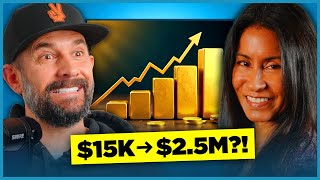
This is a YouTube video titled "From $15K to $2.5M in 18 Months?! Monica’s Gator Lending Journey is WILD! 💸🐊" created in August 2025. The content is a detailed conversation primarily between Pace Morby, Monica Heredia, and Robert, focusing on Robert's financial struggles related to his farm and property in California, discussing creative financing, lending challenges, foreclosure risks, and potential loan solutions. The discussion includes insights into lending practices, government obstacles, and business plans to secure funding and avoid foreclosure. Monica Heredia participates as a lending expert, while Pace Morby leads the conversation and offers financial advice and potential loan options. The content is a conversational interview or discussion but does not include Michael Martin as a speaker.
I got five pages of notes. Am I kidding? I took notes the whole time.
I got five pages of little handwriting notes. So if you're listening, folks, you can make some duff. Can anybody get into this? Who's motivated?
1000%.
Why aren't more people flocking into this? This is the formula right here about subjectivity. Bro, you're making me sick.
Right?
Why would the bank let me do that?
But this guy seemed to come out of nowhere. And he's got an unbelievable following tribe. He's got a top podcast. He's got the most popular TV show on A E called Triple Digit Flip. But what's even more impressive is his heart to serve. Pace Barbee is the guy for all things real estate, and he does it all with something called creative financing. It's going to be everything and anything you could ever want to know about creative financing. When I watch Pace, you know what I see?
I see a guy who got a.
Whole universe of humans who told him, you can't do it that way. And he said it.
Watch me.
Speaking of watch me, today we've got a special guest. We've got Monica with me. She's awesome. She's doing a lot of lending, and I'm super proud of her. We're going to be interviewing her, but as I promised on Instagram Live just a couple of minutes ago, we're actually going to interview. Or not interview. I'll interview her. But it. I have this lead that is, like, so timely. I've got a guy that's losing his whole entire livelihood, his entire business, his entire house, and he needs a loan. I don't think he knows he needs a loan, but I know he needs a loan. And because Monica's business is all about lending, I thought it would be a really great opener for me to call this guy, see if there's a way I can help. Monica and I to chat about it, and then we'll talk about Monica's business. She's going to hang out with me. Monica, thanks for hanging with me today.
Thank you for the invite. We're glad to be here.
You have never been. You've been on live calls with me, but you have not sat next to me while I made a live call. So this is gonna be fun.
Exactly.
All right.
This guy's name is Robert, by the way. I do have his permission to record all of this, just FYI. How you doing, Robert?
I feel better. I heard from you guys.
That's good, man. So what's. What's been the journey so far what have you been dealing with?
Well, you know, I bought this house back in 05, right before the housing crash. It was one of the subprime deal stated income loans. I live up in Humboldt County. I don't know if you know our backstory of this region of California, but you know, I came up here to save the redwoods back in the 90s, you know, tree sitting and protesting the logging companies. Eventually settled here. Got heavily involved in cannabis for a while. And I have my house there in 05. And in 2010 I got sent to federal prison for cultivation.
Okay.
During that time I had a friend living there. He did not pay the bills. I came out of prison to foreclosure and I filed a bankruptcy, I think in 2015. I did save the house back then. When I got released, I started my venture in growing vegetables and berries. And I learned all about the business and ran a business down on the central coast for a while. And eventually credit situation because of the bankruptcy and stuff, I couldn't. I couldn't buy the lease property I was renting. So I had to shut down my farming operation. But I did get a lot of experience in the business and I relocated back here to Humboldt. Right, right as Covid was hitting.
And to the same property, to a.
Different property, Same property. I had some renters helping me work in there, clean the place up and stuff. And you know, they decided to stop paying me rent because the state was like, oh, we can't. You can't evict anyone. So for two years I didn't collect rent. I ended up getting a forbearance, got the loan reinstated again. And I. Up until the beginning of last year, I've been keeping up my payments. And then I was, you know, I had this farming opportunity and it was just huge. I mean, I was like way over my head financially to keep it going and kind of leveraged whatever money I could to keep the farm going. I wrote a grant from the state of California, which my LLC I filed last year was awarded $350,000 to increase production and work on school programs. So after that happened, I was like, well, I got to keep this going. You know, money's coming. And I was playing catch up. I went from payment plan to payment plan and I collected up enough money to get out of default. One day in January, I was waiting to go make a deposit. While I was in the coffee shop, someone smashed my car window open and took all my money. So ever since then I just, you know, I get close to carrying it within A thousand or two. And then it's just. It's just been really difficult to just get to that point where I can, like, make payments again on a regular basis. I have been making money doing some consulting and. And stuff like that. I do bring in about 5,500amonth right now. I've got. I think by the end of next week, I'll have like 7 or 8,000. And I have a reimbursement for receipts that I submitted for, you know, supplies for the farm that's in the grant. I have a $17,000 payment coming. I don't know how quick it's going to come, but I'm just really nervous. You know, it's like I have a lot of sleepless nights, and, you know, it's just. It's hard to be productive and to think straight knowing that, you know, if I have to move, then I have nowhere to move, and then I have to run the farm, and how am I going to do that? It's just. It's a rough one.
Okay. And you've got $350,000 coming from the state in form of a grant, and they are giving it to you in installments. So the first installments coming for $17,000. Is that correct?
Yeah.
Okay.
Yeah. The way. The way it works is it's. It's a reimbursement. And. Okay, so back in January, when that default happened, I was going to cure it. I was lined up with Farm Services Agency to get a micro loan for $50,000 for my business.
Okay.
So I had some capital to start spending money and get tranches back from the grant to keep going. And they. They basically were like, oh, you're in foreclosure or you're in default. You know, we're just going to shred your file. It's like, we don't have anything to do with you. And I've been trying to get loan after loan after loan.
What is. What's the. What's the opportunity that the 350 would do for you? Like, how would that help you?
Oh, what that's doing is. Okay, first of all, I gotta get my credit situated. I have a partner. I'm working on his credit. Once we have. So part of the grant is there's a $90,000 budget for equipment, which is. Only covers 70%.
Okay.
I've gotta come up with 30% for the equipment and then the labor. I think we have a $70,000 labor budget, but I've got to have the money to make the payroll, to submit to payroll checks, receipts, and then I get the reimbursement 60 days after the fact.
What's the product you're selling and who's the customer?
We have the school districts lined up to buy on a weekly basis. We've got about seven or eight different schools in our district, plus there's two food hubs that also distribute throughout to restaurants and stuff like that. So we do have a distribution network for the product that we're going to be harvesting this fall.
And what is the harvest? What is the product?
Tomatoes, peppers, cucumbers.
And is this profitable?
Yeah. No, it is. I mean, we're not making a lot of money, but at least it's enough to keep going and keep expanding. And when I get the equipment, I'll be able to manage more land.
Okay.
I've been basically beating up my two little tractors. And the way, you know, the type of land that we have, it's. It's bottomland, riverland. And you really got to get everything worked early in the year when the rainy season is still happening or just finishing, because when things get dried up, then you've got to irrigate. And then it's just my equipment just way too small to get to the production level I'm trying to get to. So that's really what the grant's going to be. Major impact.
Okay.
And, you know, it's just the house and the payments, you know, being behind for so long, messing my credit up. It's just been really hard to get loans.
Okay.
So, yeah, that's kind of where I've been stuck.
Okay, cool. Do you feel like I have all the information I need to kind of jump in and tell you what I do and how I think there's problems and maybe some solutions that you and I could chat about?
Yeah, no, as far as the loan that I have. Right. I know it's about 24. Roughly 24 to reinstate the interest rates at 3.7. And out of the total of 400, only 300 of its interest varied.
Okay. And what's the property worth?
It's about worth what I'm paying for it. You know, it's worth.
It's worth about 400 grand.
Yeah.
Okay.
Model like we're planning on, and I have a whole team of people are going to help me work on, you know, putting new flooring, put a new kitchen, everything, and then I'll just rent it out again.
Okay, cool. Got it.
Because I have a cabin that I can stain in the back, so.
Okay, let me. Let me give you A lot of the negatives that a business owner. Okay. Number one, California is a communist country.
Yes, you're right.
Okay. And. And you. I feel like God has tried to tell you a hundred times, get the hell out of that place. Sucks so bad.
Yeah.
And it's like the last time God came, that was. That was, by the way, not a burglar that broke into your car. That was God. He broke into your car, stole your money, trying to get you to move out of California. Like, it's just. It's unfortunate. I love California so much, but the government there makes it really, really hard to get things done. I'll give you a very specific reason why I feel that way. If I come to you, I'm a capitalist, right. My job is to. The money I would bring to you as a loan, if that's what you're looking for. Sounds like that's what you're looking for, would not be my money. Right. I have retired school teachers, and I have people that went and worked government jobs. I have good, honest people that came to me and said, pace, I know you know how to deploy money properly. And I rely on my retirement getting paid by investing in you and helping people out of foreclosure. And so a portion of what I do for a living is I take those people's money that don't know how to find opportunities like I do, and I take their money and I bring it to you who doesn't know how to find those people. And I basically make a deal happen. Right. And the way that I make money is I go, all right, well, if I give, you know, this gentleman a $24,000 loan, I'm gonna. My job is to make as little or as much as possible. Which one is it? Is it as little as possible or as much, as much as I possibly can?
Well, I mean, obviously, you need to make something, and you need to make it worth their time and their money, you know, being able, you know, put up the money.
Yeah. And then I'd say about 5% of our loans that we do go into default. Okay. So not a lot, but significant amount of. Let's say I go do a hundred loans, and five of those loans default. What I end up having to do is I take the property over. And now this is where your government sucks. Is that. Let's say I come in. You're in a situation, you're going to lose your entire farm in what, 10 days or less? Maybe two days.
It's the 21st is when this, the auction is. I think the 20th is the very last day.
Okay, cool. So there's no real estate agent on the planet that's going to solve this problem for you, obviously, because you don't want to sell the property because there's an opportunity for you to, you know, expand your livelihood and hire employees and do something cool.
Yeah, exactly.
So you're not looking to sell the property in the first place. Right. So a real estate agent isn't going to be able to help you. You're not going to sell the property. Even if you sold it for sale by owner, you're not going to do that. You want to keep it. And so you're sitting here going, I need a loan. I need a loan. I need a loan. Now here's where your government will hate me. Yeah, Your government will go, oh, you prayed on this individual. He, his backup against is up against the wall, which it is. You prayed on this individual and you charged him an unreasonable amount of interest. But here's the part that the communist California government doesn't understand is that I run a risk of losing somebody else's retirement money if I don't make sure I hedge all my bets. Meaning if you default, for example, right, let's say next week you get abducted by an alien after I give you a loan. How do I, how do I get my investors money back? Right. These are real people. These aren't billionaires. These aren't hedge funds. These are not banks. These are like, literally, I have a lady, I'm not exaggerating you, her name, she's one of my investors. Her name is Grandma Smith. That's what we call her in my investment pool. She is Grandma Smith. Her name is Susan Smith and she's a grandmother. She's 82 years old and she gets a return off me saving people from foreclosure. So what happens is, let's say that I lend money in this situation. Here's the downfall to you if you default, right? Let's say I wire the 24,000, which it won't be 24,000, it'll be probably close to 31,000. And the reason being is you have a trustee or you have somebody that is going to have all sorts of fees that you don't currently see. What you do see is you see what's on your reinstatement letter from the bank. What you don't see is that the bank has already hired a trustee and they have their own hidden fees that you don't see until you actually catch it all the way up. Maybe you've experienced this before where you're like, wait, I thought I owed 12, but why are you saying I owe 15? Oh, well, there's extra fees and things that weren't on.
You are right about that. The amount of payments I'm behind is about 28, 900.
Okay.
These are 500.
Okay. So. Okay, cool. So you've already included your, your extra fees in your 24 grand. Awesome. Okay, cool. Yeah, yeah. Most sellers don't understand that. They think that they owe 20. But you've been through this a couple times. So you, you already knew that that was coming.
Yeah.
So let's, let's go through like a worst case scenario for me and why your government hates you and why your government hates me. You have 11 days to get caught up with this or else it's going to go to auction. Somebody's going to buy this piece of property and they'll buy it for 300 grand. Right. They'll buy it on auction and whoever you know is owed that 400 grand is going to lose 100 grand. So the bank, whoever buys it, that bank is going to just write off their $100,000 loss. So the bank loses 100 grand. You lose a property and my investors lose out on an opportunity because we couldn't figure out how to help you. That would be worst case scenario. The next worst case scenario is I come in, I save you from foreclosure, I give you a loan for 24 grand. Then what happens is in two weeks something bad happens. A piece of equipment breaks, your $17,000 doesn't come. You can't make payments to me. My Grandma Smith, who's 82 years old, who's relying on my monthly payment to her, can't make her, you know, cell phone bill because she's relying on the interest payment to pay all her monthly expenses. Now she's going to hold me responsible to come in and foreclose on that house. And now I'm in the process of now foreclosing and taking over this property. And now guess what your government's going to do. Your government's going to say, well, you took advantage and you knew that if you loaned money to him that you were going to take the property over. And so a lot of people are going to be really reluctant to give you a loan because you're in the worst state in the country.
Yes, you're right.
And so you got your back up against the wall because you're, and this is a political thing, right? Like it's, you know, that you're sitting there praying or, like, trying to manifest somebody like me getting on the phone. But your government officials would never see it that way. All they would say is this. And I've had this happen. I have. I have a seller that I come in, I loan them money. Three months later, they default. But when I gave them the loan, they're like, pace, you're saving my life. My wife and I were going to get divorced until you saved foreclosure. You know, every amazing store you could imagine. Three months later, that seller stops making payments, and I have to come and take the house back to make sure that my investors are made whole. Then the local government gets a call from this seller and says, this Pace Morbi guy took advantage of me and he loaned money to me in a nefarious manner to try and steal my house. It's like, what are you talking about? I don't. I don't want to take houses. Right. I want. I want my interest. I don't want houses. I want interest. Right.
Yeah.
So it's interesting, you know, you need 24 grand. So that's kind of the worst case scenario. Basically, best case scenario is I give you a loan and we have awesome paperwork and I never have to worry about taking over your house or your property. I don't even know the address. You and I have not communicated that. Jamil just called me and told me, hey, I've got this lead that's not really up my alley. So I don't know anything about the property. So. And I don't need to right now. I think the smartest thing to do is. Number one, can I help you? Number two, what would that look like? Number three, you would have to say, yes, I'm interested. Three, I would have you talk to somebody on my lending company. Her name is Heather. And she would work through the paperwork and the details for us to do this loan. If that makes sense.
Yes.
So a $24,000 loan, knowing that I have Grandma Smith on the back end that's relying on me to pay her monthly expenses, how do you plan on paying a $24,000 loan back?
Well, like I said, I have that grant payment. It is definitely coming, but it's a re.
It's a reimbursement. That's the problem. Right. You have to go and do things in order to get it. So, like, even the $350,000, if $70,000 of it is for equipment, that means you have to go buy the equipment first and then get reimbursed for it. Is that correct?
What it is, is I diverted money that should have gone to my payments to buying things for the farm that I'm getting reimbursed for. About 9,000. Of that, 17,000 goes directly to my company. And then I have to pay out the rest in receipts or, you know, for, you know, leases and things I have on the fund. So 9,000 is going to come to me, like, to my. Well, the whole thing will come to my account.
Okay?
So I talked to them. They said to give me an extra 30 days to come up with the money if I needed it, so I could deploy the whole 17 into my situation. I'd rather not.
Okay.
But. And then I probably have. By the end of the week, I'll probably have another seven in cash on top of that.
Okay? So here. Here's the other downfall to that, right? As a person who's lending to you, I don't want to lend in a nefarious way and be a cutthroat loan shark and say, hey, you got to pay me every penny that you receive, because now that's what that's going to do is suffocate your operation, which then, you know, if you owe me 24, you're not going to owe me 24. You're going to owe me 24 plus my fee. Right? And my fee is not 500 bucks. My fee is significant. I mean, you're probably talking in the tens of thousands of dollars in order for my fee to be a thing. And I'm probably not the first choice. You should go after. You should find other people and then use me as a last resort, because I do charge not only enough money to make sure that Grandma Smith gets her interest, but also my team gets their payroll made, and then I also get to pay for my, you know, my living expenses, right? So I'm not cheap. I'm. In fact, I'm not just expensive. I am like, holy crap, expensive to the point where you'll have to lay it at home at night and pray about it before you say yes, like, that's me. So if you owe me, if, let's say you. I lend you 24 grand, I think you've got some other significant problems. And correct me where I'm wrong on this. I give you 24 grand, right? You're going to then be able to get that $17,000. You are not, let's just say, magic wand. You have a magic wand.
You.
What would you want to do with that $17,000? It's definitely not to pay me off. 17 grand and then owe me another whatever you probably would like to say, hey, Pace, can I pay a monthly payment to you and then I can use a portion of that 17 grand to keep my operation going, Is that correct?
That would be ideal.
Okay. And how much of that 17 grand do you need to keep the operation going in a healthy manner, not like hobbling along?
Well, I've been working out some other avenues. I mean, we're going to keep going at the rate we're going. I would spend, you know, whatever's coming to me. I think it's 9, 500 or something like that.
Okay.
My partner, like I have a partner in this business, he's been going through some. He just moved off of property. He's been dealing with issues with his wife. He's got way better credit than me. He's got a property, it's probably, you know, 750,000 in assets. I'm trying to strengthen his credit file so that we can use him to pull in some zero percent interest, you know, credit so that we can really bankroll this grant money. And yeah, so honestly, all this money really was money that was meant at least 9,000 plus of it was to pay my house payments. And I knew I was going to get reimbursed and I just went ahead and kept the operation going because we didn't have the credit yet.
Okay, so you get 17,000. Let's say it's next week or the week after. Hell, it's maybe three weeks later. Right. So you get 17 grand. You were going to take nine grand of that and put it towards the payments. But of course the bank is not going to accept partial payment at this point. They want full, full payment.
Yeah.
How do I know this? Because I do this full time every single day in all 50 states. Your, your state is by far the worst state to lend money in. But it doesn't mean we don't do it. So you would, you were, you would then pay nine grand towards what you owe me. Right. So let's say I charge you a ten thousand dollar fee. Hypothetically. I'm not saying that's my fee. I loan you 24 grand. Okay. You then have to pay me back $34,000. I'm not a monthly payment guy. I'm like, you got 180 days to pay me back or you've got 120 days to pay me back back or else I charge another $10,000. That's like the kind of lender I am. So let's say you give me 24. I give you 24 grand. My repayment schedule is 34 grand. You would then pay 9,000 towards this. Now you owe me 25 grand. How would you pay me the other 25 grand? It sounds like. From the. As a businessman, it sounds like what you need is another loan on top of that to get the equipment going and to get other things going so that you can Release the other $350,000 in grant money that's already been awarded to you. Is that correct?
That's what we're working on. Yeah.
Yeah, got it. And what. Okay, so if you don't. So this is where my. My downfall is. If you can't secure future funding, I now have married you. Because now what's going to happen is there's a possibility that you come to me, Robert, and you say, hey, Pace, I know I owe you 25 grand. I made a $9,000 payment. I still owe you 25 grand. And I. I really want to pay you, but I haven't been able to secure other funding. And so now I'm going to have to dig myself into a deeper hole to go, okay, well, what do you need, Robert? And you're going to go, Well, I need 70,000 for equipment and I need this and I need that, and I. Blah, blah, blah, blah, blah. Right. And I'm going to now have to continue to lend money in order to just get my $26,000 back. That's what it kind of sounds like. And that sounds like that's the future of my relationship with you, is that I end up being your lender to get the rest of your money released.
Yeah, I mean, that's not what I would want to happen.
Yeah. But we. We in lending, we always do a doomsday plan. And so that would be my doomsday plan, is that. And then here's what would happen. For every dollar I put, your Property is worth 400 grand. Right. Let's just say.
Yeah.
Okay, so here's what sucks about that. You owe roughly 400,000. Correct. So you think, oh, well, I owe about what I could sell it for. Well, that's not entirely true. If you sold it today for 400, and that's what you owe is 400, what's going to end up happening is you're going to have to write a check for 30 or $40,000 to just get rid of this house because you have real estate fees and you have payments along the way, and you have utilities and you have all sorts of stuff where agents are getting paid and Closing costs and title. And your buyer's going to come in and go, I want these 17 things fixed before I close escrow on the property. And now you didn't receive 400 and pay off your loans, not to mention the 25 grand that you still owe me. You, you can't even pay that off. You're actually going to be underwater. So even the property itself doesn't really give me any security to do the loan.
Gotcha.
Right? So it's interesting, like, usually the reason why somebody is in this situation is because real estate agents don't know how to solve this problem. And most people go to real estate agents to solve these kind of problems. The second reason very, a lot less common. But the second reason is because there's no collateral. There's no safe way for me to take Grandma Smith's money and deploy it into your deal. Knowing a hundred percent, I could stare Grandma Smith in the face and go, I made a good decision, Grandma Smith, to put your money into Robert's deal. Knowing that worst case scenario, I was going to get your money back in a worst case scenario. There's no physical way for me to get Grandma Smith's money back in a worst case scenario. Yeah, right. It would. The property is not worth what you owe. You've reinstated it and done loan modifications enough times that there's so many fees on it that the property that you bought back in whatever should have appreciated to a point where you had 100 grand or more in equity. But what's ironic is that these banks have allowed you to do loan modifications and your attorney general allows this kind of crap to happen. But an investor like me that comes in and tries to solve your problem, I get in trouble, but the big banks don't. It's kind of a messed up situation, but it is what it is. So I, the, this, here's, here's the question I would have to ask. Like, you're a businessman and so what I would have you do is this. I want you to, I want you to email Heather on my team. Okay. And I do, I do these kind of loans. But what I'm going to have you do with Heather is I want you to give Heather a business plan, meaning, hey, Heather, you guys give us 24 grand. I mean, I'm not going to give you 24 grand. I'm going to go wire the money to catch up the payment so we can get you out of foreclosure. That's what I'm, I am going to do.
Yeah.
And I would Want a business plan saying, hey, Heather, 24 grand, I get the 17,000, I'll pay you down nine. Then what I really need is I need another 50 grand. I need another 70 grand. And then I can pay you not only the 50, the 70 and the 25, but I can also pay your fees on top of it if I can get this money released to me. If you have a game plan, I could do a loan. If you don't have a game plan, worst case scenario, my team's just going to go, no, we've got other opportunities now. Worst case scenario, let's say I don't do a loan for you, I can still help you. Here's the way I would help you, and I would do it for free. I can extend your foreclosure In California probably 60 to 90 days for free without a bankruptcy, without any doing any shenanigans. I could extend your foreclosure for you, and I could just do that as a parting gift and just go, hey, let me just help you out. Sorry I couldn't lend to you, but let me give you 90 more days to try and figure this thing out.
That would be helpful.
Yeah, we do it. We do it for people all the time. Even. Even despite the fact that your government thinks that real estate investors are dirty rotten scoundrels. So here's what I want you to do. I want you to email money@pacemorby.com m o n e y money.com and I want you to say to my notes here, yeah, no problem.
At p a c e dot com. Got it.
Yeah. So, yeah, moneypacemorby.com and I would address it to Heather. Just say, hey, Heather, I spoke to Pace today. He said there's a possibility you guys could do a loan for me. Here's my business plan. When can we get on, get on a call and I leave all of those types of decisions to her. She might call me and I'll just give her some insight. But if we do the loan, awesome. If we don't do the loan, I can still have somebody on my team extend your foreclosure and give you some extra time to try and figure out where else you can get some money.
Gotcha. And I did want to mention I do have, you know, I do have a lot of support and friends and stuff. Not everyone's flush with money, but I do have one friend that has a house that he went to go remodel. It never finished. The remodel historic house. It's completely paid Off. We've been talking about trying to get a construction loan to finish it, and he would gladly loan me money if I needed it in any situation. But there could be a real estate, you know, play there.
I like that. I like that creativity, Robert. I. Maybe that's. That house is what I get for as collateral or something like that. If I can collateralize my loan against his house and I do the loan and he doesn't have to do the loan, he doesn't have to come up with any money. But if that house is paid off for and clear, maybe that's the way I collateralize myself and protect myself.
And then my business partner also has some rural real estate that could be a home, but he built a barndominium. It's. It's insane. Like this building he built out of four shipping containers. And you know, he's, he's working on getting this grant to put in a bridge. So they allow him to turn it into a house because they're limited on the square footage, because this is one of those California things. Like they got the bridge has to be engineered a certain way. And you know, it's like a million dollars to put in the bridge. But right now you could have a thousand square foot of it, a house, and you could have that mortgageable. That. That's a paid off property as well.
Yeah. Okay, well, I, I mean, if those guys will allow us to collateralize, like, your property as it is right now, does not have any collateral. It's actually an unsafe investment.
No, it's. Yeah, you're right.
Your business plan would be basically my collateral. But if these guys would be willing to pledge their houses as collateral to make sure I'm not, I don't have it. I have a hundred percent loss protection, then I would be open to doing a loan for sure.
Great.
Awesome. And. And we're fast. Like, I could wire money tomorrow, right? I could like make this all go away in one day.
And you guys do like, just out of curiosity, I mean, you guys do sometimes business loans or what kind of. How does that look?
I do business loans. Yes, but you guys have not produced real, any significant revenue. So we do business loans against people's revenue. And it seems like you guys are not really quite there yet. So this would be more of a personal loan based on backing, backed by the security of real estate.
Gotcha. That makes sense.
Yeah. In fact, I would maybe even text your buddies and just go, hey, I talked to an interesting guy that says he can loan the money to us, but he needs Some sort of security. Would you be willing to pledge your house as collateral? Now, that's obviously a tough conversation to have with your buddy, but that's almost a guaranteed way to get access to my cash, is give me collateral.
Yeah. And just. I mean, you're not just an interesting guy. You're really amazing. I have been listening to your content many, many years now.
Oh, dang it. Okay. I didn't know you knew me.
Program. I just, you know, the cost of entry, you know, it's right around 10,000 to be in the family. It's one of my goals. You know, I think. What is? The last webinar I listened to, it was like, you know, like the go getter that, you know, the guy that. That finds, you know, the wholesale.
The bird dog.
Bird dog.
That's it.
That was an amazing webinar, by the way. I learned a lot.
Thank you. I appreciate it.
I'm really inspired by a lot of stuff you do, and it's like, one of my goals to be in your, you know, in your family. And, you know, I think one of the guys I've been talking to for the last, I don't know, year or so, I think his name's Dell.
Yeah, Dell's a cool guy.
Gardle. Yeah. So we've had a lot of conversations about it, and, you know, it's just like, I'd be willing to commit to something.
Well, you. You've gone through. I can tell you right now that what you're going through right now in terms of challenges and hardship is nothing compared to what. I'm sorry, I shouldn't say nothing. It's way more challenging, what you're dealing with right now than what we do in real estate, like doing these grants and waiting for reimbursements and all of that kind of stuff. It, like, what you're doing is challenging, and the fact that you've been hanging on is super impressive. So keep it going.
Yeah, it's. It's. It's rewarding. I get a lot of, like, when the kids come to visit the farm, you know, just how impressionable they are and how excited they are to be out in nature and get their hands dirty. And, you know, just. That's the rewarding part for me, 100%.
What city is this in again?
I'm in Garberville, which is southern Humboldt. We're near Eureka on the Eel River.
Okay, got it. Oh, wow. You guys have ocean and river.
Yeah, I mean, the ocean's like, 20 miles away. It takes about 40 minutes to get there. But.
Wow, this place is incredible.
And, you know, I've got an old growth. Just between me and you, I have an old growth tree in my yard that's probably worth 250 grand. I don't want to cut it down. Probably like 6, 700 years old.
Wow.
You know, it's just. I came up here to save the trees and I cut them down.
Yeah. This is. This place is freaking awesome. Wow.
Potential. Part of the reason why I want to like property. I mean, it's almost an acre. There's two lots. We want to do the remodel, turn it to duplex. We.
We.
The town I live in is called Miranda. It's got the only high school for 100 square miles. So you have students coming to the high school two hours in the morning and two hours in the evening to go home every single day of the week. And what a lot of families do when their kids are in high school is they'll find a rental and they're impossible to find.
Yeah.
So the rental potential, like. Yeah. Harder to rent some of these hill properties where you got to drive an hour up a dirt road or whatever. Beautiful places, they're harder to rent out. But because I live in the small town, it's so easy to rent.
Yeah.
And the hospital's expanding, and you know that just that new doctors are hiring, having to drive an hour to work. They would love to have, you know, a rental close to town.
Yeah. This is awesome. This, where you live is really, really cool. Congrats. It's cool that you figured this out and gotten this property and gotten this far.
Half a mile from my house. I've got a beautiful swimming spot. You know, it's in the Avenue. The Giants. I mean, you know, they used footage from that in Star. Star Wars. You know the Star wars movie with the light bike race?
Yeah.
You know, that. That was here.
So, so freaking awesome. Well, email Heather. Let's. Let's figure out what we can do. I would reach out to your buddies and see if there's a way they would. Would be willing to pledge something over to you. If so, I don't see the downside of it if I've got collateral and we can make something happen.
Cool. And yeah, I mean, considering that I can probably make a $10,000 payment, like, within a month, like, I don't know if you could consider that towards your fees, like, being a little less than you would normally charge. But if that happened, I don't know if there's something you could write in there. For that. But I want you to make money, too.
Yeah. I mean, the thing is, I don't reduce my fees. Sadly, my fee is my fee, and I hate to say that, but I have other people that have got to get paid. And what ends up happening is, again, just going kind of going back to where a lot of my money comes from is a lot of people think that I make money from, like, mentorships, but the reality is, like, that $10,000 fee, it goes to a company called New Reach. I don't make any of that money. What I did is I partnered with a company called New Reach a couple years back, five years ago, and I said, I don't want to be a coach or a mentor that charges, but I also don't want to build a community of people from Free. Free people. I want to be with people that have filtered themselves and, you know, they have the resources to be part of a really exclusive community. And so I let New Reach take all of that money. So what people assume is, oh, Pace is worth hundreds of millions of dollars because his community is so big. That's. I don't. I've not made any of that money. Like, if you've ever watched any of my gator stuff, I think our gator stuff loses half a million dollars a year, but we keep the community going because we do so much business with each other. It's kind of a lost leader, if that makes sense.
Yeah, but.
So, like, when I go lend money, you would assume, oh, pace is worth $50 million, he's going to lend his own money. No, I'm going and borrowing Grandma Smith's money. She's relying on me for a very specific return, which is why she gave me the money. And so my fee has to remain where it is. Otherwise I can't honor my commitment to her.
Gotcha.
So. But I. Anyway, I. I think that we could make something happen. I appreciate the time and the call. And it's freaking awesome watching a dude just scrap it out and figure out how to make it all happen, man. Super impressed. Right on.
No, I really appreciate it.
Cool.
At least you could consider maybe a two for one deal. Or maybe my business partner can join the family.
Oh, that would be a New Reach. A New Reach question. Sadly, not me.
Okay. Gotcha.
Yeah. I don't. Again, I don't collect the money. I. I have. Could I force somebody through New Reach? Yes. But I'm not the one that collects the money, makes the money, or does any of that kind of stuff. I just tell New Reach you guys run the back end. You guys collect the money. I want to have nothing to do with it. I just want to do deals with people in the community and train them. And so people come to me. Can I get access to the sub2 community? I'm, like, paid near each, and I'm sure they'll let you in. So it's unfortunate, but that's the way I set it up five years ago. I'm grateful I set it up that way because I never wanted to be a guy that relied on coaching income ever in my life.
So gotcha in the community.
Yeah. So anyway, I appreciate it. Send an email to Heather. Let's see what we can do.
Thank you so much, Case for your time.
No problem.
Super valuable.
Hey, yours is, too. I appreciate it. Have a good night.
All right. Thank you so much.
Okay, bye. Bye. Okay. What a fun. That was a lot longer of a call than I was planning on having, but welcome to foreclosure calls. Right? Okay. So for those of you guys that just tuned in, this is Monica Heredia. She's amazing. And Monica's also doing a lot of lending. She's in our collective community, and she's awesome. She's a great contributor. I actually was meaning to interview her tonight, which we will as well. But I just thought, like, I get this lead pops up a couple of hours ago, and this guy's in this horrible situation. And I just kind of looking at it at the surface level, I go, okay, the guy's in foreclosure. I don't think he's trying to sell the property. He's trying to save the property so he can build his business, which means he needs a loan. And that's what Monica does. Monica, as you were listening to my call with this guy, what were like, a couple of things that came across your mind of like, red flag, red flag, red flag.
They're not having equity in the house. His again, like his business plan. It didn't sound like he has his business up and running for him to have to invest more into the business, but he hasn't created any income that he can show. Yeah, lotto and of course, California. The one question that I am not certain about was for his. He was offering his buddy his buddy's house. I'm wondering if that is a primary residence or did they actually buy it as an investment and they are just trying to rehab it or if there's somebody that's actually living in it because could you still. If it was owned as a primary. Yeah, yeah, exactly.
Such a good call out, Monica. So what she's saying, guys, is that this friend of his has a home. And he was. He was specific, but we would have to verify this. He was specific enough to say, my buddy bought this property to fix and flip, and he kind of just ran out of cash. But he's got. He owns it free and clear, and it's meant to be a project, but that doesn't mean he doesn't live in the fricking back. And it's not his primary residence. So Monica has a really good call out. I can't just go. I mean, this is where the government is trying to protect these people, right? Here's what the government, I feel like, really wants if somebody's in this bad of a situation. Meaning I don't have credit. I've been to federal prison for growing weed, which is so crappy now that weed is legal, but at the time it wasn't. And so he went to prison for something that today is now legal. So in my mind, I'm like, he's not a bad guy. He didn't do anything wrong. Like, in today's standards, he's perfectly fine. But he did go to federal prison, which means he's got, you know, prison time on his record. He's got bad credit. He's had five or six bad things happen to him in a row. And it's sad to say this, and I don't believe this entirely, but as I was listening to the call, it was like, man, bad things just seem to find you, bro. And I think he's such a positive guy with a positive energy that I don't think it's necessarily because of him. But usually it's the victim mentality, people that everything in the world is somebody else's fault. And f everybody, and my parents this and my parents that, whatever it may be, they invite these really negative things, like people breaking into my car when I had like, what are you doing with $30,000 in cash sitting on your front seat of your car, bro? I would. I would literally wrap that in a bag and swallow it and keep it in my stomach. I would never let that money out of my sight. It would go right into the bank. So it's like, either A, that's not true, or B, you're so trusting of people. So what ends up happening is you have to kind of make a judgment call as well. Let's say, Monica, you're to your call out. By the way, guys, give Monica some freaking love in the side chat. This is awesome. I'm so sorry. You.
Thank you.
If you guys did not plan on coming here and seeing a foreclosure call. But that was fun for you guys to see. Just say something in the comments that you guys learned something. So I feel like bad luck follows the guy for whatever reason. And even if his buddy's house is not the primary and we have collateral, what we would have to do the loan based on is going. All right, well, one. Anytime you guys are doing loans with people in foreclosure, record every conversation because they're the nicest people. On the first call, they are like, no, I'll figure it out. No, I'll pay you whatever it may be. The second your money gets released to them, everything changes. Dr. Jekyll, Mr. Hyde. All of a sudden, you'll see the. The real person once they have what they need from you. And it's ironic that the government would ever think, oh, the investors took advantage of this person. Every single person in foreclosure that needs money or saving sounds exactly like that. Yes, sir. I want to help. I want to get you paid. I'll do anything you want. I'll get collateral. Thank you so much. You're saving my life. Three weeks into the loan, they're like, you took advantage of me. Okay, well, I don't know who's right or who's wrong, but I feel like the government actually prefers people in those situations. They'll just lose everything. Like, they're gonna lose. He's gonna lose his farm. He's gonna lose all the cash he's poured into this thing. He's going to lose his livelihood. And the government rather just let that all go, right? Rather than us come in and make money, because where would we make money, Monica? Let's go through that. I definitely don't want to be involved in his business. You don't want to be involved in his business, Right?
No, I don't.
It's either a hell yes or a hell no. Right? And then this one, I would say it's a hell, no. So I would say, I don't want to be involved in his business. So where would we make our money? The where. If he defaulted, how could we make our money? Well, we, Monica and I. Let's say we do this deal together. We don't want to take that farm over. I don't want to grow tomatoes. I can go buy them down at freaking Sprouts.
That's true.
Right. So I didn't look at the house. Yeah, well, we have to look at the house. But even he's admitting. Right. Most of the time the sellers or the people you're doing loans for always over inflate their money.
Yes.
They over inflate the value. This guy's saying I owe what it's worth. Which means he probably owes more than what it's worth. Right. The only way for us to make money would be he defaults. In a worst case scenario, we have to go take his buddy's house back or take his buddy's house and we would make our pound of flesh over there. But now you have not just one person complaining to the government that we took advantage of him, but you have two. Right. And so that's a scary situation to walk yourself into. How fast did you say in your mind, Monica, that this is a loan you would not do.
Five minutes in. And it was, it was pretty fast when he was telling me or telling you the story of. About his business. And, and then that there is no equity in the house. Yeah. So it'd be a big no for me.
Yeah. And even at the end he's like, hey, I'll use collateral. I'm like, okay, well maybe, maybe I can help you out. Worst case scenario. Here's what's fun about what we can do in our community. We're really smart. Right. We're very diverse. We've got lenders, we've got buyers, we've got flippers, we've got transaction coordinators, we've got Everybody inside the sub2 community. So I know I could at least help the guy and give him a nice hug and then walk away to a loan that I'm fully secured on. But I don't want to go through a doomsday scenario. Even though there's a, a possibility of making some good money. I feel like the doomsday scenario in this situation would be horrible. Here. Let's pull this up too. Monica hit the nail on the head. Let's. But let's show this as well. Let's go to. This is where it's at. Okay. 99 of you guys will never even visit part this part of the country. Want to know why? Because they don't have a freaking. Like the closest airport is probably Sacramento to Reading. And then driving in, this is where he's. He's actually in Miranda right here. This is the town he lives in. Look at this. Do you guys see any restaurants or anything that you guys recognize?
So it's very rural.
It's very rural. Which means nobody's gonna buy the house. Even if you Took it back over. Nobody's gonna buy the house for a year or two years. And, oh, there's so much demand. Really, if seven people that live in your entire town. What do you mean there's so much demand? Right. So that. Do you want to own a property in this part of the world? Worst case scenario? And I think I know the answer for you from you, Monica.
No.
No. You want to fly here, go foreclose on the property, deal with all that crap just to lose money? No. So how many people learned how to say no to a deal on this call? But then you still feel bad that you say no to the situation? What's the point I want to make before we interview Monica is that we can always still help that seller. Right. Like this guy. Even though. Even though Monica and I are not going to do this loan, I can go and help him get 90 more days on his farm and hopefully he finds another situation that he could borrow money from a friend or a family member or, like, why didn't he ask his buddy for a loan who has a free and clear house that he said, my buddy will get me along. He probably just needs, like, a final push to just make that call. So I'm 95% sure it's a no, and I'm 100% sure I can still help him even if we don't do a loan. So John says, I say no to 99% of deals that come across my desk. I agree with that. Good to see you, John. Her, you handsome son of a gun. Okay, so what changes when a person is facing foreclosure but has equity in the home? Okay, so what we will do is we will buy the home from them. This is where it gets tricky. I will just buy the home from them and lease it back to them for, like, six months, and I'll give them a lease option to buy it back from me or what have you. And even that's really, really risky. Most of the loans that Monica's probably doing that we're going to talk about are not occupied houses. 99% of them, or maybe even 100% of them, you're staying away from occupied houses. So anyway, guys, welcome Monica to the show today. We're going to interview her for the next 30 minutes and get to know her. Monica, you went from 15,000 to $2.5 million in 18 months of lending.
Yeah.
You are doing gator loans. So let's talk about your business. Let's talk about your journey. How did you get into the lending the gator business.
So my background is finance. I have like 20 years of finance. And I was looking for an opportunity that I could make. Really there's no cap on my income. I could work from home. I was trying to replace my income for my W2 and be able to leave. And seven months before I started my journey looking for opportunities. And I joined webinars and all sorts of real estate Facebook groups and I came across you, somebody said in a Facebook group to check you out. And, and so I started watching your YouTube videos and then you had a introduction webinar on the Gator method. And I joined that and within 10 minutes pace I was like, this is it. Because my whole background has been investing and investing in mutual funds and stocks and I thought, oh my gosh, how did I not know about this? Because I can actually make double even more than that. We used to always think like, oh, if you can make 9%, 10% annualized in my, in a mutual fund, you're doing great. And then to see that you can make. And this is what my experience has, has shown me easily 30%, 60% it just depends on like what you are lending on. So I ended up joining Gator and so going back now it was 20, 23 and 10 month or 10 weeks in the program, I was ready to lend and I kept I. All my money was invested in my retirement accounts. So thinking about your lender, everything was invested in retirement accounts. I really didn't have any liquid assets and so I thought where can I get capital from? And the first thought was I'll use my HELOC because I had a HELOC from doing just renovations on my property. And then I thought I also have an underutilized brokerage account but we won't touch that yet because you said not to use your own money, to always borrow money. And while I was trying to find a private money lending deal, everybody just kept like I would find one. There was somebody that would post like at 10 o' clock at night really awesome deals and I would reach out and say hey, I'm ready, I would love to fund this one. And it would already be taken by somebody else in the community. So 10 weeks in, somebody that I have been networking with reached back out to me and they had, they're like, hey, we have an earnest money deal and this it's we. So it was a wholesaler that had the property, they had an end buyer and they said we have a lender and everything is solid.
And.
And the property was in Tarpon Springs, Florida. It was a really beautiful property.
I like Tarpon Springs. It's a good spot.
Yeah, yeah. And so I reviewed the property. The numbers worked and I thought, okay, it was. How much did they want? Was 15,000 for the earnest money. And I said, okay. So then it was the connector. He's like, by the way, it is. If you lend that $15,000, it will go hard. And if anybody's on here that doesn't know what that means, you have that 30 day, usually it's 30 day window to do your due diligence. If you find anything wrong, you can back out of the contract. The buyer can, but they couldn't. So we were already hard and I did everything wrong. I know you're not supposed to do that, but the return for that lending, the 15,000 was going to be $10,000. And the connector was really, they really like were so confident that this, there's this buyer and there's the lender and we're good to go. And so I lent on that and a week. So I had called the title company to let them know, hey, I'm going to be wiring $15,000. I'm. My name is Monica Heredia and I'll be sending this in from my personal account. So I wasn't. The money was in my personal account rather than in my business llc. And she's like, okay. So I, I wired that in and then it is a day before we're supposed to close. And so a day before we were supposed to close. I end up calling the title company because we hadn't heard anything. And I'm asked if they were ready if we were ready to close the following day. And she said, we closed the file. And I'm like, you, you closed the file? Can you tell me why? And she's like, you, because you're not the seller and you're not the buyer. I can't share that information. So I go back to the connector, the wholesaler, and it sounds like you.
Did not put a transaction coordinator on this file.
Correct? I told you I did everything wrong.
I can just tell. I mean, the advantage here though is your experience, right? You know how to lend money or not lend money, but you know how to invest, you know how to ask the right questions. And so the challenging part is like, when you're more experienced on some of these things is you will have the smart person fallacy. The fallacy of like in the belief system of like, oh, no, no, I don't need a transaction coordinator. I can kind of figure this out. But the transaction coordinator would have made sure that you and the borrower, the original wholesaler, signed a JV agreement that gave you permission to actually speak to the title company about all the details. So I'm like, okay, why would they not give her the deal? Oh, she doesn't have a tc she didn't get the documents done. Which makes sense. I mean, it means that you broke every role that we trained in Gator, which I love. This is great.
We did have a JV agreement, but it didn't allow me still, the, the title companies still didn't allow me to speak with them. So I go back to the team and I tell them what had that they close this file and, and they're panicking because they think that the seller is not like, okay, they're going to find another buyer. Like, you know what's going on. So we try to go to another title company, and that title company talked to the first title company and they came back and they said they, they wouldn't do the deal. So then we went to the seller and they had a title company that he was using that we went ahead and used. So I, I, I was like, well, we still need to get my $15,000 because there's $15,000 with that first title company. And the connector was like, we'll do that. We'll deal with that after this closes. So they went and they got another lender to bring in another 15,000 for earnest money to take to the, the third title company. And so we had, so my contract I had signed was, this was, gosh, July, August. It was August 21st. There's my little. Where I lent out 15,000 and then I was going to get 10, and it's 1050 because I don't know if you can see that.
Yeah.
But the 500 was going to be going to the wholesaler, and they ended up closing. So we ended up closing. It was October 16th, and I got paid my $10,000.
Nice.
And yeah, that was great. So now the, the wholesaler, the, the buyer and myself ended up signing a release. And we sent that to the first title company to let them know that they could release the money to my business. We didn't hear anything. So I end up calling the title company, and I talked to the same agent that had helped me with the wire, and she said, oh, we sent that over to our attorney and they'll be reaching out to you. I wasn't really sure. That didn't sound too good to me that she couldn't tell me what was going on. So it was probably a few, it was a few weeks later, maybe the next, the next week that my, the wholesaler ends up getting an email. And the email was that we, we were summoned. They had filed a lawsuit again.
Who's they?
The title company. The title, the first title company filed a lawsuit against the buyer, the wholesaler and myself.
And so switching to a different title company.
No. So what they thought, what they said is that they didn't know who the 15,000 should be paid to. And I called to talk to the woman that I had spoke to the agent again and she said that she couldn't provide me any information. So I have this stated October 27th, the summons. And she documented what she submitted to the court was documentation of when the wholesaler went into a contract with the seller and then when he was signing over to the end buyer. Everything was documented when I wired the funds. What she didn't document was that they closed the file. And so she made it sound like that we, we ended up going and closing the deal with another title company on our own. She didn't reference anything about that. Their company was the one that closed the file. So me being new, I didn't know what to do. So I ended up talking to an attorney that was in Florida and she was like just go ahead and send back a response to their response and just document all the details. And so I did. And I ended up documenting the important piece that they left out that they, they were the ones that closed the file. And it was probably, it was a week later that they agreed to go ahead and pay me back my 15,000. But guess what? They withheld.
What?
So they would, they withheld $2,000 in attorney fees. And I think the whole time they were just trying to get money for all the work that they had done for that entire month. And I honestly just think like they didn't understand like the, the wholesale, the wholesaler to the end buyer. Even though the wholesaler said yes, they, they work with wholesalers. And so we never really found out like why they closed the file. But that was my first, my first lend in gator.
And, and since you've. And since then you've loaned $2.5 million on deals.
So since then what, what I ended up doing is in those four months I did seven deals on my own and I ended up making 39, 39,000. Which I thought if I can do that like in every four months, this is amazing. 2004. So I ended up doing. It was three earnest money deals and three private money lending deals. And then I did a private money partner deal. And then in January of it.
Can you guys hear me in the side comments? If you can hear me. If you can hear me, tell me. Say yes in the side comments. I don't think it's me. I'm hardwired. Okay, Everybody can hear me. We've lost. We've lost her. Okay, well, Monica, we've lost you somehow, some way. Dang, that sucks. Oh, yeah, we lost her. All right. Well, that sucks. Well, I don't know what happened, but her Internet got cut out, man. We were just getting to the good part. She lost. She made $39,000 in just a matter of a couple of months on doing deals on her own. Her story actually gets to a point where she, like, how much money she's making is so significant. Insane amount. So I guess I might have to just have her come back another night. I'm hardwired, so it's definitely not me. So, guys, anybody that's in the Gator tribe, we will have Monica come in and we'll do a deep dive on her existing business. You guys will all meet her, make a comment on the YouTube channel, please. I'm gonna. I'll do a second interview with her. Well, I don't know what happened with her. That sucks, man. That's so bad, Monica, that your story was just getting good. Let's see. There she is. Monica. Well, guys, we appreciate you. We will see you guys another day. Thank you guys so much. I think Monica just lost her Internet. I think that we'll just come back and interview her another night. Thank you guys so much. Hopefully the first call was really freaking awesome, even though we missed Monica's full entire story. Thank you guys so much. We'll see. Have a good night. Have a good Sunday.