AI Agents, USDC, and the Programmable Economy | thirdweb (Furqan Rydhan) | Builder Series

Furqan Rydhan, co-founder of Thirdweb, explains how USDC stablecoins enable trustless payments for AI agents, unlike reversible credit cards. Thirdweb's Nebula engine gives agents blockchain knowledge to execute smart contracts and handle DeFi transactions. The convergence creates agent-to-agent economies where services are paid in verified USDC, opening new internet-native jobs.
Chapters
But we, the most interesting stuff that we see is when agents are actually putting it into their toolset so that, hey, I can make an image really great, but you have to pay me 1 USDC and then I'll give you an image. And so it could receive the USDC, verify that it got the money and sent it back. And I think this is something we just can't see in the traditional world. Like, you know, if you pay me with credit card, I give you an image a month later, you do a chargeback. Is done. And so the beauty of USDC being verified and on-chain and kind of concrete is incredible for agents, especially when we start seeing agent-to-agent economies form. And I think that's going to be kind of exceptionally explosive.
Today we're talking about the collision course between 2 of the biggest waves in tech, AI and crypto. To explore what happens when these 2 worlds truly connect, I'm joined by Furqan Rydhan, who has been building since the dot-com era. He's co-founded companies like AppLovin and Bebo, and today he's behind Third Web, a platform that's reshaping how developers build Web3 apps. Welcome to the Builder Series, where we spotlight visionaries transforming technology and innovation with USDC and the Circle Developer Platform. Furqan, I am super excited to have you here. Before we dive in, I really want to start off off the bat and learn, how did you first come across USDC? I know it ended up playing a role in some of the earliest third web tools.
Yeah, I mean, I got into crypto kind of accidentally. I'm a bit of a nerd and I'm on just some forums back, I don't know, in 2010, and learned about this thing called Bitcoin from that. And I ended up downloading the Bitcoin miner and I ran it on my computer and it felt like a virus. My computer started kind of fritzing out. So that was my introduction to cryptocurrency. I got excited about the peer-to-peer technologies, and I've been kind of like a builder investor nerd about this ecosystem since then. You know, I think USDC was interesting for me because we use, you know, I live in America, we use dollars all day, we use digital dollars using credit cards. And it felt like there needed to be a representation of that on-chain so that you could do all the programmatic capabilities of crypto. But I wasn't looking for the price variation. I was looking at something more stable. And that's how, when I first saw USTC, it clicked for me that, oh shit, this makes sense. You know?
You've seen a lot of shifts. Dot-com, mobile, Web2. Now we've got AI and blockchain converging. I'm curious, from your perspective, what do you think is driving that convergence? And how do you see AI influencing What's possible on-chain?
They're very different in one aspect. So, you know, the similarity is they're brand new and we don't know yet how it impacts everything, both for AI and crypto. But I think the difference is crypto is kind of like a different format, a different platform to kind of operate from. And it gave us some new capabilities, you know, public infrastructure that's shared, that's verified, that we can all use. that's available to everyone. I think it's similar to bridges and highways or parks, right? These are public places that we have in the physical world. We all get to share it. There's some rules, you know, just, just be a good person, kind of clean up after yourselves and do those things. And, you know, the internet has been mostly private, right? Private roads, driveways. And I think crypto kind of unlocked this new capability. And we've definitely seen it in the financial world just completely change everything in terms of how we know. And I think that's kind of happening to the rest of the internet. For AI, I don't think of it as an industry. I actually think of it as kind of a different layer that's kind of like the internet or cloud. And the analogy that I typically give people is early computers and just getting that UI was so cool. I could point, click, see things, interact with it. That was the first interface that we got from computers, right? Was the— Right. UI. That was kind of one of the biggest shifts. And the second one was the internet. It brought us API. It made it so that systems can communicate with each other. You know, cloud was an accelerant. Maybe it was a 10x. AI feels like a 100x type technology. We can program the way we think into these things and they can reproduce it over and over again. And it's going to significantly increase the amount of digital work that happens, the quality of work that happens, and just kind of the underpinning of everything. And so while there's similarities to AI, I just don't know how to Kind of grasp it into the same, you know, kind of scale. It just feels bigger.
All right, let's keep going, man. We started— we're starting to hear a lot, I mean, about AI agents, right? I mean, that don't just analyze or write, but actually freaking act and act on-chain. And I want to dive now into Nebula. Initiate something like a transaction. What's actually happening Under the hood?
Yeah. So Nebula, just so people kind of know a little bit of what it is, is our kind of view of how AI should understand blockchains. And we found a lot of problems with the existing AI systems and just understanding this new technology set. First, blockchains move, you know, their technology has updated so quickly, so rapidly. Every month or two, there are major changes. And just having that understanding of the types of things you can do. Second, the core knowledge of How does the EVM work? How does a smart contract work? What does it do? What does this particular smart contract do? Stuff like that. And so we developed Nebula so that there is a kind of, you know, top-tier AI model out there in the world that can understand everything. What Nebula does is it takes that request, it understands, it tries to create some understanding. So it has a reasoning brain. It'll say, okay, what's the intent of the user? What are they trying to do? know, and then how are they trying to do it? And so when we take that request and it'll look at it, it'll understand, one, I am trying to actually do an action. That's the first thing it'll determine. Are you trying to research data? Are you trying to read information? Are you trying to write to kind of the blockchain? In this case, because we're doing this swap, we're trying to write. Now, there's no existing way to do a swap, right? Like the blockchain doesn't have that. Some piece of software out there on the blockchain whether it's a decentralized exchange or some sort of other mechanic like that, will actually do the function of it. The cool thing is Nebula can actually write new code too. So you're not limited to templates. You're not limited to even what's available already on the chain. So Nebula can act, you know, can deploy things that are off the shelf that are available through Third Web. It can find things that are already on-chain. So any protocol that exists out there in the world, it can interact with it. But also, if there isn't the thing that you want to do, It can write code. And today we have it both writing Python code internally to do more complex tasks. So I want to deploy this NFT contract. I want to mint 10 to me, 10 to Sam, and then we want to sell 30 of them. It can kind of write Python codes just in time, live, to go and stitch those things together. And then, by the way, if we wanted a really cool mechanic on the NFT, like, hey, me and Sam have to both sign off on this person before they can buy our thing. It could even customize that thing live before it deploys it to say, hey, we need some new code here. We should be able to kind of do that. It'll verify it. It'll check it. It'll look at kind of how it works, simulate it to make sure it could do the right task. And so it's not really limited to templates. It's not kind of off-the-shelf stuff. It's totally dynamic, as if you had a serious blockchain engineer on your team just sitting there and could understand your product or what your goals were. That's what Nebula can achieve.
That's wild. That's wild. So, man. All right. So I'm wondering too, like, so with moving USDC, right, it means dealing with gas, security, real value. How does Nebula, I guess, help abstract some of those complexities?
Yeah. So first is it understands USDC. It understands the right USDC, meaning the proper contract that's official and verified. It knows that inherently. Second, you know, agents themselves, they need wallets. And so Nebula kind of brings that to the equation. It can put in a smart account that can be acted on. It could be a Third Web smart account. It can be any other wallet that exists out there in the world as well. And what it can do then is it can ask for permission to either autonomously act on your behalf or ask you for confirmation. And so let's say I just wanted to set up an agent that every day sends you a random amount between $0.10 and $0.50 of USDC. And it's just kind of a fun gimmick and I'm just sending it. It could wake up and it could do that. And I've said, hey, $1 in this account, you can go wild, do whatever you want. Or, hey, I'm doing larger transactions, I'm doing kind of major functions. I want you to think about it and decide before you actually do the thing, ask for my permission. And giving the agent, you know, core capabilities of the wallet, embedding it in has really unlocked its ability to kind of act. A wallet is partly your gateway into the blockchain, right?
Right.
read the blockchain however you want, but to act, you actually need to sign something. And that comes from that. And so does Nebula have a wallet and understands how to use it? It has deep, you know, what we call a wallet execution agent. It has deep understanding of what it takes to sign transactions, craft transactions, interact with functions that are on-chain. And, you know, so when we're looking at something like a USDC, you know, pretty easy. There's a transfer function. We call it. That's going to go ahead and kind of transfer the money from my wallet to the destination. But, you know, as we go further, I might be using USDC in a DeFi platform. I might be buying an NFT with USDC. And so it would also understand how to call this other function over there and use the USDC in my wallet. And the last thing is because again, the Third Web developer stack is embedded inside Nebula. I might only have USDC in my wallet. The person selling the thing might be selling it in some other token. And so in flight, it could just swap from USDC to the token that we need. It could use the programmatic functions of cryptocurrency right away without you even knowing it. And so it takes a lot of these complexities, makes it really seamless to kind of interact with. Now, the interface here, so there's human interfaces, you could type to it and you could do things. I think that's pretty cool. That's like chat. That's like a human driving things. But we, the most interesting stuff that we see is when agents are actually putting it into their toolset so that, hey, I can make an image really great, but you have to pay me 1 USDC and then I'll give you an image. And so it could receive the USDC, verify that it got the money. And sent it back. And I think this is something we just can't see in the traditional world. Like, you know, if you pay me with credit card, I give you an image, a month later you do a chargeback, it's done. And so the beauty of USDC being verified and on-chain and kind of concrete is incredible for agents, especially when we start seeing agent-to-agent economies form. And I think that's going to be kind of exceptionally explosive.
Hey, look, I want to thank each and every single one of you builders for taking the time to watch this video. And as a special thank you, I'm offering $100 in credits towards Circle's developer services. That's right, sign up today at circle.com/build— that's B-U-I-L-D— to automatically receive yours. How far can that go? Well, look, that's enough for about 1 month of managing, uh, 2,000 active wallets, or it could go towards 200,000 smart contract platform API calls, Or you know what? You can even use those to sponsor network fees. Make sure to go ahead and sign up right now. That's circle.com/build to receive your $100 in credits now.
Why did you pick blockchain? Like, what's the reason for it? And they said, actually, we explored building it in a traditional way with the database and doing it ourselves and guaranteeing it, making it secure. and we explored it 3 or 4 other ways, and actually blockchain was the best way for us to do it. And I think that statement is what—
Right there.
It's the, it's the change factor, right? And when that starts happening at a higher velocity, it's already happening. And we're seeing 10x more of that than a year ago. And a year ago, we saw 10x more of that than the year before. So while that number maybe isn't reaching everybody yet, It is moving at an exponential pace and the capability is starting to become much easier. I'll use a very different technology set, self-driving cars. You know, if you go back 10 years ago, it's kind of starting. There's all these rumors of, you know, big investments happening. A few years later, ah, self-driving cars are never gonna happen. They're all failures, whatever.
Right.
You know, if you come to San Francisco, there's Waymos running all day, every day. There's more Waymos at night Than human drivers.
Crazy, man. Like, it's gonna— going to San Francisco, getting at a stoplight, looking over, and it's a car with nobody in it. 2, actually, back to back.
And it's wild. And they're there. And now it feels like, okay, like, I've seen it here. I go around the world, I go to different cities, it's not. But that's probably gonna happen very fast now that it works. And I think the moment that, like, it works And it's not us, you know, like guessing, hey, is it working or not? When something works, it's so obvious, it's just happening, right? Like you're pushing this ball up a hill, at some point you get over the top and it just starts going and it starts going faster. And so I don't know when the top of the hill is, but I do know the moment it happens, it's going to happen what feels like instantly because it's kind of this explosive technology set. I think there's a need to actually develop new jobs.
There you go.
And, uh, the internet is going to create new jobs. You know, creators, for example, you know, YouTubers, live streamers— these jobs didn't exist 10 years ago. There's over 100,000 streamers that make a living wage. There's over a few hundred thousand YouTubers that make a living wage, like $50K, $60K, $80K a year by creating content. And I think more and more of the new jobs are going to be digital. They're gonna be internet native. They might be within apps. And I think crypto underpins all of it because this is the format where these mechanics can happen. I can use your app and provide value to it. I could be a curator, a moderator, a reviewer. You know, on Yelp, I just get a little badge that says I'm elite.
Right.
Man, I really contributed to the success of Yelp to some degree by doing that. Reddit moderator. So these jobs have existed on the internet. They haven't been paid for. In kind of deep ways. And I think, you know, crypto is going to underpin a lot of that. People are going to want to pay their bills with it. So USDC is a perfect choice because I get this thing that feels like income and then I could use it in kind of other ways. And so I think crypto is going to help create a lot of jobs on the internet. And I think that's an important function now as work is becoming easier to create. And that's going to create these kind of secondary effects. And so I'm very excited for that. I think it's a huge responsibility for every entrepreneur out there to think about How many jobs are we creating? You know, how are we creating things that allow people to not— to earn a living wage, to make money, to, you know, pay the bills, to kind of do a variety of things? And, you know, crypto has a lot of mechanics that allow that— new ways to program money, to move it around, to make sure that my work gets its reward, uh, and it's encoded in. And so, uh, to me, there's this other part of the intersection where I think crypto is actually going to help AI a lot by developing this new set of stuff that people are going to need to do.
Man, you know what, Furqan, this has been really one of those conversations that, you know, it inspires me as I'm talking to you. And it just makes you really just get super excited. You know, like, I'm happy to be able to share this conversation with developers, you know, really just to rethink what's possible. AI agents that think and transact, you know, blockchain infrastructure, and everything we said about USDC.
Yeah.
You know, acting as that trust layer, you know, for transactions and really this whole new economy. You know, for builders that are listening, you know, and want to explore Nebula or start playing with these tools, where's the best place for them to go?
Yeah, they could go to nebula.thirdweb.com and just get started right away. It's free. So you just, you know, type in an email address or sign in with any wallet. And you get going. There's buttons there to go and find the API docs and go and, you know, start building agents around it. You know, so it's very easy to get started at nebula.thirdweb.com.
Awesome. Awesome. Look, Furqan, it's really been incredible talking with you. I know that you have very limited time, so I tried to cram in as much as I could. You know, I want to thank you for joining. I want to thank everyone for listening. Definitely, please check out Third Web. Make sure to follow Furkan. I do on X. He posts great stuff, inspirational things, always giving insight in what's ticking in his brain, which I love. Join our community, folks. Visit circle.com/discord. Let's continue the conversation. If there's, you know, you want to start doing some workshops on Nebula, I'll be happy to reach out to Furkan and we can get those things activated within our community because I'm sure a lot of you would be interested in doing so. Any final thoughts, Furqan, before we leave?
This was awesome. We'll definitely have to do another one. And, you know, build with Nebula. It's a very exciting time. And, you know, send me stuff that you're working on. I'm always excited to see anything in the space, AI, crypto, the intersection of it. So hit me up on X, but appreciate the time today. And this was awesome.
Awesome. Awesome, awesome. Thank you. Thank everybody and take care from the Builder Series. Bye. Thanks for joining us for this episode of the Circle Builder Series. Check out the show notes for links to any resources mentioned in today's show. And if you enjoyed the show, please leave us a 5-star review and hit subscribe so you never miss an episode.
More from Furqan


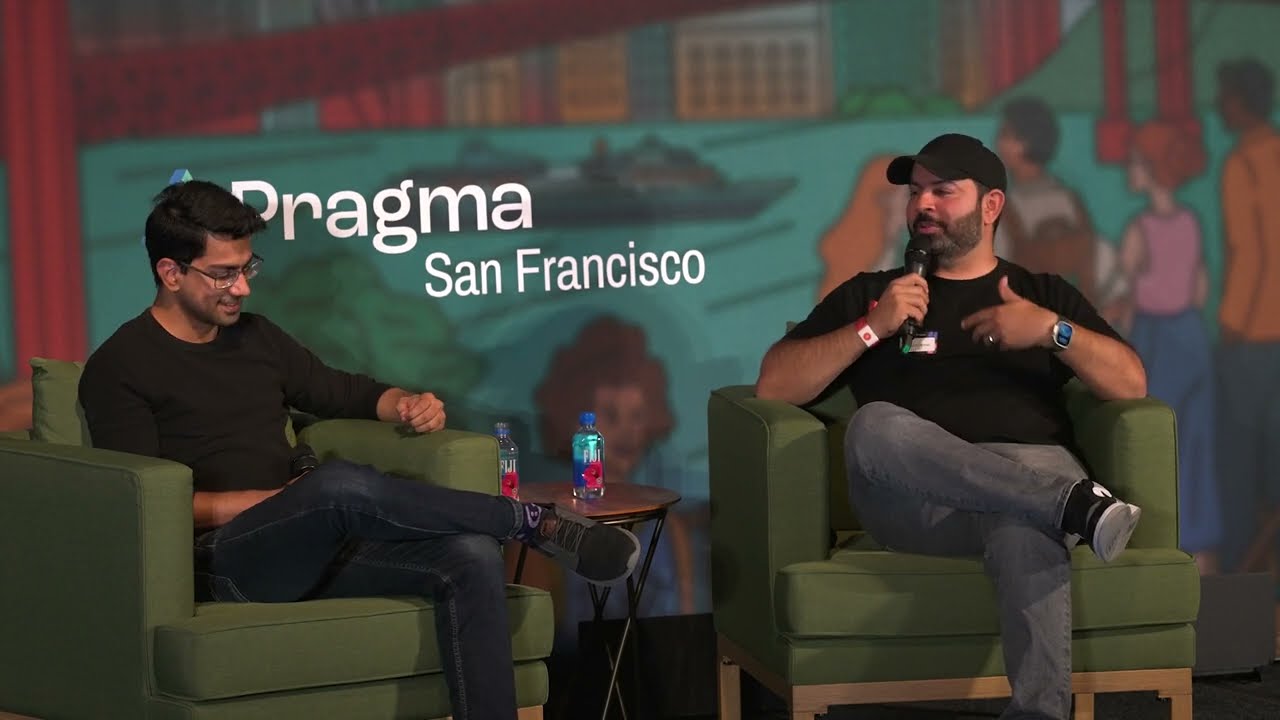
Fireside Chat With Thirdweb CEO Furqan Rydhan & Kartik Talwar I Pragma San Francisco 2024
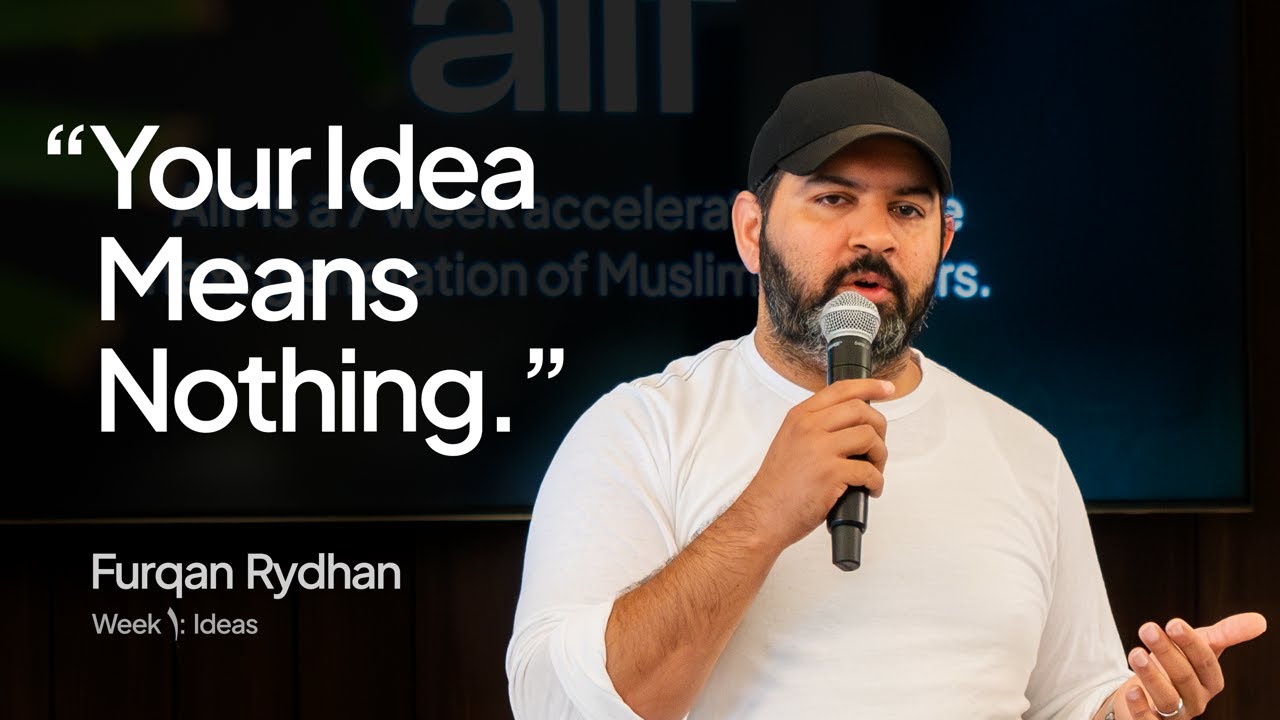


Furqan Rydhan on What It's Like Co-founding a $20B Company | My First Million #180
