Fireside Chat With Thirdweb CEO Furqan Rydhan & Kartik Talwar I Pragma San Francisco 2024
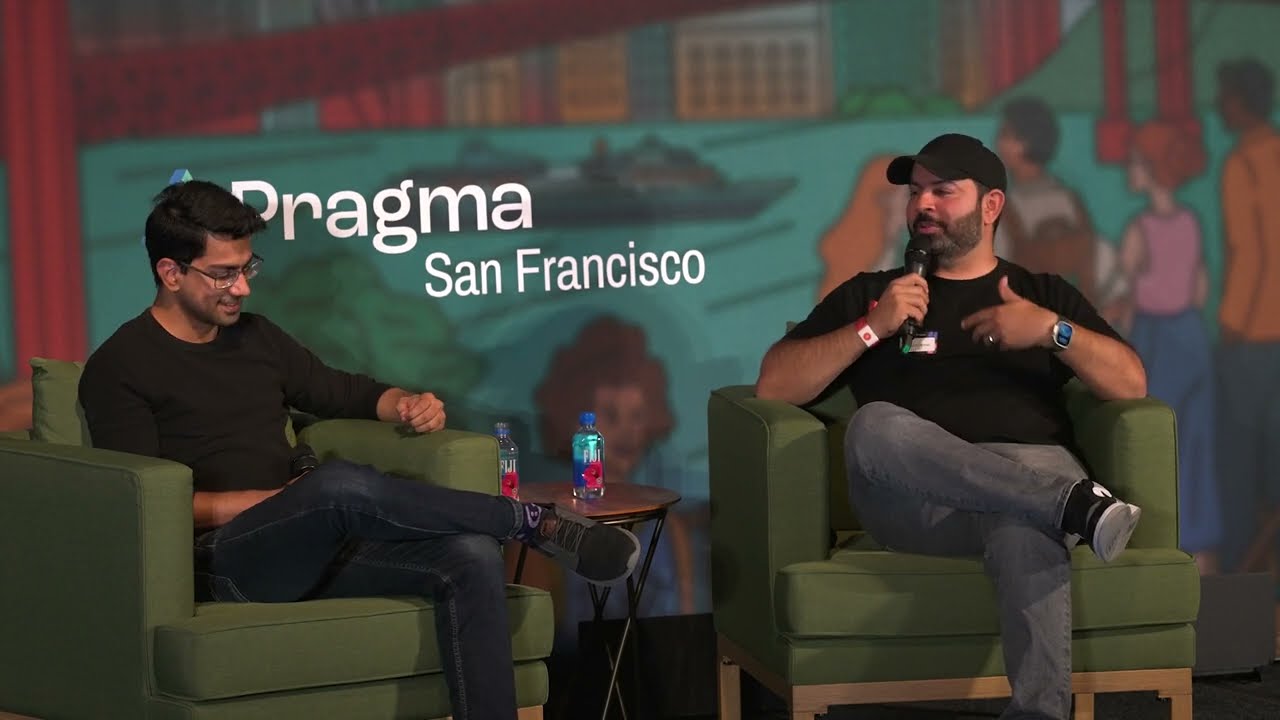
Thirdweb CEO Furqan Rydhan built the platform after repeatedly rebuilding blockchain prototypes and finding no cohesive framework like Next.js for web3. The company releases 90-95% of its code open source and bundles front-end, back-end, and on-chain tools to cut developer overhead. Rydhan stresses avoiding hype cycles and building based on real support tickets.
Chapters
And for our next session, we're going to have a fireside chat with Furqan from Third Web. We're going to talk about all the things that you can learn from them going hard into building open source tooling and getting more and more developers in the space, and also why We should be all excited about the Bay Area. So without further ado, let's welcome Furqan from Third Web.
All right.
I'm excited to chat today because there's a lot of things that are very complementary to what you're doing and has helped make a massive impact over the last couple of years in this space. But before we kind of get into the specifics of all the stuff that you've put out in this ecosystem, I'm kind of curious about what actually made you start the company. What's kind of the history behind it? Why did you choose to build it? And what got you excited originally?
Yeah, well, thanks for having me here. And it should be an exciting time. I'll give a little background because I got a kind of a decent story in terms of entrepreneurship. And like, I grew up here in the Bay Area. I got started in tech very young. I'm old, so this was— I worked at a dot-com when I was 15. That was 1999. So I got a chance to see the early internet. I built an e-commerce company in 2001, which has a ton of parallels to crypto. Like, I've been banned from banks and payment processors because selling online was too risky. And it feels a lot like what we experience now. And I've built stuff on every era of the internet as a founder, as somebody on founding teams. I would say I'm not going to tell you about all those things that didn't work. But I started a company called AppLovin, which is publicly traded now. in the mobile gaming space. And I got a chance to see what mobile looked like up front, what it sounded like when you're trying to sell mobile games to big publishers who were selling console games. And they're like, this doesn't make any sense. And turns out mobile gaming was gigantic. And then I built a lot of stuff in consumer social at a company called Bebo. I was part of the second half of that. We bought it back from AOL. And we built many social products. You know, live streaming products, items and creator tools. Eventually, we ended up selling to Amazon and Twitch and spent some time there. And so had a few exits, and I'm like, what am I going to do with my life? I was investing a lot. And investing is a little boring. You meet great founders, you get excited, and then you just kind of are a monthly update away. And I'm like, this is not fun. And so I created a company called Founders Inc. This is like my family office. I invest through it. It has a studio where we get to build companies. This is where Third Web was born. In 2019, we were building kind of like social-like products online, on-chain. And we were doing a lot of work, kind of like 3 months we'd kick something off, ship it, get some people to use it, pivot the idea, delete all the code, start from the same framework. And about a year of doing that, it felt like, hey, why isn't there a framework here that I could just build apps with? Like, we believe apps are going to be the biggest dominant thing on blockchains. And the apps we use on the internet, they look a certain way. They're in a browser. They're on a mobile app. They're in a game. The tools are very similar. If I build something else, I have these great frameworks. I have Next.js. I have Django and Python. I have many different tools. Why is it missing in this ecosystem? And I think that was the light bulb for Third Web. And when that happened, we literally spent 2 weeks just sprinting. and hacking together this kind of rough tool. And I just talked to everybody I could get ahold of about it, and turned out they needed it, and that was the inception of Third Web.
That's awesome. And I mean, the developer world in 2019 was even more nascent than what it is now, and kind of the best you had was OpenZeppelin libraries, but nothing else about structure or best practices. I have a lot more stories from that era too. The question I'm kind of curious about is, it seems like you were your own customer, and that's kind of why you built it. But was that the intent, or did you actually kind of— were like, hey, this is something that everybody else should have, and that's kind of the first reason why we're doing it? Or because you were prototyping so much that you just didn't want to start that whole loop every time?
Yeah, I mean, it's really nice when you're your own customer. You get to feel the pain and you understand it very well. You're not kind of thinking out loud and wondering if somebody else has this problem. You know they have the problem because you had it. But we did see that we would be better suited not to build an app in the ecosystem, but just to unlock this. And the starting point was we want to see apps, like real apps, using blockchains. We've seen a few of them at that era, but the majority of them were very simple products. Like, click this button and mint this thing. And the tooling just wasn't ready for that. And I've gotten a chance to build a lot of stuff on the internet. And cloud was probably one of the big transformative things that accelerated the internet. Why? It made developers— it gave them the ability to develop simpler, faster, better products for their users. And just take away some of the pain, right? So like, we pay for compute on Amazon AWS to make the servers closer to you, to do database work, to do caching. And that helped people develop faster, bigger products. And I think this industry felt that— we felt that we needed the same thing in this industry. And so for apps, there was a variety of things that you needed. And the first starting point was, hey, this smart contract thing is weird, new, and it's a new language. It's kind of hard. to just get up and go from 0 to 1 and get something out to production. In almost every other industry, you could just hack something together in a night and get something out. And in this industry, it's like, I need audits, I need security, I need to know this new language, I need to do all these things. And we said, what if we just made this part easy and then we let people connect their apps to it? And that was the starting point. And we saw just so much demand. It was basically like 9 months straight of sprinting is what it felt like at the start just to cover the ground of what people needed, different frameworks, different capabilities, better caching. And then we started discovering, well, damn, I also need an RPC and I need this other thing and I need wallets. And so it turned out that, yes, the starting point for us was help developers connect their apps to smart contracts. But to do that, you needed 5 or 7 or 8 things. And actually, for most app developers, the blockchain part is 1 box out of 6 boxes. And for most app developers, it felt like there's 6 slices of this box and there's too much overhead, and then I fumble it. And so we ended up with this full-stack platform. We think about front-end tools, back-end tools, and on-chain tools. That's what we believe full-stack is now. Like, you have to include on-chain, otherwise it's not actually full-stack. And that's kind of like where the development of our toolset grew. But it was really like we just talked with users, we heard their pain points, we actually just debugged with them and we're like, man, this sucks. 60% of the problems are because they didn't go get a paid RPC. What if we just gave them an RPC? What would it look like? Guess what? All those problems went away. It was literally 250 support tickets a week we were getting that, I just need a better RPC because my app blew out a little bit. I got more users. And just going in and plugging that in was very helpful for them. And so it's kind of identifying those things in real time and then figuring out how the hell do you build it really fast. And so that's been a bit of it.
It's also actually super interesting framing because We're in the business of telling people, hey, this is possible and build stuff in Web3. And every time you kind of have that conversation, the reaction that people have is, oh, this is a new thing I have to learn. But they don't naturally think it's complementary or actually it's one additional slice of the stuff that you built. Even if we're working on a smart contract, I still interface with that on Vercel most of the time. And it's not an either-or scenario at all. But the thing I'm kind of curious about is the part that is sometimes good, sometimes not good about our ecosystem is things change way too fast. You have anywhere from thematic spikes of what people are excited about. You have a whole change in philosophy. You have a whole change in architecture. And if you started in 2019, you kind of Saw everything from DeFi to stablecoins to L2s to NFTs to all the DA stuff to rollups now. How do you prioritize what's worth spending time on? How do you think about what is good feedback or what is going to be sticky or what is a layer that you want to be under instead of kind of supporting everything that people want at that time? And how do you make decisions like that?
Yeah. Yeah, I mean, really good question. I think the first thing for me is like I saw Ethereum when the white paper first came out. I followed along, I invested, I wrote stuff, I was a hobbyist in it. There's a long story that's being written, and you have to remember that. Like, you're part of this story. You're maybe in chapter 1 or chapter 2 or 3, and you just don't wanna become a maximalist about chapter 3. Like, I think that's like the number one thing is like there is something now, but what's this vision that's building? And, you know, when I first, you know, I had seen Bitcoin before that. When I first saw Ethereum, I'm like, Man, this is cool. We're going to program on these networks? That's awesome. I'm not that excited about financial use cases. I don't think about trading on Wall Street or anything like that and other things I've built. But when I was like, we're going to program, this is like public internet. This reminded me of bridges and highways. Isn't it really cool that we have freeways between cities so we can get around? That's what blockchains are. They're public infrastructure for the internet. And man, we literally live only in private infrastructure. That sucks.
Yeah.
Like at Apple Oven, I saw like a database with like a billion plus phones' information. It's kind of wild, right? And like I could just go in and do whatever to change the algorithm to do something, or like show you a different ad, or do something like that. That's weird. It's a weird feeling. And I just saw this world that was going to form. And I think that was a centering point. Like we want apps built. We believe everything we do on the internet, we already enjoy that. We like social. We like gaming. We like some utility. We like communicating with people. We've already declared what we love on the internet. How do we do that here? And that was our centering point. So we tried not to get caught in every cycle. And I think when we launched Third Web, the NFT cycle was the thing that was peaking. And everyone was running around telling you that 10K PFPs were everything. We found the magic number, guys. It was 10,000. That was it. That wasn't it. And it was kind of like leaning on experience of seeing other eras of the internet, seeing e-commerce in '01, seeing mobile. You don't get caught up in the now too much. You try to get to where you want. There's a promised land to kind of go find. And I think to me, for us, it's apps and games like we use on the internet using public infrastructure. Things that are now trustless, permissionless, and ideally decentralized allow you to kind of get there. These words make up public infrastructure to me. And so we just centered around that. So try not to get caught in the now. Try to keep a vision forward. And your job is to inch it forward. So yes, I can't make the leap in 2019, 2020 from where the tooling is to every single person on the internet using it. You know what? 3 years later, there's tools now that anybody can use.
You can launch a rollup in 30 seconds now.
Yeah, you launch a rollup in 30 seconds. You can plug in wallets very easy, social logins. There's so much there now. Developers can sponsor gas. That's like me paying AWS Lambda costs. I could just do that now. Well, guess what? There's apps doing hundreds of thousands of DAUs that were built 3 months ago. That wasn't possible 2 years ago, but it is now. And it was our job to inch it forward. And there's more of this. It doesn't stop here, right?
So does that mean that you are actively deciding, hey, we're not going to support this specific case? I mean, it's not the best example, but with the 10,000 PFP NFT crazy era, was there a decision that you consciously made that, hey, we're not going to enable one-click minting of this process for somebody to repeat? Or was it like, hey, what matters is a solid NFT minting infrastructure, and we'll just give you just that API, and you figure out how you want to use it, because we're not going to be opinionated about the implementation, but we'll give you the API?
Yeah, I mean, as an early-stage startup, you're always thinking about, like, I need to know if people love and need my thing. That's like the thing that I'm really hunting for. Do you need it? Like, hair-on-fire problem. If I have a fire extinguisher, your hair's on fire, you need it, right? Like, that's kind of what I'm looking for. And because everybody was thinking about NFTs, if our tool wasn't useful for people building NFT products, we're not a useful tool. Nobody needs this. So while we don't necessarily have to agree with what they do with the tools, they still need to use it. And then our job is to translate it. Like, this is what they're doing today. Are we building an NFT minting company? Are we building a general purpose Web3 dev tool helping folks get on chain, right? Which one are we doing? And we chose that second one. We were a general purpose tool. Now, these were particular use cases. This is where your guides, your content, your documentation, it helps guide people. This is where your solutions teams understands the use cases that are happening. Like, we understand DeFi. We understand when people want to take payments in stablecoins. We understand how you want to use NFTs. And actually, we see so much of it that we're really good at helping other teams. Like, hey, you're doing it this way.
Why?
And they're like, well, that's just the first thought that came up. It's like, do it this way. It's better for you. It gives you these advantages. And by the way, here are some modules that help make it easier. Because you're doing stuff that other people have also done. And your product's different. You use infrastructure in a general-purpose way. And so we think of ourselves as software infrastructure. We embed ourselves in apps and games. We help those things work. But we're general purpose. And so you don't try to squeeze into one vertical or one use case. And I think that's what we ended up doing.
That's awesome. Hopefully you get to translate that for— for what you're doing as you build your companies. One other interesting piece that's unique, or somewhat unique to Third Web, is that everything you're— most of the things you're doing are open source. So the thing I'm curious about is how do you kind of think about building something entirely that's open source and usable by everybody and having a sustainable business? How do those things intersect for you?
Yeah, I mean, so first I've used a lot of open source in my life. I would say that my entire career is built on open source. I've contributed a bit in different ways. But I've never gotten a chance to build an open source company. And so there was always this want. And this industry is by default open, right? Like when you go to the blockchain, by default you can see what's happening. And it just felt odd. Like we're going to build this thing in an open industry that's just mostly visible and talking about the ability to audit something, the ability to look at it, and then we're going to close all of our stuff. It felt a little weird. And so that was kind of the starting point. We wanted to make sure that was there. I think 90% or 95% of the stuff that we do is open source. And it's a very permissive license, and people should use it. I think open source cannot be your marketing tactic. If that's what you're doing it for, it's a huge mistake.
Especially in this system, ecosystem.
Yeah, yeah, definitely.
It's table stakes.
Yeah, exactly. And so I think that can't be the reason. And so what were the reasons for us? I think there were 2 critical reasons that we picked it. We wanted to make sure that we got the most amount of feedback from users in any capacity. So if they could go in, poke around, inspect our stuff— our users are developers. Well, what do they want to look at? They're willing to look through code. They're willing to find bugs in your code or better opportunities or send pull requests. This is a behavior that I've done and other people have done. We wanted to make sure that that was capable because we needed to know how do we build the best product. I can't sit on a whiteboard and invent it. That's not how it works. You sit there user by user and you learn it. You see the pain points, you see how they do it, you see how they interact with it. And that was important. The second thing was our engineering bar. Like, I think if you write code and you hide it behind a wall, it's much easier to have a lower quality engineering output. And there's all these best practices you need when going from a private to a public repo. If you start there, you don't do those mistakes. You don't put keys in your repos and you don't do a lot of weird stuff. Why? Because somebody else needs to do it. You make sure that when the server runs, there's environment variables configured.
Why?
Because that's how it needs to happen when somebody else runs it. Now, how do we build a business on this? And I think this was a big challenge for us to think about as well. We spent the first 2 years of Third Web open source and free. That was just on purpose. We needed to figure out what to build, how to do it. And then there were ideas. There's these open core models that I've seen, especially in big data and other industries, where people develop services on top. Like the typical internet one is hosting. So we have a backend server called Enjin. This is an HTTP API that's paired with a backend wallet. It allows developers to immediately be able to sign in with Ethereum, do mints, do transactions from their side. Now this system, you could just self-host it. It's a Docker container. It's kind of annoying to manage and scale it. Well, we offer a managed service, so we can offer kind of value for that. There are solutions and support. So there's a business side that we were able to kind of create some value there. And then lastly, we've built products on top of our own open source tools that are paid products. And so that's kind of what it looks like. We look at the top end of the ecosystem, folks that have raised a lot of money and generating a lot of revenue as our customer base. And then we look at kind of this long tail of developers, the solo person just starting out, few-person startup. Like, we want to give a lot of free capabilities here. For me, this is like GitHub. GitHub was like this. I used GitHub for, I don't know, 10 years without paying them a cent. It's great. I ran companies where they paid them a lot, an enterprise GitHub, and it worked for them and they made a lot of revenue. And so—
It was sustainable, yeah.
Exactly. And so I don't think open source limits you. You just have to be very intentional and purposeful about what it is. And I just think the biggest mistake I see founders do is they use it as a marketing thing. It's not. It has to be a core value. Because otherwise, the business team comes in later and they're like, oh, we need to close this because our customers are just doing it for free. It's like, that's— you're going to hit that wall. And so it must be of value. Our engineering team is better. They're better because people can see their code. It's also tougher. It's a bigger challenge.
You open up yourself to a lot of criticism. And in this case, you need this to make something better.
Exactly. The criticism actually just fuels us and helps us. I'm literally not worried about somebody saying, Your code is bad. I'm like, great, thank you for spotting that. We'll go make it better tomorrow. That's exactly what we want to do.
No, that's a really good way of framing this. You are based here in SF. A lot of your team is here. And interestingly, that's not the hub of where crypto is. It's not that there's a single hub. It's just spread all across the world. So how has that sort of impacted the way you think about product development? Or do you think it's been net positive, neutral, negative? What's kind of been your assessment for building Prokimi Crypto?
Yeah, I mean, I think the world has just changed in general, right? So 10 years ago when I was building companies, it was most of the people were around me here in SF, and it was very easy to do things. Now you're going to be a digital-first company. Like, you're going to by default communicate probably via Slack and other messaging communication. And I think that's the same for us. We do have a good concentration here in SF. It's very powerful to have somebody right next to you that you can interact with. But there's also just great talent all around the world. I would argue just slightly, I think there's a lot of crypto builders in the SF and Bay Area, but it just hasn't been wrapped together.
It's a fragmentation, yeah.
It's a fragmentation problem. And so I think one thing—
That's why we did this event.
Yeah, this event is great. And similarly, that's what we're trying to do as well is just corral the community. Do events, do things, do working sessions. And so just trying to find a way to do that. But the in-person time is special. We do, as a team, we do a lot of offsites. We bring them here. We get them to see our spaces. We get them to interact. We have an offsite next week with 25 people from Third Web coming into SF, and it's gonna be awesome. They're gonna feel a lot of energy, and there's a lot of technical innovation happening. Like, most places in the world, you're not seeing self-driving cars and things like that on the road, and it just inspires you, I think, to think bigger and go next. And this industry is the next variant of things on the internet. This is happening. Every app will be a crypto-enabled app. There's no doubt in my mind because we need this public infrastructure. We're going to bring our data with us to apps. We're going to do a lot of things. And I think we want to be inspired by everything that's happening. And so I think SF is a massive tech hub. I think there's many others. I'm born and raised here in the Bay Area, so I'm not like— I don't know another place in the same way. I've never lived somewhere else for years where I'm like, this is my home.
But—
I just think that SF is one of those key places you should come. You should see the people doing innovation. And you'll be surprised at how many of those products will use blockchains in the future. And I think you should be the first touchpoint. And so for me, I think of myself as somebody here in San Francisco that people can go to to learn about blockchains, to learn why it's awesome. And I'm not talking about meme coins and the degen and the trading stats. I'm talking about what you can build with it. and how your app can use it. I think just last week I talked to a developer. I showed them our Third Web Connect product. And they're like, wait, this is a whole user login system? I'm like, yeah. Turns out public infrastructure comes with a user login system. Like, you get an account ID. You get something that you can use as a unit of account. Like, that's awesome. And it's just you've got to get that click to happen. And so I don't know. I just use the opportunity anywhere to kind of speak about it. And this is the best place to do it, I think.
As an NSF native, I agree. Thank you so much for this amazing conversation. I think we'll wrap this up here. It's been amazing to hear the story and how you think about this whole space. And hopefully you got some good advice. So please give him a big round of applause.
More from Furqan

AI Agents, USDC, and the Programmable Economy | thirdweb (Furqan Rydhan) | Builder Series




Furqan Rydhan on What It's Like Co-founding a $20B Company | My First Million #180
