Avoid these Startup Idea Traps | Furqan Rydhan
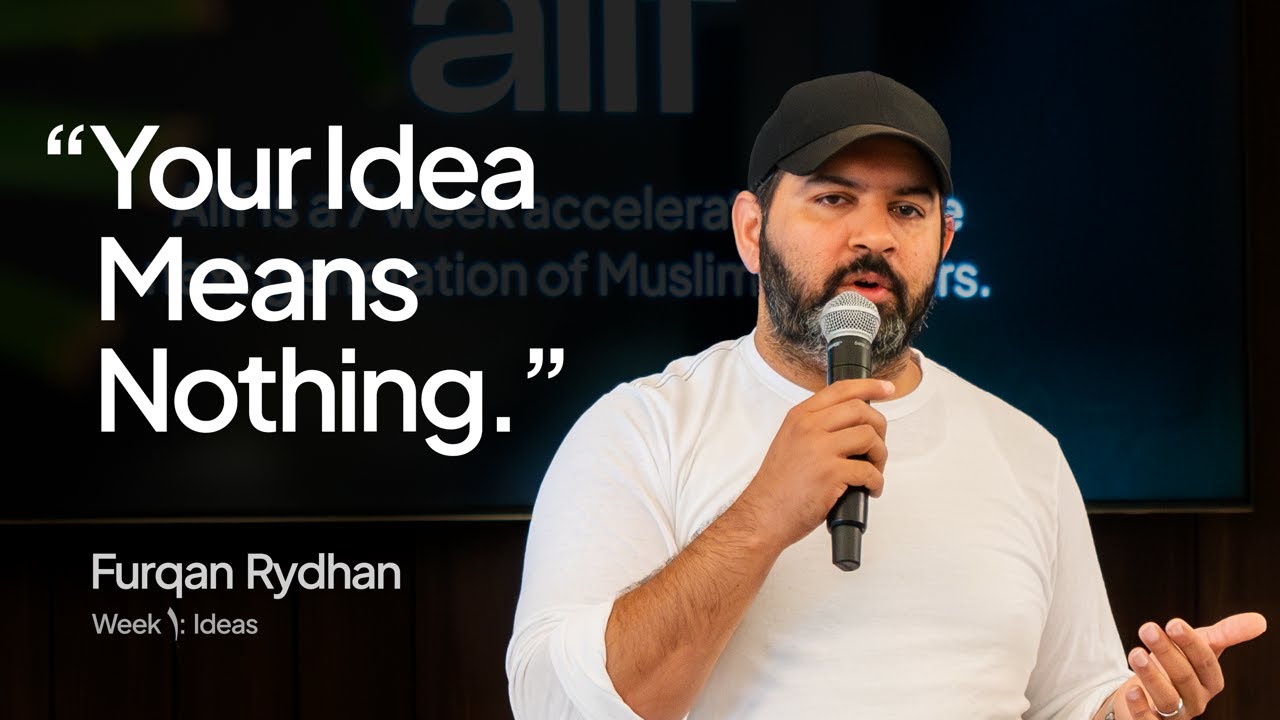
In this conversational session, Furqan Rydhan walks through the common pitfalls founders fall into when handling ideas and offers concrete mental models to avoid them. He explains how ideas can become false truths when repeated without evidence, the danger of falling in love with an unvalidated concept, and the importance of treating the market as illogical. He introduces a concise Build‑Measure‑Learn loop, emphasizing that each stage should receive roughly equal focus and that measurement must happen before scaling. He contrasts product‑centric versus growth‑centric mindsets, urging founders (especially technical ones) to bias heavily toward distribution early on. The talk covers practical discovery techniques, how to extract honest feedback, and how to spot real user interest versus polite praise. He also outlines metrics for early‑stage validation, marketplace dynamics for two‑sided platforms, and the decision framework for bootstrapping versus raising capital, using the “lighter‑fluid” analogy. Finally, he discusses engineering trade‑offs between rapid MVP delivery and building for scale, advocating a “skateboard‑to‑bicycle‑to‑car” approach to iterative product development.
Chapters
All right. So yeah, so when we talk about ideas, typically it's something new, right? Many times it's half-baked because it's kind of formalized in your mind. I don't know where to fit the word hiring in here, but we'll try. And I think it's kind of like in the word, right? An idea, the phrase that we use, oh, it's just an idea. And so what's the purpose of an idea? Why do we think about ideas? How do we kind of use them as an entrepreneur? Where to dive into ideas, where to kind of like wait on ideas. Like, how do you think about these processes? And I can tell you all the things to do wrong. So that's what we'll basically cover here is how not to kind of approach ideas or kind of some of the ways that maybe what you want to guard against. And I think the first thing for me is always— and I've spent a lot of time doing this— is coming up with an idea, thinking it's amazing, saying it to somebody, they say it back to you, you say it 5 times. The idea goes from just an idea to truth. And actually, that's like the most dangerous thing because you actually have no evidence beyond you saying it 5 more times and it making sense to you. Of course you like it. You came up with it. It makes sense to you. You've worked through the logic. And logic is kind of what you're thinking about. Now, when you build a company, when you build a product, you always think about who's using it, who are the users, what are they going to do with it? They're not logical. in the same way that your mind works. And so I always like to think about the market as illogical. And so, cool, I came up with some idea. My logic says it's good. I have some beliefs on how it could work. I actually need to go prove that. And I think an idea can be a starting point for momentum and motion. I think that's actually what they're really good for is seeing something, an opportunity, an idea, and then using that as a way to start it and trial it and figure it out. And then I leave how much I love the idea at that stage. And my goal is to find something of substance. And maybe that was my starting point, my inception. And I think that's really important because I work with a lot of founders and entrepreneurs who are 2 years into something. And I tell them— they tell me what they're doing. And I'm like, why do you guys think this is a good thing to do? Or where's the evidence? And they're like, oh, we know this is a great idea. It's like, cool. How do you know? It's like, we know. And the founders look at each other and they point. And they're like, yeah, we know. I'm like, OK, tell me. Tell me how you know. And they'll say some stuff, but it's a lot of emotional logic. It's a lot of, wouldn't it be awesome if these 3 steps happened? It's like, yeah, but those steps haven't happened. And so the 3rd step doesn't matter, right? Just because you can say it all out. And I think it's the biggest trap that founders and really smart people run into. It's because we're hyper-smart, and we can make a good case for a lot of things. And then if we love something like an idea and we make it, we're gonna make a really strong case for it, we're not gonna be able to shake ourselves from that. And probably for me, I think the first company I started was very organic. And then after that, I fell in love with the fact that I could come up with stuff. And there was a lot of time spent in companies, money spent, debt created, whatever you wanna call it, the pain side of it, because I ran with an idea without the evidence. There was one company I started. It was called Live RSVP. It was an event management company kind of in 2008, around then. And we probably were in the company for about 14 or 15 months. And the idea that we had in day one didn't really morph because we never got it out the door. We actually just fell in love with the idea. We would tell people. They would smile and tell us how smart we are and how awesome we are, and the idea sounds great, and just kept running with that. And in the life of the company, maybe 15 months, 11 or 12 months were spent basically building this thing, never thinking it's— just thinking it's great, never actually proving it. And then kind of in the last 2 months where the writing's on the wall, we don't have money, we can't get more money, we're starting to kind of reach this kind of like— you see this wall that you're running into. And then it was like kind of go into like effort mode, right? Like basically just flip the switch of like, I don't care about my idea, I just need to do anything possible. And in that kind of 1 or 2 months, we made so much progress. And actually our idea wasn't the thing that, you know, was going to be it. There was actually something under that that some other companies started gravitating to. They were like, hey, what you're saying is really interesting, but not like this whole thing around events. Like just this marketing component you're talking about is like really, really interesting. And can we just use that? And, you know, first it was a smaller company, then it was a medium-sized company. And then there was a company doing tens of millions a year and said, hey, we could drive all of our user marketing towards this. And that one deal would have been bigger than hundreds of thousands of dollars that we had raised at the time. And it was striking. And I didn't really realize it till later that when you go do other stuff, things kind of click for you. It was like, oh, we fell in love with our idea. We waited on it. We didn't get it out the door. And so I've seen this a lot. I've been in the loop. I probably am in the loop of getting back into this trap. Even recently, it happens. You get infatuated with stuff. But it's really, really important to kind of center yourself and say, OK, the idea was our starting point, but we're going to leave it at that starting point. We're then going to go on this journey of proving a product that has a market and there's a fit there. And that requires you to kind of get out of that idea stage. So that's maybe, to me, where ideas start from, right? Now, I think ideation is really powerful. And a second, I think, trap that I Fall into as well is you ideate ideas, and you're doing it to go do something right after. When in reality, the best ideas actually need to simmer and kind of become a little organic. And so how do you just ideate? How do you let things flow without the commitment of I need to go do it? And then because once you need to do it, you start building a case for it. You start building a plan for it. It becomes really heavyweight. There's a lot of ideas that if they could just chill in your mind for a bit, they could simmer. They could. you know, marinate, you may have a better version of it. You may learn stuff over time. You may meet other people that might have something interesting to kind of combine with that. But you don't give yourself the space to do that. We have this pressure that we came up with something great and we must hit it right away. And so, finding yourself and giving yourself space to do that is challenging. It's like, I want to start a company and you're telling me to wait, right? Like, these sometimes go at odds. And so, you know, like, I think that's important. The last thing is the grass is always greener, right? If you're doing something and you look over there and you're like, you know, building something in VR and AI comes out and, you know, you're like, oh my God, that looks really shiny and that's awesome. Now, if you want to be in the wandering forest, which is really important as an entrepreneur to be wandering around and finding things that are interesting, you should go and jump and do that. If you actually have something working and moving and a plan that you're already in motion with, you need to flesh that out first. And you need to resist that. But in those moments, you can sit and ideate. You can sit and let ideas kind of simmer. Most of the time, a month or 2 or 3 is not the difference between a successful company and not. And actually, many times, it's not even 1 or 2 years. I mean, the biggest company in the world, or one of them, Apple, historically has been later with almost every feature. You know, we all have the friends with the green bubbles, right, that are like, look, I already had this feature 4 years ago. But like, it doesn't matter. Because Apple has built a product that a bunch of people love and people buy. And so when they come out with it even later, people still love it. And they just say, oh, Apple actually waited to do it better. They even promote it. They actually become a fan of it. And so when you have that kind of fit, like being first doesn't matter. And so sometimes it's like you got to let the ideas flesh out. You got to understand them. You got to see what the market does. And you can create an opportunity for yourself. And so especially when you have something working, like you don't want to derail a train. because of something random, right? You want to actually have a purpose to be like, no, we're actually changing our course because we see a bigger opportunity here. And we've had enough time to let that kind of simmer. And so it's really easy to want to ideate. I think it's really important to do. But how do you actually then give yourself time to kind of let that marinate and things like that? The last thing, I kind of talked about this a little bit before, this idea of like these false truths. So this happens a lot in companies, especially within teams where you have a bunch of smart people together. You whiteboard something, you say it to another one, they say it to another one. You kind of say it around each other a bunch. And from there what happens is somewhere along the way that becomes fact. And you start feeling like we know this, we do this, we have this kind of opportunity. And I think with ideas, this is the most dangerous. It's like you have this like false truth in front of you of like, if we go do this, we're going to get this kind of outcome, but you never kind of go and prove that. And so when you think about ideas around business strategy or a go-to-market or a marketing opportunity, it's really important to go and flesh that out even at its earliest phases. I've met a lot of emerging tech founders that basically have this vision that I just got to build the thing. That's the hard thing. And I know how I'm going to grow. They'll actually say, I know how I'm going to grow. And it's actually an idea of how they're going to grow. And they tell you, I'm just going to go do this. It's like, great. Have you done that?
No.
Have you ever done that?
No.
Do you have a reason to believe this is actually a way to do this? And it's like, no, I don't. But I see other people doing it, and I know I could do it. Or there's kind of something around that. And so when you get into ideas about your tactics— so typically people call this strategy. So they think about how they can go approach something, how they can go do something to go win it. Strategy typically starts in the idea stage. And you have to actually put some evidence and meat towards that. And so this applies— this concept of ideas applies all the way at the top at your entire company and what you want to do in life down to every strategic decision you're going to make. And they need that same evidence loop. And so I've always found we had this very small framework. It was build, measure, learn. And the idea was like, you have this idea that's going to incept the build loop, right? And so you're going to enter this flywheel in the build stage. You're going to then measure it. And I actually think about all of these 3 parts as 33% important. If you're technical, you probably spend 98% of your time in the build loop. And then you move on to the next build loop. That's not how it works. You're never going to get a flow here. So you're going to start in build. You're going to measure it. You're going to try to understand what that means. I try to learn from it. And then it's a choice, right? If this is the first turn, you entered in build, but then do you actually go back to build or do you exit out? It's always an opportunity. And I think it's better to think of that as an opportunity than an exit. Because a lot of people say, oh, maybe I just got to try it differently. Maybe I got to try it 5 ways. But it's like, well, why are we saying that? Are we saying it because we love the thing? Because we came up with a genius thing and we want to prove that that's correct? Or do we truly believe there's a loop here to go back around? Because you could always start another build loop, right? You exit out of learn, you go back into idea, you can start another loop. So it's not that you don't have to stop, but you kind of forcibly make yourself go in this kind of item. And so I think ideas have a lot of value in how you can kind of use them to accelerate things you want to do, whether it's your business or your career or whatever. But also they have a lot of traps that you can run into that you got to avoid. And pretty much all of these I've done and I'll continue to do because they're hard to avoid. That's why they're called traps because you can't always see them in front of you. But you could have some frameworks that help you not get in that bucket. And so build, measure, learn is a framework that I use to make sure that I'm not just going build, build, build, build, build, and then 2 years go by and you're like, how come I don't have anything growing? I've built all this great product. It's like, well, we didn't have anything. We didn't measure it. We didn't see if people wanted it. We never got it out there. And so I didn't want to spend a lot of time, me up here just talking. And so that's what I'm going to start with around ideas. But I wanted to open it up to see if there's other thoughts or other things around this or kind of around anything else in relation to building a company that would be useful for the people here. And so if you have a question or a thought or an opinion, happy to kind of dive into that. And you know, use that as a starting point for some other conversation. Yeah, this is this is like working out and going to the gym and losing weight, right? It's like the fastest way is you just start and you do it, and you make you make yourself disciplined around it. How do you actually do that? I think. The measurement of the goal is really important. So if our goal is not to go build, build, build, build, well, let's measure that. And what are we supposed to do? So let's say we were supposed to build, measure, learn. And so how do we create our time, effort, energy around that? And how do we track that? Because if we track that and review that, we won't be able to lie to ourselves that we were actually doing the right things. And so a lot of things come down to a very similar philosophy, which is create your goal and your KPIs around it, and then you can track your progress towards it. And as long as you're willing to be honest with yourself, you'll be able to kind of get your outcome. Now, if you don't do the processes like setting a goal and tracking the KPIs, and you're not willing to be honest with yourself, and every time the problem comes up, like, look, the last month we spent 100% of the month building, and everyone's like, no, no, no, it was fine. We did a great job. Yeah, you're not going to get it in the same way that if you don't go to the gym and you don't do the right workouts, you're not going to get those results. results, right? And so I think fastest is a challenge. And actually, I would say your goal is not the fastest way to get there. Your goal is just to get there. Because I think once you get there, you actually start reaping the benefits of the effort you put in. And I think this is, for me, was one of the biggest triggers. It was like, you know—
Got it.
I'm going to spend a lot of time and effort on my company. I'm going to spend a lot of time and effort on what I'm going to do every single day to accelerate whatever my goals are. And what if I don't get the value for that effort? What if I never get the benefits of it? Wouldn't that suck, right? Like, like that, that was kind of this like thing of like, wait a minute, I know I'm willing to put in the effort. I've done this for, you know, 12 years at the time when this was kind of making sense to me. But what's the difference? It's either I'm not getting enough leverage out of my effort or I'm not doing it right, or there's some opportunity. There's many conditions where you could be doing everything right and not getting the results. That's, I think, much more rare. And if you're there, you'll know. It'll be very obvious, right? It's like not a question. And it's so rare that you should basically never believe you're in that state. You always believe that you actually have something that's going to help you kind of do that. And so once that clicked for me of like, wait a minute, I'm going to put in the effort. I think I'm smart enough to do this. I think I have the right kinds of ideas. Why am I not getting it? And some of it was learning these things that like I literally had to get off, you know, build stage and actually get it to the market. Other things were just like, how long are you going to spend on something? Are you building for your vision of the thing, or are you letting your users iterate there? Are you doing— an example there is a lot of people are like, I got to keep it quiet to have a big launch moment. And it sounds like a good thing, right? It makes sense, and it's logical. But then the reality is, well, what if you just get it out there and you just ask people what they want? What would happen? And a lot of people are like, well, somebody's going to take my idea. It's like, well, yeah, the idea is going to be out there anyways. So why is that the restriction? That can't be the restriction. It's like, well, I've got to make a lot of attention. The product's not ready. All these reasons to not get there when the reality was the best products I ever built were just— they just got out there with people earlier. We didn't really care if somebody else knew what we were doing. We were just going to do it the best. And so it's just creating these loops for yourself and knowing— that I'm gonna put in a lot of effort and I wanna get the reward of it. It helps you understand why I wanna follow some of these processes that help me do that. The other thing I think works really well for technical founders is, or technical folks on early teams is, think about spending 90% of your time on GTM. You're so good at product building that probably 10 to 20% of your energy and effort towards it equals 50%. So half of your job early on is to grow. And your whole team should be responsible with that. But I'm just an engineer, I write code. No, it's like, no, you don't. You're a founding member of this team and you have technical skills that could be used for anything. And I think just really being extreme with that sometimes helps, especially in the areas that, you know, the natural time's not gonna be spent. So yeah, I think—
How do you think of product versus distribution as a founder? What's the most optimal?
Yeah, early on, like at the very start of a company, you have 2 organizations. You have product and growth. And product covers everything like engineering, product design, everything related to developing something. And then growth is everything relating to distribution. So this could be sales. It could be marketing. It could be other growth activities. And whether you're 1 person or 4 people, you kind of, as a founder, own all of it.
Right.
And so I think you have to first set that basis. You have these 2 things. Most, I think, technical founders start with— they don't even think about growth. It's a 0% equation in their companies, what it feels like. And they're just building something what they think is cool. And they're like, well, I'm going to tell the world and everyone's going to come here, right? That's how it works. It's like, that's not how it works. You actually have to get it out there. And so I like to think about that ratio. Now, if you have a team of really good product builders, you have to over-bias the ratio to kind of get there. And I do tell teams you should think 80%, 90% about growth. And growth is like the fuel for your startup. If you're not growing, why are you doing it? Like, you really should ask that question. And then it's like, well, I just started one day ago. Of course I'm not growing. But every week we can have some growth. Like, can I get one person that I could talk to in this industry before I've even built it about do they have these needs? That's growth, right? So very early before you have a product, growth is, How many people in the industry are you talking to in this market that you believe you're, you know, you've identified their problem and you have a solution for them as you build it? Even like, you know, a lot of our companies at this idea stage, we're doing that. And then at design stage, we're literally getting on with potential customers and showing them Figma mockups, right? I mean, Figma has made it really awesome to like show you what a product could look like and feel like. If I tell you that and your problem's big enough, You would be excited to be like, yo, you're gonna solve this for me, right? Like, like that, that works. And if that's not going to give you signals, I'm not sure a shittier version of this pro— of this design is going to actually produce a better result, which is what the first version is going to look like. It's never going to look like the design, and also it's never going to function like the design. And we have all these features in the design that we can't even build for 6 months because it takes forever. So if the idea of it doesn't help solve it It's another stage for you there. And so kind of along the way, like, distribution is the most important thing. I really think of it as like fuel. And if you don't have fuel, your car is not going to start. You're not going to go anywhere. And so you could build the best car as much as you want, but you're not moving. And really, truly, you're in a race and you're building the race car at the same time. It's kind of like a weird circumstance. You can't pull over on the side and start fixing your car. You're never going to compete in the race. You can't just go full and let the wheels fly off either. Because that— you're also not going to win the race. So there's a delicate balance here, and you're really straddling between that. So as a founder, bias yourself towards distribution, but there's a straddle, and sometimes your distribution will outpace what your product can do. And I'll add one last thing here. A lot of technical folks are worried, but what about when 10,000 people come and my app breaks and it won't scale? It's like, your job is to actually create that circumstance, and you should be trading time today for future pain. Like, think about like, if this takes me 2 weeks to build this scalably, but 1 or 2 days to hack it together, I'm willing to trade that time now so that a future, you know, future Furqan is going to have this issue and he's going to have to deal with it. And that's actually a good circumstance. Like, that's progress. And you should— you shouldn't be upset a future problem came that you could have fixed before, especially if you were trading this kind of speed. Because the 2-day cycles now can actually get you a lot of momentum. And it's also very likely you'll never get to that issue because most products never get there. So you've kind of got to kind of prove it. Once you get there, you'll have more information about how your systems work. You'll have more information about what the needs of the customer are. And you'll be able to solve it. It might suck. But you guys have all picked the hard path. So you can only blame yourselves for it. You can't point at anybody else for that. You guys are all picking the entrepreneurship path.
Yeah.
This is harder. This is not easier. So if you think this is easier, wrong path. But like, this is typically harder. So you're willing to do that. But yeah.
Say you do all of those things, you know, when you have the idea, when you have the prototype, you showcase it to potential users, get their feedback, and they're all excited about it. And you launch your product, but they're kind of nowhere to be found. What does distribution and growth look like? After you've launched that product or version 1 of that product?
Yeah, so early on when you're showing people stuff, and actually even when you have a product, you'll notice this— customers lie to you. And I learned this in that same startup where I built this product and I actually would send it to a lot of people. I'd send it to my friends, send it to people in the network. A lot of people are like, oh, this is awesome, this looks great. But they didn't realize I had tracking. So like most of the people that said it was great, they didn't even sign up for it. It's like, what looked great? Like you didn't even click the link. Like you just told me that This looks awesome. And so it was kind of weird. It's like, hey, why are these people lying to me? And it just turns out people like to be nice. They don't want to shatter your dreams. And so there's a discount, right? The idea stage of just showing a design, showing a potential solution to a problem doesn't actually give you the evidence fully either. It is more information and signal than you had where you and your founder were talking, your co-founders were talking about it, but it's still not— real market evidence. The funny thing is you don't get real market evidence until you're already winning. So along the way, you're just trying to gain more info so you can make an intelligent, you know, guess on, hey, do I put more resources into this? Do I put more time or money into this to continue it down this path? And so you have to take a discount and you have to try to find a way in these conversations to be able to get a better signal from them as well. So a lot of people, oh, I love this. Say, okay, what specifically did you like? Or hey, which one of these pain points? Or did their eyes light up at any of the features? I told you about 8 features and you only cared about one of them and your questions were on one of them. You may not care about the other 7. And you talk to 10 people and if they're all like that, you got to kind of like see that signal and be like, wait a minute, it's not the whole thing that they're interested in, it's this. So let's start with that, let's see if that works. And then when you have it, you got to send them the link, right? And so you're trying to move along these stages fairly efficiently in terms of time. So like Idea, group, let it simmer a little bit, build a prototype, build some designs, build something. How quick can I get it to where I'm sending somebody a link? Because once I send them the link, I actually will know if they use it. And I think that completely changes the information game. And so yes, these stages are really important, and you're going to have to take some discount. And depending on the industry or your feel of it, it might be a 75% discount, it might be a 25% discount on what people want. Um, I think some of the best products that I've built are the ones that felt the best as it went through that stage. It was very extreme. You know, I would do a call with somebody, I would show them something, and then like hours later I got an email like, you know, hey, by the way, you showed me this thing, it was actually broken in your demo, but when you fix it, can I use it? And I'm like, huh, I showed them something that didn't work. I like swapped tabs in between so that I hope they don't notice. They noticed, right? Like stuff like that. But like The reality was they really, really needed it and the problem was burning. And if they have a burning problem, they're likely to find a solution for it and willing to pay for it. And I think that's what we're hunting for. So, we're not just hunting for like people saying, oh, this is awesome, looks great. We're actually looking for people that have this like burning need and our solution helps solve that. How do I know if my idea will work? You don't.
What are the true signposts and metrics that are showing that your idea might be working?
So, people using it, right? So, like, that's the start of your idea potentially working. And I think if they don't have something to use, you won't know. So, everything before people can use it is a guess. And it's a guess with probably very little information. So, you know, if you think about a ratio of information that you're going to have as an entrepreneur, you're likely never going to have 100% information. And you're probably never going to have even 80% information in terms of how accurate is my guess. So you're more likely in a 50/50 area. And then early on, you're more likely in a 25/75 area. And so what you're trying to figure out is, do I have enough evidence for me to continue down this journey and figure it out? Once you get to this stage that you have a product, then you're starting to measure, are people using it? And depending on the kind of product, your KPIs might be different. Like the idea you're thinking about what What industry or what product type is it? Or throw an example.
It's like recruiting, so it's matching talent with emerging companies.
So you have a marketplace, right? So you basically have companies that have jobs. You have people and talent that want to get jobs. And so for you, it's going to be a combination— the end success is jobs placed through your marketplace. Now, to start, it's like, well, it kind of feels far, right? I don't know, maybe hundreds of interviews are going to happen and one job gets placed. So it's going to take some time to even get that. And so then you can start even before that, at the very start, you have this two-sided marketplace. Do you have jobs on your platform and do you have talent on your platform? And if you don't have enough of either, you're never even going to get your answers. You're going to be measuring how many, you know, how deep is the marketplace, right? Like how, how have I been able to do that? And you may even create strategies that say, okay, well, I'm gonna go find jobs in AI first. So I'm gonna get all these AI companies to list their jobs here, and then I'm gonna go get a bunch of people who are AI engineers or AI developers or people that are focused around AI to then kind of enter the platform. And you're gonna try to bootstrap kind of either side of it just to get enough minimum depth. And so you may even stay focused around one segment. Now your goal might be to expand it, but you're really trying to measure that. Daily active users in this case is tricky. It's like, A combination of which side of the marketplace. So like, who do you need more of? And then the last thing is, especially very early on in a marketplace problem, you're gonna have to cheat on one side. So like, how do I get one? Like, how do I get supply side or demand side first so that I can get the— I can focus my energy on the other side? You're not gonna know if it works until it's really far down the equation. You know, it's hard to figure out in 9 months if a company or idea is gonna work.
Yeah.
So, what do you do along the way? You can't just go by hope. And so, along the way, you're trying to give yourself these stages. And so, if simply you were spending the first 3 months to figure out, does anybody give it— does anybody care about my idea at all? And how do I do that? Well, I come up with something. I show something. I show designs. I might have a prototype. And I'm going to go talk to customers. Second, I'm going to go build and flesh this out a little bit more. Let's call it a production version, but I'm going to put that in quotes. Because you're OK with a little bit of issues. But now you're sending people links and seeing, does the product have some of the loops? And we're measuring every function of it. And you're going to want to create KPIs. And then hopefully in the third section of those 9 months, you're trying to just figure out, actually, OK, I did get 5 to 10 people using it. We did get some interviews to happen. How do we just do it 10x more to see, is this going to scale? Can we go get 10x more scale? Does the problem scale? Or do we just happen to find the right group? So you're just creating yourself these avenues to kind of find success in a shorter window so that you can gain more information to see, is your idea good? The problem is it's hard and it's unlikely to have a clear answer. And by the time the clear answer happened, it's like you're already in an obvious state where, of course, this is scaling and working. I don't even have time to think about if my idea is good anymore. Now I'm just thinking about scaling my company. And it's likely that I'm not even thinking about those problems. So that's the funny thing about product market fit. A lot of people talk about this. Like, oh, you got to go figure out product-market fit. Product-market fit is obvious. If you're asking the question, you probably don't have it right now. And if you have it, you probably don't have time to ask the question, is what it ends up feeling like. And it just feels so different. Like, I built maybe 10 or 15 things that I thought were working. They never worked. And when I first was in a company that actually worked, I was like, man, this doesn't feel at all like the other thing. And it's not even close.
It's like—
I'm 10x, 100x, 1,000x off what I thought was working. And so you're really hunting for this really obvious scenario. And I think that's the key is like it'll be so obvious that I'm not— I don't have to ask the question of like, is my idea good or is it working?
At what point do you call it?
How much time do you have? And, you know, there's a limit, right? So we have limits, time, money. I think that's your equation. I think for many people that are entrepreneurs, you're probably just going to do it over and over again. So it's really about creating yourself efficient loops. If you read something like A Lean Startup, they say like, you know, 6 weeks you can figure it out. If you read other things, it might be 3 months. You know, like it's not years typically unless you have really strong evidence. I don't think that for me has been the best situation. For other people it might. I think for me it's like because I want to keep doing this over and over again, I'm hunting for something that's going to have some depth that I can really spend some time on. The reality is if something starts working, it's going to take 5 to 10 years. So you're going to spend a long time on it. It's just how much time do you want to spend before you're spending on that thing? And I think that that's part of the challenge. And so I like to flesh out ideas in 3 months from a technology product type idea. I think there's the right pacing there. But it's really the first 6 weeks where we're going to have a lot of it fleshed out. Our prototype's going to be there. And we're going to have to feel excited about it and be talking to customers. And then we're trying to refine it enough to gain some metrics. A fixed window is really hard, but I do think there are limits on time and resources.
How do you get the feedback from the people that you focus on? Because people inherently will sometimes not understand their own issues, or they won't be as transparent. So what are some ways that you can ask the right questions and frame them in the way that you— in line with this principle?
Yeah. And so, yeah, I think one— that's an important point. It's like your customers are not product managers. They're not entrepreneurs. They don't really understand your product or probably even half of what you're saying. And so how do you kind of situate the ask or what you're showing them in a way that's defined around their problem? And I think the number one important thing about working with a new potential customer, a user, or whatever, is discovery around what they do. So like you don't join the call with your Figma up already screen sharing and you just running and saying everything and waiting for their feedback. You're actually starting it with discovery and you're learning about them. You're learning about what their needs are. And actually most of the time what'll happen, especially early, is as you learn about them and you talk to them, you'll end up realizing, hey, my pitch that I'm about to say is slightly off for their needs. And you may on the fly need to even tune it towards that. 'Cause you're gonna drive it towards what their problems are. And I think it's about identifying their problems and seeing if you can give them solutions to do that. And I think that's what you're trying to measure in the end is I've developed this thing to solve X for you. Are you doing that? And if you're not doing that, why not? Well, I sent you the link and they're like, well, I couldn't sign up. It's like, oh shit, I should fix my signup. All right, good. We get past that. It's like, oh, I don't know what to do. Well, then you maybe walk them through it. Or it's like, hey, I did this, but this is not what I need. Or they never clicked the link. Turned out the problem wasn't a big deal. If a problem is a big deal, people want to solve it. They don't just leave those things happening, right? Like if you have a fire in your house, you don't really leave that in the corner like, I'll deal with it later. Like you got to deal with it now. You're like, oh, you sell fire extinguishers? Amazing. I kind of need one right now. You know, like they act on it really fast. And if you're not getting that, It's going to be really challenging to find something that is going to grow really fast because you're going to need to talk to 100 people and 70 to 80 of them are going to need to go try your thing for you to start building up that growth and that depth in scale. And so I think I'm trying to find this burning problem. It all starts with discovery. So I like to flip the conversations. Don't start with your thing and who you are. Go learn about them. Go learn their problems. Go learn their issues. Go learn what they need and then kind of doing your pitch early on to kind of make sure you match that because you may need to do that. There's been times where we've been developing something very early. Somebody says something, it clicks halfway through the conversation. We say we have that coming out next week. We didn't have that coming out next week. It just now made sense because a bunch of people had said it and this person also said it. Now it clicked for us. We felt like this is the thing they need. Kind of overpromised a little bit. And sometimes you put yourself in awkward positions. But the reality is you're trying to find this burning problem. And you're trying to get that right as much as possible. And once you can discover that, you can build your products around it.
What would you say about new technologies or new experiences where Steve Jobs said something— he tells his customers what they want versus the other way around.
What would you say about that?
Something completely new that people are not necessarily aware of yet.
Yeah, I mean, Steve Jobs observed people using a mobile phone before Apple decided to build one, right? Like, so it's kind of true, and history rewrites itself, and you take some of the best entrepreneurs and you give them all the credit of everything. The reality is they had some sort of a feedback loop on what people needed. You know, similarly with, you know, the MacBook and the PowerPC and switching from different kind of platforms, like a lot of them have some sort of an evidence and you gotta start with that. You can build stuff that people have never used or imagined before. And I think there are many examples of that as well. The reality is there is still some sort of a loop that you see, some behavior you observe, and you would be able to learn that. When we were building stuff in mobile games, You know, it was really clear that people play games. It wasn't clear at all that people play games on their phone. And actually, when you talk to game companies about building games on the phone, they would laugh a little bit and say, yeah, I don't know, like, real games look like this. And it's like Call of Duty, right? It's like on an Xbox, graphics cost $50 or $100 million to go build. But actually, mobile games look different. They function differently. They were a different need. It was like 5 minutes on the bus versus sitting there on a PC or an Xbox for a long time. So you can imagine stuff that's very different, but there's some evidence of something that's happening that's really important. And I don't really think that there are any ideas that aren't inspired from something. And I think there are some products that feel much more visionary than others, but I think a lot of that is rewritten after the success happens. Because there's many variants of those products that didn't work. There were touchscreen phones that didn't work. There were PDAs and Palm Pilots that weren't it. If you were building BlackBerry at the time and you were basically like, yeah, there's no version of a mobile phone without a keyboard, right? So, you had a great idea that actually worked and then actually didn't even last even longer than that. And so, I think there's always these loops that exist. Post-Steve Jobs, Apple's actually been very different. Like, you never saw colors with Steve. The first thing that happened is like iPhone 5C, the color version. Was that good or bad? Well, Apple sales went up, right? They sold more units. They're way bigger than they've ever been. You could argue that their current leadership is actually the one that's driven most of the multiple of success than him even. And some of the ideas feel and function different, right? There's a lot of products that you people pick up and they're like, Steve would have never done this. It's like, well, yeah, maybe. But is that good or bad? We don't know, right? Would we have many product lines? Would we have AirPods even? Would we have a variety of products that would've gone in different ways? Who knows if that would've been some of the solution. So I think it's really easy to glamorize one thing or one way, but I think everything has a feedback loop. It's just really, really hard not to have that. If you're building spaceships to go to Mars, There's got to be some evidence for you to want to take that. You know, nobody's waking up today, be like, I want to go to Mars, right? That's not the daily ask by a user, but there's some reasoning and some inspiration and thought behind it. And that typically doesn't happen without talking to people and understanding their needs. You may not be with a Figma mockup and showing them exactly the thing. You may be doing conversations around other things and identifying kind of those, those opportunities. I think in the medical space, for example, it's like we know a lot of the needs that people have because they have these diseases, they have these issues, and, you know, then we're using that as an inspiration. It's a pretty obvious, like, hey, you have this problem that's maybe life-threatening. I go to the person, hey, do you have this problem? They're like, yes, right? But so it's like you may have to invent in places where there's clear problems, and you may have to invent in places where There's unclear problems, but somehow you're going to have to identify something to work from as a basis because otherwise you're really just building for yourself. Which, by the way, nothing wrong with that. Like, I think some of the best products ever have come out of just building for your own needs. But you have the needs, then you're the customer to start with. Now, there may be problems that you don't have growth from there because it's a product that can only be built for one person. But that's part of the risk you take kind of in different ways. I just think everything starts from somewhere. You don't do anything just because. Right? The inspiration has to start from somewhere, and that somewhere is people. Like, we're a, you know, world full of people. Everything starts from that. There's, you know, we're not yet in an AI-filled world where, you know, agents are just doing all the work. But like, the reality is everything today is driven for people. And if you're building something that affects people, you may not have a product directly to talk about, and you could talk about other stuff, but there's something that you're going to learn from them and identify as the inspiration as to why you're going to go build something.
So I was wondering, like, what your stance is on bootstrapping versus raising funding, because we could be at a juncture where we could get clients to give us enough money and not raise at some point. So when is it important to start fundraising? And should we ever not fundraise?
Yeah, I don't have a stance on it because it's not a— it's a by-person, by-condition, by-situation thing. I think there's certain kinds of companies that are venture companies, and their job is to go identify a really large problem and solve it. And I think there are benefits sometimes of not having to think about every part of the company at once. So meaning, not only do I have to build a product and distribute it and monetize it, I also got to figure out how to scale that and do all of that. For some companies, it's better like, let me go develop this technology. Let me go get it to people. Let me develop it more. Let me get it to more people. Let me test monetization. Let me develop it. Like, so some companies actually have a benefit to doing that and other companies don't, or there's a benefit to not doing that and the outcomes could be better. And so I think a lot of it starts with what is your outcome? I think there's a lot of businesses you can build that can get actually fairly large without external investors. And if that's the outcome that you're going for is building a large company, this may be a pathway for you to do it. There's a lot of companies that need some cash to operate, to go a little faster, to get to the right stage and to get there. There's different kinds of opportunities out there. And I think a lot of it starts with what you want as an outcome and a goal, and then how do you get there? And I think that's, for me, the main thing. The way I would think about raising money is you're selling off a piece of your company for some price today. in the hopes that you get 10 to 100x future value on that, you got to have a really clear understanding of how this money comes in and how it accelerates. So an example that I like to use is kind of like a barbecue. It's like you have, you know, the investment money is lighter fluid. If you put lighter fluid on coal and you don't have a match, it's not going to be, you know, very productive, right? Like that thing's just going to sit there and you're not going to have a barbecue. If If you have a match and no coal and lighter fluid, you could spray it, you could get a big flame, and it'll just go away, right? You kind of need all of the components together, and then the lighter fluid kind of makes sense. And I think that's how I would think about it. What's my use of this money? And how do I— what is my strategic view of how I take this money and kind of accelerate it? I think it's really important to own your own destiny, like, in these businesses as much as possible. So how do you create situations where you can get really good outcomes, whether it's somebody investing in and that gives you stability in the company now and growth where you've done a lot of the work to create it there, or kind of other opportunities that are good for yourselves. I think equity is very valuable and you should be very tight on it and not just hand it out. I think the time resource is more important than the money resource typically because time results in leveraged work.
Right.
Like an engineer builds something, that code keeps running, they're sleeping, 10 engineers build stuff, that code's going to run in a bigger scale, serve hundreds of thousands of users. That stuff is really powerful. You do need money to pay for that time, but you're really trying to capture that, I think. And if you can do that in ways without needing other people's money and it matches your outcomes, that seems great. The trap that I always worry about with founders is getting in the rat race of raise, raise, raise, raise, die. most companies, kind of how they end up. Or they end up in a spot where you've diluted yourself out and the incentive is just not as good anymore. Or you've set your price too high where, yeah, we raised at this number because the market was hot, and then now we're not worth anywhere near that. They don't think about the valuation. You need to be worth that at some point in a real company view. And how do you kind of create that loop? So I think it's very situation dependent.
Yeah. So we hired our first engineer and you were talking about like everyone has to build, measure, and learn, right? Like, does that mean like the engineer doesn't code for like a week and we all look at like Hotjar or something? Like sometimes I feel like I talked to a couple of users, like discovery, I'll show them some Figma. They're all like in, right? It was in our roadmap. We got buy-in and it'll take us like 6 weeks to build it. Um, is it— and the engineer wants to build the right way, right? Is it better to like build in a crappy way and get it done like in 2 weeks, but it's gonna definitely fail, um, versus like, you know, building it right then pushing out there and like not measuring?
Yeah, you set up this question for one answer, which is what you want to hear, you know? Like, you told me one path is like gonna fail and the other path I'm gonna do it right. So in this question I can only give you one answer, which is do it the right way because you told me the other one's not going to work. I don't think it's that simple, right? But like, like if you think about like what is the thing you're building, everything can be built faster. That's a guarantee. And there's a framework around building stuff. You don't build things that are purposely going to fail. You're just trying to shortcut to a feature or a need that a user might have in a short amount of time. Your time early on is very important. Like every week matters a lot. And I do think that it's very easy to be like, do engineers need to just stare at dashboards for a week? That's not what measure is. Measure is understanding the thing that we shipped, what's happening with it. And think about how many times you ship something and it's like, hey, can we go add tracking for this? The measuring couldn't have even started because we didn't even have that thing. And so engineers should actually think about how their product is working live and sometimes should be able to synthesize the outcome of that feature better than you even. Because they've built the thing, they touch it, they see all the touchpoints. And sometimes in the measure loop, there are like quick iterations to just go do. Like, hey, we launched this new first-time user experience. All of a sudden there's a massive drop-off. I'm not just going to wait there, right? Immediately you may be able to see some issues. How do you go do that? Tracking missing. Do we have the right kind of dashboards and items? And then do we even have enough users coming through the funnel that are gonna allow us to do that? An engineer is the one that can go in the database and get you a list of emails to go set up. And engineers are the ones that can set up a webhook so that new user signups, or when this trigger happens, can show up in your Slack, right? Like, I don't have to just write code to my core product. I can use my technical skills across the puzzle. I think the key thing is, is how do you get everybody in the company rowing in one direction? Because you have a small boat, you have one boat with 4 people in it, everyone wants to go in a different way. You're not gonna— you're gonna go nowhere, actually. You're gonna spin, right? And so how do you get rowing in one direction? And writing code is not the only way to success, but it is a potential useful tool to produce a lot of success depending on what the company's objectives are. Sometimes you got to build product, sometimes you have to build tools or data analysis or understanding. Sometimes you have to go seek improvement in other areas. And so I think there's a lot and most answers are it depends. In terms of building something in 2 weeks and 6 weeks, I like the framework around skateboard, scooter, bike, car, right? Or kind of reverse there. So skateboard, bike, scooter, car. So like your job and maybe the problem is to go from point A to point B, right? That's like your goal. You can say, I need a car to go from here to like Soma, but a really good early-stage product builder would go build a skateboard because it kind of gets you moving in the direction and you're going to start feeling the pain. So you get on a skateboard, start going towards Soma, you get up the hill over here and you're like, I can't go up the hill. Guess what? The skateboard got me over there. It didn't get me all the way. Did you know for sure it wasn't going to get you there? Maybe. But you also probably identified new problems that you didn't have an idea of. So then you build a bicycle, actually gets you up the hill, you actually get there. Problem is you're in an important meeting and now you're sweating, right? And you're like, damn, like this wasn't also useful. I didn't anticipate that really. I didn't really think about the 8 problems in front of me. And actually I need to feel it. But along the way I did get there, by the way. And so you're getting to point B and then you go build a motorcycle and then you're like, cool, I can zip around the city, I can get there really fast, I'm not sweating. It rains. I'm not covered from the, you know, elements. So now I identified more things, but along the way I'm getting there, and my vehicle that I've created can get there. And so you need to actually have a minimum thing that can get you there. And that's— you typically, when they talk about minimum viable product, it's like, what's the minimum thing that's going to get me there? It's not perfect yet, and maybe there's some stuff we see, but we can't build it all yet. Also, our customers won't even feel the pain until they start going on the journey. So we get the minimum thing there. It's a skateboard. We tell them just go. We know we got to go build a bicycle now because we see some of this. But it actually gives us a lot of time because they go on the journey, they kind of get there, but they're like, hey, there's some problems. You're like, look, I got another solution for you. Because along the way you've been iterating and you've been seeing problems. So why speed up versus slow down and build it properly? Every engineer says build it properly. How come when they build it properly, it still goes down? Because there's more stuff. They're building it properly is too much. Like, there's too much to do. A very proper setup might take years to build for a basic app. So the stuff— we can't do that. We don't have the time to do that. We're going to miss our big window opportunity in the market. And so instead, it's like, how do we get flowing? How do we give ourselves an opportunity where users can feel the solution to their problem and just continue to iterate it and not get stuck in this Build it properly. What I would tell engineers, and I still tell them, is yeah, build it so it works, but let's do it in a quick way. And they're like, I can't. And then you break down why, and you kind of convince them. And after a while, like if you've been convincing people for the life of your company, probably not the right person in your company. It's like the objective here is to move fast, to get there quickly. Like the objective is not build the most stable thing in the world at this stage of product. Now you're not trying to build something that. literally breaks every day. You're just trying to build quickly, and you can build things that work well quickly. That is doable. The evidence is there every single day. You can't build every feature in the world, and you can't build every engineering scale mechanism in the world, but you can build things quickly that get you there and then continue to iterate from there. And so I would find those people. I think they're the most important. I think that's the most important mindset in an early-stage startup. Sweet.
More from Furqan

AI Agents, USDC, and the Programmable Economy | thirdweb (Furqan Rydhan) | Builder Series



Fireside Chat With Thirdweb CEO Furqan Rydhan & Kartik Talwar I Pragma San Francisco 2024


Furqan Rydhan on What It's Like Co-founding a $20B Company | My First Million #180
