How Asking Better Questions Unlocks Your Future | Marc Champagne
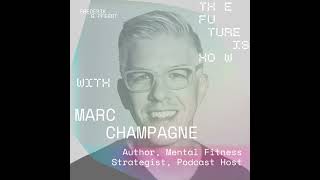
Marc Champagne, author of Personal Socrates, argues that asking better questions unlocks the future you create. He shares concrete tools like 30-second visualization resets and breathwork, and specific questions like "What am I pretending not to know?" that shift how high-performers think and act.
Chapters
The future is how. Have you asked yourself today, what's next for me? You're not alone. We've all felt that way at some point. My name is Frederik Pferdt, and for years I've helped the brightest minds at Google and Stanford and people around the world shape their futures. Now I want to help you to do the same. Because the future isn't just something that happens. It's something you can create, starting right now, from within. Instead of waiting to see what happens next, let's explore how you can make it happen. Each episode dives into one key area, like sleep, nutrition, relationships, creativity, storytelling, mindfulness, beauty, movement, or purpose, and brings you real stories and practical tools you can use to shape a better future for yourself. So what's one step you can take today to create what's next? Let's dive in and explore how to build a better tomorrow, starting right now. Welcome everyone, and warm welcome, Mark Champagne. It's such a pleasure and treat to see you again, to talk to you again. It's been some time, I think over a year now. But we've been following each other around virtually and seeing the amazing work that you've been doing. So welcome to The Future Is How. I might start with a question that hopefully inspires people that are listening. That is, what if shaping the future wasn't about having all the answers? But asking the right questions? What if your greatest edge in a world of disruption wasn't knowledge or speed, but clarity? So I'm Dr. Frederik Pferdt, and this is The Future Is How. And in every episode, we explore how to create a better future, not through predictions, but through perspective. Not by chasing what's next, by, but by preparing ourselves to shape it. And today's guest believes the next big disruption won't be technological. It will be psychological. So here's the real question, Mark. Will your mind be ready? Help us find an answer to that. So Mark Champagne is not only the bestselling author of personal Socrates, and host of the Behind the Human podcast. He's also a pioneer in mental fitness. Mark has trained thousands of leaders, from my colleagues at Google to high-performing startups, helping them clear their mental clutter, navigate uncertainty, and unlock clarity in moments that matter. So he's here to show us that the mind can be actually trained like a muscle. And that one powerful question can shift everything. And that inner clarity might be just our greatest superpower in shaping what's next. Mark, take us into your mental gym. Welcome.
Oh, thank you so much. It's an honor. And I still can't believe how time flies. I mean, you're right. It's been over a year since the mics were flipped, I guess you can say, and you were on Behind the Human. But it's been a beautiful ride to watch because at that time, I think your book had just, just published and to watch the journey you've been on and stay in touch through technology. So thank you. Thank you for inviting me on.
So Mark, before we dive in, I'd love to start with, dare I say, a tradition here on The Future Is How. It's your future bio. So fast forward 10 years, who are you becoming and what are you creating?
Well, you know, I'm a fan of questions, of course. And this one really, I really enjoyed taking some time to think about. I mean, I've reflected on it, I think on my own, just working out my own path, but obviously to honor you in the show, it really took time thinking about that, that question again. Which means a lot because I've asked hundreds of people at this point the question, who are you in this very moment? So this is like, to me, an evolved version of that prompt. So for me, you've kind of caught me at a really good time, or interesting time I should say, because I feel like my world in my mind itself has been shifting and evolving, and I want to say almost upgrading in a way that has been meant to be, I guess, on my side. And, and I can only be here because of the work that I've put in and, and where the universe is kind of unfolding and so forth. But I do, in thinking of your question, I do feel a shift happening. And to answer it directly, you know, over, let's say, the next 5 to 10 years, I really do see myself acting as a bridge from— a bridge of wisdom, and in many cases ancient wisdom, and the people that I study and research and so forth and bridging that knowledge into the modern way that we live so that these age-old, I'll call them challenges or moments of struggle and tension and so forth. None of this stuff is new. I mean, there are different circumstances surrounding all of these situations. I find it so fascinating that all cultures and all, you know, ancient wisdom keepers and the teachers and, and so forth across all of the world have dealt with, you know, a lot of these challenges. And I'm doing my best through different mediums. And this is what I mean by things are evolving, is that the projects are— new projects are surfacing, but the body of work is all around this, I guess, container of being that bridge and, and being able to bring the practices and the perspectives and the questions of course in a really relatable way to hopefully help as much as possible in present day.
I love that. Thanks, Mark, for being that bridge that you are probably right now between ancient wisdom and maybe future wisdom. Yeah, right. I think that's very powerful. Can you give us an example, like, what do you think are things that show up as challenge for us humans over and over again?
Yeah, well, I mean, and this is a topic I've been working on quite a bit right now because I'm, I've been working on the next book or two actually. We'll see, there might be a couple here, but the topic being the idea, and I'm in this place as well, of how do we navigate the between world with a little bit more grace and ease? And what I mean by that, because I feel it and I feel it with guests and just the world in general, I think a lot of us have invested in our development and have practices and routines and rituals and so forth to help with just the stresses of regular life and so forth. But then you get— it's almost like you get caught between, you know, one foot in old self and one foot in new self and are being pulled back and forth. And, you know, it's not about completely dissolving anxiety or depressive thoughts or whatever's coming up for you in that between space. But I think there is a way to navigate it with a little bit more ease and a little bit more grace and, you know, really take that evolution from a different perspective because often, and I'm speaking from my own opinion, it feels like a bit of a war in your mind. You know, I know for me at some points I could, you know, in one moment be, you know, so confident, so clear about the path ahead and feel very focused. And then, you know, one thing may happen or one thing may not happen equally. And all of a sudden, you know, rapid, you know, thoughts of self-doubt come in. Like, I don't know, why am I doing this? And it's, I just find it. Interesting how fast that can happen. And the more it happens, I find, the more exhausting it can be. Right? And this is where, for me at least, the practices that surface from present-day people living today to, you know, samurai of the past and indigenous, you know, elders, as well as African healers. I mean, all these, it doesn't matter where you look, there's all practices and, and at times very quick rituals that can help reset our minds, essentially. And then we get into our bodies and then so forth, and next thing you know, you're, you know, you're back on track and a little bit further down that journey.
Fascinating. You mentioned samurai warriors, right? And you said like they might have, you know, the same challenges that we now have, right, in terms of self-doubt and not being confident enough. So what's a practice they might have used or what you can share with us that allows us to get a little bit more clarity, get a little bit more confidence?
Yeah, what really struck me is I've studied a few of them at this point, and I'm leveraging technology to do that. I mean, the way I'm doing it is I'm using AI to have conversations no different than what we're having and putting those interviews in the first person tense, and I am— they're not scripted. I mean, there's a topic, obviously, no different than what I do on Behind the Human, and we just go into dialogue. I've been starting my day— this is the research for the book— but I've been starting my days like this, and it's just been a beautiful experience. And what struck me most with the samurai in relation to, I think, what we can all relate to around knowing that we're motivated, we want to succeed, we want to grow and so forth in everyday life and evolve, but at the same time know that time in stillness to clear out the mind and be present is very important. But sometimes it feels like those objectives are at odds in a way. So it's almost like, how do you perform at the best in whatever that looks like for you, but also then still be present and grounded and not completely burn yourself out? So I asked that question. And what came back was, was really interesting. And it was just a subtle shift in perspective, you know, and they said, when we train, we train with focus and discipline and with kind of a warrior spirit in a way that is what we would probably describe as being very focused in flow and taking action. But when we're in battle, we have to have the presence and the attunement of a Zen master in that moment so that now we're relying on our training, but we're relying on making to move and being with the flow. It's like you're going with the water and being able to move in a way that is so beautifully present. And I've just, I found that really interesting as you can, it's not about one world or the other. It's about living in both worlds in a way, but being able to see what do I need now? And this is how I related back to our current life, like in this current season, and that season may be a quarter, that season may be just this week, but what do I need most this week? And can I inject some of those moments of whether it's nature or meditation or some of the practice to help ground and so forth? And how do we oscillate between them in a way that supports who we're striving to become, essentially, coming back to your question? So that's one, and there's, there's so many that continue to surface, but that's one that really struck me.
I like that duality between being in the present and preparing for the future, right? I think those are— when you're talking about training your mind and preparing for the future, right? I think that's what we all like to do. We invest in ourselves. We get ready for an uncertain world that's ahead of us. We get motivated to show up again, right, with confidence and that we think we are on the right path and so forth. At the same time, we have to acknowledge that in the present moment, there's a lot of beauty, right? And being present is important to notice all the things that give you joy, that make you happy, that allow you to feel connected and so forth. So there's this duality, right, between preparing yourself for the future and being present in the moment.
Well, and I think that's the big part is if you feel prepared, adequately prepared, then it allows you to be present in that moment. And also see what others can't see. And this is a lot of the work that I do with teams. We're really good in the business community or in the corporate world of creating strategy for the brands and the businesses and so forth. But the next question most organizations aren't asking or leaders aren't asking, what do our minds need to support this strategy or this quarter or this launch or the sprint, whatever it is, right? And that to me is the next step. And you mentioned it earlier in the bio, but the— I think that the biggest competitive advantage and also the most important transformation is this prioritization of our minds and making sure that we're proactive, right? And it's not super complicated. It's just taking a bit of time to think, okay, even week by week personally, if you look at the calendar ahead, you know, okay, I have this, I have that, you know, it's inevitable. Some of those meetings or interactions, some will give energy, some will take energy away or require different things of you. Just even taking a couple minutes to then think proactively, okay, well, I'm going to do maybe a few minutes of breathing before or after this meeting because I know it's going to be heavy, or I know it's going to take a lot out of me, or I'm going to schedule in a brief walk outside between this and that. Like, they're not earth-shattering or big adjustments, but they end up stacking together and making all the difference. And all of a sudden, you get to the end of the day or week or, or month, and like, gosh, I feel like I have energy versus feeling completely depleted, right? And we all win when we're all feeling like that.
Maybe you can take us into your mental gym and do an exercise like that with us. Yeah.
Well, so one, one that always resonates really well is this. I call it the 30-second reset. And this is something that you can use, of course, at any point. I mean, you can use it at night. I use it at night often just to help fall asleep. And, you know, I don't have a hard time falling asleep, but it's it's a nice way to fall asleep is what I would say. But you can also use it if you, you know, you get that email or something happens and it, your mind is thrown off and you're thrown off the energy that you, you wanted to feel in the day as an example. It's really quick as the title suggests. It's a 30-second reset. Make sure you have maybe a piece of paper or something to write down because we'll have a little, we'll give ourself a message at the end and that's a trigger to go back into the visualization. So All right, I'll do— and I'm going to do with you, of course. Everyone just closes their eyes and we'll just take a nice long slow collective breath in and then out. We'll do one more because that feels nice. One more and then out. And keep your eyes closed. I just want you to put yourself at the end of the year or a period that is impactful for you. And you're, you're at the end of that time period and you've just achieved a really important milestone or goal or objective, like something that's, that's really meaningful for you personally or professionally. You've, you've achieved that thing at this point. And I just want you to, to see where you are, who's around you, what environment are you in? What do you see? What do you hear? What do you smell? Just really pick up into the senses of that and, and try to identify the dominant emotion you feel being in that place and where you feel it in your body. And then with your eyes closed, just zoom out of your body and kind of look back at yourself. What do you tell yourself in that moment? What's that message? And write that down on your piece of paper. And then you can open your eyes. Typically there's something that is said like, you did it, or congratulations, well done. I've yet to be with anyone that says, well, you really suck. You shouldn't have tried that. Right. But often, you know, that's how we speak to ourselves and in our minds and in moments when we're not feeling our greatest. But it doesn't have to be like that, right? And we can be kind to ourselves. And that's just usually when I'm doing this in a full room, I mean, I cheat a bit and open my eyes and you can see the smiles developing on people's faces because it's personalized to them. It's something that you're working on and you put yourself there, no different than how you started this conversation to put myself into the future, right? And feel the emotions of that and so forth. And the reason we write down the trigger word or line is that again, at a moment's notice, you can just look at that and go back to it immediately. And it doesn't take much, right? Versus stewing in something that maybe, you know, is getting our mind to spin or getting us to constantly, you know, running these narratives and so forth that can at times completely hijack our whole day, if not days, which then compounds. And that's why I think it's not the only reason, but We're in a bit of a crisis when it comes to our minds right now. I see the global data, I see the data within my own companies and the people that are running through. We're not doing super well. So my whole mission is just like, that's one practice. It's not the end-all be-all, but it's one thing we can do. And there's so much more that we can do for ourselves and to feel good more days than not.
Thank you for sharing that with us. I love the simplicity and that there's a very low entry point, right? You don't need anything basically. You just need like these 30 seconds, the 1 minute to close your eyes, take 2 deep breaths, and think about your future self, right? And that is so powerful because if we, like in a gym, right? The physical gym where we exercise our muscles, right? When we do 1 minute of that every night, maybe every morning, maybe after lunch, our minds get stronger, right? That muscle develops to imagine, to put that smile back on our face, to have those moments of joy, right? And I think that's very powerful. So thanks for sharing that with us. So what have you actually learned from studying, you know, thousands of these high performers, right? And high performers, I think, is a word that we need probably to explain, right? I don't think it's high performers in ways that they make a lot of money or they run these ultrathons or whatever it is. I think it's just everyday people that really do an outstanding job in whatever they're engaged in. Yeah. So what did you learn from studying these people?
I agree with your definition. And I would say for me at least, and this is what I keep in mind in terms of thinking of high performance, but people that feel alive and are really tuned into their craft or whatever that is. And again, it's personal and professional, but that you can feel that energy. They're alive. They're excited to get up there. You know, it's not to say they have perfect days all the time, but there's a, there's a higher purpose. In their work and a lightness to their step, I guess you can say, then they, those are the people that I find see things that others may not be able to see. And that may be asking a question that, you know, someone else just wouldn't think of asking because they're in a state of survival mode, right? Just trying to get to the end of the day. That's the big difference that I see, that even the ones that you would assume, you know, and I think of some of the billionaires or millionaires that are leading massive organizations where you'd be like, ah, they would have no time to do any of this stuff because of the sheer volume of, or size of the company and the people and so forth. Where those are the people I would say are, are most dialed in, in the sense that they're really protective with how they navigate their day.. And for the most part, not everyone, of course, but are proactive in ensuring there's time to process, you know, versus being in back-to-back meetings that, you know, I have some time to think about what just happened in this interaction or whatever it is. And then they also find ways, and this comes back to what you, I think, noticed in that last or mentioned in that last practice, they find practices and ways that integrate into their existing routines that are simple. So the barrier to entry is easy, right? Versus thinking, you know, okay, I have to get in an hour workout somewhere, but then I'm traveling across the world and landing in different time zones and so forth. And I'll never forget, there's this one gentleman out of Australia that said, you know, the thing that I do most often whenever traveling is that as soon as I land, I make sure that I at least get a walk outside to, A, bring in some sunlight, help adjust for the jet lag, move the body after being on an airplane, and doing that in silence, right? And allowing the mind to clear and process whatever may be going on or maybe preparing for a meeting to come. And again, that's not, you know, it doesn't have to be hours. And that's something like you don't need equipment for that. You know, just get outside and there's multiple benefits. I would say the theme that surfaces across all of them is some sort of prioritization to put the mind in a still place, allowing moments where the mind can rest and sometimes think, but sometimes just be. And the language, you know, changes for all types of people. But at the end of the day, what we're typically doing, or what most of society is doing, is running a 12 to 14 hour high intensity workout on our minds. Nonstop without any kind of rest and recovery. And that's just not sustainable, right? And this is where, when I look at all of these, these people that we read and study or follow, whether that's religious subjects or sages and teachers and so forth, it's so obvious. I mean, they're all doing something like this. And it's not to say that there wasn't, you know, sure, we've got more technology, but you know, in those times too, you're dealing with being in full-on war nonstop. There's a— like, the circumstances have changed, but it doesn't say that they're any easier or harder, right? When I think of the Stoics, I remember studying Marcus Aurelius, and when you're reading some of his journaling entries, I can't remember the exact numbers, but— and I know you have kids and so do I— but I mean, at those times, I mean, people were losing dozens of children, you know, due to disease and war and so forth. Like having to process that. I mean, that's, that's a lot. I can't even imagine, you know, any child being lost, right? It goes to show, I mean, the times have changed, but the mental struggles and then the emotions— we're still human— have always been there. And again, like, the through line is just time to think, time to process, write, meditate, whatever that is, breathe, get outside, and let your mind heal and rest.
Absolutely. It reminds me of a, of a study, a friend of mine, Sonia, who wrote a book about happiness. And when she asked nurses in the hospitals what they think about their job, is it first a job, is it a career, or is it a calling, right? She studied these 3 types of answers and these 3 different groups, right? And the ones that defined their work in the hospital as a job were the least happy. And the ones who defined their job in the hospital, same job, same hospital, as a calling were the most happy. And she saw actually that how they're doing their jobs was also very different.
Oh, wow.
Yeah. Who defined their job as something they need to do, which is like something that's dictated to them and they don't have any control over or whatever it is, They literally showed up, you know, these 8, 9 hours that they had to show up. The ones that defined their job or what they did in the hospital as a calling, right? They showed up longer hours. They did extra work, right? They actually engaged with the patients and they said, it's not just a job what I'm doing here. I'm helping the patients to heal and I'm the main part of that healing process, right? So they had a totally different understanding of what they were doing, which increased their happiness level. So you can ask yourself, like, how do you see your professional work? Is it a job? Is it a career? Or is it a calling? And I think as soon as you become aware that most of the things we are doing can be a calling, then your happiness might actually increase and you're doing things that are more meaningful, that have more value, not just for yourself, but for the other person that is usually involved in your professional work too. So I think that's fascinating. So let's switch gears a little bit, Mark. You're also known for someone who loves questions, right? You wrote the book that I have right here, Personal Socrates. Where there are just many questions that are super inspiring. What's the one question that you would say is the most powerful question that you've ever asked?
Ooh, that's a powerful question in itself. Well, my take on powerful questions are, they're centered around the relevance and the timing of the question. But I will answer your question with two questions if you're okay with that.
Perfect.
Because the, probably one of the biggest questions that was posed to me by a mentor during one of the hardest times of my life when I was shutting a business down and trying to figure out what I was going to do next was by actually the gentleman on the COVID of the book, Chip Conley. And he said, you know, what do you want for your life? And that That question in that time, I can't state how significant it was for me because it was during a time where, if I paint the picture a little bit, I had one of my sons was born. He was, I think, maybe 1 year old. We were financially really stressed about what was going on. I, as a dad, was concerned that that energy was being felt in the, in the home, even though both my wife and I were doing everything possible to not let that translate. But, you know, anyone who has kids knows that they pick up on energy pretty, pretty quickly. And, you know, I shut down a business that reached a bunch of people and, and a business that I knew, or I would say calling at that point, that I knew was what I was meant to do. But for various reasons, that avenue didn't work out. And I was left in a place where I felt hopeless, actually, for the first time in my life. But it was that question that paused all of that narrative long enough to then start asking other questions and say, okay, well, if this is what you want, you know, what's one step that you can take today? Or what do you need to make sure your mind stays in a good state? And who can you speak to that to help you along that path? And I share that question because if I were to ask that today, it's a good check-in, it's a good reminder, but it doesn't have the weight that it did and the impact that it did in that moment where I could feel myself slipping into deep depression. That's my point around quite— in those questions, I mean, sometimes mentors will leave them, or you'll see them in a book, or left on a, you know, in a conversation like this, where if you're listening, they can be revolutionary for you personally, right? And I, I firmly do believe, and this is on the back of the book for a reason, I do believe that we're all one question away from a completely different life at any moment. And for me, that question was the one posed at that time. But to get directly to what you asked me, the one that I actually come back to that's probably the most relevant, at least for me, in all use cases is, what am I pretending not to know? And another version of that is, what am I hearing in the whispers? And that's always just a really good check-in at any point to see Okay, is my ego coming up in a situation right now? Am I getting ahead of myself about maybe an opportunity that seems really, you know, bright and shiny? Like, what am I really pretending not to know? Am I leaving wisdom on the table because I'm kind of being, again, the ego being pulled down a track, which is situations I've been in? Or simply as practical as if I pick this thing up and I put it in my body as food, Am I pretending that this is healthy? Right? Same thing with mental nutrition. Am I pretending that I'm, you know, gonna spend a, a certain amount of time on this website or that website and it's, I've gotta do this for market research or am I avoiding something? You know, so it's, we have the answers to that. It's just, we're, we're also very intelligent in the sense of negotiating ourselves out of actually what we're doing., or we want to be doing, and we bring in all these distractions and so forth. So that one's been really powerful when I come back to you, probably almost weekly.
Thanks for sharing that.
Yes. Yeah. Do you have a question on your side that you come back to often?
So maybe two questions. Yeah. One, one is inspired by your book. I was going through all the questions and most of them really resonated, but one stood really out that I think you're right, like at the right time, right? In the right context, it's really powerful to ask. And that is a question that Naveen Jain asked, and that is, what if it were possible? What if it were possible? Just a question that really tricks your mind, probably, right? Because we, all of us, we tell ourselves like, oh, it's impossible, right? I can't do that. Or like, yeah. This is not something that I can reach, or whatever it is. But when you flip that and say to yourself, what if it were possible? That gives you that hope, that motivation, that optimism, right? That might put a smile on your face and say like, yeah, what if it were possible? I think that's fascinating.
Well, then you start journaling on a question like that, or taking a walk and thinking about you know, just different ideas and situations that could develop based on whatever you're thinking about. And I'm always amazed that, you know, seconds before where it was like, I don't think I can do this for whatever the reason, then within seconds, you know, you're coming up with different solutions and different use cases. And it's not to say that all of that will come to fruition, but they definitely wouldn't have surfaced in that, you know, previous mindset that it's easy to get sucked into. The other thing you can do with that question that I've done a lot is you stack it with a visualization like what we just went through, but you can do that right before going to bed and go to sleep in that world of possibility and play it out in your mind. Whatever, again, whether that's a decision that you have to make or a project or life path, like something like put yourself in living in that future state, having some of those things materialize, first of all, it's just a beautiful way to go to sleep versus, you know, looping on the lack of possibility, which usually triggers anxiety and so forth. There's some good science to support this, but I mean, you start, you know, building some pathways in your mind to actually allow that to happen while you're sleeping. You know, you can wake up and all of a sudden you're like, there, that's the solution.
There it is.
Yeah.
Powerful. Powerful. Yeah, amazing. Yeah, the second question I learned from a Zen master that really is helpful when you have ants— ants are these automatic negative thoughts that always come up, right? It's the stories we tell ourselves, right? And we have that all the time, right? It's like the self-doubt, the self-talk that usually goes on in your mind for minutes, hours, or maybe days, or even, you you know, in our whole life. And so the one question he asked was, are you certain? Oh, right. Just asking yourself, like, are you certain about that? Right? Are you sure? And then you can think about, like, yeah, it's maybe just a thought, right? It's maybe something that there is no evidence, there is no support for what I'm just thinking right now. And as the future is uncertain by definition, right? I think coming back to that question, are you certain, is really powerful because that helps you maybe to get your ants off these automatic negative thoughts. And it just gives you a pause. Gives you a pause.
Exactly. Yeah. I love that question. Again, so simple. I mean, I know I'm biased with questions, but I just, they're so powerful, right? For that, for what we're talking about, it just a quick pause. Quick reframe. I think with that, I don't think we deserve as humans to sit in that suffering for longer than what's required. Of course, there's, you know, there's growth and evolution in those between spaces. But if I look at the data out there, I mean, we're most— many of us are sitting in those places for extended periods of time when literally a question or a practice can pull you out of that.
Absolutely.
Almost immediately. Yeah, right. Like, so I just like, let's make that available and test some stuff out. Because, because again, from that place, when I think of the future, the best ideas come from that state of mind. So not only is the individual feeling better in the moment and feeling more alive and connected and so forth, but then all of a sudden these innovations and thoughts come up and like, the ripple effect of it is we—
it's a win-win across the board. It is, yeah. And let's use that bridge maybe to go into a quick pause for a mindstate moment. Next, let's take a moment to pause and reconnect. This is your mindstate moment, a chance to reset and come back to yourself, wherever you are right now. These moments of presence are powerful. They remind us that the future starts from within by shifting how we show up in this very moment. Here we go.
Yes.
Wherever you are, maybe you're walking or driving or sitting at your desk. I invite you to take a small step with me, not forward or backward, just inward. So take a deep breath and let it out slowly. Again, breathe in and gently out. And now I want you to ask yourself this: What's the one question I haven't dared to ask myself lately? What's that one question I haven't dared to ask myself lately? Maybe it's: What do I really want? Am I on the path I want to be on? What's no longer working? What am I avoiding? What would I do if I wasn't afraid? Or simply, what's next for me? Don't try to answer it right away. Just let that question open something in you. Because the space between the question and the answer That's where the possibility lives. It's where new futures begin to whisper, and if we listen carefully, we might just hear the future we want to create calling us closer. So let's keep going from that place. Hmm, that's beautiful. Beautiful. So let's bring us down to earth again for anyone listening who feels overwhelmed or stuck. And what's one practice that you can start using today? When you're overwhelmed, when you're in that cluttered mind, that negative thoughts come up? Like, what's the one thing that you go towards using in your own life, Mark?
Maybe you want to share that. Yeah, yeah, for sure. I'll share a practice, but then I'll share a question as well, because I think a lot of us have the answer to this question. We just need to pose the question. And it's— I'll start with that. It's this. It's if you think of let's just say that the next few days, keep it real tactical and short. What does your mind need most? And for you in your life, your reality, what would give that to your mind? And this is where often, and same is true for me, I mean, I'll ask that question and you give yourself the reminders of the practices that do work. You know, maybe the next few days. Yeah, I need to, I need to take a walk outside or I need to get some more fresh air. I've been in my home too often or behind a screen, whatever it is, right? Or maybe that's for me, the place where my mind feels most alive is in a sauna. And there are places within the community that I am in that are very accessible price-wise as well as location-wise. I just need to prioritize the time and go. So for me, that's a practice that I've been prioritizing, especially in seasons of, which is a season I'm just about to enter in where I have a couple months of pretty heavy travel and team activations. And my commitment is always to be present and energized and, and everyone gets the same, the best version of me that I can provide. But to do that, I mean, I need to go in healthy and I need to have recovery built in as well. So. One of those things being the sauna, I've upped that practice over the next couple of weeks. The other thing, which is you alluded to, I think earlier, there's just the breath. I mean, we've done it twice now with your guided practice and visualization that, that I led the crew through. It's the thing that we literally, you know, need it to stay alive and we don't think about it very often. And also it's there immediately and you felt it just with your last guided practice, just a couple of breaths immediately. You can slow down. The nervous system and your mind and so forth. So for me, the go-to is typically breathing. I use various methods for that. Wim Hof, I use a lot of his stuff because I like the holds. I literally had a whole book project in front of my mind over 3 holds recently, which, you know, that doesn't happen that often, but it just shows the power of like when your mind is still, like, holy smokes, I've got the whole story here. And I also like it because, you know, in my case where I have my youngest son, sometimes, you know, sleep is up and down and that can, you know, of course affects your own routines. At the very minimum, if something like that happens and I need a little bit more rest and can't go through my regular kind of morning routine, at the very minimum, the non-negotiable is 2, 3 minutes of guided breathing. And that's enough to feel like I'm starting the day. Under my own terms and not just rolling out of bed after not sleeping as long as I'd like and just cramming emails or getting into meetings, because then you feel like you're in catch-up, in survival mode the whole day. And this is just a couple minutes, right? But it's— they're intentional minutes.
So that works the best for me. Thanks so much, Mark, for reminding us so powerfully: when you train your mind, you prepare your world. Yeah. So thanks for being that bridge between ancient wisdom and maybe future spirit. Yes. Ooh, I like that. If you're curious to learn more about Mark, check out his book Personal Socrates or subscribe to his podcast Behind the Human. The links are in the show notes. The future doesn't just happen to us, it begins within us. And if you are ready to fall in love with your future again, Join me in 2 weeks. Until then, remember, don't wait for the future to happen. Create it. Maybe one question at a time. Thank you so much for joining us. Thank you, Mark, and see you in the future. Thank you. That's a wrap for today's episode of The Future Is How. Remember, the future isn't something we wait for. It's something we create with every choice, every breath, and every step we take. If this episode sparked something in you, share it with someone who's ready to shape what's next. And don't forget to subscribe and leave a review. Your next chapter begins now. So what will you create today? I'll see you in your future.
More from Dr

You'll do to your child what was done to you, unless you notice it | Dr. Shefali

How to Stop Passing Your Past On to Your Kids | Conscious Parenting Pioneer Dr. Shefali

How to Stop Passing Your Past On to Your Kids | Conscious Parenting Pioneer Dr. Shefali

The Future Is HOW Season 4 Trailer | How Do You Prepare for a Future You Can't See?




Ruchika Sikri @FrederikGPferdt - The other person may be craving connection just as much



From Doing to Being | Ruchika Sikri on Mindfulness, Connection & Tech That's Good for Humans