How Connection Becomes Your Superpower | Laura Jones (CMO Instacart)
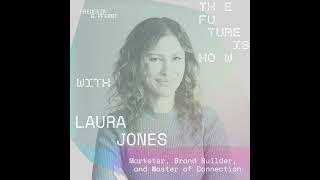
Laura Jones, CMO of Instacart, on connection as a leadership tool. She learned "How Might We" thinking at Stanford's d.school and used it to build Instacart's Super Bowl ad around a data insight: bananas were the most-noted item in shopper notes. The spot starred Ben Stiller and Benson Boone.
Chapters
Some people walk into a room and fill it. My guest today walks into a room and connects it. There's a difference, and most people never learn it. I remember sitting down with Laura in a meeting at Google, and she started showing me, showing me something. It wasn't a finished idea. It was a rough concept. It was more like a vision. She had on her mind, how she wanted to completely reimagine what shopping online could feel like. And then almost casually, she started connecting people across countries around this specific idea, different teams, different cultures, different ways of seeing it. And she made it feel obvious, like, of course these people belonged in the same room. Of course this was possible. And that moment really stayed with me because what Laura did wasn't a strategy. It was something more fundamental. Connection as a way of leading, a way of seeing, a way of creating. And she's done it at Google, at Uber, and now as CMO of Instacart, where she took the same quality to the biggest stage in marketing. The Super Bowl. Today, I want to know how. Laura Jones, welcome to The Future is How.
Thank you so much for having me.
So let me share a little bit more about you. At Google, Laura helped shape how one of the world's most complex products speaks to real people. At Uber, she led marketing through one of the most challenging brand reinventions of the decade. And now as CMO of Instacart, she's reimagining what it means for a brand to be generally useful and generally felt in everyday life. Earlier this year, she created what many called the most joyful Super Bowl ad of the season. I talk a lot about her in my book, not for what she built, but for how she thinks. And, um, before we go anywhere else, I want to start somewhere very personal. So, when did you really realize that connection was actually your superpower?
I think that I realized that at the D School at Stanford, which is a, a place you and I both have a lot of connections to. And, and I really think about that as kind of the beginning of who I became professionally, the first chapter. It was the first place that I figured out how creativity could be at the core of business and be the springboard for my career. And I think I also learned kind of what my version of creativity is, which, as you said, I, I think is about making connections between ideas, between people, um, and really viewing that as something that could be a superpower. And I think that came to bear in a few different ways. One, cross-functional connection. And I think this was an attribute that really, really served me well in my career. So at the D School, I came in as an MBA and I would be paired, or in one case was paired with someone from the School of Engineering and someone from the medical school. And we work together for a year on a project. And so learning how to speak their languages and find how we could all make something greater than what any one of us could create on our own, I think was a huge learning. And then the kind of lateral thinking of connecting seemingly disparate ideas to come up with something new, I think was the other way that I learned to wield connection as a tool. And I think those skills of connecting people and connecting ideas really became the basis for a lot of what I got to do later at Google, at Uber, and now at Instacart.
Thanks for sharing that. And I remember you shared with me a story when you were a student that you actually connected physically with the d.school. You put your hand on the container at that time. So, Take us back to that moment where you literally put the hand on— at that time, the d.school was not like an institution on campus. It was off campus at Stanford, right, in a container where the founders really taught creativity. So take us back to that moment, how that connection actually happened.
Yeah, I was working in consulting by day and going to a painting studio at night and feeling like really disconnected between the right and left side of my brain. And I had I had this realization in my kind of mid-20s that if I could connect my right brain and my left brain, connect my analytical thinking with my creative spirit, I would be the best version of myself. So then I kind of went on like a journey to figure out like how I could do that. What would that look like? What careers were there out there that would let me do that? And And through a winding path that led me exactly to this moment, I had heard about the d.school from a friend. I grew up in San Francisco. So when I was back home, I went down to Stanford and said, I'm going to find the d.school. And at the time, and it sounded very official, it had a website, but when I got there, it was quite literally in a trailer kind of off on the side of campus with a which is kind of a printed sign strung up on the trailer. And it wasn't even open, sadly, when I got there. But I did. I kind of laid my hands on the side of this trailer. And I just said, whatever is inside here, I think it's going to change my life. And then I figured out, OK, if I want to go to the D School, which was not a degree-granting institution, I would need to come in through another graduate program. MBA was most plausible given my background with, you know, a degree in economics and a consulting career. So I, and, you know, got, you know, I applied to the Stanford Business School with the premise that I would go and I would spend as much of my time as they would let me at the D School. And thankfully, they let me do that. And the rest is kind of history. But I definitely feel that, and I was searching for that way to and find that connection point between the two parts of my personality. And I really do feel like the d.school is the first time, you know, since my childhood that I really felt those come back together and realize the power that that could unlock.
Thanks for sharing that, and thanks for taking us back to that first physical connection, right, with an object, but also like an idea of a school where you can learn creativity, where you can tap into your own creative superpowers. So thanks for taking us back there. Connection gets used a lot as a word, right? It's been throwing, thrown around like a lot these days. So what does it actually mean to you in practice on an ordinary Wednesday, April 1st?
Yeah, I think that it's, it's an interesting question because to your point, it's kind of, it's, it's in everything we do. I think a lot of our daily tasks are about of, you know, connecting one person to another, connecting one idea to another. But I think that you get to a certain point in your career and you've acquired a lot of the tactical skills needed to do a job. And then, and then connection becomes disproportionately important. And what I found is that as you take on a bigger and bigger scope in an organization, you have more and more context, you have a broader purview. So, Instacart, for example, is a four-sided marketplace. We have consumers, shoppers who are out shopping for the goods in the stores. Then we have our retailers and our brands that are on the platform. So it's a pretty complex business. And, you know, I think that for me, I now lead the marketing team and the communications team and sit across this four-sided marketplace. So much of what I need to do is connect those dots, meaning see how something that might be going on in one part of the business might relate to something going on in another part of the business and bring those people together to make sure that they understand that relationship and, and give them the opportunity to collaborate. And so I think so much of connection is just understanding how different ideas can relate to one another. And sometimes that's obvious and sometimes it's really not obvious. So one exercise I like to do is to, is to almost force that connection. So to think about, You know, if there's some feature I really like in one app to think about, what would this look like for Instacart? An example is I am on the board of Match Group, which owns Tinder and Hinge, which are both dating apps. And so you would think, okay, dating apps and online grocery, not very related, but Tinder has launched some really interesting features like astrology mode or music mode where you can swipe based on preferences and they've just they announced this recently. And, you know, I was in a meeting with my teams the other day and I was like, well, what would that look like for us? You know, and it might be nothing. It might be there is no applicable corollary. Another thing, they recently launched Double Date. We thought about that one a lot and there really was not an applicable corollary, but maybe there is, you know, maybe it's me and my husband shopping together on our Instacart, which you can do through family accounts. But really like taking that question of like, different models or patterns you see in, in one context and asking how might they apply to another context. So I think that whether it's through, um, connecting disparate parts of a business or bringing in a new layer, a new element that doesn't already exist within a business, and borrowing it from, um, some other part of life, be it a different app, something from art, something from culture, asking yourself how might this apply, I think, is a big part of my everyday. Tactically, like almost every day, we'll look at what is trending on social, what are the big trends on TikTok, on Instagram. As marketers, we really need to know what's going on in culture, and we ask ourselves, should we do something with that? Recently, there was the KitKat heist, and all different brands are jumping in on that. And, you know, it's a thing you look at, you say, okay, like, Do we have something, anything to add to this conversation? Maybe the answer is yes, maybe the answer is no. But I think asking that question frequently makes you more attuned to those opportunities and gets you better at jumping on them really quickly when they do arise.
I love that question. Yes, how might we apply this in our context, or how might we apply this to our lives, to our work, to what we are trying to build here and trying to create? I think that's a wonderful question. But to be honest, Laura, I think you are not just looking into the obvious places, like where the trends are happening. I think you're also looking in other places, making those connections that no one else probably sees. How do you do that? Where do you draw your inspiration from? I think the, the example of like taking a Tinder feature and put that into a shopping app is, is a brilliant one. But what is, what is a more extreme connection that you probably have done or have you made in your life where you see that probably no one else could have seen that?
Yeah, it's a good question. I don't know if there's one big one. I think for me, it's a million small ones that happen every day. I think that, that, that tool of how might we is, is the key because what I love about framing things in that way is It creates so much space. It is the most open-ended question possible. It doesn't suppose that you even can, like the answer might be like, no, there's no, there's no applicability, but it, it leaves so much room open. So I think again, going back to the d.school, I learned that skill of asking how might we as kind of the jumping off point for ideation. And I think that has just opened. So many doors in terms of new ideas and really kind of suspending disbelief, another term that I learned at the d.school, you know, and so it manifests in big and small ways every day. I mean, I think like one, you know, interesting place that this came up was with the Super Bowl this year. We wanted to tell a story that helped customers understand our obsession with quality and the level of care we put into grocery shopping. We are the pioneer of the category of online grocery, and we put more focus and energy into getting it right than anyone else in the field. And so we really wanted to own that message of quality because this is kind of a core distinguishing factor of our service. And so, you know, we're thinking, okay, how might we communicate this? It's going to be really boring if we just, you know, flash up our quality statistics, our found rate, you know, our shopper quality, like all of those things wouldn't really hold someone's interest in a 30-second ad. And so we're really thinking about, okay, like how might we grab someone's attention? And we look to the data to start to understand where do we see people's preferences being expressed. And for us in the app, it's the shopper notes field. So it's where you can tell a shopper exactly how you want something. And the number one item for shopper notes was bananas, which also happens to be our most sold item. We've delivered over 1.8 billion bananas, and it is the item that had the most shopper notes. And so we said, okay, there's something interesting here. And we started to dig in. And what we saw is people saying, okay, I want my banana almost ripe, but not quite ripe, a little bit of green on top, or I want it with brown spots because I'm making banana bread. And we went, we thought about this and we said, okay, we know people have strong preferences. Now we could tell a story about, you know, how hard we work to meet them. But we then, we kind of went to another d.school tool, Yes and. It was like, yes and, but how do we even make it better? How do we take all the work people are putting into this and just make it even easier? And so we had this idea, you know, maybe there's a way to just productize this and to create, you know, what became the preference picker. So now there's the ability to select the exact kind of banana you want. And again, like We're sitting over here in marketing. Our job is not to come up with product ideas, but this one we felt so strongly about. We went back to the product team and said, we knew they had tested something similar to this in the past. And we said, you know what? Like, we think this is ready for primetime. Let's like launch this, make a big deal out of it and kind of reimagine what that feature could be. And they partnered with us and built it. And we went on to then tell a story about finding the perfect banana with Ben Stiller and Benson Boone and It was a really fun and, to your point, joyful kind of premise. But I think that there's— there were so many constraints we could have internalized. You know, this wasn't on the product roadmap. There weren't any spare cycles to build anything new. We thought we just needed to tell a story about kind of the existing functionality. But I think because we were able to go look at the user data, to have built those personal connections to that product team, to come in with a big idea and passion and this ability to kind of connect the data to a story into an opportunity, we were able to kind of turn a no into a yes. And in the end, the product team was super excited to build it and we built it and it's working incredibly well and we're super pleased with the results. So, yeah, I think that there's just so many tools that might sound at face value like, oh, what is How Might We or Yes, And, what does that really mean? Or how can that really help me in my day-to-day? Day, but I think once they become deeply internalized, they can really change something that was impossible to something that people want to rally around and do because you're creating space for ideas and you're creating space for people to buy in and want to build something together.
Beautifully said. Yes. And, um, funny story, like, uh, we just, uh, had our first banana bread yesterday, baked by my daughter. She's 10. And so we definitely saw the difference between ripe bananas and fresh bananas. And it just makes a huge difference, right? How you can process them and fold them into the dough. So it was a good reminder. And those two tools you're mentioning, how might we as a question that really gets you off the ground. And this podcast is called The Future Is How. So I think how is really a great starting point for a question. And then adding this might really opens up the doors, the possibilities where you are not sure like how this will turn out, but like you were asking, how might, and then you put the we in that equation where you invite others to help you to find a solution. So how might we is one of the most powerful tools I guess we can use as individuals in our lives, but also as leaders, right, to lead teams. To discover something new. And then if you instill some yes and in it, right? And we did that too with the banana bread yesterday. When my daughter asked like, how might we bake banana bread? You know, I said, yes and we're not just baking banana bread, what we adding chocolate sprinkles on top at the end. Of course you need to do that. And then we had like, you know, my son jumping in and doing another yes and what we could do. We can bake, you know, two banana breads or we can make one and give it to our neighbors and so forth. So you're starting to really get into this adding mode. So you're not just adding ingredients literally, but you're adding to this idea. You make it bigger, faster, and better. I think that's very powerful. So thanks for sharing those two practices. I wouldn't even say those are tools that are really practices that you can use. Start with a how might we and then follow up with yes, and very powerful. But take us back to the beginning of of that process, creating an ad that finally went live on one of the biggest stages you can imagine. So take us back. Is it like you went to a whiteboard and you sat down, had some Post-its, and we, I think we all have these pictures in mind where you, you just kind of like brainstorm and come up with, with some ideas and then you connect some of those, or like, how does that work? How do you really come up with something that is truly unique, that is creative, that connects so many different things from like an actor to like a fruit to how it's presented and communicated. Like, just walk me through that.
Yeah, I mean, the reality is this whole process started basically 5 years ago when I joined Instacart because, you know, you don't just, as a brand, you can't just make a rash decision to go to the Super Bowl. It's such a massive investment. It's pretty much the most expensive media you can buy. But also some of the highest ROI if, if used correctly and used in a way that really excites people and generates conversations. So it's such a big decision and it starts with the brand fundamentals and really building a compelling brand. And then as well, the business case, right? Like getting the reps in of deploying increasingly large budgets and doing that and in first the most measurable channels and then working your way up the funnel to to really build credibility with the rest of the business that you can invest. And when you invest, that those investments can have strong returns. So, that's kind of all the pre-work in a way, the foundation that has to be built. And it's important to just state that because I think, again, on the one hand, it's 30 seconds, right? And it's fun and people laugh. But when you think about actually like the amount of work and the number of things that have to happen, over such a long period to even get to a place where you can make an ad like that. It's really, you know, quite a lot of foundational work that needs to go into it. So then you get to a point where, okay, you've built the credibility with the stakeholders, you've gotten a really good media placement, which is a whole nother thing, 'cause you gotta make sure you get a good placement, ideally in the first half of the game, et cetera. So let's imagine we've gotten there, now we're confronted with the blank piece of paper of like, okay, what are we gonna do? And this is, you know, going back to the kind of question of like the return on the investment. If you make a great Super Bowl ad that people remember and talk about, you reach such a broader audience. You know, on average the past 2 years we had 130 million and 125 million respectively viewers tuning in. So already that's, you know, a huge swath of American households. But even for people who, you know, don't watch the ad, if you do it right, you can actually reach an even broader audience through the social buzz and the conversation that accompanies and the earned media that accompanies a great ad. So that's really like what you're aiming for. And it's a little bit of kind of go big or go home, which is really intimidating because when you think about all the rest of the work that you do, most of it's not done in public. Like if I write my 2026 strategy and it's really good and I give it to my boss, like I'll get like a great job, right? But like, you know, my 4th grade teacher or my aunt or my children's friends at school, they won't know if I did a good or bad job on, on that strategy document, right? Nobody cares, nobody knows. Super Bowl ad is the most public form of work possible. So when you put this out to the world, not only from a business standpoint do you wanna make something really impactful, also it's just, it's intimidating because pretty much everyone you've ever met in your life, I mean, I know you grew up in Germany, so maybe not for you, but as someone who grew up in the US, it's like your entire friends, family, social network for the most part will be exposed to this. So I just wanna kind of paint that picture because I think it creates just a, it's a really different kind of creative exercise than, than, than most because it, it comes with a bit more pressure. So I think the most important thing to do in, in the beginning is to really just give this space to say, okay, we're gonna give ourselves, like, we have a workback plan and we have this many weeks to get to a great idea to kind of create a bit of a safe space for ideation because no great idea comes under duress. And when you think about like the amount of money on the line, the amount of eyeballs that are going to be watching you, it can feel really pressurized. So step one is to kind of like create that space of like, okay, we know we have to get to a great outcome, but it's going to be iterative and we're going to give ourselves this many weeks to get there. So once that's all set, you know, then you need the right team. You need your incredible internal team. This year, in the past years, we've, we've worked with agencies who come in and bring an external perspective. And we start with a brief. And, you know, as a design thinker, I love a great brief because it starts with What is the objective? Who is the audience? And really lays out the job to be done so that the creative process can occur within the constraints that exist and can be on message, right? Because again, you could make a really entertaining Super Bowl ad, but if it doesn't actually line up with your corporate strategy and consumers don't know kind of what to take away from it, then again, you've kind of wasted a tremendous amount of money. So from there, once you have the brief, then it's really about iterative ideation. And if I, I mean, if I think about the shares spot, the number— I actually just went through some of the earlier decks. I actually was invited to my daughter's 4th grade class to share about making a Super Bowl ad, and I pulled out some of the early slides of some of the earlier ideas we had. And it was a nonlinear journey even to get to bananas, which is what we ended up talking about and explained why that took a minute to figure that out. And then once we had bananas, it was kind of like, well, how do we tell an interesting story about bananas? And in the end, what we came to is we loved the idea of doing something that would be— we wanted it to be really memorable and funny. And because it was going to be about bananas, we realized it had to be bananas, meaning kind of crazy, kind of unhinged. And so we thought a song and dance with kind of a comedic angle about finding the perfect bananas would have an absurdity that would make it inherently memorable. And then it was really about finding talent that could carry the comedy and the musicality of it. Plus a million different versions of demographic analysis and budget, et cetera. We ended up with Ben Stiller for his comedic chops and Benson Boone for his musicality and his signature flip. And, you know, we did not go in saying, we're going to make a musical. Comedy about bananas starring Ben Benson. We landed there after a very, you know, circuitous journey. But I always think that if you go into a process, you can kind of envision the outcome, like a little bit, what's the point? I felt that way about my career. I felt that way about, you know, any big creative project I embark upon. But I've always felt this way where if you're just kind of on a linear path, then I think about my starting my career in consulting. Was so clear. It was like, you come in as a junior analyst and you work there for 20 years, you become a partner. And I was just like, well, if I already know that's, that's the path, like, I don't, I don't need to take that. Like, why would I take that path? I kind of always want to like forge new ground. And I think same thing with creative, you know, going in, we really didn't know what it would look like. You know, there was a minute when we thought it was going to be a musical about ham inspired by Hamilton. Needless to say, that's also related, but, um, I, I think that's what makes it fun and a bit scary too, to be honest, cuz there's moments of like, do we even know where this is going? But that process of trusting the team, trusting the process, and being kind of delighted and surprised by where you end up is a lot of what keeps me excited after all these years to, um, keep making this kind of work.
So I'm curious, what did you share with the 4th graders and what were some of the, the questions they asked? Because I imagine kind of like you come in and, um, you know, you're like a superwoman, right? Who like just created one of the most joyful ads, um, in history. And you're sitting there as a 4th grader and you're like, how can I learn what Laura does, how she thinks, how she is as a human being? How can I become a Laura Jones? So tell me a little bit more about what you shared with the 4th graders, how they responded, and What did you tell them so that they go on a similar path that you just described, which is not a linear one?
It's a great question. I will say, you know, I feel so lucky at this stage in my career to have had some really amazing speaking opportunities, be it, you know, South by or Cannes, you know, and I've gotten to speak on, you know, incredible stages to large audiences. This was one of the most intimidating invitations. I was so honored, first of all, the kids even were interested and wanted to to learn about it. So that really was incredible. And also because the Super Bowl had been— was in San Francisco this year, my daughter actually got to go to a few of my speaking engagements that I did. I invited actually my kids, my husband, and my parents who still live in San Francisco, all got to kind of see me in my element, which was really fun because it's so hard to explain to them, you know, sometimes what I You know, they all kind of know what my job is, but, you know, why do I have to travel? What is it? Why am I going to Cannes? So that was really amazing. But then having to do that in front of, you know, 48 of their closest friends was a little bit more of an intimidating factor.
So you don't want to screw that up, right?
Yeah. No. And then, you know, they're a tough audience, right? They're— if you lose their interest even for a minute, it's quite evident. So I really thought about what I wanted to do with them. You know, I started by asking them, why do brands run ads to begin with? And I will say that the kid that answered it, I was like ready to hire him as an intern because not only did he nail kind of the why, you know, to educate people about new products, get them to try it, he also touched on the concept of return on investment, which I was like, wow, for a 10-year-old, that's very impressive. So, so I was, you know, thinking about how do I get this kid, you know, a grade school internship. But no, it was, it was really cool to see, you know, for even you know, even at that age, how some of them really are interested and really get it. And then really tried to just take them on the journey of, again, why do we as a company run ads? What goes into making an ad? You know, we all see ads and I think, you know, I think the stat is the average person is exposed to over 200 ads a day. I'm sure it's even more than that for many of us. And most of them we don't remember. And, you know, I think part of that is adaptive. If we actually paid attention to every ad, we literally we'd be doing nothing else all day. And part of it is just the ads themselves, I think, you know, are not always relevant and don't always grab attention. And so I spent a little bit of time kind of on that. And just because, again, like every ad you see is somebody's work. And, you know, I think, again, not all ads are going to be relevant to everyone at each time. But when you have an opportunity like Super Bowl where, you know, so one time of the year people are actually watching the ads, they actually want to see it. That it is important to make something really good because if you're asking someone for their attention, you should make it worth their time. And so we kind of started there of just what is the premise? Because I, to be honest, sometimes I feel conflicted as a marketer because people will use marketing as like a pejorative term. They'll be like, oh, just marketing, or let's skip the ad, you know? And I get it because it can be interruptive and it can be forceful and it can try to grab your attention at a time when that attention is not needing to go in that direction. So I kind of wanted to orient them first as like a mental model to think about advertising, which for me is about be as relevant and targeted as possible so that you're not coming in and interrupting people. You're really trying to find them in that moment of intent where they do want to purchase and where your message is relevant. And then if you're reaching them in more of a mass context like Super Bowl, where, you know, they're not about to go pull out their phone and enter Instacart at that point, The goal is really to grab attention and form a connection between that customer and your brand so that then later when you target them, that they're more receptive and more positively biased and maybe have a better understanding or more curiosity about what you're offering. So I think providing some of that mental scaffolding, I think is important. I would love to see more smart, caring people choosing to do marketing and do it in a way that is respectful, intentful, and really honors kind of the time and attention you're asking for. So, you know, hopefully, um, I don't think they got the full nuance of that, but I think just this idea of like, hey, it's okay that sometimes ads are annoying, sometimes you want to skip them, but if you're going to make an ad, you should try to make a great one. And then really tried to take them through, well, what does it look like to try to make a great ad? How much work goes into it? And really also just attuning them to how many different types of work there are within, you know, if you think about the Super Bowl ad, and I actually pulled the stat for them of how many people were on set because they had a question about how many people it had taken to make it. And it was actually interesting for me too. I went back and looked and I think over 200 people within Instacart played a role in making the ad. And we had almost between 150 and 160 people at some point on that set. And it's everyone from from someone who is crafting the costumes to someone who is doing the catering for the folks acting. You have the backup, uh, you, you know, the kind of backup dancers, the people that are working the camera equipment. Actually, one of the people who worked on, um, the production and the, and the photography for the, um, the project had been the— I believe the DP for Sinners, right? So she like won an Academy Award this year, Autumn Arkapaw, and she, you know, was on on our set helping us film this ad, right? So it's really incredible to, I think, attune people to, hey, basically we're making a movie. The movie only lasts 30 seconds, but that same level of production goes into this. And then even in post-production, there are people who are doing the editing, the sound mixing. Actually, one of the gentlemen who worked on crafting our custom song has kids at the school too, and he, uh, he, he and I, he works for the company that, um, did the music for it. So just kind of saying like, look, you know, maybe you want to be a marketer, maybe you want to be a CFO, maybe you want to be a musician or a director of photography. And like, all these things are adjacent to this and, and just kind of opening their mind to like the number of different ways that you can spend your time and the kinds of work that might be available, right? Because I think sometimes these kids, you can feel like, especially in Silicon Valley, like everyone works in tech and I think everyone's on a computer and you imagine they're all doing the same thing, but in reality, there's so many different skills and so many different paths. And so, just trying to attune them to what those options are so that as they develop their own identity, they can figure out ways to find work that they love.
So, if I wanna be on Laura Jones' team, I have to think like a 4th grader.
Yeah, pretty much.
Perfect.
Really pay attention to the return on investment. Just kidding.
Yes, but what are some of the other qualities you look for in people that, you know, you literally can start developing as a 4th grader and then continue to develop in your life? What are some of these qualities that you are specifically looking for in that very creative industry that, as you just described, has opportunities for literally everyone and every talent? Like, if you're a photographer, if you're a costume maker, if you were a caterer into food, if you, whatever it is. So, what are some of the qualities that you're looking for in people that would love to join your team?
Yeah, yeah. I think about kind of skills and behaviors, and I think, you know, skills, obviously, the skills are kind of what's necessary to execute on the task at hand, right? So, if you are coming in to be, you know, a MarTech engineer, well, you need to have coding skills, or if you're coming in to be copywriter on the creative team, you need to have writing skills, but then there are behaviors. And I think that's kind of the connective tissue between the different people on the team. So, that could be something like curiosity, I think is incredibly important and that ability to question everything, right? Because we're in such a dynamic, ever-changing world, especially now with AI, like having that curiosity to every day ask, oh, could I be doing something differently? Should I be trying a new tool? Like that I think is foundational. User-centricity, empathy, the ability to really care about your customer, your teammates, really being interested in people and what drives people's behavior, I think is incredibly important as well. And ambition, I think, is another thing that when I look at my leads and I, you know, or just my team in general, we're, I think we're the most neurodiverse team in the company because we literally have everyone from engineers to photographers sitting on the team. So it's this incredibly diverse set of skills, but the behaviors really are what needs to be consistent. And ambition is definitely one that I think we all share. And what I love is that we, we have this kind of term, career-defining moments, and I challenge a team like every year, each one of us should have a career-defining moment. And I look at the people that I get to work with every day and whether it's, you know, our executive creative director who last year said, my goal, my career-defining moment, my ambition for the year is to be the In-House Agency of the Year, which is this award given by Ad Age, just, just one company each year who has the best in-house creative team. And we just won it. And she led the team to that incredible ambition. And, you know, I just, I think that and that level of ambition, or, you know, my VP of Consumer who really drove all of our Super Bowl efforts and like her level of ambition to say, we're not just going to go to the Super Bowl, we're going to win it. Like if we're going to go, we're going to be on the top 10 list. We're going to be one of the most talked about ads. And again, it's that ability to like envision something really audacious and bold and then go and make it happen. I think those things paired to the kind of curiosity, the like human centricity and the ambition come together in just a really interesting way. And that can apply again, whether you're a communications professional or you're a B2B channel marketer, right? Like you can have a big vision, use your curiosity as kind of the fuel there, and then use that human centricity to enlist the people and understand, you know, how you can behaviorally get to the outcomes you want.
I love that you start with curiosity as one of the most important things that you're looking for. And I think that's coming up over and over again when we look into the future. And interestingly, just right behind me, I have this calligraphy that I drew inspired by one of my calligraphy teachers, Jiro. And it says curiosity, and it consists of these two characters, which is a woman holding a child, which stands for caring. And it's about surprise, this middle character, and then it's love at the end. And if you take anything away, care, surprise, or love, you lose curiosity. And I think it's such a fascinating concept. So how do you develop, teach, grow curiosity in your team, but also in your children? What is something you do as a as a practice that really helps to continue to grow that curiosity? And you just shared one, which I love, which is like just having a career moment where you really do something extraordinary and really having that ambition. So what are other ways that you practice curiosity?
I love that question. It makes me think I should be more intentional about how I practice it because I think it is something that in some ways, because I had that experience at the D School, that I just, I think I internalized so much of it that it almost feels inherent at this point, but I know it is a skill and it's something that, you know, I think I was exposed to and lucky enough to get a really structured process to kind of frame it. So, you know, if I have to kind of decompose, like, how do I think I bring that to bear? I think it comes back to a lot of of the themes we've touched on. I think one is holding generative space, and this is one I struggle with, to be honest. And it's something I'm always— every year when I think about what I want to do differently with next year, I always like, I need to hold more generative space for the team because I think, you know, a lot of our work we do remotely and I do think that's something that can be lost if it's not incredibly intentional to create that generative space. But I think creating generative space, meaning space where you don't just have a meeting with an agenda and a deck and you're just like plowing through content, but you're saying, I'm going to come with a few questions and we're going to discuss. And even in the Super Bowl process I described, kind of giving ourselves X amount of time, you know, I think holding that space is the necessary precondition. And then I think it's a lot of those tools from, from kind of the G-School lexicon of the how might we's, bringing really good questions. And, you know, a place that I've really been more intentional about this has been my other board. So I mentioned I'm on the board of Match Group, which owns Tinder and Hinge. The other board I'm on is UNICEF, UNICEF USA, which is obviously an incredible organization that I have now been on the board of for 3 years, and I've been working with the leaders there to— one of the things I've been helping think through is this question of kind of innovation and how do we bring this big, bold thinking that tech companies, you know, have really codified and been known for in many ways as part of the innovation process. How do we bring some of that to this sector where the mission is to support and uplift and protect children? And really think through how do we bring that kind of same innovative spirit to probably the single most important question for humanity. It's been really interesting to think about, you know, going back to even like the work we did at Google with the garage or the sprint methodology and like, how do you bring that to an organization that has such serious and critical work, but still create that space for innovative thinking? And whether that's with the team itself, we've worked on building out an innovation incubator where teams go through the design thinking process and can put forward ideas that go through kind of a selection process, some of which get funded for additional development or even just engaging the board itself. And we really thought about, okay, we have this incredibly talented, passionate board How do we create more space so that we're not just in every meeting kind of reviewing what's been accomplished, but how do we create generative space both to spur new thinking and also, frankly, to build that emotional connection and buy-in to the work? Because we all know the IKEA effect, and the more that you feel that your fingerprints are on something, that you've influenced it, the more you're likely to be excited about it and support it. So, that has been, I think, just a really interesting case of of, you know, thinking about what needs to change to create that space. And so much of it, you know, again, I just think back to a board meeting we had very recently is about almost reducing the amount of content that we're trying to get through and saying, let's bring a question instead and let's really moderate that session and engage people and create that kind of brainstorm environment. And where we're going to measure progress not in how many slides we get through, but on how many different people on the team within this group are speaking, with how many ideas we're able to generate, and how much we're able to build on one another's ideas. So I think it's that mindset shift from viewing productivity or work as kind of a transactional exchange of, here's my thing and I'm going to tell you this and you're going to receive it and then you're going to go and take it and do something with it, to a much more collaborative generative one in which the goal is to say less, you know, as a leader and use your leadership to instead come from a place of facilitation and spurring conversation.
So I saw that you've just been to Vietnam for this UNICEF project and, you know, bringing that creative spirit to some of the children there and like just encouraging them and unleashing something in them that's around their curiosity, around their creativity, and how they can use their ideas to really build a better future for themselves and for others. So what feeling did you leave that trip with? So what's the feeling that you took on the plane back to San Francisco?
It's such a good question because I actually just last week— every few weeks, every 2 weeks, I write a letter to the team, to my team at Instacart, and to where we started on connection. It is almost always connecting something that either has happened at work or in my personal life back to the work we're doing. And it is that kind of lateral thinking whenever I sit down to write it that really has to kick in. And so my reflection on the trip to Vietnam was coming back filled with hope. I think that right now the world has a lot of challenges. If you look at, I mean, wars, chief among the many other challenges beyond wars, but just even focusing on that, we have Ukraine, Gaza, Iran, all these situations that I think at worst can feel really hopeless. And sometimes I feel that we're destroying the world faster than we can heal it. And, and it makes doing work like UNICEF, like sometimes feel hard because you, you see how much children are suffering and it's hard to keep pace with the needs that are being created every day. You know, you have a school, now that school is destroyed. Now kids that had a school don't have a school. You know, it's incredibly hard. Vietnam is such a hopeful story because 50 years— it was 1975 that the fighting stopped. So it's almost exactly 50 years ago. And, you know, the country, you know, had so much destruction, poverty, just just so much to overcome. And you look at, you know, within a generation now, Vietnam is on the path to becoming a middle-income country. The country has a goal to become a high-income country by 2045, I believe. And even when you look at the work UNICEF has done throughout that process and how critical and supportive it was in the most dire of moments and what it is becoming now, I think it again really just gives me hope. You look at, you know, 50 years ago. And actually, this was amazing, one of the people I traveled with is the current CFO of UNICEF USA, Michael Chen, and he was born in Vietnam and left as a refugee and actually received aid from UNICEF in a refugee camp as a child and then was able to move to the US, had an amazing career, and is now, you know, the CFO of UNICEF and giving back. Um, this is his second time ever going back to the country since he left. And, you know, you think about UNICEF kind of operating in refugee camps to then moving and operating within Vietnam, doing, you know, infrastructure work, providing kind of the critical foundations for that country to, to redevelop and helping kids with the most basic of needs. Now, today, the government has actually been able to take over that work, right? And so, you know, we visited a school where UNICEF had poured the foundation 10, 20 years ago. To help that. It was in a very kind of landslide-prone area due to deforestation, climate change, and they kind of built this foundation and this play area so that the school would, you know, be, be safe and secure. Today, they're not doing that kind of work anymore. The government is doing that. And UNICEF has been able to start to kind of change the nature of its presence. Now it's working on inclusive education to make sure that ethnic minority groups are being brought along in the development journey or that inclusive education for people who have disabilities and making sure that those people get to have an education, teacher training, climate resilience, water and sanitation. So the work has really changed. And now UNICEF is also starting to actually get donations from within the country and is actually now transitioning to not just aid deployment, but also actually being able to fundraise there. And I think it offers me hope that even situations that seem really dire can be transformed and transformed through, you know, the incredible resilience of the people, the government, the investment in education, the investment in infrastructure, and the partnership of organizations like UNICEF. And it makes me excited to think, you know, that there is an exit path. UNICEF doesn't have to do forever aid in every country. It can come in at times of the most dire need and eventually You know, start to, start to exit, you know, or start to change the nature of involvement to being in this, in this more sustainable model. So, you know, when I talked to my team about that, I really drew back to this idea of like consistent investment coupled with a resilient spirit, right? In every business, there are unexpectedly hard things that happen. There can be things that feel like an existential threat, and there can be a lot of change. but if you build the right foundations and stay flexible, stay resilient, then you can accomplish massive things. And I, you know, to bring it full circle, I go back to the Super Bowl. I didn't just show up on day one and say, okay, let's go do a Super Bowl ad. You know, we worked really hard for 5 years to, or I guess, you know, technically it was, we did it at like the 4-year mark, um, the first time, but we worked really, really hard to show that we, you know, could do these kinds of investments and really have them be accretive and put in a lot of hard work, dealt with things that were hard or surprising along the way, and then were able to come to a really awesome outcome together. So I think that a lot of fundamental human truths really kind of are broadly applicable. And in a way, I think the more you can change your context, like for me going to Vietnam and doing something totally outside of my day job or my normal family life, really reminded me that those fundamental truths span beyond whatever function or specific place you're in and really can be broadly applicable. And I think hope, hopefully, you know, is one of the most powerful, broadly applicable things we have, because without that, you know, I think the future wouldn't be a place we want to go, but I think with it, we can really feel like there is a path to take all of our human spirit and ingenuity and really lift ourselves up together.
Such powerful words, Laura. Thanks for sharing those. Exploring connection together, right, and how powerful it is to connect ideas, connect people, and connect things that don't seem obvious in the first place. And then talking about creativity and how we can really unleash our creativity with practices like How Might We or Yes, And. You talked about curiosity and how we can nourish that. And really, that curiosity is probably one of the most helpful skills or behaviors that we can use in today's lives, but also in the future. And then you talked about care, caring about other countries, other initiatives, other people, and how you can bring that care to, to people around the world. And interestingly, all of those start with a C. So connecting creativity, curiosity, and care, which brings me to one of my last questions, which is how do you take care of yourself to really be able to continue to build a better future with the work that you're doing with the family that you are growing? So how do you, how do you take care of yourself?
It's a really good and important question. I think having multidimensional life is really foundational for me. Having the ability to have a family that I love, that is my core support system, have a job that I love, that is really tapping into my strengths, but also challenging me every day. And then having the space to explore other things and bring that back, bring that energy back. So the board work UNICEF and getting to do something that has kind of a broader impact and meaning for me. And I love to paint. I mentioned that at the beginning. Painting is kind of what got me onto this crazy path because I— it's something that's very, um, innate. I, I have always loved to paint, and it was the thing that made me realize I couldn't leave creativity out of my career story. It's very hard to find time to do it, but I always have a painting going at all times, and I paint a lot with my daughter and then, you know, physical activity, friendship. I think physical activity specifically warrants just a mention because I think, you know, it's, it's something that is so important and foundational. And I think I used to think of it as like separate from, you know, my work or showing up for my family, but I've realized it's actually kind of like necessary prerequisite. So I run almost every morning as part of kind of a daily ritual and then I I swim in the bay whenever I can as kind of a big neurological reset and then just time with friends. So I think just having a life that has those dimensions and viewing them not as kind of competing with each other for time, but really like all as inputs. And again, kind of things that the sum is greater than the parts of like running is the time when I often have my best business ideas. I have a quieter mind, or painting is how I refresh my kind of inner, inner energy. Being with friends, I often have ideas that I can bring back to my family or my work. So I think, again, like, as a lateral thinker, having a few different ways that I spend my time and then trying to really, like, connect them all and get that value is, is huge. And I'll offer one practical tip that I learned from Jennifer Acker at the GSB, and she also teaches at the D School. She gave a really cool framework to think about this, which is basically kind of like you— let's say you have 6 or 7 of these priorities: work, family, your relationship with your spouse, physical activity, friendship, art, let's say. So those are 6 things. Looking for what she called the double and triple plays or the home runs. Within it. So finding things that you can get, you can touch on multiple of those things that you value at once. So painting with my daughter would be a double play because I love to paint. She loves to paint and we get to do that together. Or going for a swim with my husband and some friends would be a triple play because it's physical activity, it's friendship, and it's time with my spouse. So like really trying to find like what are the home runs I can have, what are the plays I can have is, I think, just a practical tip for how do you fit it all in. If you know that those are priorities, if you almost write them down and find those ways that you can kind of get a 2-for-1 or 3-for-1, and, you know, it helps you to, I think, prioritize those things and to make the most of the time that we have while still kind of prioritizing your own self-care.
Amazing. Such practical advice. Um, and I love the intention behind it where you really find those ways where all of these things ideally connect and they're usually very close to what we experience throughout our lives. So thanks for sharing that. I want to, I want to shift the energy a little bit and do a fast future round. So a rapid fire round. So just quick instinctive answers about the future we are all creating together. So first things that come to mind. First question would be, what's one thing people could stop doing tomorrow that would make the future better immediately?
Comparing themselves to others. I think that the more we, you know, comparison is the thief of joy. And I think just people spent more time connecting with themselves. And, and I say this like to myself also, I think the more we can all just be true to ourselves and march our own path and not, and not spend so much energy comparing to others, I think we would be relieved of a great mental burden.
What does a more connected world actually feel like? In your body, not on a screen?
I think a more connected world feels like, like a calm energy. I think that's the thing that I'm always craving is that, that feeling. It's like a great matcha. It's like energy, like that sense of like, I am, I am, I sparked that ambition, that motivation is there, but it's not, it's not an anxious one. It's one that feels supportive and that feels at the same time kind of mellow, but still energized.
Great. I'll enjoy my next sip of matcha.
I know I'm like also right here. Yes.
Like, thank you for that.
Together here.
The most underrated ingredient for creating something that lasts. So the most underrated ingredient for creating something that truly lasts.
Hmm. Okay, I'm gonna like just go to the obvious answer where we started this whole conversation, which is connection. I think that I think that the things that last are things that make you feel something. You know, Maya Angelou said, people won't remember what you did, but they'll remember how you made them feel. And so, I think things that really last are things that connect deeply with people and that make them feel something.
What's your connection to AI currently?
I think a curious one. In that I am really curious about what it can do. I'm curious about what it can't do or shouldn't do. I am excited to see what it's going to mean for the world, but I think that curiosity, it blends both the optimism, but also the skepticism. And every day I'm challenging myself to try something new, to learn something new, and Some days are more successful than others, but I feel if I can always come with curiosity, then I won't get discouraged, you know, if I don't quite crack the code on any given day. So I think I am excited about it, but mostly just kind of curious, like, where it will take us and hopeful that it'll take us to better outcomes and a better place.
If someone listening wants to practice connection more, not as a strategy, just as a way of being, where should they start? What's the smallest real move they can make?
I think asking more questions. Going back to the How Might We, I think asking questions, whether if you're with another human, asking them questions about themselves is is, you know, a surefire way to begin building a connection. But even if it's just you, like going back to my kind of Tinder example, like you can ask yourself a question. I feel like times when I've had really great insights about the future, I can remember this during COVID I was working for Uber, I was leading marketing for the rides business, and I knew that we were in just a, you know, obviously like an incredibly seminal moment because mobility is all about getting from one place to another and now everyone has to stay home. And I have this memory just meditating basically and asking myself, what is going to happen? How will things change? What do I think is going to happen? And just kind of really tried to like envision what I thought would happen. And I think asking yourself questions is maybe underrated, or like, Tinder, how might this apply to the product I'm working on? Or I see something, you know, that I'm jealous of that another brand has done on social, you know, I shouldn't be comparing myself to others, but if I am, you know, what I'll try to do with that is not stew, but turn it into a question. Oh, how, how would I have done that? Or what have they done here that I could potentially apply to my own business? So, I think asking questions is a great way to build connection.
Amazing. So, I'll ask you a question, which is, what question do you wish someone would have asked you? That nobody ever did? What's a question that you wish someone would ask you?
Okay, well, I'll say that I think that a question I was asked, but I wish I was asked more, is that I actually think the Stanford MBA admissions essay question, what matters most and why? Um, that was asked of me. I think I was like 25 at the time. Um, and I actually, just before this trip to Vietnam, I went back and reread that essay because, um, I remembered saying something in it about using my, my creativity in a business context and then wanting to make an impact on the world. And I had this moment of like, wow, have I just come full circle?
Yes.
So I went back and read it and I think that that question about what really matters is the most powerful one. I feel so grateful that I was asked that question, you know, at that age. And I wish that— I wish there were someone who would ask that, or I should ask that of myself each year. What, what really matters to you and why? I think that that is such a clarifying question. And I think, you know, for all, like everything I, you know, I've talked about, about like all the things that you need to, that I like to do and all the hobbies and all the things, it's like 7 things, really being clear beyond just the activities, like what are the true values behind that and what really matters the most, I think is a question. If we could ask ourselves that every day, we would, we would all be in a better place.
Amazing. Last one, finish this sentence: The future belongs to people who—
I think the future belongs to the curious. I really do. I think this is a theme of our conversation. I think that the world is changing minute to minute. It's the rate of change feels like it's accelerating. And I think the people who who maintain that curiosity, you know, will, will benefit. I think children are the most curious of all, and the future mostly belongs to them. But I think for those of us that are no longer children, I know you have— one thing I remember a lot that you invoke is eyes of a child and that childlike perspective. And I think that at its core is curiosity. So I think those of us that can channel our inner child stay curious, ask the questions, make the connections. I think future belongs to, to, to all of us who do that.
Amazing. So before we close, I want to offer something to everyone listening, a small practice, uh, inspired by actually everything you shared, Laura, today. So think of one person in your life, could be at work, at home, anywhere and ask yourself, what is this person really trying to create right now? Not what they're doing, what they are creating. And then reach out, not to give advice, just to say, I see what you're building. That's connection as a practice. One moment, one person, one question. Laura, I'm going to be thinking about this conversation for a while. What you've described connection, not as a strategy, but as a way of being, as a way of seeing, that's exactly what The Future Is How is about. The future isn't something that happens to us. It's built quietly in moments like the ones you've been describing today. In the questions you choose to ask, the how-might-we questions, in the person you choose to notice, in the bet you make when the data isn't sure yet. Thank you for bringing all of that here today. And for everyone listening, your connection is already a superpower. You just have to practice it. Thank you very much.
Thank you. Ciao!
More from Dr

You'll do to your child what was done to you, unless you notice it | Dr. Shefali

How to Stop Passing Your Past On to Your Kids | Conscious Parenting Pioneer Dr. Shefali

How to Stop Passing Your Past On to Your Kids | Conscious Parenting Pioneer Dr. Shefali

The Future Is HOW Season 4 Trailer | How Do You Prepare for a Future You Can't See?




Ruchika Sikri @FrederikGPferdt - The other person may be craving connection just as much



From Doing to Being | Ruchika Sikri on Mindfulness, Connection & Tech That's Good for Humans