How to improve your sleep to boost productivity, cognition, creativity, and mood | Dr. Els van de...
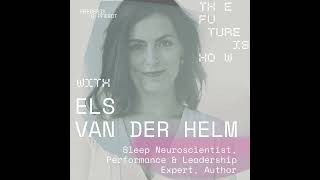
Sleep neuroscientist Dr. Els van der Helm explains why sleep debt persists even after one long night, why a 13-minute nap boosts alertness for four hours, and how REM sleep doubles your chances of solving a problem. Phone-free bedrooms, consistent routines, and bright morning light are the practical moves that work.
Chapters
The future is how. Have you asked yourself today, what's next for me? You're not alone. We've all felt that way at some point. My name is Frederik Pferdt, and for years I've helped the brightest minds at Google and Stanford and people around the world shape their futures. Now I want to help you to do the same. Because the future isn't just something that happens. It's something you can create, starting right now, from within. Instead of waiting to see what happens next, let's explore how you can make it happen. Each episode dives into one key area, like sleep, nutrition, relationships, creativity, storytelling, mindfulness, beauty, movement, or purpose, and brings you real stories and practical tools you can use to shape a better future for yourself. So, what's one step you can take today to create what's next? Let's dive in and explore how to build a better tomorrow, starting right now. All right, welcome friends, welcome to The Future Is How, our explorations on creating your better tomorrow. I'm your host, Frederik Pferdt, and today we're actually diving into a topic that has the power to really transform both of our present and our future: sleep. And sleep isn't just about rest. It's where our minds process, renew, and create the foundation for a better tomorrow. And our guest today, which I'm super excited about to introduce to you, is Els van de Helm. She's a sleep expert, neuroscientist, and adjunct professor and lecturer, and one of the top 5 sleep experts in the world. She advises corporations worldwide on sleep, performance, and well-being, and really helps leaders and teams to unlock unlock their full potential by focusing on the incredible power of sleep. So, Els, I'm really thrilled to have you on the show today. Els is not just, you know, a sleep expert today and shares that with all the leaders and people around the world. She will actually become one of the people in the next 5 years that will be revolutionizing the way the world thinks about rest and recovery. And making quality sleep a standard practice for organizations and individuals alike. She will be recognized for her work in making sleep an essential pillar of well-being, driving both professional performance and personal fulfillment. She'll inspire leaders around the globe to see sleep as their secret weapon, a tool for innovation, energy, and resilience. So again, else, I'm super thrilled to have you on the show.
Thank you so much for having me. And by the way, that was, that was wonderful to listen to. I hope that is indeed the next 5 years. Fingers crossed.
Wonderful. Great. Yeah, let's, let's talk about the next 5 years. How do you see yourself in that future? Like, what's, what's your future bio?
Yeah, I would say my, you know, my mission in my career-wise, very much what you just described. I think what I'm really hoping is going to change in the next 5 years is, you know, Arianna Huffington called it the sleep revolution in her book, but you know, that book is already 7 years old. I hope in the next 5 years, there really truly is a sleep revolution. And I'm really focusing, you know, kind of my way into this through leaders and organizations, because I feel like they have so much power actually over people's sleep. You know, some people think that sleep is separate from work, but it's actually super intertwined. And I really hope that in 5 years, you know, it's going to be harder for me to think of companies that are not doing it right than are doing it right, because Right now, it's still really a struggle, you know, to get leaders and organizations to do the right thing around this topic. And it's super frustrating because I think it's such a win-win. But my hope is that in 5 years we are truly there and that everybody knows that, you know, duh, of course sleep is super important. And this is part of my personal toolkit. This is part of my professional toolkit. So yeah, that's kind of my dream for 5 years from now.
Wonderful. Thanks for sharing that dream. It's super exciting. Yes. And so if sleep is so important, as you mentioned, why don't we do it more? And why don't we do it better?
I think there's a couple of reasons. One is that a lot of us grew up with this idea that you know, your career and productivity, all of that would really benefit if you would just put in more hours, more hours equals more output, better output, and, you know, everything is better. And this is such an old-fashioned way of thinking. It made sense, you know, back in the day with Ford, with assembly lines that, you know, kind of more hours at the assembly line led to perhaps more output. But that's not the case with most of the work that we are doing these days, particularly if you want to deliver high-quality work. So we really need to change this mindset because we now know based on so much neuroscience data out there that that's not how the brain works. The brain is not something that you switch off in the morning and then use continuously for 8 or 10 or 12 hours and then switch it off and start again the next day. No, It really needs breaks during the day. It needs sleep to recover. You know, my hope is that we can use more of this neuroscience to change people's ways of working, but we're definitely not there. So I think one aspect is that we just think more hours is better and is more output. And many leaders think that way. You know, you see this now, of course, with the 5 days back in the office, kind of this, you know, this idea of like, we need all this face time the whole day to get somewhere, to be productive. Even though we know from many studies that that can be really exhausting for the brain. The other issue is that we see from studies that when we chronically sleep-deprive people, even if we, you know, let's say take 1 or 2 hours off of their sleep every night, which is very common for the average worker, we see that objectively their performance keeps going down. So every day that we're shaving off 1 or 2 hours of sleep, their performance continues to decline. But after, you know, if you then ask these, these people after about, you know, 2 weeks, hey, how are you doing and how are you feeling? When they've been blinded to their own performance and they don't see their own performance, they will tell you that they're actually doing quite fine, that they're not very sleepy, and that they could keep going. So what we see is that we think we can rely on our subjective feeling of sleepiness to get a sense of, well, how am I doing? Should I catch up on sleep, yes or no? Whereas in reality, we are terrible at judging our own objective performance when we're tired. So what I see in a lot of my work with high performers is that they come up with this magical kind of minimum bar that they want to reach in terms of hours of sleep. And they think that, you know, if I just get 6 hours or 7 hours or whatever their number is, I'm fine. And then, you know, I have to show them the science to say, well, that's what you're thinking. But actually, we lose this self-insight into our own performance. But the fact that a lot of us can't see objectively what our performance is in our work contributes to that. If you would look at athletes who can very easily see their objective performance, you'll see that, you know, most of the athletes out there know how important sleep is for their performance.
That's so fascinating. I like that point that you made earlier around quantity and quality, right? Like, back in the days, quantity was the measure that we used, right, in terms of like how many hours we work, right, and the output we produce. And that shifted towards quality and having quality being the major indicator of, you know, the work that we want to do and also related to sleep. And you're reminding me about something that I witness in my life all the time, which is that we subjectively really have a hard time to judge if we got enough sleep, right? And that's something that I can truly see with my kids, for example, right? When my kids come back from school and they're exhausted, they don't want to take a nap, right? They don't want to lay down for like 15 minutes or half an hour. And they tell me like, I'm totally fine, I'm okay. You know, I just can keep going, right? I can, you know, do my homework now or can go play or whatever it is. And I tell them like, no, you're obviously, you're exhausted, right? Take some time to rest. And so you're making that point that subjectively, obviously they don't see themselves as being sleepy or that they need actually some sleep. And I help them to, you know, take a couple of minutes and rest. Because I have actually that routine or that ritual myself. I usually take like a 13-minute nap in the afternoon, right? Just taking a short rest, recharging myself. And I think these 13 minutes are a perfect way for me to reset and recharge again for the rest of the day. And I found this a perfect length where I don't feel like too groggy afterwards, and I feel like, you know, I have an energy recharge for whatever comes for the rest of the day. So how would you help others who don't have their parents all the time around, especially when we're adults, right? We don't have our parents telling us, hey, you need to take some rest and you might want to take some naps. Like, what can we do to really move from subjectively not judging ourselves and saying, like, we don't need rest towards getting some advice from someone? It could be a technology, it could be another person, it could be something to really get into that mode of like, oh, I need some rest now?
Well, and by the way, 13 minutes is like a really good duration indeed for this power nap, as it's called, because you won't get into deep sleep, which means that indeed you're not gonna get this grogginess upon kind of waking up from this short nap. And studies have shown that it can boost attention and alertness for up to 4 hours after the short nap. So great return on investment, right, for that, for those 13 minutes. So how do we help people? Well, to kind of start with, I always need to start with this awareness to make people aware that we're not machines. We don't work like computers, how our brain works, why it needs sleep so badly. The fact, for instance, that when we're awake and we use up energy, our brain cells, they use up the energy and they produce these toxic byproducts that need to be cleaned from our brain. And this is what happens overnight during sleep. So we are, we are not this computer and we need to take care of our brain and our body that way. And that's so critical because what I see, particularly in ambitious high performers, is that they're so driven and it's so hard to let go of this, you know, more is better mindset that it really needs to be flipped on its head to to say, this is fundamental to your performance. This is a risk if you're not getting enough sleep. You are basically declining in your performance, but you're not noticing, but you're also declining in your emotional intelligence and your social intelligence. So to really kind of paint this picture and let them see what are all the different domains that are deteriorating when I don't get good sleep, so that it's much easier for them to see some of the signs when they are tired. A bit like you pointing out with your kids, hey, I think you're tired and I can see it, you know, in this way or in this way. It really helps for people to kind of know what are all the different domains that can be impacted and what is really impacted for me personally, and when does it get impacted. You know, do I need 8 hours of sleep or do I need 9 hours or do I need 7 hours of sleep? So that people can kind of figure out what is my ideal sleep need and what do I do when I don't get enough, which of course is reality for a lot of people. So how can I best then recover? How can I get through a day when I am tired and maybe I don't have time for the nap? To really help them with these science-based strategies to go from you know, blissfully unaware to, okay, I'm aware, but I now also have a toolkit where I don't need to live in this perfect world where I get, you know, 8 or 9 or 10 hours every night, but I can deal with a really stressful upcoming week with maybe some sleep deprivation, but I'll have ways to recover faster. And this is very similar to athletes, right? Exercise is basically a stressor. So in that sense, it's not that dissimilar from sleep deprivation. The key for athletes also is how can they recover quicker? How can they bounce back to their baseline level more quickly so that they can be at this sustainable high performance? And that's actually very similar to, you know, knowledge workers.
Now you made me super curious. Is there actually such a thing as too much sleep?
Great question. I actually, I just got that question earlier today in a webinar that I was holding. And I'm always really happy when this question comes up because I think a lot of people think that you can sleep too much. I will often have people in my sessions who say, I don't know, like, I need 7 hours of sleep, but if I get 8 or 9, I feel so tired. And then making that connection of, I sleep too much and I feel worse. That's actually not how it works. What often happens in these situations is that people are, you know, slightly chronically sleep deprived, but you kind of get through with a lot of stress. So you got a lot of adrenaline that gives you energy and cortisol. So you don't quite notice because you still get all this energy. Then you've You've reached your deadline, you're done with the project, you relax. Now you get some extra sleep. Maybe now you sleep 9 hours. The next day you still feel really tired. So you make this connection between sleeping more and feeling really tired and, you know, having less energy. But what's going on there is that you've built up the sleep debt over time. Now you've removed the stress, so you finally feel sleepy, you get some extra sleep, but we don't recover in one night. Actually, studies show that if you have a work week of 5 shorter workdays, you need more than 2 nights on the weekend to recover and get back to baseline. And I think a lot of people think that, you know, one longer night should be enough and I should be back to baseline, but it's really this combination of the sleep debt, with the stress than removing the stress and your body going into this recovery mode. When I worked in management consulting years ago, I was also working really long days. And when I had this sleep debt on the weekend, I really felt like a zombie. You know, everything was kind of slow. You had this brain fog. But I knew that this is a signal from my body that I need even more recovery time. This doesn't mean, you know, that I need to have 3 coffees now and go out and party or find the next stressor at work. No, I need to recover first and get back to baseline.
So it seems to me like sleep is really about finding the right balance that works for each individual, right? We talked a little bit about, you know, children not seeing that they actually need more sleep and maybe adults having difficulties actually to fall asleep, right? So another question I have is about how sleep changes with age. So many people seem to have trouble with sleep as they get older. Right. Can you talk about why that happens and what can people do to ensure they continue getting restorative sleep even as their needs change over time?
Yes. So you're definitely right. We see that aging is strongly correlated with worse sleep quality. If you, for instance, look at the number of times that we wake up at night, we see this sharp increase as we age. So it kind of starts to jump when we hit 40 and then continues to rise. Or if we look at the percentage of really deep sleep that we have, the stage of sleep in which it's really hard to wake up out of, it's actually the stage of sleep in which we think that most of this brain cleaning is taking place. We see it decline as we age. And, you know, we all know these little kids that you could just pick up and nothing wakes them up. But as we age, we're starting to see that our sleep becomes much more vulnerable. And particularly when we go from one sleep cycle to the next. In a way, this isn't necessarily abnormal or pathological. In between sleep cycles, we always have a bit of an arousal, and evolutionary, that's probably so that we can sense any dangers from one sleep cycle to the next and wake up if need be. But as we age, this shift between cycles can sometimes really lead to more awakenings or longer awakenings. And we kind of define it as poor sleep quality when it either takes us more than 30 minutes to fall asleep, or if we wake up at night and it takes us more than 5 minutes to fall back asleep if we're under 65, or more than 10 minutes when we're above 65. So in those criteria, you can already see this impact of age. And by the way, don't look at the clock at night time this, because then you'll definitely take longer to fall back asleep. But I always say, don't worry if it takes you up to 30 minutes to fall asleep, or if you wake up at night, as long as you can fall back asleep pretty quickly. So some other kind of underlying causes why we see aging being correlated with poor sleep quality is other things that are related to aging. So there's more chronic diseases. That means that we can also have more pain, and pain can impact our ability to sleep. It can also mean that we take more medication, and there's lots of medication that can have a negative impact on our sleep quality. What we can also see with aging, not necessarily, not a correlation, in becoming less active during the day, being outside less. And with that, we're basically reducing this contrast between day and night. And our body wants a really big contrast between day and night. So during the day, lots of bright light activity, social contacts, eating, but then at night, darkness, rest, and obviously sleeping. But for instance, in a lot of elderly homes, if people are inside all day and don't get that bright light, we see that their circadian rhythm becomes less pronounced. And this is probably partially due to the environment and partially due to brain areas responsible for these rhythms, you know, slowly deteriorating over time. That said, though, even though we see all these correlations between aging and worse sleep quality, we see many individuals who can reach older age and still have good sleep quality. And what's really key there is that they remain healthy. So yes, your sleep becomes more vulnerable, but it basically means that we gotta work harder on our healthy habits, healthy sleep habits, where when we were young, you know, we had such a higher sleep pressure that we were able to still get that sleep. But when we're older, we're really noticing that. One myth though is that when we're older, you know, we somehow are more impacted because of this poor sleep. What we actually see in studies is that if you take away sleep from young people, they're much more impacted the next day than when you take away sleep from older people. So there seems to be something again about this misconception that we think we got away with everything when we were young, when that's a pretty false notion. And actually, as we age, we seem to be more resilient to some of the sleep deprivation that, you know, we might face as we get older.
That really highlights how sleep is a journey that evolves over time, right? And it's up to us to adapt and nurture it. So let's also touch on something that might be relevant, I think, to a lot of our listeners. So what's your advice for people dealing with stress or anxiety that keeps them awake at night, right? How can they manage these challenges to get better sleep and really shape a better future for themselves, right? Because as you said, there's a correlation between the amount of sleep you get and the quality of sleep and the next day. So, so literally your future. So how can we deal with that waking up and that anxiety that we maybe face during our night's sleep?
Yes. So I'm really happy that you raised this. My PhD was focused on sleep and emotional processing. And we actually called sleep overnight therapy in one of our papers because that is actually exactly what sleep is. So we experience something emotional during the day. If we then get good sleep, we see that particularly during dream sleep, we remember better what happened emotionally. But importantly, we strip away the emotional tone of the memory so that the next day we remember, ooh, that's where I saw a snake, and I've got to go around that path., but we don't feel all this autonomic arousal again the next time we think about it or the next time we see a flashback. And a famous example where we see this kind of go wrong is in post-traumatic stress disorder, where people actually tend to have a poor memory of the trauma, but they relive the emotional feeling that was associated with the trauma. And there often we see sleep problems. So In the ideal situation, we would manage our stress during the day so that we go to sleep with lower stress levels. Then we get higher quality sleep. And this higher quality sleep sets us up for a better day the next day in terms of feeling less anxious, less depressed, and kind of this overnight therapy has done its job. What is, of course, the challenge here is that when we have all of this stress during a day and we're not coping with this stress and we go to bed with high stress levels, and anyone listening can probably relate to this, we either have trouble falling asleep or we have very poor quality sleep in that we wake up multiple times, or maybe we don't wake up, but the next morning we just, it doesn't feel like refreshed sleep. And then the next day, we know from studies you're even more vulnerable to the next stressor. You know, you're kind of, you know, more anxious, more depressed, and you can easily get into this negative spiral, which we really want to turn around. So the good news is that you've got two ways to get at this problem. You've got one way, which is reducing the stress, or the other way is to improve sleep. Both of them can help you get out of the spiral. And of course, even better if you can work on both of them at the same time. And what I often see with my clients is that if you look at their agenda, their day is just go, go, go, go, go, right? Many of them are not taking, for instance, this power nap as you are doing in the middle of the day. In fact, they're hardly taking any breaks that are longer than 15 minutes. It's as if, again, more is better, even though it's not. And then what we really work on is taking these micro breaks during the day, even if it's just taking 3 deep breaths in between 2 calls that you're having or in between meetings that you're having. So that instead of this stress curve just going up and up and up all day, you're taking proactive measures to pull it down already during the day. Because I think a big myth is that people think that their sleep is all about what they do in the last hour, you know, like the that amazing relaxation exercise that they do in that last hour is going to suddenly magically give them great sleep. But the issue is that when we have all these stress hormones, they are very quick to show up and they're really slow to withdraw. And so we need to work on that hours before we go to bed.
And I think, yeah, as you said, many, many can really relate to that, right? As we have these days where we just go, go, go, go, go, right? And our agendas are packed and we don't take those breaks. So I think that's a great recommendation. The second thing you're saying is that it's not just about the last 30 minutes, right? And it's not just about the last hour in the day. It's really kind of like that you are taking those breaks and be mindful throughout the day around how you can build in these minutes or these times of rest and recovery as well.
Yeah. And maybe to add to that, because a good thing to know is that if you wake up at night or if you're awake late in the evening, you can't trust yourself. So the, one of the theories around this was actually the mind after midnight. And it's such a great term for this. So what we see is that it's not just about being awake for a really long time. It's also about the time of day. So it seems as if our biological clock has, has really programmed us to be asleep at night. But if we are awake at night, we see that we're very disinhibited. We see more crime, we see more drug use. Unfortunately, we even see more suicides at night. And we're really prone to catastrophizing at night. So when you lie awake at night and you're worried about something, know that You cannot trust your mind at this time of day. Your prefrontal cortex, the part that usually makes you really smart, that can reframe things, that can, you know, think about it an alternative way, that can think of positive things, can think of things that you're grateful for, is the part of your brain that's really impacted both by sleep deprivation, but also it's harder to reboot in the middle of the night. So this isn't the time to problem solve. This isn't the time to trust your feelings on anything. So that's, I think, good to keep in mind that everybody has these, you know, terrifying thoughts in the middle of the night. And you'll notice that when you, you know, either wake up the next day or even if you stay awake until the next morning and the sun comes up, everything is suddenly much lighter and you can feel much more positive. So don't trust your mind at night.
That's such a great point. And I think for all the travelers out there, right, who, you know, work and live in different time zones from, from time to time, right. I think jet lag is one of the most interesting things when it comes to sleep, right? Because you really have a hard time to fall asleep because your body clock is just not adjusted. And at the same time, what you're saying is that you can't trust your mind as well, right? Because you're actually in the middle of the night according to your body. And you might not see all the things in a positive light, right? Or you might not, you know, problem solve in the, in the best way. I also found whenever I experience jet lag is that there are just different ideas that are showing up right in my mind. There's just, for me, it's sometimes some of the most creative time when I'm, you know, half asleep, half awake in the middle of the night. And I'm, I would consider that daydreaming, right? So as we, you know, think about that, and speaking of the mind, I've always been fascinated by the role of dreams, right? And I've heard people say that their dreams help them solve problems and come up with these creative ideas. Like when, when I'm again, like in a different time zones, right? I'm daydreaming and I have very different ideas. And some of those are, those are really fascinating, these ideas that might not, you know, come up in, in my regular time zone or day to day. So how can we all tap into that power of dreams?
Can you talk a little bit about that? Yes. So, you know, to kind of explain it in your example, I would say probably two things are going on when you're traveling. I think one is that you're in a new environment, you have all these new impressions, new associations. So, you know, different memories get activated that just don't get activated when you stay, you know, in the same place every single day. And I really recognize what you're saying about traveling, but I think part of that, you don't need to travel time zones to experience. I think it's also very much about this new environment. The other element that you're describing about jet lag and the kind of like lying, you know, awake and kind of dozing and dreaming. Is that during jet lag, you're highly likely to sleep at a time of day that is not pushing deep sleep, but that is really pushing dream sleep, so rapid eye movement sleep. And dream sleep is really the stage of sleep in which we think, yeah, indeed, our most creative thinking takes place. And that's because during dream sleep, we see that the memory centers are active, our emotional centers are active, our visual centers are active. But the part of our brain that usually kind of checks, you know, like, can— does this really make sense? Can this really happen? Is switched off. So we have these really bizarre dreams, almost psychotic, because that part of our brain just kind of lets us— lets us— our thoughts run wild and associate things together that don't normally go together at all. And we think that this is really part of why dream sleep can make us more creative, that it kind of, it's searching through our memories, it's searching through the experience that we just had that day. It's trying to link different things together. And then you wake up and suddenly you have this new insight. And there was a really, really interesting study where they gave participants, which sounds like this horrible task, but they had this number sequence that they had to complete. So they had to figure out the rule, you know, to think of like the next 3 numbers. And they just got lines and lines and lines of this super boring task developed by Germans. So you'll, you'll laugh about this. And then they had participants, you know, do this boring task in the morning and then come back and do this boring task again in the evening. But what they hadn't told any of these participants was that there was a hidden rule that you could figure out a much quicker way to complete these sequences if you discovered this hidden rule. And after a night— after a day of wakefulness, about 25% of people discovered this hidden rule. But if the participants had slept in between they were more than twice as likely to discover this hidden rule. It was 55% who discovered this hidden rule. So that already goes to show that we literally sleep on problems. Sometimes we know we sleep on a problem, right? We have a problem to solve. We don't know the solution. We sleep and we have the solution. But in this case, people didn't even know that there was some kind of shortcut. They didn't know there was an insight to be gained. Yet after sleep, they were much more likely to gain that new insight.
Wow. Love that, that we sleep on our problems. Yeah, that's just such a good metaphor, right? We put our problems, you know, maybe under our pillow, right? And we sleep on those. And yeah, we might think about those, you know, throughout the day. And sometimes, you know, a creative idea might appear. You also touched a little bit about the last hour and the first hour. So the last hour in the day and the first hour in the morning. And I think that is such a fascinating time because I think we all get it wrong from time to time, me included. Sometimes you literally fall asleep with your phone, you're doing that doom scrolling or you read your last email and then you're trying to fall asleep or waking up the first thing that you do, you allow hundreds and hundreds of ideas to flood your mind, right? While reading emails, the news, social media, and so forth. So what are some practices that you can share, even like from your own life, that you do in the last hour before falling asleep and that first hour that's so important in the morning? And I see like there's a lot of people wearing orange-tinted glasses in the last hour of the evening, or like people stepping outside the first thing in the morning, like to get that sunlight or to get like fresh air as well. So what are some of the practices that you would recommend for that last hour in the day and the first hour in the morning?
Yeah, great question. So I kind of make a distinction between the the start of my workday and the end of my workday, and the start of my actual day and the end of my actual day. So for instance, the start of my workday, I try to take just 3 minutes to just focus on my breathing, kind of recenter, and kind of let this idea kind of flow to me of, you know, what do I want to do today? What do I want to get out of today? And just kind of see what comes up. And do the same thing at the end of my work. So just 3 minutes. It doesn't, you know, I don't manage to do this every single day, but when I do, I can really notice the difference. And what this does is also bookend my workday and kind of create this boundary between my work and my personal life. And this is so important. And indeed, as you said, it's really, really hard with work on our smartphones. And it's so tempting to go back into that, but the more you can create this boundary between between work and personal life, the better. Then in terms of what you do in the evening, so what I always do, first of all, I don't have my phone in the bedroom. I charge it in the living room, which is kind of the, you know, sure bet to not drag it into your bedroom because you don't want it to be dead the next day. So I always leave it in the living room so that it can't be the last thing that I look at. And then I have a pretty set ritual, which actually started during COVID where I started journaling in the evening. And I did that when I was like, you know, a teenage girl. And then I just kind of stopped. But then when COVID hit, I was super pregnant with our second kid and was really stressed about everything. And I thought, okay, I, you know, I need to write about this because I need to release some of this stress. And what I really use my journal for, and I call it almost like a worry dump, I just write down things that happened that day that might otherwise pop back in my mind as soon as I close my eyes and I want to go to sleep. So something annoying someone said, or how I responded to the kids when they were upset and maybe I didn't feel good about it, or anything else really, anything that kind of happened that day that, you know, might worry you, just, you'll see when you write about it, physically write about it, don't type, physically write about it. It's like a therapy session with yourself where you can reframe. You've written down your worry and as soon as you see it, you know, it doesn't really make sense. And then I try to end with kind of thinking about something that I'm grateful for that happened that day so that I go from kind of this, you know, negative worry stuff over to Okay, but even if I'm worried about that, what are all the good things? What am I grateful for? And we know from scientific studies that focusing on what you're grateful for actually shortens the time that it takes to fall asleep. And right after that, I, I read a book, not very long. I really use it to help me get sleepy and fall asleep. If I want to read more, I'll do it earlier in the evening. So that's really kind of my wind-down routine in the evening. And It's not as if everybody should do the same thing, but the more consistent you are in what you do before you go to sleep, the more it helps you to really fall asleep. Because it's like a brain trigger where your brain knows, oh, diary time, oh, reading time, now come sleep. In the morning, I have much less of a strict protocol, which is probably mostly due to my kids. So I almost always wake up naturally. And this is really something I would encourage everybody—try to find what your window is where you go to bed early enough where you can wake up naturally. Particularly evening types will struggle with this. But then what's key for evening types is indeed to get this bright light as soon as possible in the morning because that will anchor their rhythm earlier and help them fall asleep earlier in the evening as well. And for evening types, I would say the the more bright light you can get during the day, the better. And it can be very simple. So here, for instance, I mean, if you can't— great if you can go outside, but if not, you can have, you know, a little artificial bright light just standing on your desk. So really giving the signal to your biological clock. And then what you said about, you know, to kind of go back to dreams, what's really important there actually is if you want to gain more of these ideas from sleep, you can do a couple of things to kind of help them pop up. The first thing is when you wake up in the morning, to just keep your eyes closed and try to remember your dreams. To see, you know, what did you dream about? Was there anything there in your dreams? And then have pen and paper next to your bed so you can write it down because you'll forget about it very quickly. It's like this ephemeral thing that you need to grab before it disappears. What also often helps with people is, for instance, If they are standing in the shower, these ideas will pop up, or if they're going for a walk. So again, we see it's not about focus time. It's actually about doing something else and giving your brain, you know, the time and space to throw these ideas back at you.
Amazing. I've learned so many new things and confirmed some of these things that I'm always like trying to do as well, right? To have that last hour in the day being more intentional and the first hour as well, like just these small rituals that really can make a difference, right? And I also liked your honesty that, you know, sometimes we just don't have the time or the energy or whatever it is to do those. And I think that's okay. I think we're all humans, but just keep trying and keep experimenting around these practices because they're all accessible to us. They're all available. They don't cost anything and they have so many benefits that it's a no-brainer to actually go that route.
And to maybe add to that and lower the bar, I love watching TV. You know, I watch TV in the evening with my husband as like a way to unwind and relax. So it's not as if all of this needs to be the full hour before you go to bed, right? You can definitely relax watching TV. Your heart rate will slow down. You know, you can relax and think about other things. The, The key thing is, though, is to notice when you start to get sleepy. That should be the sign that you're going to start your bedtime ritual and not miss kind of, you know, your sleepiness window. But if you like watching TV in the evening, please be my guest. Do it.
Great. I like that social aspect as well, right? Like maybe we have even a partner or a family member or a friend that reminds us about starting these sleep rituals or sleep practices in the evening. Maybe we have a friend texting us, "Hey, it's 9:30. Maybe you should start your sleep routines now and do some journaling." Or, you can even schedule a time to do it together. I think that's also something that is available and accessible to all of us where even in the mornings, I have so many people that I know that actually go for a walk, just a 10-minute walk together, and they schedule the time to really get that early light exposure right in the morning, right? So, they have these sunrise rituals where they say, "Hey, let's go for a 10-minute just walk around the block," or whatever it is. And so, we can also make this a social experience. Yeah.
And, that's perfect, right? Because then you will go. Yeah, exactly. When you have the social connection, you will actually do it. And, it's funny that you mentioned that because I was just at a sleep con conference last week where I spoke with Dr. Wendy Troxel, who's written a beautiful book on sleep and relationships. And we were talking about the fact that for thousands and thousands of years, humans would always go to sleep in this social setting, right? You would either with your partner or your kids or other people around who you would talk to, reflect on the day, It would be this very social thing, this ritual before we would go to sleep and probably really helped in lowering anxiety and worries. And then, you know, ever since we have smartphones, suddenly we've replaced this very social ritual with our phones in our, in our faces. The last thing we look at and the first thing we look at in the morning. So definitely for anyone, you know, with a bed partner at home, try to talk about this together, like, hey, how are we closing off our day? Or how are we starting our day? And do we want to make some changes there? And let's support each other and remind each other in how we would rather do this, because I'm sure you'll see that there's more connection, there's lower stress levels, and people have a much easier time to sleep.
I love that. Wonderful. You touched a little bit on that gratitude exercise that we all can do, right? Just reminding ourselves of the 2 or 3 things that we are grateful for. We can use a journal to write those things down. We can just think about those, or we can talk about those, right, with our partner and say like, hey, you know, I have these 2 or 3 things that I'm grateful for, right? That's a 1-minute exercise that you can do in the evening that really has so many benefits. And my daughter is a good example of that. She likes to share these 3 things. She always includes one thing she didn't like about her day, which I also like because that also balances that out and gives you some insights what really worked for her during the day or what she appreciated, but also something that she didn't like. So I want to do a quick gratitude practice actually, or a mind state practice that Maybe everybody can join in wherever they are, if they're now in the car or if they are on a plane or are on a walk or just at home. I think that could be a practice that you might try tonight when you want to fall asleep. So I invite everybody to join now just for a minute of that exercise. Next, let's take a moment to pause and reconnect. This is your Mindstate moment, a chance to reset and come back to yourself, wherever you are right now. These moments of presence are powerful. They remind us that the future starts from within. By shifting how we show up in this very moment. So again, you might be listening in the car or on a walk or at home. This quick mindful meditation is something you can follow anywhere, and it's really designed to help you wind down at the end of your day. So wherever you are, just take a deep breath in Slowly breathe out, letting your body relax just a little more. And now I'd like you to think of something you're grateful for today. Maybe it's a kind word from a friend, a moment that that made you smile, or even just the beauty of the world around you. Hold on to that thought and notice how it makes you feel. With each breath, just let that feeling of gratitude grow like a warm, comforting light inside of you. This feeling not only shifts your energy right now but will also help you relax when it's time to sleep, allowing your mind to let go of stress and find rest. Next, think of one thing you did today that you're proud of. It could be something Something small, like finishing a task, showing kindness, or simply taking time for yourself. And let yourself feel thankful for that effort. So gratitude is a powerful way to prepare for restful sleep, helping us put the day behind us and open up space for tomorrow. So let's take one more deep breath in, and as you exhale, let this gratitude guide you forward, preparing you for a good night of deep restorative sleep when the time comes. So thanks for joining me in this moment of gratitude. And remember, sleep is the bridge between today and the future you want to create. When we rest well, we set ourselves up to shape tomorrow with more energy and more optimism as well. So, Elsa, is there anything that you want to share with our listeners that really helped you in your life to have that better relationship with sleep? Is there one thing or one moment in the past that you felt like, this really helped me to make sleep the one most important thing that I'm focusing on?
Oh, that's a tough one because I became the sleep nerd when I was just 16 years old. So I've been focused on this for so long, and people often ask me if I'm, you know, a really good sleeper. And I think I'm an average sleeper, but I think I prioritize it above average, thereby, you know, leading me to have better than average sleep, perhaps. But, you know, grateful exercise like we just did has definitely been game-changing. So, As I said, you know, during the COVID lockdowns, I was, I was highly pregnant and really stressed. I had a startup, so we had a lot of, you know, B2B clients and everything just kind of felt completely silent while I was about to have a second baby. Our other child was only a year and a half old, so it's almost like we had two babies. We couldn't go to daycare because daycare was closed. So my stress levels were so high and I knew how important sleep is, particularly for pregnant women, also for the health of their baby. And at first I really thought that when we, you know, when my husband and I started doing this gratefulness exercise, I thought, I'm sure there's going to be nothing I can think of because we're inside all day locked up. What, you know, what can I think of that was great today? And It was so mind-blowing that, you know, we could think easily of 3 things every single day. It wasn't actually hard, not even, you know, during that really, really stressful time. And the second thing that it really taught me is once you always reflect on what makes your days great, it's much easier to create those moments. In your days, right? When you, when you kind of spot the things more easily that you're going to reflect on and say, that made it really a good day, then the next day you're going to say, yeah, I'm going to take 5 or 10 minutes to do X, Y, or Z because I know that that's going to end up in my top 3 tonight. So I think that was really a time in my life when I just struggled so much with stress and sleep and I knew how important sleep was. And I think it's always about, you know, taking actions with these things. And they can be so small. This was such a small exercise. And that's really with anything with sleep. It doesn't have to be that you're gonna start your day with an hour walk outside, right? It can be a 5-minute walk outside and you can notice that it makes a real difference. So make it small, whatever you wanna start doing. And you'll start to see the benefits of it. And yeah, that's really how it worked out for me back then.
Wonderful. Yes, make it small, but start, right? Just make that small changes in your sleep routine. Last hour of the day, first hour in the morning, right? These small things can really make a big change in your life as well. So, Els, thank you so much for being here today and sharing your wisdom. We've learned that sleep is more than rest. It's an essential part of creating the future we want. By making small changes in our routines, by valuing rest, we give ourselves the gift of a future that's more energized, creative, and more resilient. So to our listeners, think about what small habit you can introduce tonight to help you sleep better. It could be practicing gratitude like Els just shared, or even taking a short nap like my 13-minute routine that I do every day, or just giving yourself permission to rest. Remember, the future is something we shape. It starts with how we care for ourselves today. Els, where can our listeners find more of your work or connect with you if they want to learn more about all the amazing work that you're doing?
Yes, thank you for asking. So I post a lot on LinkedIn, daily tips, the latest science. So there you can just find me, Dr. Els van der Helm on LinkedIn and my own website, elsvanderhelm.com. You can also sign up for my monthly newsletter. So in the monthly newsletter, I always kind of zoom in on a specific topic related to sleep and link it to the sleep tips of that month. Right now I'm actually publishing a miniseries on sleep and resilience. So it's about this overnight therapy. It's about the mind after midnight. It's about sleep and grit. So how can sleep help us to kind of get back up after we fall down? Because I think this is, you know, the impact of sleep on our emotional state is really where most people will kind of see the biggest improvement the quickest. And I think it's something that we all need right now.
Thank you so much, Els, and thank you to all listening. Thank you for joining us on The Future Is How. If you found today's episode helpful, share it with someone who could use a little bit more rest and relaxation. Together we can create a better tomorrow. Until next time, remember, the future isn't something that happens to us. It's something we create, starting with how we rest, Recharge and renew today. Thanks so much. That's a wrap for today's episode of The Future Is How. Remember, the future isn't something we wait for. It's something we create with every choice, every breath, and every step we take. If this episode sparked something in you, share it with someone who's ready to shape what's next. And don't forget to subscribe and leave a review. Your next chapter begins now. So what will you create today? I'll see you in your future.
More from Dr

You'll do to your child what was done to you, unless you notice it | Dr. Shefali

How to Stop Passing Your Past On to Your Kids | Conscious Parenting Pioneer Dr. Shefali

How to Stop Passing Your Past On to Your Kids | Conscious Parenting Pioneer Dr. Shefali

The Future Is HOW Season 4 Trailer | How Do You Prepare for a Future You Can't See?




Ruchika Sikri @FrederikGPferdt - The other person may be craving connection just as much



From Doing to Being | Ruchika Sikri on Mindfulness, Connection & Tech That's Good for Humans