Igniting Belief - The Power of Evangelism | Guy Kawasaki
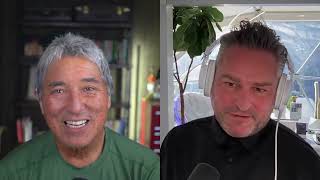
In this hour‑long interview, host Dr. Frederik G. Pferdt talks with Guy Kawasaki—Apple’s legendary chief evangelist, Canva’s global voice, and author of Wiser Guy—about the essence of evangelism, the power of belief, and how to empower others. The conversation opens with a personal story of how Kawasaki’s handwritten note “Kick butt” sparked Frederik’s confidence, illustrating how small gestures can ignite belief. Kawasaki defines evangelism as bringing the "good news" of technology and creativity, first at Apple (Macintosh) and now at Canva (democratizing design). They explore the three‑stage model of remarkable people—Growth, Grit, Grace—derived from Kawasaki’s Think Remarkable and discuss examples from Jane Goodall, Chris Webster, and Steve Jobs. The dialogue shifts to purpose, career paths, and the myth of planning, with Kawasaki emphasizing a passion‑driven, experimental approach rather than a fixed roadmap. A guided “Mindstate Moment” invites listeners to visualize a personal idea as a flame and practice sharing it, embodying evangelism as belief‑ignition rather than persuasion. A rapid‑fire segment yields practical insights: the best pitch (MacPaint/MacWrite), the habit of asking “what’s missing,” perspectives on crypto (overrated) and AI (underrated), and the importance of asking critical questions. Kawasaki shares how to empower others—buying products, offering advice, introductions—highlighting that a good connection can outweigh money. The conversation ends with reflections on optimism about AI, a “shit‑sandwich” experiment to discover work you love, and a closing reminder that evangelism is about igniting belief and creating the future.
Chapters
All right. Hello, friends. What if the most powerful thing you could ever give someone wasn't money or technology or even advice, but belief? Belief that something better is possible. Belief in themselves. Belief in a future worth creating. Today I'm joined by someone who has spent his life helping people believe. Apple's legendary chief evangelist, Canvas global voice, and bestselling author of Wiser Guy, and host of Remarkable People, one of the most insightful podcasts on the planet. Guy Kawasaki, welcome to The Future Is How.
Wow. You sure you got the right person, man? That is a hell of an introduction, man.
Absolutely. I'm pretty sure, yes. I have to share that you joined 2 minutes early. So I, I told Guy like, this is the first person that joins early and, uh, this is just, uh, remarkable. And, uh, your answer was also quite interesting because said like, you, I'm, I'm probably the most, um, uh, unique and, uh, uh, and probably different person on a podcast as well. So I'm looking forward to our conversation. Thank you.
You know, I, I obviously have my own podcast and I gotta tell you, We sign on about 15 minutes before to test all the sound and all that stuff. And when the guest shows up early, it really throws us off because we're still testing and we're doing this stuff and a guest shows up and the guest is ready to go and we're not ready yet. We're still trying to reboot our Macintosh because we decided to reboot our Macintosh 5 minutes ago and it's a 15-minute upgrade. All that kind of stuff happens.
Absolutely. Yeah. So as we're both in the Santa Cruz area, right? We both live here in this beautiful place. I have to ask you, have you been on the water this morning?
Not this morning, but I surfed yesterday afternoon. I was gonna go today right after this podcast, but somehow I hurt my neck and I just, I am not moving too well today, but It's perfect for podcasting because now I cannot shake my head, right? So, so now you don't have to worry about me going in and out of focus because, man, I am stiff. All right.
Yeah, let's not shake our heads too much, but like, let's shake up our thoughts, probably, and our thinking a little bit. So, Guy, before we dive in, I need to share something with you. I wanted to just share a big heartfelt thank you. And I mean that in, um, in, in many ways because you mentioned in your, one of your books that we should take every moment to thank the people that inspired us or even believed in us. And so you probably don't know that you believed in me, but, um, I share a quick story that really, I think, shows that this is something very important. And you really help people to believe in themselves and believe in the better, right? So the very first time I arrived in Silicon Valley, I wasn't at Google yet, right? I was a young researcher at Stanford, full of curiosity, but really short on cash. So all I could afford was a secondhand bike, which I rode across Palo Alto and Mountain View and and a small room I rented from an elderly lady who lived nearby, right? And one day I scrapped together just enough money for a bus ticket to go to the Apple Developer Conference. And I couldn't afford the ticket, so I printed out like a fake press pass, right? These IDs that you can get. And I had a Nikon camera, which looked quite impressive, right? And so they let me in. And that bus ride really changed everything for me because in that hall with thousands of others, I came across you and your work. And there was this electricity in the room, the sense of that the future was being created right in front of us, right? And at the end of the event, I lined up like, like a fanboy to get one of your books, uh, which Apple was giving away for free, I think, at that time. And when you signed it for me, you didn't just put your name, you wrote something special in it which stuck with me till now. You wrote— then I can show that 'Kick butt, Frederik.' And at that time, I didn't know what that means. Like, what does he mean? Like, kick butt, right? This German, like, arriving here in Silicon Valley, I was like confused and said, 'What does he mean?' But now I realize more and more what you actually meant, right? And that moment really stuck with me. It was more than ink on a page. It was a spark of permission. Permission to believe that I could one day play a role in shaping the future too, right? Years later, I came back to the Valley, this time after 14 interviews and permission from Larry Page, actually, with Google. And I still couldn't afford much, but my first purchase wasn't a Tesla, right? It was a beat-up used car. But I carried your words with me. And I kept watching you, Guy, how you live this role of evangelist, not as a job description, but as a way of being, right? And then in one of my first keynotes at the Redwood Theater, there you were again backstage, and you just had announced that you were the chief evangelist at Canva, and you gave out these free vouchers, I guess, right, with a 20% discount or something like that. And I remember thinking, what are the chances? Years before, I had snuck into an Apple keynote with nothing but a borrowed camera and wide eyes, right? And now I was stepping onto a stage myself, crossing paths once again with the world's most famous evangelist. Well, so for me, Sitting here with you today feels like a full circle moment. So thanks for doing that. So one of the questions I have for you, and I want to start this conversation with, is for you, evangelism wasn't just a title, right? It was just an ethos, a way of showing up in the world. So what does evangelism mean back to you when the early days at Apple happened, and what does it mean now?
All right. Well, first of all, let's correct something that you said, which is that I'm the most famous evangelist. There was a guy named Jesus before me. So, you know, some people have heard of him too. And between Jesus and the group of evangelists at Apple, there's a 2,000-year gap. But, you know, there were evangelists before us. And evangelism comes from a Greek word that means bringing the good news. And so, what we did at Apple is we brought the good news of Macintosh, that it would make people more creative and more productive. And if you are a software developer in particular, it would enable you to create the software you always dreamed about, but you just, you didn't have the richness in the ROMs, you didn't have the development tools, you didn't have the bitmap display, you know, you didn't have all the QuickDraw routines. So we empowered developers to create the software they always wanted to. So that's what an evangelist does. You know, you bring the good I brought the good news of productivity and creativity with Macintosh, and now I'm bringing the good news of being a better communicator with Canva. And, you know, we're democratizing design.
So what's probably one of the most important things that we all should evangelize in these days where maybe the good news are not that visible anymore, right?
Yeah, no kidding.
Harder to find, at least, right?
Yeah, I mean, we are in a time, Frederik, that I— if 20 years ago you would have said, you know, someday Silicon Valley is going to be, you know, it seems like the mission of the most successful people in Silicon Valley is to ensure that crypto is successful and that there is a long-term capital gains rate that is as low as possible. And that's not what the Valley used to be. The Valley used to be about making life better, doing things for society, increasing people's creativity and productivity, not increasing how much your net worth is.
Hmm. So you interviewed, I think, about 250 people on your Remarkable People podcast, from Jane Goodall to Angela Duckworth. And what are some of these conversations about, right? Like if people don't want to listen to like 250 conversations, which I highly recommend you should do, right? Because every conversation has something unique. What are some, some of these, uh, what, what makes a person first remarkable, right? And what are some of the lessons that you've learned from these people?
Well, actually, actually I codified this because my co-author and producer Madison Eisemer and I, we wrote a book called Think Remarkable. And it basically reflects the wisdom that we learned from these 250 people. So, I'm not trying to get you to buy a book. I'm just telling you if you really want a well-done analysis of remarkable people, get the book Think Remarkable. But the gist of the book is that there are 3 phases in remarkable people's lives. There's a growth phase where you realize that you can try anything, you can fail, that it's okay to fail. And you keep trying things, adding new skills to your repertoire. The second phase is the grit phase, because when you try new things, you will fail most of the time. So, you need to have grit to keep going. And the final stage is the grace stage. And this is when you give back to the world. So, I think, you know, you can kind of divide The stages of remarkableness into growth, grit, and grace.
In which stage would you say you're in there right now?
I sure as hell hope grace. Okay.
But is it possible to be in all three stages still, right?
Yeah. Yeah. You, that's a good point. You can be in all three stages, but you know, another way of looking at life, because I believe tricolons can explain everything in the world. Is that first you learn, then you earn, then you return. And I'm in the return phase of life.
What's the most important thing you like to return?
I, well, another way of asking this question is, you know, what do you want your eulogy to be? And I think my eulogy, I hope my eulogy is that Guy empowered me. Guy empowered me with his podcast, his writing, his speaking, his investment, his advising. But Guy was all about empowering people, not making crypto successful or decreasing long-term capital gains.
Yes. And there are so many ways we can empower people, right? You empowered me by just writing literally like two words in a book, right? Kick butt. Right. What are some ways you, and you shared that right now, like with investments, with advice, you know, with language, right, with your books to empower people. But how can like just other people, like our listeners, empower their friends, their families, their communities, people they love, right? Like what are some ways they can do that too?
Well, there are so many ways to empower people, and it kind of depends where you are in your life cycle, right? So, I mean, you can— okay, well, we can be very tactical. Like, if your friends are starting a company, well, you could buy one of their products, you could sign up for their service, you could offer them advice, you could offer them investment, you could offer them your Rolodex by introducing them to people who could help them. Um, there are a myriad ways to help people. It is not always about venture capitalists writing checks. Uh, I, I would make the case that, you know, a good connection, a good introduction is much more valuable than money.
Thanks for sharing that. One of the, um, probably most remarkable people that we both kind of like, I think, um, have observed in our lives, and you've worked with him very closely, Steve Jobs, right?
Yeah.
What, what's, what did Steve Jobs do? And like, how did he like return something to society in your, uh, in your view that is remarkable and puts him into this category of being remarkable?
Yeah, well, if Steve Jobs is not considered remarkable, I don't know who is considered remarkable, right? Because if you look at what he accomplished now, he didn't do it alone, but it traces back to him. So he had Apple I, which kind of started the personal computer revolution. He had Apple II, which legitimized it. He had Macintosh, which legitimized the graphic user interface. He had iPhone, iPod, iPad, Apple Retail, a retail store dedicated to one manufacturer's product. That was unheard of. There was the Apple Genius Bar, which raised the level of expectation for service because you wouldn't walk into a CompUSA and expect to find a Genius Bar where someone can basically solve all your problems for something you bought from there, right? I mean, that is unheard of. As an aside, I don't understand why companies can't look at Apple's success and say, you know what, we need a Mercedes Genius Bar, we need a Hyundai Genius Bar, we need a Toyota Genius Bar at the back of every dealer. We're going to have a Genius Bar and you have a question about your Prius or your Sienna, you come into the Toyota Genius Bar. Like, I guess, you know, one lesson you could take from Steve Jobs is you gotta know what to steal. And if I had a retail presence, the first thing I would do is I would steal Apple's Genius Bar. To take an extreme example, if I were Sephora, I would have a Sephora Genius Bar. This is how you apply foundation. This is how you apply eyeliner. You know, and the purpose is not to sell, it's to help. So Steve Jobs, he just had a way of doing one of two things depending on how you want to look at him. Either he could figure out what people would need before anybody else figured it out, or he did whatever the hell he wanted and then he convinced you that you wanted to. And that's the genius of Steve Jobs.
Where do you think Steve learned that from? Like, what was his inspiration?
The hell if I know, man. If I knew that, I would try to find that and bottle that. You know, people point to his— he went to India to travel, you know, to be with some yogi or something. He went to Japan. He got inspired by Japan. But I got to tell you something. It's not that easy because If you are a mediocre person and you go to Japan and then you go to India, you're not going to come back a Steve Jobs. It's not that easy. If it were that easy, everybody would be going to Japan and India.
Yes. I would disagree slightly, right? Because I think what he practiced was basic human skills, right? Basic human And he probably took that to the extreme, right? Like observation, for example, right? Observing like what people actually need or practicing empathy, right? Really putting himself into like different people's shoes and trying to understand, you know, how they think, how they feel, how they experience a problem as well, right? I think those are some of the— and then like giving yourself permission, right? Like taking a risk and just go for it, right? I think those are basic human things that we don't do enough of, right? So I think if you are— I wouldn't use that word, probably like a mediocre person, because I don't know what that means. But like, if you're a regular person, right, I would recommend like practicing those things even more, right? Because they're gonna put you into a category of being remarkable, right? And so what I want to ask you as well, like when you talk to these remarkable people, like what's something that challenged your own beliefs, right? Where you said like, huh, I haven't thought of this in that way.
Oh my God, I mean, in a sense, the entire book Think Remarkable is about stuff like that. Um, well, you know, my role as a podcaster is not to dominate and control the conversation. I think if you look as— listen to my podcast, it's about 10% me and 90% the guest, and that's the way it should be. So You know, I mean, Jane Goodall just 2 days ago passed away. And until 2 days ago, if you ask me who is the most remarkable person alive in the world today, I would have said Jane Goodall. And, you know, I learned from her— well, I mean, she was the embodiment of grace. For sure, I don't know anybody more graceful or gracious than Jane Goodall. And I'll tell you a story about Jane Goodall that your listeners should take to heart. So, you know, you might think, oh, Jane Goodall became this world-famous primatologist, you know, biologist, et cetera, et cetera, because she had a PhD in biology or PhD in primatology from Harvard or Stanford or Oxford or, you know, something like that. And the truth is that she came from a poor family. And so she went to school to learn secretarial skills to to be a secretary. And one of her friends happened to have connections in Africa, so off they go to Africa and they end up in Richard Leakey— no, Richard Leakey is the son. He— anyway, they ended up in the Leakey organization, and it happened that the Leakey organization just lost their secretary and they needed a secretary, and Jane Goodall had secretarial skills. So she was in the right place at the right time. Now, the lesson there that I took from that is that, you know what, it's not how you get your job. It's also not where you are in the organization. It is that you got a job. And once you're in the door, your foot is in the door. Then it is completely up to you. And if Jane Goodall can go from secretary to the remarkable person she was, that should be an inspiration for everybody. You don't need a PhD, you don't need an MBA, you don't need all that stuff. I mean, I'm not saying it'll hurt you, but I'm saying it is not necessary nor sufficient. And I have an MBA.
I think that's so helpful advice, right? Like, as soon as you are somewhere in a place, in an organization, in a startup, right? Make the best out of it, right? Like, just go for it, right? Think big. Think about like what you can contribute, how you can help as well. And Jane definitely was a remarkable person. So, I think we all feel, feel her loss. And I want to share another story that you wrote in your last book, Wiser Guy. I love all the wisdom that you share in this book. And one of the stories you share about also like somebody passing away, which was a chauffeur, right? A person who took many people in Silicon Valley to the airport and back and and was just, um, um, an individual that really made things happen, right? Uh, on a different level.
Yes.
And, uh, I think you showed up to the, um, to the ceremony basically, and Carol Dweck as well.
Yes.
And you said, you said something very interesting. So could you share that with us? Yes. So first of all, about showing up.
So you have to understand who Carol Dweck is in case you don't recognize the name. Carol Dweck is the author of the book about the mindset. So she is the mother of the growth mindset. So when I say growth, grit, and grace, she's growth. And she's a professor at Stanford, one of the most famous psychologists in the world today. And so she was making a lot of speeches as I was all around the world. And at some point, we figured out that we're both using the same chauffeur named Chris Webster. And then Chris Webster passed away. And I thought, man, this is going to be a who's who of Silicon Valley, because I know he took all the CEOs and VCs and, you know, all these people to the airport. And I show up at that memorial, and it's me and Carol Dweck and his family and his friends. That's it. And I thought, like, I cannot believe that, you know, all these people who he waited at SFO until 2 AM, he woke up at 4 AM, he did all these things. Only me and Carol Dweck were there. And Carol Dweck was already legendary status in my mind. And that just took her up another level.
Showing up when no one's watching.
Yeah. Yeah. I mean, it's, you know, it's one thing to show up for Steve Jobs memorial at Stanford Memorial memorial church and, you know, there's like, okay, you know, that Sting is gonna be there, maybe Barack Obama's gonna be there, CNN is gonna be there, you know, and everybody who's anything, you know, Bill Gates and Larry and Sergey, you know, everybody's gonna be at Steve Jobs memorial. Okay. You know, but who was at Carol Dweck's memorial? Carol Excuse me, not Carol Dweck's memorial. Who was at Chris Webster's memorial? Carol Dweck.
Thanks for sharing that story. Yes. I think that's a good reminder that the little things matter, right?
Yeah.
It's in those moments where you show up and say thank you, right, to the people who helped you that were part of your life in big or in small ways, right? And I think that's what we all can do probably better is showing up in these little moments that really, uh, are important, right? I think even the family probably talks about this today, right? That, you know, you showed up, Carol showed up.
Yeah.
And this, this matters, right? Um, so thanks for, for sharing that story. So, so you lived many lives in, in a way that you were an author, an evangelist, or still are, right? An author, an evangelist, an investor, podcaster, teacher. Which brings me to that question that's on my mind right now, which is around purpose, right? There's a lot of talking about finding your purpose, right? Is there actually a way to find purpose, or how do we create purpose in our lives?
You might not like the answer I have to this question because I cannot ever recall a time where I sat down and set out to find my purpose in life. What I have done through my life, and it has not been planned, is I've gone from things that interest me to other things that interest me. So, I fell in love with personal computers when I first used an Apple II, which led to falling in love with Macintosh. I fell in love with many kinds of things. I fell in love with Canva, all these things. And I wish— actually, I don't wish, but you know, maybe from the outside looking in, somebody would say, oh, Guy had a plan. He went to Stanford. He got a degree in psychology so he could understand marketing and behavioral economics. He went to Apple where he was an evangelist. He did this, he did that. He wrote books to position himself as a thought leader that got him consulting and speaking gigs. And Apple brought him back as an Apple Fellow and Chief Evangelist. And then Canva picked him up because Canva was trying to change the world with Canva. And Guy was the man with the plan. And I can tell you that that is all bullshit because I did not have a plan. I just fell in love with stuff and I went from one thing to another. I'm not saying I'm recommending this as career advice. I'm just trying to be honest about what I did. And podcasting, I fell in love. And now, 6 years later, I'm still podcasting. So that's the way I roll, Frederik.
Amazing. I think that's actually the best career advice, right? Is like, don't follow a plan or like, don't put a plan in place, right? Because you're only going to be disappointed. But experiment, right? Experiment your way forward, right? Towards something that interests you and just follow that passion. I think that's a great advice. So what are you currently in love with?
I am currently in love with my family. I am currently in love with podcasting. I am in love with surfing. And my most recent new love is a product called Signal. I love Signal. I think Signal is essential to the survival of America and maybe the world. So I am working on a book right now about why and how we should all be using Signal instead of text messaging, instead of WhatsApp, and instead of email.
So do you think we will all be in love with AI in the future? And that's probably like a bigger question.
So, well, I don't know if we will all be in love with AI. But I guarantee you that AI is going to have a bigger impact upon the world than computers and the internet and social media. I think AI is the biggest deal that I have ever encountered in my career. And, um, I, I, I read a great essay recently Pascal argued that— he had this argument about, you know, the, I guess, the suboptimization of atheism, which is that if you believe in God and there is a God, you're covered, right? But it is rational that if you are not sure, you should assume there is a God and and let that God influence you and how you behave. Because when you die, if there was a God, you're in a good spot. If you assume there wasn't a God, you're going to be in a bad spot. So the better thing to do is assume there's a God, live in, you know, with social responsibility, live with morality, live with all these kind of things, and then When you die, if you find out there wasn't a God, well, so what? At least you led a good life. So I would make the same argument about AI that assume that AI is happening, assume that AI is going to change the world, assume that you can use AI. And then if it all explodes and it's, you know, still, I think the world is better with it because if you assume that AI is going to be omniscient and omnipotent, it would force you to learn how to use a new tool. It would force you to come to grips with copyright issues and trademark issues. It would force you to come to grips with, you know, how do you control something this powerful? There's a lot of good effects if you assume AI is going to happen, and how do we optimize it? And then if it doesn't happen, still, you did a lot of good stuff, even though it turns out you were wrong. I don't think you're wrong, but that would be the rational argument for embracing AI.
So in your latest—
not sure what Pascal would think of that argument.
So in your latest book, uh, Wiser Guy, you obviously share a lot of wisdom, right?
I try.
So you do. Um, and before we, you know, dive into some of these wise learnings that you had in your life or epiphanies, right? Tell me more about that process of creating wisdom. Like, how do we— how does Guy, like, create that wisdom? Is it like, you know, you go out into the water, like, on your surfboard and you have time to wait for the next wave and you have time to reflect and think about life and the world and your own ups and downs, or how does that process of creating wisdom actually work?
Well, I don't know if I've created wisdom. I think I have recognized wisdom, which is different, right? Like maybe Steve Jobs created wisdom. I was able to recognize the wisdom he created. Because there's not too many Steve Jobs in the world. I am certainly not a Steve Jobs. But I can recognize with them. So it's all about pattern recognition. Now, half of pattern recognition is having an open mind, right? If you have a closed mind and you refuse to change your mind, you refuse to open your mind, you really don't need pattern recognition. You're just going to do the same old crap over and over. So first of all, you've got to have an open mind, and you've got to believe that You can learn new things. You have to have this growth mindset. And I have a growth mindset. Anybody who takes up surfing at 60 years old has a growth mindset, I guarantee you.
Reminds me of that notion, only an open hand can grasp the new, right? Yeah. It's the same with the mind, right? Like having that open mind helps you to recognize and be aware of that wisdom. That is, when you're around you, right?
But this leads to a very important concept because people should not confuse an open mind with a brilliant mind because you can be brilliant with a closed mind. And if you have a brilliant closed mind, you think that you're always right. You think you know exactly what's going to happen. You think you know why everything happens, etc., etc. So you can be extremely extremely smart and have a closed mind and therefore be extremely wrong. And so, part of the growth mindset, it's not that, you know, I think when a lot of people think of the growth mindset, they think, "Oh, these losers, they will not try new things." There's also an argument that winners have closed minds and don't try new things. So, to take a sports analogy, you know, if you're really good in tennis, But you're recognized as a good tennis player. Everybody admires your tennis playing, et cetera, et cetera. And you don't want to take up surfing because you know that surfing is completely different from tennis. You're going to make an ass of yourself for a few years because you think you have this reputation as a great tennis player, but you're going to suck in the water. So, ah, I don't want to risk my image, my self-image, or my external image and try something new. I'll just stick to tennis. And I think that is almost worse because it means that you're not tapping your full potential because you're limiting yourself.
It's a great analogy. Yes. So at this moment in a podcast, I'd like to do what I call a Mindstate Moment. This might be something, something new to you. Guy, but it's, it's a moment to pause and basically invite our listeners to reflect and practice something for themselves. So let's do this mindset moment on evangelism, actually. So I want to make this more, more tangible for people so that they can probably evangelize something that they care about as well. So wherever you are right now, I invite you to pause. And if you can, maybe just soften your gaze or even close your eyes. If not, if you're driving, totally keep your eyes on the road.
Unless you're in a Tesla.
Exactly.
Especially if you're in a Tesla. Yes.
Even that recognizes your eyes being closed. And take it just a slow, deep breath in. And now just gently let it go. And I want you to feel your feet on the ground, steady. Feel the air moving in and out of your body. And notice that in this very moment, you are here, present and alive. And now bring to mind one idea, one vision, maybe one dream that matters to you. Doesn't need to be big. It doesn't need to be perfect. It only needs to be true. So see this idea as a small flame resting in your hand. And notice its warmth, its flicker, even its fragility, but also its power, because in that light lives possibility. And take a slow breath in and imagine your breath fueling the flame. Take a slow breath out and see the flame even glow brighter. And now I want you to picture yourself sharing this idea, not with the world yet, but with just one person you trust. And see how their eyes lit up when they hear you. Feel how they lean in, drawn to the warmth of your flame. And now imagine that person carries that flame forward to someone else, then another, and another. Your one spark becomes a circle of fire. Your vision becomes a constellation of light across the horizon. This is evangelism at its deepest. Not convincing, not persuading, but igniting a belief. The belief that something better is possible. The belief that we are not alone. The belief that the future is ours to create. So let's breathe in and feel that belief fill your body. Breathing out, and you know already, shaping the future with every choice, every word, every act of courage. When you're ready, you had your eyes open— uh, closed, just open your eyes again and just carry that flame with you, not as something fragile, but as something eternal, a light to guide you, a light to share. A light for the future. So thanks for sharing in this quick Mindstate moment. Um, I want to do what I call a quick-fire round now.
Okay.
Uh, just, uh, you know, quick answers.
Okay.
To some questions that I've prepared for you. So you've probably heard thousands of pitches from, you know, entrepreneurs, from people at dinner tables, maybe in elevators, maybe in more formal settings. What's the best pitch you've ever heard? And why was that the best pitch?
Wow. Probably the best pitch I ever heard, depending on how you define the word pitch. Was when my friend took me into the back room of Apple and showed me MacPaint and MacWrite. Because when I saw MacPaint and MacWrite, if you have to put yourself in the mindset, this is back in the mid-'80s, and, you know, the state of the art was MS-DOS and Apple II and character-based 24x80 terminal. And then you see MacPaint and MacWrite, and I tell you something, the skies became blue and sunny, the angels started to sing, and I said, this is the future. And it was a Macintosh. That was amazing. Best pitch I ever had.
So let's stay in that Apple area. And, uh, era. And, uh, what's one thing that we all should do differently, right? Because Apple was really promoting this notion of do things different. What is one thing everybody should do differently?
Well, that's a hard question because not everybody is not doing it, right? So, um, I, I guess if I could rephrase the question into, you know, what, what's something that everybody, if they're not doing already, should consider doing in life? And for this, I have a piece of advice that I got from a guest on my podcast named Dan Simon, and he said you should always ask what's missing. So when you ever hear a story, don't just use that story as a singular example to determine your behavior. You should ask, what am I not asking? What am I not hearing? I'll give you a very tactical example. So suppose you're in a conversation with somebody and they say, 'You don't need to go to college. Steve Jobs, Bill Gates, Mark Zuckerberg— three most successful men in tech— they never went to college. You don't need to go to college.' When you hear something like that, you ask yourself, 'What's missing?' And what's missing is, okay, so these three people didn't go to college and they became successful. What about the people who didn't go to college and didn't become successful? And what about the people who did go to college and did become successful? And finally, you should also ask, what about the people who went to college and didn't be successful? Because if you ask all those, that's all the conditions, right? So, it may not be so obvious that 3 examples of people who didn't go to college became successful because if you look at the Fortune 500, 100% of the CEOs of the Fortune 500 500 did go to college. So maybe you're not gonna be in that class of 3, but if you go to college, you have a chance of being in the class of 500. So maybe college is a good idea in general. Doesn't mean that just because there were 3 exceptions that you don't need college. And you have to ask a question like that. Like what's missing when you hear stuff like that.
Love that. What's missing? You put a lot of great advice and wisdom in your latest book out into the world. What's one wisdom that you haven't shared yet?
You mean in the book or on this podcast or in life?
Yes, in every three, in all three, right? In a book, in a podcast, or in life. Like, what's one wisdom that you—
Frederik, if I have the awareness of a wisdom, I am sharing it. I'm not holding it back for a special day. So, you know, as I come across things, I share because I believe that life is not a zero-sum game and that, you know, if I have this wisdom and I keep it for myself, it will give me a differential advantage. So I better not share it, right? Because then I lose the advantage. I don't believe that at all. I believe the rising tide floats all boats. So as soon as I figure something out, I'm sharing it.
Wonderful. What keeps you radically optimistic about the future?
I don't know if I'm radically optimistic about the future anymore after these past 8 months, Frederik, to tell you the truth. I'm as close to being pessimistic as I am. I think that we're undergoing such radical change in America. It's not clear to me that America is gonna survive. I really do believe that. And going back to the subject of AI, I happen to believe that maybe AI is the only thing that can save us. At this point.
What's maybe one underrated or overrated tech trend right now? You choose if it's an underrated or overrated.
Wow. Um, an underrated or an overrated Well, I know this might not make me popular, but I think crypto is vastly overrated. I do not understand crypto at all. I don't see the purpose of it. And I mean, if you told me, yeah, guy, you know, you should invest in this thing, this mysterious Japanese guy said he made only 11 million of them possible, and, you know, the reason why you should buy crypto is because there's always going to be somebody more stupid than you who's going to jack up the price. That's not my investment thesis, Frederik. What can I say? But, you know, I mean, maybe I've been proven wrong, but lots of people bought tulips for quite a while too.
Exactly. So that would be an overrated. Do you have an underrated trend as well?
Underrated trend, believe it or not, I could almost make the case that AI is underrated. That, you know, we think that it's only going to help us being, you know, as agents and generating things and all that. And I would say that, you know, if you look at AI as a trip from, let's say, San Francisco to New York, we're probably around Colorado, you know, we got a lot more to go. And to think now that, you know, well, the classic stories that when IBM invented the first mainframe, they thought, ah, this is only for the military and, you know, maybe for, uh, extremely large businesses and scientific research. So maybe there's a market for, I don't know, 5 or 10 computers in the world. Well, guess what? They were a little wrong, right? They never anticipated that you and I— I have 4 computers myself, and I'm not a Fortune 500. I'm not Stanford. I'm not the FDA. So I think that that's about where we are with AI. We're in Colorado. Some people might say we're in Lake Tahoe. Some people might say we're in Sacramento on this journey to New York.
Thanks for sharing. So, um, in closing, I have something I have to disagree with you.
Go for it.
Um, in your book Wiser Guy, you wrote in a chapter, The Time I Did Quit Apple, something that I find intriguing. And we both quit probably the best jobs in, in the world, right? You at Apple, me at Google. So you, you said something I, I wanna agree with you first. You said never quit a job because of anger, right? I think that's absolutely what nobody should do, right? And I have to disagree with you. You can only leave a job if you have the next opportunity lined up, right? That's what you say in the book. Tell me, um, Tell me first, why did you actually leave Apple? And the second thing is, like, can you imagine leaving something behind even if you don't know what's next?
Wait, so you're saying that I said you should never leave a job without having another job?
You write that here exactly that.
Okay. I can So I will address that first. So I believe that is true because it is not having a job while you're looking for a job, I think, is making the job search a much harder process because people who hire people, they're going to immediately wonder, why is this person not employed now? If you left to have a baby, if you left because you work for Theranos and come to find out your CEO was a crook or, you know, something like that, that is one thing. Or you were laid off from Tesla because whatever, right? Or you're laid off from the federal government because of crazy decisions. That's one thing. But I think generally speaking, it's better to be employed while you look for new employment. That's just practical advice. Uh, it's not meant as some kind of, you know, earth-shattering major philosophical issue. I think that's just practicality.
Thanks for sharing that. So in closing, Guy, if you could give our listeners one experiment to try this week, something small but powerful.
Okay.
What would it be? Something they need to open their mind towards and just, uh, give it a shot.
So the experiment, man, you ask a lot of questions that take a lot of real-time decision-making and thought, you know, like, how do your other guests deal with all this? So, uh, I never had one of those moments of silence and, you know, magic moments either. So, um, I think you should ask yourself What shit sandwich in what I do do I love? So if you're a podcaster and you love to edit, that is a shit sandwich, but you love a shit sandwich. So if you love that shit sandwich called editing in podcasting, you're probably cut out to be a good podcaster. So now if you ask yourself, what is a shit sandwich that I love that everybody thinks is a shit sandwich? And your answer is there isn't any. And that may mean there isn't any because you have a perfect job and there are no shit sandwiches, which is unlikely. Or you're in a job that there's lots of shit sandwiches, but you don't love any of them. And I would make the case, when you truly find your calling, truly find your calling, truly find what you should do for a particular stage in life, there will be shit sandwiches associated with that position. And everybody else is going to think it's a shit sandwich, but you're going to say, I love that shit sandwich. It might be editing for a podcaster. It might be editing for a writer. You know, there is, for a programmer, it might be debugging and people saying, how can you go through lines and lines of code? Well, although you can stick it in AI now to do that, but you know, every job has shit sandwiches. And if you find out that you love the shit sandwich, you're probably in a good place. You're in the right place.
That's a great reminder. Thank you guys so much. Thank you for reminding us that evangelism isn't about selling. It's about igniting belief, right?
Yes.
That purpose isn't always found. It's practiced. And that the future isn't predicted. It's created. And sometimes it's evangelized. Thank you, Guy, for being on the show. Thanks for what you're doing and thanks for who you are.
Oh, you're very welcome, man. I'm glad I put kick butt on your book.
Absolutely. Alrighty, have a great week out in the water. Yes, all right, bye-bye, bye-bye, bye, Guy.
Bye.
More from Dr

You'll do to your child what was done to you, unless you notice it | Dr. Shefali

How to Stop Passing Your Past On to Your Kids | Conscious Parenting Pioneer Dr. Shefali

How to Stop Passing Your Past On to Your Kids | Conscious Parenting Pioneer Dr. Shefali

The Future Is HOW Season 4 Trailer | How Do You Prepare for a Future You Can't See?




Ruchika Sikri @FrederikGPferdt - The other person may be craving connection just as much



From Doing to Being | Ruchika Sikri on Mindfulness, Connection & Tech That's Good for Humans