Why Fulfillment Is a Dead End - and What to Design Instead | Bill Burnett
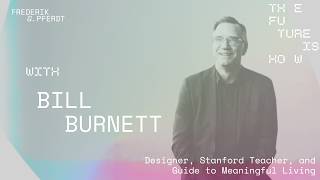
Bill Burnett argues that chasing fulfillment is a trap. Instead, he proposes four pillars for meaning: wonder, coherence, flow, and community. He uses design thinking to help people, from Gen-Z students to retirees, build lives around transcendence rather than self-actualization.
Chapters
Fulfillment in life is a dead end. That's the argument my guest makes in his new book. And I've been thinking about it ever since I read it. Because here's the question underneath it. When was the last time your life felt like it actually meant something? Not was going well, not was productive, meant something. Bill Burnett co-wrote the number one New York Times bestseller, Designing Your Life, helped over a million people figure out what to do with their lives. And now he's asking the harder question: once you're doing it, does it feel worth it? Bill and I go way back. We taught together at Stanford's d.school, and we just had a wonderful evening talking about meaning in many different ways with our partners at his house, which means I get to go deep with you today. Bill, welcome to The Future Is How.
Well, thank you very much, Frederik. It'll be a fun conversation. I think you and I have a lot of ideas in common about empathy, about experimentation and prototyping, and kind of how do people build meaningful lives. So I'm looking forward to the conversation.
Thank you so much, Bill. So as I mentioned, the first book sold over a million copies, and most authors would have written Designing Your Life 2. More designing, you know, but you and Dave went somewhere much more uncomfortable. You basically said, we noticed something was still missing. So talk me through that. Was there a specific student or conversation that really crystallized it?
Well, there are a couple, and then just the sort of the whole zeitgeist of what's going on in the world. We've had, I've had a number of students and other folks that I'm, you know, that are mid-career or particularly people thinking about retiring. Dave works Stanford now he's doing mostly what's called the Distinguished Career Institute Fellows. It's a, it's a group of grownups essentially in their, you know, 50s, 60s, 70s that come back to, want to come back to Stanford after their career and want to redefine what's next. You know, if you think about with the new longevity, you could, you could retire at 60 and have another 20, 30 years of active and engaged life. So it's kind of a gap year for grownups program. So he's hearing from them, wow. Even though I had a great career, I still don't think I understand, did I have an impact? Was it meaningful? You know, am I fulfilled? This idea of fulfillment, you know, the Maslow's self-actualization. Am I fully realized in everything I can possibly be? So they're asking that question. And at the other end, my freshmen, sophomores, juniors, seniors, some of my grad students are asking the question, how do you construct a life you know, that is meaningful. They want meaning, they want purpose. They don't just want a job, you know, to make some money, or if they want a job to make some money, that's fine, but they still need something in their life where they get to express themselves into the world in a way that, you know, that they find, they find valuable. And it's kind of an intrinsic thing, right? You define meaning very, very locally and it's about how do you define it? And most of the time people are defining it not so well. So they, if you don't know what you're looking for, you're, it's hard to find And then people fall into, you know, what we call dysfunctional beliefs all the time. You know, that if I have a lot of impact, my life will be meaningful. Well, you know, impact is great, but it's in what we call the transactional world, and that's not where meaning comes from. So yeah, we were having all, you know, we're human-centered designers. We didn't need to write another book, but we just kept coming up with this question, you know, and particularly now. And then my students are also looking, you know, looking forward in the age of AI, you know, like How will I, you know, normally people found their purpose and meaning through a job. Are there even going to be jobs in the world of AI? What, what, you know, what's the future look like? So it was a, it was a rich conversation with lots of people that kind of stimulated us thinking, hey, maybe there is a design approach to this. And it goes beyond just designing your life because it's designing really the purpose. Of your life.
You mentioned two interesting things. The one is age. You mentioned that Dave is now working and teaching people who are maybe at their third career in their lives, right? Starting at 50 or 60. And then you mentioned Maslow as well. So the first question I would have is, is finding meaning like an age thing? So Do we have to turn like 50 or 60 or whatever it is to really engage with that question on a deeper level? And the second question I have, is this a Maslow problem? You know, we got sold the idea that self-actualization is the top of the pyramid. And now we are all climbing a mountain that doesn't exist, right?
So, yeah.
Tell me more about that.
Well, let me, I'll take the Maslow thing first and then we'll go back to the age question because there is a, there is a there's a correlation, I think, between life stages, what stage of life are you at, and the bigger question of meaning. But the interesting thing about Maslow's, you know, I think he published that in 1943, 1944, and it's been called the most pernicious idea in social sciences ever, that there's this pyramid and at the top is self-actualization and you gotta get through all the stages before you can become, and he describes self-actualization, becoming fully yourself, expressing all of your talents in the world. And that's a lovely strategy. Now, we don't believe in that because we believe there's more than one life in you. You can't optimize the multitudes that are in you. There's all sorts of ways in which your life can express itself. So there isn't one way to self-actualize. But even Maslow, and he wrote this specifically in his diaries, it wasn't published before he died, he said, I think I got it wrong. The peak of the pyramid isn't self-actualization. It's actually self-transcendence, or what the wisdom traditions, theological traditions would call compassion, doing something beyond the ego. So if self-actualization is about perfecting the ego, then the peak is really self-transcendence, giving the ego away. And that shows up in all sorts of different places in the world in wisdom traditions. And then he got that wrong too, because it's not hierarchical. You can be transcendent at any stage of life. You can be in a refugee camp in Syria, and still believe in something transcendent, bigger than yourself, and experience meaningful, have a meaningful experience of life, even when you're still at the subsistence level, you're still forming, you know, forming the ego self. So one, we think the reframe is it's about self-transcendence, and that transcendent, this ability to transcend ourselves either through a mystical experience, a religious experience, just a grounded personal experience. A beautiful sunset can be transcendent, a beautiful, the birth of my children and watching, you know, these babies emerge was a transcendent experience. But there's lots, lots to be gained by going beyond on the ego. So you, yes, you can try to perfect yourself and your skills, but remember, you do contain multitudes. And so there's a lot more in you than will ever be expressed in one life. And that's actually the good news. Because that means you're not coming from scarcity. Oh, I've got to figure out how to maximize this one little thing I've got. No, you've got lots of things you can do. And what is the best version of me? The teacher version of me, the writer version of me, the grandfather version of me, the artist version of me, the guy who plays those guitars version of me. I mean, there's lots going on. So self-transcendence is the is the reframe for the ego problem. And then in terms of life stages, you know, people do, you know, spend a lot of time in their 20s, 30s, and 40s kind of building themselves, building their career, building their ego self, the thing they identify with. I'm the vice president of something. I'm the founder of something. I'm the person who does these things. Maybe in my community, my church, my whatever it is, I'm a head of the Parent Teachers Association, whatever that is. Now, those are all transactional things. They're good. They're substantial. But transactions in the transaction world, and we posit there's kind of two ways of looking at the world, the transaction world and the flow world. In the transaction world, it's all about getting stuff done. And the goal is to finish it and then move to the next thing. So there's very little opportunity to experience a transcendent state or to experience a state of flow when you're only thinking in transactions. And that's why I think people, as they get later in their life and they've kind of are comfortable with what they've accomplished, they start to go, but wait a minute, there's got to be more. What's the bigger picture? So that has traditionally been what people call second half or David Brooks wrote it, David Brooks, the New York Times columnist wrote a book called Second Mountain. This idea of like, Now I'm going to move into this next phase of life. There's also some research on the neuroscience of like intelligence and in your first half of life, sort of through your forties-ish, it's all about essentially transactional intelligence, getting stuff done, remembering things, you know, managing data. And the last half of your life, they call it fluid intelligence where you're more involved in the gestalt of things, the context of things. You see the patterns and things. So it is a natural time in life to be thinking about more meaning and more purpose because you're not that tied to your identity and your accomplishments anymore. But paradoxically, I also see in my young, you know, Gen Z students, this is their number one question. I mean, you know, they grew up through, you know, a bunch of economic uncertainty and global uncertainty, and they've got, they're facing things like climate change and now wars in the world. And so they're not like, oh, I just want to go get a job and work 40 hours a week and be the person who just does the normal thing. They want their jobs and their lives to have meaning right up front. They're not waiting until they're 55 and contemplative. And their sense of that It's quite strong. Like they're not willing to take the kinds of jobs that their peers would have taken in the past just to be recognized as being on some path to accomplishment. It used to be the CS major, computer science major is the largest major at Stanford. And it just dropped 15% this year. And I think it's gonna drop another 50% in the next couple years. They were doing it because they thought it was prestigious and they would make a lot of money. And now they're realizing with AI and stuff, there won't be that many positions there. So they're, they're all looking for something even at a, at a very early age. And I think this is wonderful, right? This is, this is their version of activism. You know, in the '60s, we took over buildings and burned down, you know, stuff to protest the war. And, uh, even when I was in, in school way back, You know, in the '70s, we were protesting apartheid in Africa. And now I think the students are protesting a lack of meaning. Yeah. Like, I don't want your crappy job. I don't want your crappy job.
Fascinating.
Yeah. It is. It's a fascinating change. But if you look at the world they're kind of transitioning into, there's a lot of disruption in the world and not just, you know, locally with geopolitical conflict, but, you know, long-term trends of climate instability, financial and economic instability. Will capitalism survive AI? Da da da da da, right? There's a lot going on. And so they're not willing to wait till their 50s to figure out if anything they're doing is meaningful.
You use an interesting word when you talk about this. You used reframe. And I think you're one of the big inspirations, at least for me, and probably for millions as well, on how to reframe things. So you reframed this as a design problem, not what is the meaning of life, but how do I find meaning in life?
Yeah.
And so as someone who thinks in design, why does that reframe matter so much?
Well, you know, I mean, you know, and I was just going back through your book, reframing is like the power tool in design thinking because, you know, problem finding plus problem solving equals, you know, the strategy going forward or the design going forward. But most people are pretty good at problem solving if, you know, people are functional and give them a well-framed problem, they can tackle it and they can solve it. Problem is it's the wrong problem. So Peter Drucker, the famous management business guy, business professor said, there's nothing quite so foolish as solving something very well that never needed to be done in the first place. And he was talking about organizations, you know, working on stuff that was not strategic. But I mean, I think the power of reframing is to take an idea that where you're either stuck or you're not sure, like, what is the meaning of life? Well, I took a lot of philosophy classes when I was at Stanford. I took more philosophy than math, even though I was an engineering major. Because I just thought that was the interesting question. It's been philosophers wrestle with the meaning of life, the big, big question. But I'm not a philosopher. I don't have any credibility talking to it. That way. I think about it sometimes philosophically, but as a designer, I can go, wait a minute. I think what you're talking about is living meaningfully. You want to live more meaningfully. You want to have, find more meaning in your life. I can help you with that. Cause those are like, we can learn how to design. We're talking becoming a meaning designer, a moment designer, making moments is where meaning occurs, finding flow. That's where meaning occurs. These are all designable things and little, you know, there's little, mindset changes, and there's little, sort of, very actionable, kind of, small projects you can run, small prototypes you can run. And all of a sudden, when you drop it into the design context with a different framing, a different framing of the question, you know, all of a sudden, you got a whole bunch of things you can try. Whereas in the meaning of life, you know, I don't know, I don't know, you have to go either talk to your spiritual advisor or your philosophical advisor. I don't know what to do with that question.
Or even AI.
Oh, you can talk to AI, which might be dangerous. Although AI is particularly good at reframing. I use it now when I'm teaching reframing because AI is good at coming up with 5 or 6 different ways of looking at the same problem, but really changing the emphasis from, you know, the classic product design when I'm teaching designers design, the classic design reframe is go from a product to an experience. It was Howard Schultz's original observation. He was in Italy, he was in a little cafe, and he realized, boy, having coffee here is an experience. You walk in, there's people chatting at the counter, the espresso machine's hissing and making sounds, it smells great. So the classic product design reframe is, it's not about the coffee, right? It's not about the coffee, it's about the coffee experience. And when you do an experience design, you get a completely different set of solutions and you invent a billion-dollar, you know, $100 billion organization. So the reframing is critical and it came actually, one of the insights was, there's, you know, Bill Moyers was interviewing Joseph Campbell for PBS a long time ago on a series called The Power of Myth. And Joseph Campbell was this mythology guy, wrote Hero with a Thousand Faces and fascinating, fascinating intellectual. And he asked Joseph Campbell, aren't these myths all about finding the meaning of life? And Campbell said, you know what, I don't think that's what people are really looking for. They may say that, but what they're really, really looking for is the rapture of being alive. Okay, rapture of being alive. Our newsletter is called Fully Alive by Design. What we're looking for is to activate our curiosity. Curiosity is the thing that drives, you know, our, our everything forward. We're looking to activate our empathy. What do I want out of the world? That's fine, but what does the world need? What can I do in the world that can activate, you know, the things that, that I love? And when you start thinking about it that way, from a designer's point of view, you find all sorts of ways to design meaning.
Fascinating. So let's build the framework actually that you introduce. So wonder, coherence, flow, and community. Let's start with wonder because it feels both obvious and radical at the same time. So what do you mean by it and why does it need to be designed?
Yeah. Well, you know, if you— one of our The new mindsets in the new book is radical acceptance. Like, let's start in reality. Design has to start in reality. I can't start in some world, you know, of the way I want it to be. And what is it the Buddhists would say? Here's reality. Here's the way you wish it was. And the gap is called suffering. It's like, let's just start with the way the world is. And then let's be available to what's around us. And when you do those two mindset shifts, you realize, oh my God, This world is full of wonder and awe. It's full of amazing things. And so we created a little formula because curiosity, I think, is really important. It's still an important mindset. But when you add curiosity plus mystery, like the things we, you know, like, why is the sunset so beautiful? Why do I emotionally respond to this particular song or this particular Beethoven, you know, symphony or piece of music? Why does, why does, why would this experience send me into sort of a rapturous state? And that's the mystery. We don't know. I mean, there's neuroscience around wonder and awe now. Dan Siegel has this thing called the Mindsight Institute where he's looking at consciousness and wonder. And so there's a bunch going on in that space, but we just describe wonder as curiosity plus mystery. And then we have a simple exercise called put on your wonder glasses.
Tell me more about that. Yes.
Where are my wonder glasses? I've got a pair of wonder glasses around here somewhere. But it's very simple. It's like, we know from all the psychology, you don't really see what you're looking at. You just see what you're looking for. And as soon as you label something, chair, table, keyboard, iPad, you stop looking, right? Because your brain needs to move on, it needs to move efficiently. But when you actually stop and look at something in and of itself, almost anything can trigger a sense of wonder. So the idea is like, nature's a good place to do this because nature's just full of, you know, amazing objects and physical and visual complexity and sights and smells. It's a multisensory experience. So go out in nature somewhere, even in your backyard, and you're looking at the world with your typical transaction glasses. Oh, the lawn needs mowing, the roses need pruning, and I got a I gotta make sure we fertilize, you know, because spring is coming and things are budding. That's my transaction brain. Okay. But on my curiosity brain, gee, look at those roses. I mean, they're, you know, I just, you know, I pruned them in January. They're already starting, you know, new growth and blah, blah, blah. That's so interesting. You know, I wonder what the cycle is that stimulates this. Is it the temperature? Is it the increasing amount of light? What's going on? You know, and I might do some research on that. And then I put on my wonder glasses and I just stare at this thing and I go, wow, there's a bud of a new rose. And that thing, that the biomass that is just suddenly being created by this, you know, incredibly mysterious process is happening. And look, there's aphids on their stem, but that's okay because the aphids are eating this other thing. And so the whole ecosystem of this rose is unbelievably wondrous. And if you can just drop into that reverie for 30 seconds, a minute, and then make that a practice once or twice a day. And it's not just nature. It can be any human interaction can be amazing. Sometimes when I'm kind of a people watcher, I'm a little bit shy. So I could sit in a cafe and just watch other people having a conversation. Boy, that couple looks like they're really in love. Oh, that couple looks like they're really having an argument. And that's looking at the transactional world, but also just looking at how amazing human beings are, right? So it's a very simple exercise of moving from looking at the world as a series of transactions to dropping into a flow state. We believe there's sort of two worlds, or at least there's one world, but two ways of looking at it. The world of transactions, getting stuff done. By the way, that's where impact lives. People want to have more impact. Great. You have some more impact. 2, 3, 4, 5. Okay. Now what have you done lately? You know, right? I mean, the impact was great, but what have you done lately? And a lot of times you have tried to have impact, but the world doesn't let you, doesn't let it happen. Right? Something you can't control doesn't happen. So if this, my co-author Dave would say, if you put all your impact eggs, if you put all your eggs in the impact basket, you're going to be really disappointed because it's not, it doesn't last. What lasts is, you know, down in the flow world where you can have these moments of wonder and meaning and awe and a sense of, a deeper sense of purpose, a sense of transcendence. Our theory is it's easier than you think. You don't have to develop a mindfulness process. That's good if you can do it. That's certainly good for your your body and your brain. You don't need to live on a rock for 40 days fasting under a Bodhi tree. You don't need to do any of that stuff. It's right here, right now. You just got to put your mindset in the right place and you got to look, change what you're looking for, right? If all you're looking for are transactions, that's all you're going to see. When you start looking for, with a curious mindset, wonder, awe, and other things, you'll discover they were there all along. And so, it's not about trying to cram more in. Oh, I gotta learn 5 new practices, or I gotta learn a new way to do it. I gotta add an hour to my morning meditation to do the wonder thing. It's not about cramming more into it. It's about getting more out of what you already have, which is right there. And then learning how to craft moments. You can become a moment designer and craft moments where meaning is likely to occur. And you will experience it because you're in the state of mind where you're fully present, you're calmly detached, you don't get to decide the outcomes all the time, you're radically accepting reality, and you're available to the things that are right there in front of you. So a little bit of mindset, a little bit of the framework of transactions versus flow, And that's all you need to know. I mean, the flow, coherence, wonder, you know, community thing are sort of 4 ways where you'll, you're likely, you know, to be able to design meaningful experiences. But it starts with recognizing that mindset matters. And, you know, you gotta look at, you gotta look at the world from 2 points of view. Lisa Miller at Columbia wrote a book called The Awakened Brain. I don't know if you've seen this or seen her talk. She talks about, it's kind of an update on the left brain, right brain thing. Says there's the achieving brain, what we call transactions, and there's the awakened brain, which can experience transcendence and connection and empathy is where empathy and other things, the humanness of us comes out. And she's got some neurological evidence that these two brains are active. But in our society, we vastly overfeed the transaction brain.
We do, absolutely.
And we starve the awakened brain, the flow brain. And, you know, I think the reason, one of the reasons you and I understand this so well is that when you live in, when you're a designer by training and by profession and by, you know, and you've developed some expertise in this as you have, it's like, well, of course empathy is important. Of course you would start with curiosity and understanding the problem before you start. Of course, problem finding is more important than problem solving. So we know this works. I wasn't at Apple when they designed the iPhone, but I was there when we did the first laptops and same thing. When you're building something that's never been done before, you have to build a lot of prototypes, try a lot of things, engage your curiosity, test with people. Be in the world, radical collaboration. So all this stuff from design that we know so well just makes so much more sense when you apply it to lives and to our, our, our, our, our lived and felt experience. We are an experience design. Our whole life is an experience design. And then I really was passionate about bringing those tools to people who'd never, never heard of it, never heard of design or had never practiced it. Because once you learn it, Wow. The world is a, I mean, there's a lot of problems and strife and we're not Pollyanna here. We're not saying, oh, design will make everything better. You still have to deal with all the hard stuff, but you deal with it with a sense of abundance and creativity rather than a sense of fear and scarcity.
And I love the Wonder Glasses. It's just a great reminder to what Anais Nin, famous writer once said, we don't see the world as it is, we see the world as we are. And I think that truly describes it, right? We always think that's what we're looking at is reality, but we're looking at it in ways that describes us through our values, through our experiences and, and so forth. So I want to dive a little bit more deeper into community. Because you talk about community in a way that it's just not connection, not just connection, but community that actively shapes you. So we are also living through a loneliness epidemic, and we talked briefly before the show about that. Is that fundamentally a meaning crisis in disguise?
I think, yeah, I actually hadn't thought of it that way, but you could certainly describe it that way. I'll go way back to my grandparents, just a couple generations ago, my grandfather, grandmother. They grew up in Germany in the early part of the 1900s. My grandfather and grandmother married, and then in 1933, my grandfather got the family out of Germany and they came to America. Classic immigrant story. Now, '33 is a critical date because that was the year Hitler was elected. You could say that maybe it was his Trump moment. He didn't think that was going to go so well, so he got the family out of Germany. Um, and he came to America with nothing. He had a 6th grade education. My grandmother Neither of them spoke English. You know, it's a very classic and a good story. Worked hard, put a roof over their head, never went to work thinking it was going to be meaningful. Took any job you could take, you know, to just make it work. But in those days, people had communities. There was an expat community of Germans that got together. There's still a big German American hall down in San Jose that has, you know, the traditional events. They have Oktoberfest and other things. He had his family in the area, and importantly, he had his church community, his religious community, his faith community. Almost all of those things, you know, are fractured now. Many people still have faith communities, and that's wonderful, but my own students really don't have a lot of experience with being in communities that support them. And so that's part of the loneliness, and just having, you know, 1,000 followers on Instagram isn't really a community. If anything, it's, it's an, it's almost an anti-community. It's a burden, you know, to keep some facade up that you're part of something that isn't really who you are. So we, we, we see this as a big crisis and, and a big opportunity. And then Dave has been teaching primarily with the DCI fellows, with the people who come back to Stanford after a career. And they have a gap year for grownups essentially where they can take classes at Stanford to kind of reimagine the next 20, 30 years of their lives. And we create communities in that group and we develop sort of a methodology for what we call a formative community. So you get together and have a good time. The bowling league, the, you know, the golf league, the, you know, the mahjong group that gets together. They're playing games, having a good time, very social. Very important, 'cause that helps build the fabric, right, of society. You can also be in a community to try to get stuff done. You can be on the PTA, you can be, you know, you can join a group that's organizing, you know, I don't know, protests against Tesla. Bunch of my friends are in those groups, and feels purposeful, and you're all pulling together for a common cause. But a formative community is quite different because it's not about content. It's not about the PTA or mahjong or something. It's about intent. We intend to get together and our goal is to help each other become the person we wanna become, transcend our ego and become the person we wanna become. So we start with a focal question. My focal question might be, you know, what, you know, how do I manage the transition from being in a role at work to being in my soul as a retired person? How might I manage to transition from role to soul? So we get together and everybody has something they're working on. And our goal is to support you, Frederik, in your path and your goal, and to help you find and refine your focal question. And then for you to design into that question and us to support your prototyping, your research, your results. It's just true. You can't hear yourself by yourself. You need to be in a group of people who can hear you and reflect back to you what it is you're saying, not to give you advice, but to simply help you on your path. So we propose in the book this idea of formative communities. We're actually thinking we will probably start some of these because we think people really want to be in these communities. We've seen how transformational it is for the DCI fellows, for my students who get together and in communities to support each other. Scott Galloway, the guy from NYU, this podcaster and big deal, he's got a phrase I love. You can't read the label from inside the bottle. And we're all inside the bottle. So without communities to reflect back to us what we're doing, it's hard to make progress. So whether you want to call it radical collaboration or formative communities, I'll tell you, we, you know, one of the exercises in the class and in the books is the compass exercise where you write your worldview and your life view. Here's what happens. You write a life view and you've thought about it a lot. And then we say, now we're going to put you in a group of 3 and the other 2 people, this is it. You listen generatively, listen for opportunity. You're not critiquing. You're not, you're not doing anything other than saying, tell me more and reinforcing when the person sounded authentic. Okay. So a person's reading his life view and just reading it aloud to other people. You suddenly go, oh, wait a minute, I really believe this. Or, oh, wait a minute, this is true. Or wait a minute, I want to expand on this. And then being listened to that way, you know, you can't hear yourself by yourself. Someone needs to listen to your truth in order for you to actually, you know, I don't know, not believe it, but to drop into a different sense of of owning it. You got to put it out there in order to claim it. And then you get all this feedback from people who help you find things. So that's, we really think, you know, it is what would happen naturally in a spiritual community or in, I'm in a men's group. I've been in a men's group for 35 years since the birth of my son. And it's a formative community. It's all men trying to help each other become better fathers, better husbands, better men. In the world. And that's what we talk about. We don't talk about the weather. We don't talk about, you know, doing any, you know, get set. Well, some of them talk about, you know, going to protests, uh, for outside of Tesla. But, um, it's, it was one of the needs we heard before we wrote the book is that, wow, I just don't have any place to go where people, where I can talk about the journey I'm on. I don't, I need a safe place. I need people who are on the journey you know, to go with me. And I don't know how to, I don't know how to make that happen. So we had this example from Stanford, the class we run for the fellows that are mature stage of life. Um, and we thought, okay, this is, this is the model. Cause almost everything we put in the books, we've tried at school, you know, we've prototyped it and built it out at school.
So here's a tension that comes up for me. I think all 4 pillars that you were describing in the book and you just alluded to right now seem to require slowing down, but most people's lives are optimized for speed nowadays. So how do you design a meaningful life inside a world that's actively hostile to slowness?
Yeah, and a world where all the apps are stealing your attention. Exactly.
And we can also bring in AI as a, you know, what's the role of AI in finding meaning in life?
I think you're right. It is about slowing down, but I think it's slowing down in a slightly different way. The moment you and I are having right now, we're talking. There's all the stuff that's happened in the past this morning. I had 5 other things to do, blah, blah, blah. I'm sure you did too. We could be thinking about all the things that are going to happen the rest of the day. I got to get in a car, I got to get down to Stanford for some meetings, blah, blah, blah. So there's all this stuff that's happening in time, and it's a very busy, we all live very busy lives. But when we drop into this moment, our conversation, or we drop into a moment of wonder or awe, we're actually in a timeless place. Because now, that little fraction of a thing that's not the past and not the future, the now, is in fact infinite. It's a timeless, infinite place. So I live a pretty busy life. I've got, you know, school and classes and books and advisees and stuff to do. But when I pay attention to looking for some moments of wonder, connection, empathy. I experienced these timeless moments inside my linear time. You know, you've had this experience. People experience it when they're meditating. It's a 15-minute meditation, but when you're actually in the now, it's an infinite amount of time. So one of my favorite Zen expressions is, if you can't find enlightenment right where you are, where do you expect to find it? Over there, right? So it's right here and it's right now. So I agree, we live crazy lives and, you know, scheduling, I'm going to meditate successfully from 9:15 to 9:30 and it just turns meditation into another transaction. And you can kill it if you turn it into a transaction. So it just takes a little bit of discipline about your mindset in order to because you, we have another exercise called flip the switch. You can be in any, you can be in a boring staff meeting. You can be in the worst, boringest budget meeting you ever had at Google. And I'm sure you had some. And it's all transactions. Who's going to do this? Who's going to do that? What are the action items? Blah, blah, blah. But you can flip the switch and start to notice the humans in the room and activate your empathy and start to understand why somebody might be really stressed. Or why they feel like they're coming from scarcity and they don't see what's available. So you can interject timeless moments in this continuum that make it feel like you've got plenty of time. And then, you know, you'll drop back into, yep, gotta get in the car, gotta get down the peninsula, I hope there's not a lot of traffic. And, you know, you have to be in both worlds. But we're so over in the pressure of time, the pressure of the schedule is all in the transactions world. And you're giving yourself no time at all to be in the flow world or the awakened brain. Practice that. I mean, you know, you've run innovation workshops and stuff and everyone's out of the box thinking. And I tell them, guess what guys, there's no out of the box. Your brain's a box. It schematizes information. It doesn't see what it's looking at. It looks to see what it's looking for. What I can help you with is I can make your box bigger. And I can have, I can say, you want to look for something different? Let's look over here. So all I'm doing is moving your box around. But boy, it changes everything when you, when you invest some time in just having a whole brain instead of just half a brain. Which is transaction-based. And by the way, you know, I was just looking this up, 60% of your prefrontal cortex is a visual processor. It speaks only in pictures. It doesn't talk to the talking brain. So, you know, that's why the first class in our design project, our design major is called visual thinking. Because once you activate your ability to think in pictures and to make pictures part of your problem-solving vocabulary, all of a sudden another 50% of your problem-solving ability is online. So just, I, you know, I, I'm, I got it to, I got a to-do list probably as long as everybody else's. I'm sure there's people that are even more stressed than me. And I get, get stressed when I can't, you know, get everything done. The goal of a to-do list is to cross stuff off, to be done. The goal of living a meaningful life is to be in the infinite moment for as long as it takes to experience the joy and wonder. And that was, Dave introduced this idea in the book called the scandal of particularity, which is a theological concept. And I was a little worried people would think it was a little weird, but all it is is saying that, look, you can't experience infinite love, infinite beauty, infinite truth, infinite justice. You We experience it in moments that can be understood by the finite human brain. The beautiful sunset, the moment of empathy and resolution with a human being. Those are where we experience the infinite in these moments of, in these particular moments. And so when you activate both sides of your brain, and you're as comfortable in the, the sort of creative awakened part of your experience as you are with the transaction part, you know, your mindset changes and you see things differently and there's more opportunities. Yeah. You show up differently and then people see that and they, they intuitively realize something else is going on here. And then you have some really interesting conversations with folks.
Fascinating.
Yeah.
So let's actually play with time a little bit. I have a section here that I call Fast Future, where we do a couple of rapid-fire provocations maybe for you.
Okay.
So short answers, big ideas. Ready?
Okay. I'll try to do short.
Fantastic. In 10 years, will more people be living meaningful lives or fewer?
I'm hopeful for more because I think the AI transformation is all about automating the transaction world, which should leave us more time to be in the creative world. I think 10 years from now, the number one major at Stanford is poetry, not computer science, because Everyone has a poet inside them.
Love it. AI can now write your goals, map your values, and tell you what career fits your personality. Is that a gift or a trap?
It's a trap. Um, and because the AI is, if it's being honest, would tell you, I have no idea what kind of careers will be available in the next 5 years. Uh, so it's an improv. You better get good at designing your way forward because planning this thing isn't going to work. I don't even know if there's going to be careers in 10 years.
What's the one thing most people think will make them happy that actually won't?
Impact and success. They believe that if they're successful, they'll be happy. Tons of research says that's not true. They believe if they have a big impact, they'll be happy. And impact will be satisfying. It will be great. But it's, it, it only lasts for a little bit of time. It's not the basis of meaning. It's just another way to transactionalize meaning.
So Designing Your Life changed a lot of lives. Did it change yours?
Yes, actually it did because, you know, I had been unconsciously just being a designer and just lived this way and found jobs this way and everything else. When we actually made it a class, I learned, I could name what the processes were. And then working with lots of thousands of students, I realized, okay, wait a minute, this is good. And Dave and I made the commitment, we will do every exercise before we assign it to the students, cuz we need to understand the felt experience of writing a life view or doing an odyssey or whatever. So that's true. And it was interesting, I was a little cautious about calling the book How to Live a Meaningful Life, cuz that's a pretty arrogant statement that I know how to live a meaningful life. But I think we got it down to things that were were practical. The more I live into the book I wrote, the more I find that it works. It kind of works. I mean, I was doing it, but now I'm really doing it.
So what's the most common mistake people make when they try to design their lives?
They fall into this sort of engineering trap of one perfect life, and I just need to, I need to engineer it and optimize it. I'm gonna hack my way to the optimum life. When in fact, you know, and all the data would say, and even your own personal experience would say, there's more than one life in you. There's more than one way forward. So in search of the perfect optimized life, they give up on the many, many good lives that are possible and they don't see them.
So Bill, what's a compliment you received recently?
I was just talking with a woman out at the University of Virginia. They want to do a Designing Your Life program as part of our studio program. And she said, I got to tell you just before we start, I came out to Stanford in 2015 and I met with Dave before your book was out because I'd heard about this thing you were doing. And then when your book came out, I realized it was important. So I designed my own version of your class and I've been doing it for 10 years. And then I was just wondering, could we get some help? And I was like, well, first of all, wow. I had no idea. And second of all, of course we'll help you. But just, I mean, it's so nice to have essentially a random stranger show up and say, hey, the thing you did was useful. That was a tremendous compliment. Dave and I are constantly humbled by the amazing people who are working hard to make their students' lives better, their lives better. Yeah, people, you know, sometimes come up and this, the funniest situation, people come up to me somewhere, book thing or something in Spanish, they'll say, hey, read your book and it changed my life. And I always ask the question, great, what were the exercises that were the most important? I forget what, but that helps you with this transformation. They go, oh, I didn't do any of the exercises. Go, what? I worked hard on those. And they go, no, no. But it's always when I do like, oh, that I could reframe a problem and open up the solution. That's amazing. I didn't know you could do it. That you could prototype anything. You could take little tiny steps to learn your way forward. I didn't know. So I'm always, again, humbled and amazed by what people, you know, what actually works for people when they come up and tell me that.
Love that. Last one. Yes. Finish this sentence. The most important thing I know about living a meaningful life that I didn't know 20 years ago is—
The most important thing I know about living a meaningful life that I didn't know 20 years ago I might have known it, but I didn't really know it. The thing is that it's all about love. Full stop.
Perfect. Let's leave it that way.
It's, yeah, it's all about love. And the opposite of love is fear.
So how do you love right now? If I may ask you, Bill, as someone who's taught more carefully or thought more carefully about meaning than almost anyone I know, what does your own meaningful life look right now, right? How does it look like?
There's a bunch of PhDs over in the philosophy department that have been working on this too. I love my life right now. You know, my children are all gone. I have 2 children, they're all grown. And they're all off and two of them now have families and I've got three grandchildren. And boy, you know, Frederik, you want to remember what curiosity looks like? Hang out with a 5-year-old. My 5-year-old, Benson Connor, is the most curious soul on the planet and everything is new and everything is interesting. And just spending a few hours with him and and playing with him and stuff, learning what play feels like again, learning what curiosity feels like again. That's amazing. So, you know, in my life, it's primarily about these relationships. And because the kids are all gone, my wife and I are empty nesters, and that, you know, we've been working the last 5, 7, 10 years. I'm like, okay, well, what, you know, we were madly in love and we had that time together, then we had the children, 25 years of raising children together, and now we've got this next, hopefully, 20, 30, 40 years. What's that going to look like? And so, I think I learned from one of the counselors that I worked with at one time, you aren't married. You get married every day. You basically have to, you know, you got to put the reps in. You got to put the time in to stay married every day. I've been married 37 years. I love my wife dearly. And I'm not that easy a partner all the time. Sometimes, you know, my fears, my anxieties, my ego gets in the way. But to try to, you know, to keep trying to be in a great relationship. And to have a great relationship now with my adult children who are all having their own busy lives, and then to be a part of my grandchildren's lives, and then extending that into the students I get to interact with, uh, the, the students, they're at every age from retiring people to 18-year-old freshmen, you know, 8 weeks out of high school and super excited about being in college. That's, that reminds me every day that, you know, if you bring humanity and empathy, you know, to your job, David always says, if you get the human part right, everything else is gonna work. And that's the big lesson I've learned, you know, in my second half. Get the human part right.
Beautiful. Thanks for sharing that, Bill, because I think it inspires so many people now who are at a stage in their life where they maybe try to find meaning, where they try to live a more meaningful life. And so this show is called The Future Is How. The premise is that the future isn't something that happens to us. It's shaped by how we think and act. And for someone trying to design a meaningful life in whatever comes next, what's the how? You most want them to hold on to?
How to do it. It's easier than you think because it's right here, right now. You have all the moments you need. You just have to be available to them and accept the reality of where you're at. I'm not saying life is going to magically get better, except the reality of where you're at and be available to the moments you have right now. And if you get the human part right, you can design moments with your family, your loved ones, your community, your, your, your, your, however you get together and gather. Because it's more than everything, more than anything now, we need, we need these human communities to support us because the world is busy and the world is messy. You know, the Alan Kay, the computer scientist was has a famous quote that wasn't actually his, but he was famous for it. You know, the best way to predict the future is to invent it. And my version of that is always the best way to predict your future is to design it. Stuff will happen that you can't control, but you have the, you know, you can put your intention into the universe. And my experience has been that makes all the difference in the world. So. It's easier than you think. Put your design into the world with love, not fear, and see what happens. I'll bet something will happen.
Wonderful. Bill, this was the conversation I was hoping it would be, and it just felt just as a continuation of our last conversation when I was fortunate enough to visit you at your house. And so Thank you so much. I'm deeply grateful for whatever people are taking out of this conversation, but I'm grateful for what you have done and what design you put out into the world that helped so many people to live more meaningful lives. Thank you so much. That was Bill Burnett. And if you came into this conversation thinking meaning was something you find, a reward for doing the work, work, I hope you're leaving with something more useful. Meaning is made in ordinary moments through specific practices with people who help you become you're meant to be. That's the design challenge. Now you have some tools. Bill's book is How to Live a Meaningful Life. It's available everywhere. Links are going to be in the show notes. Along with their Tuesday newsletter, which is worth your inbox. If this episode made you think, send it to one person who needs it right now, and I'll see you in our next show. Thank you so much.
More from Dr

You'll do to your child what was done to you, unless you notice it | Dr. Shefali

How to Stop Passing Your Past On to Your Kids | Conscious Parenting Pioneer Dr. Shefali

How to Stop Passing Your Past On to Your Kids | Conscious Parenting Pioneer Dr. Shefali

The Future Is HOW Season 4 Trailer | How Do You Prepare for a Future You Can't See?




Ruchika Sikri @FrederikGPferdt - The other person may be craving connection just as much



From Doing to Being | Ruchika Sikri on Mindfulness, Connection & Tech That's Good for Humans