Gary Payton II on finding a ‘home’ with Warriors, Steph Curry’s greatness and his dream NBA matchup
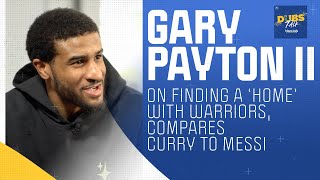
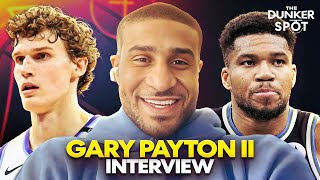
In this Dub’s Talk interview, Golden State Warriors wing Gary Payton II reflects on his unconventional path to the NBA, the emotional significance of re‑joining the Warriors, and the mental toughness forged through years of G‑League stints, two‑way contracts, and a brief NBA tenure before landing a permanent role in Golden State. He discusses his defensive identity, inherited from his Hall‑of‑Fame father, and how his positionless skill set—guard, forward, center—fits the Warriors’ system. Payton II shares anecdotes about blocking Victor Wembanyama, practicing against Stephen Curry and Damian Lillard, and his admiration for 1990s guards. He opens up about his childhood dyslexia diagnosis, the challenges it posed, and how meeting Henry Winkler inspired him to launch the Gary Payton Foundation, which provides early screening and mobile testing for dyslexia. The conversation also touches on his love for the Bay Area, his Seattle roots and desire to see the SuperSonics return, family influences, and a surprising talent for swimming. Throughout, Payton II emphasizes perseverance, community impact, and the joy of playing for a team he considers home.
Chapters
Welcome to Dubs Talk. I'm Monte Poole. Dalton Johnson. We are honored today to have Golden State Warriors guard, forward, center.
I like that. I like that. I like that.
Gary Payton Ii. We would call him a guard, but he's not a guard. We would call him a forward, but he's not a forward. Call him a center, but he's not a center. He's a little bit of all those things combined.
I feel you.
Just come back. Good to have you, man.
I appreciate it.
Thanks for having me.
Thanks for joining us.
Thank you. What I want to do to start off here is, first of all, go back if you could to When the Warriors reached out to you, well, when they reacquired you back in February, what were you doing on the day that it happened? And what was your reaction when you heard it was happening?
Day of, day before, we had just played Warriors. I think we won that game actually. Had some big free throws at the end of the game. The next day, normal day. Going in for practice, getting ready to practice on the training table, you know, getting warmed up. I think I was talking to Dame, actually. And then GM comes in and he was like, "I gotta tell you something." And he tells me I'm going back to Golden State. And I had my phone in my pocket. So, like, right before I sat down, right before he said anything, my phone just started going crazy. And it just kept vibrating, vibrating for, like, a cool, like, 10 minutes. So I was like, "All right, something's up." I knew I was going somewhere, but—
Yeah.
I didn't think I was coming back home. So he told me, you're going back to the Bay. Went home, packed my bag, got on the first flight, got back to, you know, came back home.
How did you feel in your heart when you heard the news?
My life went back to, you know, got my life back. So it was just like, you know, I know what I'm going into. It was a strange trade. I don't think I've ever seen a trade like that or something like that, you know, but I was confused in the beginning. I was just like, I didn't think, you know, they was gonna send me right back. But, you know, I guess it worked out for everybody. And I came back, I was excited, thrilled. And, you know, came back, got my, you know, got my body right and was just excited to get back out there.
You said it was like coming back home. But you and the Warriors found each other a year earlier, kinda, you know, where you went through 5 different franchises. You went through G League stuff, NBA, G League, NBA, G League, G League, Defensive Player of the Year, Whitey here. I mean, you're doing all this. What was your journey like before you found the Warriors? I mean, just describe what you went through to get to that point where, okay, in 2021, you come with the Warriors and you stick.
I think it was just, just since I got in and signed with an undrafted contract with Houston. And then I didn't make that team, sent down to the G League. And then from there, it was just, you know, just different steps, levels, experiences, just opportunities, you know, I try to create for myself to— I got one 10-day. So after that happened with Milwaukee, I tried to get another one. And then the two-way situation came, was a thing. And I did a two-way for the Lakers, bounced back and forth from G League to come up to play with the Lakers. And I was just basically just building, you know, my resume and continuing to grow as a player. And, you know, probably by the end of that, I think it was a bubble, G League bubble after 9:05. I went home. I was just working out, you know, every day trying to stay ready. I get a call from my agent and he said, "Golden State." And I was just like— Crazy thing about that is a couple years before, I was just like, if I ever get to Golden State, like, it's a perfect setup. Personnel is perfect for the way I play. And everything's just like, it's easy. Steal the ball, give it to 30. You feel me? Like, so it's just like, that's how my mindset was like a couple years. Like when the Warriors started, you know, winning championships, I was just like, bro, if I ever get there, we're gonna win the championship. Like no doubt about it. Like I can, I can help this team win. Like it's easy. So when I heard that, I was just like, a smile came on my face. Like only told me and my best friend, like we only had conversations like that.
So.
Yeah.
When that happened, he said, "Go to State," I was just like, I was like, "Dawg, this is it." Like, this is that moment. Like, this is that opportunity. So once I got there and started to get accustomed and feel everybody, feel the energy and everything, and I wanted to stay. So like I said, I went through that, like, first 10 days, second 10 days. They didn't know if they was going to keep me or not. So, you know, I was just like, I was trying to find a way to stay because I felt it. Like, I felt like this was the fit. Like, this was— they let me be me. They let me do whatever I got to do. Steve wasn't worried about, you know, me shooting the ball at a high level. He just wanted me to be myself, and he know what I brought to the team. So I was just trying to stay. Like, that story with the film room came up. Like, yeah, I was like, yeah, I don't want to go. You going to cut me? Okay, let me at least be, you know, in the building still. So it worked out. They gave me another, another chance. And, you know, I had to fight. That next offseason, you know, they brought some guys in that were battling for the same spot. So, and I came off an injury, you know, I was just waiting to get back right for that one shot. I had one game in LA preseason and, you know, I had to, I had to do what I had to do. I had to show them that, you know, I was here and I wanted to stay. So, you know, things worked out and, and I made it.
What did those, those 5 years between leaving Oregon State and going through all the things you went through to get here, what did you learn about yourself during that time?
I learned for myself just through those 5 years that I'm mentally stronger than I thought I was, you know. I really didn't have any expectations for myself just because I started at a young age, or at a late age. I started late, and, you know, just like my chances to make it, you feel me, were very slim. So like, I knew, like, I wasn't looking at, you know, 5, you know, 4 years, 5 years contract, you know. I was just trying to, you know, get on the roster, you feel me? That's it. Let me get a couple minutes here and there, you know, and let me just show you what I was, you know, what I'm about. So basically, like, those 5 years was literally just step after step after step, opportunity after opportunity, creating opportunity after opportunity, just to, you know, show a franchise that, you know, I can help a team, you know.
Yeah.
By being myself, I play defense. I'm, you know, not your ordinary guard. I can, you know, play the— I can guard 5, play the 5, play the dunker. So, you know, I just needed one organization just to give me that freedom and one coach to give me that freedom, like, just be you, like, and trust— like, they trust me to be me. So when Steve, you know, I had that talk with Steve and he was just like, We just want you to be you. Like, you're a very intelligent player. You're very different, you know. You're not your ordinary, you know, 6'2" guard. So after I heard that, it just gave me all the confidence in the world. I didn't have to think about, you know, messing up or not. Just come out, be me, and, you know, I have great players around me, so just let them be great and feed off them.
It kind of brings me back to Monty's introduction with guard, forward, wing, center. Number 1, do you call yourself a position? Do you call yourself a guard? Do you call yourself anything? And then just to kind of have the confidence that you bring up with Steve giving you that, It almost seems like the positionless was a detriment early on. And now with the Warriors, it is that perfect fit where you can fit into any puzzle piece. You don't need to have a set position.
Yeah, like I said, yeah, like growing up, I've played like high school, AAU. Most of my teams were, we were short, we were small. So like, they were like, gee, we need you to play. I was like, all right, I figured it out. You know, as a young age, I figured out the dunker, you know, how to set screens, whatnot like that. And then that just carried over through college, junior college, college and all that. So I got a lot of reps in that. And then I just had to, you know, transfer it over. I had 5 years in the G League. So, you know, I worked on it in there. Some teams we were, you know how the G League works, guys get called up, you got to, you know, go on a run. So I was just literally just reps all the way until I got my opportunity, you know, with the big guys and it turned out perfectly.
In that journey, you talk about the mental strength and everything. How do you think that maybe can help younger athletes also? And have you been able to have those conversations with other athletes about kind of trusting the process in that journey and having the mental strength, all of that?
Yeah, absolutely. There's a lot of G League guys, you know, come and ask, you know, you know, what did I, like, what did I do and like, how did I stay mentally? And I usually tell them like, everybody's path is different, you know. Some guys gotta, some guys gotta take, you know, overseas deals, you know, for families and whatnot. And my position that I was in, you know, I just try to, try to make it work off my first, you know, my first one with Houston. And then I believed in myself and I knew going over the water and trying to, you know, taking the quick money and all that, it was like, it's gonna be harder to get back over here, you right? So I was just like, I'mma thug it out here. You know, get cut one team, that's fine. I build a little resume and let's try to add on to that. Continue to work on my shot and whatnot. So, you know, any guys that come up to me and ask, especially like guys like me, you know, defensive guys that's just trying to get their foot in the door, all I say is pick up 94, you know, be disruptive. Defense will really get you on the court. And then after you're on the court for defense and your coach trusts you, you know, find ways to on the offensive side to fill in. If you got a screen, you can be a screen man and, you know, you get points. Like if you screen somebody, you're probably going to get yourself open. With your personnel. I got 30 and Splash Bros, so it kind of works out perfectly, you know, and they always get the attention and I just slip whenever, you know, if they hit me, they hit me. So I just say be a good teammate, keep working. You know, you get knocked down, just get back up and try to find a way not to get knocked back down again.
We saw something recently that we'll see again and again and again in the years to come in this '22-'23 and '23-'24 season. You became the 5th player to block a Victor Wembanyama shot.
Yeah, yeah, I think I'm the shortest player out of that list.
He's like 12, 13, 14, 15 inches taller than you are, whatever it is. But it's like this, um, what's the thought process? Because you—
it was a—
it was kind of a chase down. I mean, what's your thought process when you come down court and you see what he's doing?
Yeah, um, well, we know what he is. His, his length and athleticism gives him an advantage. So usually in transition, he's not going to give it up because he can pretty— he can get there pretty easily. I think 30 tried to hit me on a dive, deflected, and Moses kind of re-pathed him, you know, tried to redirect him, and that was great because that gave me time to time it and see what he was going to do. And just plays like that, like, 30 does so much for us, and he always has our backs on offense and end. So if he, you know, something happens and he turns it over, I like, I get excited to try to go have his back, you know. He has our back majority of the time, so I got to make sure I got his back too. So I was just trying to make a play, and me and Moses, you know, just being disruptive and energy to get back and just try to, you know, corral him. And I got my hand on him.
Your reaction though was like, "Yeah, do this all the time." Oh, yeah, yeah.
That's the best part about it. You know, you got to go make a play. First 3 steps, I just try to put my head down, try to get there, and then try to survey. And I seen him Euro and bring it back to me. He was, it was kind of low, so I was like, "Oh yeah, I got one." So yeah, you know, try to just get a spark in, get a spark for us and get us going back on the defense. You know, we missed 7 out of our last 8, I think we lost. So we just trying to get our groove back, find our groove. We got Dre back now, so we are full health. So hopefully, you know, we pick it back up.
Feel like you're getting somewhere now? Feel like you're getting somewhere now?
Oh yeah. You know, I'd rather, you know, we have our little funk early. Figure it out. But everybody I think has good intentions and still, we still got that connectivity. But, you know, with Dre back, we gonna have our full, full strength and everybody's gonna be good. And I think we're gonna, you know, get over this hump.
No, we're talking about defense because of that play. But obviously that's been your identity for a long time. Where did that start? I mean, we all know that your father, Gary Payton Ii, we'll call him the original Gary right now. Glove.
Call him Glove.
That was his identity too, you know. I mean, I saw Gary Payton Ii from way back, you know, and I know that Gary's dad, Al, your grandfather, he was all about defense too. So is that something that you just grew up with? I mean, where'd that come from?
Yeah, I think we just— I think it just came natural. And as I got older, me and my dad, we didn't have the best relationship growing up, but we really didn't talk about basketball. But, you know, I was around, I watched, and he was a pretty good two-way player. He figured out the defense side and he figured out the offensive side too. But it was just— it was really the only way that I can get on the court growing up because I didn't have no offensive game, like none. I didn't have my hops. I was like 5'10" probably. I was just, you know, a small—
5'10"?
Frail, little skinny guy. So, um, I just had to find ways to stay on the court. And, um, it was— it used to kill me. Like, I used to be like the last guy on the bench, come off the bench, you know, garbage minutes. I get the little garbage minutes.
What was this?
Um, what was this? All through high school, like, for first freshman, sophomore, and junior, like, I didn't really start working on my game to like my going into my senior year of high school. Shout out to Darryl Jordan. He got with me and started working on my game, and then that's when everything flipped. He put me on his AAU team, and he literally did what Steve did now, just let me go, you know, figure it out. I basically figured it out. So that's where I— more reps for defense, and I started getting better at defense. I started to understand it, and I started becoming a pest on the ball. Long hands, and guys, you know, didn't think I was so athletic and stuff. They would just, you know, throw lackadaisical passes or whatever. I just jump in and go steal it and dunk it. And I was like, okay, I think, I think we got something here. So I just took that and just ran with it. And I started growing athleticism. My legs got under me. I started jumping out the gym. And then once after that, it was just, you know, figure it out on the go.
Now here's what people ask me, you know, where does Gary get his hops from? I tell them, well, his father had the defensive mentality, but his mother had the athleticism.
Yeah.
Talk a bit about how you got from both, what you got from both of your parents?
Gary, I think always growing up, he always wanted me to like have that dog in me because he had the dog in him. You know, I don't think Mr. Mean, rest in peace to Mr. Mean, that he, there was no expectation, especially coming from Oakland. He had brothers, you know, they had to protect themselves when they go out and hoop and whatnot. And he just tried to install that at a young age, so I just didn't, I just didn't get it. I didn't understand it, you feel me? Like, he grew up different, I grew up different. So that took a little bit of time, you know, to— but he gave me actually a— I don't know if you know the quote he gave me when I was in high school that kind of lit a fire under me. He told me I wasn't really a good basketball player, but not in those words.
So— I can only imagine.
You're right. So he kind of lit a fire in me just because I, me and him was always like this growing up, and I just wanted to prove him wrong, you know. So, um, I think after that, that's when I started working out with Darryl, and, um, I just literally sacrificed probably the next 3, 4 summers and just working, working, going different camps, you know, going to Juco, going to just different camps and just getting reps and, and playing and, you know, just watching basketball, learning basketball. And I think, you know, eventually that dog came, you know, I found it. I knew what it was. Like, I knew how, what he was talking about. And as more and more I got better, he got quieter. So I was just like—
You noticed that, huh?
Yeah. I was like, I must be doing something good if he's not saying nothing. So I feel like I got the dog and the instincts and everything from him for sure. And then the athleticism for sure, Monique James. Everything about it. Whatever I do, anticipation, jumps, speed, I think I definitely got from my mom.
Aside from your dad, who's the one player in NBA history you wish you could pick the pocket from though?
Oh my goodness. Just one?
Just one.
Just one.
If you got more than one, give 'em to us.
I'm fine with that.
We can go multiple.
We can go multiple. I wish I would've guarded Jamal in his prime. Jamal Crawford. Shout out J-Crawf.
Oh, Seattle Sparks?
Yeah.
Yeah.
Shout out J-Crawf. Allen. AI for sure. Steve Francis was one of them for sure. There's just like all the old guards is just, it's crazy. I said Steve Francis, right? Oh yeah. Yeah, Steve Francis, J-Will, White Chocolate. I definitely wanted that matchup. That would've been a fun matchup. But like all the '90 guards is just like, there's just so many. Rondo, he's just so efficient. And like he don't make no mistakes, no nothing. He was just— I was like, I wish I can get in there and see what was things was like back then. But I give you the all '90s if you really want to talk about it. Like, I wish I played in the '90s where, you know, with the bump and hit and all that. And it was, it was good times. But for sure.
I mean, you played with some great scorers though. Obviously, you've already brought up Steph, you brought up Klay, you played with Dame too. When you look at Steph and Dame, what are maybe some of the similarities we know about the shooting, obviously, but then maybe some of the differences too, whether it's teammate-wise, playstyle-wise. What was it like being able to be teammates with both of them, but also go against both of them in practice?
The practice, let me start with the practice. Practice is the fun part, okay? The practice is the fun part. You don't get to really see the battles in practice. I don't think nobody's seen me and 30's battles. We've only played scrimmage. We've only played a couple of times. But I'll let you ask about— let— ask 30 about all that, OK? He's for sure won battles for sure. But I got a couple in there too. But Dame, they're very identical, like, not identical, but very similar. 30 just doesn't stop moving. He just— he has a motor. He knows, like, he's in a system where he passes it, he gets off, guys are looking for him. Dame— Dame's had a younger core. And, you know, he's just the same. He shoots it from a long range and his motor is ridiculous. Both of them are great teammates. They lead. Dame leads. He leads by example. Steph does too, but Steph is a little vocal. He'll let you know what he likes, what he doesn't like, and stuff like that. But Dame, Dame leads by example. Like, he'll go out there and leave it on the floor. They're both healthy. They're both playing. You know, they don't like to miss. They like to be out there with their team. And get it done. So being able to have both of those experiences, I think, just helped me for my game for sure on the defensive side, for sure. But on offensive side, it's, it's good because me and Dame's never had a 6'2 guard, you know, to play hit and hand back with and roll with. So that was a little different from him. So we had to figure that out. But it was, it's easy, you know, get him open space and give him time and, you know, they make tremendous place.
You bring up how Steph is always moving too. And there's this great clip from practice, you and J.K. kind of talking about that, where you feel like you got him, he's also somewhere else. As a great defender, how demoralizing is that to have a player like that who can score from anywhere, who also uses the basketball court like his own personal track at the same time?
No, he does. I think there was a clip the other night, he ran like 200 feet in one possession, which is crazy.
Wild.
Right? But, no, yeah, me and J.K. was talking just like, we want to stay in our scheme for the team, for the team defense, but if he shoot the ball, it's 98% chances it's going to go in. So usually when we play against him, I tell everybody like, I'm not helping, like, because I know him and I know if he gets off it, he's still dangerous because the guy's looking for him to pin in, whatnot. But he doesn't stop moving. He knows, he reads the defense. He's kind of like, he's kind of like Messi. Messi walks around on the pitch for a good couple minutes. He observes the field, you know, see where all the weaknesses is, and then he'll start picking it up. Once he starts running, that means he's found something and he's going. So that's just like 30. With the great ones like that, you know, their mind works differently and they see things that, you know, normal guys don't see.
Speaking of the way the mind works, you were diagnosed at some— how old were you when you were diagnosed with dyslexia?
I think my mom found out probably I was like 8 or 9.
Okay, so you found out pretty early. What was life, what was learning like before you found out and what was it, did it change once you were diagnosed? The process of learning.
Yeah, when I was diagnosed with dyslexia, I found out before that it was just difficult. I would read stuff backwards, flip letters. I would say one thing or write something else. Like during a sentence, I would skip a word and write it. And then my parents was just confused on, you know, why, why am I, you know, not getting things, you know, similar to my teammates, I mean, my classmates and whatnot. And I was also thinking that too, like, why am I not understanding this, you know, like they're— so they were pretty hard on me at first. And then—
They didn't know.
Yeah, they didn't know. They didn't know. So once my mom, you know, was reading and she was like, this kind of sounds like Gary, and she found out. And then we, we go talk to Harry Winkler. I think that's his name, Harry Winkler from Good Times. What is that? What show was that?
Good Times?
No, not Good Times.
Henry Winkler.
Henry. Henry. Yeah. Henry Winkler. What show was he in?
Happy Days. Oh, I'm falling on some stuff.
Yeah, yeah.
Finally, there we go.
There we go.
So we meet him and he literally tells me like, it's okay. Like he was a grown man and he still has an assistant that acts to help for spelling, you know, and still gets help for, you know, reading and whatnot. He is afraid to read in front of groups and stuff like that. So I think after meeting with Mr. Winkler, that helped me a lot and it gave me the confidence to, you know, be able to say that, you know, I need help. And after that, my mom found out, they broke down. My mom broke down because they were so hard on me and whatnot. But yeah, but, you know, it all worked out and it showed me, you know, I'm a little different. I learned a little different. But, you know, you put time and effort and you do the reps and, you know, you can figure it out.
Gary Payton II. I spoke to a guy who went to Cal and didn't get diagnosed until he was at Cal. And he told me, he said, "All my life I hated school." Yes. He said, "But once I got it," he goes, "I actually enjoy going to school." Yeah. Did it change for you too?
Absolutely. Before that, I was just, school just, I just thought, you know, I'm just not one of those guys, you know, for this. It was just, I had to be here, so, you know, I found ways to get through, to get by. But after that, things started to understand. I got extra time with my teachers, you know, they helped me out on whatever I need. And, you know, they just broke it down a little differently. And I understood, you know, the way they broke it down. And it's just you got to find your own, you know, breakdown of how, you know, you learn and how things work in your mind, how you understand them. So once you find that, you know, things become Pretty much normal.
You've done so much in the community with dyslexia, in the community here in the Bay Area, especially, of course, too. You know, when it comes to your foundation, you know, just talk to me a little bit about starting that and maybe what you see as far as your view for it going forward, too. Like, what is really maybe your dream for the foundation?
Yeah, the Gary Payton Foundation definitely helps and sheds light on, you know, kids and adults with dyslexia. And the biggest thing is screening early. We're trying to, you know, get this bill across to cap schools and make it standard for screening early, you know, at school. So, you know, kids and parents can get ahead of it and parents don't have to wonder why, you know, my kid's falling back in class and whatnot like that. And also for kids to feel like, you know, they're equal in the same class and with their other kids and, you know, they get the same attention and whatever they need. So, to learn and progress in that, in class. So my mom is on my board, my sister's on my board. So shout out to Raquel and Monique for helping me out and still bringing light. But we just built a, a dyslexia truck to go around communities. The first one, I believe, in the United States to go out and, you know, pull up to neighborhoods and get testing because it's so hard for for parents and kids to, you know, go out and find testing. So we're just trying to make ways to identify it. The first problem is to identify it, and then second is to treat it and, you know, get the help you need.
At the start, you kind of talked about coming back here with the Warriors and just said you were home. It feels like, obviously, you have your Seattle roots, played basketball.
Vegas.
Yeah, Vegas. You talk about Vegas, you talk about Salt Lake City, you talk about Oregon, but the Bay has felt like such home to you. And it feels like everyone in the Bay has embraced it, and so have you, whether it's the culture, whether it's "pilo" and E-40 and everything. Just talk to me about kind of that embrace of the Bay and why you have so much love for the Bay as well.
Yeah, the Bay is crazy. Like you said, all through my journey, I always ended up back here. 'Cause my dad playing, he would come here for offseason, get workouts in. You know, we would always come back to the Bay for some reason since I was little. Like, every summer we would always come back. And I didn't realize how many people actually, like, I was meeting around when I was young. But now that I got older and they always tell me like, yo, I remember you back in the day at my grandfather's church or something like that. And just the love that I, you know, receive now is just— I can't even put into words. Like, I get so much love out here, it's crazy. And I try to give it back as much as you can. Like, there's a bunch of kids out here, you know, they're always messing around and— Yeah. Want to say what's up. And I used to be one of those kids, you know, like my dad, I had some players back then that, you know, that didn't, didn't take a picture, autograph. And I told myself if I was ever in this position, you know, I would actually, you know, give real love back and, you know, take the time to talk to whoever, see whatever, say what up. But now that I'm living it, it's just mind-blowing. And, you know, I couldn't be more grateful.
So as you're growing up, You know, obviously your dad's home and gone and home and gone and all this stuff on the road a lot. But were there players, whether they were teammates of his or people who that you liked, that you gravitated toward? Who were those players you kind of like—
Absolutely.
You know, you like, this is my guy. Like, you know.
Yeah. Growing up, I remember anytime Minnesota came in, he was really good friends with KG. So anytime Kevin came in, Kevin would come over to the house after games. Have dinner. Before games, I'll go out down there and mess with KG on his pre-games. After the games, I'll go and ask for armband that KG used to wear, whatever. KG was definitely one of that stand out.
Vin Baker.
Vin Baker. Vin's like a, he's like an uncle to me. He took me fishing, used to go fishing when my mom was pregnant with my brother. Who else? Detlef Hersey, those are all his teammates. Nate McMillan. Yeah, Damon Stoudemire, you know, J-Kid's like family too, you know, B Shaw's family. All those guys? Yeah, all, yeah, all everybody, Big Shaq, Diesel, rest in peace Kobe. Kobe was, oh, you know, around back then. I can literally go on, Bonzi Wells, there's so many different guys, there's so many dudes that I know, and that's always been a part of, you know, been a part of my journey. You know, it's just, it's crazy now. Like, I'm playing at VC. I got to play against Vince, and I was so hyped about that before he got out of here. So shout out VC. And it's like so many guys is in the league, and being able to play against my dad and me is just, it's crazy.
Was KG intense when he came to visit?
No, no, no, no, no. I got the soft KG. I got the soft, yeah, yeah, yeah, I got— There's a soft KG? Yeah, there is, for sure. There's a soft, big teddy bear KG, but No, I didn't see that side until I got a little bit older. I was like, "Oh, yo." I said, "Oh, yeah, he's different." Yeah. Yeah, yeah, yeah, yeah. But, you know, shout out KG. He always brings that intensity and that fire, and, yeah, I love it.
A lot of great Seattle guys in there, too. I mean, obviously, there's been talks about possible expansion in the future. Just tell me, what would it mean to Seattle to bring back the NBA there? And would you want them to be the SuperSonics or just something completely new?
No, I don't think you don't bring a team back in Seattle unless it's the SuperSonics. Right. Yeah, so, um, And yeah, I'm pushing for them just like everybody else is pushing. Their fan base out there has been waiting. They got the team taken away from them years ago and now they got soccer, hockey, and they're, you know, they're showing that, you know, they deserve to have them Sonics back over there and get them back right. So I hope so. I can't wait. You never know. I might go back home, home.
I got one last question I want to ask because I've heard, I heard, and I don't know if it's true or not, I heard that you were also a pretty good swimmer.
I did dabble with the swimming in high school. The crazy part about that is I only did it for conditioning. I was like, I was trying to find new ways, you know, to stay conditioned and get conditioned, and swimming like works everything in your body. So I was just like, me and my, one of my friends on basketball team, his name is Antoine, he joined with me and we was like, all right, look, we gonna do the preseason swim training, boom, boom. We're going to do one, one meet, win it, and then we're going to stop. And we did our one meet. We got out of there. We got the win on the meet, my 100-yard freestyle, and I got out of there.
You won?
Oh, yeah, absolutely. I'm pretty quick.
Yeah, I could. Part-time, you know.
Yeah, part-time. But practice for swimming, swimming practice is crazy. What? No, no, no, no.
Crazy.
Uh-uh. But no, it was the swimming. It was fun. I played a little water polo when I was in Seattle too. So water polo is an interesting sport, but fun.
You just told us about the swimming. Is there any other player on the team that might have some kind of hidden talent, some kind of hidden athleticism that we need to know about?
Not that I know of. Wiggs said he— no, I ain't gonna do that.
No, I ain't gonna do that.
No, no, no. I don't think so.
I'm gonna leave you with this then. You already gave us who you wish you could pick the pockets from, all these '90s guards. Give me one guy that you wish you could have gone on top of the rim, slammed down on him too.
Well, you gotta go with the big bully back in the day, Diesel. Yeah, like primetime Diesel. He probably hit you with one of these though, so you probably— But I would try it though. I would love to try it though, for sure. But no, yeah, shout out Diesel.
You gotta try the big boy, man.
Oh, you got to, yeah. Yeah, I had Victor last night, but my footage is not full, so I had to scoop it and make sure I got it, but we'll see him again.
All right. He's Gary Payton Ii, Dolan Johnson, Monte Poole. This has been Dub's Talk.
Dub's Talk.
We had a good time.
More from Gary
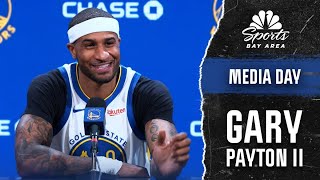
Gary Payton II expresses excitement for return to Warriors for 2025-26 season | NBC Sports Bay Area