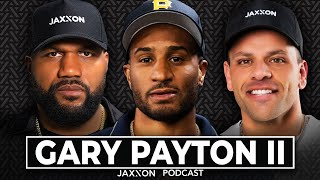
Gary Payton II: Why the NBA's Defense Will NEVER Be the Same
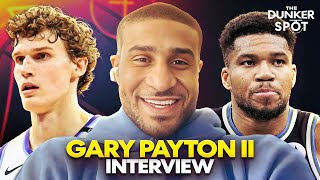
Gary Payton II breaks down his role as a Warriors dunker and screener, how his water polo background shaped his aggressive style, and why modern NBA defense requires team effort over individual heroics. He also discusses launching a co-ed professional skate league with the Skateboarding Association.
Chapters
All right, joining us for part 2 of the podcast, current Golden State Warrior, 10-year NBA vet, Gary Payton Ii. Gary, welcome to the show. How are you?
I'm good. That sounds crazy that you said it out loud. 10 years is crazy. That's wild. That's crazy. But I'm doing good, fellas. How y'all doing?
Doing all right. Happy to have you here. Excited to talk some hoops and other things with you. So I guess just to start, you are fresh off of career-high 8 assists. 9 points, 8 dimes, 6 boards, and a win. But I wanted to ask, what is your first basketball memory?
Mm, that's tough. That's tough. Definitely, I couldn't— probably couldn't tell you the first one, but I know it's in Seattle somewhere, running around KeyArena, you know, just messing around, going to practices with my dad. Going to the games early, messing around with the opposing team's players pregame, whatnot. So, a lot of that has to do with Seattle and just, you know, being in the city and being around, you know, Sonics, SuperSonics, and doing things with him within that. So, you know, a lot of good memories when I was young in Seattle.
That makes sense. I guess with basketball being that heavy of a background for you, were there any other sports that kind of captured your attention early on? Or was it just basketball? Football for you?
No, football. I liked football a lot. Dabbled with baseball a little bit and soccer. But just going through the process, you know, my dad being who he was and just growing up with that shadow, I actually wanted to get away from the game just to kill the comparisons and whatnot. And, you know, just carve out my own identity and journey. I actually played water polo in Seattle for a season. So that was different, but I turned out to like water polo. It was a very physical sport, but it was different.
Well, I gotta ask, what was your favorite part about water polo? 'Cause that looks incredibly difficult.
No, it was. I had to learn how to tread water. So once I learned how to tread water and move with the treading, it got pretty fun. You know, you can, like I said, it's pretty physical. You know, you can pull, you can stretch, you can pull 'em under the water and try to get to what you gotta do. So I like the physical part of that. That was probably the best fun part.
I would've imagined football just with the way that you defend and the way you're able to halt things in the passing lanes. Like it just gives like corner or safety for me. Water polo?
No, yes, absolutely. Absolutely. Corner or safety. There it is. You know, they had me at outside linebacker sometimes when I was young. This was when I was young, young. And I was kind of taller and bigger than everybody. For sure, corner and safety. And then on the offensive side, running back and wide receiver for sure.
That tracks, that tracks. I just, I would not have had water polo on the bingo card, but that is awesome.
No, yeah, yeah, that one's a little doozy, you know? That was just a, that was, I don't even know how that happened, to be honest. I think my mom was just like, "Let's try something new." And, you know, she came, I don't know how she came up with water polo, but that was the first time that I was introduced to water polo, which was different.
Got you. I was reading a profile on you from a few years ago. I think Mark Spears did it. He was talking about some of the contracts that you apparently had to sign promising that you would finish out a year of sports if you committed to it.
From my mom?
Yeah.
Yeah, probably right. I don't remember signing anything, but I'm sure that's what she had that in place for sure, that for all of us, you know, if we decided to do something, 'cause I'm sure we was jumping around. Quite a few, you know. So, um, I'm sure, I'm sure that that was true for sure, that we had to finish out a sport that we committed to for sure.
I was like, ooh, that's a new one to kind of make sure that commitment is there, but okay.
No, absolutely, absolutely. She know what she was doing. She knew what she was doing.
Uh, to the Warriors of it all, very quickly, it is a unique style of play on both ends for Golden State, at least during that era since you've been there. How much time did it take for you to kind of acclimate to how they want to do things on both ends of the floor?
I would say my first 2 10 days, it was pretty simple. I had already had an idea once, you know, I got the call from the Warriors. I was already thinking basketball before I was with the Warriors, just like watching them. It's really simple if you think about it and you understand the game. At the time we had the two best shooters, possibly might be the two best shooters that the game's ever seen. And my style of play was being a defender. It was easy. Get a stop, get one of them the ball, create, get them open, get them open so they can get a good look. And it was just like, there's nothing really much to it. And having Draymond in that spot to facilitate and use those guys coming off screens and you know how much attention they demand. Game is easy, you know. I learned how to set screens when I was, what, in the JUCO in high school, you know. I had to play big, so I had to learn how to set screens and play the dunker spot, you know, early. So once I got with the best, it was easy. Set a screen for them, they— two people go, slip, Draymond can, you know, facilitate and hit. And, you know, from there it was just like we were winning games. So I was like, oh, this is easy, this is the formula.
Oh, see, that was gonna— that takes my question off the table for me, 'cause I really wanted to get into the screening of it all with you. 'Cause I think we are seeing more inverted actions across the league over the past few years, really. And so what has always stood out to me with you in particular is not just you being used as a screener for Steph or for Klay, the fact that you actually hit people before getting out of there, it seems pretty rare for actual guards to want to get in to have that dirty work. So I wanted to know where that background came from, but you already mentioned kind of the juke over there.
That's the— yeah, that's the fun part, you know? The physicality and actually get to go and hit somebody, you know, the game is getting softer by the year and they didn't allow you to, you know, make that contact and have that a lot of contact. So, you know, just growing up, you know, fighting with my brothers, fighting with my cousins, you know, football, like I said, soccer is just the physicality of it is what I like. And even though you hit somebody and you set a good screen on somebody, you most likely gonna get yourself open. So that's how I had to learn and that's how I had to get my offense going, you know, when I was younger. So me learning early, you know, to actually hit somebody to open up, you know, for your teammate or, and essentially for yourself, that was my way to stay on the court. So, you know, I just added that to my game.
I do have a question because not only is the screening there, but also you mix in the slips. Do you, how long did it take you to kind of just know the difference or when, or did you just base it off how the defense was covering?
It's definitely Wardell. Wardell, okay? You gotta stay attached to Wardell. So if I can clip Wardell's guy just a little bit, my guy is gonna naturally assume that his guy's behind and Steph's open. And we all know what happens if you think Steph's open. So they both jump out and I'm 95% of the time, I'm gonna be by myself naked on the slip. So, you know, he creates, 30 points for himself, he creates 30 for others. So the more times I can get with him and get into actions is, you know, more opportunities for him and also more opportunities for me.
Just to quickly bounce off of that, 'cause there was like a 2-play sequence I wanted to ask you about from the Utah game. It was early in that first quarter.
Oh, I think I know what you talk— Wait, early in the quarter or late? The one, which one, where you hit me and then we hand back? And he came back off the screen?
Absolutely, absolutely.
Yeah. That's just a little counter to, you know, if I set the first one and I hit the pocket and I go downhill, you know, and they seem to, you know, we've done that a couple times. We'll just throw a little hitch in there to get him an extra look and, you know, hit me and come right back off the screen. I'll just drop it off and hit his guy one more time. And, you know, other than that, they'll probably jump or, You know, they're behind, so they automatically gonna, you know, seem the worst, and he's pulling up. So it's just another, uh, another, another little glitch to get him an extra shot.
Yeah, they look defeated after that one. It's like, what are we supposed to do?
Yeah, you, you just, you just can't relax with him once he gets the ball off. I think he's more dangerous without the ball than he is with the ball, um, just because his conditioning and his pace, and he reads the game and the floor. Like, you got to chase him if you get behind. Like, Somebody else don't have, gotta help you. And that's just him pulling the gravity of the court into the game. And, you know, he opens up a lot more for everybody else.
Okay. Just to zoom out a little bit, you seemed surprised when I mentioned you're a 10-year vet now in the NBA. I wanted to ask, there are a lot of young guards and wings in that Warriors room now. Are you taking anyone under your wing, rather?
It's just collectively, you know. All the young guys try to add. That dunker spot, I'm trying to get Will, BP, and those young guys to understand the importance of being able to play the dunker. Just to be able to add another piece to the game that you can have, that you can stay on the floor, and that the coaching staff trust you being in that spot and just making right plays, reading the play, and playing behind the defense. I play behind the defenses where I get a lot of my open looks, open layups. And I try to tell them that it's way easier It's way convenient for yourself to play behind a dunker and get behind the defense, you know, move around and be an outlet for those drivers and those playmakers like Steph and Jimmy. It's just another outlet and another, you know, safety net for us to have.
Well, I'd add real quick, how important is it, 'cause the league has changed over time, how important is it for vets to be in those locker rooms and be able to pass down some of their wisdom and knowledge to the younger guards?
It's huge, you know. Like I said, you guys know there's guys that's been in the league for a while and, you know, towards the end of their career, they're still there. And guys be wondering why they're still there. It's because of that reason in the locker room to teach them, to guide them, and, you know, just to walk through. And it's so useful to have them in practice, you know, on trips and to just to give to the next generation that's coming up. And know that they gonna be taking over the league soon, just to show them tricks and trades of the league. And also the young guys is showing some of the vets the new tricks and trade, 'cause it is getting younger and younger. So it goes both ways. But once the young guys figure it out, they add their little twist to it. But the vets are a staple and pillars for organizations like that to be able to come in and have championship pedigree and championship— History. Mindset and, and knows what it does and knows what it takes to win.
Got you, got you. I think just to shift to the defensive side of the ball very quickly, you have made your name as a high-level defender in this league, kind of how you earned your place in. It's interesting hearing some of the conversations around NBA defense. I don't think people really understand how hard it is to guard in this era of NBA basketball. I guess for you, what are some misconceptions or maybe things that you may hear from the outside that you wish people understood? Like, no, we are trying to do XYZ, it's just really tough right now.
No, it is. And that goes back to the game is changing, you know. The league is starting to be less handsy, you know, from coming from the '90s, which I wish I would have played in the '90s. And that would— it would have been on and cracking and fun every night going up, you know, battling, fighting in there and just scrapping. But the league has changed for many reasons. And it's hard. It's just like being a corner. You gotta mirror somebody all up and down the court, okay? And you can't touch them. So it's just like you're already at a disadvantage. So you gotta find ways and you gotta play team defense. You gotta have an extra guy helping just because of how the league is changing.
He's handsy.
There's a lot of guys getting calls now. A lot of offensive guys, you know, start to manipulate the game and the refs, how to get calls and whatnot. So as a defender, every year we're adjusting to the new calls, to the new style of play, to what the refs in the league is emphasizing on the offensive side. So yeah, the biggest thing I can say is it's like being a corner. Just imagine if you're a corner and you had a guard Megatron or something, you can't put your hands on him. So what you think gonna happen most of the time? He gonna win most of those battles for sure, okay? Yeah. So, you know, is this— is this— I don't— there's nothing really to argue about or whatever. It's just like, bro, we're trying to do the best we can with what we are given, you know? And sometimes— and you know me, I'm gonna push the envelope and push the button for sure. I might get one or two quick ones, but that's, you know, that's how the defenders adjust, you know? See what we can get away with and see what we can't and adjust from there.
And I was just gonna ask real quick, how important is that team defense? 'Cause I don't think people realize how much Y'all have to defend these days early in the shot clock. 1-2-3 actions early throughout the league. It's not just 1 or 2 teams. So how do you navigate that throughout a game? How important is that?
That's huge. And now the new gen and the new style of play is everybody's running up and down. You got a whole bunch of young kids in here that just run. You got Giannis coming downhill, Ja coming downhill with force. And it ain't gonna be just 1 person that's gonna be able to stop them. So you definitely gotta load up, show bodies. You know, just make them get it out their hands and make other people, you know, make plays. But it's definitely a team defense, it's definitely team defense more than ever now in the league, I think so. You know, just having, being on a string and communicating is huge. But just to show bodies and to load up and just make it difficult, I think that's what you gotta do nowadays.
I got you. I guess a couple of quick ones for me just on that end. When you're heading into a matchup, or what are some matchups that get you particularly excited? Like, I have to guard this player here. I really gotta make sure I'm breaking my A-game in this one.
Dawg, it's starting to get every night now. There's a lot of teams, especially in the West. We see somebody every day in the West for sure. So it's just exciting. You know, one day it might be, you know, jaw. Next day, like yesterday, it might be marketing. So, you know, I just gotta switch on it. It might be, you know, big fella. I might be guarding the 5, you know, tomorrow. I don't know, whatever the coaching staff needs me to do, you know, I'm available. And, you know, just playing off, you know, what they like to do. Just try to take away something they like to do. Some guys is just heavy post work like Jimmy Doo. And I play one-on-one with Jimmy, so he helps a lot when I gotta have those type of matchups. Whereas it's gonna be one-on-one base game, kinda. And then there's nights like yesterday where we gotta load up on marketing and everybody, you know, helps me out, you know, by being in the right spot and, you know, not letting him get easy looks.
Got you, got you. And I guess last thing for me, just to shift gears a little bit, as you are here representing the SBA a little bit.
Yes, absolutely. Yeah, shout out to SBA, Royce Campbell, Sheldon Lewis. Are— have announced the Skateboarding League, SBA, and they gave me an opportunity to come be a part of that and join that. And with them two, they do all the heavy work. I'm just blessed to be able to help out and do everything I can. But they brought it to me, and I was like— growing up, I had friends and stuff that skated and whatnot. I skated a little bit, but not— Yeah. I'm not nearly to this point where I can actually go out there and compete. But just for the love of the game, I mean, for the love of the culture in the skate world, playing skate growing up, Tony Hawk Pro Skater, I think we've all played Tony Hawk, so. Yeah, man. You feel me? So it's just like, it hits different, you know? And I'm sure this wasn't the first thought of like, why isn't there a skateboard league? It was just sitting out there on the ground. Nobody picked it up and tried to do something. They came to me and was like, "Yo, we trying to start a skateboard league." I was like, "Absolutely, whatever I can do and be a part of to help that." It's been great in the last few years. Done a lot of hard work, a lot of long nights, meetings after meetings after meetings after pitches, just trying to get this thing off the ground. And we finally did it this summer, getting off the ground, announcing in Big Bear, our upcoming season in combine and draft, which is exciting. First co-ed league, professional league, men and women, equal pay. So to be able to do that and start something so, I don't even know what the word to use. It's like unique, but it's just like, it's overdue. It's way overdue and it should have been here years ago, but I'm thankful and blessed to be a part of this with them and, you know, to start this and create something, you know, for the skate culture.
I love that. Okay, last official one from me. What was your favorite Tony Hawk game?
Oh, Project 8, for sure.
Yeah?
Oh, what? Project 8 was live. I'm talking about live. You gotta build up, you gotta work, you gotta make clips to get the sponsorships, and then once you get, you know, good enough, you get to pick you know, where you want to go. I think I chose, uh, I chose girl, girl company. So, um, um, that one was— I loved Project 8, was probably my favorite for sure.
Okay, I, I love the way you lit up on that one.
No, yeah, yeah, Project 8. I wish they remastered Project 8 because they did remaster 1 and 2 and 3, I think. Um, I downloaded that, but, um, Project 8 was It just hit different. I don't know, just for me, it was just the way they put it together and the way that you can choose where you wanted to go and, you know, go to spots and make clips. It was just, it was different at the time.
That's good stuff. That's good stuff. I need to see if they remade Underground. That was probably my one. But either way—
No, they did. They remade Underground 1 and 2. They just remastered it not too long ago.
I gotta tap in. Yeah, you got to. That's all I need to know.
And you know, they got Skate, so. You know, skate's the new gym one. Skate's fire. Yeah, skate's fire. But you know, the classics is the classics.
Understood, understood. Well, Gary, thank you again for rocking with us, tapping in, spending a little bit of your time. We really appreciate you.
Nah, I appreciate y'all. The Dunker Spot, that's a hell of a name right there. That's a hell of a— I like that a lot.
There we go.
Dunker, yeah, yeah. Stay in that Dunker Spot. Yeah, absolutely. I appreciate you, fellas.
Appreciate you. Thank you. All right.
More from Gary
Gary Payton II expresses excitement for return to Warriors for 2025-26 season | NBC Sports Bay Area
Gary Payton II on finding a ‘home’ with Warriors, Steph Curry’s greatness and his dream NBA matchup