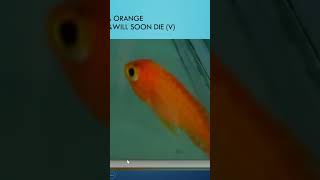
Dr. Gerald Bassleer diagnoses an Apistogramma with three parasites and organ damage: Ichthyobodo on the gills, a large gill fluke, and massive Hexamita in the gut. His treatment uses sea salt and water changes first, then combined antiparasitic and antibacterial drugs, followed by internal medication after 48 hours to target the remaining infections.
Chapters
Hello, dear aquarist! Welcome again to one of my videos on a case that I examined during my work as a fish doctor. And today you selected one about Apistogramma, a dwarf cichlid that has been tank-raised in Europe. Apistogramma cacatuoides orange. Very nice fish, but sometimes with very nice diseases. For me as a fish doctor, it's a pleasure to see specific diseases. And this fish had a mix of diseases that I want to share with you with my PowerPoint, where the Apistogramma had tubercles in the organs, had gill flukes, parasites Ichthyoboda or Costia, and also Spirulina hexameta. Well, this case 360 is a jewel for me as a fish doctor to examine these kind of problems. My books on fish diseases can help you to understand how to prevent fish diseases, how to diagnose, and also how to treat. Many information about medications, and they are available in different languages: Here I show you the Apistogramma cacatuides orange that is clamping the fins and wasting away. Look at this one, how badly that fish is looking. Others still look fine for now, but for the coming days they might show the same problem. Look at that fish, you see also the respiration is heavy. This fish is suffering and that is the one I took out for examination. I found after taking a skin scraping those tiny flagellated parasites called ichthyobodo, used to be called costia, of course having an impact on the skin of the fish, causing damage, causing irritation. In the gills I found damage. Look at the badly damaged gills here deteriorated, rotten away by bacteria and caused by the parasites, the Costia, Ichthyobodo. Ichthyobodo is causing damage, it's causing invading bacteria. These parasites are really badly damaging the fish, the skin, the gills. Here I show you again. All those parasites around parts of the gills that still look healthy for now, but that will be gone in the coming hours, days, badly damaging the fish. So parasites we don't see with the naked eye. We see the clamped fins, maybe some turbidity, cloudy skin. Sometimes we can see that, but the skin scraping already told us, wow, costia. And the skin scraping could have told us that we had to start the treatment. And those parasites are also in the gills. We also found a few gill flukes, like this big one. Well, the gill fluke is also damaging the gills and causing serious risk of bacterial infection as a secondary invader. Internally, we found tubercles. Also here, one in the intestine and one around the intestine. in the organs, in the gut, here and here, tubercles. We found parasites next to the intestine or in the gut, released into the fluid, or in the intestine, or outside, because taking the sample, it's paranoic. Hexamita! Not making the fish happy. Look at them here, there's one little tubercle here, and around here I can see many thousands of Spirulina or Hexamita parasites. So that's another parasite. So look at the mix we found. So it needs different steps of treatment. You have to understand this is a complex disease. First of all, I always recommend do a good water change before you start treating. In this case, you can add 2 grams of sea salt. That slows down the production of the parasites. But also check your filter, is it still okay? Check the food quality, is it still okay? Check, do your proper checking. Second, Treat the devastating gill infection. Combine antiparasitic and antibacterial medication like you can combine Farnamore and Medimor from Aquarium Münster as a mix to control these kind of infections. Parasitic control, bacterial control. Ask your pet shop for advice. Third, after 48 hours, do a water change and treat with metronidazole and furaltadone. Or oxytetracycline to control the spirochete infection and the secondary bacterial infection internally. Because also internally the parasites are causing damage and a risk of bacterial infection, causing the gut to be bad condition. And that's a risk for bacterial infection when the gut is leaking, and that is usually caused by those parasites. Fourthly, treat the gill flukes also, maybe after 1 week after all those treatments. Not always easy to combine it all together. You can try, but try to follow these steps. Ask your fish doctor, go to your pet shop or aquarium shop, or see the details in my books. And at the same time, you can help with a functional fish food that helps the immunity of this badly damaged fish, particularly the ones which are very badly damaged. They will not eat, they will not have the chance to take up the Dr. Bassleer Biofood La Pacho, they will not respond well to the medications. But it's the other fish, the other 99%, which is still looking to be in good shape but also might be slightly infected yet. So you you have to treat as soon as possible to prevent more losses. My books can help you to understand fish diseases. Go for the link below where you can order them. And you also can go to my Patreon link where you can get more teaching on preventing fish diseases, how to put fish in quarantine, how to diagnose fish diseases. Many lessons I'm teaching there. Okay, well, that was it for this complex disease. A beautiful Apistogramma cacatoides orange, but with a complex disease problem and not easy to handle. But I hope I teach you some lessons what you can do about it and that it improves your quality as an aquarium fishkeeper. Subscribe to continue to learn more. Thank you for