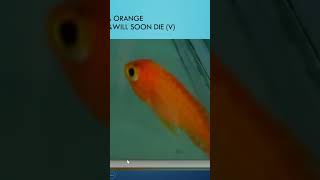
Gerald Bassleer examines a Golden Orfe killed by bacterial dropsy, showing popeye, raised scales, and massive internal fluid. Pseudomonas fluorescens caused the infection, likely from overcrowding and poor nutrition. Treatment requires antibiotics, better water quality, and lower stocking density, though heavily damaged fish rarely survive.
Chapters
Hello, dear aquarists! Today I can show you a video on my research on a golden orf, a pond fish, Leuciscus idus, which is a common fish, very interesting for those that like to keep pond fish. Not the koi keepers, but the different kind of pond fish keepers. And the Golden Orf is being pond-raised a lot in Western Europe and of course having a risk of serious problems. And I would likely, well, admit that it is usually caused by excessive high-intensive mass volume breeding, causing a risk of, well, infections. And this is something that breeders should be aware of when they are breeding fish, to take care of precautionary matters. That preventing diseases is part of the industry, and especially overcrowding and good water changes, good water management, and particularly good feeding practices. So I will show you the, the examination I did on a Golden Orf that had a bacterial infection that caused, in this case, the dropsy or ascites in the Golden Orf. This is my case 361. My books on fish diseases also explain on pond fish diseases. Particularly the new illustrated guide talks about koi, goldfish, the pond fish, and the very most— I would say the most common diseases and the treatments you can apply. Here I show you the Golden Orf that I examined. You can see some Exophthalmia, some Popeye you can call it. I see the raised scales, you see some extended belly, some dropsy. See, you can see the raised scales, very typical here, which is called dropsy or ascites. Here I show you another part of the body, and that's the belly with some red patches, which is typical for this disease. That the anus and at the belly, the red patches appear, which is typical for this dropsy or bacterial infection. And in most cases, those red patches on the belly and the anus are most likely bacterial infections. So if you have any fish showing this sign, well, you can easily say, well, this is the bacteria causing this symptom, this sign of disease. When we examined the gills, well, you could see the gill rot. I call that gillmonia. We have pneumonia for mankind with their lung infections, and this is the gillmonia, the serious bacterial gill infection that kills the fish. Here is another part of the gills. Very serious gill rot. So the fish will suffocate, no exchanges of gases, and the fish dies quickly, very quickly. Here we see the Dropsy after— well, the Golden Orf with Dropsy after dissection, and you can see inside there was a lot of fluids, a massive amount of fluid in between the organs. We examined the organs and we particularly found that the kidneys were badly damaged and, well, lacking proper function. And here I show you the video of the kidneys and you can see how black the parts are. So there is insufficient action of the kidneys anymore and that is of course having a serious impact on the fluids in the body of the fish. And also has an impact on the function of the gills because the gills take over the function of the kidneys when the kidneys are failing. And in this case, well, the gills are also badly affected with bacteria, so you can imagine this fish cannot be cured anymore. Maybe the other fish in the aquarium, which are not so heavily infected, but this one was so badly affected that we could also see here on the left the spleen in bad condition and the liver in very bad condition. Those are pathological signs of bad organs. The treatment for the Golden Orf? Well, it's a serious bacterial infection and in most cases this is caused by the bacteria Pseudomonas fluorescens. The original cause could be stress, poor feeding, overcrowding, etc., etc. I explained that in the beginning. Well, check the parameters, avoid overcrowding, and adjust the feeding. Antibacterial medication with antibiotics shall be needed in this case. Ask your pet shop or your fish doctor. For heavily infected fish, it's too late to treat. They are too badly damaged. And you can help with a functional fish food to improve the immune system of the fish. And I could recommend Dr. Bassleer Biofish Food Forte. Also suitable for pelt fish. Take your actions and try to save the fish as soon as you can. And here I show you that Golden Orf with that red anus, typical for an internal bacterial infection. Books on fish diseases, you should have them because they teach you good lessons of fish diagnostics and good treatments. Maybe you need a training? Go to my Fish Doctoring practice at my Patreon. That will help you to become more professional or more advanced aquarist. So I hope this short video on a Golden Orf with a bacterial infection teach you a lesson. Subscribe to learn more. Thank you for watching.