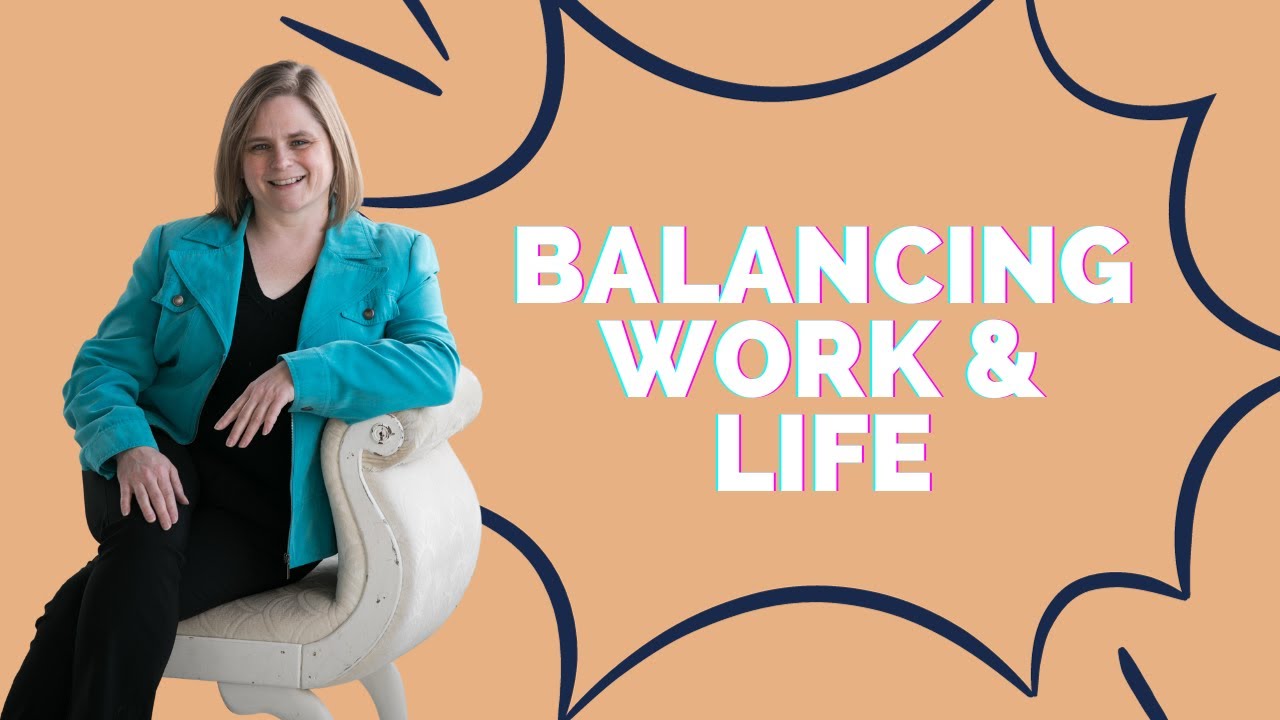
In this episode of the Overgivers Anonymous podcast, host Angela Bondo (also known as Angela Mondor) addresses the unique challenges neurodiverse entrepreneurs face when trying to achieve work‑life balance. She reframes balance as a dynamic seesaw rather than a static scale, emphasizing that different life phases (young children, adult children, aging parents) demand shifting priorities. A central mindset shift she advocates is viewing the business as a business—not a baby—so decisions can be made objectively. She stresses that personal health (sleep, nutrition, exercise, mental stimulation) is non‑negotiable because it underpins the ability to serve family, clients, and the business. Practical boundary‑setting tactics are shared, such as using a closed office door with a changing sign, sticky notes on laptop screens, and clear communication with household members. Time management and delegation are highlighted as essential tools for scaling without burnout, with the reminder that balance is not a 50/50 split but a rhythm that feels comfortable each day. Throughout, Angela encourages presence, self‑compassion, and flexibility, urging listeners to stop self‑criticism and instead create sustainable, joyful routines that honor both entrepreneurial goals and personal wellbeing.
Chapters
Welcome to the Geeky Girl channel, where we empower neurodiverse entrepreneurs to design their business for their unique needs. Being neurodiverse can come with its own set of challenges, and I know that because I have my own. But it also means that you have unique strengths and abilities that can set your business apart. The key is to leverage those strengths while also addressing the areas that may cause you overwhelm. And I know that that's something really important to all of us— the overwhelm we feel, whether it's in our business, in our personal lives, it can be soul-crushing. So on this channel, we'll start to share strategies with you and tools to help you to create a sustainable business that allows you to consistently earn income while also taking care of yourself. So join us as we navigate the world of entrepreneurship and discover how to thrive as a neurodiverse business owner. Let's get into the video and start to learn how to create a business that is tailored to work for your unique needs. Hi and welcome to this episode of the Overgivers Anonymous podcast. I'm Angela Bondo, your host. Today I'm going to talk about balancing work-life balance. Work-life balance balancing. Okay, let's be honest, this is a massive undertaking to a lot of us as entrepreneurs. Um, I started my business back when my kids were littles. They're no longer littles, they're adults. But, you know, I've watched as the time has changed that the balance changes. Lots of time people think of balance like, like, you know, those scales that are those legal scales? You have to balance this side with that side. So you have to add to this side to make that one come up. That's not what life balance is. That's not what work-life balance is. It's more like a seesaw. Sometimes this one needs more and sometimes that needs more. There's more of a pivot in the middle in terms of where we are. I talked about this before in other— on other episodes. I know I have. But the idea of being present, being mindful in these moments is way more important in terms of balancing this work-life balance. So it's tough because of the way that our business is connected to ourselves and connected to our home life. Number one, it's important to understand your business is not your baby. I said it, I'll stand by it. It was something that I was taught years ago by one of my mentors, and when she first said it, I thought, girl, you are wrong. This is like my business is my baby. But when I was able to step back and really look at it, taking out the connection from a motherly perspective into the business, really gave me a different perspective on my business, being able to look at it as a business. And then I'm making decisions for the business. We were working towards something for the business as opposed to me trying to raise a business. The mindset was different. And sometimes that can be difficult to understand and that's totally okay. But there can be some blurred boundaries in terms of your time. You know, you're working long hours inside the business, but you're also working long hours with your family. And it might not even be the littles that are in your way right now. Maybe it's aging parents that you have that are causing some work-life unbalance in your life. So it's important for you to look at what is it that you have on your plate? What are the things that you need to do from a family perspective or from your life perspective? And then how does that work with the things that the business requires of you as well? How do you work those things in? Some people talk about, you know, the hustle mindset, like working from midnight till 4 AM on your business and then getting up at 6 and then work. If that works for you, great. But I can tell you that a lot of us burn out in that mindset. That being said, I remember when my kids were little, I did work on my business from about 10 PM till 2 AM sometimes, because that was the only time that I had that I could work on things that I wouldn't get interrupted on. So when you're looking at these things inside your business and figuring out where this balance is for you, it isn't about making sure that each of them get equal time. If you're doing a launch in your business, your business is going to require more time. If your kids are sick, they're going to require more of your time. It's about making sure that you're still getting the things done that are non-negotiable in terms of making sure everybody's fed and clothed and cleaned and bills are paid and that kind of thing inside your life. But then also in the business that You know, the goals that you set for the year, the quarter, the month, like those goals are still being worked on. You're getting these tasks done to carry you through to your end results in your business. The balance includes you too. This is what's really important. Okay, let's get really honest here. Your mental health, your physical health, is more important than any of it. Because if you're not functioning at your best, how can you possibly give your best to your family? How can you possibly give your best to your clients? How can you possibly give your best to your business? You can't. You need to make sure that you are comfortable with the balance. You're getting enough sleep, you're eating properly, you're getting the exercise you need, that you are getting the mental stimulation that you require. What is it that you require to be yourself, whole and, and wonderful, so that you can spread that whole and wonderfulness outside of yourself? Sometimes that falters, and remember, it's the same as everything else. If things slide for you personally, it's okay, and you can readjust and bring it back up. Making sure you're creating boundaries, strong boundaries around things. If you're working from home like I do, um, I currently have an office where I can shut my door. I actually have a sign on the door and it'll tell people what I'm doing at this particular time during the day. I can change the sign. I can give them notifications out there so they know what's happening inside the room so that I can be disturbed or I can't be disturbed. Those sorts of ideas. Again, my kids are all grown up, so it's a little easier in that man— in that way. There's times when I've had to work Not in an office though, where I've had to work in sort of communal areas of the house, or I've had to work in communal areas of other spaces as well. How do you perform those boundaries in those situations? So there's lots of different ways that you can do that, but find what works for you. It's possible. I know that one of my clients actually, um, she works in a communal area of her apartment, and her husband is there sometimes. And so for her, they put a sticky note on the top of her, um, laptop screen so that it indicates that she's working on something. And when he walks by, he can see that, that flag, the indication that something's going on, so he doesn't disturb her. What works for you and what works for somebody else is going to be totally different, but you got to find out what are these boundaries that are important to you. For me, my number one boundary is making sure I get enough sleep. That's like a pinnacle boundary. I need to be able to be going to bed at a certain time. I need to get enough sleep. And in order for me to do that, that means I have to work everything else around that sort of schedule. That's my number one thing. If I don't get enough sleep, this brain just doesn't work right. Nobody needs to see that madness. So for me, sleep is important. So I need to make sure that I'm putting other things around that concept. I don't work past my sleep time. I don't cut into my sleep time. If I have to move my sleep time, there better be a darn good reason for it. Because I know that that is really important to me. So I also know that I have really, I have obligations to my clients. I have obligations to my business. I have obligations to my family. Those are big things that go into my calendar at the beginning of the week. And then from there, I can work around what are the other things that need to get done inside the business and those kinds of things. Time management, of course, is huge when it comes to this delegation. Right? So as your business grows, you can start to delegate more things, thinking about what are the things you can take off your plate so that you can have a better balance in terms of your family life and your personal life. There's lots of different ways that you can find moments or ways to balance things in your life. And remember, balance isn't 50/50. It just isn't. Every single day isn't going to be the same. I'm sorry to those of you who want it to be, and woohoo for those of you who don't. But making sure that you feel balanced in a way that you feel comfortable, that each of the avenues of your life, your business, yourself, that you're all being looked after. And sometimes that means that something needs more attention than another thing. And that's okay too. The balance isn't about even. The balance is simply finding a rhythm that you feel comfortable with. Okay? And as a neurodiverse entrepreneur, this is even more important. Being able to make sure that you feel good about where you're spending time. Stop shitting on yourself. Be more present in what you're doing. If you're present and you're fully present doing your work, you're not going to be feeling guilty about what you should be doing over there, because if you're fully present over there, you're doing a good job there too. So that's what the balance is all about— making sure that you're comfortable, that you are looking after you. You will look after everybody else, making sure that you're able to spread yourself not too thin, but that there's still some stuff left over for you for what you need to look after yourself as well. I hope that you find some ways to balance your work and your life in a way that makes you feel joyful rather than exhausted. Okay, hope you have a fantastic week. I'll talk to you next time.