Find Your Unique Time Management Flow: FREE Quiz!
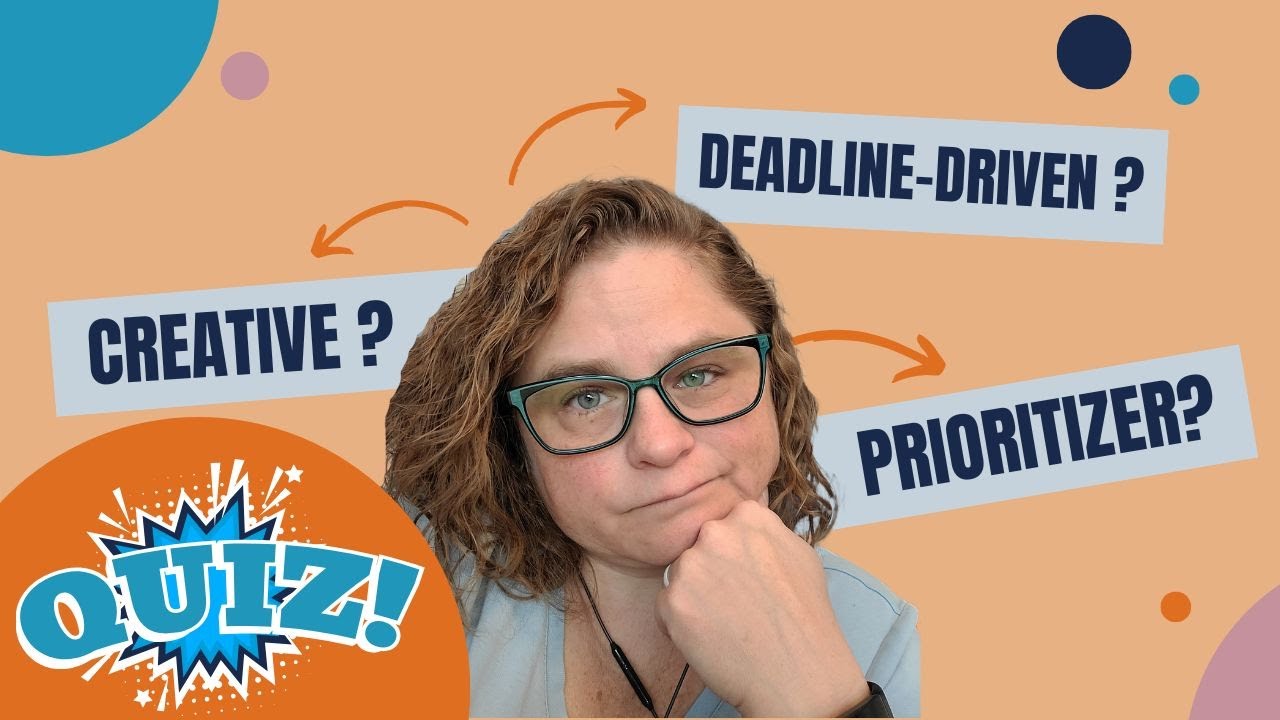
Angela Mondor shares a free quiz that sorts you into one of five time-management styles: Prioritizer, Time Blocker, Spontaneous Creator, Task Juggler, or Deadline-Driven. She uses strategies like front-loading calls to avoid waiting anxiety and blocking 50-minute work chunks to track what actually works for you.
Chapters
Welcome to the Overgivers Anonymous podcast. My name is Angela Mondor, also known as the Geeky Girl. In this podcast, we're going to be talking about some amazing things to help you get over overgiving. Hi, and welcome to this episode of the Overgivers Anonymous podcast. My name is Angela Mondor. I'm also known as the Geeky Girl, and I have some cool, super exciting things to talk to you about today. I know that you'll love What I have to share. Okay, so we're talking about time management, but, or as we like to say around here, finding your personal flow. It doesn't have to be scary or weird or whatever. Let me tell you that we created this time management quiz for you because it's designed specifically for NeuroDivergent people to find their flow. So whether you're someone who loves structure and you thrive in that structure, or you thrive in spontaneity, This quiz is gonna help you find your own personal rhythm, your personal flow. It's gonna help you to decide how you can manage your time in a way that works for you. Okay? That's what's really important because there's not just one way to manage your time. There's not one way to time block. Time management is unique to you. Each individual human is gonna have a little bit of a tweak on that. So the reason why we did this is because I've been working with neurodivergent people for a very long time. I myself, of course, you know it. I'm neurodivergent too. And sometimes even as a neurodivergent person, you find your flow and then you lose your flow. And so this quiz you can come back to and retake it and figure out what's the right way for me. Because sometimes we are a little bit more in desire of having structure and other times we need more flow. So it's gonna help you to kind of get some things together for yourself. All right. So we created this because It's gonna help you figure out what works for you. And when you find out what works for you, you actually become way more productive, become very effective, very efficient. You get more done, and it allows you to be able to structure your day in a way that works for you. I learned a few years ago that it was really important for me to organize my day so that it worked best for my brain. One of the things that I did 2 years ago during the summertime was that I took off every Friday. And so my husband's a teacher, so he's off all summer. And so we decided we would create Freedom Fridays 2 summers ago. And so that was awesome. I took Fridays off, and I had to work differently in those 4 days to make sure I got everything done. But it was a beautiful experience. Then I realized that during the work time, when, when my husband was back at work, so fall, winter, spring, during that time, it was important for me to keep that Friday Still to myself. So I get to do things like record this podcast for you on a Friday or work on projects on a Friday, things that I can do uninterrupted. Those are what my Fridays are for now. And then when I take off the Fridays in the summer, which I still do because it worked out really, really well, we really enjoy our Freedom Fridays, then I just have to move things differently during the weeks. So remember that. Different cycles, different times, different spaces will change the way you, you work inside your business and the way you find flexibility or rigidity, whatever works for you. You will find those rhythms that work for you inside your business. Okay. So you may have a different time management type than maybe another friend, another entrepreneur that you work with. Maybe you even have a different time management type at different times during the year. Maybe you have a different type when you're working on a specific kind of project. Maybe when you're busy, Or slower, whatever. So in this quiz, we have some time management types. We have the prioritizer, the time blocker, the spontaneous creator, the task juggler, and the deadline driven. So there's lots of different ways that you can find your rhythm inside there. But by doing the quiz, it gives you an idea of where you fit inside this type, and it'll give you some ideas on how you can then plan out your work so that it works for you. Now, remember, when we're talking about time management, it isn't just about what can I put into my day, but it's also about where in the day I'm going to put it. Okay? So, for example, you want to make sure that you are putting things into your day in the best possible order so that it supports you in the way that you think. So let's be honest, some of us neurodivergent people have this wait thing that happens. So if you have an appointment at 2 o'clock in the afternoon, the entire day might as well be dead to you because you're waiting for 2 o'clock when you have that appointment. So I suffer with that quite a bit. So most of my client calls I take first thing in the morning. I front load my day with those appointments so that I'm not waiting for those things to happen. And then my afternoons are clear for me to be able to do some focus stuff. Trouble comes in when I have an appointment that's not business related. It's maybe for a doctor's appointment or dentist appointment. I try to push those as high up as I can that's close to those other appointments. And sometimes you just can't get in on time and your appointments are later in the day and there's some struggle bus time inside there. So I make sure that I can have tasks available during that time that are not going to require my brain to be like in hyperfocus mode, or we call them low spoon tasks. It's not going to require a lot of effort to get the things done, and I can kind of, you know, go through them much like a rabbit would jump through a field. I can squirrel through them, let's just say. So whatever works for you, that's what's really important. And I get it, things that change are difficult to handle. And for us as neurodivergents, unfortunately, when something works for a long period of time, sometimes it stops working. So you can come back to this quiz. The quiz is free. We did this specifically because I wanna make sure it's available to you to take as many times as you like, to be able to understand where you're at today and test and adjust. So when you get this quiz and you go through it, and you find out which one, which style you have, and you start to make some changes to your schedule, then it's important for you to revisit everything. Is this still working for me? Are there things I need to change? How do I need to look at what I'm doing inside my time management? Just because you time block a certain way doesn't mean to say you're not going to change it. Essentially, me saying that I'm putting my client calls in the morning, that's time blocking. That's This is the space for time for client calls. This is the space for doing other work. Fridays are a space for a totally different thing, right? So that's technically a version of time blocking. Whatever works for you is what's important, but what's really valuable to you is to track it. So use something that you're going to be able to see whether or not it's working for you. So inside the Rockstar Planner, we have weekly planning pages so that you can actually plan out your week. And then you can revise and revisit. You can say this worked for me or that didn't work for me, and you can go back and make changes. So you don't have to have the Rockstar Planner to make this happen. You can use any planner you like. You can write it down on a piece of paper, use an Excel sheet, whatever works for you. But find something that you can use repetitively in the exact same way so that you can see what's working for you and what's not working for you as you create your own personal time management style. And then when things go sideways, as sometimes they do, You can go back and retake the, the quiz again and see if you're still in line. Maybe things have changed. Maybe it's something different that you need to do. Ultimately, what's really important is making sure that you are looking after what you need and that your brain is satisfied with the little nuggets you give it. Knowing what works best for your brain is important, not just about which day, but what time, right? When are you best able to do this task? If you do manage to track it in the Rockstar Planner, there's 50-minute increments for you to block it. So you can actually see, I thought this was going to take me 30 minutes, but oh, it took me an hour. But then when I did it this week, I did it at this time, and instead of it taking me an hour, it took me 30 minutes. Whatever the case may be, you can actually see where you are finding the time and when the time is working better for you. Those are some tidbits to take away. I hope that you take the time. To go look at this quiz and to go do it for yourself. Like I said, it's a free quiz, give you some insight in how you think and how you do things. And then from there, you get some tips and see how you can change what's working or not working for you, as the case may be. Make some tweaks, and hopefully when you do that, you'll find out that yes, it is in fact awesome. You can become way more efficient, way more effective. You can get way more done, and you'll be less overwhelmed because you're working in a time that works best for you. You're not constantly worried about what other people's schedules are. You've created one that works for you and everything falls in place that way. I have to tell you that it has taken away a lot of stress out of my life. I have been less overwhelmed by scheduling because I know what works for my brain, because I know what works for the rhythm inside my business. And I hope that you are able to create that for yourself as well. I hope you have a fantastic week and I'll talk to you next week. Thank you so much for listening to the Overgivers Anonymous podcast. Your support means the world to me. You can find show notes for this episode and other goodies at Overgiversanonymous.ca. And if you enjoyed this episode or you enjoyed the podcast in general, why not join us in the Overgivers Anonymous Facebook group where you can connect with overgivers from all over the world? Head on over to geekygirl.ca/group.
More from Angela

How to Leave Your Business for 3 Months (Without the Guilt) with Candy Messer

Neurodivergent Entrepreneurship: Building a Business Without Burnout with Alyece Smith




Stop Being Your Own Worst Critic: Mindset Tips for Success with Sandee Sgarlata

ADHD & Success: Navigating Neurodivergence in the Workplace with Sarah Olaifa


