From Chaos to Clarity: Master Task Management
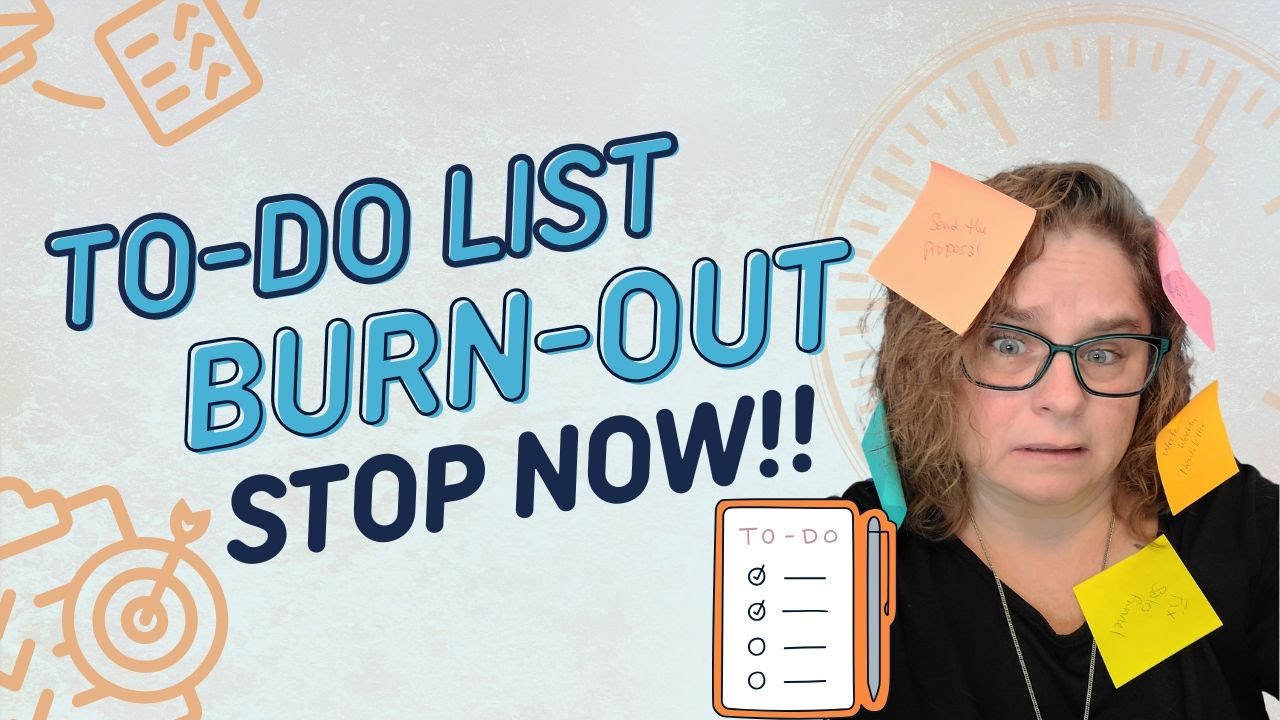
Angela Mondor explores why traditional to-do lists overwhelm neurodivergent people and shares how she moved from sprawling paper lists to energy-based prioritization. Instead of due dates, she matches tasks to her current energy level using color-coding, top-3 daily lists, and quick resets like music or showers.
Chapters
Welcome to the Overgivers Anonymous Podcast. My name is Angela Mondor, also known as the Geeky Girl. In this podcast, we're going to be talking about some amazing things to help you get over overgiving. Hi, and welcome to this episode of the Overgivers Anonymous Podcast. My name is Angela Mondor. I'm also known as the Geeky Girl. And today we're going to be talking about to-do lists, how to tell if your to-do list is burning you out. We love our to-do lists. We love to write all the things down. Sometimes it works and sometimes it doesn't. So let's peel it apart. Let's have a conversation. Let's dive into to-do lists, what makes them great and what makes them suck. Now, we do love our lists. Let's be honest, our neurodivergent brains love to have lists, but sometimes the list becomes sources of overwhelm or guilt. Sometimes it can cause us to shut down. So we're going to explore what happens when that task list becomes too much, how to spot some subtle signs of burnout and how you can get some small shifts that can help you reclaim your energy and clarity. Okay, I remember so clearly, and I appreciate this is a while back towards the beginning of my business when we didn't have a lot of tools to manage our task management and that kind of thing. But I remember I had a piece of paper, like a notepad, and it was, you know, one of those little 5x8s or whatever. There's little ones, right? And I had my task list down. And then one day it was like, ah, this isn't big enough to write all the lists of the tasks that I need to get done. I need a bigger piece of paper. So I moved to a bigger notepad. And then it was like, ah, that's still not enough room. I need 8.5 by 11 now. I need a whole letter-sized piece of paper. And every morning I would rewrite everything on that list and move it to the other list. And then eventually I got to a point where I was now using a legal pad, right? 8.5 by 14. Inches. And I was like moving all that content over every day. It was a nightmare. I couldn't use the same list over and over again because I didn't like how messy it was, like to cross things out in between and then to have some that weren't crossed out, so I'd have to rewrite it. I mean, it was a whole thing. So that caused a whole lot of burnout in my world. That caused me to be extremely exhausted every single day. It was like, ah, I'm doing this again, I'm writing it over again. It was paralyzing because it was a mess and I couldn't organize it. It wasn't until I realized that the things on the list were just things that I knew that needed to get done at some point. It wasn't things that needed to get done today or even tomorrow or even this week. It was just a long list of things that needed to get done, and I hadn't categorized them, I hadn't organized them, I hadn't put any thought as to what they were. And so I just kept looking at this really long list that kept growing and growing and growing and adding over and over again to my list. It made me feel like I was falling further and further behind because The list never ended. There was never a day when I went, oh, it's done, I've completed the things on my list. It never ever happened. And so I needed to figure out how to shift and reframe and how to change my approach to the lists. So if you've been in that boat, if you're still in that boat, that's okay, we can help you. It's all good. So when we're looking at why, as a neurodivergent person, the type of— the way that our brains work, there's a few things that can really play into a to-do list. Yes, we like them because we can physically see the things and they're on the table, but a long to-do list requires constant decision-making. So decision fatigue can happen quite easily for us because we're constantly trying to figure out, what should I do next? What should I do now? How should I do this? And it can be very, very draining to our energy levels. Task paralysis and shutdown. If you have an entire list of things and everything feels important, or everything looks like it needs to be done now, your brain can freeze because you don't know What needs to be done first. There's this spiral of what should I do, how should I do it, when is it due, is it overdue yet. Then there's the whole self-judgment piece. You think, oh, I've never accomplished an entire list ever, I suck. Even if you accomplished things on the list, you'd be like, oh, I didn't get to the end of it. The all-or-nothing concept, right? So if this whole list can't be completed, then I might be Fill in the blank, whatever word it is that comes up for you. Maybe there's no point even starting if I know I can't even get those things done. That's certainly something that our brains have with this, you know, if you have that rigid port of, you know, all or nothing piece. There's also a misalignment for yourself. Maybe you're masking. It might be masking as laziness, or maybe you're overwhelmed. So if you're feeling resistance towards the task, it doesn't mean you're lazy or that you're procrastinating. It's a signal that it's misaligned or you're burning out. Maybe you're overwhelmed. So there's a lot of things to think about when you're looking at this long list. There are some things that you can do to still use lists. There's definitely things that you can mitigate these things with. If you are still doing lists, you're not using online tracking like ClickUp or something like that, then you certainly can still use your list. But here's some things to think about. You want to think about how you can take actions to make this better for yourself. So prioritization doesn't have to just be prioritized based on the urgency of something. You can also prioritize based on your energy. So if you're looking at a list of tasks, you can say, what's the one thing that— if you're having a really low day, what's the one thing I can do right now of all the things on the list? Even if it's not the most urgent task in terms of time, your energy is a priority. So when you're looking at what feeling, what kind of energy do I have right now and what do I need to accomplish? Sometimes it's about how do I change the energy? There's a shift that you can do to make your energy, to change your energy. Sometimes you have no choice, like the energy just is what it is. And then what can I do with this energy? What are the things that I can do? We have no-brain tasks, right? So if I'm in a task, if I'm in a place where it's just like, ah, the energy is heavy but I just need to get some stuff done, I can go to that list and go like What are the things that I just don't need a lot of energy for, or I don't need a lot of brain space for? Changing your energy. If you have something that is really important to get done for a client or something else, you've promised something to somebody, there's different ways to change your energy. For me, one of the quickest ways to change my energy is music. I can put on specific types of music to change my energy depending on where I'm going. If I'm mad, I can put on my angry list. It helps me to get through those emotions. If I just need a pick-me-up, there's Uh, energy. There's a playlist specifically for that. So if music works for you, you can do something like that. Some people, it's exercise. They need to get up and move, and they need to go do something. So maybe you need to go take some time and go do some exercising, and then from there you can change your energy to get into the task mode. Maybe it's something different for you. Sometimes, literally, I have had days when the day just didn't start out right, and I need to get back in the shower and start all over again. It's not because I was out gardening and was, you know, got covered in dirt or something. I just needed the shower to reset my day. I've had times when I needed to just get out of my office and go work somewhere else, or I needed to get out of my office and go lay down and read a book or something to move through to a different type of energy. So yes, you can change your energy, but it's always better to try to work within the energy that you have first. So prioritize your tasks based on your energy. Hopefully, then you don't need to change your energy to make things work for yourself. Okay? Also, think about— you can categorize your list by color if you'd like. You need a table of contents, obviously, as to what color means what, but it could be low energy or creative energy or admin mode, brain-dead tasks, right? So you can quickly see color-wise what's on that list. There's lots of different ways that you can prioritize things. And it doesn't always have to be on due dates. Now, when you're looking at this long list of tasks, first of all, I wanna say that I want you to give yourself permission to do less. One day you might get 20 tasks done, and the next day you might get 1 task done, or 3. But if you look at those tasks from an energetic perspective, those 20 tasks might be very low-energy tasks. They might be really easy for you to do, and of course you were able to get 20 of them done. The heavier tasks, maybe it was a bigger task. It cost you a lot more energy to get done. And so therefore it was only one. So be careful how you quantify your time. You know, this was quantified based on how many tasks, but you could quantify based on actual time as well. Personally, I know that if I've done 4 hours worth of time tracking type tasks, then I've done it. That, that's enough. If I'm really tired and I can't figure out why I'm tired or why I'm exhausted, I can go look at my time tracking and go, Ah, that's because I did 6 hours of time tracking today, or 5, or whatever. But always give yourself permission to do less when you're having a day that is not optimal. Okay? So sometimes you need to do things that are more aligned with what is working for you, what is happening for you in your body and in your brain, and then you can be more impactful that way. So it might be that you can't do that task today, but you can do this task. And if you'd focused on this one, you wouldn't have done a great job on it, but focusing on this task, you can actually do a better job of that. And so sometimes when we give our permission to do less and to focus on those types of things, you can actually have way more impact in those tasks than if you'd pushed through and done other things, okay? So you could do a top 3, for example. If you— some people have a hard time picking one, but you could do a top 3, right? Say, what are the 3 top things I wanna get done? And then from there you can say, which one do I want to do most? What is the most energizing task on this list? And then help you to be able to do it in that way. It might help you to see some patterns for yourself as to which tasks bring you the most energy and which ones bring you down. Because, you know, the ones that bring you down, the ones that are harder to do, might be something you need to outsource. That's an entirely different conversation. So it's also good to redefine what productivity looks like. You are a neurodivergent human being. Which means things look different to you than it does to the neurotypicals. Don't worry about task completion. It's more about the clarity of the work that you're getting done, the alignment to yourself that is, that these tasks are your, that you're working on, as well as the sustainable action that you can take. If you are working on things and they don't feel aligned to yourself, to your goals, to where you're headed, It's gonna be really hard to get your brain to believe that it needs to do the thing. Most of us with neurodivergent brains need to have some buy-in on these things. And clarity. Are you clear about what needs to happen? If I get a task and I'm like, hmm, what do I do next? Or how am I supposed to do this? Or where, where did I leave off on? The minute I start to ask myself those questions, I know that I'm not clear anymore. I need to be really clear on what it is I need to accomplish in those tasks. And I need to change that. And then the sustainable action, we don't wanna have these ups and downs and ups and downs and ups and downs of, you know, high energy and burnout. It's really important to try to keep it a little more like a gentle wave rather than like, you know, something you would wanna go surfing on. I've never surfed in my life. I don't know what that's like, but it just feels that way, you know, gentle ripples as opposed to this like massive wave off the ocean. So if you're working and you're constantly feeling this, then yeah, it's gonna lead you to burnout. Mm-hmm. And if it's your to-do list that's driving that action, let's make some changes because you really can make some massive changes in a very short period of time. So if you have a long, unfiltered to-do list, like I was talking about before at the very beginning, it can, it can lead to that decision fatigue and it can lead to shutdown and our neurodivergent brains just don't like it. So try to take things out of that list and put them somewhere else for yourself. What are the things that you can do energetically right now? What are the things that you can prioritize based on you and your needs, not necessarily on dates? And then think about your energy. What does that look like for you? How can you create a to-do list, a flow of work that works best for you? So if this all sounds like stuff you're dealing with, then you're gonna love what I'm gonna be teaching coming up. We're gonna be having a masterclass, and so stay tuned because we're gonna give you some more information about that. It's gonna— essentially, we're gonna be taking your chaos and we're gonna turn it into some clarity because there's nothing like being able to say clearly, here's what I'm working on. These things are connected and they are aligned to where I'm headed, and I can sustain these things over the period of time that requires to actually get things done. So don't forget that it's important to look after yourself. And that it's important for you to put some boundaries around yourself and give your permission— give yourself permission. Do a little less. Maybe don't count how many things you got done, but think about the energy value of what you're doing and what you've accomplished that day. Okay? I hope you have a fantastic day. And like I said, keep watching because we're going to have information on how you can be part of the masterclass. Have a fantastic day. I'll talk to you soon. Bye. Bye for now. Thank you so much for listening to the Overgivers Anonymous podcast. Your support means the world to me. You can find show notes for this episode and other goodies at overgiversanonymous.ca. And if you enjoyed this episode or you enjoy the podcast in general, why not join us in the Overgivers Anonymous Facebook group where you can connect with overgivers from all over the world? Head on over to geekygirl.ca/group.
More from Angela

How to Leave Your Business for 3 Months (Without the Guilt) with Candy Messer

Neurodivergent Entrepreneurship: Building a Business Without Burnout with Alyece Smith




Stop Being Your Own Worst Critic: Mindset Tips for Success with Sandee Sgarlata

ADHD & Success: Navigating Neurodivergence in the Workplace with Sarah Olaifa


