Leverage Your Strengths as a Neurodivergent Entrepreneur
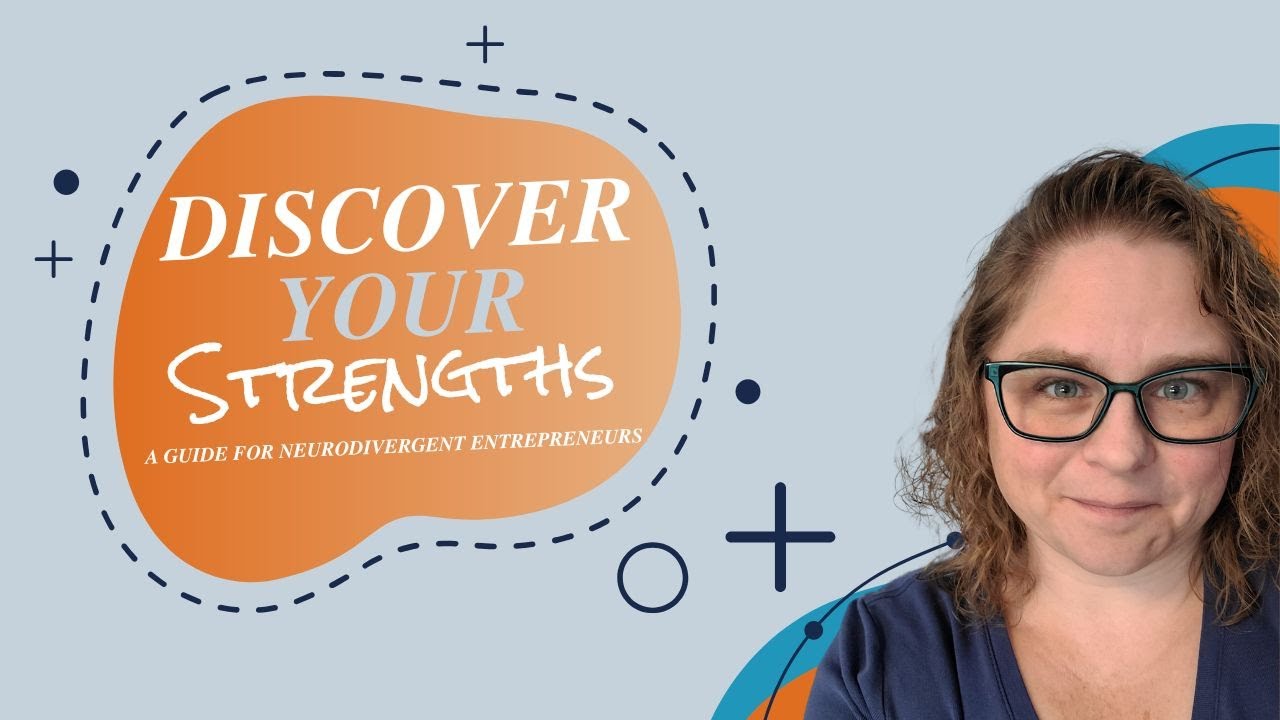
In this solo episode of the Overgivers Anonymous podcast, host Angela Mondor (the Geeky Girl) explores how neurodivergent entrepreneurs can identify and leverage their innate strengths while managing common challenges such as imposter syndrome, masking, hyperfocus, and strength blindness. She argues that focusing on weaknesses drains energy and that mitigating, rather than fixing, weaknesses allows neurodivergents to channel their unique abilities. Angela shares personal tactics—including recognizing masking, using hyperfocus intentionally, creating a “compliment wall” to surface external validation, and tracking energy through music, books, and entertainment—to combat self‑doubt and overwhelm. She uses analogies like pottery to illustrate the difference between enjoying the process versus chasing perfection, and emphasizes the importance of delegating or outsourcing tasks that don’t align with one’s strengths. Listeners are encouraged to solicit feedback from peers, review client success stories, and design their businesses around the strengths they already possess, while iterating and adapting over time. The episode concludes with practical calls to action: keep a journal, seek community input, and continuously refine how strengths are applied in business.
Chapters
Welcome to the Overgivers Anonymous podcast. My name is Angela Mondor, also known as the Geeky Girl. In this podcast, we're going to be talking about some amazing things to help you get over overgiving. Hi and welcome to this episode of the Overgivers Anonymous podcast. My name is Angela Mondor. I'm also known as the Geeky Girl, and today I want to talk to you about identifying and leveraging your strengths as a neurodivergent business owner, entrepreneur, However you identify yourself in that role, let me say that there's some common struggles that happen and we face these things non-traditional ways, obviously, because that's what's fun about our neurospicy brains. We don't typically fit into these typical business models. Now, I know that there's a lot of people that suffer from imposter syndrome, but we definitely have a lot of times where imposter syndrome is quite strong for us, for a lot of us neurodivergent people. And we end up focusing on our weaknesses rather than our strengths because we have been taught, especially if you're later diagnosed or you haven't been supported well in your neurodivergent journey, the stories that we've been told have been, you're not as good as, or you need to be as good as so-and-so, you need to be better, you need to be like so-and-so. There's these constant stories about us. Constantly looking and acknowledging and hearing our weaknesses over and over and over again. And it doesn't work. Focusing on our weaknesses, trying to be better at our weaknesses isn't what is going to help us be better. It isn't what is going to set us apart. And that is why I think it's important to really lean on and leverage your strengths. Now, I'm not saying ignore your weaknesses. Because that's just silly. But look at those weaknesses and mitigate them in a way that's going to help you to spend less energy towards them. Now, if you have weaknesses that other people are saying, oh, you should do, you should, you know, or you're shitting all over yourself about those things, really take a look at those things and see what are the things that you can do to change A, your perception about those situations, but B, how you interact with those things. As a business owner, when you first start out as a business owner, a lot of the business lands on your shoulders. You literally are everything about the business, and you have more time than money usually. And so that usually means that you're trying to do it all. And I'm not saying you can't do it all. I'm just saying that when you're trying to get it all done and there's things that are difficult for you, if you spend less time shitting on yourself and more time trying to figure out how you can get those things done or how you can be supported best to get those things done, you're going to be way far ahead. Okay? Now there are a few things. Well, there's a few, I mean, you are gonna have a different experience than I do, than anybody else does, that's for sure. But some of the things that you could be thinking about that can help you with these strengths and perhaps even some of the things that you have been doing along the way. One of the things we do is mask. So we put on the happy face or we tell everybody everything's fine, but underneath there's that self-doubt that happens underneath here. You're set, you don't feel like— You are fine. You don't feel like you've got it all handled. And so that niggling self-doubt that comes underneath there from the masking is detrimental. It's certainly not valuable to you trying to fix it, or it's not helping you. In fact, it's causing you to struggle more. So when you think about that mask you're putting on so that everybody else thinks you're okay, or that mask you put on so that everybody thinks you're normal, neurotypical, whatever the case may be, acknowledge to yourself that it's a mask. And it might make you feel better in certain situations, but honestly, be, be honest with yourself that it is a mask, that it is something that you are doing so that other people maybe find you more palatable, whatever that is. That's what masking is all about. We're trying to make everybody just look like when they see us, we're normal and it's okay. I encourage you to find ways through that to Stop masking. Obviously that doesn't— telling you to do that isn't helpful. I get it because in certain situations I still mask. So I understand that there's different places where those things are still important to us still. I mean, not important, but they're still used for us. Okay. And so, but when, when you do it, if you can honor yourself by saying, hey, you know what? I know I'm masking in that situation. It helps to reduce the self-doubt. It helps to reduce that feeling of not good enough because you know that you're not trying to live up to that. You know that you're doing it because you're trying to get through a certain situation or you're trying to get through a certain thing. Now, if you're inclined to have hyperfocus, obviously it can be a great thing. It can be an awful thing as well. Certainly hyperfocus can get things done. And I personally love the feeling of hyperfocus, diving deep and digging into it. In fact, recently I was gonna take an afternoon off to read because I hadn't been reading lately as much as I want. I read every day, but there were some books I wanted to get through. And I was like, oh, I'm going to take half, I'm going to take half a day and I'm going to sit down and I'm going to read and that's going to be my present to myself. Well, a project I was working on sparked. There was something there. And then I started to hyperfocus on all of the data and the automation. I just, I loved it. I had so much fun just continuing to dig down the rabbit hole and hours went by and I forgot to eat lunch and I forgot to go to the bathroom and I didn't drink enough water. 'Cause hyperfocus, but I enjoyed myself. So it can be great because it can help us get things done. We can't always control hyperfocus. Sometimes it just shows up and you either say, okay, let's go, or you get halfway down the rabbit hole and go, oh darn it, this is where I'm at. You can, you can work with yourself and your body and your mind. If you're managing your energy flows, you can help yourself through those or even to have hyperfocus moments. But it is like Alchemy to get that hyperfocus. I can't get it every time. There's times when I really want it to work, and I think the hardest that I, when I was like, I really want it right now and I don't get it, it's frustrating. One of the other things that we can have occur is a blindness to our strengths. I've suffered with that a lot myself with strength blindness. And part of it is, is that we just keep doing, we do, do, do, do, do, and we just assume that everybody else is able to do the things that we're able to do. And it isn't until I started to realize that there was things that I was innately capable of doing that other people weren't. And it was during those times when I thought, why doesn't everybody have the ability to do X, Y, and Z, or to be able to recognize that this was my gift? There are a lot of ways to look at this. If this is something you personally struggle with, like I said, you know, it was something I definitely struggled with. It wasn't until I started to ask people about these things. So they would say, oh my gosh, you're so good at blah blah blah, or I just realized that, you know, this thing you do, yada yada. And rather than just brushing it away like, okay, fine, yeah, yeah, whatever, I was actually starting to ask questions about it. It's like, oh well, do you not think XYZ, or are you able to do blah blah blah? And then when I start to ask those questions and started to lean in rather than brush off those compliments, I was able to look learn more about my own gifts, the way that my brain works, the way that myself works versus the way other people worked. Then I was able to ask other more poignant questions such as, when you see me or when we're working together, what do you see as something that is a strength of mine? Or what do you see as something that, uh, you think is really cool that I can do? That's when I started to put together My strengths and thinking about these things because I had strength blindness. I wasn't able to see myself. I'm still, I'm getting better. Um, but a lot of times it is about me finding from other people. So what I did at that time, I had a really good coach. I put up a piece of paper on my wall over here because sticky notes don't stick to paint. So I used contact stuff, whatever they call that stuff, on the back of the paper and stuck the paper to the wall. And then every time somebody says something nice about me or to me around me, I would write it down on a sticky note and I'd stick it to the wall. It did 2 things for me. A, it gave me the ability to see what people were saying about me that was positive and uplifting, which helped me be more positive and uplifting about the way that I talk to myself. But it also helped me see my strength through other people's brains, right? Through other people's experiences with me. That was really helpful to me. In fact, it lives there. It's still there today. It is still a valuable piece of information, I can look at that and say, oh, here's what these people thought of me, or here's, here's the things that are my strengths. And if I'm having a lower period of time, I can look at those things and they're helpful. I haven't added to it in a while because I'm getting better at listening, and rather than brushing off, I'm getting better at embracing and listening. So for me, that's how I dealt with my strength blindness, was to actually lean into those compliments or those conversations. And that allowed me to be able to say, hey, what can I learn about me through other people's eyes? Overwhelm is a thing, that's for sure. And I would encourage you not to change everything all at once, not to try to do all the things all the time. We can be overwhelmed by all kinds of things. And being able to manage my energy is something that's really important to me. I manage my energy through a lot of different avenues, and it depends on what I'm going through and how my energy is impacted. Definitely will manage, will matter on how I manage the energy. Right before I got on this to record this for you, I was listening to some music that was helping me to get into the right headspace to be able to do this for you right now. There, I'll read certain books to help me. Some people will say, well, which genre of books do you like to read? Honestly, I think about what my mood is right now and what I need to work through. And sometimes I need to work through some feelings that aren't great. And so I'll find a topic that will help me with that through somebody else, through a character's eyes. I can learn a lot about life through reading about characters in fiction. Podcasts obviously are really great things. TV shows, movies. I like to be entertained. Lots of people, most of us like to be entertained. However, I tend to find my entertainment as helpful for me to move through emotions as well. So for me, emotions, I'm very—I have certain emotions that are easier for me to handle than others, and with the emotions that are more difficult for me to work through, I find that art, right? Entertainment helps me to move through those things and help me to work through what I'm going through. So for me, the overwhelm that I feel is sometimes emotional. There's obviously, you know, there's overwhelm that comes with too much work, not enough time. I said recently, I think this week, I think I even posted. Geez, you know, I wish I had twelve more hours. hours every day so I could get done all the things I want to do and read the books that I want to read. We have broad skill sets. All of us do. Every single human on this planet has broad skill sets, and it depends on where you hone your skills and where you want to put your time. Now, I might be— I mean, I can throw pottery, but it's not great yet. I need lots of practice. I am not somebody who has easily picked up the art of pottery, but I love doing it. I enjoy the process of making it. In fact, we go often to create pottery, and sometimes I, sometimes I come out after working the wheel for a couple hours and never make anything. I mean, I make things, but I just go, okay, well, that's done, and squish it into a ball and keep moving because it's not something that I want to bring home. So when I'm thinking about the pottery, for me, it's not about the end. I don't want to say, oh, I'm making a jar or I'm making a a bowl or I'm making a mug or whatever the case may be. I go for the experience. I go for the moving of the clay, for me to learn the clay and what it feels like. For some people, they're solely focused on, I'm going and I'm going to make a mug. And if I don't make a mug, I'm not successful. Okay. So think about your broad skill sets and how you see them in yourself. Just because you're— I mean, pottery is an easy thing to think about because we think about You know, if you— this isn't pottery, but you know, you make something and you can see a thing after you're done. It might be that you just enjoy the experience moving through it. So you have certain skills that you can use, but maybe you can't get to fruition. And like with pottery, for me, I have the skills. I've learned how to do things. I'm not quite where I'm able to get to a great end result yet. I've made a couple cute little bowls. I've made a cute couple things. But of all the hours that I put into it, I've certainly, you know, somebody who's a master would have created so much more. But I don't want to compare myself to a master. I'm not a master. I'm simply somebody who is there to experience the experience of playing with clay. So think about your experience as an entrepreneur and the skills that you have. You might have skills to take you this far and you want to go the next further step. You've got just this much more to learn to do. Now you can choose to learn. Or you can choose to say, this is good enough. And now from here, I can hand it off to somebody else because maybe it still needs to get done. Or maybe you say, you know what, I can get to here and this is going to have to be good enough. Better done than perfect. So if I was at a place and I was like, I need to finish this pottery item, I'd have to get to a place where I said, well, then it's better done than perfect. Maybe I wanted to make a bowl, but I ended up making a mug, which would be harder. But anyway, other way around. Maybe I wanted to make a bowl and all I made was a finger bowl. So think about those things in terms of yourself as well. Like, where are your broad skills and where do you want to have them? Do you want to grow those skills? Because not all skills are worth growing. Okay. I like painting, sort of, but I never want to put in the time and effort to become a painter that where I could create art and hang it on my wall and people would be able to recognize that it's a bird or a sunset or person or whatever. I don't want to put the skills into that. I don't want to put my time into that. That's not where my joy lies. Okay, so think about what it is that for you, where can you put those boundaries for yourself so that you can say, I don't have to be a master of all. You don't need to be, but you can choose to grow in places where you'd like to. Focusing on your strengths doesn't mean never look at your weaknesses, but certainly don't look at the weaknesses that you don't wanna grow. I, I never want to, I'm, My weakness in art is definitely painting and mostly drawing. I'm not, I don't wanna put the effort into it. I'd rather buy the art, rather have somebody else do it for me. Okay? So when you're looking at those skills, think about those kinds of things. We have this fear of not being good enough. And again, a lot of that comes from that concept that we've been put down or been told that we're not good enough and we have to be better, or we have to be as good as this other person. So there's this constant struggle to be different than we are. But honestly, if you can embrace yourself and who you are and be the best you that's possible, that's what's really great. You know, the content that I create is created in such a way so that I can be my best person. I can give, I can give my best information to you. I can help you the best way possible, but it doesn't Totally destroy my soul to make it happen. So I love being on camera. I love speaking live. I love not knowing what I'm gonna say from bounce to bounce throughout a conversation with you right now. I have an outline. I know exactly, I know what I wanna talk about. I know where I'm going with it, but I don't want a script that would, that would just hurt my soul. So for me, it's really important for me to be able to say, here's my outline, here's where I'm going. Okay, let's go. And show up for you just like this. Now, turning this into a blog post, totally different beast. We're talking words there, and I am not in my strongest point in order to be able to turn that into a blog for you. So I have a team, and my team helps me with that. Editing. If editing was up to me, you would get whatever I put down here. There would be no editing. There would be no taking out of the ums. There would be no recording. Any of these things over again. But as it is, I have a team and that team does that for me. So if I didn't have the team, certainly you would have a less polished video, but I'd still be able to get you the information. I'd still be able to get you what you needed. So you have to make some decisions in your business about where it is that your strengths lie and how can you use those strengths to still create whatever it is in the business that you want to create. Okay, I encourage you to think about your strengths. That's what this is about. Keep a journal if you like. Use the same thing I did where you put the Mac Tac on the bottom of, on the back of the paper and stick your sticky notes to it when you hear people say nice things about you. Ask friends, colleagues, clients, ask them for your strengths. Maybe even talk to some people who maybe are in a community with you, business community maybe. Look at your customer success stories and see how you were able to get them to a successful place. Those are your strengths. See if you can dig those things out. Your strengths will become a valuable skill for you, or they are your valuable skills to begin with, but you will be able to shine a light on them and really see them when you are able to reframe them and look at them and honestly to, you know, say to yourself, hey, these are the places where I'm really great. So if you're having a hard time figuring out what your strengths are, those are some great tips for you to be able to take away from doing that. And if you already know what your strengths are, design your business around that. Think about the way that I've designed my business with this content creation for you. How can you do that for you? Maybe you don't like being live on camera. Fine, don't. You don't have to be. Not everybody needs to be live on camera. But what are your strengths? Where do you lean on? And how can you use that in your business to create what it is that you need in order to do your business? So you definitely want to think about Those kinds of things when you're thinking about your strengths and how you can incorporate them into your business, and know that there's some judging that needs to be done. What you implement today or how you put this together for yourself today in your business, it might work; it might not. You may say this is I'm going to do it this way. I mean, certainly our content creation wasn't built this way. We didn't start out. Doing content creation this way. We, through iteration after iteration after iteration, found the right way, and here we are. So this is working for us now. That doesn't mean to say that in 6 months or a year we might not change it, because we might. But right now, this is working for us. So honor that as well. Know what your strengths are right now. Don't try to fix all your weaknesses. Mitigate them instead. Okay? And if there are some places where you see weakness, but it's something that you want to improve on because that's something innately is going to bring you joy, you want to do that as opposed to you have to, you know what happens when neurodivergents have to do something, then go ahead and make those, you know. But ultimately, if you're focusing on your strengths and you're doing the things that you're best at, that's where your success is going to lie, and that's what's going to set you apart from everybody else. I hope you have a fantastic day, and I look forward to talking to you next week. Bye for now. Thank you so much for listening to the Overgivers Anonymous podcast. Your support means the world to me. You can find show notes for this episode and other goodies at overgiversanonymous.ca. And if you enjoyed this episode or you enjoy the podcast in general, why not join us in the Overgivers Anonymous Facebook group where you can connect with overgivers from all over the world? Head on over to geekygirl.ca/group.
More from Angela

How to Leave Your Business for 3 Months (Without the Guilt) with Candy Messer

Neurodivergent Entrepreneurship: Building a Business Without Burnout with Alyece Smith




Stop Being Your Own Worst Critic: Mindset Tips for Success with Sandee Sgarlata

ADHD & Success: Navigating Neurodivergence in the Workplace with Sarah Olaifa


