Stop Overgiving: Build Your Dream Team Culture Instead
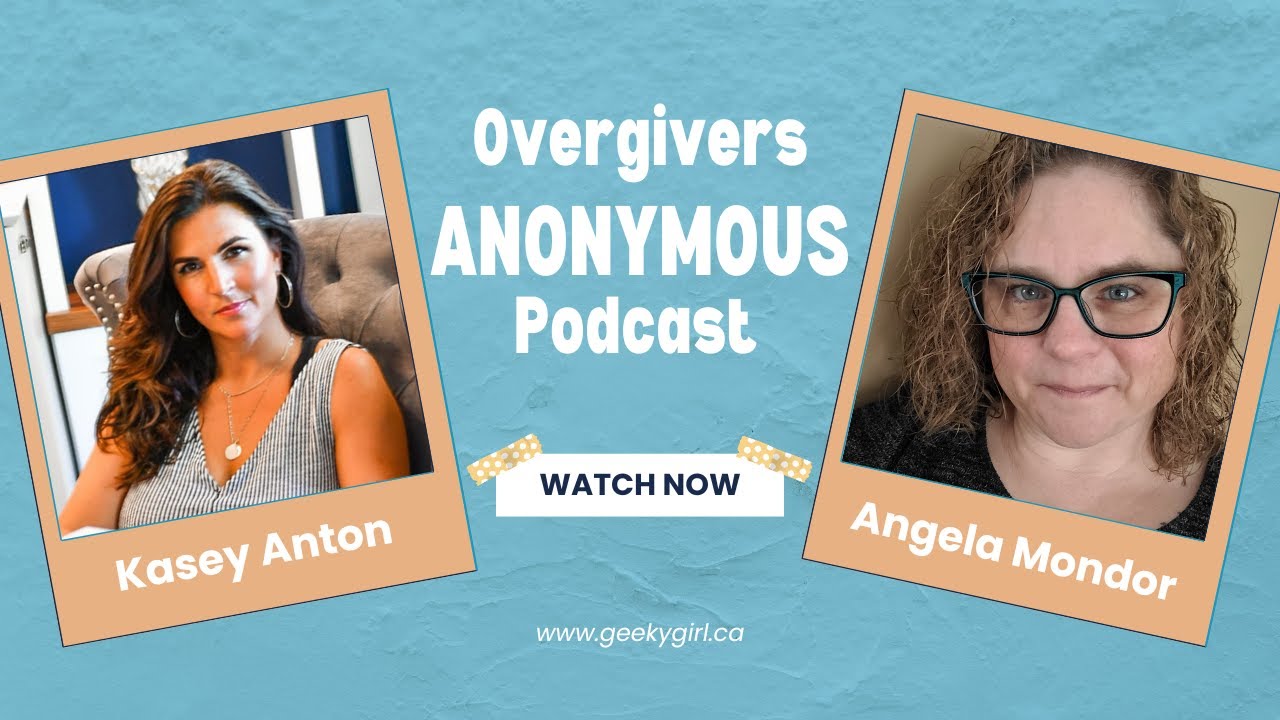
In this episode of the Overgivers Anonymous podcast, host Angela Mondor (the Geeky Girl) interviews Casey Anton, founder of Spark Business Consulting, author of Profit First for Restaurants, and adjunct professor at Boston University School of Hospitality. The conversation traces Casey’s journey from a decade‑long restaurateur in Boston to a business‑consulting entrepreneur, highlighting how her deep financial acumen (developed to keep her own restaurant afloat) became the foundation for Spark. They explore the concept of "overgiving"—both personally and as a leader—examining how excessive generosity can lead to turnover, scope‑creep, and diminished team motivation. The dialogue moves into practical strategies for building intentional company culture: setting clear boundaries, codifying expectations, and using corporate‑style tools (employee handbooks, Covey’s 7 Habits, priority quadrants) to align growing teams. Casey shares experiences with neurodiversity in her leadership team, describing how emotional‑agility training revealed differing work styles and helped the team communicate more effectively. Throughout, they discuss the Profit First methodology as a financial discipline for small businesses, especially restaurants, and provide listeners with resources (sparkbusinessconsulting.com, profitfirst4restaurants.com) and actionable take‑aways for avoiding overdelivery, managing scope creep, and fostering a sustainable, purpose‑driven culture.
Chapters
Welcome to the Overgivers Anonymous podcast. My name is Angela Mondor, also known as the Geeky Girl. In this podcast, we're going to be talking about some amazing things to help you get over overgiving. Hi there, and welcome to the Overgivers Anonymous podcast. My name is Angela Mondor, also known as the Geeky Girl, and I get to bring you a really cool guest today. And this is Casey Anton. She is the founder of Spark Business Consulting, author of Profit First for Restaurants, and an adjunct professor at Boston University School of Hospitality. With over 2 decades of experience in the restaurant industry, Casey has transitioned from a restaurateur in Boston to a leading expert in business management at Spark Business Consulting. She and her dynamic team, the Sparkles— love that— use practical insights to turn entrepreneurial chaos into profitable success. Whether she's advertising clients, speaking at conferences, or sharing her wisdom on podcasts, Casey brings a mix of humor and valuable strategies. Off the clock, Casey enjoys being a mom, renovating at home, and embracing the role of educator. Join her for a blend of fun and expertise that truly sparkles. Hi and welcome. I'm so glad you're here, Missy.
That was such a mouthful. I loved it.
It's wild to hear your own bio back, isn't it?
It is so wild. I change it up every time too, because I always get bored with it. So that was a new one. And I'm like, oh my God, that really did sparkle. You did it so well. Thank you.
It's awesome. I'm excited. I mean, I've never been in the restaurant industry, although my best friend, who's like my sister, she has a restaurant. So I'm, you know, adjacent.
Yeah. Very adjacent. Very adjacent to the restaurant industry.
But very interesting that you've made that move from actually being a restaurateur and now doing what you're doing. So what led you down that path that made the switch?
Well, I mean, being in the restaurant business is not for the faint of heart. It's not for everyone, right? So, and there is a lot of burnout that could possibly happen. But for me, it was really just a chapter change. I had kind of come to the end of how far we could take our restaurant. You know, we were there for almost 10 years. That's a, you know, decent run in the city. We were definitely kind of trendy. When we came out, had some great years, had some slow years. And then also the same year that I had just gotten married, I'd just given birth to my first child. Like, it's the way I was in the restaurant industry. I mean, it was an easy 70-hour, 80-hour work week, work till 3, 4 o'clock in the morning. Like, that's just the, you know, the part of the industry that I was in for so long. So you— to do that with a newborn would be very difficult. So I thought, okay, you know, I'm gonna grow up and be a big girl and Stay at home, be a stay-at-home mom. And that lasted for about 4 seconds. I could not— I tried. That is the hardest job ever. I think I was not cut out for that. So, you know, knowing that I couldn't go back into the restaurant industry the way I had been with an infant, I'm thinking, all right, so what can I do now? I literally had to sit and think like, okay, what, what's my skillset? Like, what do I have that's valuable to somebody else? And it was pretty easy to figure out. So I got really good at the numbers, like really good at math and really good at financials. Creating them, analyzing them, using them, because I had to in order to keep my restaurant alive as long as it did so that we were able to sell it versus having to just shut it down, maybe even file bankruptcy, right? So I had to really keep this restaurant going and make it, you know, basically take $1 and turn it into $10. That's what I had to learn how to do. So I got really fun, really fun at math, really funky at math as well. So I took that skill set, figured, oh, maybe I'll help some other small restaurants opening up with their numbers so they don't make the mistakes that I made. So I helped them. And then, you know, that was small and little, and they were like, oh, I have an interior designer girlfriend or a general contractor or a painter. Like, they're terrible with their money. Can you help them? And I'm like, I don't, I don't know. Maybe I'd go meet with them. And as it turned out, 2 2 4 anywhere you go. Like, the math is the same. And I thought, oh, yeah. So then I started Spark, and I tell you, the floodgates were open. And I think within the first 3 months, I had about 25 clients because small businesses really need help with their financials, you know. So that's why it really, really took off. And we work with now almost 300 clients now, but over the years, thousands, just really helping people understand their business model, zone in on their financials. Because I mean, if your business is not making money, it's costing you money. So, right, right. That's really when you get down to it.
And I think that what's really important, I hope people take away from this particular portion, and I talk about this a lot, it's about understanding your strengths. Who are you? What is it that you're really good at? And to be able to literally stand back and go, okay, let's, let's take inventory. Let's look, what is it that I have to offer? You know, people know my story. I started Geeky Girl in 2009, and at the time I was fixing computers, running cables, and fixing printers. Like I did that, what I did corporately, I did in the business. And then it led me to, oh, Well, people keep asking me how I'm doing the social media thing, right? And so my business evolved every time there was like this new little thing, which of course now with being— I'm in project management, which, you know, like you have to look at these opportunities in your life. And so you went, okay, I'm gonna be a stay-at-home mom and went, yeah, nope, not cool, right?
Nope.
I don't want to do this, but what else, right? So when you have these moments in your life and things change, because ultimately they do. Nothing stays the same. You do have an option. I mean, you could sit and sink if you like, right? You could have gone and got a J-O-B. That certainly could have been something that you did. But I love the fact that you stepped back and you went, okay, what are my skills and how can I reuse them and still be my own boss?
Yeah, exactly, exactly. I mean, I think there was a brief period, and I mean brief, maybe like a month Where I, I figured, oh, I'll just go work for somebody else for a little bit. And then I, I feel like maybe it's just me, or maybe it's once you've been an entrepreneur. And I had, I started my first business when I was 14. So it's like I've always been an entrepreneur in some way, shape, or form. Thinking that I could just go work for somebody? No, I just, and it's not, I like the person a lot. It's just, it's just my brain didn't work that way. I needed to be in control. I guess it probably sounds terrible, but I just needed to, I needed to create really. And this is, this is the way I create is through business.
Well, and there's definitely an entrepreneurial mindset. I know that like when I'm talking to other businesses and business owners and we're talking about like hiring and developing their team and saying like, you have to decide, are you going to hire somebody with an entrepreneurial mindset who's going to be thinking up new ideas and thoughts and here we could do this or we could change it this way, that way? Or do you hire, you know, somebody who is a J-O-B person, somebody who's an employee with that employee mindset where you can just go, here's your list, goodbye, right? There are 2 different brains. And if you can't find a way to make yourself happy working corporate or any other job placement, right, where you don't have the ability to be creative like an entrepreneur can, it can be stifling.
Yeah. But then again, some people want the J-O-B and they just, they want to clock in, do a thing and clock out and then really go live their life. And I'm actually, you know, very envious in a lot of ways of that. My, my brain doesn't work that way. It doesn't. shut off that way. And my passion comes from what I do for work. Thank goodness for me. Like, I, I feel like very fortunate. But the other side of me is my brain never turns off. I am constantly, constantly working. So I think, you know, it's good and bad to both ways. But you're right. There's 2 very separate sets of skills, separate people, separate personalities for those 2 things.
And bless those people who can do that because we need them to do those jobs like that. We need those people in our world. Right.
Yeah.
But I think it's really important to acknowledge I'm just not that one, right? I need to be creative and I need to be entrepreneurial in the way I think. And if you don't have an opportunity from a job perspective, then it can be stifling. I know there was times in my business when the business wasn't doing well in the beginning and I was like struggling and blah, blah, blah. And I would like to say to my husband, maybe I should just quit. Maybe I should just stop working, like stop trying to make the business and I should just go to work. And he just, he literally went, Don't you dare.
You'll be so unhappy. Oh, he knows you then.
Yeah.
Right. Smart man.
So when you're thinking about, like, all of the success in the year— success and trials, because let's be honest, you don't have one without the other. Right?
That's right.
And, you know, before we, before we started recording, I asked you, like, do you think that you're an overgiver? And you said yes. How do you think that that manifests inside yourself?
How do I think it manifests inside myself? Ooh, I don't know. That's a really good question. Well, here's the first thing that comes to mind when you, when you say that part is that the reason why I went into restaurants in the first place, right, it was because I had a passion for it. It was because at a very, very young age, I think 5 or 6 years old, I remember the few times that my parents would take me and my 2 brothers out to dinner. So it wasn't a lot. We did not have a lot of money, very blue collar. I just remember that every time we went out to dinner, it was a celebration of some kind. The celebration could just be guess what? You're not eating at home. But I mean, but it was a celebration. And I just remember like having people wait on me. I just remember, oh, I love like the joy and the celebratory. And I loved to take, you know, the fact that the waiters took care of me. They brought me my chicken fingers and fries. Like the whole thing was just so— oh, it just stuck with me at such a young age. And then as I went to other restaurants, as I got older and started, and then was able to work in them and saw how every restaurant, every different concept could kind of bring a different celebration to you. Like, I think that, you know, that is really hospitality at its best, and that is what's really in my soul. So I just feel like when it comes to being an overgiver, it also comes from that place of like hospitality just runs through my blood, and I just want to make everyone that comes into contact with me feel seen and heard and understood and valued. Like, that's just— and I think that stems just from the restaurant industry, but that's just like who I am. And I know, you know, the last few years I've done a lot of like leadership training and personal training, all these different trainings when you become CEO to be the best one you can be. And a lot of it is about uncovering your superpowers and whatnot. And when I have to peel back those layers or do my journaling or my visualization or whatever freaking menu board, you know, board that I'm making, vision board, it all comes back to the same thing. It's just like I exist to help others create the thing of their dreams, the business of their dreams, whatever it is. And to me, that's over— you know, that's an overgiving, but it doesn't feel like overgiving. Like, that's just— that's just part of me. When you originally asked me the question about overgiving, I was thinking about all the things that I do for my staff, and that is overgiving. That is overgiving. Yeah.
So I think it's interesting. I asked that in that way because We have a different, everybody has a different definition pretty much of all the words that are out there. It depends on what your life story has been up till now. You know, what, what, how you see the world, right? To me, overgiving is, I mean, I'm the same as you. I'm a giver. I love to give. I love to serve. I will say it often with my clients as well as my team members. Like, I'm just here to help. I want to help. How can I help? Right? To me, overgiving is when I help so much that I'm now not helping me.
Mm-hmm.
So do you think that there's been times through your journey where you could say, oh, I think I've done that?
Yeah, in a sense. In a sense, I can. And I'll explain. And that comes when it comes to talking about my team, because there was a time, and it wasn't that long ago, where I was— I mean, I guess, lack of a better way to put it, over-spoiling them, right? I was just over-spoiling them in every way I could because the business was doing extremely well. I love to give. I love hospitality. So I, every, you know, in the business, I designed my business to run without me. So I'll put it that way. And I think everyone should design a business to run without them. And I did that from day 1. I didn't, I wasn't able to not run it from day 1, but every time I was building it year over year, it was, it was at some point that it would run without me. So when I achieved that kind of level a few years back where I was like, oh, this thing, I'm like the chess player now. These are all the chess pieces. I was like, ooh, now I just get to spoil people. Right? So I would go out and I would, We would do these events where I'd bring in all these surprises, and the more and more I did, the more people were just like, eh, eh. Like, there was just like either people— I, I had a lot of turnover at the time, which I couldn't believe. I was like, how does anybody wanna leave here? Like, I was like giving them everything. I get the shirt off my back. Like, what? And it was just doing— and I'll never forget sitting down with a gentleman. He's a friend of mine. He runs a big payroll company. here on the East Coast. And he's like, he— I remember him saying, you're doing too much. And to me, too much is just not a thing. Yeah. When you're in hospitality, too much is not a thing. So I was like, what? That's not even comprehending in my head. And, and the way he explained it, the way I got it was kind of like where they say, you know, American children, they are spoiled because they— there's so— we give them so many toys that they're all bored because they have too many. Versus you go to another country where a child might only have 3 or 5 toys. They're like, they're the happiest kids you'll ever see. Because they just have those few things and they love them fiercely, and that's what they have. And it's— it was— I think it was— it leads back to that, right? It was just I was giving them too much. They just kind of got inoculated by the whole thing, and then they were like, yeah, nothing felt special anymore. It was weird because I don't think that way, but I have to realize that others do view it a different way than I meant it. So I had to dial that way back, and that was hard. That's hard to dial back.
It's interesting because it doesn't matter whether it's our team members, staff members, whether it's our clients or potential clients, being able to understand other people's perspectives is very helpful to us as business owners in order to pivot, right? To be able to make the right choices and the right moves. And when we, when we come at it with this full heart of like, I'm giving you these things and for them to just go, man, it sucks. And then, you know, like, it's like, But I gave you these things. They're my shinies. Right.
Yeah. Right.
You know, having to really figure out a different way through that can be difficult. I'm glad to hear you've made it through.
Yes, I am on the other side of that.
But it's interesting because it, like I said, it doesn't matter which portion of your business. We always, I say that entrepreneurship is like the biggest self-help program on the planet because you have to grow in order to, like, as a human, we have to change and grow. Otherwise the business isn't gonna.
That's right. That's right. Yeah.
Absolutely wild. And I appreciate, like, as a restaurateur in the restaurant business, it is all about service. It is all about how can I make, you know, the person on the other end of that service love what we've done, right? We want a return customer, blah, blah, blah. Like, it's a big deal in the service industry to give, give, give, right? But we've also been trained to think that we under-promise and over-deliver. But I don't, but I think that overgiving takes us one step past overdelivering.
It does. Yeah, I agree.
And I often explain it to people in that if you feel, especially when we're talking about clients, there's in that, in the piece of overgiving or overdelivering, overgiving to the client, of course we want to give our clients a great experience. That's not, there's no question about that. And yes, it's nice to give them a little extra carrot at the end. Yes, beautiful. But if you're giving them so much that you're now feeling like you're being taken advantage of, you've tipped over. Yeah.
Oh yeah.
So this comes back to lots of people have trouble with scope creep, which of course I'm sure you've had to deal with some of that too, right?
Oh my God. We've definitely had to deal with that. I mean, these are all my— this is bringing me way back with all the things that we've been through in the business. I'm like, yeah, there's, you know, and there was scope creep and there's everything you said is spot on. There was, you know, wanting to really overdeliver and the whole dog and pony show. And then, you know, the Vegas show with the maracas. We're going to bring it all out here. And you have to remember that that actually, and as you said earlier, it's about their perspective, like the client perspective. You don't— you may like that. I may like someone to bring me a Vegas show to my house and be like, this is the greatest thing ever. But not everyone does. So yeah, it's, you know, all of this kind of leads back to, I think, why there are corporations, which is, you know, sad to me because I've never ever been the corporate world. I've never been a corporate employee, and I, I want to say thank God to that. I don't think it's for me, but there's a reason why they exist, which is like you create standards. There are expectations set. Everybody's on the same page, whether you work there or you're a client of that corporation. Like, that's where I had to kind of go with this, is that I had to be like, oh, I got to get really corporate about this stuff. I have to have like an employee handbook that like says like what the days off are, what— like, you really have to get corporate, which was like, nah, like boring. But like, I had to in order to not deal with what felt like crazy personalities. They aren't crazy. They're just not my personality. But it was just— that was it. It was like, okay, everyone has— and I think all it comes back to is expectation. Like, everyone needs to be at the same starting point, and the expectations need to be set in stone to avoid, like, some of the crazy stuff that can go on.
Yeah. You know, I think that, like, as a business owner, the nicest part about this concept is we can create our own business culture. Right? So we have the ability to say, hey, here's what our expectations are as a company, or here's what we are going to present and here's how we're going to present ourselves. And here's what's acceptable and not acceptable inside the business. Sure. That's corporatey. However, we also get to choose what that looks like, right? So we don't have to choose black and white, harsh corners for our expectations, right? We can say, you know what, Yeah, we have X amount of days off, but, you know, whatever. Like, you can choose what it is that makes your organization work the way your organization does. And so I think that what you said is really valuable. Yes, you had to start putting this stuff down. You do have to start, whether you write it down, whether you type it out, whatever the case may be, you still have to put some lines and boundaries around things. But boundaries are important.
Mm-hmm.
Across the entire entrepreneurial journey, you need boundaries around yourself, what you're willing to accept and what you're not willing to accept. Then you need boundaries around your business, what your business willing to accept, what your business not. Your business is not you, right? You gotta be separate.
That's right. Oh, amen. So true.
And so each of these pieces, the boundaries are important. It's, it's important not only to identify them, It's also important to communicate them, but then it's really important to reinforce them. And that's what you're talking about there.
That is exactly what I'm talking about. And, and that's, that's the climb up the hill. That's the hard part is the reinforce. It's hard, I think, for, for hard for me. I think it's hard in a lot of different ways. And it's, I think mostly it's because you're just like, why isn't everyone just happy? Like, I create such a great work environment. Why? But you will always, especially the, the bigger you get, I think the more you'll find personalities that might not agree with your ham, might agree with things, and you, you'll always come up against that. And that's just, you know, the, the refining on, on making it, you know, corporate. But really, I mean, you can be creative, like you said, like you, you can be, but you have to make that so crystal clear as you grow and grow and grow and bring in all these new people to organizations so everyone can be on the same page, because if not, they'll push back hard. And they do.
Well, it's interesting because I've been a part of different corporations before I became my own boss, even though I was like literally like I didn't have a high school job. I managed babysitting jobs, right? So I was running my own businesses in that way as a kid, right? But one of the best things that I saw in all of the jobs that I had, and there was only a few of them before I decided that I was out, but one of the best things was understanding that there was a community called a corporate culture, right? So the company actually put all of their new employees through the exact same training course and it was Covey, the 7 Habits of Highly Effective People.
Oh yeah, I love that.
And we were all Covey certified. That was one of the things everybody had to go through. So I did first and second level while I was there. Not everybody did too, but, and what was great was, is that because we had the same training, we had the same language. So when I said to a coworker, when they walked up to me and said, I have this thing I need you to do. I was able to say, is that a Q1 or a Q2? And they knew what I meant. And it was defined. It wasn't how important is this? Because we knew that based on the quadrants that are what is in Covey, we knew what those meant. And it was a stronger ask than it was to go, well, how important is it? Well, of course his butt's on fire. He left it to the last minute because I worked in the car industry. That's just the way it works. So I think that having that as a company culture makes it so that as you grow, you have less bumps. You will end up— we— you literally end up filtering out people fairly quickly if they're not willing to get on board to that company culture. It was very valuable.
Yeah, I would agree. I'd agree with that. So it's just, yeah, it's like you said, creating it, making it a standard, putting people through it, and then sticking with it. Sticking with it can be hard, but yeah, that's, that's the secret sauce. And if anyone tries to fight against that, like, oh, I'm not doing that, I'm never gonna incorporate— yeah, you are. If you want You've got to grow. You have. You will. Yeah.
Yeah, yeah. Eventually you have to get to a point because you can't— we can't do everything even as you first start your business. We try. That's how we end up working our 70 hours anyway, right? Right.
Yep.
But as you start to build and you have team members, and those team members, then we have more team members. And especially if you're not hiring, especially if you now have grown to a point where you now have other people hiring for you, then you're not in control anymore of all of those little tiny pieces. Having the company culture and having all those things worked out is really important. It's not— it's never too early to start thinking, what do I want my company culture to look like?
That's right.
That's right.
So I asked you another— it's being created. I said, if you're not creating intentionally your company culture, there's one being created for you that you're not in control of.
100%. You better be creating it.
Yep.
It's either being created by your employees or it's being created by your customers. Yeah. Somebody's taken a hold.
That's right.
So I asked you another question earlier, and, of course, because I'm neurodivergent, I always like to find other people who are. And so I'd asked you if you're neurodivergent. You said no. And I said, do you think that you work with other neurodivergents? And your answer was, I believe I do. But you said, you, you followed that up and you said, it's not discussed. Right. This is cool and interesting to me. Do you What makes you, what makes you think, oh, I do, but it's not discussed?
So this is for my leadership team. I had brought in an expert in emotional agility about a year, maybe a year and a half ago. I brought in an expert, spent a lot of money on this program. I thought it was important. I, there's 4 of us on the, at the top of the, of my leadership team, and we were not gelling, and I couldn't have it. I couldn't figure out why. To me, it's so simple. We do, we do math. We, we please our clients. Like, what's going on? There was something going on personality-wise that I couldn't figure out myself. Brought in this expert, and over a 3-day period, we did all these different assessments. And it, that, and that was the first time I even heard the term neurodivergent. I didn't, I've never heard it until then. And it was brought up throughout there. And she, the woman who was leading, the doctor that was leading this, Certainly wasn't gonna call. I mean, wasn't. I think it's like almost HIPAA protected, right? She wasn't gonna call it out, but it came up. And then from there, it was just kind of able to figure out like, oh, that's what that means. That's why it's coming up. And it actually ended up explaining a lot of work styles that were not meshing, or you know that I was even like, I don't understand this work style. So in that way, and I know that's not a very eloquent way to say it, but again, like that was the first time I heard it, and then that's why it came up is is this intense emotional agility training that we did like. Why are we not all just getting along on the same page? And it was because all of our brains work differently.
Yes.
So I loved these people. I love them to this day. Like, people that work for me, I, I want them to work for me forever. They know that. And then from what they say, they wanna work with me forever. How are we gonna make that happen where everybody's getting something from this? So that's where it kinda came from.
So do you think— so I, I don't know the ages of the people that you're working with, whatever. I just know that I mean, I'm in my 50s. I didn't know until I was in my 30s that I had ADHD. And like when I was a kid, there was no like, you're different, you need a diagnosis like that. I mean, it just didn't happen. We just, everybody just had to survive the best way we could, right? Yay, Gen X. So are your, were those people that you're talking about this in the same age bracket as that?
Yeah, I'd say late 30s, mostly 40s, early 50s. But yeah, so the, yeah, for that, for that, yeah, I'd say late 30s and 40s. Yep.
Because the concept— so part of the concept is that neurodivergent isn't new. It's been around forever, right? But we're starting to talk about it more. We're starting to be more open with it. We're starting to say, hey, this is who I am. Like, that's what it is. Do you think that people are not identifying because they just haven't spent the time to look at who they are? Or do you think that maybe they know what they are, but they're hiding it?
I think it might be a combination of both.
Yeah.
I don't think— I don't think there's anyone— I think— I think maybe they were— yes, they were trying to hide it early on, I would say. I mean, I— and I could be wrong. I actually could be wrong about that. I'm thinking— I'm thinking they were trying to hide it. I'm thinking now that I say that out loud, I'm wondering if maybe they just didn't know. Maybe they were wondering, like, why am— why— why is my brain going this way and everyone else is going this way? Like, maybe they were figuring it out too. And since then, I think there's been— I think some of our children— so most of us are moms. It's all sparkles, right? And most of us are moms. And I think some of their kids have been diagnosed with ADHD. So now that they have that and now being protective mama bear moms, we're like, what does this mean? How do I get help for my child? So now we're all being somewhat educated because we're just close in that way of what does it mean? What's going on? How can we help type thing? So now I feel like it's Pretty much out there, but it's not like— yeah, I mean, it's out there, but it's not. So, I mean, it's hard to really put my finger on that because this, again, it feels kind of new. Yeah. But back to that original conversation when this came up, yeah, I think it was a combination of maybe a little bit of hiding, but hiding more because they just didn't understand why they were different.
Fair enough. Yeah. And it's interesting to— it's the more I understand my brain, the more I understand the way that I think. And the more I sort of look at, you know, the way other people behave or they act or they think, right? You think, ah, okay, that's why I just don't understand that person the way they speak. Like, I need to hear it in a different way, right?
Mhmm.
So it's interesting for me. I think that the more that we can make the conversation on how do I think normal, regardless of whether I'm a, you know, whether somebody's neurodivergent, whether they're neurotypical, whether there's some sort of smash between them all. We all have different ways of thinking, and it isn't necessarily a neurological thing. Sometimes it's simply, oh, here's what I grew up with, so that's what I believe.
Yeah, definitely, definitely is that. Yep.
And I just think that, you know, we all just need to just chill and go, you know what, tell me how you think it so we can make a better way. Like, it's like you were saying, you brought in that person so that you can all figure out how we can all work together Because we know we can do great things together. We just keep banging heads.
Exactly. And I will say that there was, you know, the person that I'm thinking of too the most in this conversation as a human being, an individual, and a lot in the way she produced, I'd be like, God, I really love this person. But man, they're just not performing. Like, I don't know, maybe, maybe, maybe they're not for my company. And I was kind of going down that road. But once all this kind of came out in the open, and I just thought differently. I was able to be like, oh, so when I think this plus this equals this, she's thinking this minus this plus this, you know, over here. We're coming to the same place, we're arriving there differently. Once I could like understand that in my head, it's been like a dream. I'm— thank God I didn't go down the road. I'm like, I think that we're just gonna part ways because all I had to do was kind of tweak my thought because I'm like, okay, she just thinks differently than me. There's not— one's not better or than the other. It's just different. It's just completely different. So now that I know that, we communicate beautifully. I mean, and sky's the limit. And thank God she's my rock star, like my number one rock star on the team.
That's awesome. And it is neat because when you, when you are open as a business owner slash CEO, right, like on a team leadership-wise, when you're open to hear other people's opinions, some people might, even if it's just like, oh, that sky is blue. Well, no, it's more teal. And rather than go, well, no, it's not as blue. go, well, how do— why do you see it's teal, right? And you start to understand each other. When we hear each other, we have 2 ears, right? One mouth, 2 ears, right? Stephen Covey actually has— there's an entire section of the book, it's called Seeking First to Understand Before Being Understood. And so when we do come to these situations seeking first, Mm-hmm. then we can learn so many new things. And sometimes them having that little different way of seeing things, can really make a huge difference to the outcome of the project.
Oh, it does. 100%, it does. Yeah, yeah, it's super valuable. It's like the dessert. It's the cherry on top. It's great. Yeah.
That's awesome. That's amazing. I'm so glad that you were able to find somebody who was able to come in and actually work with your team that way to find those, you know, nuances to make you guys come together.
Me too. We're very fortunate.
That's awesome. So I'm super excited that we were here today and that you shared all these really cool things with me. I would like to know if you could— well, I don't want to— I want you to tell everybody in the audience where to find you and how they can best get a hold of you.
Yes, thank you for that. So as you said earlier, I own a company called Spark Business Consulting. So basically what we do is we help small businesses create the business, build the business of their dreams. So that's what we do. We do bookkeeping, accounting, and consulting. We're Profit First certified. If you don't know what that is, definitely look into it. Profit First is transforming businesses across the world. So a great way to kind of see who we are and what we're about in any industry would be sparkbusinessconsulting.com. That is our main hub of information. And then specifically, I wrote a book called Profit First for Restaurants because of my background being a restaurateur. I also teach at Boston University in the hospitality school. So if you, if you or anyone you know is in the hospitality industry, I have the website that goes with the book and there are so many great free downloadable tools that will help out any restaurateur or anyone even in the retail space or any hospitality company. And that is profitfirst4restaurants.com. So profitfirst4restaurants.com and you can get all free tools there.
Perfect. Thank you so much. I hope that, uh, everybody takes you up on that offer and goes and checks out that website. We'll have everything in the show notes as well. Uh, it has been such a pleasure to have you today, and thank you so much for this beautiful chat.
Thank you, Angela. This was great.
I appreciate it. Have yourself a fantastic day.
You as well.
Thank you so much for listening to the Overgivers Anonymous podcast. Your support means the world to me. You can find show notes for this episode and other goodies at overgiversanonymous.ca. And if you enjoyed this episode or you enjoyed the podcast in general, why not join us in the Overgivers Anonymous Facebook group where you Connect with overgivers from all over the world. Head on over to geekygirl.ca/group.
More from Angela

How to Leave Your Business for 3 Months (Without the Guilt) with Candy Messer

Neurodivergent Entrepreneurship: Building a Business Without Burnout with Alyece Smith




Stop Being Your Own Worst Critic: Mindset Tips for Success with Sandee Sgarlata

ADHD & Success: Navigating Neurodivergence in the Workplace with Sarah Olaifa


