Construction Worker To 6-Figure Trader | Student Interview - Simon Moore
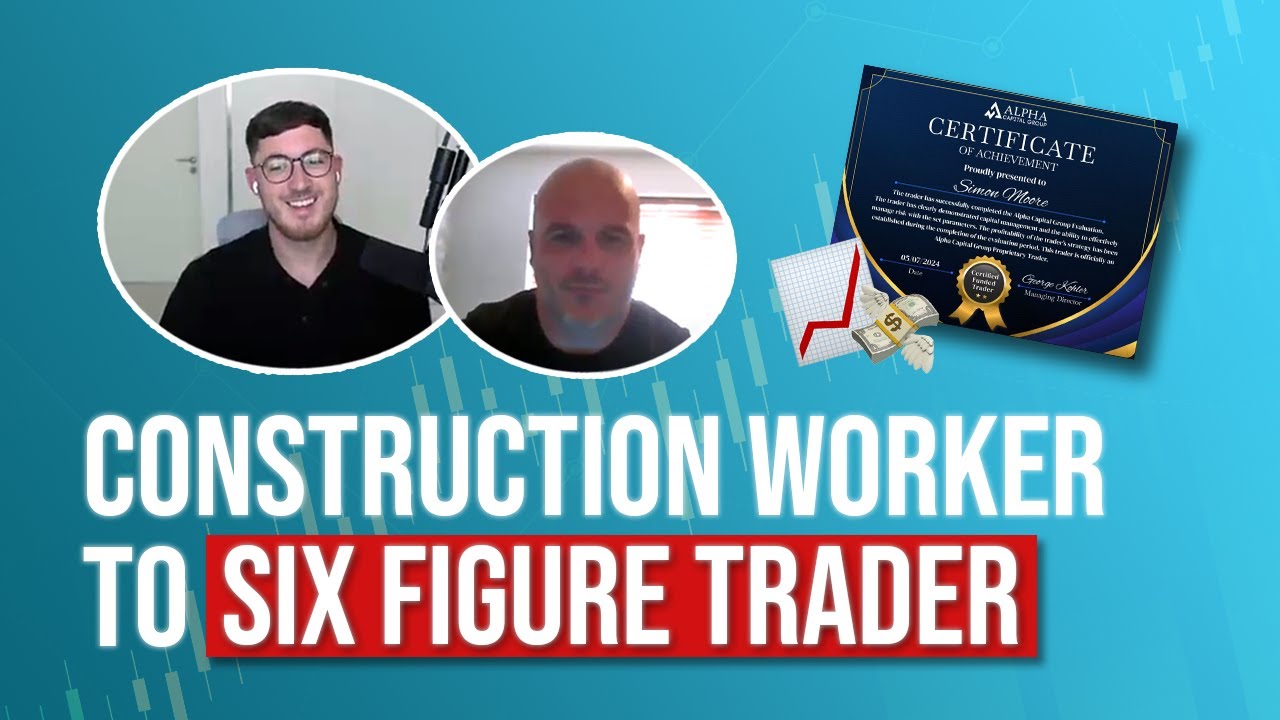
Simon Moore went from construction business owner to funded forex trader in four years. He credits structured education in supply-and-demand trading, focus on GBP/USD, and a disciplined routine fitting around his day job. He recently secured a $100k funded account and plans to trade full-time.
Chapters
So we've got another great interview for you today. A trader that had a bit of experience, went through the typical good knowledge, got funded, lost the accounts, got funded, lost the accounts, but really over the last few months has really found his feet, found that consistency, and is now beginning to really see the fruits of his labor. So in this interview, uh, we're going to talk about how Simon has now become a very successful trader. So I hope there's going to be a ton of information there that you're going to be able to learn from, and I'll see you in the next one. All right, perfect. So yeah, I mean, firstly, thanks for, uh, thanks for jumping on. I think we've been seeing some good results from, from your side for a while. I think it's good that we, uh, that we eventually got on this call and, and, uh, get to tell people your story. So I do appreciate you jumping on with me.
No, no problem at all.
Yeah, like I, like I do with all of these, uh, interviews slash case studies, whatever you want to call them. I want to start really from, from the very, very beginning, um, pre-trading, and just sort of understand really your journey from, I guess, before this even started to ultimately where you are today with things. So, um, yeah, I guess, um, I mean, what were you, what were you doing before trading? What was, what was life like for you sort of before all of this started to become what it is?
Um, So the trading journey is probably going on, I think, at the end of this year, we're probably talking best part of 4 years. Um, so there was some stuff pre-we trade, um, some good, some bad, lots of ugly stuff. Um, I think that's probably the case, case for many. So, um, what I do for my normal day job is I'm in construction. So I've started off a small business, um, 15 years ago. Um, I was in the trade actually hands-on myself very much going back from when I left school, really. Um, what I do now is kind of more the project management side of it, so it allows me time at home, which obviously helps with trading, especially, you know, the, the, the main times of the day, if you like. Um, and my, my work is kind of flexible. We have teams on site, so it's, it's— I can kind of book in appointments and stuff, you know, to suit me, really. So it's a bit more flexible lifestyle and work, work lifestyle. So, uh, but the trading side of it was, um, like I said, it was about, about 4 years ago. Um, it was a, it was a strange entry into the world of trading actually, because I actually didn't ever see anything about trading. I didn't see any, know anybody who was involved in it. Um, so it was completely brand new. And there was a guy I knew who lives over in Spain, and he, he, um, put onto his socials, um, his Instagram, you know, some results of FX trading, Forex trading. Come and join us, come and join this setup, join this team, you know, we'll teach you this, that, and the other. Before you know it, you're going to be on a beach with a cocktail in your hand. So, you know, you know many of those people, I'm sure, George, anyway. But, um, but he, he was genuine. He was, he was a kind of good acquaintance. So I thought, you know what, let's— I'll drop him a message. So we, we had a few phone calls, we had a few Zoom stuff, and it was, um, I kind of got involved with him in a particular setup, which I'm probably not going to say. Um, there's a few of those about, but, um, yeah, the educational stuff was pretty really good. Um, it gave me kind of the base knowledge and, you know, all the stuff that the general foundation curriculum that people are taught in various different establishments. Um, but it quickly became quite horrible. And, you know, it wasn't just, uh, I wouldn't say it was a scam because I was— then I never put any money up front, but it was just quickly become a bit of a money-making scheme for the people involved who were running it. Um, so it went around in circles. Um, I found a lot of YouTube stuff, I found a lot of other online or Instagrammy kind of people who were claiming to be this, that, and the other. And some were good, um, but obviously you're always on the back foot as soon as people are asking you to throw loads of money at it. Copy trades and all that sort of thing. So, um, I started to build a bit more knowledge of the market. So when I joined you guys, which was— actually looked on my profile, it was, um, it was last January, and I thought it was longer than that, to be honest, but it wasn't. Yeah, it was January '23. So once I joined with you and then we were kind of plowing through the educational side of stuff, the Forex Kickstarter, which your stuff, to be fair, is It filled tons of gaps that I had in my education. Some stuff as I was going through, especially the entry-level or foundation educational stuff, it was kind of like, yeah, yeah, yeah, I know this, you know, it's the market structure, the way— yeah, yeah. And I felt that I had learned something elsewhere, so all wasn't lost. I wasn't kind of starting from scratch, but it opened up a new educational world and the way, you know, supply and demand and just the way, you know, I was used to looking at 28 forex pairs, which was probably the worst thing you can do. And I said to Gio last week when we had a brief call, I said, you know, 28 pairs could be 28 mistakes, you know, if you're not, you know, and everything is different. So I narrowed down to just GU. I think at the start we were using AU as well. I think you quickly pushed that one aside with the way you teach. Um, and just for the last 3 or 4 months, I've just been trading with GU, just because for me, um, the way it flows, I get better results. And I think generally against the EU, I get better results anyway, um, with, with my kind of entry requirements. So in the last few months, I've kind of focused in and, and narrowed it in just to that pair. Um, and there's, there's various you know, things that we look for. And I think helped by reaching out to Gio, I think over the last year or so, obviously Gio's been heavily involved in the UK side of things while you're in Dubai. So, um, and obviously Scott as well, he's, he's doing, doing really well. So I've had a few, couple of conversations with him over, uh, Instagram, uh, just, just for advice. And like I said to Gio last week on the phone, you know, Speak to the people that are doing well, put yourself in with them, um, ask for their advice, you know, rather than kind of going around in circles. Because yeah, I think for me, I was like you said, there was some good results, and there were some good results last year, um, and I pulled away from the whole thing. Not, not from, you know, I was still involved, but I just needed some to step back and think, you know, where am I at, what am I missing, um, have I left gaps in the education, am I missing key things? But because obviously, you know, we go on about finding your own edge or finding your own rules and requirements, um, for what you see. That, that takes you up to the, to the next level, essentially. Um, yeah, the education, the ASR and all that kind of thing will obviously give you and your— give you all the tools you need, um, give you all the education you need. But obviously taking a step up to be profitable, uh, funded is, is, is another level. So I think You've got to put, you know, like anything, you have to put the time and effort in. You've got to keep learning, you know. Forever and a day I'm kind of opening up, um, stuff in the evening, you know, and just scrolling through and looking and just seeing where things, things are and how things have turned out good and how things turned out not so good. Um, forward testing, and you know, it's highly addictive, but it's the, the, you know you just don't quit. You kind of— you've got to, you've got to carry on with it.
Yeah, no, 100%. I think it's super important. I think a lot of people want to get into trading, but they kind of want one foot in, one foot out. And I mean, it's definitely not something you can do that with. I think if you look at any business model, trading has probably got the biggest rewards out of them all. But with that comes with— you need to be, you need to be dedicated to saying, okay, I'm going to become a trader here. I'm not going to just have a little side hustle. This is going to be I am going to become a trader. And it's that mindset where every day you're backtesting, you're forward testing, you're staying sharp, you're constantly refining what you're doing, getting a better understanding, looking back at the trades that you've taken. I think that is so important, and a lot of people don't do that. A lot of people don't do that, and it definitely reflects in, in their results as well. Um, and I think what you said there about sort of having access to people like George, George Cook, the sort of head of client success in our program, And also people like Scott as well. Like, I think where we have been super real with what we do, we've got some great people inside the community. It's like there's so many great minds bouncing off of each other that if you've got problems and you need to need help solving them, there's always going to be somewhere there for you to turn to. And I'm sure that George and George and Scott have been super helpful to sort of get you to the level that you are, that you are today.
Sure. Yeah, I think reaching out is obviously key. You know, you know yourself, you can't, you can't just overnight click into a super profitable trader. You've got it, you've got to find what works for you and, you know, put, put that graft and put that shift in. Whether, you know, you can go over the educational stuff forever and a day, um, and keep recapping and recapping, and it's kind of a point where, like I said a moment ago, am I missing something here? And it's like, no, I'm really comfortable with this, you know. It is, it is a mindset, you know. People, you know, at the very start when I— people say, oh, it's, you know, mainly mindset, short amount of skill, but it actually is. And until you, you're in that focused, in that zone, and you're confident with what you're looking for, what works for you, I think only then you can kind of break the shackles off a little bit and say, you know what, right, this is where I'm at now. Um, um, you're going to get losses, and you know, you've got to, you know, just, just be focused. Like you say, fresh every day, what you're looking for. If it doesn't turn out, great, it doesn't turn out. But you know, it probably turn out tomorrow or that afternoon or later that week. And, and you don't— the reality is, and I have had a few people on the platform actually message through to me because I have tried to share some, quite a lot of results recently. I felt like I was a bit bombarded in the results section at one point. But, um, it's, it's also a place where you can log your results and your little microanalysis of how you've arrived at that trade. And, you know, just you it's almost like your own little blog as well as helping people who are, let's say, at day one, or people who are recent into the group. Um, obviously there's some within, within the group, there's, there's some literally brand new people with no experience, and there's people in there who full-time, you know, doing, doing really well and getting fantastic results. So, um, for me, it helped to log that down. I know it's kind of like a little journal within, within the group, but um, without putting too much in, too much in.
But yeah, no, definitely. I think, I mean, I think that's important, right? Because I mean, if you even, you look at, look at some of the traders in, in our group, I mean, even yourself, I think that as a trader you go through a stage where you go from being a complete beginner, then you sort of get the foundations right, you can find the right opportunities, and you have that sort of baseline down. So you're profitable, but you're not at the sort of level where you're like a super expert trader and you know the market's at the back of your hand. You sort of go through that evolution of you have a good strategy in place, and then there's like a layer above that where you are just so in tune with the markets. And I think that's kind of where, where, where you're at now. Like, some of the trades that you've been posting recently where it's like you kind of just know what's going on. Like, you can read price action perfectly on, on like the lower time frames, and you can, you can really just flow with the markets. And I think that, I think that the ability to do that really does take you from somebody that can pass challenges, get payouts, to somebody that is able to, to pass multiple challenges very quickly, somebody that's able to get payouts like, like there's no tomorrow. And I think that's really, that's like a, a really good level to, to get out.
I think, I think, I think, yeah, it is. And I can tell from the many of the early mistakes were, you know, trading against the trend, which is obviously not really what you want to be doing. The continuations, especially on GU, I think, like I said earlier, focusing in on that one pair has helped, um, because you're kind of blanking out everything else. If you, if you can do so across those both pairs, then fantastic. But you know, they are very different in the way they, where they move and the way they are. Generally they're going to go in the same direction on, on, you know, on the higher time frames. But, um, for me, I just focused on that just to wipe out some of the blurry stuff that's in, that's in my mind, I suppose, and just concentrate on that. And again, once I said to Geo that, but when I spoke to him last week, and he said it just— once him in particular, once he was focusing on that, he was finding himself better results. I said, that works for me. And obviously it was nice to hear that it works for somebody else as well. Um, but yeah, the results, they have, they have been better. Um, my understanding's been clear, but like I said, it's only been the last few months. I did have a, I did have a live account at the end of last year, um, had a couple of good months, and then maybe something crept in, which I'm sure it did. That's when I pulled away for maybe a month or a month and a half. Um, Gio reached out to me, asked if everything was okay, because, you know, I think as he does with all the students, but I think he could see that I was kind of quite active within, within the group. Um, and he just asked if everything was okay, is there anything else you can do? So it was nice. And I said we could really see the changes in the last few months where, um, It's— there's more— there's obviously yourself and him involved, but there's more help for students now than there was when I started. Not saying there wasn't any at the start, but you can see that the model of We Trade has changed and it's evolving. It's getting so much better than it was before, and it was really good at the start, which was what impressed me. Because I didn't mention, you know, I literally stumbled again across you on Instagram, so that's how I ended up within We Trade. And you know, you do your own due diligence of what you want to get involved in and what you don't want to get involved in. Um, and yeah, so at the time when I joined 18 months ago, it was, you know, it was something attracted to me, and it was the community and all the people involved. You know, it just had all the green ticks for me. That's why I got involved.
Yeah. So, so going back, because I remember having the sort of conversations with you sort of pre-actually joining us and working with us, Yeah, back then, because you were still sort of in the— you were still sort of trading like the supply and demand market structure, sort of typical stuff. What sort of problems were you facing with your trading back there that, that you were sort of struggling with and you felt like you needed to, to get some help with?
So not long before I joined, I mean, at the start we would trade, you know, taught to trade, or was trading things like breakouts and all that sort of thing. Um, and then I got into supply and demand really just, just by stuff online, YouTube, and you know, I started to do my own stuff because I wasn't actually involved in a community back for a period of time. Um, so I kind of, you know, it was— I was doing my own research, my own learning, which was again some good, some bad. But I didn't— the structure for me was never clear, and I didn't have the confidence because I hadn't been taught the right way, I think, essentially. So the Forex Kickstarter stuff takes you through that and, you know, in hand almost. So it was— it's kind of building confidence around the education, which then gives you confidence into entering trades and, and having more clarity of what you're doing, really. Um, so to be part of a community with, with a very robust structure in place with the educational side of stuff and obviously the community itself, that just took me up a few levels. I wasn't any fantastic level, but it took me up levels that I needed to get to where I was more, um, you know, well, you know what you're doing, I suppose. We understand him was a lot better. Um, so the stuff you're teaching, supply and demand, obviously the stuff in the 15-minute, the 1-minute, and the 4-hour is all relevant to those pairs. So it, it kind of took me away from trying to trade supply and demand over 10 or 15 or 28 pairs, you know. And you know, they all don't work how you want them to work, unfortunately. But your system, obviously, which you've built, um, 7 or 10 years ago now, um, you're going to get better results from it. And you're just focusing on the 2 pairs, essentially.
Yeah, yeah, no, definitely. I think, I mean, a lot of traders will trade that style, right? But I think that really the, the key thing to have is, is that mechanical process. I'm sure you agree, like, being able to wake up in the morning and you know exactly what you're doing, so you don't need to make those decisions or something pops up in the market because you already know that when this happens, you're going to be placing this trade. So it's about— I think it's about coming to the market equipped with that mechanical process so you can just execute on it and you don't have to think about what's going to go on. You don't have to try and figure out with some complex analysis as to where price might go because every day is the same. You're looking for the same thing every day on the same pairs, rinse and repeat. And I think that that's— that can be quite— I think that alone can help a lot of people. Just from a direction standpoint, because you're very, you're very much narrowing down, like, what you're, what you're really giving yourself the, the approval to take.
Yeah, sure, I completely agree. And I think focusing on, again, just one or two pairs cuts out all the background noise of everything out, everything else. So it is, it is kind of a rinse and repeat process. And I know, um, some people have just trade basically off 15-minute liquidity. I know there's entries, um, flowing with the 1-minute inside all of that, you know, which is again little next level stuff up, um, which, you know, which you need to learn outside what you say— we say you need to learn, it's just if you're focusing right in to scalping those sorts of areas, there are obviously opportunities, um, on the 1-minute as well. But it's kind of, you have your routine, you have your process you know, you get up straight on. I'll always check your daily analysis because I'll always do my own first, but then I'll check yours. Um, 99% of the time it's pretty much where it needs to be. Um, and then from then on, from say 7 AM or whatever, once we start getting some volume in, then you know what, you, you kind of start thinking, what's it gonna, you know, where are we gonna go with this now? And then mechanically trading has changed. Um, recently, of course, because people are looking for reactions and certain things to get their entries, um, whether that's pro or counter trend essentially. But, um, taking your markups, getting your setups in place, you know, marking it, which— and then just, just seeing how we open up and then flowing with it, um, as, as things kind of progress towards the late, you know, later on in the session. Then there's obviously opportunities for continuations and stuff like that. So that's where I kind of— because at the start I'll trade the ASR, um, and, and you know yourself that that doesn't play every day, um, and you can see sometimes there are frustrations of people in the group. So I've not had a trade for 4 weeks, or we've not— this hasn't played out for— and there was a comment in there just a week ago and said it's been quite a rough few weeks. And I think you said actually there's been actually quite a good 4 to 6 weeks, but there are other opportunities outside of the ASR strategy. ASR strategy is really good, um, for me at the start. I'd come down if that didn't play out in the morning, I'll turn off and I'll come back the next day and I just keep turning up and I just keep turning up. But then what happens after that? There's more, you know. The market's going to go in one— is going in one direction or the other. Are there any other opportunities within that flow of the 15-minute or the 4-hour? Is there opportunity we can get in? And you, you know, surf out, um, on with the trend, but obviously according to your requirements of what you— how you enter. But I think, and again, just going back to a couple of things about the entries that, you know, I think Gio is very much supply and demand on the 1-minute. Um, I know Scott does a lot of stuff on, uh, FVGs and bearish FVGs and, you know, IFVG. But I kind of have looked at both those independently, so I kind of— the way I tackle the entries now is that I'll look for both, um, or see how we're playing out once we hit an area of liquidity and then make a kind of a decision from there. But there are obviously, um, a couple of things I would generally look for, if not both, and just see— just literally seeing what happens.
Yeah, I think— I mean, it all comes in cycles, right, doesn't it? So I mean, if, if you kind of look, look what I'm doing, I'm very much in the case of I want to keep it nice and simple. If I take one trade a week, I'm more than happy to do that. And I'm kind of taking like the top of the cycle. I'm catching that first initial move, that run-off of that key area of liquidity, and then it all kind of trickles down from that. And then it's always going to— you always then you have those opportunities to follow that cycle down into, into potentially the next area of liquidity. So once you then have the ability to say, okay, I can read the markets here on the higher timeframes, if you can do that and you can understand what's going on, if you then have the ability to read lower timeframe order flow, liquidity, the market creating imbalances and then rebalancing, and you can use that understanding, then there's so much opportunity to run with the understanding that if the higher time frame goes from here, it's likely to go here, and you can trade all the way in between that. And I think that that's something that yourself, George Linfieldfield, Scott Linfield are really, really good at. And then I think that is really what ultimately tips the needle from being profitable to somebody that is, I mean, becoming or is a highly successful trader. And I think you can really see that um, across a number of members in the community, obviously, as well as yourself.
Yeah, that's what I said. I mean, there was always more for me, you know, outside of that initial move in the morning, uh, or the ASR move, or whatever direction we opened up. So it was kind of, right now I need to look at what's going on in between that, after that, where we continue into, is it— where's the next areas of liquidity, how can we get inside. But then, as you know, if you're kind of scalping on 1-minute, you know, if you don't get it right, you know, you're using very small stop losses. Um, you know, and if you don't know what you're looking for, it can go pretty badly quite quickly.
Um, very, very wrong very quickly.
Very wrong very quickly. So don't get me wrong, there are losses, but at the moment there's obviously a lot better trades than there are worse ones. Um, and that's the game as we know. But, um, it's kind of making that process as robust as— it's kind of got your morning processes, I suppose, if you like. But But, but by reaching out to kind of George and Scott, I can see what they do, you know, they're happy to help. And, and I suppose sharing your results, and also, um, you got the trade breakdowns now, which has been very helpful, um, which, you know, we're getting at least a handful in there a week now, which, which does help. And it's kind of clarified some of my processes. So when I've gone on to watch, say, George, say, Geo's in particular, because I, I think I trade quite similar, look for similar things to him, then it kind of answers a lot of questions and just gives you those extra confluences and confidence to take those trades, what he's looking for. Um, and then you can, you can pick that up and take it into your own entry requirements. And, you know, so that's, that's— I'd say only in the last 3 months, for me, I've improved quite a lot. Um, but there was a time at the start when, you know, you're ready to break down and quit. You know, there's a time when you're thinking, oh, when are we going to get one of these trades? Or, you know, but you've got to still put the time and effort in to continue to learn. It's okay learning about the 4-hour and the 15-minute, but let's zoom in right into the market and then looking for these, these more precision, um, scalps, if you like. Um, but again, that's just taking things to another level, which, you know yourself, if you're trading like that— I mean, I don't trade all day every day by any stretch. I'll do the morning session Um, and I kind of find the late afternoon in New York works really well, especially in New York, obviously peppered with news a lot of the time between 1 and 3. So after the news has passed, between 3 and 5, there's also some good continuation opportunities I've found. And again, this is a conversation I had with Gio about, uh, just on Friday. So I can dip in and out. I'll be there in the morning session, but I'll— throughout the day when things have gone a little bit quiet Um, you know, you just want to see how things open up in the afternoon, and then again it does open up some more opportunities on the, on the lower time frame.
Yeah, well, I mean, listen, this is— it's always knowledge is power, right? I mean, I guess a year ago you wouldn't, you wouldn't have thought that you could jump on the markets and you know exactly what you're looking for. As soon as you've got that process and understanding as to what needs to happen to find a high probability trade, I mean, you can kind of plug that in at any time. Obviously there's going to be times that might be a little bit more conducive to seeing a better trade. But ultimately, if you see something within, within the right time period, then, then you've got an opportunity to make money there. So I think it's definitely, um, it's definitely worth having that knowledge so that you do have that ability to do that. Um, but again, I want to, want to ask you a couple of questions because I know that a lot of people will be watching this maybe from similar backgrounds to yourself in sort of construction jobs and, and doing this, that, and the other. How— what, what things do you implement into your sort of daily routine that sort of help you or have helped you sort of manage your trading around your job?
Um, the mark— I get up and the markets open a good few hours before my work opens, which is obviously really quite helpful. Um, so I would always get up 6 o'clock in the morning, you know, that kind of anytime around then, prepare for work and obviously for What else is happening? Thank you. Sorry, the voice is probably going to be dead. Yeah, so just morning routine. I'm on the phones generally in the morning. We have like a WhatsApp group and stuff like that, so we can kind of organize things on site for what's starting off for that period of day, for that day. So it kind of buys me the morning. During the middle of the day, I'll be out and about, whether that's speaking to clients, site visits and all that sort of thing. And then as the day tails off later on, late afternoon, once we finish at 5, but those last couple of hours, I'll generally tie up things in the office and just gives me an opportunity then to jump back on and see if there's anything there. Some days I'm completely stacked out with appointments, with phone calls, so there's no— sometimes not an opportunity, but for me it's not the end of the world. Um, I've gone past the stage where it's kind of like, oh, if I'm not on the charts, I've missed out, there's never going to be another trade. You know, there's that— the FOMO is a killer, as you've always said. It's just, it's horrible, and I've been through that. Um, but there are opportunities like almost all day, every day, if the setup presents itself. Yeah, so there's, there's kind of— let's get that in that mindset that, you know, if you went on holiday for a week and didn't open the charts, it's not the end of the world because there's opportunities the next week and the week after.
Yeah, but obviously, yeah, it's that abundance mindset, I think. Like, you're not missing a trade, you just haven't caught that one. There'll be one tomorrow, probably one the next day, and probably one the day after that as well.
Yeah, sure.
I think you do get a lot of, a lot of traders, right, where they have that mindset where it's like, oh, it's the end of the world if I miss a trade.
But yeah, it's tough. It is. And I think, I think when I was just literally doing the ASR on its own, um, then there does get that more FOMO because the trades were more or less frequent. Um, and if you are in a full-time job elsewhere or have commitments at that time in the morning, let's say from 7 till 9 in the morning, when you potentially could miss those setups, um, then the FOMO does creep in even more. But, you know, once you advance your and develop your own skills, and you know, you know, you can see more— there is more opportunity deeper in the market than just 7 o'clock in the morning or just on London opening. There are, there are, as we said, lots of opportunities, um, when they present themselves.
Yeah, no, for sure. Oh yeah, we have to remember, right, the markets do the same things time and time again. So once you've got that understanding as to when the market does X, it's likely to go and do Y. So if you, if you understand that process, then if you see it, then, then there's likely going to be a trade that you can take. So Yeah, I think that's, that's definitely important to understand. Um, and going down to— I mean, obviously everybody loves to hear about results. I understand, like, even before working with us, I think you did manage to get a few, like, funded accounts and stuff like that, didn't you?
I did, yeah. Um, so as with everybody, it was all demo, demo at the start. The demos were getting blown left, right, and center. I think that's everybody's entry into the world of trading. If you haven't blown loads of demo accounts, I don't know what you've been doing. Um, so I did have a funded account, uh, back end of last year, um, which went all right for a couple of months. Um, but like I said, I just, I don't think the mindset, and I don't think my education or my knowledge was deep enough, you know, just as the processes we've just, just gone through. Um, I wasn't there, I wasn't ready. I don't think I knew I was ready. Um, you know, as soon as you doubt yourself, then, you know, you know, that's— you're already in a negative mindset anyway. So it didn't take long before kind of the FOMO on trades was setting in, and I was a little bit in drawdown. Then panic station set in, and then all of a sudden you found yourself in a deeper hole than you ever started off with. So that was a period of time. That's when I took a step back for a while. Um, just a matter of weeks. I was still monitoring. I was still, still getting up in the morning, still turning up. Um, I wasn't trading, I was doing just purely doing setups on TradingView, um, looking for things, then obviously looking at other people's results and reaching out, and then just trying to work out where it went wrong for me. Um, up until recently, so that, that's recently has been hugely more successful than it was at the start of this year, but, um, there was just, just a few things of uncertainty, and as soon as you've got that crept in Um, I think it's a case of, you know, it's hard. I didn't have the confidence either. I weren't confident in my own, you know, analysis of my own, you know, as I said about the educational stuff, I could go back, you go back over that forever and ever and ever and you'd still be, it'd still be sinking and you'd still be getting the same answer. So it's kind of like, look, we know what we're doing now, we know how to read the markets and we're happy with all that side of things. It's just implementing that into your process of how you trade and, you know, how you're individual to anybody else, or what you look for, what your set of rules are and what your set of requirements are. Um, so really then, like I said, the last few months I've just focused deep, deeper into that, which has kind of gave me a bit more of a solid base and confidence inside that, you know, that's, that's where I'm at.
Yeah.
And kind of try and still be patient, you not jumping into certain trades which haven't given you at least kind of 3 or 4 confluences that you want to see. Um, I think the one, the last one I posted last, at the end of last week, or was it Monday?
Um, yeah, GBP/USD buys, I think, wasn't it?
Yeah, it was, it was there or thereabouts. It was kind of, I liked all of it apart from a little bit of it. And, you know, and again, when I spoke to Jerry, he's like, if he's giving you 3 or 4 out of 5 or 4 out of 5, get in, you know. It's— nothing's going to work out perfect. Now and again we'll get one like literally out of the textbook, as you know. It will just hit— it'll just be the perfect trade of what you kind of teach and what the strategy is. But you know yourself, you know, if, if you, if you, if you're nearly there with it, then you've got to get in.
Yeah.
No, so I think getting confidence to— getting the confidence to get into those sorts of trades as well when everything's not as pure as it looks, I think again that's another mindset thing. You know, people are kicking themselves that, you know, like you mentioned the other day, you're on the skateboard, aren't you? You've got to, you've got to, uh, you know, it's not always going to be flat and lovely. You've got to kind of attack the hills at some point and kind of get, get, get comfortable with that and be confident with that. It's a lot of it's a confidence thing.
I mean, I, I always try and say it. I, I've actually, I'm working with another guy at the moment one-on-one, and he's kind of struggling with that. He's sort of, he's, he's been very intense with what he's doing and I think one of the big problems that traders face is they do, they do a little bit too much thinking and not enough doing. And I think that's kind of the case here. It's like if you're seeing it and it makes sense in your head and it's following your rules, then sometimes you've just got to take that trade and stop thinking it. But it's never going to be perfect. It's never going to be like telling you that it's going to go to this point. We have to look at the markets, we have to assess the situation, and we have to make a decision. And if you can't do that, then you're probably not going to be a good trader. So Yeah, I think it is just a case of being able to pull the trigger and take that trade.
Many setups where, you know, you've placed an order, you're looking at it, you're staring at it, and I'm already thinking, this isn't gonna— this isn't gonna— this is gonna be a losing trade. You know, I've done it so many times over the last kind of year or so, and then it becomes a losing trade, then it kicks you in the teeth, and you kind of feel like you've gone full circle back to square one. But I think that's the key thing. As I say, it's having your own robust rules and, you know, strategy or whatever in place. Um, if it doesn't— if it's not a winning trade, great. You just got to keep consistent and picking up those trades. There's going to be loads of losing trades. That's just, just the way the market's not going to give you everything. Um, of course, but if you're, if you're consistent in your own ways and your setup and your routine um, then, you know, if you're getting more good results than bad, then you're going to be in a really good place.
Yeah, no, 100%. And I think, I mean, obviously having a lot of this mindset shift with you and just building that confidence, you've recently got yourself another $100K funded account, wasn't it?
Yeah, so after the lull or the disappointment, I suppose, from earlier in the year, um, it was a case of reevaluating, you know, as you do. Backtesting, forward testing, seeing what went wrong, and then trying to— I was probably trying too many 1-minute entries as opposed to the 15-minute entries, which can be a bit more clearer, um, and making far more mistakes. So that, that was the issue I had, uh, but by trying to change things and obviously develop my skills more on, you know, inside the market, um, like I've been doing the last few months, obviously improve those results. It did give me more opportunities, and I don't want to kind of scare ASR kind of people off because that's where I start, you know, and you've got to stretch your education, you've got to keep learning from there, you've got to further your education, you've got to further your knowledge, and just do what works for you, I suppose, is key. Finding the edge is another thing, you know, when people mention, what's your edge? And, you know, I'm like, what are you talking about? You know, that was kind of from, you know, but once you get to a point where you've got your solid rules, um, and what you look for, then that's your own edge and that's how you trade. Um, but it's a daunting word from, from the start because people don't know what their edge is because they're just setting off onto this journey, um, trying to find certain things, um, and what, you know, what works for them. But yeah, once you've got to that point, I think you've just got to keep the belief and just keep consistent and keep taking those trades.
Yeah, no, 100%. Yeah, that could be more true. I mean, you definitely go for a progression as a trader, understanding the, the real concepts to be using to make these decisions, and then it's about seeing the market the way that you see it and making sure that you've got the rules to back that up so you know what you're doing every day. I think that is, that is super, super important. Um, but we'll, we'll start to wrap things up then, so What's the future looking like for you? I mean, do you have plans to sort of pivot into, into trading full-time? What, what are your sort of plans for, I guess, the rest of this year to maybe get more funding? Or yeah, I mean, yeah, I think talk me through what the plans are.
The plans would be to increase funded capital. I think that's the progression once you're at that level, to take your level even more. You know, the more capital you got, the obviously more opportunity you've got there. And, um, Yeah, I think with, with the work balance, trading lifestyle, I mean, it kind of works really well for me. Um, yeah, there's obviously always, like with anything, you know, people got security of having their income and kind of things when they're just stepping into this big world of trading. Um, so for this year, yeah, it's completely self-development. Um, if there's opportunity, which hopefully there will be, to increase, uh, funded capital, um, and then next year we'll see what happens, but Um, yeah, it would be good to think that in maybe a year or 18 months we might be in an even better place than right now. And, you know, I'm 42 now, so looking to the next couple of years, it'd be nice to, you know, to be looking at full-time trading and just give me some time back that we've put back into all this. And, you know, yeah, through our working lives. But yeah, that's the next steps of progression, I'd like to think.
Awesome. Sounds good. Sounds good. And one more question for me just to end this, because I know there's going to be a lot of people that are going to be watching and listening to this, and they're going to be people that were like yourself who had good knowledge. They were sort of on the fence of being profitable, but they didn't quite have everything. And there's also going to be a load of people watching this that are probably never— they've never traded before. They might have followed a few signals and they're on the fence about whether they invest in their education, right? Because we're definitely not cheap. We're definitely not the cheapest on the block, and we definitely don't want to be either. We want to give everyone the time that they need to. So what would you say to those people that are on the fence about investing in themselves, investing in their education to ultimately get themselves into a position where they can, they can start to replicate the sort of results that yourself and many of our other clients do?
Yeah, for sure. You know, the first thing people ask is what's the cost when you're offering any service? It's a question I asked many people before I joined with, with, with you. But, um, the education for me, I've found, is the best I've, I've came across in 4 years. Um, it's kicked me on massively. Um, it's gave me such much more better understanding of the markets. Obviously the results speak for themselves. Um, but like anything, you, you need to invest in yourself, whether that's, you know, you've got, you've got to lay out something financially to get this educated. I know in, in-house as well, there's obviously other services that you guys are offering to current students, which is one-to-ones now, and other sessions, just to focus more on helping those people develop. So I wouldn't think twice of doing it again. I didn't at the start. If I was back there, back at square one and I didn't know anything, then I'm sure I'd make the same decision. But for me, it was obviously a great little investment to further my knowledge, another kind of potentially life-changing opportunity, which, which it is if you're in the— within amongst the right people and you want— you've got that drive and kind of you don't give up and you want to learn and you've, you've got to put time and effort in. You know, you can go to university for 5 years if you want, um, and come out with very little. But, um, you know, it is a skill you need to learn. You know, there's a lot of psychological side of it and mindset where you need to be focused in, but that comes with um, education. It comes with, you know, your own commitment, I suppose, as well as another word. But, you know, it's how badly do you want to, you know, improve what you've already got. I mean, I didn't come from nothing, um, but this is another opportunity in me as a person developing and being able to offer something back to, you know, my kids, my wife, my family, and that kind of thing. But I like trading when I got into it as well. So for me, it was kind of highly addictive, but I loved it. Um, so it wasn't just, you know, some people it's just a little sideline or a little hustle. If they trade when they want, they might make a little bit of money. But obviously through, through this platform, there's opportunity to take that to the real, like, the top level if, if you, if you're happy to invest time and effort in yourself. Um, but like I say, there is a little bit of financial layout, but that's, that's just, that's what it, that's what happens when you're paying for any kind of service within a community or, or a setup. So Yeah, I wouldn't think twice.
Awesome, awesome. Well, yeah, I think there's obviously a lot to take from this. I mean, you've been very dedicated for a long time now, and you're obviously seeing the fruits of your labor now. So yeah, I appreciate you telling everybody your story. I'm sure there's going to be a lot of people thinking right now. But yeah, we'll catch up in another year or so, and we can maybe review and see where you're at there.
Yeah, sure we can. Sorry about the light in the background, by the way.
I'm sure it'll be fine. I'm sure it'll be fine.










