How 6 Months Of Work Got My Client Henry $100,000 In Funding To Kickstart His Trading Career
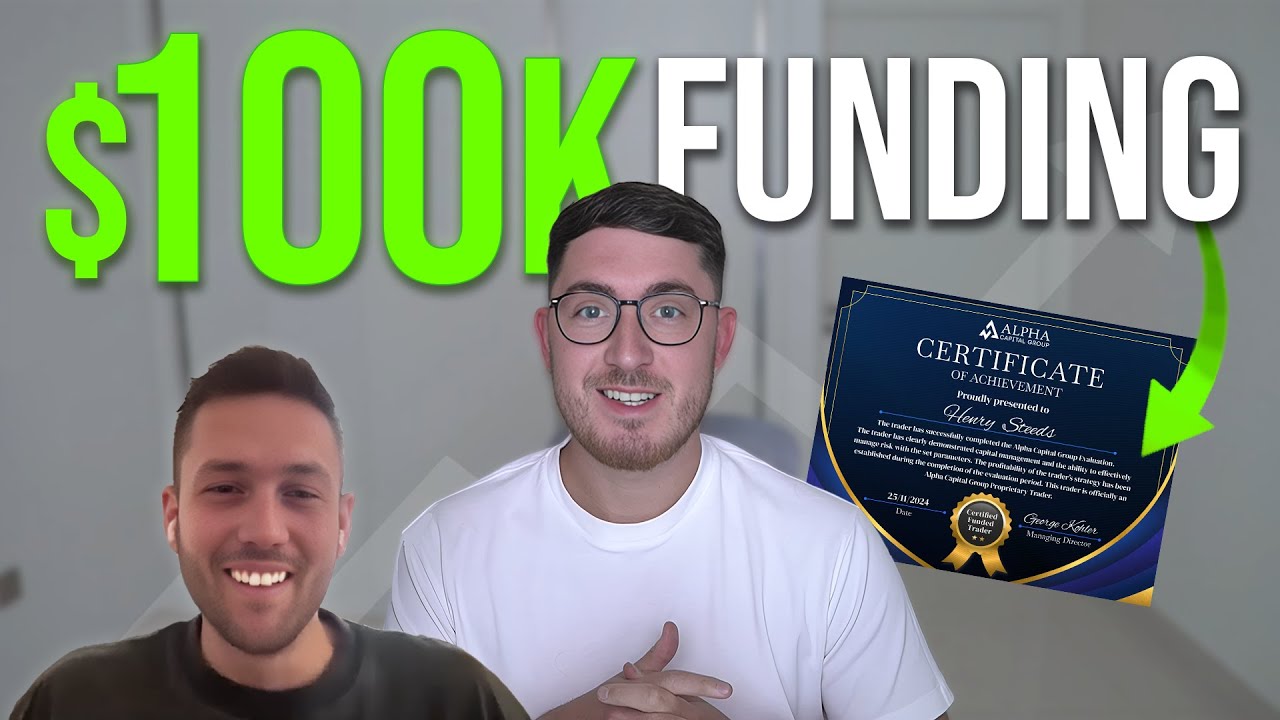
In this interview, host George Linfield (Speaker A) talks with longtime student Henry about his journey from a casual, unfocused trader to a funded professional. Henry explains how early attempts at trading were hampered by lack of commitment, inconsistent chart time, and a "dip‑in‑dip‑out" mindset during the COVID era. Over the past five to six months he intensified his effort, joined the one‑to‑one mentorship with George and the community, and adopted disciplined practices such as weekly trade reviews, back‑testing, and setting TradingView alerts. He describes how he balances a double‑glazing business and two young children with trading by carving out dedicated chart windows before and after work and using alerts to capture missed setups. After passing the funding challenge, Henry emphasizes capital preservation, treating the funded account as a business asset, and maintaining the same process that earned the funding. Both speakers stress the importance of accountability, consistent practice, and mentorship, and Henry offers three concrete tips for fence‑sitters: define long‑term goals, dive deep into the course, and secure mentorship early. The conversation serves both as a testimonial of the program’s effectiveness and a practical guide for aspiring traders.
Chapters
Okay then, what's up troops? So I'm just about to head out actually, but I wanted to do an intro for this interview. Now this interview is with one of my— really one of my oldest students, Henry, actually. Um, he started working with me many, many years ago actually, but when he first started his trading career, he kind of struggled a little bit with dedication and just really staying focused on his trading. So over the last 6 months, he's knuckled down, he's taken it seriously, he's learned the strategies, and again. He's just got himself back on the straight and narrow with his trading, and he has just acquired his first six figures in funding. Um, huge achievement, great story about really what it takes to become a successful trader, what it takes to get results. So tune in for this one. Any questions, just let us know, and I'll see you in the next one. Obviously, you've just achieved a— but you've just achieved a great achievement getting yourself six figures in funding. So what I kind of want to do is just understand a little bit about your journey, how things started, and, and sort of what you've, what you've had to do to get to this stage, really. So I guess if you can kick us off a little bit with a little bit of a background on you, and I guess sort of an understanding as to how all of this trading thing started for you.
Yeah, so it's probably going back around, um, COVID times, um, obviously being at home, seeing all these things pop up online all the time, um, with trading, etc. I've always been interested in, um, mainly just a passive income to begin with. Before, um, you know, before I was sort of real serious about trying to get funding, etc. It was more so, um, just a passive income whilst being at work. Um, and so I've been in, I've been in obviously the signal groups and stuff like that when I first started out. Um, obviously never got anywhere with any of it. Um, and then, um, I think it was back in the times when, um, it was SOFX was when I first come across you. Um, but I think, um, when Forex Kickstarter began, I was one of— I was quite early on. I, you know, I joined— I can't remember when you started it, but I joined back in 2021. Yeah, so it's quite early days. Um, but yeah, so from there, really, um, so back in like the supply and demand sort of era of strategy, that was when I sort of picked up with you guys.
Yeah, yeah, yeah. But I think things have definitely evolved quite a lot, a lot since then, I think. And yeah, I think since then we've had a, we've had a ton of great results, including yourself, I think, since we sort of begun to develop things a little bit further than, than a sort of very typical supply and demand stuff. So through that journey, because it's obviously been, it's obviously been 2 or sort of 2 or 3 years or so since you sort of started this journey. So What were, I guess, some of the main struggles that you went through in, I guess, those early few months, years, and stuff like that, that I guess sort of led you to take sort of 3 or so years to really kick on with this?
Um, I've, I've probably put most of it down to myself not being 100% committed with everything. Um, it's, it's one of those things that I find is, um, with trading, because it's completely new and it's basically foreign when you first start learning it. And it's, it's something you've got to really dive into, um, and if you're sort of dipping your toe in here and there, it's quite hard to pick up on exactly like what you're doing. Um, it's— I've been so going back probably a couple of years, maybe a year ago, I had a real good go at it and then I stopped and then lost myself again. But the last sort of like I don't know, 5, 6 months or so is when I've really knuckled down, um, got into the mentorship as well with, um, Gio, and just, just literally thrown, thrown the kitchen sink at it. And now I'm starting to see some real good results. Um, yeah, it's like, it's hard, it's hard to, um, I find it hard to grasp if you don't fully commit to it, just because there's so much to it, if that makes sense. Yeah, so until I've really knuckled down and thought, look, this is it now, I'm gonna really, you know, I'm gonna invest in myself, I'm gonna have a real good go at it, and if it doesn't work out, so be it, I'll go off and do it, do something else. Um, but ultimately, this is what I wanted to do. Um, obviously, for like finances and stuff like that, I've got two, two young kids. Um, and it just, it just makes life a lot easier. Um, you know, when, when you're sort of help financially, do you know what I mean? So that is obviously the end goal, but I found like since I've really knuckled down, one of the main things is not actually concentrating on the time it takes to learn things. That's helped me a lot because I was always thinking, you know, I got the end goal of trying to get six-figure in funding, but ultimately like it doesn't really matter how long it takes. In a sense, you know, because once you've got it and you fully understand the strategy and how things work and all the rest of it, then everything else comes into place afterwards.
Yeah, well, I guess it's kind of point proven there really, isn't it? Like the previous sort of 2 or 3 years or so, it's kind of— you've kind of been one foot in, one foot out, just sort of seeing, seeing what happens with it. And obviously that, that didn't generate results. But over the last sort of 5 or 6 months where you've obviously gotten to our mentorship, you've really knuckled down and taken it seriously. I mean, it's not really taken you very long to get to the stage where— I mean, even looking at the stuff that you post inside the community, the analysis you post, it's like, it's spot on. So it's really— I think it is a lot of the time, it's just a case of whenever you can get into that mindset of, I'm just going to focus on the process. If I focus on the process, the profits are just going to be a byproduct of me really mastering that process. And I guess kind of that's how it's gone from you, because like I said, you, you sort of went a few years not really taking it too seriously, just sort of seeing what happens. And then again, like the last 5 or 6 months, you've taken it really seriously. You've been really motivated to get things done, and you've been held accountable within, within mentorship. And obviously now you've, you've got the results. Do you think that, do you think that that's sort of how, how things have played for you?
Yeah, definitely. That's 100%. Um, one of the— I find as well, one of the things with trading is like for me personally, it is the accountability side of things as well, because especially when you're starting out, you can see how quickly you can make money from trading, but there isn't a shortcut to it, even though everyone seems like there is. Um, so like, you know, having, having a mentor, um, to be accountable with really does— me personally, really has helped me kick on because it's, it's eliminated, pretty much eliminated all the silly trades, you know. Occasionally I'll be a bit, has it, a bit too quick to get into something. I'm like, ah, like for example yesterday I did it on, um, on GU. I jumped in a bit early and I got took out, but then I caught the, the trade afterwards because it went up to, um, an imbalance and then played from that rather than immediately from the, um, high LQ. But it's just, it's, it's still for me, still, you know, I've got so much to learn still. I don't by any means think I'm professional trader or anything like it just yet, um, because every, every day still, for me, I still see things that I'm like, oh, I didn't know that was going to happen, then it happens. Do you know what I mean?
Yeah, yeah, yeah. But I think, I think a trader gets to a level where, like, there's two things I like to look at when it comes to, like, being a profitable trader and being, like, an optimal trader. Being profitable, you need to get your knowledge to a certain point. I say this on I mean, every call I take, every mentorship call I have with somebody, you kind of want to get to the level where you've got enough knowledge that you're going to be profitable with, and then you don't really want to take it too much further than that. The more knowledge you have, it just becomes harder because you consider so many different things that it's super difficult to focus on your edge. You want to get to that stage, and then really that's where you're profitable. But what you're then building is trading IQ, which is kind of what you've said there. Like, you start to see different variations of different things and, and your strategy might play out slightly differently, and you start to pick up on these little nuances that you can't necessarily pinpoint, but you have that level of trading IQ where you say, ah, no, I, I've seen this before, I know what happens, let me act accordingly. I think that's kind of what you're building at the moment by the sounds of it.
Definitely, yeah. Like, the, um, the course, um, the whole course is amazing, um, teach you from literally zero to essentially being profitable with the strategy, etc. But it's like It's a bit like learning to drive, isn't it? You know, you, you learn to drive, but they teach you to pass your test, but then, you know, you actually learn properly to drive when you're actually experiencing things on the road. Yeah. So I feel like I'm sort of at that stage now where, yeah, I understand the strategy, um, understand how the markets move, etc., but there's still things that I'm going to be adding, adding alongside the strategy that you teach to help me, um, and stuff like that, really.
Yeah, well, I mean, it's like, it's like expecting to pass your driving test and then go and race in F1. Yeah, it is that, like, everybody starts at the same place, but it's about how much time somebody spends doing those things where they're learning how the car feels, they're learning about the traction and stuff like that. That's what you do as a trader, right? You, you learn how to spot things, you learn to gauge a feel of, to, as to what's going on, and then, and then you act accordingly. And that's how you get to the level where, like, you're, you're performing at a high level, right? You're an optimal trader, you're a profitable trader, or somebody that can pull in um, good numbers from, from your trading. And yeah, I think that's, uh, yeah, that's, that's spot on. Um, so I guess like putting aside the sort of 2 or 3 years prior to really knuckling down, in the last sort of 5 or 6 months, what do you think some of the main things have been that have helped you sort of really just kick on and, and get to the stage where you can analyze properly, you can catch the right trades, and you can ultimately go and get funded?
Um, there's a couple of things that's helped me quite a lot. Obviously, one of the main things is having George there to chat to and go through things. And, um, obviously the community as well with, um, uploading stuff and also seeing other people's stuff as well and seeing what you and George comment on and sort of, um, say no, it's here, or it should have been this, or it should have been that sort of thing. Um, but, um, I have. I've been— so at the end of each week, I've been going through, even if I haven't taken the trades, I'm going through trying to find trades that would have paid out or should have paid out if I've missed anything. Because, um, I have a double glazing company that I run on my own, um, alongside two kids. So quite often during the day, if I've got to leave for work early, then I essentially miss the London session, um, and sometimes I miss a good chunk of the New York as well. So Some days I just can't physically get on the markets really, because essentially I'm at work and it's— I've tried on my phone, etc., but it's just, it's just difficult and it's difficult to see properly and then you sort of make mistakes and stuff. So, um, so I've been going— have been going back, um, and just essentially just, um, looking back through the markets and finding trades that played out that I've missed. Um, also using the community for that as well, because obviously a lot of people put the the results of the trades they've taken during the day. And so I've been going on there looking and checking back and stuff like that and seeing, seeing how things work basically. And once you do it quite often, you know, it's a pattern, don't you?
Yeah, muscle memory.
Yeah, that's it. It's, it's almost like a— yeah, muscle memory, like a sort of save in your brain, don't you, as the, as the pattern plays out, or— and it can become second nature then, I find.
Yeah.
So going back through doing that has helped me helped me a lot.
Yeah, I, I recommend— I mean, I know we haven't worked one-to-one together, you've always been working with George, but all of the clients that I work with one-to-one, one of the big things that I recommend they do, and that has really helped so many people, is doing that weekly trade assessment and just understanding, like, I mean, number one, obviously assessing your performance. So if you've made 2% that week, but then you go back and you backtest the week and there's been 5, 6, 7% on offer, Understanding, okay, why have I missed that? What do I need to improve on next week to, to help me get to that level where I am trading an optimal position? But even if they're not profitable, going back and backtesting— because it's always easy to backtest and look at things in hindsight, right? Everybody's the best trader in the world when they do that. But being able to identify that pattern recognition and start to really ingrain that in your mind, again, you kind of have those aha moments. Like, you're watching the charts and you see, oh, I saw this play out last week in my backtesting. I know what's going to happen here. And you, you can then sort of act intuitively, as opposed to like a new trader who just sort of sits there and then they see it play out and then they see it. Like, you can begin to sort of— you can begin to sort of, um, not predict the market, but you can react accordingly as to sort of what you've, what you've seen play out before.
Yeah, yeah, no, I totally agree with that. It's, um, it's, it's, it's time on the charts, isn't it? A lot of it is time on the charts, you know. It's experience, time on the charts, just getting stuck in. Um, that's what's, you know, the main thing with it. Like I said before, sort of jumping in and out and stuff, it's just, it doesn't work. You, you've got to be in, you're out, basically. That, that's my opinion on it personally.
Yeah, yeah, no, I'm with you on that. I'm with you on that. So you mentioned that you have, you're running a business on your own at the moment. Um, obviously you have been able to achieve good things in, in, in trading so far. How, how have you juggled obviously working, not being able to be on the chart sometimes, and also being profitable with your trading? I mean, what sort of things have you sort of put in place to, to help you ultimately be profitable while juggling the two?
Um, a lot of it is, uh, finding, finding chart time. I found, um, because, well, essentially without chart time you don't know what's going on. So either as soon as I get home, um, first thing in the morning, early, early doors, I'll do my analysis, check things out, um, setting alerts on TradingView. That's, um, that's a big thing, um, because quite often I can see something— well, I think I can see something going to play out, and then I'm like, I've got to leave. So I've set an alert sort of thing, and then I can sort of watch it. Um, but recently, like, since actually doing the challenges, I've had not time off work, but I've had spare days where I've chose not to put work in. So, um, you know, like, I love— I don't know, like, the couple of weeks I've had where it's been a bit— I've had like 3, 4 days spare where I've not had stuff in the diary, and rather than booking jobs in, I've not done it because I want to try and get this done. Because I, um, I sort of had a goal in mind that I wanted to try and do it before, before I go away. I'm going away on my honeymoon soon, so I wanted to try and get this nailed down and done and then sort of relax and reset and go again sort of thing. So that was sort of my, my goal. So yeah, that's basically what I've been doing really, because like I said, when you're at work, if you're at work and you've got a computer in front of you, then you can sort of, you know, sneakily just flick off your work, get onto the charts, and happy days. That would be amazing. But with what I do, I'm— I cannot do that. So I've got to do, do the work before, before work, and then as soon as I'm home, same again basically.
Yeah, so just making sure that, like, again, I think so many people try and juggle it, and some people can juggle it. I mean, we've got people that juggle their work and trading But I think obviously different environments are going to allow you to do that more than others. But do you, do you find it is just a case of, okay, I've got this time, let me set things up. If there's anything here, great, I'll take it. If not, you've got like a trading and like you've got an end time. Okay, I've got to be out. I'm not focused on trading whatsoever. I'm focused on my work and I'm coming back in the evening. I'll focus on my trading then. And it's very much just like, this is my trading time, this is my working time, and you just, you just run it that way.
Yeah, that's, that's the only way I can do at the moment, um, purely because I, you know, I have, I have one guy that works with me, um, pretty much all the time, but I'm always on site as well. So it's not like I just like, oh, you know, you go off and do this, I'm just going to stay home and trade sort of thing. I'm not, not at that stage yet, you know. Um, going forward, obviously that'd be brilliant if I can do that. Um, that's sort of like the, the goal is to have, have that on the side and basically trade full-time and sort of run the business from home sort of thing. That'd be great. Yeah, that's, that's something that I'm not quite ready for yet, and I know that. So, um, you know, as it is at the moment, it's gonna have to stay how it is. You know, I've passed the, the funding account okay doing it how it is at the moment, so it's obviously okay to do it like that. Um, and not only that, now I feel like there's quite a lot of pressure off now, um, how that is passed, because, you know, if I, if I can't trade, I can't trade. Whereas before, I felt like I had that goal to get to a certain amount of profit, even though there's an unlimited time on it, you still feel like you need to trade. Yeah, I just felt like, just like the relief of just knowing that like I don't have to. I don't— well, I didn't have to anyway, but I don't feel like I need to. If I don't—
if there's not like a goal in mind, you don't have to get to something before you can move on. Like you're kind of free to do what you want now, right?
That's how I feel. Yeah. Um, but at the same time, there's still— it's like that pressure's gone, but then the other pressures come in now. I'm like, I lose the account.
Yeah, I mean, that was the real work, isn't it? Like now it's okay. Like you're now in a position where you're a real trader.
Yeah.
Once you've got capital there and your actions are going to result in your income, that means you're a real trader, really. And, and that is— yeah, that's, that's pressure in itself. So I think like going forward in this sort of situation, I think it's super important for anybody to just be mindful that like the actions that you took to get to this position are the same actions you should continue taking. I see so many people that get funded and then they're like, okay, I'm gonna, I'm gonna stop doing this now, I've got the account. And then it's like, well, no, like the process should remain the same. Like the goal is obviously a little bit different, but the process should remain the same. If you, if you can go and generate 15% or whatever it's going to be to get those 2 accounts passed, but if you could just go and do the same again on that funded account, then, then there's, there's the money, right? And you just have to really stay level-headed, try and forget about the profits and, and the goals. And yeah, just, just stick to the process, because if you stick to that process, ultimately that, that edge is what's going to create the income. And then it's just a case of repeating that process. And, and yeah, before you know it, you've got— you're in a really good position. You've got good funding and you've always got a good income as well.
Yeah, yeah, I completely agree with that. That's, um, that is obviously the ultimate goal. Um, at the moment I'm just concentrating on getting, getting the account into some, some good profit as a buffer. I've spoke to George, I'm gonna have a catch up with him later actually, but been speaking to George about it. So I've obviously, I've obviously messaged him saying like sort of the emotions I'm feeling and stuff like that, being a bit nervous to place trades and don't want to go into drawdown, etc. Um, so I'm gonna have a catch up with him in a bit, um, to go through things like that. But he did mention that, um, quite a good idea is to set yourself like a buffer to get to before you start drawing money from the account, which I think's— yeah, so That is going to be the plan going forward to get the account to a certain percentage and then as like a buffer, as a safety net. Because obviously the same, the same loss parameters still, still apply when you're funded. So you still need to be careful and make sure, you know, you keep the account because ultimately otherwise you're going back to the start again and that's not what you want to do.
Yeah, yeah. And I think it's definitely a case of, of capital preservation. I think you kind of, when it comes to funding, you have to kind of look at it as like you've, you've done one step of the, of the phase, right? You've got that first bit of capital. But really, if you look at trading as a business and long-term goals, it's like that account is just one of 10 accounts that you want to collect, like, over the long term. So it's a case of having that capital preservation. Now you've got the ability to start generating income, so dropping your risk, just staying consistent with that, and then just going and going again and focusing on getting more capital. Because then the more capital you've got you can essentially spread your risk a little bit more. You can lower your, lower your risk on in terms of trade percentage, and that means that you're trading in a much safer environment. Your capital preservation is going to be a lot better, and then you've got a much bigger pot, and you can generate the same returns with much lower risk. And then the chances of you actually losing the accounts obviously reduces quite a lot at that point. So I think it's definitely— you definitely have to be, definitely have to be smart about it and really treat it like a business and think long term. Like, I've seen, I mean, I've seen so many people get that first funded account, they're trying to go and get a $10K payout straight away, and in the process they end up risking too much and losing the account. And it's like, you don't get rewarded for that, unfortunately.
It's not really worth it, is it? As tempting as it is when you know that you can make some good money, but it's not, it's not worth it.
Yeah, no, 100%. 100%. So I guess, I mean, we've I had a good conversation about, about your goals and, and, uh, and how you've got there and some of the struggles. So I want to just talk a little bit about the, the one-to-one mentorship, because I mean, it's something that, that we've seen once when we started to really implement it and put in a team in place to deliver the one-to-one mentorship. The results we've got have been really, really good. I mean, what, what was your opinion on the one-to-one mentorship? How much do you think that that one-on-one side of things has sort of helped you sort of reach your goals?
Oh, like tenfold, mate. Honestly, it's been unbelievably, like, unbelievably good. Um, I, I knew it would be good anyway because I've obviously been in the group for a long time and I know what you, you and George are all about, you know. There's no nonsense. It's, it's not like, uh, you know, none of these like schemes where you're just making money off everyone. It's not, it's not that at all. You've actually got, you know, you want people to do well, and I knew that. Um, But since actually joining, the accountability and, you know, like the response, the response time when I've got questions, um, when I want to book him for a call, you know, it's, it's brilliant. I wouldn't— I would, I would never not do it, if that makes sense. Um, anyone sitting on the fence about it, I mean, if, if you're serious and you want to invest yourself, you know, and you can afford it, then honestly I would recommend doing it because it's, it's pushed me, it's pushed me on. And it's, you know, in, in that time I have obviously come on a lot, and it's essentially helped me get funded. So, and that is the goal, isn't it? At the end of the day, when you start trading, that is— that's, that's our goal anyway, to, you know, to get, to get to funding.
Yeah, yeah. I mean, that's, that's our goal, right? We want, we want to put everybody in the position where they've got an edge in the market so they can use that edge to get funded, build an income, and they, they know what to focus on. And I think having that one-to-one time is super important. Having that accountability is super important. Like, you don't want to turn up to a call— I mean, I wouldn't want to turn up to a call with George and, and say, oh yeah, I've taken this stupid trade, because I know that he wouldn't be happy. And I guess, I guess you're probably in the same boat.
Yeah, mate, 100%. That was why, um, you know, when I started the funding challenge, I actually messaged him. I said, look, I'm starting, I'm starting phase 1 of, um, of the funding challenge today. And I'm telling you because that makes, makes me be accountable, because the chances are you're gonna ask me how I'm getting on. And then I'm gonna have to say, oh yeah, I've, um, I've done that and the other. But you know, I did that and you know, I've just been keeping him in the loop whilst I've been doing it. And you know, having that there has personally helped me loads because before I have like, I have been guilty of, um, overtrading and placing trades where I think the market might go, etc. And that's just, it always catches you, it catches you in the end. You know, you may, you may have a couple of trades where you, you make some good profit, but in, in the end it always does get you. So it's about following the exit tool, um, being accountable, and just having good risk management, you know.
Yeah, yeah, no, 100%, 100%. So I guess following on from that, I mean, you kind of given a few tips there, but I always like to ask this at the end of, end of any, end of any call. What would be your top 3 tips for somebody that is maybe sat on the fence about learning how to trade? Maybe they want to become a, a trader and learn to trade full-time, what would be your 3 tips for that person that is sat on the fence that wants to do it but they haven't got the guts to do so? What would the 3 tips be?
Um, look at, look at your long-term goals and where you want to be, um, because essentially the longer you sit on the fence, the longer it's going to be until you get to those goals. You know, if, if the— if you can afford to do it, then just do it because You know, it's, you're basically just procrastinating your own time. Number 2, what would number 2 be? I'd probably say if you're gonna do it, then like I've said, this whole course, just dive in and get really stuck into it. Because from myself, my personal experience is, if you don't do that, then obviously you may learn different to what I do, but I personally, you know, if you don't just jump in and get right stuck into it, then It's really hard to pick up because it is basically like a foreign language when you're starting out. And number 3, number 3 would probably be if you are going to do it, then I would recommend mentorship straight away because that will just seriously fast-track where you want to be. Obviously, you know, sometimes you see online, it's like, ah, get you funded in so many days, etc., etc. Don't listen to that because I think that's just noise. Um, everyone works at their own pace. Everyone's got different responsibility, different times. Like, you know, for myself, I have a full-time job where I'm out the house where I can't get on the charts and stuff like that. You know, everyone's at different, different paces. So just, just take it all in and you'll get there when you get there.
That's— yeah, yeah, awesome. No, I 100% agree with that. I understand, agree. But yeah, I'm sure that if there is people that are, that are sat on the fence and they're listening to this, I'm sure that what they've listened to from you and, and sort of hearing your story, I'm sure it's going to give them a bit of a kick up the backside to, to start taking action in, in, in hope that next year is going to be a good year for them. So yeah, I do appreciate it, mate. Thank you for, for giving us an insight into how you've got to where you are. And, uh, yeah, I wish you the best of luck in on the funded account. And again, as I say all the time, we'll have another catch up in a year or so's time and, and see where you're at. And, uh, yeah, we'll go from there.
Definitely. Thanks, mate. Cheers for the call.
Nice one. Cheers, mate.










